

INTRODUCTION
Diabetes can lead to major heart problems, including coronary artery disease, stroke, heart failure, and arrhythmia. Recent studies show that 537 million people in 2021 had diabetes mellitus, and it may rise to 738 million in 2045. Diabetes is the 9th leading disease that can cause morbidity and mortality (Ong et al., 2023). Epidemiological data (Framingham, UKPDS, ADVANCE, ACCORD) state that a diabetic person is more likely to develop CVD as compared to those who have no diabetes. Many diabetic patients face silent ischemic events that are more challenging. This review explores the pathophysiological mechanisms that link diabetes to cardiovascular disorders. Various risk factors discussed are hypertension, obesity and dyslipidemia. Chronic hyperglycemia leads to endothelial dysfunction, oxidative stress and inflammation that lead to cardiovascular disorders. Multidisciplinary strategies are very important that involve glycemic control, management of blood pressure, lipids, obesity, smoking cessation and physical activity are very beneficial for the prevention of CVD. Medications that are recommended in the early treatment of patients with high CVD risk are SGLT-2 inhibitors and GLP-1 receptor agonists. This review aims to explore epidemiological evidence and pathophysiologic pathways that connect diabetes to cardiovascular disorders. Understanding these connections is very important for formulating preventive strategies and optimising clinical interventions in the diabetic population (Kannel, 1975).
LINK BETWEEN DIABETES AND CARDIOVASCULAR DISEASE
The World Health Organisation (WHO) says that diabetes mellitus is the tenth most common cause of mortality in the world (Rana et al., 2021). In 2019, 1.5 million people died from the disease. Habitual diabetes mellitus heightens the risk of cardiovascular disease (CVD) and its associated consequences (Siam et al., 2024). Cardiovascular disease (CVD) is a leading cause of death in individuals with diabetes mellitus. Heart failure is the most prevalent cause of death in advanced stages. CVD represents 52% of fatalities in individuals with type 2 DM (T2DM) and 44% in those with type 1 DM (T1DM), highlighting the significant link between diabetes and cardiovascular disease. The risk of CVD increases proportionately with increased blood sugar levels before they reach diabetes limits. Because of this close association, one of the primary goals of DM treatment is to identify and treat attainable CVD risks as soon as possible. The occurrence is impacted by dyslipidemia, high blood glucose, obesity, high blood pressure, and insulin dysfunction. Hypercoagulability, vascular endothelial impairment, extreme cellular oxidation, and autonomic dysfunction have been associated with the progression of cardiovascular complications in diabetes mellitus (Canto et al., 2019).
An integrated study with 9823 participants from 13 states looked at global variations in the prevalence of specific types of cardiovascular disease (CVD) in diabetics, such as coronary atherosclerosis, vascular brain injury, cardiac insufficiency, supplemental vascular illness, and dysrhythmia. The frequency rates of the following countries were very different: Australia (40.1), China (33.9), Japan (37.3), Czech Republic (22.8), France (34.2), Hungary (35.0), Italy (38.8), Argentina (41.5), Brazil (43.9), Mexico (36.9), Israel (56.5), KSA (18.0), and Turkey (31.2). Atherosclerotic heart disease was taken into consideration for the maturity of cases, 85.8 (3074) out of the various categories of cardiovascular complaint investigated, with the weighted ASCVD assessed at 31.8. Additionally, a significant percentage of individuals (80.4) had high blood pressure, highlighting the common co-occurrence of both risk factors in the diabetic population (Mosenzon et al., 2021).
According to UKPDS Extended Results (Lancet follow-up), these long-term findings are highly relevant even though the study period began before 2015: Overall, reduced MI by 17%, microvascular events by 26%, and all-cause mortality by 10% compared to standard therapy. The microvascular advantage was not sustained in the metformin subgroup; however, the rates of MI and all-cause mortality were 31% and 20%, respectively (Bhattacharya et al., 2025).
PATHOPHYSIOLOGICAL MECHANISMS - DIABETES TO CVD
Cardiac disorder related to diabetes, often termed as diabetic cardiomyopathy, is a hot topic, which associates cardiac, structural, and functional instabilities due to metabolic disease, diabetes mellitus. Investigational studies visualize the complex pathophysiological interactions among various factors and mechanisms leading to myocardial remodeling (Fig. 1; Salvatore et al., 2021).
Hyperglycemia and Endothelial Dysfunction
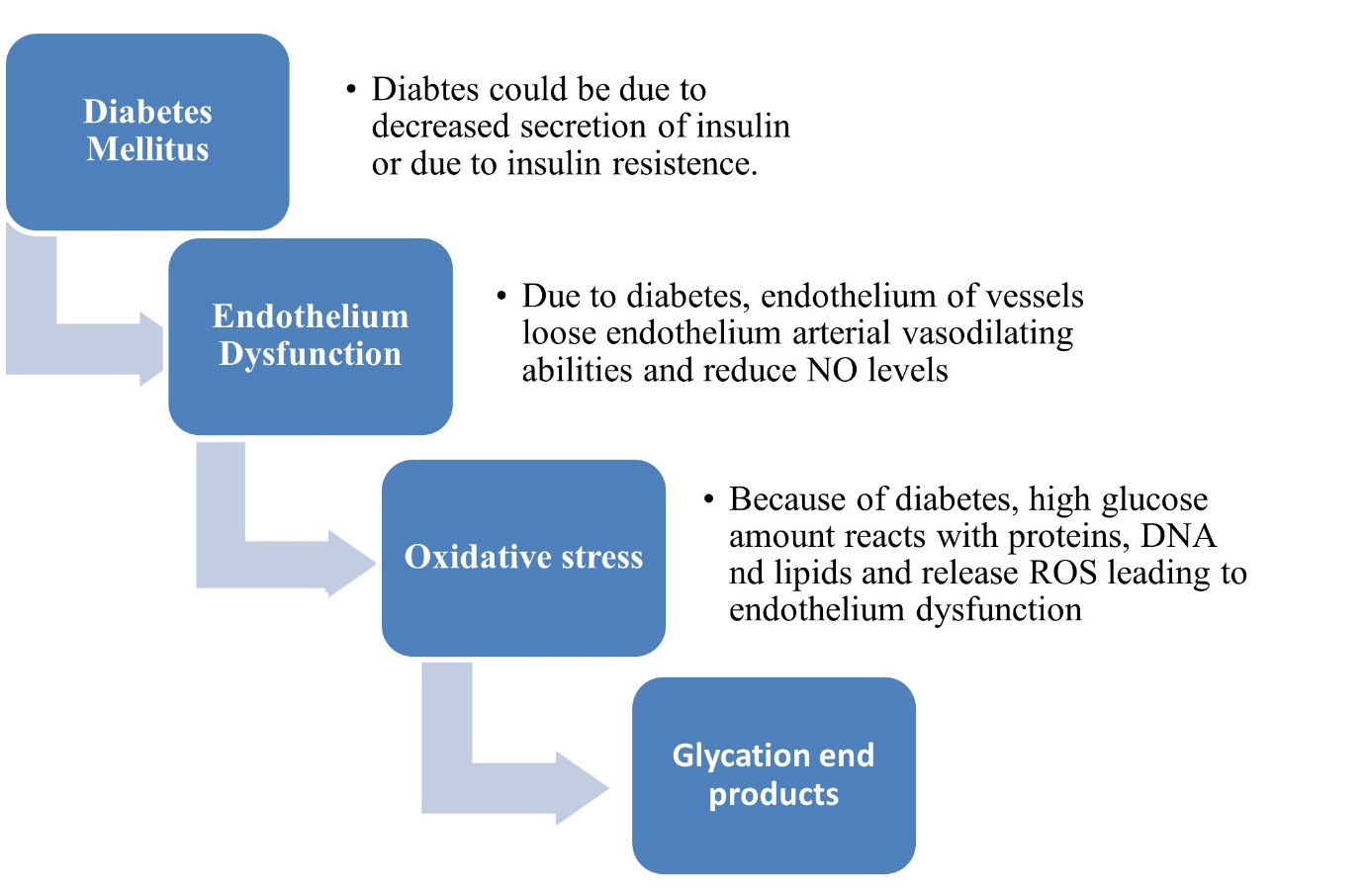
The problematic endothelial functionality of coronary blood vessels is a major risk factor between diabetes mellitus and cardiomyopathy, which specifically contributes to diastolic dysfunction or heart failure with preserved ejection fraction (HFPEF) (Canto et al., 2023). Endothelial dysfunction is caused by multifactorial approaches, causing arterial vasodilating abilities. The most significant hallmark of the concern is the reduced presence of Nitric oxide (NO). NO is linked to vascular homeostasis, and this mediator has a short life span, which is produced from the NO synthetase enzyme family of L-arginine. The NO enzyme family copes with endothelial NOS (eNOS), neuronal NOS (nNOS), and cytokine-inducible NOS (iNOS).
In early disease conditions, vasodilation is reduced due to the damaged release of NO, which can be solved by alternative exaggerated vasodilation mediated mechanisms, including endothelium-derived hyperpolarizing factors (EDHF). However, as time passes, even this survival mechanism eventually comes to an end, leading to endothelial distress. Continuous variation in blood glucose levels takes a further turn in the fate of endothelial dysfunction by excessive stimulation of reactive oxygen species from oxidative stress and production of advanced glycation end products (AGES) from glucose reactions with body proteins and enzymes, making things worse. As well as the superoxide anion, peroxynitrite, a powerful oxidant, causes inactivation of NO, thus fueling nitrosative stress and endothelium failure. Alongside slow relaxations and high diastolic stiffness are characterized by decreased cGMP and protein kinase G (PKG) levels with consecutive increased titin isoform contents. The endothelial vasodilating model of the human body is eventually torn apart by all of these pathophysiological abnormalities brought on by hyperglycemia, and this imbalance results in more serious problems (Beckman & Koppenol, 1996).
Chronic Inflammation and Oxidative Stress
The other significant pathophysiological mechanism that underlies a complication of diabetes is oxidative stress and chronic inflammation. Oxidative stress is well explained as an interference in homeostatic balance in the production of reactive oxygen species and in the body's capability to show antioxidant defence reactions, which puts cell stability at stake. Hyperglycemia and oxidative stress together are correlated. This oxidative stress is produced by multiple mechanisms (Brownlee, 2005). The most prominent mechanism is the interference with the mitochondrial electron transport chain process. Mitochondrial dysfunction affects the body's energy capacities. Along the way, accumulation of AGES and stimulation of NADPH oxidase also contribute to oxidative stress. Hyperglycemia enhances the inflammatory responses in the body by stimulating the pathways and increasing the emission of inflammatory cytokines, such as tumor necrosis factor-alpha (TNF-α) and interleukins. These inflammatory reactions increase NADPH oxidase and oxidative stress. Therefore, the antioxidant defense systems are lowered by all these processes. Serious cardiovascular issues in diabetics are caused by oxidative stress, endothelial dysfunction, atherosclerosis, and decreased NO production. Specific oxidative stress management techniques have a positive, encouraging impact on the difficulties (Giacco & Brownlee, 2010).
Advanced Glycation End-products (AGEs)
Either exogenous or endogenous pathways contribute to the production of chemically modified compounds, seemingly advanced glycation end products. Mechanisms could be the polyol pathway, oxidation reactions, and Maillard reactions. AGES accumulation in the body is a cascade process initiated from the formation of covalent bonds of functional groups of glucose with proteins, lipids, and DNA producing intermediates called Schiff's bases during high glucose levels, but as conditions turn normal. Products get reversed, but in continuous high glucose levels, Schiff's base turns to ketoamine, Amadori's product, which is an irreversible compound. These products split up to give 3-deoxy-glucosone, glyoxal, and methyl-glyoxal, which are prone to react with proteins and lipids, and AGES level increases in the body. In normal adults, accumulated AGES are removed from the body. This production cascade in the presence of metal ions, radicals and oxidative stress just speeds up the process. These AGES accumulate in the body and show fluorescent abilities. Exogenous pathways include glyco-oxidation, lipo-oxidation, tobacco intake, and pollutants, which load up the accumulation. CVD distress associated with T2DM patients is visualized with high AGES accumulated in the body. Approximately 40% to 100% higher levels of AGES in the body make people prone to a high risk of CVD associated with DM. Accumulation of AGES indirectly increases atherosclerotic levels in patients, which is a precursor to heart failure (Bansal et al., 2023).
Lipid Abnormalities and Diabetic Dyslipidemia
In insulin-resistant individuals, the susceptibility of free fatty acids in adipocytes increases; these enhanced FFAs levels stimulate triglyceride levels, triggering the release of apoB and very low-density lipoproteins. This stimulation ultimately causes dyslipidemia, which is a precursor to cardiac arrest, as dyslipidemia increases VLDL and triglycerides, and HDL levels are reduced, triggering the atherogenic profile in the body. The combination of obesity and diabetes is risky and significantly enhances the rates of cardiovascular disorders. According to the Framingham Heart Study, obesity increases the risk of heart disease by 5 to 7 % in males and females. So, maintaining a normal BMI is necessary for lowering the CVD complications in diabetic patients (Siam et al., 2024).
Insulin Resistance and Atherogenesis
Reduced responsiveness of insulin by the apkins, muscles, liver, and adipose cells leads to insulin resistance (T2DM), which is a marker of CVD. The ultimate response to insulin resistance imbalance is the lipid biographies, which lead to dyslipidemia, which causes atherogenic goods in blood vessels. Dyslipidemia causes elevated LDL and triglyceride levels and decreased HDL levels. This understanding facilitates correlation between insulin resistance and CVD. The insulin hormone facilitates lipid metabolism via enzymes and transporters, reduces the levels of FFAs in the blood, and manages body processes. So, insulin plays an important part in operations; in comparison, insulin imbalance elevates the situation of FFAs, triglycerides, and LDL and enhances the threat of dyslipidemia, which is a precursor of atherogenic dyslipidemia. All this increases the pitfalls of CVD in insulin-resistant cases (Jyotsna et al., 2023).
Coagulopathy and Platelet Dysfunction
Platelets are an important part of blood and help maintain homeostasis in the coagulation cascade happening in the body, which is generally inactive in normal situations but gets started during an injury. On injury stimuli, platelets spark the release of prothrombotic particles, including coagulation factors, which in turn spark the coagulation cascade, and activated platelets bind to fibrinogen and facilitate coagulation. To prevent excessive thrombotic formation, antiaggregants like NO and PGI2 are released in normal adults. In case of diseases such as diabetes, hypertension, and heart conditions, levels of platelets elevate and enhance thrombotic disease. This may include two mechanisms that could be procoagulation activation or reduced antiaggregant secretions, causing coagulopathy and increasing the chances of thrombus formation in blood vessels, which leads to CVD. So, diabetic patients are prone to hyperactive platelets, fibrinolysis, and increased coagulation, which paves the way to a thrombolytic condition and triggers cardiac disorders (Kaur et al., 2018).
COMMON CARDIOVASCULAR MANIFESTATIONS IN DIABETICS
Hypertension causes LVH (thickening of left ventricular walls resulting in increased pressure) in diabetic patients. LVH is more common in hyperglycemic patients due to CVS problems and diabetes related to metabolic disorders like insulin resistance and inflammation. Due to the left ventricular hypertrophy, there is an increased risk of the loss of cardio ventricular hypertrophy may increase the severity of CVS outcomes in diabetic patients may resulting in ischemia, heart stroke, diastolic dysfunction and sudden heart failure (Liatakis et al., 2019). Diabetes mellitus is a significant risk factor for stroke and its consequences. Ischemic stroke is more common in diabetes than hemorrhagic stroke. Strokes affect nearly one-third of people with diabetes. Although stroke, depression, and dementia are not thought of as the main problems of diabetes, people with these conditions typically have diabetes. Diabetes also causes cerebrovascular disease, which damages brain cells and results in dementia. Pre-diabetic patients also frequently have these conditions. They could be brought on by insulin resistance, obesity, and hyperglycemia (Xue et al., 2019).
This condition may be treated with the drugs that decrease the glucose level and increase the blood-brain barrier permeability. However, controlling diabetes in patients may increase the risk of cerebrovascular disease and other complications (van Sloten et al., 2020). Peripheral arterial disease is characterized by the partial or complete impediment of the lower or upper limbs' peripheral vessels. It occurs due to atherosclerosis and further progress in platelet aggregation, inflammation in arteries and smooth cell dysfunction. PAD is most commonly reported in patients with diabetes; it may result in the diabetic foot, causing reduced quality of life, and sometimes may cause death (Soyoye et al., 2021). Note that the important thing to notice is that the diagnosis of PAD is difficult because it is asymptomatic. However, duplex ultrasound and computed tomography and magnetic resonance angiography are used as diagnostic tests. Lower limb problems are common in diabetic patients, often because they cause leg ulcers, gangrene and physical disability. The risk factors for PAD in diabetic patients are hypertension, cardiovascular disorder and hyperlipidemia. This condition can be minimized by lifestyle modification, exercise and promoting a healthy diet (MacLean et al., 2024).
Atypical signs of diabetes include silent and atypical myocardial ischemia. Silent myocardial ischemia (SMI) and the lack of critical clinical "caution symptoms" are common presentations in diabetic patients. The frequency of silent myocardial infarction/ischemia (SMI) is higher than previously believed. Up to 25% of CAD patients have experienced silent SMI; in diabetics, the myocardium is often impaired to the level of 10% of the left ventricle's muscle mass. The existence of SMI is still up for debate. The alleged factor influencing the incidence of SMI in diabetics is the onset of cardiac autonomic dysfunction (Prokhorova & Brynza, 2021).
The idea of assuming that diabetics have a higher risk of cardiovascular events and, more frequently, silent CAD than non-diabetics, and testing asymptomatic diabetic patients for CAD, is alluring. Nonetheless, there are numerous arguments against starting a comprehensive testing program. A prospectively used testing program has a beneficial predictive influence on asymptomatic diabetes individuals, according to confirmed evidence. The incidence of atypical SMI varies greatly, as indicated by the research reviewed above. Without distinction based on the existence or lack of identifiable CAD, assessments should be made to treat hypertension and hyperlipidemia only based on diabetes status. According to the aforementioned data, investigations that employed stress single-photon emission computed tomography imaging revealed 20% high-risk images and about 50% aberrant images (Lu et al., 2023).
High Reactive Protein Sensitivity C
One biomarker is C-reactive protein (CRP), one of the necessary positive acute-phase proteins. CRP is often found in trace amounts in plasma. In areas of infection or inflammation, the concentration rises to 1000 times within 24 to 48 hours following acute inflammatory trauma, peaking within that time frame. The liver produces the majority of the CRP as native pentameric CRP. At inflammatory locations, this isoform can irreversibly split into five monomeric CRP isoforms (mCRP), which are identical non-covalently connected subunits. The binding of pCRP to phosphocholine residues of Lys phosphatidylcholines on the cell surface that are exposed by phospholipase A2 (PLA2), a biomarker of vascular inflammation, facilitates this separation. The primary regulator of CRP appears to be IL-6, which stimulates the de novo production of CRP. Moreover, interleukin-1β (IL-1β) and, to a lesser extent, tumor necrosis factor-alpha can enhance IL-6 signalling. According to the increasing number of studies, pCRP has context-dependent pro- and anti-inflammatory effects. On the other hand, mCRP strongly promotes inflammation in endothelial cells as well as in leukocytes, platelets, and their progenitor cells. The inflammatory response can potentially be made worse by the final CRP. Conflicting information on the characteristics of CRP may be explained by the occurrence of two protein conformations (Luan et al., 2021).
Studies on acute myocardial infarction (AMI) have revealed that elevated CRP levels are associated with worse prognoses and may indicate the severity of cardiac damage. In their research, they discovered a growing correlation between the size of the CRP peak and the incidence of heart failure. Additionally, there was an inverse linear correlation between the CRP peak and the left ventricular ejection fraction. Additionally, when stations were taken, the CRP peak was lower (Mitsis et al., 2025).
Six Interleukins
Lymphocytes, activated macrophages, astrocytes, ischemic myocytes, and endothelial cells all produce the pleiotropic cytokine IL-6. It is carried out by a hexametric complex made up of glycoprotein 130 (IL-6/IL-6R/gp130), IL-6, and IL-6 receptor (IL-6R). Due to the numerous functions that this cytokine can perform, IL-6 and the structure of its receptor system are essential. In physiology, this glycoprotein is found in serum in picograms per milliliter (pg/mL) quantities. IL-6 has a variety of physiological functions, but its main ones are: (1) ageing; (2) menstruation; (3) sperm production; (4) hepatic restoration; (5) skin growth; (6) involvement in brain development; (7) bone-strengthening; and (8) hematopoiesis contribution (Tyrrell & Goldstein, 2021).
One potential risk stratification method for coronary artery disease is the Coronary Artery Calcium (CAC) scoring. Although there are many different types of calcium scoring, the Agatston calcium score is, as far as we can tell, the most popular. Noncontrast CT scans are often used as the basis for the Agatston score. Calcium is defined as the voxels in a coronary artery that exhibit attenuation greater than a predetermined threshold of more than 130 HU. A predetermined calculation is then used to determine the total. To distinguish cardiac calcium from calcium deposits in other areas, such as the aorta and bones, at non-contrast CT, a semiautomatic method was previously used, requiring human interaction (Abdelrahman et al., 2024).
The imaging advancement also included CT angiography (CTA), a common noninvasive technique to evaluate the anatomical and functional details of the coronary artery tree by enhancing the coronary arteries with an injected contrast material. Typically, a non-contrast CT CAC score learning is preceded by a CTA. Assessing CAC scores at CTA has the benefit of removing the need for additional non-contrast CT imaging, which also reduces radiation exposure. Not much attention has been paid to the discovery that automatic CAC scoring at CTA is equivalent to the commonly utilized Agatston scores for non-contrast CT. It is difficult to extract the CAC region from CTA because of the hyperattenuating look of an artery filled with contrast material (Aromiwura & Kalra, 2024).
PREVENTION AND THERAPEUTIC APPROACHES
A Mediterranean diet lowers major cardiovascular events in high-risk adults and is suitable for those with type 2 diabetes (T2D). It is high in fruits, vegetables, whole grains, legumes, nuts, and olive oil; it is low in red or processed meat and sweets; and it moderately includes fish and poultry. Mediterranean diets supplemented with nuts or extra-virgin olive oil were associated with fewer myocardial infarctions, strokes, or cardiovascular mortality than a control diet, according to the updated PREDIMED trial. Mediterranean dietary patterns also enhance glycemic indices and reduce incident diabetes in those at high CV risk, hence bolstering their use as a primary preventive measure in cardiometabolic care. Individualized, culturally appropriate diet regimens are encouraged by current diabetic guidelines; Mediterranean style eating has some of the best outcome statistics and is mirrored in contemporary care standards (Aromiwura & Kalra, 2024).
A1C and other CV risk variables are improved by regular physical activity (≥150 min/week moderate-to-vigorous aerobic activity + 2-3 days/week resistance). When compared to each modality alone, combined aerobic and resistance training typically produces the biggest gains in lipid profile and glycemic management. Concurrent exercise had better glycemic and cardiometabolic consequences, according to recent meta-analyses. A1C is further lowered by structured aerobics or high-intensity interval training. Progression, customized strategies, and reducing inactive time are key components of long-term coaching. Exercise is particularly reaffirmed as a core therapy in the ADA Standards of Care (2025), with useful additions like maintaining lean mass while losing weight through resistance training (Umpierre et al., 2011)
Giving up smoking reduces the risk of cardiovascular disease (CVD) in the future in people with type 2 diabetes (T2D); this risk reduction is noticeable within a few years and keeps growing over time. Despite potential short-term weight gain, cohorts and reviews show that quitting smoking is associated with a ~20% lower incidence of CVD than continuing smoking. The importance of quitting at any time is shown by recent population studies that show dose-response benefits: former light smokers can approach the CVD risk of never-smokers. The American Diabetes Association strongly advises all diabetics to quit smoking; regular structured behavioural and medication help should be provided (Durlach et al., 2022).
SGLT2 Inhibitors
In the EMPA-REG OUTCOME trial, empagliflozin significantly decreased CV and all-cause mortality in individuals with T2D and established CVD, and it decreased the composite of cardiovascular death, nonfatal MI, or nonfatal stroke compared to placebo. Benefits were uniform across subgroups and manifested early. Additionally, SGLT2 inhibition slows the progression of kidney disease and reduces hospitalization for heart failure (HF). Regardless of baseline A1C, SGLT2 inhibitors are recommended by ADA 2025 for patients with T2 and established ASCVD, HF, or CKD to decrease hospitalizations for HF and/or CV events, as long as eGFR permits therapy. Clinically, SGLT2 inhibitors ought to be started in eligible individuals while their eGFR and volume status are being monitored. Patients should be informed about uncommon dangers such as euglycemic diabetic ketoacidosis and genital mycotic infections (Gerstein et al., 2021).
GLP-1 Receptor Agonists
Liraglutide decreased all-cause mortality and major CV events (CV death, nonfatal MI, and nonfatal stroke) in high-risk T2D patients in the LEADER study as compared to a placebo, indicating an anti-atherosclerotic benefit that goes beyond glucose lowering. GLP-1 RAs also help reduce overall cardiovascular risk by improving lipids, encouraging weight loss, and slightly lowering blood pressure. The most frequent side effects are digestive problems. Regardless of baseline A1C or metformin use, ADA 2025 recommends GLP-1 RAs with demonstrated CV benefit for T2D with established ASCVD or high risk, especially when weight loss is needed (Huang et al., 2021).
Antiplatelet and Anticoagulant Use
The ASCEND study (15,480 individuals with diabetes) demonstrated that low-dose aspirin decreased significant vascular events but increased major bleeding in primary prevention (no established ASCVD); the absolute benefits and harms were balanced. It is not always advised to take aspirin regularly; only high-risk patients with minimal bleeding risk should be considered. Aspirin (75–162 mg/day) is still the standard for secondary prevention (established ASCVD) unless it is contraindicated; if aspirin intolerance occurs, 75 mg/day of clopidogrel is suitable. Following acute coronary syndrome (ACS) or percutaneous coronary intervention (PCI), dual antiplatelet therapy (DAPT) with aspirin and a P2Y12 inhibitor is recommended, usually for a period of 12 months. The COMPASS trial demonstrated that rivaroxaban 2.5 mg twice daily in addition to aspirin reduced MACE in patients with stable atherosclerosis, while there was a favorable net benefit and an increase in severe bleeding (Huang et al., 2021).
Direct oral anticoagulants (DOACs) are better than warfarin at preventing stroke in patients with diabetes and atrial fibrillation (AF). DOACs consistently improve severe bleeding and/or stroke/systemic embolism in patients with and without diabetes, according to meta-analyses. Age, weight, and renal function should all be taken into consideration while using guidelines-concordant dosage. Reduce the length of triple therapy and switch to DOAC plus one antiplatelet (often clopidogrel) for AF patients who have had PCI or ACS (Carnicelli et al., 2022).
CONCLUSION
Cardiovascular disease is a dominant and costly consequence of diabetes. It is spreading at a global level and has economic and societal impacts. Globally, over one third of individuals with T2DM develop CVD, leading to enhanced mortality rate, enormous treatment costs and diminished quality of life. Efforts include early prevention strategies, risk factor optimization, pharmacologic advances, and equitable healthcare access are vital to alleviating this burden.
References
- Abdelrahman K, A Shiyovich, DM Huck et al., 2024. Artificial intelligence in coronary artery calcium scoring detection and quantification. Diagnostics 14:125.
- Aromiwura AA & DK Kalra, 2024. Artificial intelligence in coronary artery calcium scoring. Journal of Clinical Medicine 13:3453.
- Bansal S, A Burman & AK Tripathi, 2023. Advanced glycation end products: Key mediator and therapeutic target of cardiovascular complications in diabetes. World Journal of Diabetes 14:1146.
- Beckman JS & WH Koppenol, 1996. Nitric oxide, superoxide, and peroxynitrite: the good, the bad, and ugly. American Journal of Physiology-Cell Physiology 271:1424-37.
- Bhattacharya S, S Kalra, L Nagendra et al., 2025. Forty-four Years of the UK Prospective Diabetes Study: Legacy Effect and Beyond. Touch Endocrinology 21:2-3.
- Brownlee M, 2005. The pathobiology of diabetic complications: a unifying mechanism. Diabetes 54:1615-25.
- Canto ED, A Ceriello, L Rydén et al., 2019. Diabetes as a cardiovascular risk factor: An overview of global trends of macro and micro vascular complications. European Journal of Preventive Cardiology 26:25-32.
- Canto ED, L van Deursen, A Hoek et al., 2023. Microvascular endothelial dysfunction in skin is associated with higher risk of heart failure with preserved ejection fraction in women with type 2 diabetes: the Hoorn Diabetes Care System Cohort. Cardiovascular Diabetology 22:234.
- Carnicelli AP, H Hong, SJ Connolly et al., 2022. Direct oral anticoagulants versus warfarin in patients with atrial fibrillation: patient-level network meta-analyses of randomized clinical trials with interaction testing by age and sex. Circulation 145:242-55.
- Durlach V, B Vergès, A Al-Salameh et al., 2022. Smoking and diabetes interplay: a comprehensive review and joint statement. Diabetes and Metabolism 48:101370.
- Gerstein HC, N Sattar, J Rosenstock et al., 2021. Cardiovascular and renal outcomes with efpeglenatide in type 2 diabetes. New England Journal of Medicine 385:896-907.
- Giacco F & M Brownlee, 2010. Oxidative stress and diabetic complications. Circulation Research 107:1058-70.
- Huang W-C, Y-C Chen, C-H Wu et al., 2021. Cardiovascular outcomes and healthcare costs of liraglutide versus basal insulin for type 2 diabetes patients at high cardiovascular risk. Scientific Reports 11:1430.
- Jyotsna F, A Ahmed, K Kumar et al., 2023. Exploring the complex connection between diabetes and cardiovascular disease: analyzing approaches to mitigate cardiovascular risk in patients with diabetes. Cureus 15:43882.
- Kannel WB, 1975. Diabetes and cardiovascular disease: The Framingham study. The American Journal of Cardiology 35:147.
- Kaur R, M Kaur & J Singh, 2018. Endothelial dysfunction and platelet hyperactivity in type 2 diabetes mellitus: molecular insights and therapeutic strategies. Cardiovascular Diabetology 17:121.
- Liatakis I, E Manta & C Tsioufis, 2019. Hypertension and atrial fibrillation: epidemiological data, pathogenesis, and therapeutic implications. American Journal of Hypertension 32:725-6.
- Lu S-X, T-W Wu, C-L Chou et al., 2023. Combined effects of hypertension, hyperlipidemia, and diabetes mellitus on the presence and severity of carotid atherosclerosis in community-dwelling elders: a community-based study. Journal of the Chinese Medical Association 86:220-6.
- Luan Y-y, C-h Yin & Y-m Yao, 2021. Update advances on C-reactive protein in COVID-19 and other viral infections. Frontiers in Immunology 12:720363.
- MacLean E, E Fogarty, B Peterson et al., 2024. Prevalence of peripheral arterial disease in a Nova Scotian context through the lens of the Edinburg claudication questionnaire and ankle brachial index measurements. Canadian Journal of Cardiology 40:S159-60.
- Mitsis A, S Sokratous, G Karmioti et al., 2025. The Role of C-reactive protein in acute myocardial infarction: unmasking diagnostic, prognostic, and therapeutic insights. Journal of Clinical Medicine 14:4795.
- Mosenzon O, A Alguwaihes, JLA Leon et al., 2021. A multinational, cross-sectional study of cardiovascular disease prevalence in adults with type 2 diabetes across 13 countries. Cardiovascular Diabetology 20:154.
- Ong KL, LK Stafford, SA McLaughlin et al., 2023. Global, regional, and national burden of diabetes from 1990 to 2021, with projections of prevalence to 2050: a systematic analysis for the Global Burden of Disease Study 2021. The Lancet 402:203-34.
- Prokhorova O & M Brynza, 2021. Silent myocardial ischemia in patients with type 2 diabetes mellitus: a clinical case. Emergency Medicine 17:39-42.
- Rana JS, SS Khan, DM Lloyd-Jones et al., 2021. Changes in mortality in top 10 causes of death from 2011 to 2018. Journal of General Internal Medicine 36:2517-8.
- Salvatore T, PC Pafundi, R Galiero et al., 2021. The diabetic cardiomyopathy: the contributing pathophysiological mechanisms. Frontiers in Medicine 8:695792.
- Siam NH, NN Snigdha, N Tabasumma et al., 2024. Diabetes mellitus and cardiovascular disease: exploring epidemiology, pathophysiology, and treatment strategies. Reviews in Cardiovascular Medicine 25:436.
- Soyoye DO, OO Abiodun, RT Ikem et al., 2021. Diabetes and peripheral artery disease: A review. World Journal of Diabetes 12:827.
- Tyrrell DJ & DR Goldstein, 2021. Ageing and atherosclerosis: vascular intrinsic and extrinsic factors and potential role of IL-6. Nature Reviews Cardiology 18:58-68.
- Umpierre D, PA Ribeiro, CK Kramer et al., 2011. Physical activity advice only or structured exercise training and association with HbA1c levels in type 2 diabetes: a systematic review and meta-analysis. Jama 305:1790-9.
- van Sloten TT, S Sedaghat, MR Carnethon et al., 2020. Cerebral microvascular complications of type 2 diabetes: stroke, cognitive dysfunction, and depression. The Lancet Diabetes and Endocrinology 8:325-36.
- Xue M, W Xu, Y-N Ou et al., 2019. Diabetes mellitus and risks of cognitive impairment and dementia: A systematic review and meta-analysis of 144 prospective studies. Ageing Research Reviews 55:100944.