
INTRODUCTION
Wild animals are always subjected to numerous environmental stresses, and all the stressors that modify their behavior and physiology, as well as their survival are termed as ecological stressors. These are ecological issues like food competition, predation, parasitism and social hierarchy, and they arise due to anthropogenic disturbances, pollution, climate change and the growing human encroachment (Shackleton et al., 2019; Cockrem, 2022). The increasing encroachment of human activity has increased the magnitude and frequency of these stressors, posing grave risks to animal health, reproduction and long-term viability (Plowright et al., 2021). The most important mechanism which enables the animal to cope stress is the physiological stress response, which is coordinated mainly by the hypothalamic-pituitary-adrenal (HPA) axis. The system helps in the release of Glucocorticoids (cortisol and corticosterone), which help the animals to react to acute stress by shifting energy allocation, altering behavior and changing the activity of the immune system (Gormally & Romero, 2020). Although this is an advantageous reaction in the immediate, chronic or sustained stress can inhibit immune activity, leading to an augmented susceptibility to diseases as well as reduced fertility.
The immune system is found to be crucial in the defence of the body against infections, controlling wounds and inflammation and maintaining stability inside the body. The problem is that immune activity has a high energy cost, and in wildlife, there are many trade-offs between immune investments and other survival needs (thermoregulation, reproduction or foraging). These tradeoffs in long-stress usually led to sacrificing immune competence for immediate survival (Anderson, 2018; Downs et al., 2014).
These interactions can be considered from the perspective of eco-immunology. In contrast to conventional laboratory immunology, eco-immunology takes account of natural conditions, as immunological strategies are influenced by such factors as season, age, reproductive status, social rank, food and previously encountered pathogens. As an example, powerful animals might have more access to resources and experience greater social stress that makes immunity suppressed and negatively affects the development of diseases (Hawley & Altizer, 2018; Habig et al., 2018).
The importance of the conservation of the species as well as the management of the ecosystem rests on knowing about the relationship between stress and immunity in the wild animals. Stress among the wildlife can be enhanced by intensive association between the humans and the wildlife world in terms of agriculture, urbanization or tourism, which predisposes zoonotic diseases. It is not only the health of animals that is affected by this stress-induced disturbance, but also the health of people (Plowright et al., 2021).
Breakthroughs in non-invasive monitoring technologies have made it possible to tell researchers about physiological stress and immune markers even in free-ranging animals. It is possible to determine the levels of hormones and the status of immunity over time with such samples as faeces, hair, feathers, saliva or blood. The tools become essential in building a better image of animal reaction to environmental hardships and more instruments to direct species-specific physiological requirements-based conservation (Cockrem, 2022).
UNDERSTANDING STRESS IN WILD ANIMALS
In the biology and animal behavior realm, stress indicates any agent that is outside or inside an animal and which disturbs its physiological balance condition, resulting in a compensatory reaction in regaining a balanced condition. There is nothing negative or bad about stress in wild animals, but instead, it is a natural phenomenon of life that predisposes them to adaptability and survival, given it is controlled well. Yet, the effects of stress can be long-term and biomechanical for uncontrollable or constant stress, altering health, immunity, and fitness due to long-term physiological and behavioral ramifications (Martin et al., 2011).
There is a wide range of stressors to which wild animals are exposed, and they can be either biotic (living) or abiotic (non-living). Abiotic stressors are extreme temperature, drought, shortage of food, natural calamities, and environmental pollution. Today, an anthropogenic stressor i.e., the stressor caused by human activity, has turned out to be more prevalent and dominant. These are such factors as habitat destruction, deforestation, urban growth, noise and light pollution, and even climate change (Shackleton et al., 2019; Cockrem, 2022).
What type of stressor it is, how long it lasts, how strong it is and how predictable it could be are very important in terms of the physiological reaction of the animal. As an example, stress has acute types, which involve a short-term and rapid increase in the sympathetic nervous system and HPA axis that provide the animal with an opportunity to escape or cope with an attack (Gormally & Romero, 2020). Conversely, chronic stress, e.g., months-to-years of continued degradation of a habitat or chronic food insecurity, exposes the body to long-term glucocorticoids, which, according to some reports, leads to immunosuppression, metabolic dysfunction and even altered brain structure (Martin et al., 2011).
Stress response differs dramatically between species, individuals and even stages of life. Such variations are governed by ecological niches, behavior patterns, and evolutionary adaptations. As an illustration of prey species, compared with predators, prey species generally exhibit increased stress reactivity, whereas, in highly social species, animals can be exposed to an increased risk of stress because of dominance hierarchies or competition over mates (Habig et al., 2018). This means that diversity in juvenile and aged individuals in terms of the action has unique hormonal reactions to stress in relation to wellness in adults as age-related vulnerabilities of body processes (Downs et al., 2014).
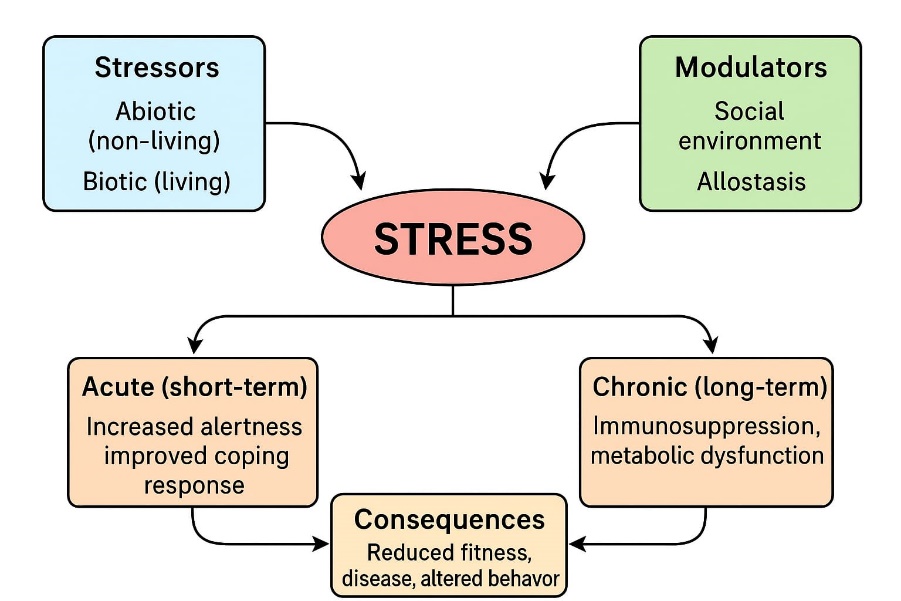
The other important modulator of stress in wild animals is social environment. Social buffering refers to a phenomenon gleaned in a few species that makes their social ties and group cohesion act to serve as a protective factor against environmental stressors (Habig et al., 2018).The other critical concept in stress biology is allostasis, which entails the process of internal stability via alteration. Changes to physiology have to be continuous in changing environments to accommodate a seasonal shift in resources, breeding times and exposure to pathogens, among others. The short-term adjustments in allostatic state are adaptive, but allostatic overactivation or allostatic load can erode the bodily systems, especially the immune systems and the endocrine system (McEwen and Wingfield, 2010). However, the consequeces of stress modulators and stressors remain obvious for inducing different stress responses (Fig. 1).
THE IMMUNE SYSTEM IN WILD ANIMALS
The immune system is a crucial protection measure allowing wild animals to live in world full of diseases-causing pathogens, parasites, injuries and poisonous substances. It is a very dynamic and intricate network of body tissues, cells and molecular pathways that essence responses to internal and external challenges. In wild animals, the function of immune response is not only part of individual fitness, but it also helps to maintain the viability of the population and the ecological equilibrium (Downs et al., 2014). In vertebrate animals (mammals, birds, reptiles and fishes) the immune system is divided into two main parts: the innate immune system and the adaptive immune system. The innate immune response is the initial system, and its response is quick and not specific and applies to many of the pathogens. It encompasses physical obstacles (e.g., skin, mucosa), chemical releases (e.g., enzymes), cells (e.g., macrophages, neutrophils), and molecular sensors such as pattern recognition receptors (PRRs) that recognize microbial components (Gomes et al., 2021).
The adaptive immune system, in contrast, is less generalized and includes the activation of the B cells and T cells producing specific antibodies and the memory response. Despite slower activation and being more energetically expensive, long-term adaptive responses protect and afford immunological memory, which is essential to animals that are repeatedly exposed to similar infections (Martin et al., 2011). Other than the fundamental components, several ecological and physiological populations also affect immune performance in wild animals. Immune investment can be affected by seasonal variation, reproduction and sex, ageing and age-related transitions. Such an example is animals that regularly undergo immunosuppression during reproduction, a trade-off that is biassed towards mating success rather than immune protection (Downs et al., 2014).
In the same vein, food insufficiency can also be involved in the suppression of the innate and adaptive immune response, leading to malnutrition or malnutrition of microelements, which contributes to the risk of infections. The animal microbiome, which is the community of microorganisms inhabiting and living in and on the body, is closely connected with the immune system. There is evidence that the variations in the gut microbiome as a response to diet, stress, or living environment could alter immune development and functionality in recent years (Foster et al., 2019).
The trade-offs in immunity have evolved because of the cost of immunity within the wild animals. Spending on immune defense may come at the expense of energy being expended on growth, reproduction or thermoregulation, particularly in hostile environments. Another example of such adaptations is that some rodents living in a desert are found capable of decreasing immune investment under conditions of food shortage or under heat stress (Knuite, 2020). These trade-offs show the fact that natural selection of immune strategies has occurred within the ecological constraints; thus, it becomes variable across species and environments. With advances in technology, researchers have been able to determine the immunity of wild animals using minimally invasive techniques (Zaffaroni-Caorsi et al., 2023). Immune markers which are measured through blood sampling, tissue biopsies and faecal analyses include the counts of leukocytes, immunoglobulin levels and proinflammatory cytokines. New methods such as enzyme-linked immunosorbent assays (ELISAs) and flow cytometry are also being more readily applied to fieldwork as a means to analyze the variability of immunity through time (seasonally, by habitat, and by individual life histories).
IMPACT OF STRESS ON IMMUNE FUNCTION IN WILDLIFE
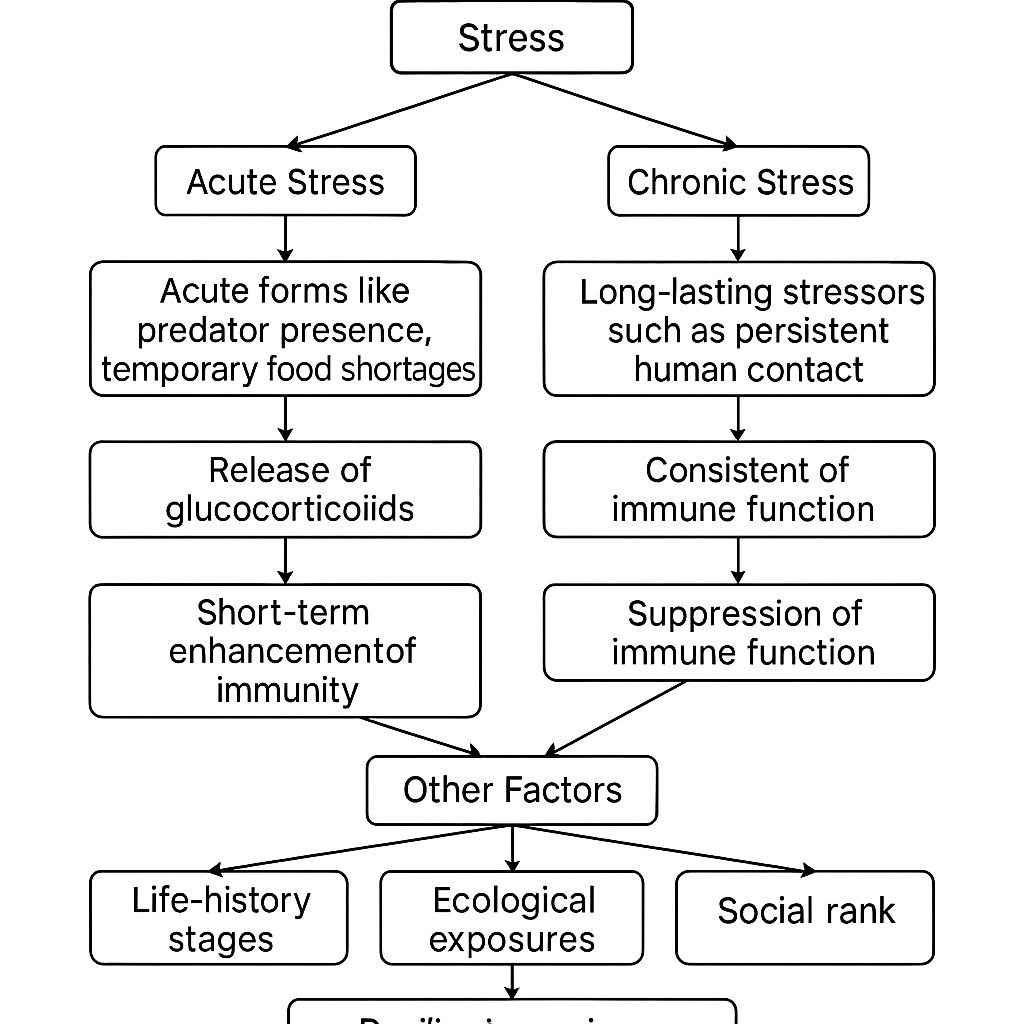
The correlation between immune functionalities and stress is very important in the health of wildlife. Although acute or short-term stress adversely affects immune functioning, stressful experiences may facilitate the recruitment of protective physiological responses in the short term (Martin et al., 2011). The acute forms of stress like predator presence or temporary food shortages activate the hypothalamic-pituitary-adrenal (HPA) axis and this results in the release of glucocorticoids (Fig. 2). These are the hormones that adjust metabolism and immune scan, raising acute preparedness against harm or infection. This is a coping mechanism that enhances immune responses and inflammation in a short-term period (Gormally & Romero, 2020).
Nevertheless, on its part, stress persists when animals are exposed to long-lasting stressors such as scattered locations or persistent human contact or chronic social unsteadiness, making glucocorticoid levels consistent and destroying defense systems. It impairs the production of white blood cells, decreases antibody formation, and blocks pro-inflammatory signals and leaves animals vulnerable to pathogens (Downs et al., 2014). As an example, tourism-stressed seabirds have higher levels of stress hormones, lowered immunity, and carrying more parasites. When amphibians experience pollution and stress, there is a decrease in the count of lymphocytes and increased mortality during the outbreaks. As well, social rank effects stress-immunity relationships. Superiors might have better immune patterns and inferiors face more pressure, which is socially demanding and limits the capabilities of the inferior since their bodies are stressed (Habig et al., 2018).
Ecological exposures especially those associated with human activities interefere with immune reactions at an interface of species. In rodents and birds in the desert, state of heat stress suppresses immune cell responsiveness, whereas in bats, both innate and adaptive immunity is suppressed by a state of nutritional stress and disrupted roost enclosure (Cockrem, 2022; Foster et al., 2019). The alteration can increase the transmission of pathogens, i.e., zoonotic spillover (Gomes et al., 2021). Although these trends exist, there are species which are resilient in that they retain immune activity in stressful conditions possibly as a result of their co-evolution with their environmental stressors. Conservation planning in changing ecosystems is made crucial by identifying such adaptations (Martin et al., 2011).
EFFECT OF NOISE ON THE IMMUNITY OF WILD ANIMALS
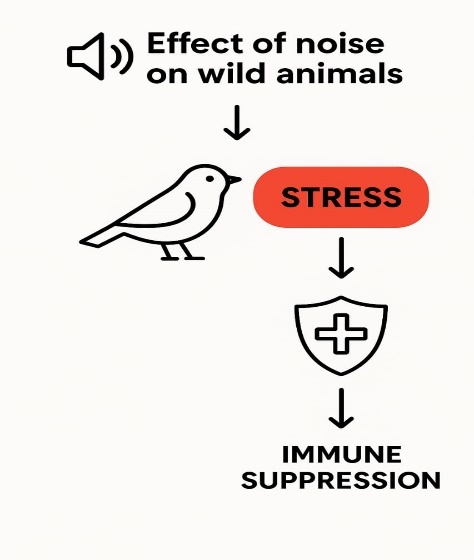
Noise pollution is one of the most rapidly increasing anthropogenic stress factors on wildlife, which changes the behavior and physiological health. Continuous or random noise caused by traffic, industry, air traffic and urbanization alters the communication capabilities of the animals, their foraging behaviors and their predator detection methods, compelling them to adjust their natural behavior in a manner that lowers their fitness (Figure 3). It has been demonstrated that noise leads to the stimulation of the hypothalamic-pituitary-adrenal (HPA) axis, leading to increased glucocorticoids-measure stress- which may disrupt immune responsiveness in the long term (Kleist et al., 2018).
Due to enhanced acoustic communication species like birds, frogs, bats and sea mammals are particularly susceptible. As in the case of songbirds living in high-traffic areas, the exposure of the birds to long-term persistent traffic noise is associated with a reduced nestling development rate and impaired immune system, implying that there are physiological consequences other than just behavioral disruption (Injaian et al., 2018).
Besides having physiological effects of stress, noise may alter ecological interactions and even disturb important life-history processes. Exposure to high levels of naval sonar or commercial shipping noise causes marine mammals to experience higher heart rates, high-speed responses to escape, and avoidance of feeding grounds over the long term that directly decreases energy consumption and reproductive success (Williams et al., 2020). The species living on the land also suffer population shifts; ungulates and carnivores tend to leave the noisy territories, which enhances the activities and makes them more vulnerable to predators (Shannon et al., 2016). With prolonged exposure, parental care, mating behaviors, and group cohesiveness, which are social factors that have a close relationship with stress buffering and immune stability, may also be disrupted. Since long-term noise impacts the vigilance efficiency of the body and increases physiological stress, leading to the weakening of immune defenses, long-term noise ultimately causes animals to be more vulnerable to disease, injury, and negative environmental change (Barber et al., 2010; Senzaki et al., 2016).
MEASUREMENT TECHNIQUES FOR STRESS AND IMMUNITY IN THE FIELD
Methodological issues surrounding the test of stress and immune response in wild animals are immense because natural habitats are unstable, ethical issues, and inability to subject the animal to negligible invasive procedures. Over a 20-year stretch, eco-immunologists and conservation physiologists have discussed and created a set of tools suitable in the field to quantify stress markers and immune values in free-ranging species (Altizer et al., 2020).
Measuring Stress Hormones
Biomarkers of stress used most frequently in wildlife are glucocorticoids, mostly cortisol and corticosterone released at the activation of the hypothalamic pituitary adrenal (HPA) axis by adrenal glands. Conventionally, the measurement of these hormones was done using blood samples, which are invasive, and captured stress can limit their value (Gormally & Romero, 2020). To counter these shortcomings, scientists are becoming quite dependent on non-invasive procedures e.g. feces, urine, saliva, and hair, feathers, and even expired breath condensate (Cockrem, 2022).
Each of the two matrices has its own benefits. As an example, fecal glucocorticoid metabolites (FGMs) offer a time-integrated lens in the stress hormone release over the hours or days, and they have become prevalent in mammals and birds (Raulo & Dantzer, 2018). The cortisol levels in hair and feathers are indicative of chronic stress exposure; thus, they can be used to measure chronic stress or analyze stress experiences in the past, i.e., migration or reproduction. In the meantime, salivary cortisol is also considered to reflect acute stress, but it must be collected shortly after being captured so that it is not confounded. The enzyme immunoassays (EIAs) and the radioimmunoassays (RIAs) have made the analysis of hormones possible in fields. The methods are sensitive, and inexpensive as well as able to be scaled to low volumes of samples (Gormally & Romero, 2020).
Assessing Immune Function in the Field
The assessment of immune activity is more complicated than measuring the levels of a hormone, with it necessary to measure many aspects of the immune activity of the animal during or after the capture by using a portable, trustworthy, and ethically applicable technique. The procedures of field immunology are always aimed at functional tests, the number of cells and the number of proteins to determine immune responsiveness. The commonly applied technique is the phytohaemagglutinin (PHA) skin swelling test, which determines the level of T cell immune response. Local swelling after a small injection of PHA into the skin (commonly in the wing web or footpad) is caused by an infiltration of immune cells to the local area. The size of such swelling is regarded as a surrogate marker of the immune reactivity (Downs et al., 2014). In humoral immunity the hem-agglutination hemolysis test is used to determine how well an animal is capable of producing natural antibodies and complement proteins to clump or lyse red blood cells. They are carried out on small amounts of blood and can be done in simple labs (Martin et al., 2011). The blood smear preparation and staining enable determination of leukocyte profiles, which help to understand chronically stressed and cortisol-mediated immune status, and frequent high heterophil-to-lymphocyte (H/L) ratios are the results of immunosuppression. Newer yet, devices in portable molecular technology and immunology technologies made it possible to measure in the field cytokines, acute phase proteins and immunoglobulins. Wildlife diagnostics is under development by lateral flow diagnostic tools, such as home pregnancy tests, where a quick result is also available of a discrete infection or an antibody response (Foster et al., 2019).
TRANS-SPECIFIC CASE STUDIES
The case studies give better understandings of the interaction between stress and immunity on the natural conditions of varied taxa. Observing the natural reactions to ecological stressors (predation, human pressure, climate change, interspecific aggression, etc.), researchers reveal not only the trends related to species but also the general eco-immunological patterns (Martin et al., 2011).
For example, In African elephants (Loxodonta africana), glucocorticoid levels in the feces become elevated when the animals are near human population centers with tourists. These increased levels go hand in hand with the higher parasite multiplicity and lower immune marker expression, which suggests chronic stress-related immunosuppression. During food scarcity and poor weather conditions, black-legged kittiwakes (Rissa tridactyla) exhibit increased levels of corticosterone and a dormant cell-mediated immunity (cell-mediated immunity) through PHA-induced swelling (Merkling et al., 2019). Reptiles and amphibians as ectotherms are very vulnerable to thermal stress. Corticosterone accumulation together with bacterial killing capacity reduction occurs during periodic heating in green iguanas (Iguana iguana).
It is evident that bats, the supposed homes of zoonotic viruses, have stress-immunity associations. Disturbance of roost in Egyptian fruit bats (Rousettus aegyptiacus) elevates cortisol and decreases the activity of neutrophils (Schneeberger et al., 2013). Stressed bats are also bigger shedders of viruses, including coronaviruses that are a cause of concern for potential spill-over in disturbed habitats (Andreasen & Dwyer, 2023). The stress evokes immune suppression in fish, i.e., Atlantic salmon (Salmo salar). Salmon under crowding stress have high cortisol and low mucosal immunity which renders salmon vulnerable to infections such as Aeromonas salmonicida (Teles & Tort, 2011). These results are crucial towards handling the disease risks among the wild populations of fish and aquaculture systems.
EVOLUTIONARY AND ECOLOGICAL OUTLOOKS
Stress and immunity in wild animals can only be viewed through the evolutionary and ecological perspectives. Through time, animals have acquired adaptive mechanisms to balance energy expenditure among competing physiological requirements of the immune system, reproduction, thermoregulation, and foraging within the ecological pressures and survival (Martin et al., 2011). Such adaptive measures are especially influenced by the environmental uncertainty and maximizing species-specific fitness. According to the evolutionary perspective, stress responses, particularly through activation of the hypothalamic-pituitary-adrenal (HPA) axis, have helped in short-term survival. Acute stress boosts immediate preparedness by skewing the investments towards short-term goals and constrained energy allocation to such activities as evading predators or approaching hazardous conditions (Gormally & Romero, 2020). This advantage, however, might be expensive in the case of chronic or frequent stress when this effect blocks immune processes and exposes individuals to infections (Downs et al., 2014).
The interpretation of various species' responses to stress is based on the life history theory. In the same line, quick-living species (e.g., rodents, small birds) will commonly focus more on rapid reproduction than immune investment, at least under stressful conditions, whereas slow-living species (e.g., elephants, primates) will tend to focus more on immune maintenance to facilitate long-term survival. This structure can describe interspecies variation in immune resilience and is critical to determine the vulnerability of conservation. Ecologically, stressors often do not act in isolation on the parts of the wild animals. Inducers of stress are generally a combination of feeding conditions (food scarcity, competition, and predation), disease, and anthropogenic factors, all of which have a simultaneous influence on the immune response (Habig et al., 2018). An example is that seasonality influences the availability of resources and the quantity of pathogens, which will thus require a trade-off between immunity and other survival requirements during crucial times, such as winter periods or droughts.
Immune responses are phenotypically plastic and therefore adaptive in terms of resourcing the physiological response of animals to the environmental conditions. Yet, persistent environmental variation, such as habitat modification or climatic change, may override this plasticity and transform the health of the immune system across generations (Charbonnel & Cosson, 2021). And in addition to that, developmental programming involving early-life exposure to stress affecting the immune function of the adult has been identified across various taxa, meaning that when stress happens matters as much as how severe it is (Brock et al., 2022). Co-evolutionary forces also influence the stress reactivity of immune systems. Those species that have prolonged experience living in conditions that are rich in pathogens can develop their immune system to be stronger than those that are susceptible, particularly when exposed to new diseases or to changing environments (Downs et al., 2014). Lack of adaptive immunity towards new stressing factors or pathogens may exacerbate the effects of this disease and advance the declines of the populations (Foster et al., 2019). Conservation and management of wildlife require integration of ecological and evolutionary views (Gomes et al., 2021).
MANAGEMENT STRATEGIES AND IMPLICATIONS OF CONSERVATION
Establishing the balance between stress and immunity in wildlife species carries deep consequences for wildlife conservation, especially in the era of environmental change. Immune dysfunction due to stress also has the potential to undermine personal health as well as the rebound of a population and put the affected species at risk of developing diseases in outbreak situations. Therefore, applying physiological knowledge in conservation plans is not only advantageous but also a necessity.
Locating Hidden Stressors on Conservation Sites
Protected areas were usually selected on a habitat, species richness or biodiversity hotspot basis, but here, physiological markers of stress can be used to provide additional perspective to ensure that they are actually a refuge, as they should be in a protected area selection. Researchers have found that the presence of noise pollution, high tourist traffic, or physical proximity to urban-based development can cause animals in national parks to remain exposed to extensive glucocorticoid production (Behie et al., 2021). Monitoring of stress hormones within environmental impact assessment would improve the precision of the conservation evaluation. As one illustration, highly touristic areas of South Africa had elevated fecal glucocorticoids and compromised immunity in their elephants compared to residing in quieter areas.
Immune Monitoring and Disease Surveillance
Owing to the growing concern about zoonotic diseases, there has been an urgent need to monitor the immunity status of wildlife species. Immunology markers are able to act like early warnings of infection. Observation of the levels of antibodies, types of leukocytes, and cytokine production in populations of wildlife can give ideas not only about the health of an individual but also about trends in the population (Gomes et al., 2021). It is especially needed when it comes to the species which pose as disease reservoirs, e.g., bats, rodents, or primates. As an example, the immune surveillance conducted on bats has shown ties between habitat perturbation, spikes in cortisol levels and elevated episodes of viral shedding that are pivotal in inhibiting spillover occurrences (Schneeberger et al., 2013).
Conservation Physiology and Policy Integration
Conservation physiology has arisen such that the policy-science gap may be filled. Incorporating physiological data in conservation strategies can guide managers to focus on places, species and management that support the health and resilience of animals. It includes:
- Adding physiological data to Red List data.
- Applying stress and immunity pointers in adaptive management strategies.
- The inclusion of eco-immunological data in the rehabilitation of habitats as well as strategies in climate change alterations.
Conservationists are now learning that the idea of healthy habitat is not only concerned with cover or number of species; the idea must incorporate the biological well-being, and the focal points in such well-being are stress and immunity (Cooke et al., 2016).
FUTURE DIRECTIONS AND METHODS OF RESEARCH
Although a lot has happened in the field of eco-immunology and conservation physiology, large research gaps still exist. The realization of the impact of stress on the immunity of varied species and situations is an important aspect in changing the adaptive management plans. The mitigation of such gaps will help to improve scientific knowledge as well as conservation efforts and endeavors, particularly in the face of global environmental change (Mathews et al., 2020).
Increasing Taxonomic and Eco-Diversity
Most of the existing studies deal with mammals and birds, and a wide range of vertebrates and the majority of invertebrates are underrepresented (Martin et al., 2011). These however, are sometimes found with taxa such as amphibians, reptiles and fish that sometimes harbor unique immune systems developed in response to different ecologies. Ectothermic animals, as an example, are subjected to thermal and hydric stress, which do not necessarily affect immunity as in endotherms. Moreover, temperate areas prevail in all existing in-field studies, whereas tropical and polar ecosystems, which are strategic biodiversity hotspots, are underrepresented, although they are more vulnerable to the effects of climate.
The Contact with Microbiota and Nutrition
The microbiota of the gut is at the heart of controlling immunological reactions as well as stress physiology but is poorly understood in free-living animals (Foster et al., 2019). Microbial communities and consequently the immune system can be altered by environmental factors such as diet, contaminants and habitat degradation. Integrated skeptical microbial, endocrine, and immune measures are essential to the mental knowledge of the gut the brain immuno axis. The need to address nutritional stress caused in fragmented or shifting environments is yet another major theme of immune trade-offs (Downs et al., 2014).
Embracing Technology Advancements
Wildlife research is also being improved by technologies. Invasive practices like wearable biomonitors, transportable hormone test kits, environmental DNA (eDNA) gatherings and distant biosensors permit live-time information gathering with negligible disturbance (Cooke et al., 2016). The tools enable longitudinal monitoring of the stress and immune responses in a variety of species and landscapes, extending the scope of both research performance and animal welfare (Ezenwa et al., 2016).
Climate Change Effects and Emerging Diseases
Climate change, which has gone global, introduces cumulative stressors, which include thermal extremes, habitat changes, and food insecurity that have a direct effect on immune resilience (Merkling et al., 2019). When immune suppression caused by stress escalates, the animals can further develop vulnerability to infection or develop higher pathogen shedding, which promotes the occurrence of zoonotic spillover (Gomes et al., 2021). The dynamics that exist in them are necessary to understand One Health interventions that integrate wildlife conservation, ecosystem health, and human health (Foster et al., 2019).
Science-Policy Interconnection
Physiological science is growing and yet to be used extensively in the formulation of policy for wildlife and environmental governance. EIAs or species management plans do not usually incorporate stress and immune measures (Cooke et al., 2016). To transfer the findings into practice, there must be more cooperation to get the scientists and conservationists, the veterinarians, and the policymakers arriving at a solution that can be practiced. The establishment of open-access databanks, increased interdisciplinary education, and imperative data openness are essential steps on the way to incorporating physiology into successful conservation (Mathews et al., 2020)
CONCLUSION
The wild animal can find the relation between stress and immunity, and this aspect concerning eco-immunology shows the way in which organisms respond to natural and human-made pressures. Short-term stress may be beneficial to survival, but chronic stress usually reduces immune skills, exposes one to more diseases and decreases fertility. These effects have the capacity to undermine personal fitness and cause population losses. Studies have revealed that environmental stressors like habitat destruction, climatic changes, noise effects and social disturbances affect the immune system in most species. Most recently, novel developments in non-invasive monitoring enabled scientists to work in the field without inflicting much disturbance on the animal under study, enhancing the quality of data attained and animal welfare. Nevertheless, there exist critical gaps in spite of the progress made. Mammals and birds have been the most studied taxa with other taxa, having low levels of representation. Further prospective research is also necessary to know the relationship between stress and immunity throughout lives. Moreover, early-life stress, microbiome health and nutrition are being understood only in relation to making up immune function. In the future integration of physiologically, ecologically, and technologically based methods will also be necessary. Development of studies in more and variable species and incorporation of the results in conservation planning will help consolidate conservation and encourage resilience of wildlife in the wake of continued environmental change.
References
- Altizer S, DJ Becker, JH Epstein et al., 2018. Food for contagion: synthesis and future directions for studying host-parasite responses to resource shifts in anthropogenic environments. Philosophical Transactions of the Royal Society B: Biological Sciences 373:70-102.
- Anderson RC, 2018. Habitat noise affects immune responses but not endocrine stress in white-crowned sparrows. Functional Ecology 32:2630-40.
- Andreasen V & G Dwyer, 2023. Seasonality and the coexistence of pathogen strains. The American Naturalist 201:639-58.
- Barber JR, KR Crooks & FM Fristrup, 2010. The costs of chronic noise exposure for terrestrial organisms. Trends in Ecology and Evolution 25:180-9.
- Brock PM, RJ Hall & SJ Goodman, 2022. Pathogen spillover dynamics: impacts of stress and host ecology. Trends in Parasitology 38:301-14.
- Charbonnel N & JF Cosson, 2021. The stress-immunity-infection axis in natural populations. Trends in Ecology and Evolution 36:395-406.
- Cockrem JF, 2022. Individual variation in glucocorticoid stress responses in animals. General and Comparative Endocrinology 312:113852.
- Cooke SJ, SG Hinch, M Wikelski et al., 2016. Biotelemetry: a mechanistic approach to ecology. Trends in Ecology and Evolution 21:334-43.
- Downs CJ, JS Adelman & GE Demas, 2014. Mechanisms and methods in ecoimmunology: Integrating within-organism and between-organism processes. Integrative and Comparative Biology 54:340-52.
- Ezenwa VO, EA Archie, ME Craft et al., 2016. Host behaviour-parasite feedback: an essential link between animal behaviour and disease ecology. Proceedings of the Royal Society B: Biological Sciences 283:20153078.
- Foster JA, L Rinaman & JF Cryan, 2019. Stress and the gut-brain axis: regulation by the microbiome. Neurobiology of Stress 17:124-36.
- Gomes DC, DJ Becker & DG Streicker, 2021. Host stress and infectious disease emergence. Philosophical Transactions of the Royal Society B: Biological Sciences 376:202345.
- Gormally BMG & LM Romero, 2020. What are you actually measuring? a review of techniques that quantify glucocorticoids in vertebrates. Functional Ecology 34:2030-44.
- Habig B, MM Doellman, K Woods et al., 2018. Social status and immune regulation in wild primates. Philosophical Transactions of the Royal Society B 373:201-53.
- Hawley DM & SM Altizer, 2018. Disease ecology meets ecological immunology: understanding the links between organismal immunity and infection dynamics in natural populations. Functional Ecology 32:585-97.
- Injaian AS, CC Taff & GL Patricelli, 2018. Experimental anthropogenic noise impacts avian parental behavior, nestling growth, and nestling oxidative stress. Animal Behaviour 136:31-9.
- Kleist NJ, RP Guralnick, A Cruz et al., 2018. Chronic anthropogenic noise disrupts glucocorticoid signaling and has multiple effects on fitness in a free-living bird. Proceedings of the National Academy of Sciences of the United States of America 115:648-57.
- Knutie SA, 2020. Food supplementation affects gut microbiota and immunological resistance to parasites in a wild bird. Journal of Applied Ecology 57:536-47.
- Knutie SA, CL Wilkinson, KD Kohl et al., 2017. Early-life disruption of amphibian microbiota decreases later-life resistance to parasites. Nature Communications 8:86.
- Martin LB, DM Hawley & DR Ardia, 2021. An introduction to ecological immunology. Functional Ecology 25:1-4.
- Mathews F, D Moro, R Strachan et al., 2020. Health surveillance in wildlife reintroductions. Biological Conservation 192:20-8.
- Merkling T, G Glauser, F Helfenstein et al., 2019. Food scarcity and immune response in seabirds: a physiological perspective. Ecology Letters 22:678-89.
- Schneeberger K, GA Czirja & CC Voigt, 2013. Measures of the constitutive immune system are linked to diet and roosting habits of neotropical bats. Plos One 8:54023.
- Senzaki M, Y Yamaura, CD Francis et al., 2016. Traffic noise reduces foraging efficiency in wild owls. Scientific Reports 18:30602.
- Shannon G, LM Angeloni, G Wittemyer at al., 2016. A synthesis of two decades of research documenting the effects of noise on wildlife. Biological Reviews 91:982-1005.
- Shannon G, MF McKenna, M Littman et al., 2016. Noise in the sea and its impact on marine mammals. Conservation Biology 30:732-42.
- Teles M & L Tort, 2011. Fish immunity and stress. Developmental and Comparative Immunology 35:1366-75.
- Williams R, C Erbe, E Ashe et al., 2020. Marine mammals and noise: A review of the ecological impacts of shipping traffic. Oceanography 33:54-63.
- Zaffaroni-Caorsi V, C Both, R Márquez et al., 2023. Effects of anthropogenic noise on anuran amphibians. Bioacoustics 32:90-120.