

INTRODUCTION
Drug delivery methods are scientific systems that produce and keep the molecules of a drug in various forms that are suitable for administration, like tablets and liquids. They maximize therapeutic efficacy and cause a reduction in off-target deposits within the body via accelerating the delivery of medications at specific targeted spots in the body (Vargason et al., 2021). There are several ways that drugs can enter the body, including but not limited to the oral, buccal and sublingual, nasal and ophthalmic, transdermal as well as subcutaneous (Chauhan et al., 2022).
Importance of Drug Delivery in Pharmacological Effectiveness
Novel Drug Delivery System (NDDS) is committed to creating drug delivery systems and tools that can alter a drug's metabolism, effectiveness, toxicity, immunogenicity, and biorecognition. This will improve the drug's operating environment and make it easier for the body to absorb it. In contrast to traditional formulations, DDS provides several significant benefits: Drug stability and degradation were improved; drug distribution was optimized, increasing absorption at target and reducing adverse responses; localization of drug, effectiveness, or battered release were precise, including overcoming the blood-brain barrier for delivery of drug; and medicinal dosage was decreased, reduction in toxicity, and the therapeutic indication was elevated (Chen et al., 2024). Medicine targeting, regulated dispersion, increased drug absorption, and enhanced stability of the drug are the four main purposes of the Drug Delivery System (DDS), which goes beyond simply delivering medications to the impacted area. These features meet the most important requirements for clinical drug applications. By improving systemic circulation and regulation of the pharmacological impact of the drugs, DDS has been utilized successfully in the previous few decades to treat illnesses and enhance health. The concept of controlled release developed as cutting-edge pharmacology and pharmacokinetics, demonstrating the impact on drug release for influencing the success of therapeutics (Niza et al., 2021).
Need for Innovative Systems to Improve Therapeutic Outcomes
For easy, controlled, and targeted distribution, various drug delivery methods recently established utilizing advanced technologies. Currently, 95% of all investigational medications have poor biopharmaceutical and pharmacokinetic characteristics. To evenly distribute the drug molecules that are activated therapeutically, decrease the dose's efficacy, and improve therapeutic assessments and safety reports for novel analysts, appropriate drug delivery methods developed at the position without endangering healthy tissues. Every medication delivery system of delivery has exceptional features that affect its mechanism and rate of release. This is due to the variations in their morphological, chemical, and physical traits, which will ultimately influence how well they bind to different pharmacological molecules. Therefore, we need innovative strategies to maximize drug administration, improve therapeutic efficacy, and reduce side effects, which are represented by novel drug delivery systems. These systems use cutting-edge technologies to get around problems with traditional drug delivery techniques. Research on these has shown that the main release mechanisms include stimulus control, chemical responses, solvent reaction, and diffusion. For example, the medicine can readily pass through the permeable blood vessels as well as the lymphatic system to reach target tissues because multiplication of most cancer cells can occur there. The "Enhanced Permeability and Retention" (EPR) term mainly describes this. The well-studied mechanism of passive diffusion is EPR, is utilized for deliver the array of chemotherapeutic drugs. Numerous researchers have perceived this impact in different types of human tumors, and it serves as the foundation in nanomedicine usage for cancer treatment (Aytar Çelik et al., 2023).
FUNDAMENTAL PRINCIPLES OF DRUG DELIVERY
Basic Pharmacokinetics and Pharmacodynamics Considerations
The relationship between the dosage of patients and the changes in their physiological condition (the drug's onset) is an essential idea that belongs to pharmacology. The pharmacokinetics have determined via its absorption, distribution, metabolism, and excretion; most of these methods were in turn controlled by the molecule's physical and chemical characteristics. Pharmacokinetics aids in the comprehension of these four crucial processes (Haripriyaa and Suthindhiran, 2023). The study of pharmacological responses, which includes the chemical interactions between medications and binding sites, or receptors, is known as pharmacodynamics. These receptors are divided into five groups: intracellular receptors, G protein-coupled receptors, voltage-gated sodium channels, ligand-gated ion channels, and enzyme-linked receptors. The procedure aids in identifying the kind and extent of medication reactions within the site of action (Zou et al., 2020).
ADME Framework in Drug Delivery
The term "absorption " describes how a drug moves from the site of administration to the body's circulatory system. The primary obstacles to medication absorption are low water solubility and worse drug permeability (Bok et al., 2020). A study shown that employing a microneedle in the presence of ultrasound can increase the permeability of transdermal medication delivery. One method to get around these limitations is to use nanostructures. Electrospinning can be used to create nanostructures that increase efficacy and prevent the active component from losing its potency (Malik et al., 2022). During the distribution stage, medications go through the systemic circulation into the tissues. Nanocarriers aid in promoting target delivery and extending blood circulation. One of the core hindrances to drug distribution is the blood-brain barrier. This can be addressed by injecting the medication directly in the central nervous system, transcytosing it, or delivering it intranasally. For example, permeability increased during exposure to ultrasonic waves and opened the blood-brain barrier, according to a study (Su et al., 2019).
Drugs are broken down via metabolism, which uses enzymes and can happen in the liver, gastrointestinal tract, kidneys, lungs, or skin. Drug metabolism happens in two phases, but in some instances, both phases occur at the same time for full metabolism. Through structural breakdown, nanocarriers are eliminated from the body. Therefore, by lowering the complications, it can improve the metabolic process. Therefore, these factors must be taken into account while creating a medicine (Valikhani et al., 2021). Drug and metabolite elimination can happen in a number of ways, but the kidney is the most important. Effective nanodrug administration can be achieved through conjugation with other materials, such as peptides, coating with hydrophilic components, adjusting size of the particle, improving penetrability and preservation, and intercellular and intracellular transport. These methods facilitate the absorption, metabolism, distribution, and excretion of medications. Additionally, it enhances the efficacy and decreases healthy cells cytotoxicity (Jia et al., 2023).
Targeted Drug Delivery
Because of its effectiveness and fewer adverse effects, a novel medicine delivery method has become more and more popular. By using tailored drug administration, this technique reduces dosage while raising drug concentration. When treating a variety of illnesses, including as cancer, inflammatory disorders, and neurological ailments, this precise approach is especially important. Different transporters, ligands, or stimuli are used by targeted drug delivery systems to accomplish site-specific drug release (Pawar et al., 2023). It employs a range of drug carriers, including as synthetic cells and soluble polymers. The efficacy of this technique in utilizing the polyacrylic acid chitosan surface-modified mesoporous silicate nanoparticles to target breast cancer cells. RGD-peptides were grafted onto the nanoparticles, facilitating efficient release of drugs and cellular absorption. In comparison to free medications, the study showed improved tumor burden reduction and increased cell absorption both in vitro and in vivo. Researchers should focus more on developing a targeted medicine delivery system (Murugan et al., 2016; Bandyopadhyay et al., 2023).
LIMITATIONS OF TRADITIONAL DRUG DELIVERY SYSTEMS
Traditional methods of drug delivery include buccal, oral, transdermal, pulmonary, intramuscular, intravenous, intranasal, subcutaneous, and rectal. These are commonly employed techniques for treating a variety of medical issues, but they have limitations like instability, risk of displacement, unregulated release, adverse effects like pain and irritation, delayed absorption, and enzymatic degradation, as well as numerous others (Sultana et al., 2022).
Despite being widely used, oral medication administration has limitations. A number of reasons can cause variations in absorption. For example, food consumption, which can cause erratic blood drug levels Drugs that undergo first-pass metabolism, in which they undergo metabolism in the liver before entering the bloodstream, may have lower bioavailability (Alqahtani et al., 2021). A further problem is the possibility of gastrointestinal irritation, since many medications can have negative side effects or cause discomfort. For oral drug delivery to be successful, patient cooperation is essential, and noncompliance can affect the course of treatment (Lou et al., 2023). There are volume restrictions on some parenteral routes, including intramuscular injection, which limit the quantity of medication that can be given. Another frequent issue that can affect the patient experience is discomfort and tenderness at the injection site. Risks of tissue injury are also raised by improper delivery methods or the usage of unsuitable injection locations. The restricted amount of medicine that can be administered subcutaneously is one of the challenges. Poor penetration for polar compounds is one of the problems with intranasal medication administration (Ganesh et al., 2021).
TYPES OF INNOVATIVE DRUG DELIVERY SYSTEMS
Nanotechnology-Based Systems
The blood-brain barrier (BBB) can be compromised in pathological circumstances such as strokes, seizures, multiple sclerosis, AIDS, diabetes, gliomas, Alzheimer's disease, and Parkinson's disease. This is mainly via protein interactions, modification into intra-endothelial connections. Drug transport to the brain becomes difficult when the BBB is damaged because medications may not accumulate sufficiently in the brain area, resulting in decreased bioavailability and inefficient brain illness treatment. To deal with this, optimal Drug delivery systems (DDS) that target lesions effectively, improve BBB penetrability, and guarantee conventional safety procedures include DDSs based on cell membranes, viruses, and exosomes (Hoang Thi et al., 2021). Systems for intranasal medication delivery aided by nanocarriers are extensively used for treating brain diseases (Table 1). These systems load poorly distributed drugs into nanocarriers, improving the duration of medication absorption and enabling direct administration from the nose to the brain. Strategies contain brain permeability enhancers, exosomes, nanoparticles, viral vectors, and imaging/diagnostics methods (Mallakpour et al., 2021).
| Types of IDDS | Description | Examples | Advantages | References |
|---|---|---|---|---|
| Nanotechnology-Based Systems | Nanosized carriers are used for the delivery of drug | Nanoparticles, liposomes | Improve BBB penetrability, reduce toxicity | Hoang Thi et al., 2021 |
| Smart Drug Delivery System | It has sensors and digital features for drug release | Hydrogels | Improved medication compliance | Mahara et al., 2023 |
| Ligand-Based Targeting | Targeted supply of curative drugs | Antibodies, folic acid | Enhanced drug bioavailability, specific targeting | Bajracharya et al., 2022; Smith and Bertozzi, 2021 |
| Controlled-Release Drug Delivery System | Delivery of a drug at a predetermined space and duration | Sustained release of tablets | Increase the solubility and effectiveness of the drug | Ezike et al., 2023 |
Smart Drug Delivery System
Because they have a major effect on treatment consequences, smart delivery devices of drugs have transforming care of patients. These cutting-edge devices, which have sensors and digital features, provide several advantages that add up to better medication compliance and overall healthcare efficacy (Mahara et al., 2023). One significant benefit of these devices can improve drug adherence by providing real-time feedback and reminders, guaranteeing that patients regularly follow their recommended regimens. Smart devices have a positive impact on patient behavior and, in turn, treatment outcomes by encouraging awareness and involvement. Furthermore, by utilizing digital health technologies, smart medicine delivery devices enable customized treatment regimens. By analyzing patient data, algorithms allow dosage regimens to be customized according to each patient's unique characteristics (Pal et al., 2021).
Ligand-Based Targeting
Using particular molecules called ligands to improve the accuracy and effectiveness of medicinal treatments, ligand-based targeting methods are a novel ways to medication delivery. These tactics seek to reduce off-target effects, boost medication bioavailability, and enhance therapeutic results by employing ligands that selectively bind to receptors or enzymes on target cells (Bajracharya et al., 2022). The targeted distribution of curative drugs, particularly in cancer therapy, is made easier by antibody-mediated targeting, which uses engineered or chosen monoclonal antibodies to recognize particular antigens on target cells (Jin et al., 2022). In order to achieve targeted medication delivery, aptamer-mediated targeting makes use of short molecules of RNA or DNA, known as aptamers, which are chosen for their particular adhesion to target molecules (Xie et al., 2023). Folate receptor targeting uses ligands of folic acid to selectively bind to the overexpressed receptors of folate in some cancer cells. Glycan-based targeting, especially in the setting of inflammatory illnesses, uses carbohydrate ligands to identify carbohydrates on the cell surface and guide carriers of drugs to particular cell forms (Smith and Bertozzi, 2021).
Controlled-Release Drug Delivery System
The controlled-release formulation for pharmaceuticals, initially approved in the 1950s, has gained popularity due to its major benefits over traditional medications. It distributes medications at a predetermined pace and duration. Furthermore, regulated systems for drug delivery are unaffected by physiological circumstances, allowing them to last for days or years. It also allows for spatial control of drug release, with either constant or variable rates. Additionally, it enhances drug solubility, target area accumulation, effectiveness, pharmacological activity, pharmacokinetic characteristics, patient acceptance and compliance, and decreases drug toxicity (Ezike et al., 2023). Controlled release technology, now in its third generation, has dramatically increased therapeutic agent performance compared to traditional dose forms (Adepu and Ramakrishna, 2021).
PHARMACOLOGICAL IMPLICATIONS OF INNOVATIVE DELIVERY SYSTEMS
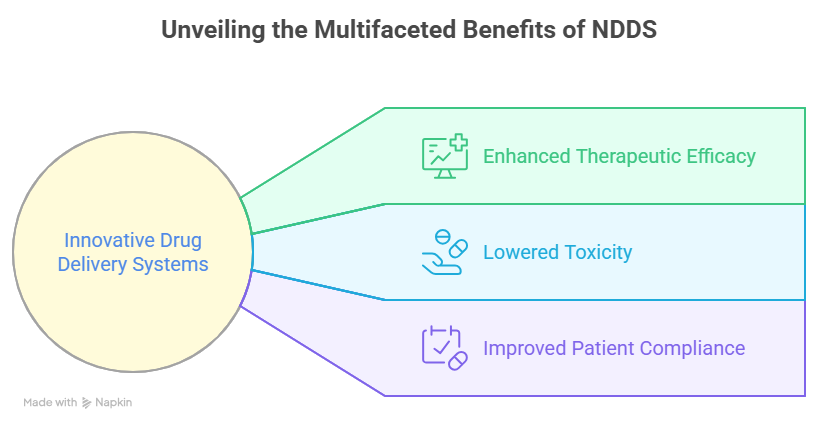
Enhancing therapeutic efficiency, lowering poisonousness, improving compliance of patients, and opening the door to whole novel medical therapies are all made possible by innovative drug delivery systems (Fig.1). Novel drug delivery systems (NDDS) offer a variety of carriers with advantages based on their kinds. The first pass effect, fluctuating plasma drug levels, high dosages and low availability, and rapid release of pharmaceuticals are all characteristics of conventional dosage forms. By-performance, safety, patient adherence, and product longevity, these issues will be mitigated by NDDS. Environmental functioning increased the man- created nanoparticles and growing awareness of their possible impacts on human well-being and environmental sustainability, nanoparticles are currently of interest. (Chaurasiya et al., 2024). Novel drug delivery systems have the following benefits: optimal dosage at the proper time and place; efficient use of costly medications and excipients; decreased production costs; and improved therapy, patient comfort, and quality of life. Targeted and controlled drug distribution systems, among others, are the fundamental forms of innovative drug delivery systems. New methods utilized in pharmaceutical science include innovative drug delivery along with drug targeting. such as the commercial development of new carriers (liposomes), gene therapy, vaccine delivery, and therapeutic molecule targeting. Pharmaceutical advancements such as Innovative Drug Delivery Systems give medical practitioners a wide range of tools at their disposal to treat illnesses with previously unheard-of precision, safety, and efficacy. Clinically, the NDDS decreases dose-related side effects by smoothing the sawtooth pattern of blood drug levels and enabling the medications to be targeted to their site of action. The illness could be more successfully treated with a smaller medicine quantity and fewer dosages (Kumar et al., 2021).
CLINICAL APPLICATIONS AND CASE STUDIES
Recently, scientists of Sloan Kettering Cancer Center revealed a novel fucoidan-based nanocarrier that penetrates the blood–brain barrier by targeting endothelial P-selectin. Via P-selectin-mediated transport, nanoparticles containing the relatively minor molecule of anti-tumor drug vismodegib were successfully transported to tissues of brain tumors, greatly increasing the medication's therapeutic efficacy (Tylawsky et al., 2023). Nanoparticles have shown promise in improving tissue targeting, prolonging the half-life of the circulatory system, and altering the distribution of minor molecules of drugs in the body. Tumor-targeted release is a primary priority for nanoparticles; the accepted medications Abraxane® and Doxil® were more concerned with prolonging circulation time and minimizing side effects than with the treatment’s better performance (Gao et al., 2023). When mice with heart failure were given mRNAs encapsulated in LNPs in 2022, researchers from the University of Pennsylvania were able to alter T cells and restore cardiac function. Building on this achievement, scientists created and manufactured ionizable Lipid nanoparticles (LNPs) in 2023 that could transfer mRNA into the placenta without entering in area of fetal area, possibly opening up a novel therapeutic option for pregnancy-related issues like preeclampsia (Swingle et al., 2023).
At the Fred Hutchinson Cancer Research Center in Seattle, researchers have using gene editing to create chimeric antigen receptor (CAR) T cells from patient-derived T cells. With the help of the LNP system of delivery, this state-of-the-art technology guarantees the encapsulated CAR gene may reach the nucleus through nuclear location, establishing novel potential for cancer treatment. In addition to producing temporary but potent CAR T cells in vivo, the improved mRNA-targeted LNPs shown great promise in lowering fibrosis and regaining heart function after damage. As a versatile therapeutic system for the management of numerous illnesses, such as CAR T cells have enormous potential (Rurik et al., 2022). Lipid nanoparticles (LNPs) are the delivery vectors used by all COVID-19 mRNA vaccines to overcome the difficulty of exogenous mRNA entering the cytoplasm without being broken down by nucleases. This development has greatly improved the safety, stability, and efficacy profiles of the vaccinations (Sixi et al., 2022).A wireless electronic patch loaded with doxorubicin was tested on naked mice using a human xenograft glioblastoma model. The findings indicated a higher survival rate and a decrease in tumor recurrence (Xu et al., 2017).
CHALLENGES AND LIMITATIONS
Among the numerous challenges facing the advancement of drug delivery systems within medicine are the paucity of existing literature and the heterogeneity of published research. Nanoparticles can be beneficial or detrimental, but little is known about their safety, how they interact with other proteins, or how they travel and interact with other organs. Problems include inadequate absorption, poor solubility, in vivo instability, lower bioavailability, target-specific delivery problems, and unfavorable adverse effects during administration, which might arise when large particles are used as carriers. Another difficulty with target-specific delivery is that effectiveness cannot be guaranteed until the intended place is sufficiently reached (Sharma et al., 2021). Targeted medication delivery is being investigated using liposomes and micelles; their effectiveness may be reduced because of how they interact with the body. Another major issue is the toxicity of the particles employed in delivery; certain nanomaterials are bad for the environment and human health. Although carbon nanotubes are frequently employed in medication delivery, gene therapy, and bioimaging, researchers are concerned about their characteristics (Hafeez et al., 2021).
Acceptability and biocompatibility are two more significant issues with medication delivery methods. Natural obstacles to the actions of various delivery systems, which include the kidney and liver, monoclonal antibodies and the blood-brain barrier (BBB), can be produced by the complex framework of the human body (Zare et al., 2021). With limitations specific to some classes, developing APIs for the Drug Delivery System (DDS) is not a process that can be generalized. For example, frequent monitoring and invasive procedures are necessary for surgical implanting. Certain DDS may be less accessible due to inadequate demand, financial backing, infrastructure, awareness, and expensive premiums. In short, even though medication delivery methods are improving, there are still a lot of issues and restrictions that need to be resolved (Weber et al., 2024).
New medication delivery system clearance procedures include formal frameworks and legal specifications. In the US, the FDA is crucial to the approval of pharmaceutical products and medication delivery methods. To guarantee the product's safety, effectiveness, and quality, the approval procedure is conducted within a systematic framework that incorporates stringent scientific and technological assessments. Because of their special characteristics, innovative drug delivery systems, like those based on nanotechnology, may require additional regulatory requirements throughout the licensing process (Thind and Kowey, 2020).
FUTURE DIRECTIONS AND EMERGING TRENDS
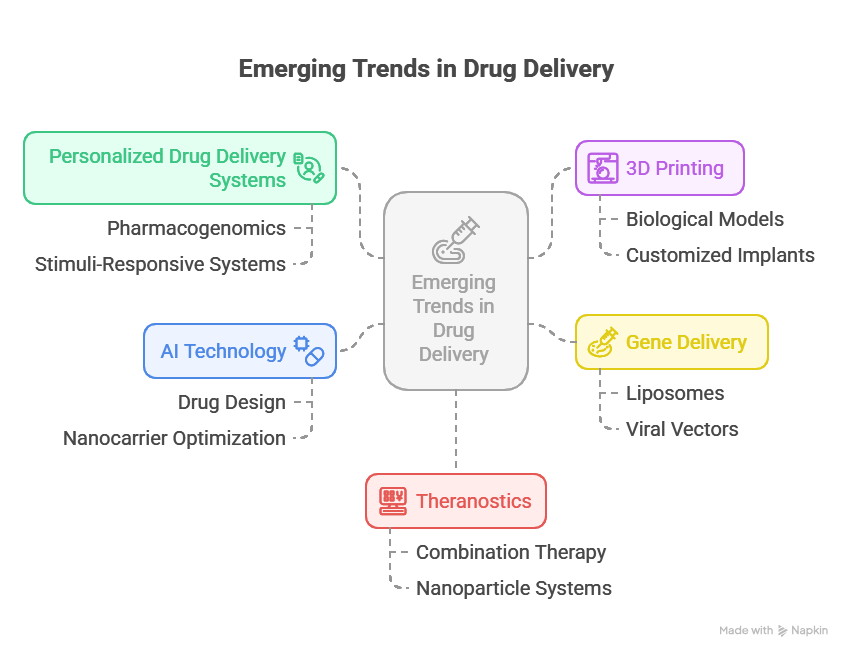
In recent years, drug delivery as well as nanomedicine have received a lot of consideration due to their promise for increased bioacceptability and efficiency. To create these systems, cooperation between academic theory, laboratory research, medical expertise, and pharmaceuticals is required. It is hoped that as more and more research efforts are directed in this area, these NDDS will soon replace a significant number of conventional dosage forms, leading to an overall improvement in the delivery of healthcare. To gain an advantage over the larger pharmaceutical companies and gain access to the regulated sector through ANDA, pharmaceutical companies are eager to investigate NDDS. Furthermore, the creation and application of new divisions such as Pharmacovigilance will guarantee that our citizens have access to safer medications (Fig. 2). Pharmacoeconomics will offer affordable healthcare, which could contribute to expanding access to the poor (Alshawwa et al., 2022).
Personalized Drug Delivery Systems
According to a patient's genomic profile, personalized medicine aims to anticipate the clinical response to medications and offer tailored treatment. Pharmacogenomics can be used to optimize medication therapy to increase efficacy and decrease toxicity, as well as to recognize patients who are susceptible to adverse drug reactions. Although there is currently little application of pharmacogenomics in clinical practice, pharmacogenetic guidelines have been issued by a number of worldwide research collaborations. The creation of stimuli-responsive drug delivery systems, which react to particular stimuli, as well as other tailored drug delivery systems. By customizing medication therapy based on each patient's unique genotype, personalized medicine holds the potential to transform drug therapy and result in better treatment outcomes and fewer side effects (Najjari et al., 2023).
Printing
Using digital models, 3D printing, commonly referred to as additive manufacturing, builds three-dimensional items layer by layer (Jandyal et al., 2022). Applications of 3D printing in medicine include the creation of biological models during surgical planning, drug delivery systems, and implants tailored to individual patients. 3D printing makes it possible to precisely design and fabricate medication delivery devices with individualized sizes, shapes, and release profiles. Complex assemblies can improve medication permanency, solubility, and bioavailability, and can be produced thanks to this technology (Mohapatra et al., 2022).
Gene Delivery
Gene delivery is the process of introducing genetic material into cells to replace or repair damaged genes in order to cure or avert diseases. Liposomes, nanoparticles, and viral as well as non-viral vectors are frequently used gene delivery vehicles. By modifying gene expression, this strategy has great promise for molecularly treating cancer, genetic abnormalities, and other illnesses (Pan et al., 2021). By introducing functioning genes made of DNA or RNA into specific tissues or cells in order to cause changes in gene expression, gene therapy has the potential to treat a wide range of inherited as well as acquired illnesses. Both viral and non-viral vectors are commonly used as gene vectors. Currently, viral vectors such as lentiviruses, adenoviruses, retroviruses, and adeno-associated viruses are used in over 70% of clinical gene therapy trials (Wang et al., 2023).
AI Technology
The logical design and optimization of medications and nanocarriers have been greatly aided by the recent development of AI technologies. Effective use of a variety of AI techniques has shortened development times, guaranteed product quality, and encouraged fruitful pharmaceutical research and development. More prospects for pharmaceutical research and development will arise in the future as the pharmaceutical sector and AI approaches become a more integrated field (Wang et al., 2021).
Theragnostic: Combining Therapy and Diagnostics
Although combination therapy gives greater target specificity and complementarity, it is being employed more and more in health care to overcome drug resistance. This method preserves effectiveness and lowers medication resistance while lowering therapeutic dosage and side effects (Wang and Huang, 2020). Chitosan nanoparticles (CSNPs) cross-linked by tripolyphosphate salts (TPP) demonstrated promising outcomes in magnetic hyperthermia therapy. The promise of combination therapy was demonstrated by the CSNPs' dose-dependent cytotoxicity and effective absorption in both cancerous and healthy cells. Studies demonstrated the application of a combined approach in therapeutic and pharmacological research that discovered, utilizing an affinity purification technique to remove endotoxins of protein nanocages and treating them with Triton X-144 produced encouraging chemotherapeutic outcomes (Silva et al., 2021). Additionally, the study discovered that nanoparticles loaded into cells outperformed nanoparticle systems, leading to enhanced therapeutic efficiency, extended half-lives, sustained release of drug, and reduced cytotoxicity and immunogenicity. The migratory and chemotaxis potential of exploit cells were unaffected by the combination of nanoparticles and cells (Choi et al., 2023).
CONCLUSION
In short, the progress of delivery systems for drugs shows a dynamic shift from traditional approaches to cutting-edge technologies, signifying a major advancement in the arena of health care. Innovative drug delivery methods have completely changed drug therapy by improving drug bioavailability, targeting accuracy, and patient adherence while lowering toxicity. Innovations like smart delivery systems, controlled-release platforms, and nanocarriers show great clinical promise in a variety of therapeutic domains. Emerging innovations, particularly within personalized medicine, AI-driven approach and theragnostics, hold promise for further revolutionizing patient care despite challenges in adaptability, regulation, and safety. It demands ongoing collaboration between professionals to reach their full therapeutic potential on a worldwide scale.
References
- Adepu S and S Ramakrishna, 2021. Controlled drug delivery systems: current status and future directions. Molecules 26:5905.
- Alqahtani MS, M Kazi, M Alsenaidy et al., 2021. Advances in oral drug delivery. Frontiers in Pharmacology 12:618411.
- Alshawwa SZ, AA Kassem, RM Farid et al., 2022. Nanocarrier drug delivery systems: characterization, limitations, future perspectives and implementation of artificial intelligence. Pharmaceutics 14:883.
- Aytar Çelik P, K Erdogan-Gover, D Barut et al., 2023. Bacterial membrane vesicles as smart drug delivery and carrier systems: a new nanosystems tool for current anticancer and antimicrobial therapy. Pharmaceutics 15:1052.
- Bajracharya R, JG Song, BR Patil et al., 2022. Functional ligands for improving anticancer drug therapy: current status and applications to drug delivery systems. Drug Delivery 29:1959-70.
- Bandyopadhyay A, T Das, S Nandy et al., 2023. Ligand-based active targeting strategies for cancer theranostics, Naunyn-Schmiedeberg's. Archives of Pharmacology 396:3417-41.
- Bok M, Z Zhao, S Jeon et al. 2020. Ultrasonically and iontophoretically enhanced drug-delivery system based on dissolving microneedle patches. Scientific Reports 10:2027.
- Chauhan A, L Fitzhenry and AP Serro, 2022. Recent advances in ophthalmic drug delivery. Pharmaceutics 14:2075.
- Chaurasiya S, V Rai and S Singh, 2024. A review of Novel drug delivery systems for oral insulin. IASR Journal of Medical and Pharmaceutical Science 4:229‐39.
- Chen Q, Z Yang, H Liu et al., 2024. Novel drug delivery systems: an important direction for drug innovation research and development. Pharmaceutics 16:674.
- Choi A, K Javius-Jones, S Hong et al., 2023. Cell-based drug delivery systems with innate homing capability as a novel nanocarrier platform. International Journal of Nanomedicine 31:509-25.
- Ezike TC, US Okpala, UL Onoja et al., 2023. Advances in drug delivery systems, challenges and future directions. Heliyon 9:17488.
- Ganesh AN, C Heusser, S Garad et al., 2021. Patient-centric design for peptide delivery: Trends in routes of administration and advancement in drug delivery technologies. Medicine in Drug Discovery 9:100079.
- Gao J, JM Karp, R Langer et al., 2023. The future of drug delivery. Chemistry of Materials 35:359-63.
- Hafeez MN, C Celia and V Petrikaite, 2021. Challenges towards targeted drug delivery in cancer nanomedicines. Processes 9:1527.
- Haripriyaa M and K Suthindhiran, 2023. Pharmacokinetics of nanoparticles: current knowledge, future directions and its implications in drug delivery. Future Journal of Pharmaceutical Sciences 9:113.
- Hoang Thi TT, EJA Suys, JS Lee et al., 2021. Lipid-Based Nanoparticles in the Clinic and Clinical Trials: From Cancer Nanomedicine to COVID-19 Vaccines. Vaccines 9:359.
- Jandyal A, I Chaturvedi, I Wazir et al., 2022. 3D printing–A review of processes, materials and applications in industry 4.0. Sustainable Operations and Computers 3:33-42.
- Jia Y, Y Jiang, Y He et al., 2023. Approved nanomedicine against diseases. Pharmaceutics. 15:774.
- Jin S, Y Sun, X Liang et al., 2022. Emerging new therapeutic antibody derivatives for cancer treatment. Signal Transduction and Targeted Therapy 7:39.
- Kumar R, P Saha, S Sarkar et al., 2021. A review on novel drug delivery system. IJRAR-International Journal of Research and Analytical Reviews (IJRAR) 8:183-99.
- Lou J, H Duan, Q Qin et al., 2023. Advances in oral drug delivery systems: challenges and opportunities. Pharmaceutics 15:484.
- Mahara G, C Tian, X Xu et al., 2023. Revolutionising health care: Exploring the latest advances in medical sciences. Journal of Global Health 13:03042.
- Malik S, S Subramanian, T Hussain et al., 2022. Electrosprayed nanoparticles as drug delivery systems for biomedical applications. Current Pharmaceutical Design 28:368-79.
- Mallakpour S, E Azadi and CM Hussain, 2021. The latest strategies in the fight against the COVID-19 pandemic: the role of metal and metal oxide nanoparticles. New Journal of Chemistry 45:6167-79.
- Mohapatra S, RK Kar, PK et al., 2022. Approaches of 3D printing in current drug delivery. Sensors International 3:100146.
- Murugan C, K Rayappan, R Thangam et al., 2016. Combinatorial nanocarrier based drug delivery approach for amalgamation of anti-tumor agents in breast cancer cells: An improved nanomedicine strategy. Scientific Reports 6:34053.
- Najjari Z, F Sadri and J Varshosaz, 2023). Smart stimuli-responsive drug delivery systems in spotlight of COVID-19. Asian Journal of Pharmaceutical Sciences 18:100873.
- Niza E, A Ocana, JA Castro-Osma et al., 2021. Polyester polymeric nanoparticles as platforms in the development of novel nanomedicines for cancer treatment. Cancers 13:3387.
- Pal P, S Sambhakar, V Dave et al., 2021. A review on emerging smart technological innovations in healthcare sector for increasing patient's medication adherence. Global Health Journal 5:183-89.
- Pan X, H Veroniaina, N Su et al., 2021. Applications and developments of gene therapy drug delivery systems for genetic diseases. Asian Journal of Pharmaceutical Sciences 16:687-703.
- Pawar V, P Maske, A Khan et al., 2023. Responsive nanostructure for targeted drug delivery. Journal of Nanotheranostics 4:55-85.
- Rurik JG, I Tombácz, A Yadegari et al., 2022. CAR T cells produced in vivo to treat cardiac injury. Science 375:91-96.
- Sharma S, R Parveen and BP Chatterji, 2021. Toxicology of nanoparticles in drug delivery. Current Pathobiology Reports 9:133-44.
- Silva F, L Sitia, R Allevi et al., 2021. Combined method to remove endotoxins from protein nanocages for drug delivery applications: the case of human ferritin. Pharmaceutics 13:229.
- Sixi X, X Fangjingwei and Z Yuntao, 2022. Research progress of mRNA vaccine delivery system. China Journal of New Drugs 31:2109-13.
- Smith BA and CR Bertozzi, 2021. The clinical impact of glycobiology: targeting selectins, Siglecs and mammalian glycans. Nature Reviews Drug Discovery 20:217-243.
- Su C, Y Liu, R Li et al., 2019. Absorption, distribution, metabolism and excretion of the biomaterials used in Nanocarrier drug delivery systems. Advanced Drug Delivery Reviews 143:97-114.
- Sultana A, M Zare, V Thomas et al., 2022. Nano-based drug delivery systems: Conventional drug delivery routes, recent developments and future prospects. Medicine in Drug Discovery 15:100134.
- Swingle KL, HC Safford, HC Geisler et al., 2023. Ionizable lipid nanoparticles for in vivo mRNA delivery to the placenta during pregnancy. Journal of the American Chemical Society 145:4691-4706.
- Thind M and PR Kowey, 2020. The role of the food and drug administration in drug development: On the subject of proarrhythmia risk. The Journal of Innovations in Cardiac Rhythm Management 11:3958.
- Tylawsky DE, H Kiguchi, J Vaynshteyn et al., 2023. P-selectin-targeted nanocarriers induce active crossing of the blood–brain barrier via caveolin-1-dependent transcytosis. Nature Materials 22:391-99.
- Valikhani D, JM Bolivar and JN Pelletier, 2021. An overview of cytochrome P450 immobilization strategies for drug metabolism studies, biosensing, and biocatalytic applications: challenges and opportunities. American Chemical Society Catalysis 11:9418-34.
- Vargason AM, AC Anselmo and S Mitragotri, 2021. The evolution of commercial drug delivery technologies. Nature Biomedical Engineering 5:951-67.
- Wang C, C Pan, H Yong et al., 2023. Emerging non-viral vectors for gene delivery. Journal of Nanobiotechnology 21:272.
- Wang H and Y Huang, 2020. Combination therapy based on nano codelivery for overcoming cancer drug resistance. Medicine in Drug Discovery 6:100024.
- Wang W, Z Ye, H Gao et al., 2021. Computational pharmaceutics-A new paradigm of drug delivery. Journal of Controlled Release 338:119-36.
- Weber C, P Quintin, F Holz et al., 2024. Ocular drug delivery systems: glaucoma patient perceptions from a German university hospital eye clinic. Graefe's Archive for Clinical and Experimental Ophthalmology 262:545-56.
- Xie S, W Sun, T Fu et al., 2023. Aptamer-based targeted delivery of functional nucleic acids. Journal of the American Chemical Society 145:7677-91.
- Xu J, M Tam, S Samaei, et al., 2017. Mucoadhesive chitosan hydrogels as rectal drug delivery vessels to treat ulcerative colitis. Acta Biomaterialia 48:247-57.
- Zare H, S Ahmadi, A Ghasemi et al., 2021. Carbon nanotubes: Smart drug/gene delivery carriers. International Journal of Nanomedicine 1:1681-1706.
- Zou H, P Banerjee, SSY Leung et al., 2020. Application of pharmacokinetic-pharmacodynamic modeling in drug delivery: development and challenges. Frontiers in Pharmacology 11:997.