

INTRODUCTION
INflammation,A basic biological reaction, shields the body from a variety of damaging stimuli, such as chemical irritants, physical trauma, metabolic stress, and microbial invasion. It initiates tissue repair, restores homeostasis, and stops the spread of infection, making it a crucial part of innate immunity. The persistence or dysregulation of inflammatory processes results in chronic inflammation, a pathological state now acknowledged as a major contributor to many non-communicable diseases, whereas acute inflammation is typically transient and advantageous. Rheumatoid arthritis, atherosclerosis, type 2 diabetes, obesity-related metabolic dysfunction, cancer, neurodegenerative disorders, and inflammatory bowel diseases have all been linked to sustained inflammatory signaling (Medzhitov, 2021; Furman et al., 2019). Immune cells, soluble mediators, and intracellular signaling networks all work together in the inflammatory cascade. Nuclear factor-κB (NF-κB), mitogen-activated protein kinases (MAPKs), Janus kinase/signal transducers and activators of transcription (JAK/STAT), and enzymatic pathways like cyclooxygenases (COX-1/2) and lipoxygenases (LOX) are important molecular regulators. Activation of these pathways leads to the production of pro-inflammatory cytokines (TNF-α, IL-1β, IL-6), chemokines, reactive oxygen species (ROS), and eicosanoids, which together orchestrate the classical features of inflammation (Nathan and Ding, 2010; Chen et al., 2018).
Conventional pharmacotherapy for inflammatory disorders, most notably non-steroidal anti-inflammatory drugs (NSAIDs), corticosteroids, and COX-2 inhibitors, remains widely used because of their rapid symptom control. However, their long-term administration is restricted due to adverse outcomes such as gastrointestinal ulceration, renal impairment, hepatotoxicity, metabolic disturbances, and increased cardiovascular risk (Vonkeman and van de Laar, 2010; Rabinovitch et al., 2021). The adverse effects of NSAIDs, especially on prolonged usage, have intensified global interest in identifying safer, multi-target anti-inflammatory agents from natural origins.
Strong regulatory effects on inflammatory signaling are found in natural products, including flavonoids, alkaloids, terpenoids, phenolic acids, coumarins, and saponins. Several studies show that these phytochemicals reduce oxidative stress through Nrf2 activation, inhibit NF-κB translocation, suppress MAPK phosphorylation, and downregulate pro-inflammatory mediators such as TNF-α, IL-6, COX-2, and inducible nitric oxide synthase (iNOS) (Cruz et al., 2023; Tungmunnithum et al., 2018). These compounds are promising scaffolds for next-generation therapeutic development, as advances in molecular docking, network pharmacology, and SAR analyses have further elucidated how specific structural motifs contribute to their anti-inflammatory actions (Pan et al., 2020; Liu et al., 2022).
Natural anti-inflammatory medications have become useful substitutes or supplements to pharmaceuticals due to the increasing amount of scientific and clinical data, providing greater biological action with comparatively fewer side effects. This chapter integrates traditional medical knowledge with modern mechanistic insights to present a thorough overview of the main types of natural substances with anti-inflammatory potential. The debate highlights the importance of natural chemicals in developing safer and more effective anti-inflammatory therapies by emphasizing molecular pathways, therapeutic relevance, experimental findings, and translational possibilities.
TYPES AND SOURCES
Natural anti-inflammatory compounds come from a variety of biological sources, including fungi, plants, marine organisms, and animal products. The most extensively studied of these are secondary metabolites originating from plants, primarily because of their pharmacological effectiveness and structural diversity. Flavonoids, alkaloids, terpenoids, phenolic acids, and saponins are among the main classes of phytochemicals that comprise these bioactive natural compounds. Each of these classes has a distinct mechanism of anti-inflammatory action Sridharan et al., 2022).
Plant-Derived Anti-Inflammatory Agents
The main sources of therapeutic compounds have been medicinal plants used in traditional systems such as Ayurveda, Traditional Chinese Medicine, and Unani pharmacology. Phytochemicals have anti-inflammatory activity by modulating signaling pathways, scavenging free radicals, suppressing pro-inflammatory mediators, and enhancing endogenous antioxidant defenses (Salehi et al., 2021). About 50 medicinal plants have been documented to include phytochemicals from the class of flavonoids, terpenoids, polyphenols, saponins, tannins, alkaloids, anthraquinones, chemical components of essential oils, and some of their M/MONPs for the treatment of inflammatory illnesses. These plants' natural compounds showed encouraging anti-inflammatory properties to treat inflammatory conditions of the skin, liver, heart, joints, gastrointestinal tract, nervous system, and lungs. Numerous investigations into phytochemistry, M/MONPs, and the anti-inflammatory properties of phytochemicals from medicinal plants have produced new, safe, and less harmful substances. Phytochemicals, which are mainly responsible for the anti-inflammatory activities, were reported from the family of polyphenols, terpenoids, flavonoids, saponins, and tannins.
| Plant Name | Active Principle | Primary Mechanism | Traditional Use | References |
|---|---|---|---|---|
| Curcuma longa (Turmeric) | Curcumin | Inhibits NF-κB, COX-2, TNF-α | Arthritis, metabolic inflammation | Aggarwal and Harikumar, 2009; Hewlings and Kalman, 2017 |
| Boswellia serrata | Boswellic acids | 5-LOX inhibition | Chronic joint inflammation | Siddiqui, 2011; Kimmatkar et al., 2003 |
| Zingiber officinale (Ginger) | Gingerols, shogaols | Inhibits prostaglandins and leukotrienes | Pain, swelling, digestive inflammation | Grzanna et al., 2005; Mashhadi et al., 2013 |
| Camellia sinensis (Green tea) | EGCG | Antioxidant, inhibits MAPKs | Metabolic and vascular inflammation | Yang et al., 2016; Khan and Mukhtar, 2018 |
Polyphenols obtained from various plants in pure form, such as from Curcuma pseudomontana, or in the form of polyphenolic proteins, like from Indigofera hirsute (leaf), or sometimes as polyphenolic terpenoids as in the case of Otostegia persica (leaf) in the form of, and from Trianthema portulacastrum (leaves) in the form of polyphenolic flavonoids play their role as anti-inflammatory agents by helping the processs of nano formulation stabilization or they are reported for the inhibition of IL-8 production, which are inflammatory mediators (Gonfa et al., 2023). Flavonoids like quercetin, kaempferol, and luteolin inhibit the activation of NF-κB and suppress the expression of COX-2 and iNOS. Essential oils may also serve their role as anti-inflammatory phytochemicals because they complex mixture of various chemicals such as terpene fatty acid derivatives, benzene derivatives, amines, and phenylpropanoid constituents. And all these substances have a significant ability to produce an anti-inflammatory role. Terpenoids, including boswellic acids and curcuminoids, inhibit 5-LOX and MAPK pathways. Alkaloids such as berberine activate AMPK and decrease pro-inflammatory cytokine release. Antioxidant and immunomodulatory effects are exerted by the phenolic acids caffeic and ferulic acid. Several widely studied medicinal plants are given in Table 1.
Marine-Derived Anti-Inflammatory Agents
Marine organisms, including algae, corals, sponges, mollusks, cyanobacteria, and marine fungi, produce structurally unique bioactive compounds due to high ecological competition and extreme environmental conditions. These compounds often exhibit potent anti-inflammatory activity by modulating cytokine release, oxidative stress responses, and immune cell signaling pathways. Brown seaweeds such as Fucus vesiculosus and Undaria pinnatifida contain fucoidan, a sulfated polysaccharide known to downregulate TNF-α, IL-1β, and IL-6 production by inhibiting NF-κB and MAPK activation (Fitton et al., 2019; Park et al., 2020). Phlorotannins, another class of polyphenols from brown algae, reduce COX-2 and iNOS expression and exhibit strong antioxidant activity by enhancing Nrf2/HO-1 signaling (Li et al., 2021). These marine polyphenols also mitigate metabolic inflammation, including obesity-induced insulin resistance.
Attention has been given to marine peptides from fish skin, mollusks, and marine microbes. For instance, peptides purified from anchovy, sardine, and oyster hydrolysates inhibit LPS-mediated macrophage activation through suppression of NO production and interruption of the JNK/p38 MAPK pathways. Conotoxins, from cone snails, have analgesic and anti-inflammatory action through modulation of voltage-gated calcium channels.
According to Jung et al. (2020), marine sterols like fucosterol (found in brown algae) have multi-target anti-inflammatory actions that include modulating PPAR-γ activity, reducing ROS, and suppressing pro-inflammatory cytokines. Many of the chemicals found in marine sponges, including manoalide, avarol, xestoquinone, and scalarane sesterterpenoids, are powerful inhibitors of the PLA2, NF-κB, and LOX pathways (Mayer et al., 2020). These substances show great promise for being developed into innovative anti-inflammatory medications. Phycocyanin, a biliprotein with proven anti-inflammatory and antioxidant qualities, is produced by marine cyanobacteria. It strengthens cellular defense mechanisms while suppressing COX-2, iNOS, and oxidative stress indicators. When taken as a whole, marine-derived chemicals constitute an important yet underutilized source of anti-inflammatory medicines with unique structures and processes, offering prospects for novel therapeutic advancements.
Fungal and Microbial Sources
Edible and medicinal mushrooms such as Ganoderma lucidum (Reishi) and Lentinula edodes (Shiitake) contain high concentrations of β-glucans, terpenoids, polysaccharides, and lectins that exert potent immunomodulatory and anti-inflammatory effects. By binding to dectin-1 and TLR-2/6 receptors, β-glucans control both innate and adaptive immune responses. This leads to the suppression of NF-κB, decreased secretion of TNF-α, IL-1β, and IL-6, and increased production of anti-inflammatory cytokines like IL-10 (Meng et al., 2021; Vetvicka and Vetvickova, 2019). Ganoderic acids, which are triterpenoids extracted from Ganoderma lucidum, lower oxidative stress and suppress the expression of COX-2 and iNOS, which helps to lessen chronic inflammatory diseases (Jong et al., 2020). Similarly, in autoimmune and metabolic illnesses, lentinan, a β-glucan derived from Lentinula edodes, improves immunological balance mediated by macrophages and reduces inflammatory mediators (Zhang et al., 2021).
A major source of anti-inflammatory secondary metabolites is soil microbes, which continue to be central to natural product-based drug discovery. Actinomycetes, particularly Streptomyces species, produce structurally diverse anti-inflammatory compounds such as rapamycin, tacrolimus (FK506), anisomycin, and resveratrol-like polyketides, many of which suppress mTOR, MAPK, or cytokine signaling pathways (Berdy, 2019). Soil-derived fungi, including Aspergillus, Penicillium, and Trichoderma, generate metabolites such as gliotoxin, pestacin, ergosterol derivatives, and cyclodepsipeptides, known to inhibit NF-κB activation, block ROS production, and suppress IL-1β and TNF-α. Bacterial-derived lipoxazolidinones, macrolides, and lipopeptides have also demonstrated inhibition of pro-inflammatory responses in macrophages and epithelial cells, highlighting the continuing value of soil ecosystems in discovering new anti-inflammatory agents.
Animal-Derived Anti-Inflammatory Substances
Certain bioactive compounds derived from animals also demonstrate significant anti-inflammatory potential. By suppressing NF-κB activation, lowering COX-2 expression, and lowering the generation of inflammatory cytokines like TNF-α and IL-1β, chondroitin sulfate, which is derived from animal cartilage (bovine, porcine, or marine sources), demonstrates anti-inflammatory potential. Because of its chondroprotective properties and ability to halt cartilage breakdown, it is frequently utilized in clinical settings for osteoarthritis. In chronic inflammatory disorders, chondroitin further lowers oxidative damage, stiffness, and joint swelling when coupled with glucosamine (Roman-Blas and Jimenez, 2020).
Omega-3 polyunsaturated fatty acids (PUFAs), specifically EPA (eicosapentaenoic acid) and DHA (docosahexaenoic acid) generated from fish oils, are another important family of agents derived from animals. By displacing arachidonic acid in cell membranes, these PUFAs lessen inflammation by reducing the synthesis of pro-inflammatory eicosanoids such as PGE₂ and leukotrienes. Furthermore, EPA and DHA stimulate the production of specific pro-resolving mediators that actively reduce inflammation and promote tissue repair, including resolvins, protectins, and maresins (Calder, 2020; Serhan and Levy, 2018). Clinical advantages for rheumatoid arthritis, psoriasis, metabolic inflammation, cardiovascular disease, and inflammatory bowel disease have been demonstrated by omega-3 fatty acids. Hyaluronic acid (from rooster combs or microbial fermentation) is another notable animal-derived substance that improves cartilage lubrication and lowers joint inflammation by blocking the release of prostaglandin and bradykinin. By inhibiting IL-6, TNF-α, and LPS-induced oxidative stress, lactoferrin, a glycoprotein derived from bovine milk, exhibits dual antimicrobial and anti-inflammatory properties. It has emerging therapeutic applications in gut inflammation, arthritis, skin inflammation, and neuroinflammation. These naturally occurring substances from animals target several biochemical pathways to collectively help resolve the inflammation process, emphasizing their importance in evidence-based and integrative treatments of chronic inflammatory illnesses.
MOLECULAR MECHANISMS
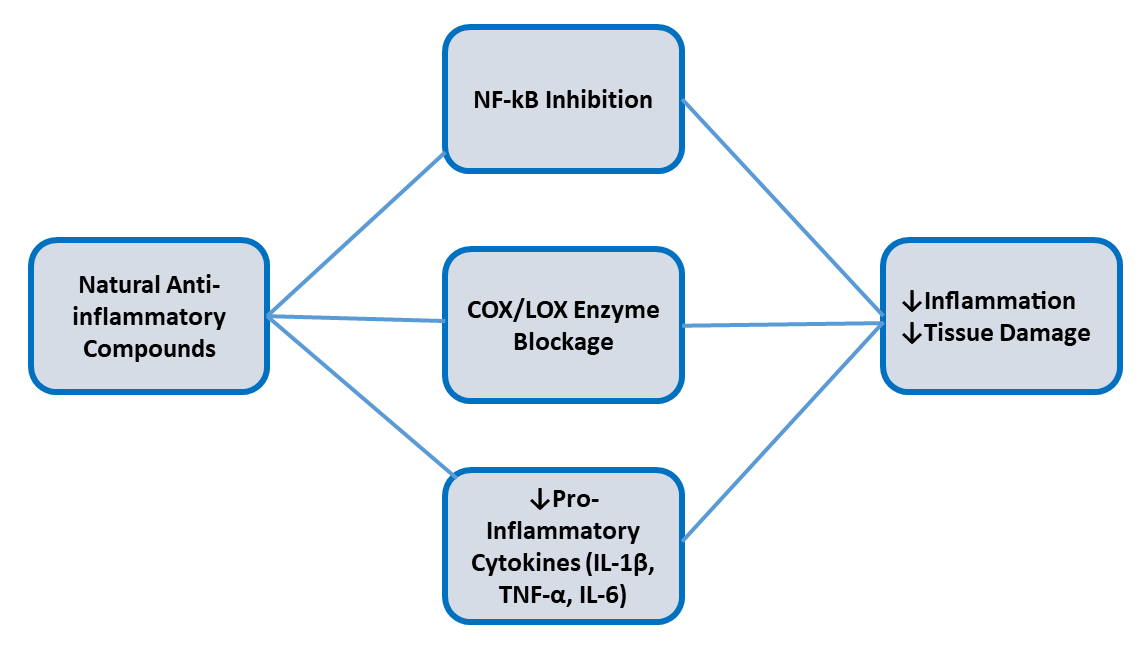
Pharmacological activities of natural anti-inflammatory drugs are various biochemical processes related to the control of oxidative stress, immune cell responses, and inflammatory signalling (Fig. 1). Phytochemicals frequently affect multiple inflammatory mediators at once, which contributes to their wider therapeutic benefits with fewer side effects, in contrast to traditional synthetic medicines that usually operate via a single enzyme or receptor target (Rathee et al., 2009).
Inhibition of Pro-Inflammatory Enzymes
Overexpression of COX-2 and 5-LOX plays a critical role in chronic inflammatory conditions such as arthritis and inflammatory bowel disease (Ricciotti and FitzGerald, 2011). Curcumin inhibits COX-2 gene expression by blocking NF-κB activation. Boswellic acids selectively inhibit the activity of 5-LOX, leading to a decrease in the synthesis of leukotrienes. Gingerols inhibit both the COX and LOX enzymes, contributing to dual anti-inflammatory action (Table 2)
Suppression of the NF-κb Signaling Pathway
NF-κB is a transcription factor regulating the expression of cytokines (TNF-α, IL-1β, IL-6), adhesion molecules, and inflammatory enzymes. Continuous activation of NF-κB results in chronic inflammation. Several natural compounds inhibit NF-κB activation by preventing degradation of its regulatory protein IκBα (Liu et al., 2017).
Modulation of MAPK and JAK/STAT Signaling
The mitogen-activated protein kinase (MAPK) and Janus kinase/signal transducer and activator of transcription (JAK/STAT) pathways are central regulators of inflammation, controlling cytokine release, cell proliferation, and immune activation. MAPKs, including ERK1/2, JNK, and p38 MAPK, are activated in response to stress signals, LPS, cytokines, and oxidative damage. Their activation triggers transcription factors such as AP-1 and NF-κB, leading to the expression of pro-inflammatory mediators (IL-1β, IL-6, TNF-α). Similarly, the JAK/STAT signaling cascade, particularly JAK1/STAT1/STAT3, mediates cytokine-driven inflammatory responses and drives chronic inflammation when overactivated.
| Compound | Primary Molecular Target(s) | Effect on Cytokines / Enzymes | Outcome on Inflammation | References |
|---|---|---|---|---|
| Curcumin | NF-κB, COX-2, LOX, Nrf2 | ↓ TNF-α, IL-1β, IL-6 | Reduces oxidative stress and inflammatory signaling | Gupta et al., 2013; Hewlings and Kalman, 2017 |
| Boswellic acids | 5-LOX enzyme inhibition | ↓ leukotriene synthesis | Suppresses chronic inflammatory responses | Ammon, 2016; Sengupta et al., 2011 |
| Resveratrol | SIRT1 activation, NF-κB inhibition | ↓ IL-6, CRP, IL-8 | Anti-proliferative and anti-inflammatory effects | Shakibaei et al., 2009; Poulsen et al., 2013 |
| Quercetin | MAPK and JAK/STAT modulation | ↓ IL-1β, IL-4, TNF-α | Stabilizes immune response and mast cell degranulation | Li et al., 2016; Mlcek et al., 2016 |
| Gingerols | COX-2 and NF-κB modulation | ↓ PGE2, IL-6 | Reduces pain and inflammatory swelling | Grzanna et al., 2005; Daily et al., 2015 |
| EGCG | Nrf2 activation, NF-κB downregulation | ↓ ROS, ↓ IL-8 | Antioxidant-mediated suppression of inflammation | Yang et al., 2016; Singh et al., 2011 |
| Omega-3 (EPA/DHA) | Specialized pro-resolving mediator pathway | Forms resolvins and protectins | Promotes resolution of inflammation | Calder, 2020; Serhan, 2014 |
By focusing on these signaling axes, several natural substances have anti-inflammatory properties. It has been demonstrated that berberine, an isoquinoline alkaloid from the Berberis species, inhibits the phosphorylation of p38 MAPK and JNK, which reduces the production of TNF-α, IL-1β, IL-8, and MCP-1 in activated macrophages. Berberine reduces downstream transcription of inflammatory genes and inhibits oxidative stress-mediated signaling by blocking MAPK activation (Jeong et al., 2009; Deng et al., 2020). Berberine also reduces inflammatory responses synergistically by interfering with the interaction between the MAPK and NF-κB pathways.
Strong regulation of cytokine-mediated signaling is also demonstrated by flavonoids such as luteolin, which is present in celery, parsley, and chamomile. By preventing JAK1 and STAT3 phosphorylation, luteolin prevents IL-6-driven STAT3 activation, which is frequently increased in autoimmune and chronic inflammatory diseases. In order to restore immunological balance and stop prolonged inflammatory signaling, this inhibition lowers downstream expression of IL-6, IL-10, and other STAT3-dependent genes (Yoo et al., 2014; Seelinger et al., 2008). Additionally, luteolin inhibits MAPK pathways, specifically ERK and p38, which limits macrophage activation and lowers the synthesis of prostaglandin and nitric oxide.
Together, these results demonstrate that natural substances reduce inflammation by directly controlling important intracellular signaling networks that control the expression of inflammatory genes as well as by blocking surface receptors or enzymes.
Antioxidant Activity and Reduction of Oxidative Stress
An important factor in the start and escalation of inflammation is oxidative stress, which is defined by an overabundance of reactive oxygen species (ROS) and reactive nitrogen species (RNS). ROS increase the production of pro-inflammatory cytokines (TNF-α, IL-1β, and IL-6), chemokines, and adhesion molecules by activating transcription factors like NF-κB and AP-1. This keeps the inflammatory response going. Furthermore, oxidative stress causes DNA damage, protein oxidation, and lipid peroxidation, all of which exacerbate tissue damage and persistent inflammation (Liguori et al., 2018).
As antioxidants, several natural substances reduce inflammation by either scavenging free radicals or strengthening the body's defenses. By donating hydrogen or electrons, phenolic acids, including ferulic acid, gallic acid, and caffeic acid, neutralize ROS and stop oxidative changes of proteins and lipids (Shahidi and Ambigaipalan, 2015). Quercetin, kaempferol, and luteolin are examples of flavonoids that chelate transition metals, block ROS-generating enzymes, and upregulate antioxidant enzymes to reduce inflammation caused by oxidative stress.
Silymarin, a polyphenolic flavonolignan from Silybum marianum (milk thistle), enhances hepatic antioxidant defense by increasing the activity of superoxide dismutase (SOD), catalase (CAT), and glutathione peroxidase (GPx), while reducing lipid peroxidation markers such as malondialdehyde (MDA) (Surai, 2015). Similarly, vitamin E (α-tocopherol) and carotenoids (β-carotene, lycopene, astaxanthin) prevent ROS-mediated signaling cascades, stabilize mitochondrial function, and shield cellular membranes from lipid peroxidation, all of which help to reduce inflammation in neurodegenerative, hepatic, and cardiovascular diseases (Traber and Atkinson, 2007; Rao and Rao, 2007). Additionally, a number of polyphenols and carotenoids stimulate the Nrf2/ARE (antioxidant response element) pathway, which increases cytoprotective proteins, phase II detoxifying enzymes, and endogenous antioxidant enzymes, strengthening cellular resistance to oxidative stress (Kobayashi and Yamamoto, 2005). The interaction of anti-inflammatory and antioxidant properties emphasizes the dual protective function of natural substances in regulating inflammatory reactions and oxidative tissue damage.
| Compound | Source | Key Mechanism | Clinical Use Evidence | Safety Profile | References |
|---|---|---|---|---|---|
| Curcumin | Curcuma longa | Inhibits NF-κB, COX-2, enhances Nrf2 | Arthritis, colitis | Generally safe; low absorption | Hewlings and Kalman, 2017; Gupta et al., 2013 |
| Boswellic acids | Boswellia serrata | Inhibits 5-LOX | Osteoarthritis, asthma | Well-tolerated | Ammon, 2016; Sengupta et al., 2010 |
| Gingerols | Zingiber officinale | Inhibits COX/LOX, TNF-α | Joint inflammation, dyspepsia | Safe at dietary doses | Daily et al., 2015; Grzanna et al., 2005 |
| Resveratrol | Grapes, berries | Activates SIRT1, inhibits NF-κB | Metabolic and neurological disorders | Mild GI discomfort in high doses | Poulsen et al., 2013; Shakibaei et al., 2009 |
| Quercetin | Fruits and vegetables | Blocks IKK, antioxidant | Allergy and inflammatory diseases | Safe up to 1 g/day | Li et al., 2016; Mlcek et al., 2016 |
| Omega-3 fatty acids | Fish oil | Reduces pro-inflammatory eicosanoids | Arthritis and cardiovascular inflammation | Safe; high doses may affect bleeding time | Calder, 2020; Serhan, 2014 |
Regulation of pro- and anti-inflammatory cytokines
One way that natural anti-inflammatory substances work is by adjusting the ratio of pro-inflammatory to anti-inflammatory cytokines. They inhibit the synthesis of important pro-inflammatory mediators that cause tissue damage, immunological overactivation, and chronic inflammation, such as TNF-α, IL-1β, and IL-6. Concurrently, these substances increase the production of anti-inflammatory cytokines, including TGF-β and IL-10, which support tissue repair, immunological homeostasis, and inflammation resolution (Gautam and Kaur, 2022; Liu et al., 2019). In autoimmune and chronic inflammatory conditions like metabolic syndrome, inflammatory bowel disease, and rheumatoid arthritis, where dysregulated cytokine networks prolong tissue damage, this dual immunomodulatory impact is especially beneficial. By restoring cytokine balance, phytochemicals and other natural agents reduce excessive immune activation while preserving host defense mechanisms.
CLINICALLY RELEVANT NATURAL ANTI-INFLAMMATORY AGENTS
Several natural compounds have progressed from traditional use to extensive experimental and clinical evaluation. Their significant pharmacological actions have been validated in a large number of inflammatory disorders, including arthritis, metabolic syndrome, neuroinflammation, and dermatological conditions. Below, key natural anti-inflammatory agents with proven pharmacological relevance are discussed in detail (Table 3).
Curcumin (Curcuma longa and Clematis viticella)
Curcumin, a polyphenolic compound derived from turmeric rhizome and also from aerial parts of Clematis viticella, exhibits broad anti-inflammatory effects. It inhibits NF-κB, COX-2, and the release of NOS, and downregulates pro-inflammatory cytokines (TNF-α, IL-1β, IL-6). Curcumin also enhances antioxidant responses through activation of Nrf2 signaling (Aggarwal et al., 2013). Clinical studies describe its effectiveness in rheumatoid arthritis, osteoarthritis, and ulcerative colitis. It usually gives relief of skin related inflammatory disorders (Gonfa et al., 2023).
Boswellic acids (Boswellia serrata)
Boswellic acids are pentacyclic triterpenes that selectively inhibit 5-lipoxygenase, inhibiting leukotriene production. Boswellia extract has been demonstrated to be effective in managing pain in osteoarthritis and inflammatory bowel conditions and possesses a better gastrointestinal safety profile compared to NSAIDs.
Ginger constituents (Zingiber officinale)
Ginger contains gingerols and shogaols, which inhibit COX and LOX pathways and suppress pro-inflammatory cytokine release (Mashhadi et al., 2013). Clinical trials favours ginger containing formulations for osteoarthritis pain reduction and improved joint mobility.
Resveratrol
Resveratrol is a stilbene with antioxidant and anti-inflammatory activity. It reduces the synthesis, activation and release of NF-κB, which actually controls transcription of cytokine functions and proinflammatory mediators. Resveratrol also stimulates SIRT1, which is a protein involved in cellular resistance to stress and longevity (Gambini et al., 2015). It shows therapeutic promise for metabolic inflammation and neurodegenerative diseases.
Quercetin
Quercetin is a flavonoid extract that exerts anti-inflammatory effects through the inhibition of IKK-dependent NF-κB signaling and its free radical-scavenging effects. It also exerts membrane-stabilizing effects, reducing mast cell-driven inflammatory responses. Clinical studies by Li et al. (2016) have indicated its usefulness in allergic and autoimmune-mediated inflammatory states.
Omega-3 fatty acids (Fish oil)
Omega-3 fatty acids, especially eicosapentaenoic acid (EPA) and docosahexaenoic acid (DHA), impede the formation of inflammatory eicosanoids from arachidonic acid and stimulate the synthesis of resolvins, compounds which actively resolve inflammation (Calder, 2020). The therapeutic uses of these essential fatty acids also include rheumatoid arthritis, atherosclerosis, and inflammatory bowel disease.
SAFETY, TOXICOLOGY AND LIMITATIONS
While generally considered to be safer than synthetic pharmaceuticals, there is certainly risk associated with the use of natural anti-inflammatory agents. Phytochemical safety is dependent on such variables as dose and duration of use, source purity, preparation method, and individual patient-specific variables including age, comorbidities, and drug interactions. Potential adverse effects, contraindications, and herb-drug interactions therefore warrant prudent consideration. In fact, many natural compounds exhibit therapeutic efficacy only within a certain dosage range. Higher concentrations of some phytochemicals exhibit cytotoxicity, hepatotoxicity, or nephrotoxicity (Nohynek et al., 2010). For example, excessive intake of curcumin hinders iron metabolism. High doses of quercetin administered in animal models have been associated with renal toxicity. Alkaloids, such as berberine, cause GI disturbances and hypotension if overdosed.
The mechanism of interaction between natural agents and medication includes the induction or inhibition of CYP450 enzymes, which eventually affects the metabolic pathway of a particular medication. Important interactions include such as; curcumin and Resveratrol may increase anticoagulant effects of warfarin. Ginger can increase bleeding risk when combined with antiplatelet drugs. St. John's Wort induces CYP3A4, thereby reducing the efficacy of many drugs. Therefore, co-administration should be monitored in clinical practice. The concentration of phytochemicals can differ from each other depending upon various reasons such as genetic variations, plant species, composition of the soil of different areas, environmental factors and harvesting and extraction methods. These deviations lead to varying therapeutic effects, making uniform extracts crucial for clinical use (Heinrich et al., 2021). For instance, compared to curcumin alone, 95% of curcuminoids have improved clinical result repeatability.
Commercial herbal products may contain a variety of contaminants that are harmful to human health, including as pesticide residue, synthetic drug contaminants, and heavy metals like lead and cadmium. Strict quality control and regulatory inspection are necessary since these pollutants might cause dangerous health issues. Despite their significant therapeutic potential, natural anti-inflammatory mediators have many drawbacks, including low absorption (curcumin, resveratrol, etc.), lack of extensive clinical trials data, and variations in formulations and dosage schedules. However, these restrictions can be overcome by employing phospholipid complexes, nanoformulations (liposomes, nanoparticles), and synergistic combination treatments.
CONCLUSION
Natural anti-inflammatory drugs continue to hold great therapeutic potential due to their diversified pharmacological actions and generally good safety profiles. Immune response controlled by cytokines can be modulated by these substances, and they may affect a number of key inflammatory pathways, including NF-κB, MAPKs, and COX/LOX enzymes. Due to the possibility of their multivalent action, they have a particular value for chronic inflammatory disorders during long-term treatment. Experimental and clinical data support the anti-inflammatory action of substances such as curcumin, boswellic acids, resveratrol, quercetin, components isolated from ginger, and omega-3 fatty acids. Application of its methods further rationalizes the scientific basis of many conventional medical approaches. There are many challenges that have to be overcome, such as the interaction of drugs with herbs and natural compounds, poor bioavailability, and variability in product quality. Future advances in formulation technologies, systematic clinical investigation, and improved regulatory guidelines will ensure enhanced therapeutic reliability. Innovations such as rational combination strategies and nanoparticle-based delivery hold promise for improved efficacy. In conclusion, natural anti-inflammatory drugs represent an important link between traditional medicine and modern pharmacology. Ongoing studies will contribute to the design of safer multi-target-oriented anti-inflammatory therapies prepared from natural products and will help to elucidate their clinical applications and enhance their mechanisms.
References
- Aggarwal BB and KB Harikumar, 2009. Potential therapeutic effects of curcumin. International Journal of Biochemistry and Cell Biology 41:40-59.
- Ammon HPT, 2016. Boswellic acids and their role in chronic inflammatory diseases. Journal of Ethnopharmacology 194:3-12.
- Berdy J, 2019. Bioactive microbial metabolites: The cornerstone of drug discovery. Journal of Antibiotics 72:233-59.
- Calder PC, 2020. Omega-3 fatty acids and inflammatory processes. Nutrients 12:2532.
- Chen L, H Deng, H Cui et al., 2018. Inflammatory responses and inflammation-associated diseases in organs. Oncotarget 9:7204-18.
- Cruz LS, MT Carvalho, MS Branquinho et al., 2023. Natural products as anti-inflammatory agents: mechanisms and applications. Biomedicine and Pharmacotherapy 157:114095.
- Daily JW, M Yang and S Park, 2015. Anti-inflammatory effects of ginger and its constituents. Journal of Ethnopharmacology 187:281-94.
- Deng Y, F Xu, Y Li et al., 2020. Berberine attenuates inflammatory responses through the MAPK and NF-κB pathways in macrophages. International Immunopharmacology 86:106733.
- Fitton JH, DN Stringer and AY Park, 2019. Therapeutic potential of fucoidan from marine brown algae. Marine Drugs 17:571.
- Furman D, J Campisi, E Verdin et al., 2019. Chronic inflammation in the etiology of disease across the life span. Nature Medicine 25:1822-32.
- Gautam R and S Kaur, 2022. Immunomodulatory effects of plant-derived compounds on inflammatory cytokines. Frontiers in Pharmacology 13:850562.
- Gonfa YH, FB Tessema, A Bachheti et al., 2023. Anti-inflammatory activity of phytochemicals from medicinal plants and their nanoparticles: A review. Current Research in Biotechnology 6:100152.
- Grzanna R, L Lindmark and CG Frondoza, 2005. Ginger—An herbal medicinal product with broad anti-inflammatory actions. Journal of Medicinal Food 8:125-32.
- Hewlings SJ and DS Kalman, 2017. Curcumin: A review of its effects on human health. Foods 6:92.
- Jeong HW, J Lee and Y Kim, 2009. Berberine suppresses proinflammatory responses via down-regulation of p38 MAPK and JNK in macrophages. Biochemical Pharmacology 77:1206-12.
- Jong SC, CH Wu and YL Lin, 2020. Ganoderic acids from Ganoderma lucidum with anti-inflammatory effects. Phytochemistry Reviews 19:809-22.
- Khan N and H Mukhtar, 2018. Tea polyphenols in the promotion of human health. Nutrients 10:1936.
- Kobayashi M and M Yamamoto, 2005. Molecular mechanisms activating the Nrf2-Keap1 pathway of antioxidant gene regulation. Antioxidants and Redox Signaling 7:385-94.
- Li Y, J Yao, C Han et al., 2016. Quercetin attenuates inflammation via MAPK and JAK/STAT pathways. International Immunopharmacology 38:439-46.
- Liguori I, G Russo, F Curcio et al., 2018. Oxidative stress, aging, and diseases. Clinical Interventions in Aging 13:757-72.
- Liu T, L Zhang, D Joo et al., 2019. NF-κB signaling in inflammation. Signal Transduction and Targeted Therapy 4:1-9.
- Mashhadi NS, R Ghiasvand, G Askari et al., 2013. Anti-inflammatory effects of ginger. International Journal of Preventive Medicine 4:36-42.
- Medzhitov R, 2021. The spectrum of inflammatory responses. Science 374:1070-75.
- Meng Q, Y Sun, Y Wu et al., 2021. Immunomodulatory and anti-inflammatory activities of β-glucans from medicinal mushrooms. International Journal of Biological Macromolecules 181:712-24.
- Nathan C and A Ding, 2010. Nonresolving inflammation. Cell 140:871-82.
- Pan MH, CS Lai and CT Ho, 2020. Anti-inflammatory activity of natural dietary flavonoids. Food and Function 11:1-13.
- Poulsen MM, PF Vestergaard, BF Clasen et al., 2013. Resveratrol and inflammation biomarkers. PLoS ONE 8:66387.
- Roman-Blas JA and SA Jimenez, 2020. Chondroprotective effects of glucosamine and chondroitin sulfate. Seminars in Arthritis and Rheumatism 50:629-36.
- Seelinger G, I Merfort and CM Schempp, 2008. Anti-inflammatory mechanisms of luteolin: Inhibition of NF-κB and JAK/STAT signaling. Molecular Nutrition and Food Research 52:134-44.
- Serhan CN, 2014. Pro-resolving lipid mediators in inflammation resolution. Nature Reviews Immunology 14:195-211.
- Shahidi F and P Ambigaipalan, 2015. Phenolics and polyphenolics in foods, beverages and spices: Antioxidant activity and health effects. Journal of Functional Foods 18:820-897.
- Shakibaei M, P Shayan, F Busch et al., 2009. Resveratrol suppresses NF-κB and activates SIRT1 in inflammation. Journal of Biological Chemistry 284:23605-612.
- Singh BN, S Shankar and RK Srivastava, 2011. Green tea polyphenols and anti-inflammatory mechanisms. Oxidative Medicine and Cellular Longevity 2011:1-8.
- Surai PF, 2015. Silymarin as a natural antioxidant: Mechanisms and clinical applications. Antioxidants 4:16-34.
- Traber MG and J Atkinson, 2007. Vitamin E, antioxidant and nothing more. Free Radical Biology and Medicine 43:4-15.
- Vetvicka V and J Vetvickova, 2019. β-Glucans as natural immunomodulators. Journal of Immunotoxicology 16:1-12.
- Yang CS, H Wang and ZP Sheridan, 2016. Studies on tea and health. Food and Function 7:466-81.
- Yoo JM, H Kang and S Jung, 2014. Luteolin inhibits IL-6-mediated JAK1/STAT3 pathway activation and suppresses inflammation. Journal of Functional Foods 7:503-512.
- Zhang Y, X Chen and J Li, 2021. Lentinan’s role in immune regulation and anti-inflammation. Carbohydrate Polymers 251:117022.
- Zimecki M and J Artym, 2021. Lactoferrin as a natural anti-inflammatory agent. International Journal of Molecular Sciences 22:10573.