

INTRODUCTION
Many life forms, from bacteria to humans, contain antimicrobial peptides (AMPs). They play a key role in the innate immune system. AMPs act as an early defense mechanism (Jenssen et al., 2006; Zhang et al., 2021). Their skill in targeting and destroying pathogens makes them great options for battling antimicrobial resistance (Boparai and Sharma, 2020). This chapter provides a complete overview of Amps. It covers their discovery and recent use in therapy. The focus is on the complex molecular mechanisms of their action. It also reviews existing clinical trials and FDA approvals from 2020 to 2025 (Mahlapuu et al., 2016).
The Global Challenge of Antimicrobial Resistance (AMR)
The World Health Organization has listed AMR as one of the top 10 global health threats. They estimate that by 2050, drug-resistant infections could cause 10 million deaths each year if not controlled. The worldwide burden of antimicrobial resistance keeps rising in all healthcare facilities. In the United States, over 2.8 million antibiotic-resistant infections occur each year. This results in over 35,000 deaths each year. In Europe, data shows around 33,000 deaths annually tied to antibiotic-resistant bacteria (Cassini et al., 2019).
STRUCTURAL CLASSIFICATION OF AMPS
Alpha-helical peptides are the most numerous and well-studied group. They can form helical shapes in membrane-like conditions (Oren and Shai 1998). Examples of α-helical AMPs are Melittin, Magainin-2, LL-37 and Cecropin A. Disulfide bridges typically hold beta-sheet peptides together. Particularly in harsh biological settings, they assume robust, inflexible forms (Ganz, 2003). Examples of β-sheet AMPs are Human β-defensin, Protegrin, Tachyplesin I, and Plectasin. Defined secondary structures are absent from extended peptides. Frequently, they contain odd amino acids or post-translational changes (Hancock and Chapple 1999). Examples of extended AMPs include Indolicidin, PR-39, Bactenecin, and Histatins. The class of looped peptides is diverse. Among them are cyclic peptides with different kinds of cyclization. These can be more intricate bicyclic shapes or simple head-to-tail links (Babii et al., 2018). Gramicidin S, Polymyxin B, Daptomycin and Colistin are examples of looped peptides.
What Makes AMPs Unique Therapeutics
Antibiotic resistance is a growing global problem. This highlights the need to explore new antimicrobial methods. Antimicrobial peptides (AMPs) are great options for this. They work well against many bacteria, even those that resist many drugs. AMPs have many benefits compared to other antibiotics. One main advantage is that antimicrobial peptides can make bacteria take more time to become resistant. They can also work in combination with other antibiotics to enhance therapeutic efficacy (Mwangi et al., 2019a). These peptides have the following characteristics as anti-microbial agents: Multiple sites of action, membrane-active mechanisms, fast killing rate, broad spectrum activity, reduced risk of resistance and immunomodulatory effects.
MECHANISMS OF ACTION OF AMPS
Membrane Disruption
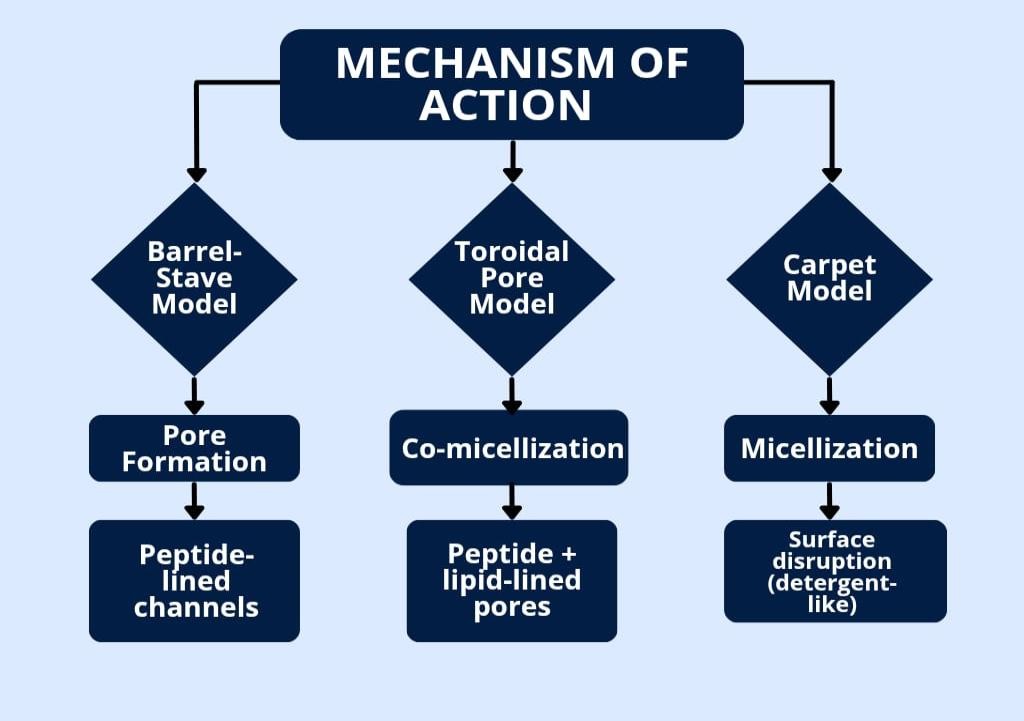
Antimicrobial peptides function primarily through the disruption of membranes. This is their most well-known action. Antimicrobial peptides typically target and degrade microbial cell membranes. (Melo et al., 2009). The first interaction occurs primarily through electrostatic attraction. Positive AMPs draw in the negative parts of microbial membranes (Matsuzaki et al., 1997). After the first electrostatic attraction, AMPs gather and stick to the membrane surface. They continue until they hit the critical concentrations that disrupt the membrane (Huang, 2000). Most AMPs change shape when they bind to membranes. This change helps them insert into the membrane and disrupt it (Wimley and White 1996). AMPs gather on membrane surfaces. This causes local changes in lipid structures. As a result, membranes thin, curve, and become unstable (Epand and Vogel 1999). Researchers can split it into different models based on how it affects the membrane. As illustrated in Fig. 1, the mechanism of action of AMPs can be explained through three models.
The barrel-stave model is one of the oldest ideas for how AMP disrupts membranes. It still helps explain how some amphipathic helical peptides work. Peptides insert straight into the membrane. They cluster together to form a pore. The peptides line this pore, much like the staves of a barrel. This creates transmembrane channels leading to leakage. Peptides using the barrel-stave mechanism usually need amphipathic helical structures. They also need certain length-to-width ratios. This helps with membrane spanning and pore stability (Bechinger, 1999). These pores typically range from 1 to 3 nanometers in diameter. They allow ions, small molecules, and even larger cellular parts to pass through (Christensen et al., 1988). The toroidal pore model shows a more dynamic mechanism. In this model, AMPs create pores that are lined with bent lipid headgroups and peptide molecules (Matsuzaki et al., 1997). The lipid monolayers curve smoothly through the pore, similar to a barrel stave. This means the pore is lined with both peptides and lipid head groups (Costa et al., 2011). The carpet model shows that AMPs don’t line up across membranes or form structured pores. Instead, they remain at the membrane-aqueous interface. Peptide deposition continues until it reaches a critical concentration. At this point, the membrane loses its integrity and breaks down rapidly (Table 1). It then dissolves in a detergent-like manner (Pouny et al., 1992).
Disruption of Cell Wall Synthesis
Most AMPs not only disrupt membranes but also affect bacterial cell wall synthesis (Table 2). This is especially true for Gram-positive bacteria.
Intracellular Targeting
Certain AMPs migrate across membranes without inflicting extensive damage and target intracellular components. Some AMPs can pass through the cytoplasmic membrane and attach to nucleic acids (Table 3). This disrupts DNA replication or RNA transcription (Park et al., 1998). Cationic peptides can bind to the major and minor grooves of DNA. This might cause structural distortions that block normal processing (Hsu et al., 2005). Some AMPs block RNA polymerase activity. This stops the transcription of important genes (Subbalakshmi and Sitaram 1998). Some AMPs can cause chromatin condensation in target cells. This blocks DNA accessibility for transcription and replication (Lawyer et al., 1996). AMPs can interfere with protein synthesis or enzymic activities, hindering cell division processes. AMPs can stop protein synthesis in various ways. They may attach to ribosomes, work with tRNA, or disrupt protein folding (Friedrich et al., 2001). This interference affects protein synthesis and enzyme activities, which can inhibit cell division. Some peptides stop translation elongation. They do this by binding to elongation factors or ribosomal subunits (Castle et al., 1999). Some AMPs can disrupt bacterial chaperone systems. This leads to protein misfolding and cellular stress (Otvos et al., 2000). Some AMPs can interfere with tRNA aminoacylation. This inhibits proper initiation of protein synthesis (Kragol et al., 2001).
The antimicrobial peptides can interact directly with the active or allosteric site of metabolic enzymes or change their shape (Hilpert et al., 2005). The examples of enzyme-inhibiting AMPs include histatins that inhibit the fungal respiration enzymes, lactoferrin that inhibits iron-dependent enzymatic activity, lysozyme that breaks peptidoglycan linkages in bacterial cell walls and secretory phospholipase A2 that inhibits membrane lipid metabolism. Enzymes with a positively charged active site that attracts cationic AMPs can interact with the active site of enzymes directly (Yeaman and Yount 2003). These peptides can change the enzyme shape by binding on allosteric site (Nicolas, 2009). They can also bind with metal ions or other cofactors, so enzyme function is disturbed in this way too (Weinberg, 2009).
How AMPs Affect the Body's Defenses
AMPs really know how to tweak the immune system (Table 4). This means they could be useful for more than just killing off bugs (Scott et al., 2002). Examples of immunomodulatory AMPs: LL-37 - augments immune cell recruitment and activation, Defensins control the generation of cytokines and T-cell activation, Lactoferrin - increases wound healing and macrophage activation, Thymosin β4 -increases immunological response and tissue healing.
Mechanism of action
Cytokine Regulation: AMPs can alter the production of cytokines by immune cells. Depending on the clinical necessity, they can increase or decrease inflammation (Yang et al., 2000). TNF-a and IL-1 bring on inflammation, but it is lessened by IL-10 and other mediators.
Luring Immune Cells: Similar to a beacon, some AMPs attract neutrophils, macrophages, and other immune cells to the site of an infection (Chertov et al., 1996).
| Drug and Model | Pharmacokinetics | Clinical Uses | Adverse Effects | References |
|---|---|---|---|---|
| Daptomycin (Barrel-Stave Model) | IV injection: Linear PK is ≤6 mg/kg. Half- life is 9 hours. Volume of distribution is about 0.1L/kg. Around 54% is eliminated from the body unchanged in urine after 24 hours. It has limited tissue distribution and high protein binding (around 92%) | Gram-positive pathogens include VRE and MRSA. Off-label uses: diabetic foot, osteomyelitis, prosthetic joint infection, and healthcare- associated meningitis FDA-approved for cSSSI; S. aureus bacteremia, including right- sided endocarditis Bloodstream infections can occur due to catheter use. | Rare diarrhoea linked to C. difficile; headache, sleeplessness, and gastrointestinal distress | Pan et al., 2009 |
| Melittin (Bee Venom Peptide) (Toroidal Pore Model) | Nanocarriers and microneedles boost bioavailability and keep levels steady. They enable rapid absorption, with plasma and brain peaks occurring in just hours. Plasma peaks at about 5 hours and then drops. | Conventional use: rheumatism, arthritis, and pain Investigative: antimicrobial (bacteria, fungi, viruses, and protozoa); RA (anti- inflammatory, immunomodulatory, and analgesic) Also studied for: wound healing, antiviral effects, and anticancer properties | Haemolysis (limiting dose) Risk of severe acute renal failure and rhabdomyolysis. Cytotoxicity to non-target cells and allergic reactions. | Sengupta et al., 2008 |
| Polymyxin B (Carpet Model) | Administered IV or topically; bound to proteins at a rate of 99% or less. Non-renal elimination is the main path, so renal dose change is usually not needed. Two compartment PK; t½ = 6–8 hours; condition- dependent variable clearance | MDR Gram-negative infections include A. baumannii, P. aeruginosa, and Enterobacteriaceae. Clinical: These can cause pneumonia, meningitis, bacteremia, and UTIs with susceptible strains. Topical: They may lead to skin infections, conjunctivitis, and otitis externa. | Nephrotoxicity (severe, common) Neurotoxicity: ataxia, vertigo, and paraesthesia Local and allergic responses; Gastrointestinal issues (diarrhoea, nausea) We tell close renal monitoring | Pouny et al., 1992 |
| Mechanism | Examples / Description | References |
|---|---|---|
| Peptidoglycan Synthesis Inhibition | AMPs prevent the production of bacterial cell walls. Nisin – binds to Lipid II. Vancomycin – targets D-Ala- D-Ala. Mersacidin – a lantibiotic that binds to Lipid II. Ramoplanin – a lipoglycopeptide. | Breukink and de Kruijff, 2006 |
| Lipid II Targeting | By sequestering Lipid II, a key precursor of peptidoglycan, AMPs attach to it. This stops normal cell wall production. | Ganchev et al., 2006 |
| Enzyme Inhibition | Some AMPs focus on transglycosylases and transpeptidases. These enzymes help form peptidoglycans. | Hsu et al., 2004 |
| Synergistic Effects | Inhibition of cell wall production intensifies membrane rupture. Weaker cell walls make people more vulnerable to osmotic stress. | Bierbaum and Sahl, 2009 |
Boosting Adaptive Immunity: Adaptive immunity can benefit from certain AMPs. As Bowdish and colleagues discovered in 2005, they can act as boosters or facilitate the body's display of antigens. presentation of antigen (Bowdish et al., 2005).
HOW AMPS ARE BEING USED NOW
From being merely a subject of laboratory research, antimicrobial peptides have advanced significantly. They are currently having a significant impact on healthcare. Because of their special qualities, they are especially well-suited for certain clinical situations where traditional antibiotics have drawbacks.
Wound Healing Applications
Wounds that don't heal and repeatedly become infected are a major cause of death and a significant financial burden on healthcare systems. Effective wound treatment methods are therefore crucial. AMPs, or antimicrobial peptides, are excellent at killing bacteria. They are gaining popularity as a novel approach to wound healing (Nasseri and Sharifi 2022). In essence, LL-37 aids in wound closure by promoting cell growth and motility. It may also be a safe method of introducing various medicines and microscopic particles into the body. Together, these systems maintain tissue stability and promote regeneration (Ramos et al., 2011). Among the delivery systems are: Systems Based on Hydrogels, Delivery via Nanoparticles, Nanofibers using Electrospinning, and Exosome-Based Transport
Diabetic Foot Ulcers: Patients with diabetes frequently develop lower limb sores. These wounds can be infected by a variety of bacteria that form biofilms. These wounds have healed quite well after the biofilm was removed. The human cathelicidin peptide LL-37 combats several infections, including Gram-positive and Gram-negative. It has demonstrated anti-biofilm and antibacterial properties. Additionally, it helps the host's wounds heal. Topical use of LL-37 may be used to treat polymicrobial infections in wounds. Its potential is increased by its wound-healing qualities and anti-biofilmimpact (Haisma et al., 2014; Steinstraesser et al., 2011).
| Drug | Pharmacokinetics | Therapeutic Applications | Adverse Effects | Reference |
|---|---|---|---|---|
| Daptomycin (Inhibition of DNA/RNA Synthesis) | Poor oral absorption; given IV; eliminated renally; half- life 8–9 h 4–6 mg/ kg IV once daily | Complicated skin and soft tissue infections, MRSA bacteremia, right-sided endocarditis | Myopathy, eosinophilic pneumonia, CPK elevation | Steenbergen et al., 2005 |
| Bacitracin (Inhibition of Protein Synthesis) | Poor oral absorption; used topically; minimal systemic distribution | Skin and eye infections due to Gram- positive bacteria | Nephrotoxicity if systemic, contact dermatitis | Stone et al., 1971 |
| Colistin (Polymyxin E) (Inhibition of Enzymes) | Administered IV/IM; converted from prodrug colistimethate sodium; renal elimination. 2.5–5 mg/kg/d ay | Severe Gram- negative infections (MDR Pseudomon as, Klebsiella, Acinetobacter) | Nephrotoxicity, neurotoxicity | Nation et al., 2016 |
| Drug | Pharmacokinetics (PK) | Pharmacodynamics (PD) | Therapeutic Uses | Adverse Drug Reactions | References |
|---|---|---|---|---|---|
| Interferon alfa- 2b (Cytokine) | Administration: SC/IM injection. Quick absorption. Half-life: 3 to 8 hours. Metabolised inside cells and eliminated by the kidneys. | MHC-I antigen presentation: Inhibits tumour growth and viral multiplication. Activates NK and T-cell cytotoxicity. | Erythema nodosum leprosum, multiple myeloma, and autoimmune disorders are being studied. | Common: Flu- like symptoms, like chills, fever, and tiredness. Haematologic: Thrombocytopenia and neutropenia. Neuropsychiatric: Mood swings and depression. Autoimmune conditions (like thyroid problems). Reactions at the injection site Infrequent: seizures and heart issues. | Huang et al., 2021; Ningrum et al., 2014 |
Burn Wounds: A nano-delivery device based on hydrogel was developed. It aids in skin healing and has antibacterial qualities. This technique uses photodynamic antimicrobial chemotherapy (PACT) to treat burn wounds. Additionally, it might be a biocompatible way to provide different medications and nanoparticles (Haidari et al., 2023).
Infected MRSA Wounds: The unique hydrogel, MNPs/CyRL-QN15/FeCMCS, demonstrated great efficacy in warding off germs and promoting the healing of infected wounds, suggesting that it could be a very beneficial choice for wound care. In a study with a wound infected by MRSA, a hydrogel was found to help heal long-term wounds. It was excellent for repairing and reshaping injured tissue because it reduced edema and accelerated the growth of new skin and collagen.
Cutting-Edge Wound Dressings: Defenses are now present in hydrogels and wound dressings. They promote a healthy environment for tissue regeneration and offer enduring antibacterial protection (Copling et al, 2023). These formulations are effective against bacteria that create biofilms, which are frequently present in chronic wounds. Pseudomonas aeruginosa and Staphylococcus aureus are examples of this. Long-lasting antibacterial coverage is provided by the sustained release mechanisms. We won't need to change dressings as frequently, which is fantastic (Brogden, 2005).
CATHETER COATING AND MEDICAL DEVICE APPLICATIONS
Healthcare-Associated Infection Prevention
A significant clinical concern is infections associated with healthcare, particularly those caused by indwelling medical equipment. They result in serious illness and expensive medical care. Every year, more than 250,000 people in the US suffer from catheter-related bloodstream infections (CRBSIs). The death rates, which range from 12% to 25%, are comparatively high. These infections cost over £2 billion annually. This demonstrates how urgently we need to develop fresh approaches to avoid these problems (Haque et al., 2018).
Catheter Coatings Using AMPs
AMPs are a great choice for covering medical devices, including breathing tubes and catheters. They're effective at preventing bacteria from growing and forming biofilms. Nisin, which is a type of lantibiotic AMP. They have added it to polyurethane catheter coatings. This shows lasting antimicrobial activity for up to 30 days and maintains biocompatibility. The coating remains stable during insertion and shows minimal degradation over the device's lifespan (Appendini and Hotchkiss 2002).
Colistin-Coated Medical Device
Colistin-coated catheters are very effective at preventing infections from multidrug-resistant Gram-negative bacteria. The mechanism kills planktonic bacteria that attempt to attach to the device surface. Then, it works by releasing compounds that prevent biofilm development. In fact, studies have shown that using catheters coated with colistin can reduce infections related to the devices by as much as 70% in patients who are at high risk. (Raad et al., 2007).
Anticancer Therapy
Mechanism and Selectivity: AMPs can find target and kill cancer cells without hearting healthy ones. Many insect AMPs can kill cancer cells. This includes breast cancer, lung cancer, melanoma, leukaemia, and lymphoma. Researchers refer to cationic low-molecular-weight AMPs that fight infections and cancer as anticancer peptides (Mwangi et al., 2019b).
Breast Cancer: The marine antimicrobial peptide TP4 is derived from Nile tilapia. It has antimicrobial, immune-modulatory, and wound-healing properties. TP4 has gained attention for its strong anticancer effects. It has shown promise in glioblastoma, triple-negative breast cancer, and non-small cell lung cancer cells (Hoskin and Ramamoorthy 2008).
Bacterial Keratitis and Conjunctivitis: Ocular infections, like bacterial keratitis and conjunctivitis, need quick and effective treatment. This helps prevent vision loss. Defensins and lactoferrin are types of AMPs found in tears. They help protect the eyes through natural means. The special antimicrobial traits of these peptides have led to new treatments that imitate and boost natural eye immunity (McDermott, 2013).
Traditional AMP-Based Ophthalmic Formulations
Researchers have developed therapeutic formulations of AMPs to treat antibiotic-resistant ocular infections. Gramicidin is usually combined with neomycin and polymyxin B. It has been an important part of eye antibiotic treatments for many years. It works well for bacterial conjunctivitis. Treating a range of common eye infections, this triple-antibiotic combination is kind to the eyes (Kowalski et al., 2001).
Novel Synthetic AMPs for Ocular Use
Synthetic AMPs for use in the eyes are presently undergoing clinical development. Rapid bacterial death, decreased ocular epithelial toxicity, and effectiveness against powerful strains like MRSA and multidrug-resistant Pseudomonas aeruginosa are some advantages. These novel formulations are being improved in terms of viscosity, pH, and osmolarity. As a result, they will be able to enter the cornea more successfully and stay there for a longer period of time (Huang et al., 2007).
Immunomodulatory Benefits in Ocular Therapy
Some AMPs aid in lowering inflammation brought on by serious infections. Visual recovery is accelerated as a result. In addition to eliminating infections, AMP treatment reduces inflammatory mediators. In patients with severe keratitis, this helps preserve clear vision and prevent scarring (McDermott, 2013).
Oral and Dental Applications
Because the mouth is home to a diverse variety of microorganisms, effective antimicrobial treatments are essential for maintaining dental health. Histatins are naturally occurring antimicrobial peptides found in human saliva. To fight Candida species, they employ strong antifungal properties. As a result, new treatments for oral candidiasis have been created, especially for people with weakened immune systems. These peptides still work in the mouth in spite of proteases and varying pH levels (Helmerhorst et al., 1997).
Periodontal disease management: Oral gels and mouthwashes containing AMP are being developed to treat periodontal disease, dental caries, and post-surgical infections. These formulations target two periodontal bacteria that cause tooth loss and progressive gum disease: Porphyromonas gingivalis and Aggregatibacter actinomycetemcomitans. Clinical investigations have shown that AMP-based treatments considerably reduce periodontal pocket depth and bleeding during probing (Ji et al., 2007).
Localized Delivery Advantages: While restricting systemic absorption, these formulations offer localized distribution. This lessens the possibility of detrimental systemic effects or disturbance of the gut microbiota. High local concentrations may arise from topical oral administrations. This maintains safety and guarantees potent antimicrobial activity. They can therefore be used for a long time in cases of chronic periodontal disease (Dale and Krisanaprakornkit 2001).
Skin and Soft Tissue Infections
Topical AMP preparations are used to treat simple infections of the skin and soft tissues. These include impetigo, folliculitis, and mild burns. These formulations rapidly eliminate microorganisms at the site of infection. They also avoid systemic exposure and its negative consequences (Giuliani et al., 2007).
Addressing Antibiotic Resistance in Dermatology
AMPs are especially important alternatives to mupirocin. The rise in mupirocin resistance in hospitals and communities is the cause of this. AMPs take a different approach. By circumventing existing resistance mechanisms, they successfully treat staphylococcal and streptococcal skin infections that are resistant to traditional therapy. (Pfalzgraff et al., 2018).
Cosmeceutical Applications
The cosmeceutical industry is investigating AMPs for skincare. Because of their antioxidant properties, they can stop aging. They also fight the germs that cause acne and other skin conditions (Zhang and Falla 2006).
Immunomodulatory Therapy
AMPs may help treat autoimmune illnesses due to their immunomodulatory qualities (Scott et al., 2002). Many ACPs support tissue repair and wound healing. They speed up tissue regeneration, lessen inflammation, and promote the formation of new blood vessels. Additionally, several ACPs have adjuvant properties that enhance the immune system's response to immunizations. The effectiveness of immunizations against cancer and infectious diseases can be increased (Bowdish et al., 2005).
References
- Appendini P and JH Hotchkiss, 2002. Review of antimicrobial food packaging. Innovative Food Science and Emerging 3:113-26.
- Babii O, S Afonin, AY Ischenko et al., 2018. Structure-activity relationships of photo switchable diarylethene-based β-hairpin peptides as membranolytic antimicrobial and anticancer agents. Journal of Medicinal Chemistry 61:10793-813.
- Bechinger B, 1999. The structure, dynamics and orientation of antimicrobial peptides in membranes by multidimensional solid-state NMR spectroscopy. Biochimica et Biophysica Acta 1462:157-83.
- Bierbaum G and HG Sahl, 2009. Lantibiotics: mode of action, biosynthesis and bioengineering. Current Pharmaceutical Biotechnology 10:2-18.
- Boparai JK and PK Sharma, 2020. Mini review on antimicrobial peptides, sources, mechanism and recent applications. Protein and Peptide Letters 27:4-16.
- Bowdish DME, DJ Davidson, MG Scott et al., 2005. Immunomodulatory activities of small host defense peptides. Antimicrobial Agents 49:1727-32.
- Breukink E and B de Kruijff, 2006. Lipid II as a target for antibiotics. Nature Reviews Drug Discovery 5:321-32.
- Brogden KA, 2005. Antimicrobial peptides: Pore formers or metabolic inhibitors in bacteria? Nature Reviews Microbiology 3:238-50.
- Cassini A, LD Högberg, D Plachouras et al., 2019. Attributable deaths and disability- adjusted life-years caused by infections with antibiotic-resistant bacteria in the EU and European Economic Area in 2015. The Lancet Infectious Diseases 19:56-66.
- Castle M, A Nazarian, SS Yi et al., 1999. Lethal effects of apidaecin on Escherichia coli involve sequential molecular interactions with diverse targets. Journal of Biological Chemistry 274:32555-64.
- Chertov O, DF Michiel, L Xu et al., 1996. Identification of defensin-1, defensin-2 and CAP37/azurocidin as T-cell chemoattractant proteins released from interleukin-8-stimulated neutrophils. Journal of Biological Chemistry 271:2935-40.
- Christensen B, J Fink, RB Merrifield et al., 1988. Channel-forming properties of cecropins and related compounds incorporated into planar lipid membranes. Proceedings of the National Academy of Sciences 85:5072-6.
- Copling A, M Akantibilia, R Kumaresan et al., 2023. Recent advances in anti-microbial peptide hydrogels. International Journal of Molecular Sciences 24:7563.
- Costa F, IF Carvalho, RC Montelaro et al., 2011. Covalent immobilization of antimicrobial peptides onto biomaterial surfaces. Acta Biomaterialia 7:1431-40.
- Dale BA and S Krisanaprakornkit, 2001. Defensin antimicrobial peptides in the oral cavity. Journal of Oral Pathology and Medicine 30:321-7.
- Epand RM and HJ Vogel, 1999. Diversity of antimicrobial peptides and their mechanisms of action. Biochimica et Biophysica Acta 1462:11-28.
- Friedrich CL, A Rozek, A Patrzykat et al., 2001. Structure and mechanism of action of an indolicidin peptide derivative with improved activity against gram-positive bacteria. Journal of Biological Chemistry 276:24015-22.
- Ganchev DN, HE Hasper, E Breukink et al., 2006. Size and orientation of the lipid II headgroups as revealed by the AFM Imaging. Biochemistry 45:6195-202.
- Ganz T, 2003. Defensins: Antimicrobial peptides of innate immunity. Nature Reviews Immunology 3:710-20.
- Giuliani A, G Pirri and S Nicoletto, 2007. Antimicrobial peptides: an overview of a promising class of therapeutics. Central European Journal of Biology 2:1-33.
- Haidari H, L Melguizo-Rodrígueze, AJ Cowin et al., 2023. Therapeutic potential of antimicrobial peptides for treatment of wound infection. American Journal of Physiology- Cell Physiology 324:C29-38.
- Haisma EM, A de Breij, H Chan et al., 2014. LL-37-derived peptides eradicate multidrug- resistant Staphylococcus aureus from thermally wounded human skin equivalents.Antimicrobial Agents and Chemotherapy 58: 4411-9.
- Hancock REW and DS Chapple, 1999. Peptide antibiotics. Antimicrobial Agents and Chemotherapy 43:1317-23.
- Haque M, M Sartelli, J McKimm et al., 2018. Health care-associated infections - an overview. Infection and Drug Resistance 11:2321-33.
- Helmerhorst EJ, W Van't Hof, EC Veerman et al., 1997. Synthetic histatin analogues with broad-spectrum antimicrobial activity. Biochemical Journal 326:39-45.
- Hilpert K, R Volkmer-Engert, T Walter et al., 2005. High-throughput generation of small antibacterial peptides with improved activity. Nature Biotechnology 23:1008-12.
- Hoskin DW and A Ramamoorthy, 2008. Studies on anticancer activities of antimicrobial peptides. Biochimica et Biophysica Acta 1778:357-75.
- Hsu CH, C Chen, ML Jou et al., 2005. Structural and DNA-binding studies on the bovine antimicrobial peptide indolicidin: evidence for multiple confirmations involved in binding to membranes and DNA. Nucleic Acids Research 33:4053-64.
- Huang HW, 2000. Action of antimicrobial peptides: Two-state model. Biochemistry 39:8347-52.
- Huang LC, D Jean, RJ Proske et al., 2007. Ocular surface expression and in vitro activity of antimicrobial peptides. Current Eye Research 32:595-609.
- Huang YW, A Qin, J Fang et al., 2021. Novel long‐acting ropeginterferon alfa‐2b: Pharmacokinetics, pharmacodynamics and safety in a phase I clinical trial. British Journal of Clinical Pharmacology 88:2396-407.
- Jenssen H, P Hamill and RE Hancock, 2006. Peptide antimicrobial agents. Clinical Microbiology Reviews 19:491-511.
- Ji S, J Hyun, E Park et al., 2007. Susceptibility of various oral bacteria to antimicrobial peptides and to phagocytosis by neutrophils. Journal of Periodontal Research 42:410-9.
- Kowalski RP, AN Pandya, LM Karenchak et al., 2001. An in vitro resistance study of levofloxacin, ciprofloxacin and ofloxacin using keratitis isolates of Staphylococcus aureus and Pseudomonas aeruginosa. Ophthalmology 108:1826-9.
- Kragol G, Lovas S, Varadi G et al., 2001. The antibacterial peptide pyrrhocoricin inhibits the ATPase actions of DnaK and prevents chaperone-assisted protein folding. Biochemistry 40:3016-26.
- Lawyer C, S Pai, M Watabe, et al., 1996. Antimicrobial activity of a 13 amino acid tryptophan-rich peptide derived from a putative porcine precursor protein of a novel family of antimicrobial peptides. FEBS Letters 390:95-8.
- Mahlapuu M, J Håkansson, L Ringstad et al., 2016. Antimicrobial peptides: An emerging category of therapeutic agents. Frontiers in Cellular and Infection Microbiology 6:194.
- Matsuzaki K, S Yoneyama and K Miyajima, 1997. Pore formation and translocation of melittin. Biophysical Journal 73:831-8.
- McDermott AM, 2013. Antimicrobial compounds in tears. Experimental Eye Research 117:53-61.
- Melo MN, R Ferre and MA Castanho, 2009. Antimicrobial peptides: linking partition, activity and high membrane-bound concentrations. Nature Reviews Microbiology 7:245-50.
- Mwangi J, X Hao, R Lai et al., 2019a. Antimicrobial peptides: new hope in the war against multidrug resistance. Zoological Research 40:488-505.
- Mwangi J, Y Yin, G Wang et al., 2019b. Antimicrobial peptide ZY4 combats multidrug- resistant Pseudomonas aeruginosa and Acinetobacter baumannii infection. Proceedings of the National Academy of Sciences 116:26516-22.
- Nasseri S and M Sharifi, 2022. Therapeutic potential of antimicrobial peptides for wound healing. International Journal of Peptide Research and Therapeutics 28:38.
- Nation RL, SM Garonzik, V Thamlikitkul et al., 2016. Dosing guidance for intravenous colistin in critically ill patients. Clinical Infectious Diseases 64:565-71.
- Nicolas P, 2009. Multifunctional host defense peptides: Intracellular-targeting antimicrobial peptides. FEBS Journal 276:6483-96.
- Ningrum RA, 2014. Human interferon alpha-2b: a therapeutic protein for cancer treatment. Scientifica 2014:970315.
- Oren Z and Y Shai, 1998. Mode of action of linear amphipathic α-helical antimicrobial peptides. Biopolymers 47:451-63.
- Otvos L Jr, I O, Rogers ME et al., 2000. Interaction between heat shock proteins and antimicrobial peptides. Biochemistry 39:14150-9.
- Pan J, S Tristram-Nagle and JF Nagle, 2009. Alamethicin aggregation in lipid membranes. Journal of Membrane Biology 231:11-27.
- Park CB, HS Kim and SC Kim, 1998. Mechanism of action of the antimicrobial peptide buforin II: buforin II kills microorganism by penetrating the cell membrane and inhibiting cellular functions. Biochemical and Biophysical Research Communications 244:253-7.
- Pfalzgraff A, K Brandenburg and G Weindl, 2018. Antimicrobial peptides and their therapeutic potential for bacterial skin infections and wounds. Frontiers in Pharmacology 9:281.
- Pouny Y, D Rapaport, A Mor et al., 1992. Interaction of antimicrobial dermaseptin and its fluorescently labeled analogs with phospholipid membranes. Biochemistry 31:12416-23.
- Raad I, H Hanna, Y Jiang et al., 2007. Comparative activities of daptomycin, linezolid and tigecycline against catheter-related methicillin-resistant Staphylococcus bacteremic isolates embedded in biofilm. Antimicrobial Agents and Chemotherapy 51:1656-60.
- Ramos R, JP Silva, AC Rodrigues et al., 2011. Wound healing activity of the human antimicrobial peptide LL37. Peptides 32:1469-76.
- Scott MG, DJ Davidson, MR Gold et al., 2002. The human antimicrobial peptide LL-37 is a multifunctional modulator of innate immune responses. Journal of Immunology 169:3883- 91.
- Sengupta D, H Leontiadou, AE Mark et al., 2008. Toroidal pores formed by antimicrobial peptides show significant disorder. Biochimica et Biophysica Acta 1778:2308-17.
- Steenbergen JN, J Alder, GM Thorne et al., 2005. Daptomycin: a lipopeptide antibiotic for the treatment of serious Gram-positive infections. Journal of Antimicrobial Chemotherapy 55:283-8.
- Steinstraesser L, U Kraneburg, F Jacobsen et al., 2011. Host defense peptides and their antimicrobial-immunomodulatory duality. Immunobiology 216:322-33.
- Stone KJ and JL Strominger, 1971. Mechanism of action of bacitracin: complexation with metal ion and C 55-isoprenyl pyrophosphate. Proceedings of the National Academy of Sciences 68:3223-7.
- Subbalakshmi C and N Sitaram, 1998. Mechanism of antimicrobial action of indolicidin. FEMS Microbiology Letters 160:91-6.
- Weinberg ED, 2009. Iron availability and infection. Biochimica et Biophysica Acta 1790:600-5.
- Wimley WC and SH White, 1996. Experimentally determined hydrophobicity scale for proteins at membrane interfaces. Nature Structural Biology 3:842-8.
- Yang D, Q Chen, AP Schmidt et al., 2000. LL-37, the neutrophil granule- and epithelial cell- derived cathelicidin, utilizes formyl peptide receptor-like 1 (FPRL 1) as a receptor to chemoattract human peripheral blood neutrophils, monocytes and T cells. Journal of Experimental Medicine 192:1069-1074.
- Yeaman MR and NY Yount, 2003. Mechanisms of antimicrobial peptide action and resistance. Pharmacological Reviews 55:27-55.
- Zhang L and TJ Falla, 2006. Antimicrobial peptides: Therapeutic potential. Expert Opinion on Pharmacotherapy 7:653-63.
- Zhang QY, ZB Yan, YM Meng et al., 2021. Antimicrobial peptides: Mechanism of action, activity and clinical potential. Military Medical Research 8:48.