
INTRODUCTION
Lactose intolerance is characterized by gastrointestinal symptoms such as gas, bloating, stomach pain, nausea, diarrhea, and borborygmi following the consumption of meals containing lactose. The small intestinal lining contains the enzyme lactase, which breaks down lactose, a disaccharide that is the primary sugar in human breast milk, into glucose and galactose. Human milk is the only natural food source of galactose, which is crucial for the production of macromolecules. The most common disaccharidase deficiency, lactase deficiency, is rarely congenital; instead, it typically shows up as a late-onset decrease in enzyme activity that is genetically programmed or as a later consequence of intestinal injury. Lactase activity peaks immediately following the delivery and decreases after that, even if lactose consumption is maintained. The majority of nonhuman mammals share this pattern. Adult-onset lactase insufficiency is more common in populations of South American, Asian, and African ancestry. On the other hand, people with northwest Indian and northern European ancestry are more likely to maintain lactase activity into adulthood. After symptoms appear and a diagnosis is made, many people avoid lactose-containing foods and frequently use lactose-free goods and supplements instead. This dietary change leads to higher healthcare consumption, even if it is based on a suspected rather than verified disease (Goosenberg & Afzal, 2025). Around 57% of people worldwide have been identified with lactose intolerance using instrumental approaches. Rather, the actual prevalence is thought to be higher than 65%. About 50% of people in South America, Africa, and Asia have this illness. In the United States, the incidence is 80% among Black people, 53% among Mexican-Americans, and 15% among white people. The prevalence in Europe is roughly 28%, with the North and South having different amounts. In fact, it ranges from over 70% in Sicily to 2% in Scandinavia.
Types of Lactose Intolerance
While the symptoms of the many types of lactose intolerance are similar, each kind has different factors that affect how efficient lactase is. The situation is mainly divided into three cases. Lactose intolerance can be classified as primary, secondary, or congenital.
Primary lactose intolerance: The most prevalent kind, primary lactose intolerance, is not inherited. They can instead be digested early on since infants require lactase and must obtain all of their nutrients from milk. As they get older, kids can choose from a number of food selections to make sure they're getting adequate nutrients. When youngsters move from milk to other meals in this situation, they will produce less lactase. Lactase levels will remain high enough for the average person to meet their fundamental demands for digesting dairy products in their adult diet. A significant decrease in lactase production by maturity is a hallmark of primary lactose intolerance, which makes it difficult to digest milk products. Primary lactose intolerance is an adaptation of the secretory system to the dietary changes that occurred following early development.
Secondary intolerance to lactose: Lactose intolerance of this kind is caused by a decrease in the small intestine's capacity to manufacture lactases following surgery, trauma, or illness affecting the small intestine. Intestinal infections, Crohn's disease, celiac disease, and bacterial overgrowth are among the conditions associated with secondary lactose intolerance. Treatment of the underlying disease may restore lactase levels and relieve symptoms and signs, albeit this procedure may take some time. Secondary lactose intolerance is linked to postnatal accidents or artificial intervention processes.
Infants who have a lactase deficiency may develop lactose intolerance, however this is uncommon. The gene pattern used to explain how this condition is passed down from generation to generation is called autosomal recessive inheritance, which happens when the same gene mutation is inherited from both parents. In comparison to primary and secondary lactose intolerance, the likelihood of a mutation occurring in both the mother's and father's chromosomes is extremely low. Premature babies may acquire lactose intolerance as a result of low lactase levels. In summary, congenital lactose intolerance is seen as an unintentional gene mutation.
Abdominal pain, bloating, flatulence, diarrhea, borborygmi, and occasionally constipation, nausea, and vomiting are the typical signs of lactose intolerance. They may show up sooner or later, although they typically start about an hour after lactose consumption (Szilagyi & Ishayek, 2018). Because lactose is fermented by intestinal flora and not broken down and absorbed in the small intestine, gas is generated in those with lactose intolerance. According to certain research, the gas output of lactose intolerance and lactose malabsorbers differs little or not at all. Therefore, the manifestation of symptoms, in this case swelling and abdominal pain depends on the sensitivity to intestinal distension. Other factors that contribute to bloating include minor bacterial overgrowth, abnormal intestinal flora, and poor substrate absorption. Patients with lactose intolerance have also been reported to experience other extra-intestinal symptoms, such as anxiety, sadness, cephalalgia, and musculoskeletal pain, ulcers in the oral mucosa, heart rhythm abnormalities, and memory loss. The cause may be the harmful effects of chemicals that are produced during lactose malabsorption and maldigestion, such ethanol, acetone, acetaldehyde, and peptides (Schiffner et al., 2016; Ugidos-Rodriguez, 2018).
PATHOPHYSIOLOGY OF LACTOSE INTOLERANCE
Lactose is a disaccharide composed of glucose and galactose. It is synthesized in the mammary gland by the enzyme lactose synthetase, which catalyzes the union of glucose and galactose to form lactose. This lactose is then present in milk, both in human breast milk and cow's milk (Rachwal et al., 2024). For the human body to utilize lactose, it must be hydrolyzed by the enzyme lactase, which is present on the surface of the intestinal mucosa. Lactase activity is highest at birth and decreases with age in most individuals, leading to a condition called lactase non-persistence or hypolactasia (Bahodirovna et al., 2024).
When lactose is broken down by lactase, the resulting monosaccharides, glucose and galactose, are actively transported across the intestinal epithelium by the sodium-glucose cotransporter SGLT-1. These monosaccharides are afterwards absorbed by the intestinal cells into the bloodstream through the transporter of glucose GLUT-2 (Rachwal et al., 2024). Lactose is not hydrolyzed and absorbed in lactose deficient individuals. The net result is that it causes the excessive osmotic load on the small intestine due to the attraction of water into the intestinal lumen by undigested lactose (Rachwal et al., 2024).
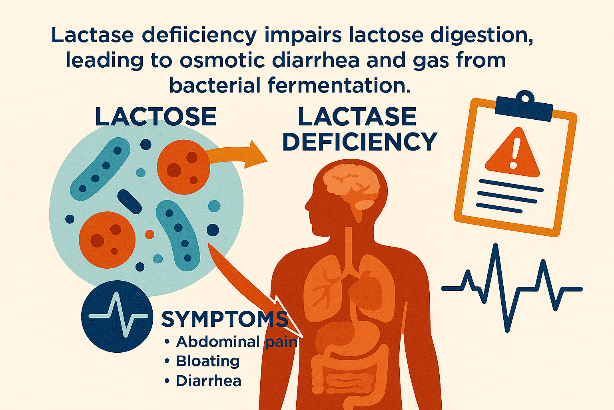
The lactose which goes unfermented by the gut microbiome is finally fermented by them, resulting in the production of short-chain fatty acids and gases including hydrogen, carbon dioxide, and methane. This is the fermentation that gives it the typical signs and symptoms of lactose intolerance, such as abdominal pain, bloating, and flatulence, as well as diarrhea (Rachwal et al., 2024). Thus, the most important processes in biochemistry are the lowered activity or lack of the lactase enzyme, which causes lactose to be partially digested and absorbed (Fig. 1). This causes an osmotic imbalance in the intestine and the following fermentation of lactose by the bacteria of the gut, which causes the symptoms of lactose intolerance (Bahodirovna et al., 2024). Lactose non-persisting and hypolactasia genetic causes are largely linked with genetics polymorphism in the LCT gene that encode lactase enzyme. The digestion of lactose which is the major sugar in milk and dairy products depends on Lactase. LCT gene that is found in chromosome 2(locus 2q21), occupies approximately 50 kb, having 17 exons. Lactase is only expressed in enterocytes in the small intestine, mostly in the mid-jejunum. Two main polymorphisms in the LCT gene have been identified as the primary genetic determinants of lactase persistence or non-persistence (Catanzaro et al., 2021a):
C/T-13910 polymorphism: This polymorphism is located 14 kb upstream of the LCT gene. The C/C genotype is associated with lactase non-persistence, while the C/T or T/T genotypes are associated with lactase persistence.
G/A-22018 polymorphism: This polymorphism is located 22 kb upstream of the LCT gene. The G/G genotype is associated with lactase non-persistence, while the G/A or A/A genotypes are associated with lactase persistence. In addition to these two major polymorphisms, other genetic variants have been identified in certain populations, particularly in Africa and the Middle East. These include C/G-13915, G/C-14010, and T/G-14009.
The presence of the non-persistence types (C/C or G/G) results in better or hereditary suppression of the lactase enzyme in the mucosal cells of the intestines. This creates the inability to digest and absorb lactose adequately causing lactose malabsorption and developing lactose intolerance symptoms, which include stomach pain, bloating, gas and diarrhea.
Epigenetic mechanisms can also lead to lactase non-persistence in addition to the role of genetic factors. Epigenetic alterations, e.g. the DNA methylation and histone modifications may affect the LCT gene expression and consequently cause the down-regulation of lactase gene expression with time. Lactase non-persistence and lactose intolerance is widespread among different population groups and geographic locations. The rate of the prevalence of lactose intolerance diagnosed using instrumental methods is estimated to be 57 worldwide and the true prevalence is more than 65. In South America, Africa, and Asia its prevalence has been the highest with some populations being as high as 80-90. Conversely, its prevalence is lower in Europe (between about 2 and 70 per cent in Scandinavia and Sicily, respectively) (Catanzaro et al., 2021a).
In short, the genetic etiology of lactase non-persistence and hypolactasia is largely influenced by certain inherited mutations in LCT gene with the C/T-13910 and G/A-22018 of such mutations. Such genetic variations can cause the poor or missing expression of lactase enzyme that causes lactose malabsorption and lactose intolerance develops. There is also another theory, which proposes that epigenetic controls could also affect the control of lactase expression and the development of lactose intolerance. This would be important in diagnosing and treatment of the lactose intolerance since it will involve the understanding of the genetic and epigenetic factors of lactase non-persistence and its knowledge would aid in proper diagnosis and treatment (Catanzaro et al., 2021a).
Those with the lactase non-persistent (LNP) genotype that is common to a maximum of 100 percent of the Asian countries are capable of developing gastrointestinal (GI) discomfort when they consume lactose-containing foods. The reason is that the latter people do not have an enzyme known as lactase that helps them to digest the natural sugar of milk and dairy products called lactose properly (JanssenDuijghuijsen et al., 2024).
When the lactose passes through the,\,\small intestine of LNP patients, it elevates the osmotic pressure resulting in increased water intake into the intestinal lumen. This may lead to the cause of diarrhea which is among the chief symptoms of lactose intolerance. Moreover, some intestinal bacteria, including Bacteroides and Escherichia, ferment the undigested lactose. Hydrogen and methane are some of the byproducts of the fermentation of lactose by these bacteria. These gases may contribute to the development of abdominal pain, bloating and flatulence - other typical symptoms of a lactose intolerant individual (Leszkowicz et al., 2022).
The intensity of GI symptoms may widely differ in different individuals, including people who are of LNP genotype. Others can probably take fairly large amounts of lactose of as much as 12 grams per serving, without excessive discomfort. This perhaps is because of alterations in the gut microbiota, in which a consistent exposure to lactose may amplify the populations of lactose-fermenting bacteria such as bifidobacteria, which generate fewer gases when fermenting lactose (JanssenDuijghuijsen et al., 2024).
NUTRITIONAL CHALLENGES AND DEFICIENCIES
Calcium and Vitamin D Malabsorption
The basic mechanism involves obtaining high amounts of calcium and smaller amounts of vitamin D from dairy products. Lactose is digested by the lactase enzyme in the small intestine, which helps absorb both nutrients into the bloodstream. In lactose intolerance, milk products are not consumed. This leads to calcium malabsorption and, in turn, calcium and vitamin D deficiencies. Symptoms can include flatulence, diarrhea, and bone diseases. Experimental studies suggest that individuals with lactose intolerance should use calcium supplements to compensate for this lack. Vitamin D is of two types D2 and D3 (cholecalciferol). Vitamin D3 is produced endogenously in skin; this D3 could also be obtained from fortified food products. Vitamin D might be obtained from food sources or produced in skin that flows through blood stream and reaches liver where it is metabolized. The main duty of Vitamin D is to combine calcium and phosphorus to make bones strong and to overcome calcium deficiency by better absorption of calcium from duodenum. So, the patients who are lactose intolerant can’t intake dairy or fortified food products leading to malnutrition relevant to calcium and Vitamin D (Ahmed et al., 2023).
Secondary Nutrient Deficiencies
Nutrient deficiency could be secondary due to celiac disease, which is autoimmune condition causing villi atrophy in the duodenum that is triggered by a gluten-containing diet (wheat and barley). A gluten-containing diet initiates an immune reaction on the villi and affects the absorption of nutrients, and, consequently, malabsorption occurs. The condition gets normalized, but relapse can occur if the gluten-containing diet is consumed again. An untreated condition removes lactase from villi and ultimately, lactose intolerance starts, and hypocalcemia, diarrhea, flatulence, osteopenia, and osteoporosis occur. Secondary nutrient deficiency could also be due to irritable bowel syndrome (IBS), which is suggested to have severe abdominal pain, flatulence, spasmodic movements, and cramps leading to diarrhea or constipation. So, people with IBS are given the low-lactose specific fermented oligo-, di-, monosaccharides and polyols (FODMAPs) diet, which is necessary. But on a low FODMAPs diet, certain nutrients are excessively depleted, including fibers, calcium, proteins, and vitamin B12. Ultimately, a low-FODMAP diet alters the nutrient deficiencies in the body secondarily. Some patients are sensitive to gluten-containing diets, so are advised to take a gluten-free diet (GFD). Gluten-free diets can exaggerate the heavy metals in the body and can cause a deficiency of micronutrients, including folic acid, iron, calcium, and vitamin D. All of these secondary conditions can cause patients' nutrient deficit and lead to nutritional malabsorption.
DIETARY ADAPTATIONS AND ALTERNATIVES
Widely consumed food all over the world and serves as a key ingredient in numerous dairy products is milk, but a significant portion of the global population experiences milk allergies and lactose intolerance. Lactose intolerance management includes a straightforward way by avoiding dairy and milk products such as yogurt, milk, cheese, ice-cream, and many other products which can also be found in various processed foods and medications. A lactose-free diet is beneficial for managing LI. Read all the dockets keenly, as terms like curds, whey, and milk solids designate the existence of lactose. In markets, many lactose-free and lactose-hydrolyzed products are available, so patients with LI don’t have to completely abolish dairy products (Katoch et al., 2022).
Lactose-free diet
To mitigate symptoms, a lactose-free diet is recommended. Most patients can digest or tolerate small amounts of lactose in their diet. However, it is essential to guide that patients don’t exceed their LI because avoiding all dairy products can lead to micronutrient deficiencies, as lactose or dairy products are a crucial source of calcium and other important nutrients. Restrict the daily intake of lactose in patients is about 12 to 15 grams (Catanzaro et al., 2021b). According to research, patients or individuals with LI have low calcium intake, falling below recommended levels, which can unluckily affect bone health and other health conditions. Specific probiotic strains help relieve indications of LI, such as eating yogurt and fermented milk. Studies foreground the provocation of accomplish the calcium intake without including dairy products in the diet. In addition, lactase supplements can help in managing symptoms associated with LI. You can add a few lactases drops to your diet, which will break down the lactose and help to lower the risk of lactose intolerance. Consult with your physician before using lactase supplements because pregnant and breastfeeding women are at a loss of using them. Using fish with soft bones, broccoli, cereals, fruit juices, almonds, nuts, tofu, and dried beans in your diet helps to manage LI (Ibrahim et al., 2021).
CLINICAL RISKS AND LONG-TERM COMPLICATIONS
Gastrointestinal Morbidity
Lactose intolerance develops primarily due to inadequate lactase enzyme production in the small intestine. This leads to incomplete breakdown of lactose into glucose and galactose, allowing undigested lactose to pass into the colon. In the colon, it undergoes fermentation by gut microbiota, releasing gases such as hydrogen and methane, alongside short-chain fatty acids. This increases intestinal osmotic pressure, drawing water into the lumen and causing diarrhea. Chronic diarrhea is not merely an acute symptom but a recurring problem that can result in dehydration, loss of electrolytes, and reduced nutrient absorption. Persistent gastrointestinal discomfort—bloating, cramping, and excessive gas-often discourages individuals from consuming dairy or other essential foods, leading to inadvertent nutritional deficiencies.
Metabolic and Skeletal Health Risks
The chronic consequences of lactose intolerance on bone health are well-reported. Milk products have been the main calcium-450 food of most people and chronic avoidance may contribute greatly to the decrease in calcium intake. This lowered consumption impairs the bone mineral density (BMD), which puts one at high risk of osteopenia and ultimately, osteoporosis. Deficiency of vitamin D continues to worsen this state of affairs because its deficiency disrupts the absorption of calcium and bone remodelling. The insufficiency of calcium triggers an over secretion of parathyroid hormone (PTH) thus causing secondary hyperparathyroidism; bones are deteriorated to supply calcium into the blood thus increasing the chances of fractures in the long run.
Pediatric Considerations
The children and adolescents are sensitive since this is the period when mass bone is developed, and this defines the strength of the skeleton when at adulthood. The lack of calcium and vitamin D (because of dairy avoidance) may lead to retarded growth, premature puberty or rickets in severe instances. With chronic calcium deficiency, neuromuscular functions are also affected to deteriorate physical performance and cognitive development. Patients with chronic lactose intolerance that develops pediatric secondary hyperparathyroidism may show signs of secondary hyperparathyroidism early in life, during periods of rapid bone resorption. Unless dietary coordination is achieved at an early age, the effects can manifest in adulthood resulting in a weaker skeletal framework and increased risk against fractures.
The clinical risks associated with lactose intolerance involve chronic diarrhea, bloating, malabsorption, osteopenia, osteoporosis, secondary hyperparathyroidism, growth delays, rickets and reduced peak bone mass. Early diagnosis using hydrogen breathes tests or genetic screening, inclusion of lactose-free or plant-based milk in diet, Calcium and vitamin D supplementation with weight-bearing exercise and Pediatric monitoring with targeted nutritional counseling.
DIAGNOSTIC APPROACHES OF LACTOSE INTOLERANCE
Lactose intolerance (LI) is usually diagnosed by the lack of lactase activity and the examination of symptom development after ingesting lactose. Patient-reported history and dietary adjustments can also not be as reliable as relying on a subjective report (Angima et al., 2024). Lactose tolerance test and hydrogen breath test (HBT) are the most used diagnostic tests. The level of glucose in the blood is checked in the lactose tolerance test, whereby the failure to indicate adequate increase of glucose levels with lactose intake indicates malabsorption. The HBT is a simpler and non-invasive test, which is used to identify hydrogen in the breath, when bacteria ferment undigested lactose in the colon; a positive response of about 20ppm hydrogen will indicate lactose intolerance (DeGeyter et al., 2021).
Since not all people produce Hydrogen but instead methane, the simultaneous measurement of CH 4 and H 2 may increase the precision of diagnosis. A study of children gave the same results (approximately 6% CH 4 only, half of them symptomatic), indicating the value added with methane measurement when breath-testing (DeGeyter et al., 2021). In infants and young children, breath tests cannot be done and thus the stool acidity test is used as an alternative. The stool samples are also tested on acidity and reducing substances when the lactose is taken; high degree of acidity is a result that lactose that could not be digested in the colon was fermented, hence is a sign of lactase deficiency (Leis et al., 2020). Known polymorphisms can be used to determine primary lactase non-persistence (LNP) by genetic testing. Nevertheless, available information mainly apply to Caucasian groups and cannot be applicable in Asia, Africa, and Middle East. Genetic tests also cannot diagnose the secondary lactase deficiency, which can develop as a result of other gastrointestinal disorders (Misselwitz et al., 2019). LI bloating, pain, gas, diarrhea are nonspecific and are similar to other GIT disorders, where there is need to differentiate carefully.
Secondary lactose intolerance may result in celiac disease (CD) and is caused by villous atrophy which inhibits the other activity of lactase. Diagnosis is done by serologic testing (e.g., anti-tTG, EMA), and biopsy. Remarkably, intolerance toward lactose can be cured with the help of a strict gluten-free diet in untreated CD (Saiprasad et al., 2023). Crohn disease and ulcerative colitis are inflammatory bowel diseases (IBD) that, through independent of mucosal inflammation, may impair the lactase functions. In that instance, diagnostic testing should lead lactose restriction, instead of presuming it, to prevent the needless dietary restrictions.
Irritable bowel syndrome (IBS) has much in common with LI, except that it has no enzymatic deficit and malabsorption. Assign of LI in the IBS-like presentation may be gotten through positive HBT or symptom improvement with the removal of lactose. In short, the diagnosis of lactose intolerance should be conducted in a systematic, evidenced-based manner in which Breath tests (HBT, which may also be used with methane measurement) represent an effective but simple initial test, which should be used in young children in which tool acidity testing is a practical test but has a low level of accuracy and the inability to identify secondary causes. Moreover, Clinicians also have to exclude such conditions as celiac disease, IBD or IBS so that to be correctly diagnosed and avoid any diet supplements
PHARMACOLOGICAL AND THERAPEUTIC INTERVENTIONS
Enzyme replacement therapy (ERT) and probiotics: Oral lactase enzyme supplements (1.25 -galactosidase) stand as one of the most popular pharmaceutical therapies. These enzymes break down lactose into glucose and galactose and the small intestine can absorb it normally. The formulations contain liquid drops, pills, and capsules, which can be mixed with milk or eaten with food. ERT is considered the initial form of treatment in the treatment of the symptoms of the lactose intolerance which include gas, diarrhea, bloating and abdominal pain (Misselwitz et al., 2019). In the gastrointestinal system, probiotics like Lactobacillus and Bifidobacterium strains generate β-galactosidase. These microbes lessen the colon’s fermentation of undigested lactose and enhance lactose digestion. Clinical advantages include fewer diarrheas, bloating, flatulence, and discomfort in the abdomen. Probiotics can be found in yoghurt or dairy products that have been fortified with good bacterial cultures, as well as in capsules and sachets. They are typically used in conjunction with dietary control and enzyme treatment.
Non-absorbable antibiotics: Small intestinal bacterial overgrowth (SIBO) can exacerbate lactose intolerance and maldigestion in certain patients. Rifaximin and other non-absorbable antibiotics are used to lessen the bacterial load in the small intestine. It has been demonstrated that brief treatment courses can lessen symptoms like diarrhea, bloating, and stomach pain while also improving hydrogen breath test findings (Lin et al., 2022). In healthy people, the brush border of the small intestine produces the enzyme lactase (β-galactosidase), which reduces the disaccharide lactose to absorbable glucose and galactose. Lactose enters the colon undigested due to a lack of lactase activity, which causes bacterial fermentation and subsequent gas, bloating, and diarrhea. In addition to: The microbial lactase found in oral lactase supplements is often derived from Kluyveromyces lactis or Aspergillus oryzae. They break down lactose in dairy products before they enter the small intestine. When taken with the first bite or drink of dairy, they begin the process of breaking down lactose in the small intestine and stomach.
Efficacy short-term symptom relief: Reduces symptoms like bloating, flatulence, diarrhea in mild–moderate lactose intolerance. Works best for small to moderate amounts of lactose (e.g., 240 mL of milk). Better efficacy when: Taken immediately before or with dairy (not long after eating).Used with lower-lactose foods rather than large, high-lactose loads. Evidence: Multiple randomized controlled trials show 30–70% symptom improvement and measurable reduction in hydrogen breath test levels. Not a cure, only works while taken with dairy-containing meals. Variable effectiveness: Gastric acidity may inactivate the enzyme before reaching the small intestine (especially with fungal lactase). High doses of lactose can be more than the decomposition capacity of the supplement. Time sensitive: The later the intake, the worse it is. Cost and compliance: Frequent usage may be costly and inconvenient. Not effective in congenital lactase deficiency (extremely uncommon), which is characterized by serious symptoms on even minor amounts of lactose.
Probiotics/gut microbiome regulation in lactose intolerance: some probiotics (Lactobacillus, Bifidobacterium) are known to secrete 8 -galactosidase, which helps break down lactose in the colorectum. Shifts gut flora to lactose consuming bacteria, decreases pH, and decreases gas forming species. Efficacy: Top choices: L. Acidophilus, L. Bulgaricus, B. Longum. Yogurt with live cultures often better tolerated than milk. Trials show reduced hydrogen breath levels and symptoms, especially in mild–moderate cases. Limitations: Strain-specific, variable product quality, benefits fade after stopping. Takes 1–2 weeks for effect; less effective for large lactose loads or complete lactase absence (Baijal & Tandon, 2021).
CALCIUM AND VITAMIN D STRATEGIES IN LACTOSE INTOLERANCE
For dairy-free vitamin D maintenance, fortified foods like bread, cereals, and juices, as well as natural sources like eggs and fatty fish (salmon, tuna, and mackerel), are good substitutes. Hard cheese and yoghurt can supply calcium and vitamin D and are often tolerated in small doses. Dairy products and milk without lactose are generally accessible and safe. Additionally, to aid in the digestion of dairy products and improve their nutritional value, lactase enzyme tablets or drops can be taken with meals with calcium and vitamin D is advised when food intake is inadequate. To prevent deficiencies or overconsumption, they should always be taken under a doctor’s supervision. To combat widespread deficiency, many countries have developed dietary fortification measures, such as adding vitamin D to staple foods. Pregnant women, elderly people, and children are among the high-risk groups that supplementation programs target. In order to help people choose healthy food options while still getting enough nutrients, patient education is essential. In order to monitor vitamin D levels and avoid long-term consequences, interdisciplinary healthcare teams—which include doctors and dietitians—are crucial. In high-risk people, keep an eye on serum 25-hydroxyvitamin D levels. When evaluating long-term dairy avoiders, consider their bone mineral density and counsel them on alternative sources of calcium and vitamin D or appropriate supplementation to ensure adequate bone health. To preserve the best possible bone health, teach patients how to incorporate fortified foods and supplements into their daily routine. The main cause of lactose intolerance is decreased activity of the lactase-phlorizin hydrolase (LPH) enzyme in the small intestinal enterocyte brush border. The traditional treatment, which includes probiotics, lactase supplements, and dietary lactose restriction, only relieves symptoms. The goal of current research is to improve or permanently correct metabolic abnormalities by investigating disease-modifying techniques, especially gene editing and synthetic enzyme methods.
Methods for editing genes goal: Intestinal epithelial cells’ expression of the LCT gene should be permanently restored or increased. Lactase is encoded by the LCT gene on chromosome 2q21. Post-weaning epigenetic down regulation happens in the majority of people. Research is being done on gene editing techniques including base editing, CRISPR-Cas9, and epigenome modification to: Silenced LCT promoters should be reactivated. Introduce variations of lactase that are known to sustain lactase synthesis throughout life, such as the C/T-13910 mutation in the MCM6 enhancer region. Strategies for delivery: Non-viral nanoparticles that target viruses or viral vectors (AAV, lentivirus) crypt-based intestinal stem cells. Aim for stable genome modification to achieve lactase expression over an extended period of time. A potential one-time curative treatment is one of the benefits. The difficulties delivery that is tailored to the gut epithelial cells and free of off-target effects. Safety issues include immunological reactions to delivery methods and inadvertent gene alterations. Status of research: Lactase function is partially restored following CRISPR-mediated LCT reactivation, according to preclinical research in mouse and pig models. Clinical studies on humans are still in the translational research stage (Misselwitz et al., 2019).
Enzyme synthesis technology: A more stable and effective exogenous lactase that functions not only in the upper small intestine but also throughout the gastrointestinal system is the goal. Some of the advancements are: modified lactase forms that have: more stable pH (active from the stomach to the colon, pH 2–8). Greater resistance to the breakdown of proteins and longer shelf life due to improved thermal stability are the direct results of increased molecular stability. Technologies of encapsulation: Lactase can be released in the small intestine after being shielded by gastric acid via microencapsulation or nanoparticle coating. Continuous-release formulations: Lactase is gradually released via synthetic hydrogels or polymer matrices while food passes through the gastrointestinal tract. Advances in synthetic biology: Utilizing genetically modified probiotics (such as Lactobacillus expressing lactase) or cell-free enzyme systems to administer the enzyme in vivo. Probiotic bacteria that have been modified using CRISPR to gradually colonize the gut and release lactase, Benefits operates without the patient’s own LCT gene activity being a factor. Until colonising microbial delivery techniques are used, repeated dosage is still necessary. The safety of modified probiotics over the long run requires more research (Deng et al., 2015).
CONCLUSION
Lactose intolerance happens when the small intestine doesn't produce sufficient amounts of lactase. This enzyme lactase breaks down sugar present in dietary products and milk (lactose). This shows the indigestion of lactose existence brings on gut bacteria. In the small intestine, deficiency of the lactase enzyme leads to lactose intolerance. This show disturbance in the GIT following the consumption of lactose higher than the body capacity to digest. Lactose malabsorption is decreased due to low quantity of enzyme lactase. Lactose intolerance is needed for an extensive approach, including nutritional implications and pharmacological treatment. Avoid the food that contains lactose and take some calcium and vitamin supplements. Pharmacological management included treating lactase intolerance. Before consuming lactose containing food and milk, take the lactase enzyme supplement. Some probiotics and supplements reduce the symptoms of lactose intolerance. Lactose intolerance is reduced by some changes in food and pharmacological treatment.
References
- Ahmed A, MA Saleem, F Saeed et al., 2023. A comprehensive review on the impact of calcium and vitamin D insufficiency and allied metabolic disorders in females. Food Science and Nutrition 119:5004-27.
- Angima G, Y Qu, SH Park et al., 2024. Prebiotic strategies to manage lactose intolerance symptoms. Nutrients 167:1002.
- Bahodirovna AS, SG Utkurovna & KSK Kizi, 2024. Pathogenetic basis for the development of lactase enzyme deficiency. American Journal of Medicine and Medical Sciences 14:466-70.
- Baijal R & RK Tandon, 2021. Effect of lactase on symptoms and hydrogen breath levels in lactose intolerance: A crossover placebo‐controlled study. JGH Open 51:143-8.
- Catanzaro R, M Sciuto & F Marotta, 2021a. Lactose intolerance—old and new knowledge on pathophysiological mechanisms, diagnosis, and treatment. SN Comprehensive Clinical Medicine 3:499-509.
- Catanzaro R, M Sciuto & F Marotta, 2021b. Lactose intolerance: An update on its pathogenesis, diagnosis, and treatment. Nutrition Research 89:23-34.
- DeGeyter C, KV de Maele, B Hauser et al., 2021. Hydrogen and methane breath test in the diagnosis of lactose intolerance. Nutrients 139:3261.
- Deng Y, B Misselwitz, N Dai et al., 2015. Lactose intolerance in adults: biological mechanism and dietary management. Nutrients 79:8020-35.
- Goosenberg E & Afzal M, 2025. Lactose Intolerance. [Updated 2025 Aug 6]. In: StatPearls [Internet]. Treasure Island (FL): StatPearls Publishing; 2025 Jan-. Available from: https://www.ncbi.nlm.nih.gov/books/NBK532285/.
- Ibrahim SA, R Gyawali, SS Awaisheh et al.,2021. Fermented foods and probiotics: An approach to lactose intolerance. Journal of Dairy Research 883:357-65.
- JanssenDuijghuijsen L, E Looijesteijn E, M van den Belt et al., 2024. Changes in gut microbiota and lactose intolerance symptoms before and after daily lactose supplementation in individuals with the lactase nonpersistent genotype. The American Journal of Clinical Nutrition 1193:702-10.
- Katoch GK, N Nain, S Kaur et al., 2022. Lactose intolerance and its dietary management: an update. Journal of the American Nutrition Association 414: 424-34.
- Leis R, MJ de Castro, C de Lamas et al., 2020. Effects of prebiotic and probiotic supplementation on lactase deficiency and lactose intolerance: a systematic review of controlled trials. Nutrients 125:1487.
- Leszkowicz J, KP Nazar & AS Sidorkiewicz, 2022. Can lactose intolerance be a cause of constipation? A narrative review. Nutrients 149:1785.
- Lin YC, CH Chu, YJ Chen et al., 2022. Gestational age-related associations between early-life feeding trajectories and growth outcomes at term equivalent age in very preterm infants. Nutrients 145:1032.
- Misselwitz B, M Butter, K Verbeke et al., 2019. Update on lactose malabsorption and intolerance: pathogenesis, diagnosis and clinical management. Gut 6811:2080-91.
- Rachwal K, K Wielgus, P Bator et al.,2024. Lactase deficiency and lactose intolerance: current understanding and future directions. Journal of Education Health and Sport 69:49393.
- Saiprasad SM, OG Moreno & DA Savaiano, 2023. A narrative review of human clinical trials to improve lactose digestion and tolerance by feeding bifidobacteria or galacto-oligosacharides. Nutrients, 1516:3559.
- Schiffner R, K Kostev & H Gothe, 2016. Do patients with lactose intolerance exhibit more frequent comorbidities than patients without lactose intolerance? An analysis of routine data from German medical practices. Annals of Gastroenterology 292:174.
- Szilagyi A & N Ishayek, 2018. Lactose intolerance, dairy avoidance, and treatment options. Nutrients 1012:1994.
- Ugidos-Rodriguez S, MC Matallana González & MC Sanchez Mata, 2018. Lactose malabsorption and intolerance: a review. Food and Function 98: 4056-68.