
INTRODUCTION
In animal reproduction, various scientific and technological gain has been achieved by the development of different tools commonly known as assisted reproductive technologies (ARTs) during the past few decades (Ferré et al., 2020). Productivity has a central place in growth, while reproduction is the mainstay of animal production. Reproductive inefficiency is recognized globally as one of the main causes of financial losses in the animal industries. Although advances in reproductive physiology have been made recently, low conception and high embryonic mortality rates continue to pose a significant barrier to infertility treatment. Agricultural research and its applications, as well as future needs, will require the adoption of all new technologies, particularly contemporary reproductive biotechnologies (Verma et al., 2012).
For thousands of years, most tamed animals have had their reproductive cycles controlled. These include castrating animals, keeping animals with superior phenotypes for breeding, eating males before females because fewer males were required to sustain breeding flocks and herds, and employing hybridization to create mules. The Bible, the Domesday Book, Greek and Roman writings, Egyptian hieroglyphics, and comparable works from other cultures all attest to the effectiveness of these methods as reproductive technologies. The greatest significant reproductive alteration to date has undoubtedly been selective breeding (Seidel, 2015). According to the Food and Agriculture Organization,
by 2050, there will likely be 9.7 billion people on the planet, about one-third increase from 2015. This is a challenge to not only feed a growing population, but to do so while accounting for health disparities like obesity and malnutrition. According to the Lancet Commissions 2019, widespread multisector, multilevel action is needed, including a big global shift towards healthier dietary patterns, large reductions in food loss and waste, and major improvements in food production techniques. If the present level of per capita consumption remains unchanged until 2050, the average worldwide demand for all food products derived from animals will rise from 1.4 billion tons to 2.0 billion tons, roughly (Henchion et al., 2021).
Meeting the food demands of the increasing global population is a big challenge (Henchion et al., 2021). With the increasing world population, global meat consumption has seen an increase of 58% during the last 20 years. Out of this increase in demand, 4% is because of the increase in per capita consumption of meat. This demonstrates the need for effective implementation of ARTs (Daly et al., 2020). Animal breeding programs are the focus of reproductive technologies; the majority of these include the selection of animals based on assessment of their genetic quality and the distribution of superior genetic material from the commercial population’s nucleus herd. A tiny portion of the population (the nucleus herd) produces genetic gain, and these animals are sold to the larger commercial population. The development of ARTs has been driven by several goals, including lowering the rate of infertility, increasing the number of offspring from genetically superior animals, permitting genetic modification, aiding in the preservation and long-distance transmission of germplasm, and generating research material (Hansen, 2020). Some of the purposes behind the introduction of ARTs include overcoming the inherent reproductive issues, rapid propagation of superior germ plasm as well as to reduce the generation interval (Warriach et al., 2015). The major ARTs under investigation nowadays are artificial insemination, multiple ovulation and embryo transfer, estrus synchronization, semen sexing, intra cytoplasmic sperm injection, somatic cell nuclear transfer, transgenesis, embryo/oocyte cryopreservation, in vitro fertilization, ovum pick up, sperm transcriptomics, and nanotechnology (Daly et al., 2020). The chapter highlights the recent advances in various ARTs and their practical application in research and field conditions.
SIGNIFICANCE OF ARTS IN ANIMAL BREEDING
The ARTs are crucial in modern animal breeding. There are three major components of ARTs; Genetic Improvement: The utilization of embryo transfer following superovulation or follicular aspiration (in vivo or in vitro) from superior females significantly accelerates the advancement of animal genetics. In addition to improving the effectiveness of breeding programs and the genetic trade, large-scale generation of embryos per female and the capacity to store them for future use and transportation also lowers the risk of multiple pathogen transmission (Menchaca, 2023).
Preservation of Endangered Species: In food and laboratory animals, the use of ARTs spans about 100 years. Rapidly growing human population, and thus an increased demand for natural and man-made resources, has resulted in a rapid decline in biodiversity all around the globe. Managers of conservation programs are realizing the value of using ARTs to improve reproductive success and guarantee the long-term preservation of priceless genetic material, as more vertebrate species threaten extinction (Mastromonaco & Songsasen, 2020).
Reduction in Generation Interval: artificial insemination, superovulation, in vitro fertilization, and embryo transfer have been used to address reproductive issues, enhance the number of offspring from specific females, and shorten the generation intervals in farm animals (Vikrama & Balaji 2010). It is anticipated that reproductive technology will be used more frequently to shorten the generational gap and quicken the rate of genetic gain for cattle that are efficient, more fertile, and have low methane emission (Baruselli et al., 2023).
KEY MILESTONES IN THE ARTS
Artificial Insemination
Artificial insemination (AI) is a technique that uses processed sperm, stored at a suitable temperature, and then introduced into the female reproductive tract. Additionally, it has occasionally been employed in the conservation breeding of rare or endangered species, such as wild cats, elephants, and primates (Kumar et al., 2017). There is no doubt that AI is the most significant reproductive technology employed during the 20th/21st centuries. When compared to embryo transfer, AI is comparatively economical and easy to employ. For cattle and certain other species, this is the most common and significant reproductive technology. For instance, the most recent estimates place the annual global number of artificially inseminated cattle at approximately 130 million. In the late 1700s, Spallanzani was the first to perform AI in the dog. AI is also used in combination with other ARTs like embryo transfer and sexed semen (Seidel, 2015). After Spallanzani’s experiment in dog, AI was performed on various animal species by various researchers. By introducing new genetic material through the import of semen rather than live animals, this technology helps maximize the use of males with excellent performance, airing superior genetic material, improving the rate and efficiency of genetic selection, and enabling the use of frozen semen even after the donor animal is no longer alive (Verma et al., 2012). AI is still considered one of the basic technologies available for the improvement of farm animals’ reproductive efficiency, and has been practiced globally for more than fifty years (Vikrama & Balaji, 2010). As per the estimates by some reliable authorities, the role of AI in improving dairy production since World War II is equal to the improvement jointly brought about by better health, nutrition and husbandry factor. In 1980, the introduction of flow cytometric separation of X and Y sperms, Ovum retrieval using ultrasound-guided follicular aspiration, nuclear transfers from embryonic cells to create clones, and in vitro fertilization resulted in the birth of live calves. The advent of possibly the most potent biotechnology since the creation of cryopreservation and AI occurred in the 21st century. The calves breeding sector is transforming with to single-nucleotide polymorphism genotyping chips, which provide quick and affordable genomic analysis. With the advent of genome editing technology, the rate of change is now nearly too quick to keep up with (Moore & Hasler, 2017). Controlling the sex of the offspring via isolation of X and Y-bearing sperm was the most desired goal of the dairy industry. Recently, flow cytometry has made semen sexing possible at a commercial level. The idea behind semen sexing is to use a fluorescent dye to stain the DNA, which binds to it without harming it. Next, the fluorescence difference between spermatozoa containing X and Y can be detected, and cells can be sorted based on that difference. After that, a flow cytometer is used to sort the stained cells according to the fluorescence of the stained DNA (Parkinson et al., 2019).
Multiple Ovulation and Embryo Transfer
When defining multiple ovulation and embryo transfer (MOET), it can be described as a process in which we collect fertilized eggs from a donor female and place them in many genetically irrelevant surrogate recipient females. This technique is applicable in most farm animals, including cattle, sheep, goats, buffalo and pigs. Horses are the exception here as they can’t be super ovulated (Faizah et al., 2018). One example of a reproductive technology that was brought into the commercial market to address particular issues in cattle breeding is embryo transfer. Umbaugh was the first to report the successful embryo transfer in bovines in 1949. The first embryo transfer calf was born in 1951, when an abattoir-derived day-5 embryo was surgically transferred to cattle. Later, Rowson and colleagues at Cambridge developed the technology that made embryo transfer possible at a commercial level. For many years, the propagation of desired phenotypes in animal production programs was achieved through embryo transfer (Mapletoft & Hasler, 2005).
In bovines, MOET has several advantages, including more and better offspring from genetically superior donors, more offspring from a superior female as compared to normal reproduction, an increase in the potential or capacity for reproduction, and an increase in the herd's genetic improvement percentage. Additionally, MOET can be used to address female infertility brought on by illness, trauma, or aging (Faizah et al., 2018). To create AI sires from highly proven cows and bulls, embryo transfer is now frequently utilized (Vikrama & Balaji, 2010). Important steps involved in MOET are as follows: Hormone treatments (FSH and LH) are given to donor cows of high-quality pedigree animals to induce multiple ovulations, which is the release of more eggs during ovulation. Semen from the proven sires is used to artificially inseminate the cows. A catheter inserted into the uterus is used to non-surgically drain out the embryos after 6-7 days. This is conceivable since embryos in cattle take longer to implant in the uterine wall. Four to seven embryos are typically collected. After that, embryos may be implanted into recipient cows, which usually have their estrus cycles at the proper receptive stage because of hormonal manipulation. Similar procedures to those used for semen can be used to freeze and store embryos (though exact mechanism is somewhat more complicated).
Embryos are flushed 6/7 days for buffalo and 5/6 days for cattle. Typically, two techniques are used to flush the embryos: non-surgical and surgical. Surgical flushing is only used in the case of tiny ruminants since it produces more embryos but requires more time and labor. For non-surgical flushing, a Foley's or Rusch catheter is utilized, and the flushing medium is poured into and out of the uterus to get the embryos at the right time post-estrus (Choudhary et al., 2016). Embryo Transfer has great use if seen as a genetic selection tool. Enhancing fertility is one more possible application for ET. The reasoning for this is that an embryo that is available for transfer has previously successfully surmounted numerous challenges to conceiving, such as failed fertilization and ovulation, as well as pre-blastocyst embryonic mortality. The most extensive research has been done on the use of ET to increase fertility in breastfeeding dairy cows (Hansen, 2014).
Estrus Synchronization
These days, most dairy companies' breeding management in their herds includes estrus synchronization procedures as normal practice. To get over the practical challenges of estrus identification, the synchronization technique is based on timed inseminations (Macmillan, 2010). Estrus synchronization in farm animals involves the use of pharmacologic techniques to control both ovulation and estrus. As a result, female animals are forced to experience estrus, or ovulation, at a certain, favorable time rather than when it would typically occur. Progestogens are used to temporarily decrease ovarian activity, while luteolytic medications, such as prostaglandin F2 alpha or its derivatives, are used to induce premature luteolysis intentionally. Synchronization has several benefits and makes it easier to control AI and calving in herds of cattle in a maximum and batch manner, which boosts output and lowers expenses in the production of dairy and beef cattle (Nwoga et al., 2021) Progestogens were among the first products tried in controlling the estrus cycle. Melengestrol acetate (MGA) is one of the most widely used in synchronizing the estrus cycle, but its sole use in trying to control the estrus was not effective. Moreover, a reduced fertility rate was also observed following their use. For these agents to be effective, a luteolytic agent must be used with them. Later, another approach using Progestogens and Prostaglandin F2α was adopted for this purpose. PGF2α and its analogues serve as luteolytic agents and return of the estrus cycle when given during the luteal phase (Days 5 to 17; Considering Day 0=Estrus). This combination did not affect fertility rates. Studies showed that if progestogen (MGA) is fed (for 14 days) to heifers following the injection of PGF2α (17-19 days post feeding MGA), during the late luteal phase, estrus synchronization and improved fertility are obtained.
Another approach to synchronize the estrus is the use of Progesterone and Prostaglandin-CIDR®. It’s a 5-inch-long device, which, upon insertion in the vagina, raises the blood progesterone level rapidly (within an hour). This device remains inserted for a week and maintains the high progesterone level in the blood. Blood progesterone level drops quickly when the CIDR is removed after 7 days. The device is removed at day 8, while the signs of heat are observed at day 9-11 (for 96 hours), and the animal is inseminated (12 hours) after detection of heat. CIDR is effective for dairy as well as beef cows. Some veterinarians inject Lutalyse on the CIDR removal day to get better results (Dhami et al., 2015).
Semen Sexing
Semen sexing is a technology employed to produce the offspring of the desired sex, whether male or female. It’s a very advantageous technology for animal breeders. The basic technology used for this purpose is flow cytometry, where fluorescent-labeled X-chromosome carrying spermatozoa are separated from fluorescent-labeled Y-chromosome carrying spermatozoa (Choudhary et al., 2016). Usually, male to female ratio in natural mating or artificial breeding programs is 51:49 and this is one of the few genetic traits that can’t be controlled efficiently. Hence, the goal of a dairy farmer is to use every available uterus for a productive purpose, i.e. female calf to join the herd, while the vice versa is true in the case of a beef farmer. The use of sex semen ensures female calves for dairy farmers, while male calves for beef farmers and thus maximizes the use of these animal resources for genetic as well as production purposes (Vishwanath & Moreno, 2018). The conception rate with the use of sexed semen is almost comparable to that of conventional semen, but may exceed it in the future. It may also be possible in the future to remove sub-fertile sperm cells or choose the competent cells only (Vishwanath & Moreno, 2018).
Intracytoplasmic Sperm Injection
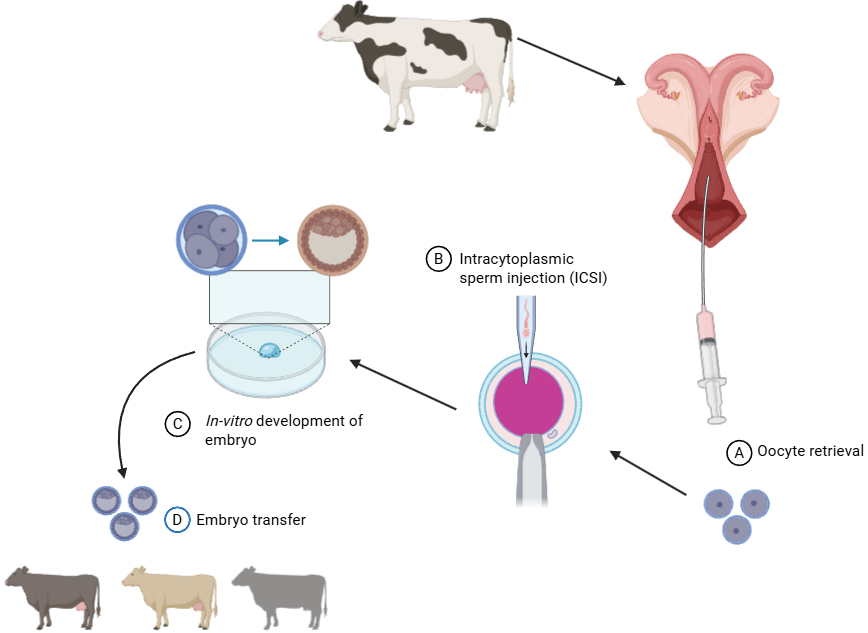
Intracytoplasmic sperm injection (ICSI) can be defined as a micromanipulation technique where an injection of a single spermatozoa (Fig. 1) or its nucleus into the cytoplasm of a mature oocyte is done (Salamone et al., 2017). One of the aims of ARTs is to treat infertility. ICSI aims to treat male factor infertility in farm animals (Parmar et al., 2013). In 1992, the first human baby using this technique was born, and soon it became an important reproductive technique in humans, and its use was extended to other species, including bovines, equines, ovine, caprine, felines, and others. Despite many working groups around the globe, the success of this technique in farm animals is still limited (Salamone et al., 2017).
In domestic animals, including cattle, the purpose of ICSI is to effectively use the spermatozoa, with an aim to improve the livestock as well as the multiplication of animals having excellent productive qualities. It can also be used as an alternative to in vitro fertilization (IVF) if the fertility rate is low. The defective spermatozoa of those infertile animals can be used effectively through this technique if those animals possess excellent productive traits (Horiuchi & Numabe, 1999). As the process of ICSI involves directly injecting a sperm or its nucleus into the cytoplasm of a mature oocyte, it bypasses the natural interactive process of sperm and oocyte. This technique is employed as a last resort when all insemination techniques fail to yield results. When compared to IVF and AI, ICSI is far better than both these techniques in the sense that it requires only a single spermatozoon while IVF and AI require millions. During the last two decades, ICSI has been used in farm animals for experimental purposes only. One of the reasons for its being employed at the commercial level is that its success rate is quite low (Parmar et al., 2013).
The process of ICSI involves various steps. These involve the preparation of oocytes and sperm. An oocyte is obtained via aspiration. The sperm, either from fresh or frozen semen, is prepared using a swim-up procedure and are immobilized. The immobilized sperm is then injected into the oocyte with the help of a pipette. The zona pellucida is punctured by injecting the sperm directly into the polar body location. The process of introducing sperm into an egg typically takes five seconds. Subsequently, the oocytes undergo a media change and are cultivated in an appropriate medium with mineral oil for a whole night. Around 15–17 hours after injection, the fertilized oocytes are checked for signs of fertilization. Studying the molecular pathways during the initial phases of fertilization requires the use of this approach. ICSI is similar to what is used in humans in that it can be used to train models and to use sperm from superior bulls in cases where the quality of the semen is compromised. However, it requires specialized equipment and knowledge to be performed in both research and field settings (Choudhary et al., 2016).
ICSI is, however a promising technique for endangered or non-traditional species. Lack of genetic variation in small populations of endangered animals increases the likelihood of inbreeding and homozygosis. This lowers the ability to adapt, raises the chance of hereditary illnesses and congenital abnormalities, and lowers fertility. These animals frequently have lower-quality sperm, which makes it difficult to reproduce regularly or to use ARTs like IVF or AI. ICSI can be used in such cases. Moreover, it is feasible to create progeny from the gametes of departed creatures or improve the fertility of poor sperm or oocyte quality. With the use of this approach, morphologically normal spermatozoa can be selected even from samples that contain a significant amount of teratozoosperm, which are commonly found in inbred species found in zoos (Salamone et al., 2017).
Somatic Cell Nuclear Transfer
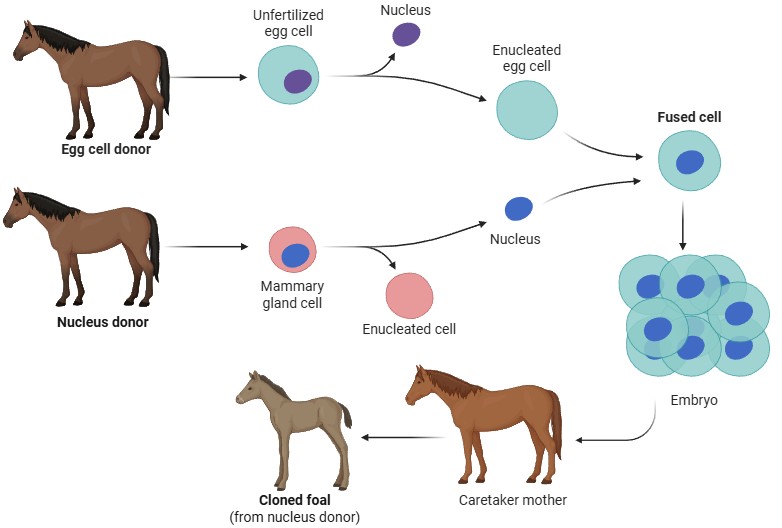
Through somatic cell nuclear transfer (SCNT) or cloning, terminally differentiated cells can be reprogrammed into totipotent cells by inserting a donor cell into an enucleated oocyte (Fig. 2). Twenty-three mammalian species have successfully produced cloned offspring since the birth of the first cloned sheep, Dolly, in 1996. For the creation of genetically modified animals, wildlife conservation, biomedical applications, and the multiplication of genetically valuable animals, SCNT is a unique tool. SCNT success rate ranging from 0.1 to 16.0% (Srirattana et al., 2022). Preparing the donor cells, oocyte maturation, enucleation, injecting the donor cells, fusion, activation, embryo culture, and embryo transfer are some of the steps involved in SCNT. Subpar circumstances in any of these stages can have a significant impact on how cloned embryos and their progeny develop (Srirattana et al., 2022). Our understanding of developmental biology has been drastically altered by SCNT, which has also created new opportunities for research and treatment. The prospect of attempting nuclear transplantation in mammals requires the capacity to generate huge numbers of oocytes or zygotes, grow them in vitro during and after micromanipulation, and then enable them to mature to term in a surrogate mother. This requires the capacity to control the estrous cycle and induce superovulation in animals. (Wilmut et al., 2015).
Transgenesis
Transgenesis is used for the production of stem cells for medicinal purposes, the preservation and propagation of endangered species, the cloning of elite animals, and the reduction of genetic variation in experimental animals. By passing conventional breeding procedures, cloning holds the potential to produce thousands of identical replicas of genetically engineered animals. Clone samples from a range of species could be employed in remote areas where it is not practicable to collect and retain enough semen and embryos in order to preserve genetic diversity. Because native breeds may contain valuable traits that confer adaptability, such as heat tolerance or disease resistance, it is imperative to avert their extinction. This can be accomplished with the aid of cloning methods. Interest in using nuclear transfer techniques to assist in raising production, conserve endangered species, or even bring them back after entire organisms have gone extinct has recently increased in both the public and scientific domains (Tadesse & Bedada, 2018).
Embryo/Oocyte Cryopreservation
Oocyte cryopreservation is useful for both basic science and therapeutic settings, as well as for applying models for genetic preservation. Gametes can be stored for a long time with this technology to store them genetically and use them later with other ARTs. Oocytes, due to their size and low surface area to cytoplasm ratio, have proven to be the hardest cell type to freeze. When compared to oocytes that have not been cryopreserved, the success rate of oocyte cryopreservation is often lower since they are also extremely vulnerable to harm throughout the process. Even though oocyte cryopreservation has advanced quickly over the past few decades, cryosurvival and clinical results still need to be improved (Tharasanit & Thuwanut, 2021). Gametes and embryos have been cryopreserved since the middle of the 20th century, coinciding with the advancement of ARTs and enabling the modification of domestic animal breeding programs. These technologies have expedited both the global dissemination of germplasm and the advancement of genetic improvement (Diez et al., 2012). Cryopreservation of eggs and embryos is used in many aspects of animal husbandry, and procedures for this process are developed based on various goals since cellular features differ between species and even within a species at different phases of development (Huang et al., 2019).
Conventional equilibrium procedures, which use glycerol as a cryoprotectant and freezing equipment with regulated chilling rates, are typically used for the cryopreservation of embryos. Pregnancy rates following the transfer of cryopreserved embryos are, nevertheless, modest. Rall and Fahy's introduction of vitrification as a solution to this problem has supplanted the traditional cryopreservation method. This approach is said to be preferable than slow freezing because it uses highly concentrated aqueous solutions of cryoprotective chemicals, such as glycerol and ethylene glycol, and non-permeating compounds, including sucrose, glucose, and fructose, without the use of freezing equipment. Cattle embryos at different developmental stages have been cryopreserved by vitrification, with an 88–89% recovery rate. Although this method is beneficial in that it lowers the risk and cost of transporting pricey animals, prevents the spread of disease, and preserves the germplasm of endangered species, it also lowers the survival rate of frozen embryos, which results in low pregnancy rates after embryo transfer (Choudhary et al., 2016).
In Vitro Fertilization
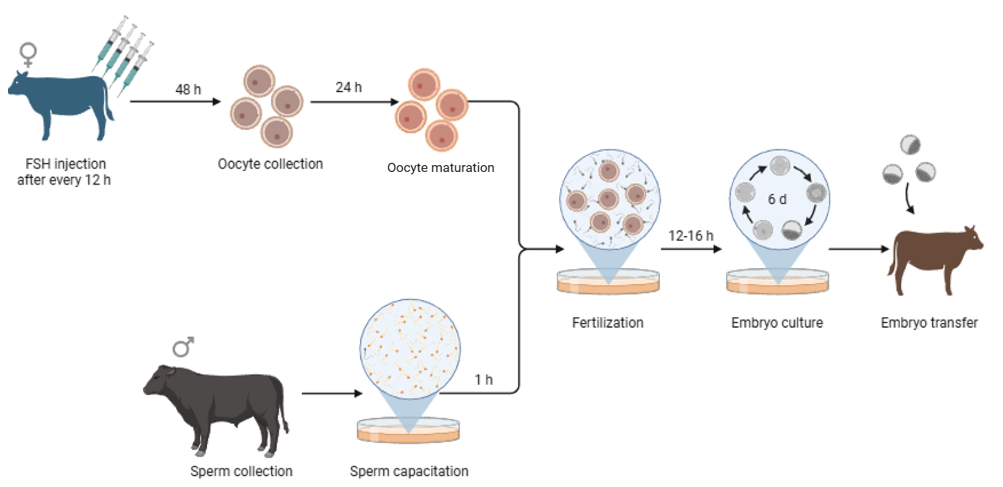
With around one million bovine embryos created in vitro annually, the advent of ARTs in the cow species is not far behind the medical front (Sjunnesson, 2020). In vitro fertilization (IVF) has created an exponential increase in the number of embryos in recent years (Fig. 3). For the first time in history, there were substantially more embryos created and transferred in vitro than in vivo worldwide (Sanches et al., 2019). The intricate process of IVF necessitates proper oocyte maturation, sperm selection, sperm capacitation, and IVF media. For heifers and cows, in vivo fertilization rates are approximately 90%. In bovines, before IVF, bull sperm are often treated by choosing the cells with the highest progressive motility. Moreover, cryoprotectants, seminal plasma, and other elements are eliminated. Spermatozoa are often prepared for IVF by centrifuging them through a gradient of concentration, such as a 45% Percoll mixture overlaid on a 90% solution (Wrenzycki et al., 2018). Cumulus oocyte complexes (COCs) are constantly present in the ovaries of domestic animals since most of them have continuous follicular waves. Consequently, the method of choice is often to harvest relatively young COCs and carry out the last stages of maturation in vitro. The first step in the selection procedure is aspirating follicles, usually by hand using syringes and needles, within a specific size range depending on the species. LH and FSH are added to the media during in vitro maturation (IVM), and occasionally, estradiol, growth hormones, and insulin as well. The medium is altered following IVM to encourage sperm capacitation and fertilization. Depending on the species, fertilization can last anywhere from a few hours to a day. Typically, embryos are categorized and assessed using the principles set out by the International Embryo Technology Society. Early blastocyst or morula stages are the most usual times for transfer back to a recipient animal, but later blastocyst stages and earlier embryos could potentially be transferred (Sjunnesson, 2020).
The selection and breeding of genetically superior animals, for which IVF is a useful tool, is an increasingly popular procedure in commercial dairies. However, despite improvements in IVF, the embryo production rate from total COCs remains between 30 and 40%. As a result, research facilities and businesses have been searching for alternatives that work together to enhance the current procedure and optimize techniques for using IVF in extensive dairy projects. IVF programs are currently being dramatically impacted by cow genetic testing. Dairy production has undergone a revolution thanks to genomic selection, which has decreased the cost of progeny testing in the past and shortened the breeding interval while also improving selection accuracy. Genomics analysis and the collection of gametes from prepubertal animals with desired features are becoming increasingly attractive to the commercial world. The latest generation of small ultrasound ovum pick up probes makes it possible to grow in vitro production of embryos from younger girls. Furthermore, before transfer procedures, genomic analysis has been used to assess the viability and quality of oocytes and even embryos (Sanches et al., 2019).
Ovum Pick Up
Oocytes can be extracted from antral follicles in live animals, particularly in cows and mares, using a non-invasive technique called ultrasound-guided transvaginal follicular aspiration for ovum pick-up (OPU). It was first created for assisted reproduction in humans to help with infertility. In the 1980s, it was applied to cattle for the first time in the Netherlands. OPU can be utilized in adult cows in a variety of physiological states, in elderly animals with non-genetic reproductive problems, and in calves and heifers as young as six months old. It proved to be a dependable and minimally intrusive technique for repeatedly harvesting (immature) oocytes from donors who are genetically highly desirable. It does not disrupt the donor's regular cycles of reproduction or production. By repeatedly recovering oocytes by OPU, we can produce the greatest number of animals. In addition to being a fantastic supply of oocytes for cloning and transgenesis, the recurrent recovery of oocytes using OPU speeds up the processes of animal selection and genetic improvement and enables us to produce the greatest number of offspring with high genetic value (López, 2020). The availability of a trustworthy in vitro embryo production technology is crucial for the process to be successful (Bols & Stout, 2018).
An aspiration pump, an oocyte collection tube-connected needle guiding system, and an ultrasonographic scanner with the proper transducer make up an OPU system. Although it's not required, cows can be given hyoscine-N butyl bromide treatment to induce intestinal relaxation and detomidine hydrochloride sedation before OPU. The feces are then extracted from the rectum, and to prevent undue straining during the transrectal manipulation, lidocaine (2%) is used to induce epidural analgesia. The vulva and perineum are carefully washed and disinfected after the tail has been pinned to one side. The OPU device, which contains the transducer and the needle guidance system, is then introduced into the vagina. To see the ovary and its follicles on the ultrasound screen, the operator fixes the ovary and presses it up to the transducer's head. The location of the follicle for a successful puncture is indicated on the screen by a biopsy line that has been coded into the scanner's software. The needle is then gradually advanced by the operator until the vaginal wall is punctured and the needle is seen as it enters the ultrasonic field. The ovary per rectum can be moved into a follicle by concurrently monitoring the needle's position and adjusting it (Layek et al., 2022). When the needle pierces the follicle, COCs are collected into the embryo filter, which contains the oocyte collecting media. Next, the foot pedal and the follicular fluid are used to activate the aspiration pump. The oocytes are located under a stereomicroscope, extracted using a glass pipette, and then placed in maturation media after being cleaned and the contents of the filter are transferred to a petri dish. After 24 hours of maturation, they will be fertilized and cultivated in vitro for 7 days to reach the blastocyst stage (Layek et al., 2022).
Sperm Transcriptomics
One issue facing the livestock business is infertility. These instances may result in a lengthy calving gap, which raises operating costs. Before each breeding season, male animals should undergo a breeding soundness examination. There's no assurance that a male who was fertile last year will surely be this year too. As a result, a regular selection process should be followed. On the other hand, sperm transcriptome analysis is one genetic trait that can be used to predict male reproductive potential. Transcriptome analysis, which detects male fertility, offers a more accurate and sophisticated technology evaluation (Indriastuti et al., 2022).
The study of mRNA during different phases of development, including spermatogenesis, is known as transcriptomics. In addition to delivering paternal genes to the egg, sperm also contain messenger RNA leftover from spermatogenesis. There are various cellular and biological processes linked to these transcripts. The investigation of sperm mRNA expression profiles and polymorphism in linked genes can be studied by the extremely effective approach of profiling these transcripts utilizing microarrays or next-generation sequencing technology (Choudhary et al., 2016). It has been discovered that a few mRNA populations or transcripts detected in spermatozoa may be important for fertilization. The true fertilization status of the sperm may be determined by analyzing the mRNA population in the sperm using RNA separation from the sperm and mRNA transcript profiling. This method is non-invasive and has the potential to be a useful tool for early screening of male animal fertility (Vijayalakshmy et al., 2018).
Nanotechnology
The science and technology of tiny, specialized objects that are smaller than 100 nm is known as nanotechnology (Ali et al., 2021). Numerous uses of nanotechnology in animal reproduction optimize overall reproductive performance at various stages, from diagnosing and treating reproductive disorders to detecting estrus and sorting and freezing sperm, and concluding with the direct interference of nanodevices during calving and managing reproductive issues like retained placenta (El-Sayed et al., 2020). It has been extensively shown that using nanoparticles can increase sperm protection and conception rates. AI can be improved by using nano-techniques, including non-invasive gamete bioimaging and nano-purification, which will ultimately improve the variety and selection of livestock traits. Due to their advantages over organic fluorescent molecules in terms of biocompatibility, photo-stability, and increased signal intensity, inorganic nanoparticles are becoming more popular in the field of theriogenology and are being employed for in vivo imaging of gametes and other cell types (Ali et al., 2021). In animal reproduction, cryopreservation of gonadal tissues, sperm, oocytes, and embryos has created a new and fascinating area of study. The next development in cryopreservation technology may involve the use of biocompatible metal nanoparticles to preserve cells and tissues at extremely high cooling rates. This will enable the biological materials to be rapidly and uniformly rewarmed to nearly physiological temperatures. Nonetheless, a small number of research investigations are using nanoparticles to cryopreserve cells and tissues (Meena et al., 2018).
CHALLENGES AND FUTURE PROSPECTS
Modern biotechnologies have become increasingly important and play a bigger role to increase production. Nevertheless, there are several obstacles to these methods, such as the dearth of databases on native livestock and its biodiversity, which includes features resistant to illness within species and breeds, productivity, and reproduction. The infrastructure, significant expense, and difficulty for stakeholders to access these techniques are additional barriers to realizing their full potential. The limited applicability of these strategies is further compounded by a lack of experience and a poor interaction between public and private partnerships. In addition to the biotechniques that have been mentioned, other related fields such as genomics, proteomics, bioinformatics, and other "omics" have already been used in a variety of reproductive fields, including cattle species. In the future, the application of these cutting-edge methods may shed more light on the molecular details of the reproductive process, including its disruption. To effectively leverage these proven technologies and deliver them to stakeholders, it is essential that clear policies are in place. This calls for a multi-institutional strategy to handle issues related to animal production and reproduction.
References
- Ali A, M Ijaz, YR Khan et al., 2021. Role of nanotechnology in animal production and veterinary medicine. Tropical Animal Health and Production 53:508.
- Baruselli PS, LA Abreu, VR Paula et al., 2023. Applying assisted reproductive technology and reproductive management to reduce CO₂-equivalentemission in dairy and beef cattle: a review. Animal Reproduction 20:20230060.
- Bols PE & TAJB Stout, 2018. Transvaginal ultrasound-guided oocyte retrieval (OPU: Ovum Pick-Up) in cows and mares. In: Reproductive Biotechnology (Niemann H & C Wrenzycki, Eds.): Springer, Cham, USA, pp:209-33.
- Choudhary K, KM Kavya, A Jerome et al., 2016. Advances in reproductive biotechnologies. Veterinary World 9:388-95.
- Daly J, MA McGettigan, GC Perry et al., 2020. Towards improving the outcomes of assisted reproductive technologies of cattle and sheep, with particular focus on recipient management. Animals 10:293.
- Dhami AJ, BB Nakrani, KK Hadiya et al., 2015. Comparative efficacy of different estrus synchronization protocols on estrus induction response, fertility and plasma progesterone and biochemical profile in crossbred anestrus cows. Veterinary world 8:1310.
- Diez C, P Duque, F Gómez et al., 2012. Cryopreservation of the bovine oocyte: current status and perspectives. Theriogenology 47:76-83.
- El-Sayed A, A Kamel & M Badr, 2020. Advanced applications of nanotechnology in veterinary medicine. International Journal of Veterinary Science and Medicine 27:19073-86.
- Faizah H, R D’Occhio & J Taylor, 2018. Multiple ovulation embryo transfer (MOET) in dairy cattle in Gatton. Conference proceedings, Gatton, Australia. pp:109-116.
- Ferré L, JF Garcia-Martinez, M Jimenez-Macedo et al., 2020. Recent advances in bovine in vitro embryo production: reproductive biotechnology history and methods. Animal 14:991-1004.
- Hansen PJ, 2014. Current and future assisted reproductive technologies for mammalian farm animals. In: Current and Future Reproductive Technologies and World Food Production (Lamb G & N DiLorenzo, Eds.): Springer New York, USA, pp:1-22.
- Hansen PJ, 2020. Implications of assisted reproductive technologies for pregnancy outcomes in mammals. Annual Review of Animal Biosciences 8:395-413.
- Henchion M, A Moloney, J Hyland et al., 2021. Trends for meat, milk and egg consumption for the next decades and the role played by livestock systems in the global production of proteins. Animal 15:100287.
- Horiuchi T & T Numabe, 1999. Intracytoplasmic sperm injection (ICSI) in cattle and other domestic animals: problems and improvements in practical use. Journal of Mammalian Ova Research 16:1-9.
- Huang Z, Y Gao, X Liu et al., 2019. Cryopreservation of farm animal gametes and embryos: recent updates and progress. Journal of Animal Science and Biotechnology 6:42-53.
- Indriastuti R, M Yudi & A Hidayat, 2022. Sperm transcriptome analysis accurately reveals male fertility potential in livestock. Animals 12:2955.
- Kumar PG, P Patel & N Patel, 2017. Artificial insemination: a tool to improve livestock productivity. Journal of Pharmacognosy and Phytochemistry 6:307-13.
- Layek S, SK Mohanty & TK Mohanty, 2022. Ovum pick-up and in vitro embryo production in bovine. In: Frontier Technologies in Bovine Reproduction (Kumaresan A & AK Srivastava, Eds.): Springer, Singapore, pp:211-32.
- López SR, 2020. Ovum pick-up (OPU) in cattle: an update. In: Biotechnologies Applied to Animal Reproduction (Gardon JC & K Satue, Eds.): Apple Academic Press, New York, USA, pp:139-83.
- Macmillan KL, 2010. Recent advances in the synchronization of estrus and ovulation in dairy cows. Journal of Reproduction and Development 56:42-7.
- Mapletoft RJ & JF Hasler, 2005. Assisted reproductive technologies in cattle: a review. Revue Scientifique et Technique (OIE) 24:393-403.
- Mastromonaco GF & N Songsasen, 2020. Reproductive technologies for the conservation of wildlife and endangered species. In: Reproductive Technologies in Animals (Presicce GA, Ed.): Academic Press, New York, USA, pp:99-117.
- Meena N, R Meena & A Sharma, 2018. Applications of nanotechnology in veterinary. International Journal of Science and Research 3:477-80.
- Menchaca A, 2023. Assisted reproductive technologies (ART) and genome editing to support a sustainable livestock. Animal Reproduction 20:20230074.
- Moore S & JF Hasler, 2017. A 100-Year review: reproductive technologies in dairy science. Journal of Dairy Science 100:10314-31.
- Nwoga C, N Ikeh, M Onodugo et al., 2021. Assisted reproductive technologies as veritable tools for improving production efficiencies of N’dama and Muturu cattle breeds in Nigeria: a review. In: Bovine Science – Challenges and Advances. IntechOpen, London, United Kingdom, pp:1–21.
- Parkinson TJ, GC Perry & JF Smith, 2019. Advantages and disadvantages of artificial insemination. In: Reproduction in Domestic Animals (Abubakar M, Ed.): IntechOpen, London, UK, pp:746-77.
- Parmar MS, S Parmar & R Patel, 2013. Intracytoplasmic sperm injection (ICSI) and its applications in veterinary sciences: an overview. International Journal of Advanced Research 1:266-70.
- Salamone DF, G Canel & R Rodriguez, 2017. Intracytoplasmic sperm injection in domestic and wild mammals. Reproduction 154:111-24.
- Sanches BV, F Zangirolamo & JR Silva-Santos, 2019. Intensive use of IVF by large-scale dairy programs. Animal Reproduction 16:394-401.
- Seidel GE Jr, 2015. Lessons from reproductive technology research. Annual Review of Animal Biosciences 3:467-87.
- Sjunnesson Y, 2020. In vitro fertilisation in domestic mammals—a brief overview. Upsala Journal of Medical Sciences 125:68-76.
- Srirattana K, S Imsoonthornruksa & P Ketudat-Cairns, 2022. Strategies to improve the efficiency of somatic cell nuclear transfer. Animals 23:1969.
- Tadesse T & H Bedada, 2018. Review on the major challenges and difficulties of farm animal cloning. Science Journal of Zoology 7:82-7.
- Tharasanit T & P Thuwanut, 2021. Oocyte cryopreservation in domestic animals and humans: principles, techniques and updated outcomes. Animals 11:2949.
- Verma OP, R Kumar, A Kumar et al., 2012. Assisted reproductive techniques in farm animals-from artificial insemination to nanobiotechnology. Veterinary World 5:301-10.
- Vijayalakshmy, K., et al. (2018). "Sperm Transcriptomics: an emerging technique to assess male fertility. International Journal of Current Microbiology and Applied Science 7:1188-200.
- Vikrama CP & NS Balaji, 2010. Use of assisted reproductive technologies for livestock development. Veterinary World 3:238.
- Vishwanath R & J Moreno, 2018. Semen sexing-current state of the art with emphasis on bovine species. Animal Reproduction 12:85-96.
- Warriach H, N Ahmad & S Ahmad, 2015. A review of recent developments in buffalo reproduction. Asian-Australasian Journal of Animal Sciences 28:451-5.
- Wilmut I, A Schnieke, J McWhir et al., 2015. Somatic cell nuclear transfer: origins, the present position and future opportunities. Philosophical Transactions of the Royal Society B 370:20140366.
- Wrenzycki C, D Herrmann & H Niemann, 2018. In vitro production of farm animal embryos. In: Animal Biotechnology (Niemann H & C Wrenzycki, Eds.) Springer, Cham, USA, pp:269-304.