
INTRODUCTION
Any variation from an individual's normal physiological or structural state brought on by a source other than an acute damage is referred to as a disease. The aberrant circumstances of a diseased organism are typically indicated by certain indications and symptoms. Pathology is the area of veterinary medicine that focuses on identifying the origin of disease, examining its development mechanism, examining the structural alterations linked to the disease process, and examining the functional effects of those alterations. Animal health, welfare, and economic sustainability are all impacted by infectious viral infections, which constitute a major challenge in livestock production globally. These illnesses, which impact a variety of livestock animals, including cattle, pigs, sheep, goats, poultry, and others, are brought on by a wide variety of viruses. Constructive disease management and preventive techniques in cattle depend on transmission, insight into the nature, clinical symptoms, and control mechanisms of infectious viral infections (Prasad et al., 2024).
Additionally, viruses are better able to coexist peacefully with their hosts without causing them to die. Some, like the Lentivirus group, cause relapsing illness by producing prolonged infections with antigenic drift and the formation of new antigenic strains. Animal viral infections provide serious obstacles for veterinary care, necessitating a multidisciplinary strategy for illness management, prevention, and control. In order to secure the health and wellbeing of animals, veterinarians are essential in the detection, diagnosis, and surveillance of diseases as well as in the creation and enactment of immunization programs, biosecurity measures, and treatment procedures. Research into the epidemiology, pathophysiology, and host-pathogen interactions of viral infections, as well as the creation of innovative diagnostic instruments, vaccinations, and treatments, is also aided by veterinary specialists (Prasad et al., 2024). Besides being aware of the consequences of their existence and the types of emergency measures that must be taken when they are identified, field veterinarians must always be on the lookout for the emergence of new illnesses in their practice areas.
CLASSIFICATION OF VIRAL DISEASE
Horses, donkeys and mules are all considered equine because of their many uses in companionship, transportation and agriculture. The health and welfare of horses across the world are threatened by equine viral infections. Viral infections are the source of these illnesses, which can impact the respiratory, gastrointestinal, and neurological systems of horses. It is essential to comprehend these illnesses in order to productively avoid, manage, and control them. An overview of some prominent equine viral diseases is given in Table 1 (Prasad et al., 2024).
Various varieties of domestic cattle produced for their meat (beef), milk, and byproducts like leather are referred to as bovines. Cattle can contract bovine viral illness by coming into close contact with one another and by being exposed to polluted settings. The signs of bovine viral illness are severe and enduring. Reduced reproductive performance, higher calf mortality, and possible long-term effects on heart health and productivity are some of the major consequences of bovine viral illness for the cow business. The subsequent bacterial infection may also be aggravated by this. Common bovine viral diseases and their causative agents are described in Table 2 (Prasad et al., 2024).
Domestic birds grown for their flesh (chicken, turkey, and duck), eggs (chicken and duck), and feathers are mentioned as poultry. Both commercial and backyard flocks are affected by poultry viral infections, which are a major problem in the global poultry business. Because of higher death rates and lower output, these illnesses can result in significant economic losses. Maintaining flock health and food safety requires a clear idea of the traits, spread of infection, clinical symptoms, prevention, and control methods of chicken viral infections. Information on common poultry diseases, their causes, and symptoms is provided in Table 3 (Prasad et al., 2024).
Swine, also referred to as pigs or hogs, are domesticated animals kept for their flesh. The global swine industry is seriously threatened by swine viral infections. Numerous viruses from various families, such as the Coronaviridae, Picornaviridae, Flaviviridae, Orthomyxoviridae, and others, are responsible for these illnesses. Vaccination, biosecurity protocols, surveillance, and prompt outbreak response are all examples of successful disease control techniques. Common swine diseases have been discussed in Table 4 (Prasad et al., 2024).
Small ruminant livestock species, such as sheep and goats, are grown all over the world for their meat, milk, fiber, and other products. Goats provide meat (chevon), milk, and fiber (cashmere, mohair), whereas sheep are prized for their wool, meat (lamb and mutton), milk, and skins. Viruses from various families, such as the Herpesviridae, Paramyxoviridae, Flaviviridae, immunization, biosecurity protocols, surveillance, and rapid response, as well as the Retroviridae families, are responsible for these illnesses. Therefore, viral illnesses give rise to serious risks to the production, well-being, and health of sheep and goat populations across the world. Major viral diseases of sheep and goat are discussed in given Table 5 (Prasad et al., 2024).
| Disease | Causative agent | Symptoms |
|---|---|---|
| Equine influenza | Influenza A virus H7N7 and H3N8 | Nasal discharge, inappetence, stagnation, whoop, fever, and respiratory distress |
| Horse Herpesvirus | EHV-1, 2, 3, 4 and 5 | Coughing, chill, respiratory distress, and neurological disorders like incoordination |
| African Horse Sickness | African Horse Sickness Virus | Edema in the head and neck, depression, jaundice, difficulty in swallowing |
| Equine Rotavirus | Equine Rotavirus | Watery diarrhea, Dehydration, inappetence, weight loss, abdominal discomfort, |
| Equine Rhino Pneumonitis | Equine Herpesvirus | Mainly, respiratory symptoms are affected, including fever, whooping and nasal discharge |
| Disease | Causative agent | Symptoms |
|---|---|---|
| Bovine Viral Diarrhea | Bovine Viral Diarrhea Virus | Severity of symptoms may vary based upon the strain of virus and immunological status of affected cattle such as, fever, depression, nasal discharge, reduced appetite, dehydration, diarrhea, abortion in pregnant cows also birth of infected calves. |
| Malignant Catarrhal Fever | Alcelaphine Herpesvirus 1 (AHV-1) and Ovine Herpesvirus 2 (OHV-2) | Ocular discharge, delirium, gastrointestinal disorders, respiratory symptoms and neurological disorders |
| Foot and Mouth Disease | Aphthovirus Virus-A, C, O | Blisters on the foot and mouth regions of infected animals, drools, discomfort, reduced appetite, reduced weight, behavioral changes, respiratory syndromes, limping |
| Blue Tongue Fever | Blue Tongue Virus | High fever, nasal discharge, swelling of lips and tongue, erosion around teats, mouth and nose, abortion or deformed lambs |
MODES OF TRANSMISSION OF VIRAL INFECTIONS AND ANTIVIRAL THERAPY
Viral disease can be transmitted from one animal to another and their mode of transmission depends upon the specific virus, host species involved, and environmental factors. It is crucial to understand transmission dynamics to implement effective control and preventive measures. Common modes of virus transmission are direct contact, indirect contact, aerosol transmission, vector-born transmission (Prasad et al., 2024). While some antiviral medications are simply used topically, others are given systemically. Antiviral medications have a limited therapeutic index. Designing effectual vaccinations is the traditional method of controlling viral illnesses, although this isn't always practicable. Antiviral therapy's goals are to eliminate the virus with the least amount of harm to the host and stop additional viral invasion (Riviere & Papich, 2018).
Anti-Herpesvirus Agents: Nucleoside Analogs
Acyclovir and valacyclovir
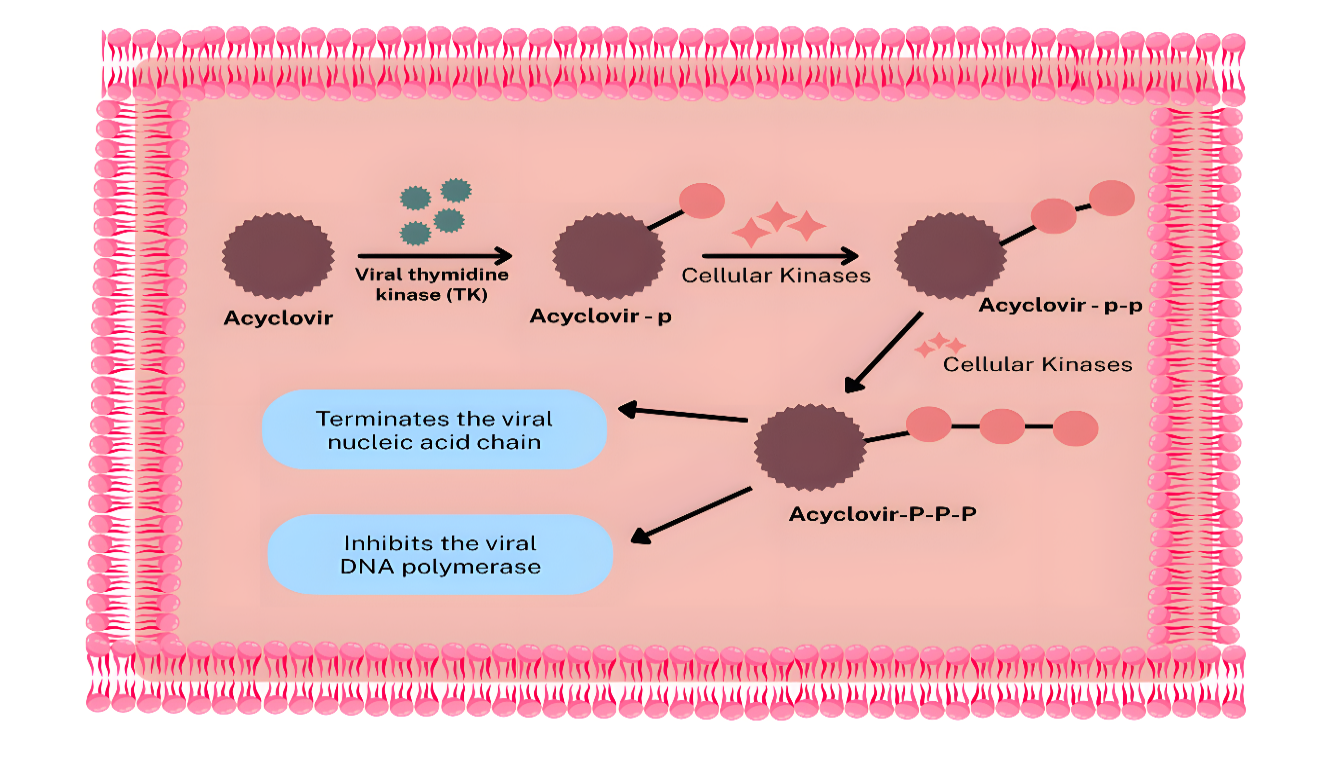
The prototypical nucleoside analogue of the purine, deoxyguanosine, is acyclovir (Zovirax). At therapeutic dosages, acyclovir has selective activity against herpesviruses with least immediate impact on host cells. This specificity results from acyclovir being selectively phosphorylated in infected cells to its active form, acyclovir triphosphate. Viral thymidine kinase mono-phosphorylates acyclovir 200 times more aptly than the mammalian enzyme, which helps explain its high therapeutic index and appropriate selectivity. Following successive phosphorylation by viral and cellular enzymes, the triphosphate form is created, which acts in competition with deoxyguanosine triphosphate to partially block DNA polymerases of viruses. When acyclo-GTP is merged into viral DNA strands, elongation is ceased. Cells infected by virus exhibit 40-100 fold higher effectiveness in converting acyclo-GMP to acyclo-GTP (Fig. 1). Prodrug of acyclovir is valacyclovir which is quickly broken down in its biologically active form following oral absorption. Valine enables the active transport of valacyclovir into enterocytes, where it is metabolized to acyclovir through hepatic esterases and plasma (Riviere & Papich, 2018).
| Disease | Causative agent | Symptoms |
|---|---|---|
| Avian Influenza | Influenza A Viruses | Reduced appetite, decreased egg production, edema, sudden death, and neurological disorders |
| Newcastle Disease/ Ranikhet disease | Avian paramyxovirus type 1 (APMV-1) | Respiratory symptoms like coughing, sneezing, nasal discharge, wheezing, and difficulty in breathing. Gastrointestinal symptoms like diarrhea, weight loss, reduced appetite, and dehydration. Neurological disorders like paralysis. |
| Avian Infectious Bronchitis | Avian Coronavirus | Respiratory symptoms like sneezing, coughing, and difficulty in breathing. Reduced egg production, reduced food and water consumption, and conjunctivitis |
| Marek’s Disease | MDV (Marek’s disease virus) | Tumor, paralysis in one or both legs, wings, ocular disease, blindness, and immunosuppression |
| Avian leucosis | Avian leucosis viruses (ALV) are rotaviruses | Tumor, weight loss, poor growth, anemia, reduced egg production, immune suppression, reproductive disorders |
| Infectious Laryngotracheitis | Gallid herpesvirus type 1 (GaHV-1) | Severe respiratory distress, nasal discharge, inflammation, decreased food and water consumption, cyanosis |
| Egg Drop Syndrome (EDS) | Avian Adenovirus | Abnormal eggs, poor shell quality, reduced fertility, drop egg production |
| Disease | Causative agent | Symptoms |
|---|---|---|
| African Swine Fever | Asfarviridae | Reduced appetite, high fever, weakness, skin discoloration, vomiting, diarrhea, reproductive and neurological disorders |
| Classical Swine Fever | Pestivirus genus in family Flaviviridae | High fever, reduced appetite, gastrointestinal and respiratory signs weakness |
| Disease | Causative agent | Symptoms |
|---|---|---|
| Capripoxviruses | Capripoxvirus genus within the Poxviridae family | Skin lesion, reduced appetite, reduced milk production, reduced weight, adenomegaly |
| Blue Tongue disease | Orbivirus within the family Reovridae | Salivating, oral lesion, edema in neck or head, conjunctivitis, respiratory symptoms, lameness, abortion |
| Contagious Ecthyma | Parapox Virus, belongs to family Poxviridae | Blisters, lesion, vesicles |
Spectrum of activity and pharmacokinetics of acyclovir: Few herpesviruses of veterinary significance have the extreme sensitivity to acyclovir. Acyclovir is 100 times more effective against feline herpesvirus type-1 (FHV-1) than HSV-1. On the other hand, equine herpesvirus type-1 (EHV-1) and HSV have equivalent susceptibility to acyclovir (Riviere & Papich, 2018). In dogs, the drug's oral bioavailability is excellent (>80%), whereas in horses, it is poor and inconsistent (<5%). With increasing dosages, dogs' oral absorption of acyclovir lessens (Krasny et al., 1981). Oral absorption in horses was not noticeable. On the other hand, when acyclovir is given intravenously to horses, the elimination half-life is 5–53 hours (Garre et al., 2007; Maxwell et al., 2008). Where the mechanism of clearance has been assessed in species, the primary method of acyclovir elimination was glomerular secretion (de Miranda et al., 1981, 1982; Krasny et al., 1981). As the oral bioavailability of acyclovir is limited so, valacyclovir (Valtrex), a valine ester prodrug is used. Valacyclovir possesses much higher bioavailability following oral administration than acyclovir in both cats and horses (more than two times larger in cats and 6–15 times greater in horses) (Garre et al., 2007; Owens et al., 1996; Maxwell et al., 2008).
Clinical uses and adverse effects: Acyclovir and Valacyclovir is used to treat herpesvirus infections and equine herpesvirus infections (EHV-1) in cats and horses (Riviere & Papich 2018). High dose of valacyclovir leads to nephrotoxicity and bone marrow suppression (Nasisse et al., 1997). High concentration of acyclovir can cause renal tubular necrosis which results in crystalluria (Sawyer et al., 1988).
Penciclovir
Topical administration of penciclovir is employed in veterinary practice against herpesvirus infection, within one hour of lesion appearance, every 2 hours. Primary effect of penciclovir is to shorten the duration of clinical symptoms instead of completely eliminating them. Its mechanism of action resembles that of acyclovir; however, the half-life within infected cells is approximately 10-20 times longer (Gill & Wood, 1996). Almost all HSV isolates have similar sensitivity to penciclovir and acyclovir due to their comparable mechanism of action (Riviere & Papich, 2018).
Pharmacokinetics: In rodents, penciclovir has lower oral absorption than acyclovir, therefore, femciclovir (diacetate ester prodrug) which has much more oral bioavailability and more lipophilicity, was developed. After the oral administration famciclovir undergoes metabolism by intestinal esterases and hepatic aldehyde oxidase, resulting in formation of active drug, penciclovir (Gudmundsson & Antman, 2007). Post oral absorption, the drug shows an elimination half-life of about 3-4 hours (Thomasy et al., 2012b). In horses, oral administration of 20 mg/kg famciclovir produced a peak penciclovir plasma concentration (2.9 pg/kg), which exceeded the value observed in cats (Tsujimura et al., 2010). Interestingly, the elimination half-life of penciclovir in horses (34 hours) was prolonged, yet similar to that of acyclovir following valacyclovir administration in horses (Maxwell et al., 2008a; Tsujimura et al., 2010).
Clinical uses and Adverse effects: Famciclovir at present is the only antiviral medication that is regularly delivered systemically to cats exhibiting upper respiratory or ocular symptoms of FHV-1 infection. Although, a reduced dosage is generally preferred in clinical use (Malik et al., 2009). It comes in 125, 250, and 500 mg tablets and doctors frequently choose to deliver one 125-mg pill every 8 to 12 hours (Riviere & Papich, 2018). Initially anorexia and polydipsia reported in cats, but in a follow up investigation, dosing at 90 mg/kg every 8 hours reported no adverse effects (Thomasy et al., 2011).
Idoxuridine and trifluridine
Trifluridine (5-trifluoromethyl-2) and Idoxuridine (5-iodo-2'-deoxyuridine) are thymidine analogues and are merely effective against DNA viruses, namely herpesvirus and poxvirus. The substances are phosphorylated within the host cell and then fused into developing viral and DNA strands of mammals, just as other nucleoside analogues. For the treatment of herpetic keratitis the only topical ophthalmic medication that is commercially available is trifluridine. Idoxuridine is commercially available as an ointment (0.5%) or compounded solution (0.1%). Although trifluridine (also called trifluorothymidine) has a greater affinity for viral DNA, it also irritates the conjunctiva the most in vivo (Nasisse et al., 1989). Idoxuridine is the preferred option in cats with herpetic keratitis (Stiles, 1995). The ocular preparations need to be administered many times a day because, like the majority of other anti-herpetic medications, the antiviral benefits stop after the drug leaves the eye (Riviere & Papich 2018).
Cytarabine and vidarabine
The nucleoside analogues of cytosine and adenine are Cytarabine (referred as cytosine arabinoside) and vidarabine, respectively. Herpesviruses, poxviruses, vaccinia, rabies, cytomegalovirus, and most likely the hepatitis B virus are all the DNA viruses and have in vitro action against DNA viruses. These substances are transformed into triphosphate form by cellular enzymes, and eventually function as competitive inhibitors of DNA polymerase. Consequently, adverse effects of these medications have restricted their therapeutic use in both people and animals after their parenteral administration. The antineoplastic drug, cytarabine is commonly used to manage leukemia and lymphoma in cats and dogs. Additionally, it is effective in treating canine meningo-encephalomyelitis and can be delivered either by injection or subcutaneous administration (Crook et al., 2013). Vidarabine shows reduced efficacy against feline herpesvirus than trifluridine or idoxuridine, although sometimes it is used to treat herpetic keratitis when used topically as compounded 3%ointment (Nasisse et al., 1989). Cross resistance between idoxuridine and vidarabine may not occur in all viral isolates, which is the primary benefit of vidarabine over the other antiherpetic medications mentioned (Eriksson & Oberg, 1979).
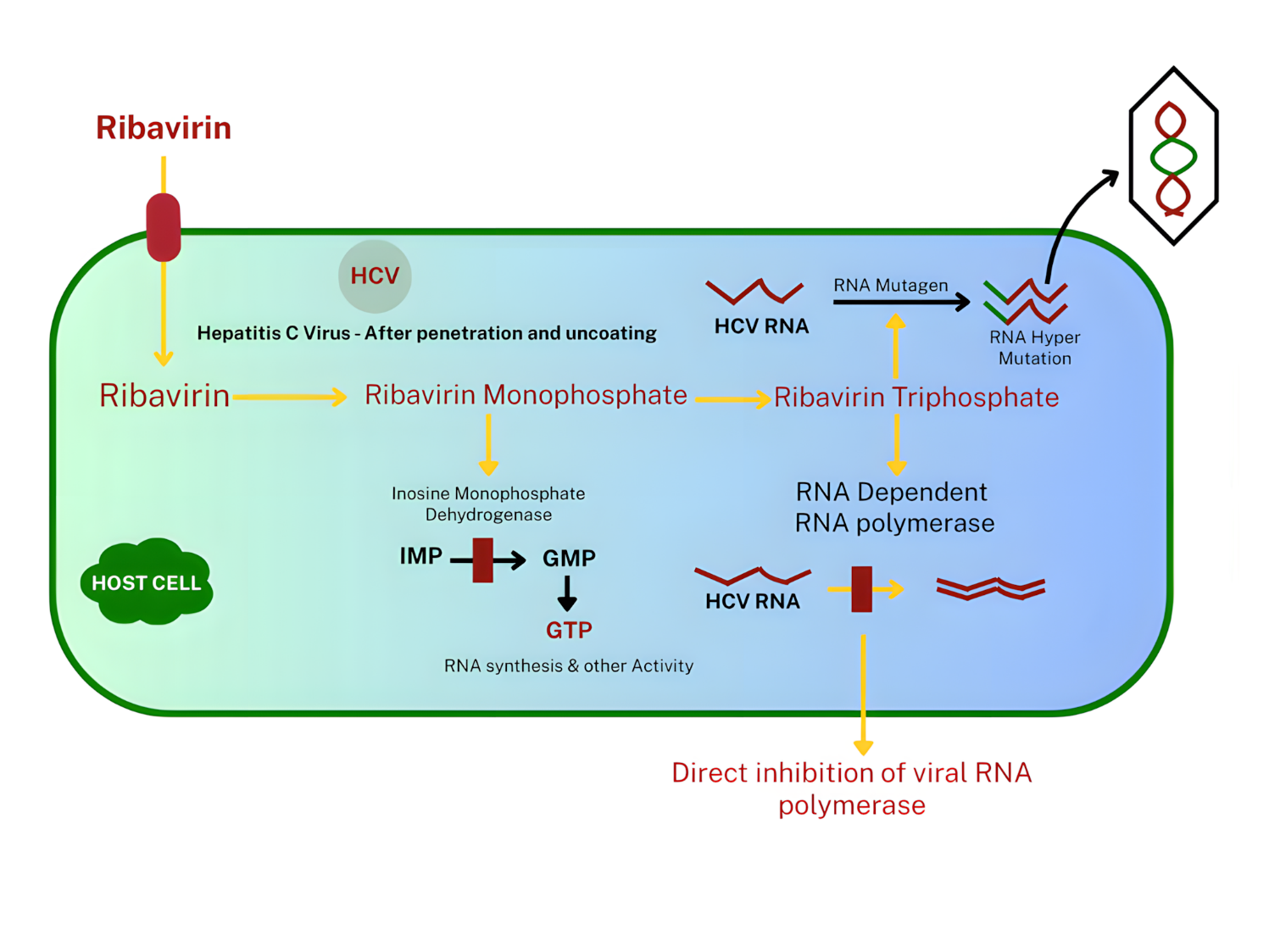
Ribavirin
A guanosine analogue called ribavirin (Virazole) prevents a variety of RNA and DNA viruses from replicating in vitro (Te et al., 2007). Ribavirin is believed to have several different locations of action. Firstly it is mono-phosphorylation by adenosine kinase to ribavirin 5'-monophosphate, than ribavirin S'-triphosphate, that completely block RNA polymerase activity, thereby hindering viral replication (Fig. 2). Due to their wide spectrum of side effects, the majority of research examining ribavirin's effectiveness in treating veterinary illnesses has been unsuccessful. In cats infected with calici-virus, oral ribavirin can exacerbate the conditions of cats. Observed adverse effects included bone marrow suppression, weight loss, icterus and elevation of hepatic enzymes (Povey, 1978). When drug is given to healthy cats it also effects them (Weiss et al., 1993). However, no such effects were detected in dos receiving 60 mg/kg over a two-week period (Canonico, 1985).
Oseltamivir
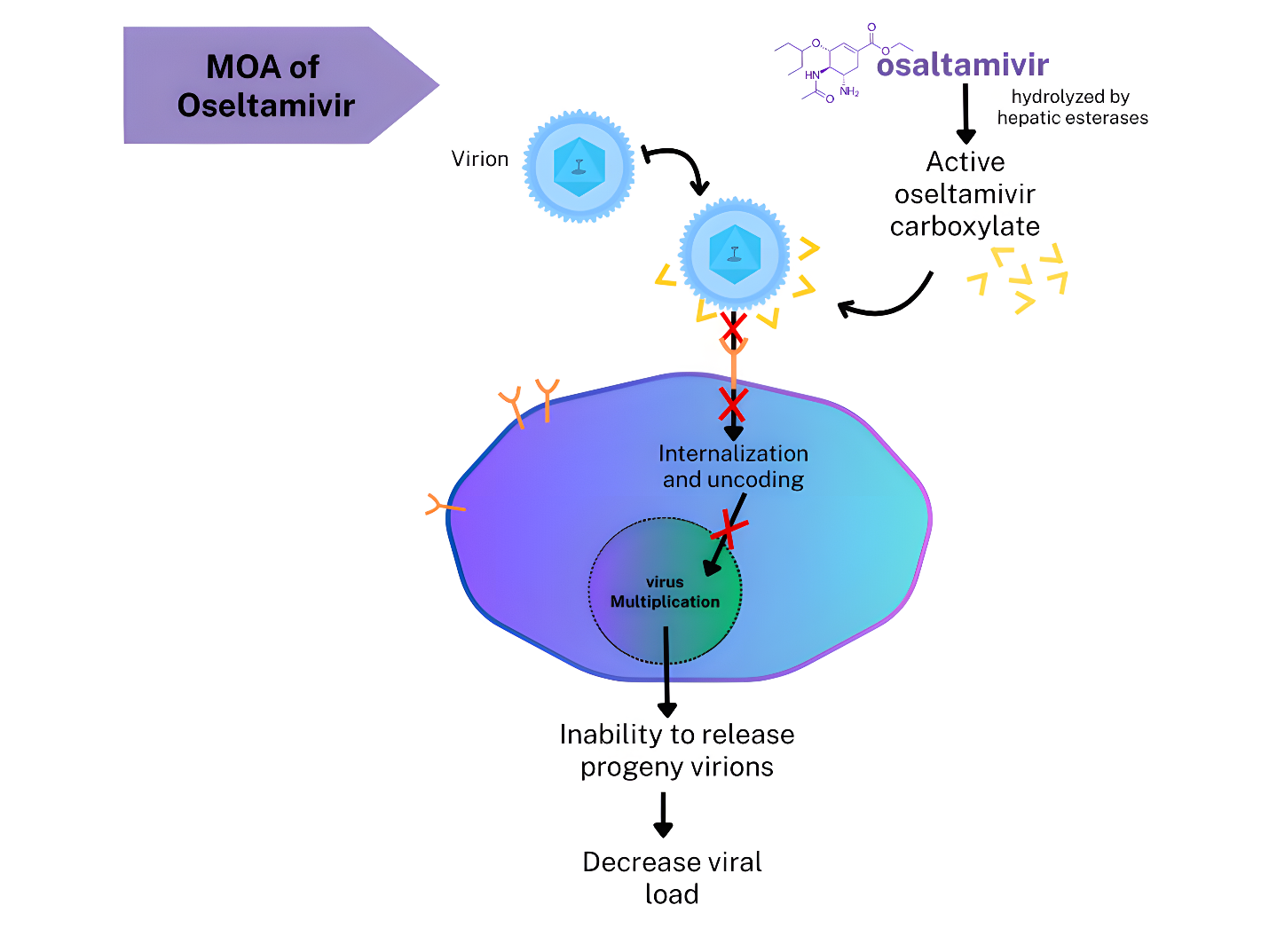
Hepatic esterases transform the ester prodrug oseltamivir phosphate (Tamiflu) into oseltamivir carboxylate, its active metabolite. Oseltamivir competitively inhibit the enzyme neuraminidase, which influenza viruses utilize to budding the viral particles replicating within infected cells (Fig. 3). Twelve strains of the equine influenza-A virus (EIV) have been examined for oseltamivir's in vitro effectiveness, which shows the variation in antiviral susceptibility of oseltamivir across influenza strains (Yamanaka et al., 2006). Plasma concentration of oseltamivir carboxylate subsequent to oral dosing of 2 mg/kg of oseltamivir phosphate in horses was comparable to the plasma concentration of people with similar dose (Yamanaka et al., 2007). The biological half-life of oseltamivir carboxylate in horses is 2.5 hours, due to rapid elimination rate the dosing interval may need to be less than 10 hours (Riviere & Papich, 2018).
Clinical uses and Adverse effects: Oseltamivir administration did appear to decrease viral shedding, fever, and secondary bacterial pneumonia. For effective therapeutic results, oseltamivir treatment should be started as early as possible, ideally within 48 hours after onset of symptoms (Rodriguez et al., 2011). Due to resistance of avian influenza virus to oseltamivir, extra label administration of neuraminidase inhibitors in poultry is banned by FDA (Lee et al., 2011). However, oseltamivir is used more regularly in USA not against canine parvovirus itself but to reduce secondary bacterial infections. Dogs have experienced nausea and vomiting with oseltamivir, however this side effect may be lessened by diluting oseltamivir suspension (Savigny & Macintire, 2010). There is no side effect in horses (Riviere & Papich, 2018).
Amantadine and Rimantadine
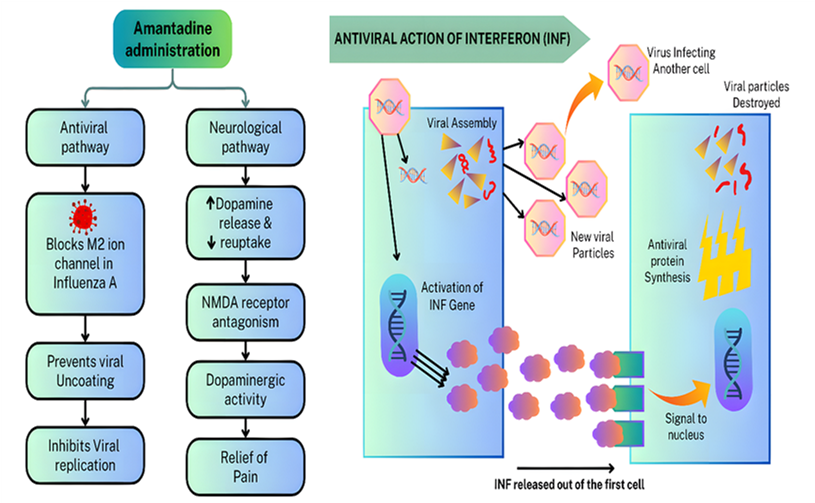
Water soluble cyclic amines Amantadine hydrochloride (1-adamantanamine hydrochloride, Symmetrel) and rimantadine (Flumadine) have antiviral properties against limited group of RNA viruses, such as myxoviruses, paramyxoviruses, togaviruses, and most strains of influenza virus A. In comparison to amantadine, rimantadine demonstrates three to four time’s higher in vitro potency against the influenza virus A (Betts, 1991). They inhibit late-stage assembly of virus. However, influenza strains can develop resistance against amantadine, therefore, extra label use of amantadine and rimantadine in poultry has been prohibited by FDA. For the treatment of influenza in horses, investigations suggested that amantadine suppress viral replication at the concentration of 300 ng/ml while rimantadine inhibits at concentration of 30 ng/ml which is more potent than amantadine (Rees et al., 1997, 1999). Amantadine cause side effects like, anxiety and dry mouth in dogs and cats. Toxicity can also develop when doses are doubled. Oral administration of rimantadine shows adequate absorption with maintained plasma concentration above estimated concentration throughout dosing interval, with almost no side effect (Rees et al., 1999).
Treatment of pain: Pain syndromes in animals are treated by using amantadine. The pain relieving mode of action of amantadine is, the blocking of neurotransmitter, NMDA (N-methyl-D-aspartate), because NMDA sensitize pain in animals. Dogs respond better when 3-5 mg/kg concentration of amantadine is administered orally with meloxicam, once daily. Oral doses ranging from 2 to 10 mg/kg every 8-12 hours in dogs and 2 mg/kg every 24 hours in cats are considered appropriate for pain management (Pozzi et al, 2006).
Interferons
Certain mammalian cells produce polypeptide molecules called interferons in response to various stimuli, including viral infections. They are strong cytokines with immune-modulating, antiviral, and anticancer effects (Pestka et al., 1987). Interferons are of three different types, such as, type I, which comprises a-IFN, p-IFN, and a-IFN; type II, which contains y-IFN; and type III, which consists of Xs-IFN (Hoffman et al., 2015). Interferons have indirect antiviral activity. Interferons enhance the IFN-responsive gene promoters in host cells and produce variable antiviral mechanisms. Interferons have special property of transferring their antiviral activity from one cell to another cell (cell to cell), without requiring additional interferons (Fig. 4; Riviere & Papich 2018). Parenteral, Nasal and oral formulations of interferons are available, administration through parenteral and nasal routes carries a risk of adverse reactions, including the development of neutralizing antibodies and the appearance of clinical symptoms such as anorexia, malaise, and hyperthermia (Roney et al., 1985). As interferons are the peptides, so they can be inactivated in the gastrointestinal tract by digestive enzymes, but still oral administration is effective in many species (Cummins et al., 1999). The mechanism behind is the sensitization of lymphocytes by the uptake of IFN through oropharyngeal-associated lymphoid tissues. Lymphocytes are than released into the circulation where they perform antiviral activity at the site of infection (Bocci, 1991).
Alpha interferon
Interferons and acyclovir can be used in combination to block viral replication (Weiss, 1989). The injectable formulation of a-IFN in humans has been used employed off-label in veterinary species by both oral and parenteral routes. A low dose of 0.5 U in cats, administered orally produces antiviral activity (Cummins et al., 1988), but oral dosing in horses failed to produce effects (Seahorn et al., 1990).
Omega Interferon
In Europe, Japan, New Zealand, Australia and Mexico, omega interferons are licensed for the treatment of viral diseases in dogs and cats. Genetically engineered feline omega interferon is a type 1 interferon that is closely linked to a-interferon (Yang et al., 2007). Like a-IFN and p-IFN, this IFN-co interacts to the same receptors. After IV dosing, IFN-co demonstrates half-life of 1.4 hours in dogs and 1.7 hours in cats. It exhibits limited distribution because it is bounded by receptors in infected cells, and can be quickly eliminated from kidneys. In cats with feline retrovirus and dogs with parvovirus, interferons are used to stimulate immune cells. The veterinary formulation, which is reconstituted before to use, comes in vials containing 5-10 million units. For cats the dosage is 1.0 MU/kg SC for five days in a row. For dogs, an intravenous dosage of 2.5 million units (MU/kg) should be given once daily for three consecutive days (Riviere & Papich 2018).
Adverse effects
Generally, interferons are well tolerated in animals, but it may cause nausea and vomiting. After 36 hours of injection, it may cause hyperthermia in some animals. It might cause mild diarrhoea or soft stool in cats. There may be modest drop in red blood cells, white blood cells, and platelets as well as an increase in alanine aminotransferase concentration. After a week of final injection, these metrics often return to normal. During the course of therapy, cats may experience temporary weariness. Avoid vaccinating cats or dogs that are getting interferon (Riviere & Papich 2018).
LIMITATIONS AND CHALLENGES IN VETERINARY ANTIVIRAL THERAPY
The wide variety of viruses that may infect animals is one of the biggest obstacles to creating antiviral treatments for veterinary medicine. Viruses, like Bird flu, African swine fever, and Foot and Mouth Disease (FMD), are frequently extremely infectious and can result in catastrophic financial losses. Meanwhile, diseases like canine parvovirus, feline leukaemia virus, and respiratory ailments brought on by viruses like herpes virus and distemper, harm pets like dogs and cats. Due to the unique methods of infection, reproduction, and pathogenesis of each of these viruses, specialized treatment approaches are needed. Antiviral therapy research and development must be extremely specialized due to its intricacy, and lengthens the time and expense needed for discovery and approval. The strict regulatory environment for veterinary medications is another obstacle to the development of antiviral medications in veterinary medicine. Since regulatory bodies like the European Medicine Agency (EMA) and the U.S Food and Drug Administration (FDA) demand comprehensive safety and effectiveness studies, veterinary medications frequently encounter more difficulties in obtaining regulatory clearance than human medications. These studies need a lot of money, time, and resources. Moreover, there are frequently few financial incentives for creating antiviral therapies for animals. Increased funding for veterinary virology research, cooperation between veterinarians, scientists and pharmaceutical firms, as well as investigation of novel treatment strategies, are required to get over these challenges. Despite these obstacles, progress is being made, especially in creation of tailored antiviral medications and vaccines. Antiviral treatments will be crucial to enhancing animal health and preserving public and agricultural health with further advancements (Hesham, 2024).
References
- Betts RF, 1991. Antiviral agents in respiratory infections. In: Seminars in Respiratory Infections 6:147-57.
- Bocci V, 1991. Absorption of cytokines via oropharyngeal-associated lymphoid tissues: does an unorthodox route improve the therapeutic index of interferon? Clinical Pharmacokinetics 21:411-7.
- Canonico PG, 1985. Efficacy, toxicology and clinical applications of ribavirin against virulent RNA viral infections. Antiviral Research 5:75-81.
- Crook KI, PJ Early, KM Messenger et al., 2013. The pharmacokinetics of cytarabine in dogs when administered via subcutaneous and continuous intravenous infusion routes. Journal of veterinary pharmacology and therapeutics 36:408-11.
- Cummins JM, MW Beilharz & S Krakowka, 1999. Oral use of interferon. Journal of interferon and cytokine research 19:853-7.
- Cummins JM, MB Tompkins, RG Olsen et al., 1988. Oral use of human alpha interferon in cats. Journal of Immunotherapy 7:513-23.
- de Miranda P, HC Krasny, DA Page et al., 1981. The disposition of acyclovir in different species. The Journal of Pharmacology and Experimental Therapeutics 219:309-15.
- de Miranda P, HC Krasny, DA Page et al., 1982. Species differences in the disposition of acyclovir. The American Journal of Medicine 73:31-5.
- Eriksson B & B Öberg, 1979. Characteristics of herpesvirus mutants resistant to phosphonoformate and phosphonoacetate. Antimicrobial Agents and Chemotherapy 15:758-62.
- Garré B, K Shebany, A Gryspeerdt et al., 2007. Pharmacokinetics of acyclovir after intravenous infusion of acyclovir and after oral administration of acyclovir and its prodrug valacyclovir in healthy adult horses. Antimicrobial Agents and Chemotherapy 51:4308-14.
- Gill KS & Wood MJ, 1996. The clinical pharmacokinetics of famciclovir. Clinical pharmacokinetics 31:1-8.
- Gudmundsson OS & Antman M, 2007. Case study: famciclovir: a prodrug of penciclovir. In: Prodrugs: Challenges and Rewards Part 1 (Stella VJ, RT Borchardt, MJ Hageman et al., Eds.): Springer, New York, USA, pp. 1231-9.
- Hesham M, 2024. Antiviral therapies in veterinary medicine: challenges in treating animal viral infections. Journal of Veterinary Science and Medical Diagnosis 13:1-6.
- Hoffmann HH, WM Schneider & CM Rice, 2015. Interferons and viruses: an evolutionary arms race of molecular interactions. Trends in Immunology 36:124-38.
- Krasny HC, P de Miranda, MR Blum et al., 1981. Pharmacokinetics and bioavailability of acyclovir in the dog. The Journal of Pharmacology and Experimental Therapeutics 216:281-8.
- Lee DH, YN Lee, JK Park et al., 2011. Antiviral efficacy of oseltamivir against avian influenza virus in avian species. Avian Diseases 55:677-9.
- Malik R, NS Lessels, S Webb et al., 2009. Treatment of feline herpesvirus-1 associated disease in cats with famciclovir and related drugs. Journal of Feline Medicine and Surgery 11:40-8.
- Maxwell LK, BG Bentz, DWA Bourne et al., 2008. Pharmacokinetics of valacyclovir in the adult horse. Journal of Veterinary Pharmacology and Therapeutics 31:312-20.
- Nasisse MP, DC Dorman, KC Jamison et al., 1997. Effects of valacyclovir in cats infected with feline herpesvirus 1. American Journal of Veterinary Research 58:1141-4.
- Nasisse MP, JS Guy, MG Davidson et al., 1989. In vitro susceptibility of feline herpesvirus-1 to vidarabine, idoxuridine, trifluridine, acyclovir, or bromovinyldeoxyuridine. American Journal of Veterinary Research 50:158-160.
- Owens JG, MP Nasisse, SM Tadepalli et al., 1996. Pharmacokinetics of acyclovir in the cat. Journal of Veterinary Pharmacology and Therapeutics 19:488-90.
- Pestka S, JA Langer, KC Zoon et al., 1987. Interferons and their actions. Annual Review of Biochemistry 56:727-77.
- Povey RC, 1978. Effect of orally administered ribavirin on experimental feline calicivirus infection in cats. American Journal of Veterinary Research 39:1337-41.
- Pozzi A, WW Muir & F Traverso, 2006. Prevention of central sensitization and pain by N-methyl-D-aspartate receptor antagonists. Journal of the American Veterinary Medical Association 228:53-60.
- Prasad RD, KD Sonawane, RS Prasad et al., 2024. A review on livestock viral disease and their management. ES General 5:1227.
- Rees WA, JD Harkins, M Lu et al., 1999. Pharmacokinetics and therapeutic efficacy of rimantadine in horses experimentally infected with influenza virus A2. American Journal of Veterinary Research 60:888-94.
- Rees WA, JD Harkins, WE Woods et al., 1997. Amantadine and equine influenza: pharmacology, pharmacokinetics and neurological effects in the horse. Equine Veterinary Journal 29:104-10.
- Riviere JE & MG Papich, 2018. Veterinary pharmacology and therapeutics. 10th ed. Wiley-Blackwell, Hoboken, New Jersey, pp:988-1032.
- Rodríguez A, E Díaz, I Martín-Loeches et al., 2011. Impact of early oseltamivir treatment on outcome in critically ill patients with 2009 pandemic influenza A. Journal of Antimicrobial Chemotherapy 66:1140-9.
- Roney CS, CR Rossi, PC Smith et al., 1985. Effect of human leukocyte interferon on prevention of infectious bovine rhinotracheitis virus infection of cattle. American Journal of Veterinary Research 46:1251-5.
- Savigny MR & DK Macintire, 2010. Use of oseltamivir in the treatment of canine parvoviral enteritis. Journal of Veterinary Emergency and Critical Care 20:132-42.
- Sawyer MH, DE Webb, JE Balow et al., 1988. Acyclovir-induced renal failure: clinical course and histology. The American Journal of Medicine 84:1067-71.
- Seahorn TL, GK Carter, JG Martens et al., 1990. Effects of human alpha interferon on experimentally induced equine herpesvirus-1 infection in horses. American Journal of Veterinary Research 51:2006-10.
- Stiles J, 1995. Treatment of cats with ocular disease attributable to herpesvirus infection: 17 cases (1983-1993). Journal of the American Veterinary Medical Association 207:599-603.
- Te Helen S, G Randall & DM Jensen, 2007. Mechanism of action of ribavirin in the treatment of chronic hepatitis C. Gastroenterology and Hepatology 3:218.
- Thomasy SM, JC Covert, SD Stanley et al., 2012. Pharmacokinetics of famciclovir and penciclovir in tears following oral administration of famciclovir to cats: a pilot study. Veterinary Ophthalmology 15:299-306.
- Thomasy SM, CC Lim, CM Reilly et al., 2011. Evaluation of orally administered famciclovir in cats experimentally infected with feline herpesvirus type-1. American Journal of Veterinary Research 72:85-95.
- Tsujimura K, M Yamada, SI Nagata et al., 2010. Pharmacokinetics of penciclovir after oral administration of its prodrug famciclovir to horses. Journal of Veterinary Medical Science 72:357-61.
- Weiss RC, 1989. Synergistic antiviral activities of acyclovir and recombinant human leukocyte (alpha) interferon on feline herpesvirus replication. American Journal of Veterinary Research 50:1672-7.
- Weiss RC, NR Cox & MK Boudreaux, 1993. Toxicologic effects of ribavirin in cats. Journal of Veterinary Pharmacology and Therapeutics 16:301-16.
- Yamanaka T, K Tsujimura, T Kondo et al., 2006. Efficacy of oseltamivir phosphate to horses inoculated with equine influenza A virus. Journal of Veterinary Medical Science 68:923-8.
- Yamanaka T, M Yamada, K Tsujimura et al., 2007. Clinical pharmacokinetics of oseltamivir and its active metabolite oseltamivir carboxylate after oral administration in horses. Journal of Veterinary Medical Science 69:293-6.
- Yang LM, Xue QH, Sun L et al., 2007. Cloning and characterization of a novel feline IFN-ω. Journal of Interferon and Cytokine Research 27:119-28.