
INTRODUCTION
Infectious diseases continue to impose a major worldwide burden, despite significant advances in antimicrobial therapy and the community medicine framework. Vaccination offers a proactive and cost-effective preventive strategy by stimulating the immune system to prevent infections rather than treat established disease (Bonanni et al., 2014). The efficacy of vaccination in humans is epitomized by the eradication of smallpox, near‐elimination of Poliomyelitis and dramatic reductions in measles, tetanus and other vaccine-preventable diseases. Apart from disease prevention, vaccines reduce hospitalization admissions, prevent long-term complications and limit the outbreak of antimicrobial resistance by lowering the need for antimicrobial therapy (D'Amelio et al., 2016). Similarly, in veterinary medicine, vaccines have led to the elimination of rinderpest, effective control of foot-and-mouth disease in many regions, and reduction of zoonotic reservoirs that harm both animal and human health (Rémy et al., 2015).
Vaccination in domestic animals increases the rate of productivity, including increased milk production, improved growth rates, and fertility rate, while continuously supporting food availability and economic equilibrium in low, middle income countries (Marsh et al., 2016). Pharmacologically, vaccines differ from drugs in that their effects are mediated primarily through the immune system via antigen presentation, immune cell activation, memory induction, and effector responses (Pollard and Bijker, 2021). These processes translate into clinical protection similarly to how a drug’s action results in symptom cure. From pharmacokinetics, timing, dose, route of administration and vaccine synthesis are important parameters. Understanding vaccines through the pharmacology perspective, such as antigen delivery method, adjuvants modifying responses, and immune memory has become increasingly important as new technologies such as viral vectors, mRNA, and nanoparticle platforms continue to reshape the field (Li et al., 2024).
Furthermore, vaccination in animals provides a lot of benefits like improved animal health and productivity, and protection of humans through reduced zoonotic transmission. This integrated “One Health” perspective underscores the interconnectedness of humans, animals, and pathogens. This integrated approach acknowledges that human beings, animals and community health are interconnected, supporting coordinated vaccine strategies across species to reduce infections and worldwide pandemics. Vaccines, therefore, occupy a unique position at the intersection of immunology, pharmacology, veterinary medicine, human health, and public policy (Hafez & Attia, 2020).
HISTORICAL PERSPECTIVE AND PUBLIC-HEALTH IMPACT
Vaccination dates back to early veterinary practices and was revolutionized by Edward Jenner’s smallpox vaccine in the late 18th century. Jenner’s approach made the foundation for the concept of adaptive immunity and indicated that calculated vulnerability to the pathogen could confer long time safety without causing severe disease. Over time, vaccines have evolved from live‐attenuated organisms to inactivated or killed vaccines, toxoid vaccines (e.g., diphtheria, tetanus), conjugate vaccines (e.g., Haemophilus influenzae type b), and modern recombinant and nucleic‐acid based platforms (Pollard & Bijker, 2021).
These new techniques have enlarged the scope of preventable diseases, enhanced safety profiles, and marked good response to emerging infectious diseases as shown by the development of Covid -19 vaccines (Andey et al., 2024). The public-health impact in humans has been profound; large-scale childhood immunization programs have prevented millions of deaths and offered a high degree of cost-effectiveness. Like measles vaccination alone has reduced an estimated 25 million deaths worldwide since 2000 showing the excellent effect of immunization programs (Aribi, 2024). In veterinary medicine, widespread vaccination campaigns have played a critical role in the eradication and control of animal diseases, thereby safeguarding food production and minimizing economic losses.
The eradication of Rinderpest only, the second disease after smallpox to be eradicated testifies to the power of globally coordinated vaccination efforts. Beyond protection of vaccinated individuals directly, vaccines lower circulation of pathogen by employing herd immunity, thereby safeguarding populations that are unvaccinated or immunocompromised (D'Amelio et al., 2016). These benefits at the level of community also include reducing transmission acroos species, from animals to humans, signifying the value of merging vaccination plans of human and animal under the pyramid of one health. They also reduce the need for antimicrobials, thereby delaying resistance, lower rates of hospitalization and long-term complications, and contribute to overall economic stability and growth. In general, vaccination constitute keystone of disease control, showing how new scientific advancements, pharmacology and community health can intersect to control infectious diseases on worldwide scale (Brito et al., 2013).
IMMUNOLOGICAL PRINCIPLES
Vaccine as an Immunological Drug
In pharmacological terms, a vaccine administers a defined amount of antigen and adjuvant into the body often intramuscularly or subcutaneously. Its “absorption” involves drainage to lymph nodes, uptake by antigen‐presenting cells (APCs) such as dendritic cells and macrophages and distribution of activated immune cells (Diotti et al., 2022). The “pharmacodynamics” are reflected in B-cell activation, antibody production, T-cell responses, generation of memory cells, and deployment of effector mechanisms. Unlike traditional drugs, vaccines do not act by modifying disease pathways rather, they prime the immune system to respond rapidly upon frequent exposure to the pathogen. Instead, they boost the immune system to recognize and respond quickly to a pathogen upon exposure, comparable to beginning a pharmacological memory dose that stimulates responsiveness. From a drug formation point of view, vaccines can be considered immunological therapeutics that minimize the effects of pathogen exposure without causing any illness, maintaining prophylaxis through well controlled stimulation of the immune system (Alemayehu et al., 2015).
Innate Immune Activation and Antigen Presentation
When a vaccine is administered, the antigen is often co‐delivered with an adjuvant that provides a “danger” signal, triggering innate immune activation. APCs such as dendritic cells (DCs) and macrophages capture the antigen, become activated via pattern-recognition receptors, migrate to local lymph nodes, and present antigen on major histocompatibility complex (MHC) molecules (Wang & Xu, 2020). This step is analogous to a drug reaching its target tissue and initiating a receptor response; however, in this case the immune system itself serves as the target. The magnitude and quality of these innate signals determine the nature of adaptive immunity such as Th1 verses Th2 polarization, memory formation, and mucosal verses systemic immune responses. Adding on, the innate immunity activation results in stimulation of natural killer cells, macrophages and neutrophils, participating to immediate pathogen killing(Wang & Xu, 2020).
B-cell and T-cell Responses
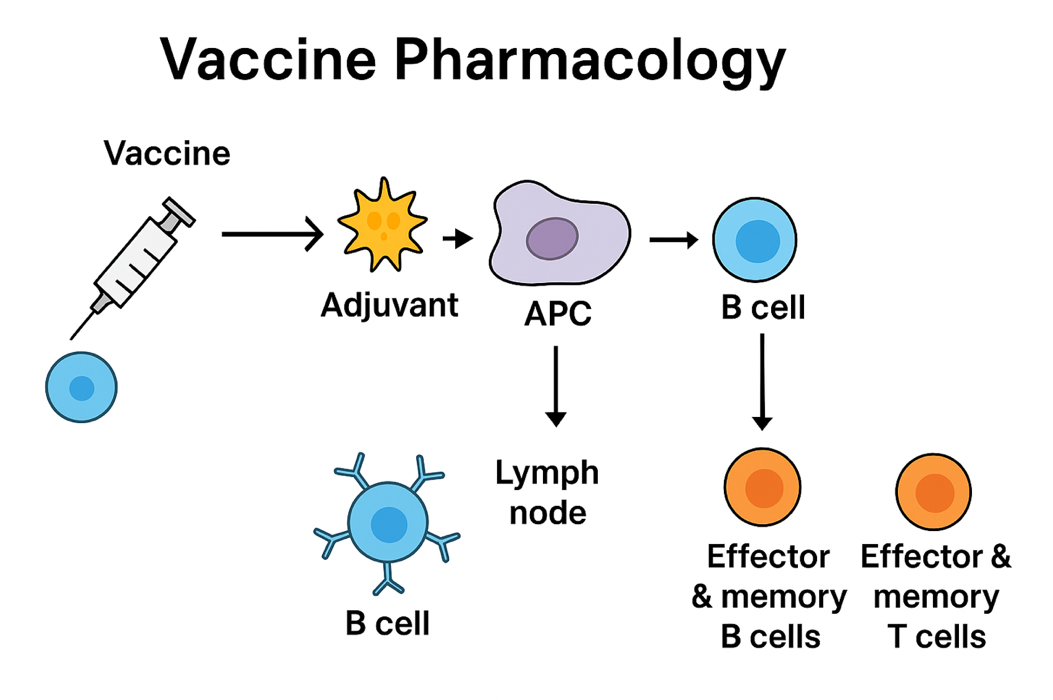
Within the lymph node, APCs stimulate naïve CD4+ T helper cells and, in some vaccines CD8+ cytotoxic T cells. Helper T cells promotes B‐cell activation, germinal‐center reactions, affinity maturation, class switching (e.g., IgM → IgG, IgA), and the formation of long‐lived plasma cells and memory B cells as shown in the Fig. 1. Cytotoxic cells, point and destroy the host cells infected with pathogens such as viruses (Hua & Hou, 2020). Cytotoxic T cells eradicate infected host cells particularly those harboring intracellular pathogens. The overall result is durable adaptive immunity characterized by rapid and effective response upon re‐exposure known as immunological memory (Pollard & Bijker, 2021). This memory supports the principles of booster agents and doses, which play pharmacological role to reeducate the immune system, enhancing antibody titers, T cells and overall protective efficacy. Generally, vaccines make the immune system into pharmacological organ that helps in both short term and long-term memory formation, differentiating them from conventional drugs.
Mucosal vs Systemic Immunity
The site and route of vaccination strongly influence the type of immunity response elicited. Intramuscular or subcutaneous injection primarily induces systemic IgG responses and circulating T cells. In disparity mucosal vaccines administered orally, intranasally or via other mucosal routes The goal is to generate mucosal IgA responses and tissue-resident memory T cells in mucosa‐associated lymphoid tissue (MALT) (Amanna & Slifka, 2010). These mechanisms are essential for defence against pathogens that enter through mucosal surfaces such as influenza virus and enteric bacteria. In veterinary medicine, both the route of administration and species‐specific immune architecture are critical determinants of vaccine efficacy (Warimwe et al., 2021). For example, oral bait vaccination for wildlife exemplifies how immunological pharmacology can be adapted to field conditions to attain effective immunization. Mucosal immunization makes the benefits of making both systemic and local immunity and shows a pharmacological approach in reducing the risk of natural infections. The absorption and synthesis of antigens by route of mucosal barriers depend on epithelial transport, M-cell uptake, and interaction with local dendritic cells, synthesizing formulation and add on selection critical for vaccine stability and uptake (Warimwe et al., 2021).
Memory and Boosters
Re-exposure of Memory B and T cells to an antigen allow rapid and strong secondary responses, whereas booster doses help to magnify and extend this memory of immune system. From a pharmacological point of view, a booster dose is comparable to repeated administration of drug that strengthens the immune system to a higher responsiveness threshold. The key considerations when creating optimal schedules of vaccination are the dynamics of decreasing immunity and the half‐life of antibodies derived from plasma cell (Amanna & Slifka, 2010). Factors such as age, comorbidities, and prior antigen exposure influence memory development and determine the timing and necessity of booster doses. Factors like age, comorbidities, nutritional level and antigen contact strongly increase the strength and resolution of memory responses. Like, older adults often exhibit immune degeneration requiring higher antigen doses or combined formulations to achieve good results. On the other hands infants may reveal weaken immune response or maternal antibody response involving time boosters. From veterinary medicine point of view, booster injections are streamlined based on species immunity, production cycles, vulnerability, maintaining immunological efficacy with economic and supply chain workability (Zhao et al., 2021). Use of primary and booster doses shows a pharmacological fine tuning of immune kinetics, ensuring globally safety in both animals and human beings.
TYPES OF VACCINES AND PHARMACOLOGICAL CONSIDERATIONS
Live-Attenuated Vaccines
Live-attenuated vaccines contain organisms that are capable of limited replication under controlled conditions. This replication results in prolonged antigen exposure and mimics natural infection, thereby generating robust cellular and humoral immunity often after a single dose (Aida et al., 2021). From a pharmacological standpoint, the antigen effectively “amplifies” within host tissues, providing persistent stimulation and consistent memory formation. Examples include measles, mumps and rubella and polio vaccine in humans and Newcastle disease in animals (Sohag & Chebloune, 2021). The timeline of protection is long lived making suspensions and formulations especially well-planned from pharmacological perspective. However, certain risk exists in immunocompromised individuals, there is potential for reversion to virulence or disease induction; strict cold-chain maintenance is required and immunologic interference (e.g., maternal antibodies) may attenuate the immune response (Pollard & Bijker, 2021). Therefore, proper dose maintenance, proper vaccination schedule to target community are key pharmacological points.
Inactivated (Killed) and Toxoid Vaccines
In inactivated and toxoid vaccines organisms or toxins that have been transformed to non-pathogenic forms by physical or chemical treatment are used. They offer excellent safety because replication does not occur, but their immunogenicity is generally lower compared to live vaccines (Aribi, 2024). Pharmacologically, the availability of antigen is only for a brief period of time which create the need for multiple doses and the incorporation of adjuvants for stimulation of sufficient response. There is a repeated need for booster doses to maintain protection. Adjuvants play an important role as pharmacological boosters, prolonging antigen presentation and stimulating the immune activation system. For example, inactivated polio, hepatitis A, rabies, and vaccines like diphtheria and tetanus, which consist of chemically bacterial exotoxins to draw out neutralizing antibodies without lethal effect (Pollard & Bijker, 2021). However, immunity needs regular boosters, especially in populations with limited capacity of immune memory.
Subunit, Recombinant and Conjugate Vaccines
These vaccines consist of purified antigenic components like proteins, polysaccharides, or peptides, often manufactured by using recombinant DNA technology. Vaccines like hepatitis B virus vaccine and HPV vaccines which are genetically engineered are incorporated in this method. Conjugate vaccines which linked polysaccharide antigen to a protein carrier, enhance T-cell help and memory formation especially important in infants (Zhao et al., 2021). For example, Haemophilus influenzae type b (Hib) and pneumococcal conjugate vaccines have suddenly reduced invasive bacterial diseases. Their advantages include well defined composition, favorable safety profiles, and scalable manufacturing. However, they often exhibit lower inherent immunogenicity, depend on adjuvants and multiple doses, and sometimes may induce narrower immune responses limited to the included antigens. In the veterinary field coupling and subunit vaccines are increasingly demanded for illnesses like foot-and-mouth disease, providing safe options where live vaccines may interact with diagnostic assays and trade regulations (Sohag & Chebloune, 2021).
Viral-Vector and Nucleic-Acid (mRNA/DNA) Vaccines
Viral-vector vaccines, such as those based on adenovirus or poxvirus deliver gene encoding target antigen genes into host cells where the antigen is expressed endogenously and presented through intracellular antigen‐presentation pathways e.g. MHC I and II. mRNA vaccines encapsulated with lipid nanoparticles, introduce codon‐optimized mRNA that directs intracellular antigen synthesis without using a replicating vector. From a pharmacological view, these represent intracellular delivery systems that produce antigen endogenously, leading to strong cellular immunity and humoral responses. mRNA vaccines offer rapid design, scalable production, and favorable safety due to their non‐integrating and transient expression (Litvinova et al., 2023). Nonetheless limitations include complex cold-chain logistics (especially in early formulations), reactogenicity, and ongoing questions regarding the durability of induced immunity. Moreover, immunogenicity and time period of immunity remain active fields of investigation. Veterinary tools of mRNA and vector-based platforms are under supervision for diseases like African swine fever and avian influenza, highlighting the translational potential of these new-era vaccines.
ADJUVANTS AND DELIVERY SYSTEMS
Immune responses are enhanced by adjuvants by stimulating natural immunity, generating reservoir of antigen, or ameliorating targeting of antigen presenting cells (APC). There are some traditional adjuvants like aluminum salts (alum) which are still widely used. Newer formulations are also available which include oil-in-water emulsions (MF59), Toll-like-receptor agonists (CpG, MPL), saponins (QS-21), and combinations (Tizard, 2020). Platforms for advanced delivery including liposomes, nanoparticles, microneedle patches or aerosol sprays regulate the distribution, motion and location of exposure to antigen. From a pharmacological perspective, adjuvants and delivery system enhance the “agonist potency” of antigen by increasing immune system responsiveness and reducing required dose (dose-sparing effect). Conventional adjuvants like aluminum salt consider the most widely used due to their outstanding safety record and make a local antigen deposition by gradually releasing antigen and enhancing Th2-antibody responses (Shuja et al., 2022).
However, alum is not very effective at stimulating strong cellular (Th1 or CD8+) immunity, elevating the production of newer adjuvant systems. New generation adjuvants consist of oil-in-water emulsions like MF59 and AS03, which provoke recruitment of immune cells to the injection site; Toll-like receptor (TLR) agonists such as monophosphoryl lipid A (MPL) and oligodeoxynucleotides, which destroy pathogen-associated molecular patterns (PAMPs) and drive potent Th1 responses; and saponin-based adjuvants like QS-21, used in the AS01 system which enhance both humoral and cellular immunity (Tizard, 2020). Combination adjuvants, which use multiple mechanisms like MPL + QS-21 + liposome shows example of pharmacological approach to excellent immune profiles.
ROUTE, DOSE, SCHEDULE AND FORMULATION
The route of administration is intramuscular, subcutaneous, intradermal oral and intranasal. Significantly influence antigen distribution and the kinetics of immune induction each route decides which tissues, immune compartments first interact with the antigen, enhancing the balance between systemic and mucosal responses (Diotti et al., 2022). Intramuscular and subcutaneous injections locally elicit systemic IgG and T-cell immunity, however, mucosal routes like oral or intranasal delivery mostly stimulate secretory IgA antibodies and tissue-resident lymphocytes in mucosa-associated lymphoid tissue (MALT) (Aida et al., 2021) .
The vaccine dose influences both the magnitude of response and formation of immunological memory. Scheduling including priming and booster doses determines the durability of immunity and the extent of affinity maturation. Insufficient dosage may lead to bring out protective immunity, while majority of high doses can cause reactogenicity. Study of dose response is a mandatory area of both preclinical and clinical vaccine development. Different vaccination schedules consist of priming and booster doses, are made to balance both innate immunity activation and long-term time period. The gap between doses helps in maturation of B cells, memory T cells expansion, and antibody production (Natalini et al., 2022). Booster doses helps to “retrain” the immune system, balancing antibody levels and enhancing response span against antigenic variants. Vaccine formulations encompasses antigen concentration, adjuvant content, excipients, and stabilizers; in veterinary contexts, additional factors thermo stability, logistics of mass administration and species-specific immune characteristics are critical for optimal efficacy (Sinani & Şenel, 2025).
VACCINE PHARMACOKINETICS AND DOSING STRATEGIES
Although vaccines do not follow classic pharmacokinetic absorption and metabolism profiles, analogous rules apply:
Absorption and Distribution: After administration of injection, antigen drains through lymphatic system to local lymph nodes where local inflammation and activation of APC increase uptake. Mucosal vaccines approach mucosa associated lymph nodes MALT and produce limited immune reactions (Andey et al., 2024).
Persistence: Live vaccines increase their exposure to antigen by multiplying in host cells. Fixed dose of antigen is given by inactivated vaccines and it often depend on stored adjuvants to increase antigen presentation (Andey et al., 2024).
Clearance: APCs aare reponsile for the processing and removal of antigen. There is a chance of formation of immune complexes. Moreover, residual adjuvant may persist for variable period of time (Aida et al., 2021).
Dose kinetics: The loading dose that is administered initially gives rise to baseline immunity, whereas booster shots magnify and refine the immunological response. The interval between doses influences the maturation of immune system and quality of memory cell (Aribi, 2024).
Special populations: Variation of immune response de[ends on age (infants, elderly), immunosuppression, pregnancy and coexisting disease conditions, which sometimes create the need for higher doses or specialized formulations (e.g., high-dose influenza vaccines for elderly individuals). Veterinary dosing varies by species, weight and immune status of animals.
These pharmacokinetic and adjustable dosing are required for designing powerful immunization techniques.
VACCINES IN HUMAN DISEASE PREVENTION
Vaccination markedly decreases morbidity, mortality and the overall expenditure on healthcare and is among best health strategies in public for protecting human from diseases. Their mechanism of action involves encouragement of immune system to recognize specific pathogens and guard against them to prevent illness. Owing to vast programs for immunization, smallpox has been exterminated. The cases that can be averted with the use of vaccination have dramatically decreased such as poliomyelitis, measles and other diseases (Henderson, 2011). Vaccination safeguards the individual as well as provide immunity with in population. It shields groups at risk like little children, the aged people and those patients which have compromised immune systems. Vaccines based on recombinant, genetic carriers (viral-vector) and mRNA are among the examples of latest progress in development of vaccine. This has further improved safety of vaccine, its efficacy and its quick response to surfacing contagious diseases (Amanna & Slifka, 2010).
HERD IMMUNITY AND INDIRECT EFFECTS
Herd immunity arises when a sufficient proportion of the population is immune, thereby limiting transmission chains and protecting unvaccinated or immunocompromised individuals. At this peak point every infected person have the capacity to transmit the disease to more than one host on average, causing the epidemic to diminish. For example, pneumococcal conjugate vaccines reduce. Bacterial carriage and transmission indirectly protecting infants and older adults indirectly. Good community benefits are seen with, where maintaining high coverage leads to a sudden reduction in outbreaks and indoor measles, rubella, and pertussis vaccines admissions. Herd immunity thresholds depend on the basic reproduction number (R₀) of pathogen and vaccine efficacy (Aguas et al., 2020). From pharmacological point of view and community medicine perspective, herd immunity declares population-level “dose–response” phenomenon, where spikes of vaccinations protects both direct and indirect populations. This overall combine immunity also diminishes used of antimicrobials, hospital admissions, by expanding the cost-values of vaccination programs (Sohag & Chebloune, 2021).
In veterinary medicine and context of One Health, mass immunity is equally sensitive. Massive number of animals and livestock vaccinations against diseases like foot-and-mouth disease, brucellosis, and rabies interferes with zoonotic transmission cycles, protecting both wildlife populations and human communities. So, balancing herd, innate immunity cut cross individual protective measures forms the foundation of societal clinical pharmacological measures and worldwide health security (Shuja et al., 2022).
Key Case Studies
Measles is a highly infectious viral disease (R₀ ~12–18). High-coverage vaccination campaigns have dramatically reduced incidence and mortality. Outbreaks continue to occur when immunization gaps persist. Influenza requires annual vaccination due to gradual mutation of antigen. Effecacy of vaccines changes from season to season. To create a strong immune reponse, adjuvant and formulations of high dose target elderly people (Andey et al., 2024). The pandemic of COVID-19 displayed the fast growth and distribution of modern platforms of vaccine. Vaccines consisting of mRNA and viral vector were manyfatured, approved and deployed in a yeaar’s time. These efforts highlighted immune‐priming, booster strategies, global rollout management, variant adaptation, and real‐world effectiveness in reducing hospitalization and mortality (Shuja et al., 2022). In case of rabies, post exposure vaccination is highly effective in preventing disease. However, the greatest human benefit arises from mass vaccination of canine populations. Demonstrating the one health principle of zoonotic disease control.
Randomized controlled trials, post-licensure observational studies, and modelling demonstrate that vaccines are among the most cost-effective medical interventions. Vaccination reduces hospital admissions, complications, antimicrobial usage, and long-term sequelae (e.g., post-polio syndrome, congenital rubella). Global immunization programs also contribute to economic development by reducing absenteeism and alleviating healthcare burden (Alemayehu et al., 2015).
Veterinary Vaccines
Vaccines are essential in veterinary medicine for maintenance of animal health. They play an important role in improving indicators of productivity such as speed of growth, fertility and yield of milk. They also contribute in enhancing profit output in livestock farming (Roth & Sandbulte, 2021). The prevalence of infectious diseases is reduced by efficacious immunization programs. This leads to decreased requirement of antibiotics and contribution to the fight against worldwide resistance to antimicrobials. Veterinary vaccinations are very important for safeguarding health of people by ceasing the spread of zoonotic agents causing disease from animals to people. According to the model of One Health, ecosystems, animals, and health of humans are all closely connected and vaccinating animals assist in safeguarding all three mentioned. Therefore, vaccines for animals are key to public health because they encourage sustainable agriculture, guarantee supplies for safe food and reduce the economical deficit in animal production (Sohag & Chebloune, 2021).
Animal vaccines are available for livestock (cattle, pigs, poultry), companion animals (dogs, cats), and wildlife (oral bait vaccination for foxes, raccoons) (Sohag & Chebloune, 2021). Vaccine types i.e., live, inactivated, subunit, vector, and even mRNA platforms are available. Delivery strategies must consider species behavior, herd dynamics, farm logistics, cost, and cold-chain infrastructure. Oral baits for wildlife exemplified tailored delivery for immunological and practical reasons (Rémy et al., 2015; Roth & Sandbulte, 2021).
Case Studies in Veterinary Vaccination
Rinderpest eradication: Rinderpest were eliminated in 2011 which was a notable success through systemized vaccination worldwide and monitoring (Sohag & Chebloune, 2021).
Rabies control: Large scale campaigns for vaccination of dog reduce cases of rabies in human. Canine vaccination diminishes the risk for pathogen reservoir and exposures to human (Bonanni et al., 2014).
Foot-and-Mouth Disease (FMD): Vaccination, combined with movement restrictions and surveillance, is essential in endemic regions. Serotype diversity complicates vaccine matching (Aida et al., 2021).
Avian Influenza (H5N1): Animal vaccination protect poultry, reduce culling, reducing zoonotic risk, and support trade. A WOAH/FAO 2025 emphasized that vaccinating animals decreases human spillover and trade disruption (Monath, 2013).
Despite the widespread use of veterinary vaccines, their evaluation and regulatory frameworks differ from human vaccines. Human vaccine efficacy is typically measured via controlled trials, whereas in animals, challenge studies, seroconversion, and field effectiveness are used. Large models comprising of animals (e.g., pigs, cattle) usualy forecast immune responses of human in the better way than small rodents, calling attention towards translational pharmacology (Aida et al., 2021).
One Health Implications
Vaccinating animals not only protects animal health and productivity but also interrupts zoonotic transmission. One Health applications classify vaccines into three frameworks (Knight-Jones et al., 2014).
- Vaccines for humans or livestock where neither transmits disease.
- Vaccines for domestic animals to protect both animals and humans from zoonosis.
- Vaccines for wildlife reservoirs to block spillover transmission.
This integrated approach highlights veterinary vaccines as pharmacological tools with human‐health impact.
SAFETY AND PHARMACOVIGILANCE
Vaccines bear the weight for side effects, although benefits are irresistibly greater tham risks. Some of the common reactions to vaccines include mild symptoms like pain, redness and pyrexia. Serious reactions are rare but can occur like anaphylaxis, reaactions mediated by immune system. These severe reactions require careful monitoring and drug safety. The occurance of some adverse effects such as Guillain–Barré syndrome, after administration of influenza vaccines together with adjuvant have been reported and attenuated. To maintain public trust clarity and diligent evaluation is necessary. Risk and safety assessment in animals also take impacts of production into account which include yield of milk, fertility and residual effects for food animals and reactions specific to species. Monitoring and quality control of vaccines is pivotal due to minor regulatory margins and extensive utilisation in animals. Vaccination dose, its route of administration, formulation and schedule modifications can alleviate the risks of harms like immune activation other than at target area, overstimulation by adjuvants or interactions with other diseases in host or formulation problem of antigen and adjuvant (Aguas et al., 2020).
VACCINE DEVELOPMENT AND REGULATORY PHARMACOLOGY
Vaccine development proceeds through antigen identification, preclinical testing vivo, clinical trials, for Phase I–III in humans; challenge and field trials in animals, regulatory submission, manufacturing scale-up, and post-licensure monitoring (Knight-Jones et al., 2014). Animal models are essential for safety and immunogenicity testing. Human outcomes are usually better predicted by models comprised of large animal rather than small animals but are they are more expensive. Experimental research tests parameters corresponding to pharmacokinetic and pharmacodynamics modelling. They usually include dose of antigen, effect of adjuvant, route and timings of administration (Monath, 2013). Vaccines must comply with standards of Good Manufacturing Practice (GMP). They must ensure potency, purity, stability, sterility and controlled temperature environment. Consistency in results in batches is important. Assays for effectiveness generally depend on immunologic responses. For animal vaccines, efficacy in field and stability under conditions of the farm which may include intolerance to heat are added concerns. Human vaccines are required to exhibit safety, immunogenicity and efficacy. Animal vaccines usually depend on challenging investigations and field effectiveness (Sohag & Chebloune, 2021).
Regulatory harmonization is weaker for veterinary vaccines though they directly impact human health by reducing zoonosis. Accelerated pathways (e.g., Emergency Use Authorizations) were emerged during COVID-19 vaccine. Dose, schedule, adjuvant selection, and route optimization mimic pharmacological dose–response modelling. Immune correlate thresholds (antibody titers, T-cell levels) are analogous to the therapeutic drug levels. Booster timing, immune senescence adaptation, and strain changes require ongoing pharmacologic adjustments (Aida et al., 2021).
Older adults may often require higher antigen doses, more potent adjuvants, and more frequent boosters (for example, high-dose or adjuvanted influenza vaccines) (East, 2025). Vaccination during pregnancy (e.g., tetanus, influenza, and pertussis) provides passive immunity to the fetus and neonate via Trans placental IgG and breast milk IgA. These .interventions are time‐sensitive; maternal antibodies may transiently interfere with infant vaccine responses which must be considered in immunization schedules. Patients with immunosuppression, such as those with HIV infection, cancer chemotherapy or organ transplantation, may respond poorly to vaccines. Veterinary equivalents include immunocompromised animals or production animals under stress. Dose adjustment, extra boosters, or specialized formulations may be required (Alemayehu et al., 2015).
CHALLENGES AND FUTURE DIRECTIONS
Development of vaccine are challenged by pathogens which have elevated mutation rates like influenza, HIV, covid 19. Strategies include repetitive improvements such as for seasonal influenza or to target antigens that are conserved, for example in case of universal influenza vaccines and neutralizing antibodies at wide range. Animal vaccination faces same kind of variability in serotype (e.g., FMD in cattle), quick production platforms (mRNA, viral vectors) and scaffold designs are not well development to take action against these challenges. Impact on public-health is limited by delay in acceptance of vaccines, wrong or limited information and unfair access worldwide. The pandemic of COVID-19 called for attention in discrepancies in distribution of vaccine (Aida et al., 2021).
Additional challenges are faced by veterinary vaccinations in developing countries. These challenges include budget, logistics for cold chain and supply chain management. Progresses in pharmacology to gain maximum impact must be accompanied with strategies for distribution and structured policy framework. New adjuvant systems are being focussed in current research to improve immune reactivity, reduce doses of antigen, long term immunity, and facilitate mass administration. Innovations in field of veterinary vaccines include formulations that are temperature stable, edible vaccines for wildlife and delivery systems specific to species (Aida et al., 2021).
References
- Aguas R, RM Corder, JG King et al., 2020. Herd immunity thresholds for SARS-CoV-2 estimated from unfolding epidemics. MedRxiv (Preprint):20160762.
- Aida V, VC Pliasas, PJ Neasham et al., 2021. Novel vaccine technologies in veterinary medicine: a herald to human medicine vaccines. Frontiers in Veterinary Science 8:654289.
- Alemayehu D, E Utt & C Knirsch, 2015. Vaccines: A review of immune‐based interventions to prevent and treat disease. The Journal of Clinical Pharmacology 55:S93-102.
- Amanna IJ & Slifka MK, 2010. Mechanisms that determine plasma cell lifespan and the duration of humoral immunity. Immunological Reviews 236:125-38.
- Andey T, S Soni & S Modi, 2024. Conventional vaccination methods: Inactivated and live attenuated vaccines. In: Advanced Vaccination Technologies for Infectious and Chronic Diseases (Chavda VP, LK Vora & V Apostolopoulos, Eds.): Academic press, London, England, pp: 37-50.
- Aribi M, 2024. Advancements in human vaccine development: from traditional to modern approaches. In: New Topics in Vaccine Development (Aribi M, Eds.): Intech open, London, England, pp: 1.
- Bonanni P, C Sacco, R Donato et al., 2014. Lifelong vaccination as a key disease-prevention strategy. Clinical Microbiology and Infection 20:32-6.
- Brito LA, P Malyala & DT O’Hagan, 2013 Vaccine adjuvant formulations: a pharmaceutical perspective. Seminars in Immunology 25:130-45.
- D'amelio E, S Salemi & R D'amelio, 2016. Anti-infectious human vaccination in historical perspective. International Reviews of Immunology 35:260-90.
- Diotti RA, V Caputo & GA Sautto, 2022. Conventional and nontraditional delivery methods and routes of vaccine administration. In: Practical Aspects of Vaccine Development (Kolhe P & S Ohtake, Eds.): Academic press, London, England, pp:329-55.
- East C, 2025. National resilience and biological threat deterrence in the united kingdom: technical advancements and collaboration enhancements. Journal for Peace and Nuclear Disarmament 8:317-30.
- Hafez HM & YA Attia, 2020. Challenges to the poultry industry: current perspectives and strategic future after the COVID-19 outbreak. Frontiers in Veterinary Science 7:516.
- Henderson DA, 2011. The eradication of smallpox–an overview of the past, present, and future. Vaccine 29:D7-9.
- Hua Z & B Hou, 2020. The role of B cell antigen presentation in the initiation of CD4+ T cell response. Immunological Reviews 296:24-35.
- Knight-Jones T, K Edmond, S Gubbins et al., 2014. Veterinary and human vaccine evaluation methods. Proceedings of the Royal Society B: Biological Sciences 281:20132839.
- Li X, J Qi, J Wang et al., 2024. Nanoparticle technology for mRNA: Delivery strategy, clinical application and developmental landscape. Theranostics 14:738.
- Litvonova V, A Rudometov, L Karpenko et al., 2023. mRNA vaccine platform: mRNA production and delivery. Russian Journal of Bioorganic Chemistry 49:220-35.
- Marsh TL, J Yoder, T Deboch et al., 2016. Livestock vaccinations translate into increased human capital and school attendance by girls. Science Advances 2:e1601410.
- Monath TP, 2013. Vaccines against diseases transmitted from animals to humans: a one health paradigm. Vaccine 31:5321-38.
- Natalini A, S Simonetti, C Sher et al., 2022. Durable CD8 T cell memory against SARS-CoV-2 by Prime/Boost and multi-dose vaccination: Considerations on inter-dose time intervals. International Journal of Molecular Sciences 23:14367.
- Pollard AJ & EM Bijker, 2021. A guide to vaccinology: from basic principles to new developments. Nature Reviews Immunology 21:83-100.
- Rémy V, Y Zöllner & U Heckmann, 2015. Vaccination: the cornerstone of an efficient healthcare system. Journal of Market Access and Health Policy 3:27041.
- Roth JA & Sandbulte MR, 2021. The role of veterinary vaccines in livestock production, animal health, and public health. In: Veterinary Vaccines: Principles and Applications (Metwally S, AE Idrissi & G Viljoen, Eds.): Wiley, Hoboken, USA, pp: 1-10.
- Shuja A, JA Qureshi & N Shuja, 2022. Traditional and recent approaches for the development of animal vaccines. A Review. Pakistan Journal of Medical and Health Sciences 16:460.
- Sinani G & S Şenel, 2025. Advances in vaccine adjuvant development and future perspectives. Drug Delivery 32:2517137.
- Sohag MMH & Y Chebloune, 2021. Impact of veterinary vaccines on human health and probable challenges. Acta Veterinaria Eurasia 47:197-200.
- Tizard IR, 2020. Adjuvants and adjuvanticity. In: Vaccines for Veterinarians (Tizard IR, Ed.): Elsevier, Missouri, USA, pp: 75-86.
- Wang ZB & J Xu, 2020. Better adjuvants for better vaccines: Progress in adjuvant delivery systems, modifications, and adjuvant–antigen codelivery. Vaccines 8:128.
- Warimwe GM, MJ Francis, TA Bowden et al., 2021. Using cross-species vaccination approaches to counter emerging infectious diseases. Nature Reviews Immunology 21:815-22.
- Zhao J, G Hu, Y Huang et al., 2021. Polysaccharide conjugate vaccine: A kind of vaccine with great development potential. Chinese Chemical Letters 32:1331-40.