

INTRODUCTION
Non-communicable diseases (NCDs) are a group of conditions related to modern lifestyle that can be explained by analyzing demographic and epidemiological transitions (Wolf et al., 2021). Environmental and lifestyle factors and an aging population have all been implicated in the rising frequency of noncommunicable diseases (NCDs) (Pescheny et al., 2020). Such as heart disease, obesity, and metabolic disorders, including type 2 diabetes. NCDs are also linked to other habits, like smoking and drinking alcohol (Manderson and Jewett, 2023). Globally, large-scale poverty that is spread everywhere, including states, communities, and countries, affects food production, distribution, and consumption of which, in turn, and to a large extent, determines who is most likely to be afflicted by non-communicable diseases (NCDs), the onset of comorbidities and complications, and the risk of dying prematurely. The focus on the ‘quadruple Burden’ of disease comes from the argument that these same populations that are vulnerable to NCDs are most affected by the other burdens of infectious diseases, accidents, and extremely poor maternal and child health (Vaughan, 2019). Noncommunicable diseases (NCDs) such as ischemic heart disease, stroke, diabetes mellitus, colon and rectal cancer, and hypertensive heart disease are the main causes of death and disability globally. Because they are prevalent in people of working age, treating NCDs costs more than treating other illnesses. The rising prevalence of NCDs has sparked worries about follow-up costs, especially in low and middle-income nations (Ezzati et al., 2018).
Additionally, 58% of Disability Adjusted Life Years (DALYs) are caused by NCDs. Between 1990 and 2010, the burden of noncommunicable diseases (NCDs) grew globally, including in South Asia, due to factors such as high blood pressure, sedentary lifestyles, fast urbanization, increased consumption of unhealthy foods, and high alcohol usage (Richards et al., 2016). One-quarter of the world’s population resides in South Asian states, including nations such as Afghanistan, Bangladesh, Bhutan, Maldive, Nepal, India, Pakistan, and Sri Lanka. These nations are primarily low- and middle-income, with regional GDPs of 1639.7 USD per capita (Misra et al., 2017). South Asia's already fragile health system is in danger due to the rising prevalence of NCDs. Addressing these new NCDs will have a significant influence on health care in South Asia, both at the individual and institutional levels, if there are insufficient policy guidance, diagnostic capability, and efficient organizational strategies (Misra et al., 2017).
Epidemiology of NCDs in South Asia
It has been observed that the frequency of NCDs is on the rise in South Asia, which is home to 25% of the world’s population and over 37% of the world’s impoverished. The factors relying on the personal lifestyle are said to be the main ones responsible for the development of cardiometabolic disorders, which are obesity, diseases of the heart and blood vessels, and metabolic diseases such as type 2 diabetes (Manderson & Jewett, 2023). They are informally described in terms of choices about housing, diet, leisure, and so forth. Numerous malignancies and other NCDs are also linked to other activities, such as smoking and drinking alcohol. Lifestyle changes like weight loss, exercise, and a healthy diet, however it is defined, might prevent many diseases and disorders, as well as their consequences and comorbidities, according to research on lifestyle variables (Hills et al., 2018).
Nutrition and Dietary Pattern in South Asia
Genetic, environmental, and infrastructure risk variables seem to interact as a result of individual and group behaviors. The foundation of human well-being is nutrition, which shapes both individual health outcomes and population health as a whole. But the global nutrition scene is tainted by complex problems that affect millions of people in many regions and lead to a variety of health problems (Pineau et al., 2021). The use of processed and high-energy meals has significantly changed in modern dietary habits. These goods, which are frequently high in sugar, bad fats, and sodium, increase caloric intake without offering commensurate nutritional advantages. The consumption of fast food, convenience meals, and heavily processed snacks has caused an obesity and non-communicable diseases (NCDs) epidemic that affects the whole world and is related to dietary habits (Kumar et al., 2024).
Although poor eating habits and inadequate nutrient intake are considered dietary concerns, the main culprits are low intake of fruits and whole grains and high intake of sodium. Deaths and disability-adjusted life years (DALYs) linked to inadequate diets have dramatically increased in recent decades (Afshin et al., 2019). DALYs estimate health loss due to certain diseases and injuries and provide a thorough assessment of diseases (Cooper, 2018). 42% of NCD-related deaths occur in those under 70, despite greater mortality and fatality rates in the older age range. Smoking, excessive alcohol use, poor diet, and physical inactivity are the four health behavioral risk factors associated with the majority of NCDs. These factors lead to four distinct metabolic-physiological abnormalities: high blood pressure, overweight/obesity, high blood sugar, and high cholesterol (Di Cesare, 2019).
FRAMEWORK ON MODIFIABLE RISK FACTORS
Non-communicable diseases (NCDs) are normally, of long duration and are due to a combination of genetic, physiological, environmental, and behavioral factors, according to the World Health Organization (WHO). Diabetes, cancer, chronic respiratory conditions, and cardiovascular diseases are the more common NCDs (Iriti et al., 2020). The risk factors responsible for the emergence of NCDs can be classified into two main groups: metabolic risk factors (hypertension, being overweight/obese, diabetes, and high cholesterol) and changeable behavioral risk factors (smoking, excessive salt consumption, alcohol consumption, and inactivity), as shown in Table 1. Nutrition has multifaceted associations with metabolic risk factors and modifiable behavioral risk factors, sometimes acting as a risk factor and sometimes as a protector. (Coates et al., 2020).
| Risk Factors | Specific Risk Factor | Health Outcome/Contribution |
|---|---|---|
| Metabolic/Obesity | Increases risk for diabetes, heart disease, and certain cancers. | Leading risk factor for stroke and ischemic disease. |
| Hyperglycemia | Directly leads to Type 2 Diabetes and related complications. | Directly linked to hypertension (high blood pressure). |
| Tobacco Use / Excessive Sodium Intake | Major contributor to chronic respiratory and cardiovascular disease. | Contributes to liver disease, cancer, and hypertension. |
| Harmful Alcohol Use | The primary cause of cancer and chronic respiratory disease. | Increases risk of obesity and cardiovascular disease. |
Childhood, or the early stages of human existence, is considered a critical time frame for NCD prevention. is the time frame that corresponds to the initial ten years of life. Childhood eating habits can have a lasting impact on one's health and eating patterns later in life. The greatest significant risk factor for NDCs in children is obesity. The consumption of cow milk and sugars in large amounts during adulthood might have a role in the initiation of this disease. Vitamins A, D, and E, zinc, fruits, vegetables, and a Mediterranean diet are the food groups mentioned that provide asthma protection (Fleming et al., 2018). NCDs are related mainly to adolescent habits like drinking, smoking, being inactive, and having unhealthy diets. NCDs are a great economic burden on the world due to their severe negative impact not only on human health and well-being but also on the health care system and economy. A lot of risk factors develop in early life, even though most of the NCD-related illnesses and deaths occur in adults. Modifiable risk factors are bad dietary habits, lack of physical activity, smoking, and drinking too much alcohol. The application of policies and regulations that have an impact on the supply or prices of food products, controlling the marketing of ultra-processed foods, taxing unhealthy foods and beverages, lowering the salt, sugar, and/or fat content of products, and food labeling can all support the consumption of fruits and vegetables and the reduction of salt, sugar, and saturated fat. Therefore, the life-course approach and acknowledging NCD prevention and control as a health priority are vital (Curioni et al., 2022).
Population density is a measure of “the extent of pressure on natural resources” and a sign showing the number of human activities in a certain limited area. Human risk is amplified by both population density and closeness to humans & their activities and to nature (Agovino et al., 2018). Population density, social or economic fragility, and exposure to pollutants from the air, water, or soil can all raise the risk of subclinical or clinical health impairment. As a result, taking steps to improve environmental quality could have positive health and financial effects, with places with high human activity and density showing the most improvements (Silveira et al., 2016).
The health loads vary according to the factors of exposure, susceptibility, and vulnerability (like baseline incidence rates), along with the population density. They highlight the importance of the public having access to information about their surroundings and the impact of such living conditions on health outcomes. Countries, regions, and continents all have different relative population densities (Martenies et al. 2017). Cities in the US are less densely inhabited than those in Asia and Europe (Su et al., 2015). A number of events, including insulin sensitivity, which results in insulin resistance, chronic oxidative stress, and the inflammation it causes, can be triggered by nutritional imbalances. These events typically occur chronically and at a low level, which can lead to the development of non-communicable diseases (NCDs) (Diani, 2024).
Patients suffering from diabetes (ranging from 26.00% to 80.88%), heart disease (51.80% to 83.43%), and lung disease (COPD) were found to have low health literacy to a greater extent than the general population (74.80% to 79.00%). No studies to date have been conducted that specifically evaluate the health literacy of people with chronic renal diseases. Health literacy was found to be inadequate in connection with the following characteristics, among others: being a female, living in an indigenous or marginalized community in a rural area, having little or no education, and lacking disease knowledge (Khatiwada et al., 2022).
GLOBAL BURDEN AND ECONOMIC COSTS
NCDs are responsible for about 41.1 million deaths each year, which is equivalent to 73% of the global mortality rate (Coates et al., 2020). A new World Health Organization (WHO) report released in 2021 states that 32 million out of the 41 million global deaths due to NCDs occur in low- and middle-income countries (LMICS)as shown in Fig. 1. Approximately 34.5 million, which represents 83.9% of the global total, could be prevented by excellent medical care, tackling common risk factors such as smoking, drinking, unhealthy eating, and lack of exercise as well as ensuring that public health interventions and policies are effective in resolving public health issues (Martinez et al., 2020)
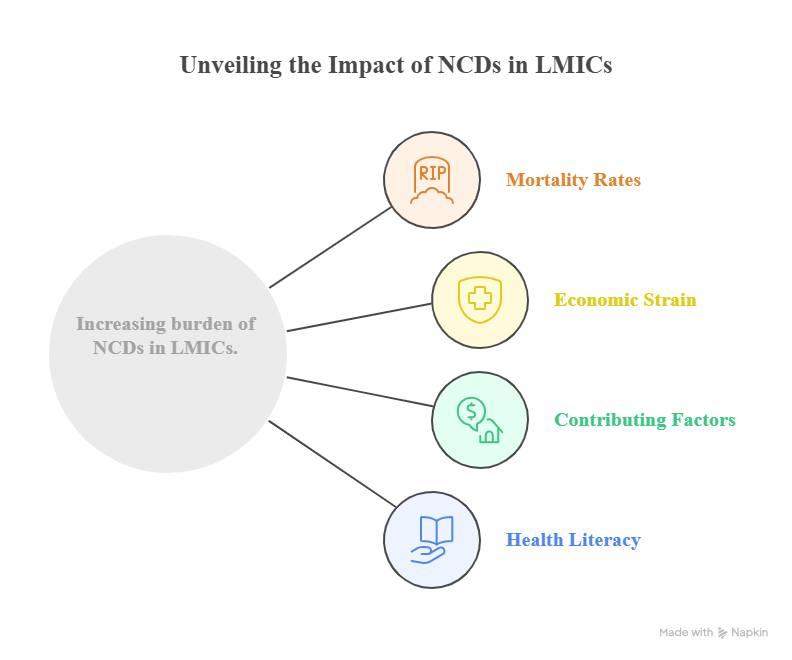
In addition to hurting health, NCDs place a financial strain on the nation's healthcare system and society. According to a 2011 study by the Global Economic Burden of Non-communicable Disease, by 2030, the world will have lost $46.7 trillion, of which $30.4 trillion will be attributable to major NCDs, such as cancer, diabetes, cardiovascular disease (CVD), and chronic respiratory disease. The majority of the thirteen studies, which came from four different countries, came from Pakistan. According to the review, the majority of PLWNCDs lacked sufficient health literacy. Individuals suffering from diabetes (26.00%–80.88%), heart disease (51.80%–83.43%), and chronic obstructive pulmonary disease were the ones who had low health literacy. There were no studies done to assess the health literacy of patients with chronic kidney disease. Poor health literacy was associated with several traits, among which were female gender, being part of a tribe or an underprivileged community living in a rural area, no or very little formal education, and a lack of knowledge about the disease. (Khatiwada et al., 2022).
According to a recent World Health Organization (WHO) study from 2021, 32 million of the 41 million NCD deaths worldwide take place in low- and middle-income nations (LMICs). The poor in the area are particularly at risk because they are more likely to have the highest burden of NCDs and, consequently, to experience the repercussions of growing health and economic disparities. Urbanization, economic growth, and globalization have all contributed significantly to this increase by pushing people in the area to adopt more unhealthy lifestyles, such as eating poorly, not exercising, and smoking tobacco, which ultimately increases their risk of developing noncommunicable diseases (NCDs) (Nugent et al., 2018).
Over the past 20 years, South Asian nations have seen tremendous economic expansion accompanied by changes to their social, economic, and food systems. The nutrition transition, characterized by the replacement of conventional high-carb, low-fat diets with a lower carbohydrate content and a higher proportion of saturated fat, sugar, and salt, is still being spurred on by increasing disposable incomes (Bishwajit, 2015).
LIFESTYLE RISK FACTORS IN SOUTH ASIA
Unhealthy lifestyles have been linked to a considerable proportion of NCDs. Thus, adopting a better lifestyle is an economical way to avoid these illnesses (Zhang et al., 2021). The link between tobacco smoking and non-communicable diseases (NCDs) in South Asia has been researched extensively. The use of tobacco was pointed out as the main risk factor for the leading NCDs in the area in a cross-sectional study on NCD risk factors in adults in Bangladesh. This study concluded that those individuals who are not physically active and have unhealthy diets are at greater risk of suffering from health issues such as obesity and hypertension. (Riaz et al., 2020).
After evaluating all factors, it can be concluded that NCDs are the principal contributors to death and disability in South Asia. More specifically, the link between lifestyle choices and noncommunicable diseases (NCDs) was seen through the fact that smoking and unhealthy eating habits were listed as the greatest three risk factors for early death and disability, respectively (Siegel et al., 2014).
Research has demonstrated that the majority of persons in the Eastern Mediterranean Region (EMR) do not know that they have risk factors for non-communicable diseases (NCDs). Lifestyle modifications over the years have, in fact, led to an increased presence of NCD risk factors (Altajori & Blshrek, 2017). Furthermore, it has been established that the provision of effective interventions which would cut down on the exposure of both individuals and communities to such risk factors as smoking, malnutrition, physical inactivity, and alcohol misuse would have, in the case of Morocco and its nearby countries, prevented premature deaths due to NCDs by as much as 80% (Bhuiyan et al., 2024).
Rising obesity and metabolic syndrome in south asians
The Asia-Pacific area is dealing with a serious outbreak of Metabolic Syndrome (MetS), despite variations in methodology, diagnostic standards, and the age of study participants. MetS affects at least one-fifth of the adult population in the majority of countries, and its prevalence has been steadily rising. Primary prevention strategies are needed to prevent the epidemic from spreading further and to lower the morbidity and death linked to MetS (Ranasinghe et al., 2017). Developing countries have experienced a dramatic increase in the number of overweight and obesity cases along with non-communicable diseases associated with obesity, and the main reasons for that are the growing and aging populations, the urban migration to cities, and the changes in people’s lifestyles towards consuming more energy and being less physically active (Alam et al., 2024).
The possible reasons behind the high obesity and metabolic syndrome rates among South Asians are examined. One of the characteristics of South Asian obesity is the undesirable body composition, which leads to reduced (resting) energy expenditure. This population’s low resting energy expenditure can be the reason for their inability to acclimatize to a high-energy (fat) intake, thus making them more susceptible to a positive energy balance. Besides, the rapid rise in obesity and metabolic syndrome among South Asians, as well as the positive energy balance, could be aggravated by reduced physical activity energy expenditure. Inactivity and unhealthy eating patterns are two of the biggest risk factors for non-communicable diseases (NCDs) worldwide (Sharma et al., 2023)
PRIMARY HEALTH CARE AND POLICY INTERVENTION
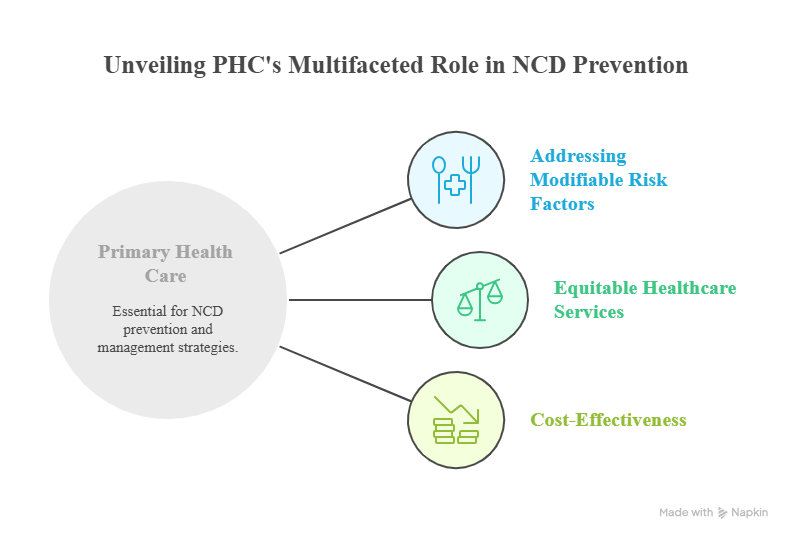
Diet, physical activity, smoking, and alcohol consumption are only a few of the risk factors that can be changed to prevent or manage noncommunicable diseases (NCDs). More attention has recently been paid to the study of dietary patterns rather than individual nutrients and foods, with the idea that combined effects may manifest as a result of antagonism or synergy (Dominguez et al., 2021). The prevention of non-communicable diseases (NCDs) revolves around the four main modifiable risk factors: tobacco, alcohol, unhealthy diet, and lack of exercise (Fig. 2). Primary health care (PHC) is the foundation for the first-contact, continuous, comprehensive, and coordinated person-centered treatment in the community. This type of treatment is very appropriate for the NCD prevention services and the “screening, early detection, and management” during the routine outpatient visits of the patients. The older population is the one that is most affected by the NCDs. In many cases, the application of holistic and integrated PHC approaches is more effective overall in managing this disaster of multi-morbidity than the use of highly-priced vertical care that is specialist-based for specific NCDs. Taking into account the increasing rate of NCDs amongst the poor populations, PHCs’ philosophy of giving appropriate, equitable, and fairly priced health care services is also crucial in the case of LMICs.
Finally, the PHC method, which gives priority to task-shifting, making available community health workers and actively involving the community in health matters, turns out to be the most effective and the most efficient way to deliver NCD services even in low-resource environments. According to the 2018 Astana Declaration and the WHO’s South-East Asia regional policy, PHC is also integral to attaining the health-related Sustainable Development Goals and universal health coverage (UHC) by 2030. One year of healthy living can be achieved for less than $100 by applying a range of highly cost-effective strategies for NCD prevention and management. Such activities include taxing alcohol and tobacco products, voluntary and statutory measures to reduce sodium intake, public awareness campaigns to promote physical activity, and providing treatment for epilepsy, cervical cancer, and cardiovascular disease (CVD). Moreover, some therapies like those for depression, chronic obstructive pulmonary disease, and breast cancer are just slightly above the threshold of $100 per year (Bertramet al., 2021).
The growing patient involvement in disease self-management, which is a sort of general skill development, has been advised not only to manage and control but also to change the health outcomes positively, regardless of the type of NCD (Dineen-Griffin et al., 2019). In order to manage their overall health, patients must be able to recognize their own strengths and problems and develop methods that work for them (Hearn et al., 2019). This requires a variety of skills and mindsets. Programs for self-management interventions were found to be successful in helping PLWNCDs improve their health behaviors, self-care knowledge, and a number of physiological parameters, including blood pressure, hemoglobin, and blood glucose. The outcomes of such enhancements are a drastic reduction in hospital stays, frequent visits to emergency rooms, a reduction of costs, and an enhancement of living standards (Yadav et al., 2020). Health literacy (HL) is perceived as one of the potential factors that may affect individuals’ self-care practices (RobatSarphioos et al., 2020). HL is basically a set of skills that help an individual to acquire, interpret, evaluate, and integrate health-related data to choose the best options that will enhance and prolong their life. Earlier research conducted in affluent settings indicated that self-management interventions focusing on health literacy had a beneficial effect on health outcomes. Participants with a satisfactory level of health literacy showed the following benefits: better health outcomes, improved SNAPW (smoking, nutrition, alcohol, physical activity, and weight), self-rated health, self-efficacy, disease knowledge, self-management of disease, and healthy lifestyle practices (Marciano et al., 2019).
The growing prevalence of non-communicable diseases (NCDs) in the South Asian region has led to the necessity of enhancing health care services and crucial participation of patients, predominantly those with NCDs, in the management of their diseases. The WHO’s 2016 Shanghai Declaration recognized the value of HL and noted that it is essential for promoting health to meet the Sustainable Development Goals (SDGs) agenda. First-contact, ongoing, all-encompassing, and coordinated person-centered treatment in the community is supported by primary health care (PHC). This type of treatment, during routine outpatient visits, is the most appropriate to give "screening, early detection, and management" of NCDs, and prevention services in general. Aging people are more subject to getting more than one chronic disease.
At times, a holistic and integrated PHC approach is more productive in dealing with this scenario of multimorbidity than the expensive vertical care provided by specialists for individual NCDs. Even though the prevalence of NCDs is increasing among the poor, the PHC's focus on delivering suitable, just, and reasonably priced health services is still critical in LMICs. The global epidemiological change has caused NCDs to become the leading cause of premature deaths around the world. In 2016, NCDs were responsible for 71% (40.5 million) of the total 56.9 million deaths reported worldwide. NCDs accounted for 46% of the 31.5 million early deaths that occurred in low and middle-income countries (LMICs) (Ahmed et al., 2024).
References
- Afshin A, PJ Sur, KA Fay et al., 2019. Health effects of dietary risks in 195 countries, 1990–2017: a systematic analysis for the Global Burden of Disease Study 2017. The Lancet 393:1958–1972.
- Agovino M, MC Aprile, A Garofalo et al., 2018. Cancer mortality rates and spillover effects among different areas: a case study in Campania (southern Italy). Social Science & Medicine 204:67–83.
- Ahmed SM, A Krishnan, O Karim et al., 2024. Delivering non-communicable disease services through primary health care in selected South Asian countries: are health systems prepared? The Lancet Global Health 12:e1706–e1719.
- Alam M, M Begum, R Sharmin et al., 2024. Obesity in Southeast Asia: an emerging health concern. Scholars Journal of Applied Medical Sciences 12:1690–1698.
- Altajori NN & YM Elshrek, 2017. Risk factors for non-communicable diseases in Libya. The Egyptian Journal of Hospital Medicine 66:202–214.
- Bertram MY, D Chisholm, R Watts et al., 2021. Cost-effectiveness of population level and individual level interventions to combat non-communicable disease in Eastern Sub-Saharan Africa and South East Asia: a WHO-CHOICE analysis. International Journal of Health Policy and Management 10:724.
- Bhuiyan MA, N Galdes, S Cuschieri et al., 2024. Comparative systematic review of risk factors, prevalence, and challenges contributing to non-communicable diseases in South Asia, Africa, and the Caribbeans. Journal of Health, Population and Nutrition 43:140.
- Bishwajit G, 2015. Nutrition transition in South Asia: the emergence of non-communicable chronic diseases. F1000Research 4:8.
- Coates MM, A Kintu, N Gupta et al., 2020. Burden of non-communicable diseases from infectious causes in 2017: a modelling study. The Lancet Global Health 8:e1489–e1498.
- Cooper C, 2018. Global, regional, and national disability-adjusted life-years (DALY) for 359 diseases and injuries and health life expectancy (HALE) for 195 countries and territories, 1990–2017: a systematic analysis for the Global Burden of Disease Study 2017. The Lancet 392:1859–1922.
- Curioni CC, ACF da Silva, AC da Silva Pereira et al., 2022. Role of dietary habits on development and progress of risk factors of chronic non-communicable diseases. In: Healthy Lifestyle: From Pediatrics to Geriatrics. Springer International Publishing, Cham. pp. 105-129.
- Di Cesare M, 2019. Global trends of chronic non-communicable disease risk factors. European Journal of Public Health 29:ckz185–196.
- Diani YH, 2024. Epidemiological impact of diet and nutrition on non-communicable diseases: insights into overnutrition and undernutrition. Asian Journal of Advanced Research and Reports 18:180–188.
- Dineen-Griffin S, V Garcia-Cardenas, K Williams et al., 2019. Helping patients help themselves: a systematic review of self-management support strategies in primary health care practice. PLoS One 14:e0220116.
- Dominguez LJ, G Di Bella, N Veronese et al., 2021. Impact of Mediterranean diet on chronic non-communicable diseases and longevity. Nutrients 13:2028.
- Ezzati M, J Pearson-Stuttard, JE Bennett et al., 2018. Acting on non-communicable diseases in low- and middle-income tropical countries. Nature 559:507–516.
- Fleming TP, AJ Watkins, MA Velazquez et al., 2018. Origins of lifetime health around the time of conception: causes and consequences. The Lancet 391:1842–1852.
- Hearn J, I Ssinabulya, JI Schwartz et al., 2019. Self-management of non-communicable diseases in low- and middle-income countries: a scoping review. PLoS One 14:e0219141.
- Hills AP, R Arena, K Khunti et al., 2018. Epidemiology and determinants of type 2 diabetes in South Asia. The Lancet Diabetes & Endocrinology 6:966–978.
- Iriti M, EM Varoni & S Vitalini, 2020. Healthy diets and modifiable risk factors for non-communicable diseases—the European perspective. Foods 9:940.
- Khatiwada B, B Rajbhandari, SK Mistry et al, 2022. Prevalence of and factors associated with health literacy among people with noncommunicable diseases (NCDs) in South Asian countries: a systematic review. Clinical Epidemiology and Global Health 18:101174.
- Kumar M, D Kumar, A Sharma et al., 2024. Micronutrients throughout the life cycle: needs and functions in health and disease. Current Nutrition & Food Science 20:62–84.
- Manderson L & S Jewett, 2023. Risk, lifestyle and non-communicable diseases of poverty. Globalization and Health 19:13.
- Marciano L, AL Camerini & PJ Schulz, 2019. Role of health literacy in diabetes knowledge, self-care, and glycemic control: a meta-analysis. Journal of General Internal Medicine 34:1007–1017.
- Martenies SE, CW Milando, GO Williams et al., 2017. Disease and health inequalities attributable to air pollutant exposure in Detroit, Michigan. International Journal of Environmental Research and Public Health 14:1243.
- Martinez R, P Lloyd-Sherlock, P Soliz et al., 2020. Trends in premature avertable mortality from non-communicable diseases for 195 countries and territories, 1990–2017: a population-based study. The Lancet Global Health 8:e511–e523.
- Misra A, N Tandon, S Ebrahim et al., 2017. Diabetes, cardiovascular disease, and chronic kidney disease in South Asia: current status and future directions. BMJ 357:j1420.
- Nugent R, MY Bertram, S Jan et al., 2018. Investing in non-communicable disease prevention and management to advance the Sustainable Development Goals. The Lancet 391:2029–2035.
- Pescheny JV, G Randhawa & Y Pappas, 2020. Impact of social prescribing services on service users: a systematic review of the evidence. European Journal of Public Health 30:664–673.
- Pineau C, PL Williams, J Brady et al, 2021. Exploring experiences of food insecurity, stigma, social exclusion, and shame among women in high-income countries: a narrative review. Canadian Food Studies 8:3.
- Ranasinghe P, Y Mathangasinghe, R Jayawardena et al., 2017. Prevalence and trends of metabolic syndrome among adults in the Asia-Pacific region: a systematic review. BMC Public Health 17:101.
- Riaz BK, MZ Islam, AS Islam et al., 2020. Risk factors for non-communicable diseases in Bangladesh: findings of the population-based cross-sectional national survey 2018. BMJ Open 10:e041334.
- Richards NC, HN Gouda, J Durham et al., 2016. Disability, non-communicable disease and health information. Bulletin of the World Health Organization 94:230–238.
- RobatSarphioos D, M Mahdizadeh, H Alizadeh Siuki et al., 2020. Relationship between health literacy level and self-care behaviors in patients with diabetes. Patient Related Outcome Measures 11:129–135.
- Sharma S, A Matheson, D Lambrick et al., 2023. Dietary practices, physical activity and social determinants of non-communicable diseases in Nepal: a systemic analysis. PLoS One 18:e0281355.
- Siegel KR, SA Patel & MK Ali, 2014. Non-communicable diseases in South Asia: contemporary perspectives. British Medical Bulletin 111:31–44.
- Silveira C, P Roebeling, M Lopes et al., 2016. Assessment of health benefits related to air quality improvement strategies in urban areas: an impact pathway approach. Journal of Environmental Management 183:694–702.
- Su JG, JS Apte, J Lipsitt et al., 2015. Populations potentially exposed to traffic-related air pollution in seven world cities. Environment International 78:82–89.
- Vaughan M, 2019. Conceptualising metabolic disorder in Southern Africa: biology, history and global health. BioSocieties 14:123–142.
- Wolf TG, MG Cagetti, JM Fisher et al., 2021. Non-communicable diseases and oral health: an overview. Frontiers in Oral Health 2:725460.
- World Health Organization, 2016. Policy brief 4: Health literacy. Geneva: World Health Organization.
- Yadav UN, J Lloyd, H Hosseinzadeh et al., 2020. Self-management practice, associated factors and its relationship with health literacy and patient activation among multi-morbid COPD patients from rural Nepal. BMC Public Health 20:300.