
INTRODUCTION
The first 1000 days (FTD) are the period between conception and at the age of two years. The 1000 days of an infant (FTD) are a critical period when the baby grows and develops rapidly in thinking, socializing, physical, and emotional aspects. A child's first 1000 days of existence are among the most critical and important for laying the foundations for their ideal growth and development (Soofi et al., 2022). A child's life during the first 1,000 days is full of opportunities and vulnerabilities. The quality of the food and care that mothers and children receive during this time has a big influence on how well or poorly a child develops, learns, and thrives. This is because during the first 1,000 days of life, a child's growing brain evolves and changes. The basis for their future wellness is also established throughout this time (Likhar and Patil, 2022).
For the growth and development of the foetus and infant during this time, proper nutrition is essential. Because proper nutrition and care for the unborn child, the pregnant woman, and children under the age of two have a lasting impact on a family's future health and financial performance, this time frame is known as "the 1000-day window of opportunity "(Nyarko et al., 2024). This period, which includes gestation, the newborn period, and the first 12 months of life, is the best time for risk factors to raise the likelihood of disease development ("window of vulnerability" or "susceptibility") and for defense mechanisms to have their positive effects ("window of opportunity") (Acevedo et al., 2021). The American Academy of Paediatrics highlights the significant influence of nutrition at this time, acknowledging it as a critical factor in determining long-term adult health as well as childhood development (Pettoello-Mantovani et al., 2025)
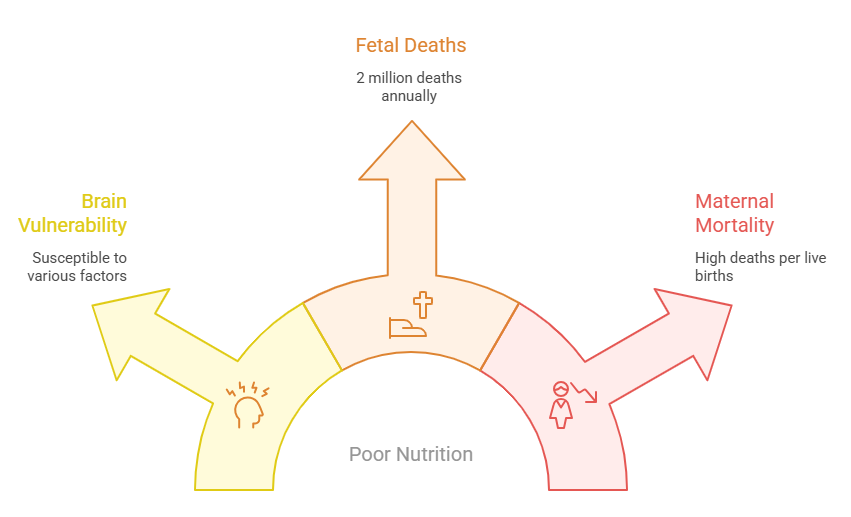
Numerous studies conducted in the previous few decades in the domains of biology, neuroscience, and early growth and development have yielded significant insights into how the interplay between surroundings and nutrition during these 1,000 days shapes subsequent results. The first 1,000 days are characterized by rapid changes in neuronal proliferation, development, along with differentiation, myelination and synaptic formation. The brain is particularly vulnerable during this period to a variety of factors, including a lack of nutrients, infections, unfavourable living situations, and immunisation status (Fig. 1). The United Nations Children's Fund (UNICEF), World Health Organisation (WHO), World Bank Group, and Population Division of the Department of Economic and Social Affairs of the United Nations reported in 2020 that there are approximately 2 million foetal deaths worldwide each year, with one death occurring every 16 seconds, nearly four every minute, over 200 per hour, nearly 5,400 per day, and roughly 164,000 per month (Debbag et al., 2023). Globally, and particularly in countries with low to middle incomes, maternal healthcare continues to be a significant public health concern. In particular, the maternal mortality ratio (MMR) in Kenya in 2022 was 362 mother’s deaths per 100,000 live births, or roughly 6000 maternal deaths annually, and the infant stillbirth rate was 23 deaths per 1000 births that were alive, or 35,000 stillbirths annually. These figures were significantly below the 2030 target of 147 maternal deaths per 100,000 babies born alive and 12 stillbirths per 1000 live births (Kitila et al., 2022).
BIOLOGICAL BASIS OF THE FIRST 1000 DAYS
The most crucial time in determining a person's health trajectory is the first 1000 days of life. Numerous biological, immunological, and neurological processes take place during this critical period, establishing the groundwork for long-term health (Bertin et al., 2023). Four distinct phases have been identified for the child's growth both inside and outside the mother's womb: Pregnancy, which lasts from nine months to zero months; breastfeeding, which lasts from zero to six months; the introduction of solid food, which extends between six and twelve months; and >12 months, which is the time when the child transitions to the parent's diet and learns to appreciate the nutrient-dense food that is offered during each stage for their development. Furthermore, learning, well-being, and nutrition are all directly correlated. Adolescents, children, and infants receive adequate nourishment to sustain their body weight and to support appropriate growth and development. One of the most significant factors influencing a child's development is nutrition. Infancy is a time of fast growth. This is the stage of the greatest relative calorie and food demand on body size compared to earlier stages of growth (Likhar and Patil, 2022).
Maternal Nutrition During Pregnancy
Micronutrients, or vitamins and minerals, and omega-3 fatty acids, which are primarily found in a balanced diet, are essential for many physiological and metabolic processes, including cell differentiation, cell growth, hemoglobin production, transport of oxygen, mineralization, etc. The present intake of omega-3 fatty acids, vitamins, and minerals from meals lowers the risk of severe deficits. For instance, it has been determined that pregnant women are particularly affected by shortages in iron or vitamin D. Pregnant women should watch what they consume in order to maintain proper amounts of micronutrients. Minerals, vitamins, and omega-3 fatty acids are essential for a healthy pregnancy when it comes to helping the mother deal with the normal problems of pregnancy or avoiding pregnancy issues (Badoni et al., 2021).
A vital micronutrient, iron is important for the neurodevelopment of the fetus. Research has shown that pregnant women who consume iron-deficient foods cause long-lasting changes in the structure and function of their developing children's brains (Qin et al., 2025). Healthy lifestyle choices are considered to be a major defense against gestational diseases and for a healthy pregnancy from conception till the postpartum phase. The World Health Organization (WHO) preconception priorities include healthy eating and nutrition, weight management, physical activity, preplanned pregnancy, physical, mental and emotional health. Enhancing pregnancy and breastfeeding requires adequate intake of micronutrients as well, e.g., iron, calcium, folate, vitamin D, and carotenoids. In addition to lowering the incidence of preeclampsia, gestational diabetes (i.e., diabetes linked to obesity), and postpartum obesity, moderate physical activity during pregnancy enhances muscle tone and function. According to intervention studies, mothers' general health and well-being can improve over the long run from exercising for 30 minutes a day on average. The quality of life of mothers may also be impacted by other variables like microbiome modulation, behavioral measures (such as quitting smoking, reducing anxiety and stress, and improving sleep), maternal age and genetics, social class, and education. These elements help to guarantee a safe pregnancy, or at the very least, lower the chance of unfavorable consequences for both the mother and the fetus, both during and after pregnancy (Mate et al., 2021).
Infants who are underweight and small for gestational age are linked to preconception anemia and low preconception weight. There are a number of evidence-based methods for enhancing birth outcomes during pregnancy, such as small-quantity lipid nutrient supplements, various micronutrient supplements, and balanced-energy protein supplements (Young and Ramakrishnan, 2021). Abnormal programming in organ and tissue development might result from changes in gene expression caused by maternal nutritional deficiencies that cause intrauterine growth retardation. The fetus responds by adjusting to this state of scarcity and may struggle to adjust to consuming large amounts of food after birth, which increases the likelihood that it may experience metabolic and cardiovascular disorders as an adult. Breast milk must be used to ensure the infant's nourishment after delivery. The content of the mother's milk and her nutritional state are related, and this can affect the infant's health by influencing the amount of nutrients they receive (Favara et al., 2024).
Nutrition During Lactation And Breastfeeding
To organize the body for the birth and breastfeeding process and ensure the proper development of the fetus or baby, the nutritional requirements of women increase during pregnancy and breastfeeding (Jouanne et al., 2021). Breast milk belongs to a special biological process the connected triad, which links the well-being of the mother and her children. This triangle is created through the interaction of the mother, breast milk and the infant and helps to create a dynamic and mutually dependent relationship. Such broad impacts of breastfeeding on overall well-being are manifested by the fact that each transformation in this triangle can lead to significant influence on the pattern of infant development and the overall well-being of the mother (Christian et al., 2023). Breastfeeding lowers the morbidity and mortality rates among children in the long term. Longer breastfeeding periods have become increasingly supported as a potential preventive measure against overweight, diabetes, allergies and other chronic diseases in adulthood compared to shorter durations of breastfeeding or no breastfeeding at all. They may also help reduce dental malocclusions and improve intelligence. These advantages continue until later life phases (Yi and Kim, 2021). The nutritional and immunological benefits of human milk continue to be substantial after six months. According to studies, milk's macronutrient composition varies to satisfy the growing child's energy needs. This milk's high quantities of immunoglobulins and other bioactive ingredients demonstrate its ongoing significance for a baby's health. In order to avoid infections in infants, public health should prioritize encouraging prolonged nursing, even after solid food introduction (Sinkiewicz‐Darol et al., 2022).
The World Health Organization recommends nursing exclusively during the first six months of life, followed by sustained breastfeeding for at least the first two years, with the introduction of complementary foods six months after delivery (Pérez-Escamilla et al., 2023). The most likely deficiencies during this period are zinc, calcium, folate, vitamin B1, vitamin B6 and omega-3 fatty acids. There is a rise in obesity and metabolic disorders, as well as an increase in the prevalence of anemia and vitamin D, A, iodine, and iron deficiencies in women, especially those from low- and middle-income nations. Obesity is linked to increased postpartum weight retention, altered breastmilk composition, and decreased breastfeeding rates (Perichart-Perera, 2025).
| Type of Malnutrition | Underlying Causes | Health Consequences | Public Health Interventions / Strategies | |
|---|---|---|---|---|
| Stunting (Chronic Undernutrition) | Poor maternal nutrition, recurrent infections, and inadequate complementary feeding | Impaired linear growth, delayed cognitive development, reduced productivity in adulthood | Pregnancy to 24 months | Maternal supplementation, optimal IYCF practices, infection prevention, and sanitation improvements |
| Wasting (Acute Undernutrition) | Illness, inadequate dietary intake, and food insecurity | Increased risk of mortality, weakened immunity | 6–24 months | Community-based management of acute malnutrition (CMAM), therapeutic feeding, and rehydration |
| Micronutrient Deficiencies (Hidden Hunger) | Lack of diet diversity, poor maternal stores, and limited fortification programs | Anemia, goiter, blindness, and increased susceptibility to infections | Throughout the 1,000 days | Supplementation (iron, vitamin A, iodine), food fortification, maternal education |
| Low Birth Weight | Maternal undernutrition, infections, and short birth spacing | Higher infant mortality, stunting risk, and poor development | Prenatal | Improved antenatal care, balanced energy-protein supplements, maternal rest and nutrition |
| Overnutrition / Early Childhood Obesity | Early introduction of energy-dense foods, sugary beverages, and a lack of physical activity | Obesity, insulin resistance, and early NCD risk | 12–24 months | Parental education, promoting healthy complementary feeding, regulating SSBs and junk foods |
Complementary Feeding (6–24 Months)
A key modifiable factor that influences brain development is diet, which provides nutrients and energy (Mou et al., 2023). Introducing foods to supplement a milk-based diet is known as complementary feeding, and it typically takes place between the ages of 6 and 23 months. Complementary feeding involves avoiding excessive consumption of calories, salt, sweets, and harmful fats in addition to making sure that nutrients are consumed in sufficient amounts (Lutter et al., 2021). As a result, the phase of complementary feeding/weaning, when a child switches from a milk-based diet to one that incorporates solid foods, is crucial for developing diet-related attitudes and habits. In the end, complementary feeding ought to promote the development of the best possible food-related behaviors, abilities, and attitudes while resulting in the ingestion of a range of foods that satisfy nutritional needs. As essential components of an infant's interpersonal food environment, what and how babies are fed matter in doing this (Boswell, 2021). Early supplemental feeding (before three months of age) has been associated with a higher risk of obesity, allergies, and gastrointestinal and respiratory illnesses; however, this may be due to lower breastfeeding duration. Yet, a delayed start to complementary feeding can also be harmful since it can lead to issues with feeding, insufficient development and nutrition, and an inability to develop oral tolerance (Laursen, 2021).
Malnutrition in the First 1,000 Days
Malnutrition, which includes undernutrition, overweight or obesity, and deficiencies in some micronutrients, has detrimental effects on the development, morbidity, and death of children as shown in Table 1 (Vir and Suri, 2023). Infants born prematurely or with low birth weight are inherently vulnerable due to their developing bodily systems. Due to intestinal malabsorption, children with cystic fibrosis are at risk for malnutrition. Among other circumstances, children who follow particular dietary regimens may be more susceptible to nutritional deficiencies (Panzeri et al., 2024). A child is considered stunted if their height for age is below the median of the 2006 WHO Child Growth Standards by minus two standard deviations for mild stunting and minus three standard deviations for severe stunting. Wasting is the propensity to be underweight for one's height, often known as weight-for-height. Stunting is an indication of persistent malnutrition, with mostly irreversible effects, whereas wasting is the outcome of an acute, severe food deficit and/or sickness. Growing retardation is more likely to occur in the first two years of life due to the high dietary needs to promote rapid growth and development. The significant risk of stunting during the first two years of life is also influenced by frequent infections throughout this time (Budzulak et al., 2022).
There are both short-term and long-term health effects from how babies are fed during the first thousand days of their lives, from conception to age two. Poor nutrition, which is made worse by the cohabitation of undernutrition and overnutrition, is largely to blame for the worldwide burden of disease, the rise in chronic non-communicable diseases, and the costs to people, communities, and society as a whole. Globally, infants and young children's calorie intake and nutrition quality are being negatively impacted by emerging risks like the COVID-19 pandemic (Saavedra and Dattilo, 2022). Adolescent preparation, conception, gestation, nursing, and recovery before a potential following conception are all significant stages of reproduction, and each has unique metabolic needs and strategies for adapting to unfavourable dietary conditions (Prentice, 2025).
LONG-TERM CONSEQUENCES OF EARLY NUTRITION
Our knowledge of the "who, what, where, when, why, and how" of nutrition throughout the first 1000 days is mostly based on research and public health surveillance. Nevertheless, conclusions are predicated on the populations that are included. For inferences and generalizations to be accurate, pregnant and lactating mothers, infants and toddlers, and various racial and ethnic groups must be represented. In the past, surveys have either not covered these important groups or have had insufficient samples of them (Hamner et al., 2022). The World Health Organization (WHO) states that one of the primary causes of the worldwide burden of disease, disability, and child death is childhood malnutrition, which poses a serious risk to children's morbidity and mortality. Over two-thirds of fatalities worldwide happen to newborns during the first year of life. Colostrum depletion and ineffective supplemental feeding techniques brought on by inadequacies in nutritional knowledge are important indicators of malnutrition. The other kind of "malnutrition," in which youngsters are overfed, manifests as obesity and overweight. A bad diet (e.g., excessive consumption of foods low in nutrients, like sugar), inactivity, heredity, and specific medical disorders are some of the causes of being overweight or obese, which is defined by excess body weight. Undernutrition in early life, especially during crucial developmental stages, may have long-term effects on adult non-communicable diseases (NCDs) (Wu et al., 2025).
PUBLIC HEALTH STRATEGIES AND INTERVENTIONS
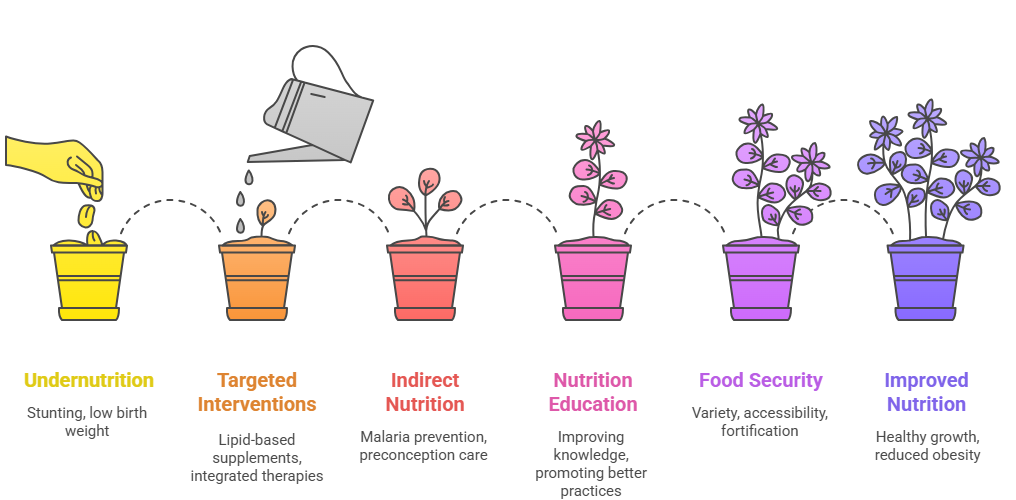
The double burden of malnutrition (DBM) is becoming more prevalent in low- and middle-income countries (LMICs) going through a nutrition transition (Escher et al., 2024). Emerging therapies have demonstrated beneficial impacts on child growth, such as preventive minimal-dose lipid-based nutritional supplementation for children six to 23 months of age (Fig. 2). Although there is minimal data from LMICs, integrated interventions such as food, exercise, and behavioural therapy are the most effective for managing and preventing paediatric obesity. Finally, there are significant nutritional advantages to indirect nutrition interventions that are provided both inside and outside the health care industry, such as malaria prevention, preconception care, and the promotion of water, sanitation, and hygiene. Going forward, more work is needed to increase the coverage of interventions, particularly for the most vulnerable, and it is imperative to address the increasing double burden of malnutrition in LMICs, which includes undernutrition as well as overweight and obesity (Barker et al., 2018). Nutrition education programs have been shown to be effective in improving participants' knowledge of nutrition and promoting better eating practices. Food variety and accessibility have benefited from advancements in agriculture and food production, and efforts to fortify foods have demonstrated promise in correcting micronutrient shortages. By emphasising the need of comprehensive prenatal care in breaking the cycle of hunger, mother and child health programs significantly reduced stunting and low birth weight (Dewey, 2016).
FUTURE DIRECTIONS AND RESEARCH NEEDS
Global concerns over child nutrition have always existed. In 2019, a study named "The State of the World's Children in 2019" was published by the United Nations International Children's Emergency Fund (UNICEF) on children, food, and nutrition. According to the research, one-third of children under five worldwide still do not receive the nourishment they require to develop into adults. Meanwhile, the prevalence of starvation has grown more noticeable (Wang et al., 2021). Federal as well as other professional organizations have set agendas and goals to shape the future of nutrition science. The National Institutes of Health Nutrition Research's Strategic Plan lists five cross-cutting research topics and four objectives that should be prioritized for investigation between 2020 and 2030. Priority areas have also been established in the research agendas of various governmental and professional organizations, including the American Society for Parenteral and Enteral Nutrition. These topics of interest need to be researched through thorough research studies and considerable implementation methods taken into account to implement the research. Numerous resources exist to help practitioners in their work, and nutrition clinicians are in a privileged position to share their knowledge regarding study design, implementation, advocacy, and evidence-based practice.
CONCLUSION
The initial 1000 days of life, or the period between conception and the age of two, is a crucial period that affects a child on the basis of future health, brain and physical development. Although poor nutrition may have a long-term effect, proper feeding of mothers and infants during this period is beneficial to promoting maximum development and reducing the occurrence of diseases. To enhance the health results of children, it is necessary to supply safe and adequate complementary food, support exclusive breastfeeding, and reinforce maternal diet. There is a need to have integrated programs on public health which would deal with malnutrition, the lack of micronutrients and the increasing issue of obesity among children. Investing during this developmental period of life, we will be able to foster healthier generations and social and economic development on a long-term scale.
References
- Acevedo N, B Alashkar Alhamwe, L Caraballo et al., 2021. Perinatal and early-life nutrition, epigenetics, and allergy. Nutrients 13:724.
- Barker M, SU Dombrowski, T Colbourn et al., 2018. Intervention strategies to improve nutrition and health behaviours before conception. The Lancet 391:1853-64.
- Bertin B, B Foligne, D Ley et al., 2023. An overview of the influence of breastfeeding on the development of inflammatory bowel disease. Nutrients 15:5103.
- Boswell N, 2021. Complementary feeding methods—A review of the benefits and risks. International Journal of Environmental Research and Public Health 18:7165.
- Budzulak J, KA Majewska, and A Kędzia, 2022. Malnutrition as the cause of growth retardation among children in developed countries. Annals of Agricultural and Environmental Medicine 29:336-41.
- Christian P, ER Smith, SE Lee et al., 2021. The need to study human milk as a biological system. The American Journal of Clinical Nutrition 113:1063-72.
- Debbag R, JR Torres, LH Falleiros-Arlant et al., 2023. Are the first 1,000 days of life a neglected vital period to prevent the impact on maternal and infant morbimortality of infectious diseases in Latin America? Proceedings of a workshop of experts from the Latin American Pediatric Infectious Diseases Society, SLIPE. Frontiers in Pediatrics 11:1297177.
- Dewey KG, 2016. Reducing stunting by improving maternal, infant and young child nutrition in regions such as South Asia: evidence, challenges and opportunities. Maternal and child nutrition 12:27-38.
- Escher NA, GC Andrade, S Ghosh-Jerath et al., 2024. The effect of nutrition-specific and nutrition-sensitive interventions on the double burden of malnutrition in low-income and middle-income countries: a systematic review. The Lancet Global Health 12:419-32.
- Favara G, A Maugeri, M Barchitta et al., 2024. Maternal lifestyle factors affecting breast milk composition and infant health: A systematic review. Nutrients 17:62.
- Hamner HC, JM Nelson, AJ Sharma et al., 2022. Improving nutrition in the first 1000 days in the United States: a federal perspective. American Journal of Public Health 112:817-25.
- Jouanne M, S Oddoux, A Noël et al., 2021. Nutrient requirements during pregnancy and lactation. Nutrients 13:692.
- Kitila SB, GT Feyissa, AK Olika et al., 2022. Maternal healthcare in low-and middle-income countries: a scoping review. Health Services Insights 15:11786329221100310.
- Laursen MF, 2021. Gut microbiota development: influence of diet from infancy to toddlerhood. Annals of Nutrition and Metabolism 77:21-34.
- Likhar A and MS Patil, 2022. Importance of maternal nutrition in the first 1,000 days of life and its effects on child development: a narrative review. Cureus 14:30083.
- Lutter CK, L Grummer-Strawn and L Rogers, 2021. Complementary feeding of infants and young children 6 to 23 months of age. Nutrition Reviews 79:825-46.
- Mate A, C Reyes-Goya, A Santana-Garrido et al., 2021. Lifestyle, maternal nutrition and healthy pregnancy. Current Vascular Pharmacology 19:132-40.
- Mou Y, E Blok, M Barroso et al., 2023. Dietary patterns, brain morphology and cognitive performance in children: Results from a prospective population-based study. European Journal of Epidemiology 38:669-87.
- Nyarko MJ, D van Rooyen and W ten Ham-Baloyi, 2024. Preventing malnutrition within the first 1000 days of life in under-resourced communities: An integrative literature review. Journal of Child Health Care 28:898-913.
- Panzeri C, L Pecoraro, A Dianin et al., 2024. Potential micronutrient deficiencies in the first 1000 days of life: the pediatrician on the side of the weakest. Current Obesity Reports 13:338-51.
- Pérez-Escamilla R, C Tomori, S Hernández-Cordero et al., 2023. Breastfeeding: crucially important, but increasingly challenged in a market-driven world. The Lancet 401:472-85.
- Perichart-Perera O, 2025. Nutrition for optimal lactation. Annals of Nutrition and Metabolism 81:33-44.
- Pettoello-Mantovani M, D Bali, E Sevketoglu et al., 2025. The first thousand days: nourishing the developing brain for a lifetime of mental well-being. Narrative review. Global Pediatrics 13:100270.
- Prentice A, 2025. Maternal Nutrition and the Lifelong Health of Their Offspring. Annals of Nutrition and Metabolism 81:5-8.
- Qin R, L Pang, H Hu et al., 2025. Associations of maternal dietary iron intake during pregnancy with infant neurodevelopment: evidence from a prospective cohort study. Nutrition Journal 24:131.
- Saavedra JM and AM Dattilo, 2022. Nutrition in the first 1000 days of life: society’s greatest opportunity. In Early Nutrition and Long-Term Health, 2nd Edition, Woodhead Publishing, pp. 3-25.
- Sinkiewicz‐Darol E, D Martysiak‐Żurowska, M Puta et al., 2022. Nutrients and bioactive components of human milk after one year of lactation: implicationsand for human milk banks. Journal of Pediatric Gastroenterology and Nutrition 74:284-291.
- Soofi SB, GN Khan, S Ariff et al., 2022. Effectiveness of nutritional supplementation during the first 1000-days of life to reduce child undernutrition: A cluster randomized controlled trial in Pakistan. The Lancet Regional Health-Southeast Asia 4:100035.
- Vir SC and S Suri, 2023. Young child undernutrition: crucial to prioritize nutrition interventions in the first 1000 days of life. Indian Journal of Pediatrics 90:85-94.
- Wu M, H Tian, C Guo et al., 2025. Early-life undernutrition increases the risk of death from chronic diseases in adulthood: a population-based cohort study. Global Health Research and Policy 10:28.
- Yi DY and SY Kim, 2021. Human breast milk composition and function in human health: from nutritional components to microbiome and microRNAs. Nutrients 13:3094.
- Young MF and U Ramakrishnan, 2021. Maternal undernutrition before and during pregnancy and offspring health and development. Annals of Nutrition and Metabolism 76:41-53.