

INTRODUCTION
The most common affective disorder and the primary cause of disease and impairment among youth globally is major depressive disorder (MDD). Young people are not only more prone to suffer from depression, but are also more likely experience loneliness, and social relationships during this time affect their social and personal growth. The stigma associated with mental health is thought to negatively impact young people's long-term outcomes for disorders like depression as well as their ability to seek treatment (Prizeman et al., 2023). Young individuals between the ages of 16 and 24 are most at risk, with prevalence rates reaching 5% by the end of adolescence. Prevalence rates have increased significantly over the last ten years (Thapar et al., 2022). The nearly universal availability of digital technology and the fact that most people use it daily for a range of purposes and activities are driving a profound revolution in the psychological treatment of mental health issues. Computers, the Internet, mobile devices, applications, and other comparable digital gadgets are all considered to be part of digital technology. Digital interventions are thought to be better than previous psychological delivery methods since they are freely accessible, private (avoiding some stigma), possibly less expensive, and easily customizable to meet the requirements and interests of each individual (Taylor et al., 2021).
Exercise and physical activity, which are defined as any movement of the body that uses energy, are crucial for public health because they prevent and treat a variety of physical problems, such as obesity and cardiovascular and metabolic disorders. In addition to having numerous positive impacts on the physical and mental health of individuals with a variety of mental diseases, physical activity and exercise can also help prevent common mental disorders like anxiety and depression. Populations with higher levels of physical activity are probably less burdened with mental health issues. Because exercise has so many positive effects on both physical and mental health, it should be a regular part of the care of individuals with mental illnesses (Schuch and Vancampfort, 2021).
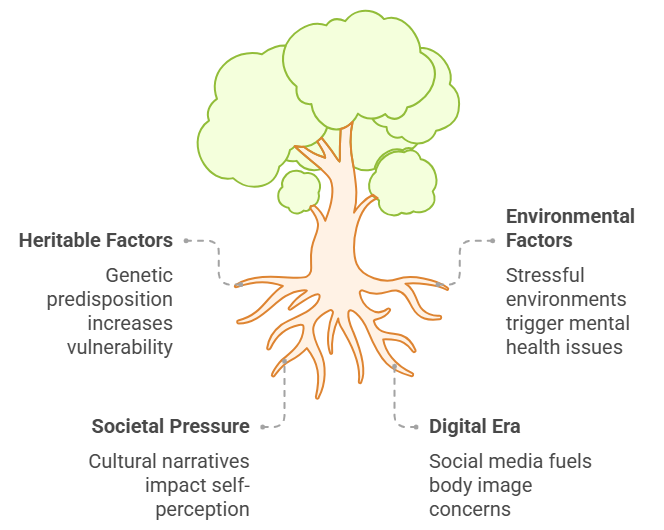
Among the most prevalent mental illnesses affecting young people are anxiety disorders and depression. While depression usually manifests later in adolescence or early adulthood, anxiety problems usually start in infancy. These conditions frequently coexist with pathological anxiety, often emerging before depression. Like other mental illnesses, anxiety disorders and major depression are caused by a combination of heritable and nonheritable factors, with a significant portion of the risk being attributed to environmental factors that may be changed. Genes that contribute to the explanation of some of the heritability of anxiety and depression are still being found through genome-wide associations (Kalin, 2021). The interaction between personal self-perception and societal cultural narratives surrounding physical appearance takes on greater significance as society struggles with the intricacies of contemporary living. The analysis goes into great detail about a number of variables, such as height, weight, and Body Mass Index (BMI), analyzing how these measurements all work together to support mental health and self-esteem while also emphasizing the unique ways that gender and cultural differences influence how different populations perceive their bodies. Body image issues have changed significantly in the current digital era, which is characterized by the dominance of platforms like Facebook, Instagram, and TikTok (Merino et al., 2024).
The numerous elements of social support, the relationships between social work and mental health recovery, and the links between social support are all areas that require further research. Health inequalities are becoming a bigger issue. In order to improve recovery and lessen health disparities, social support-oriented policies and services should be more widely integrated. Social assistance is frequently thought of as appraisal, informative, instrumental, and emotional. Having a close relationship with family and friends, feeling loved and cared for, and having someone to talk to are all examples of emotional support. The term "instrumental support" describes having someone to rely on and trust during trying times and when juggling the rigors of everyday life, such as going to appointments, shopping, cleaning, seeking financial assistance, paying bills, and so on (Bjorlykhaug et al., 2022).
One of the most important current debates in physical education and public health is that a decrease in physical education and school sports participation (PES) causes a corresponding decrease in physical activity (PA), which in turn causes a rise in mental health disorders among school-age children and adolescents (Fig. 1). The lack of properly qualified teaching staff, the lack of time dedicated to PES, the lack of facilities, equipment, and materials, the deficit budget for this subject, and the detraction of PE teachers are some of the obstacles that prevent PES from providing all that it could to school-aged children and adolescents, which subsequently impacts the entire society. Consequently, a sedentary lifestyle leads to mental illnesses, including depression and anxiety as well as hypokinetic diseases. Furthermore, some students continue to struggle academically in the modern day, which is linked to the sedentary lifestyle that many students lead today. This results in higher rates of repeat, dropout, and, eventually, on-time completion (Habyarimana et al., 2022).
Understanding Mental Health
The mechanisms underlying the relationships between mental health and cognitive capacity are still not well understood. A portion of the correlation may be attributed to socioeconomic factors, such as income and education. According to a behavioral perspective on depression, people who are depressed have lost the chance and/or capacity to interact with their surroundings in ways that might result in fulfilling experiences. According to a cognitive approach, people's coping mechanisms and assessments of stressful life events have a significant role in determining the degree to which those experiences impact mental health. According to social theories, a lack of supporting close relationships with friends, family, and other members of the community is strongly associated with an increased risk of mental health issues (Jokela, 2022).
Psychiatric care is significantly impacted by stigma, which is defined by societal prejudice and discrimination, creating obstacles to the prompt diagnosis and treatment of mental health issues. Stigma is a complex problem that affects all levels of mental health care and is deeply ingrained in cultural standards. It causes the quality of life of the patient to decline, treatment to be delayed, and morbidity to rise. Families may experience feelings of guilt and isolation as a result of the stigma, making it challenging for them to get the resources and assistance they need. It's interesting to note that stigma can lead to stress and discouragement among healthcare professionals, which lowers the standard and effectiveness of therapy. Additionally, stigmatization can make it more difficult for patients and healthcare professionals to build therapeutic and trustworthy connections, which are crucial for providing quality care. Stigma can lead to resource misallocation for society as a whole, with mental health services frequently receiving inadequate funding and being disregarded (Ahad et al., 2023). Mental health fundamentals like depression and anxiety and their different types, have been discussed below.
FUNDAMENTALS OF MENTAL HEALTH
Depression and its Types
Depression is one of the most prevalent diseases. According to the WHO, over 150 million individuals are impacted globally. However, over 60% of patients with depression experience recurrent episodes of depression. Depression significantly raises the risk of suicide and has an impact on one's quality of life and ability to adapt. Depression can also result in family disintegration, a decline in or loss of employment position, and even total incapacity. Biological (illness, medications) and psychosocial and social (stress, grief) factors are among the causes of depression (Velikova, 2021). A common mental health issue that affects a lot of people is depression. Males have a lifetime risk of depression of 8–12%, while females have a risk of 20–26% (Albert, 2015).
Women experience depression twice as often as men do. Given its incidence, misery, dysfunction, morbidity, and financial cost, depression is an illness of significant public health concern. Depressed mood, reduced activity, and loss of interest in life and enjoyment are the main signs of depression. Poor concentration, diminished thinking capacity, indecision, delusional ideas, slow and poor speech, low self-esteem, a tendency to self-reproach, suicidal thoughts, disturbed sleep and appetite, pain associated with the feeling of melancholy, seasonal and circadian mood fluctuations, and substance abuse are some of the additional symptoms that may manifest in some cases but not in others. According to ICD-10, a period of at least two weeks is necessary for a diagnosis of depression; a brief period of poor mood is not yet indicative of depression. Depression that strikes a mother after giving birth is known as postpartum depression, and it usually results from a combination of hormonal changes, psychological adjustment to motherhood, and exhaustion. Compared to non-perinatal depression, women in the early postpartum period were more likely to exhibit anxiety symptoms, agitation, decreased focus and decision-making, or obsessive-aggressive thoughts, specifically harming their newborn. Additionally, postpartum women may explicitly express bodily issues, including headache, exhaustion, or soreness (Tebeka et al., 2023).
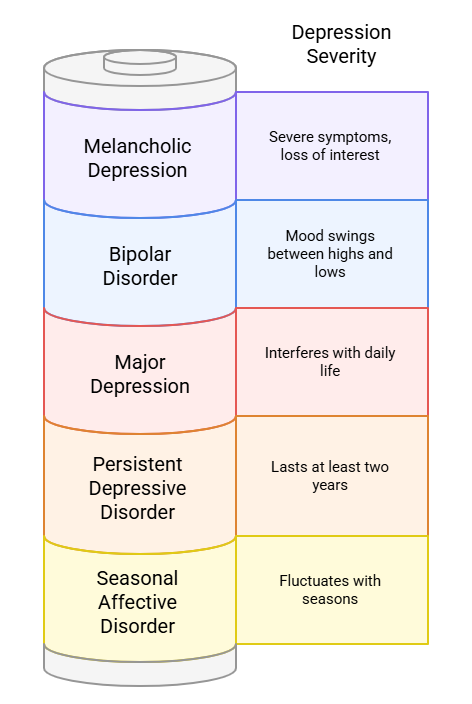
Types of depression include: Melancholic depression can be severe with symptoms of loss of interest in once-enjoyable hobbies, low energy, anxiety, and irritability. It is more common in older adults and more severe and psychotic depressions. Depression that fluctuates with the seasons, usually beginning in late fall and early winter and disappearing in the spring and summer, is known as seasonal affective disorder and it is more common in women. A chronic type of depression that frequently lasts for at least two years is called persistent depressive disorder. Major depression is characterized by symptoms that interfere with one's ability to work, sleep, study, eat, and enjoy life for most of the day, almost every day, for at least two weeks and it may occur frequently. Mood swings from extreme highs (mania) or mild highs (hypomania) to extreme lows (depression) are a hallmark of bipolar disorder, also known as manic depression. Feelings of guilt and sorrow, self-doubt, and emptiness are among the symptoms of bipolar disorder, as shown in Fig. 2 (Liu et al., 2021).
Anxiety and Associated Factors
Anxiety is an emotion we experience daily. It is the most prevalent mental illness, affecting one in three people worldwide. Anxiety symptoms include nervousness, helplessness, elevated heart rate, danger, suicidal thoughts, sweating, numbness, loss of concentration, trembling, overthinking, hyperventilation, inability to stop overthinking, worrying about every little thing, increased irritability, headaches, sleep disturbances, etc. According to this study, out of all the brain disorders, anxiety is the most common psychiatric condition. According to a survey, young people and women are more likely to experience anxiety. Neurotransmitter imbalances, genetics, medications, other illnesses brought on by other diseases, and dietary changes are examples of biological reasons. Low self-esteem, interpersonal interest, the emergence of crises, unpleasant emotions, and the perception of situational factors are examples of psychological causes. Social factors include terrorism, altered values, a demanding workload, a lack of support, and a lack of social skills. Certain treatments, such as anticonvulsants, cognitive behavioral therapy, steroids, sedatives, hypnotics, and selective serotonin reuptake inhibitors (SSRIs), are supported by evidence (Gautam et al., 2022).
EPIDEMIOLOGY
With a prevalence of 3%–8% in the general population, it is one of the most prevalent mental illnesses. In general medicine, it affects between 10% and 15% of individuals, either on its own or in conjunction with other medical conditions (Shivalkar and Sengupta 2023). Young people are more susceptible to anxiety, stress, and depression due to dietary changes, poor nutrition, weakened immune systems, or other social and biological factors. Though very few people are aware of it, several scientific studies demonstrate the significance of a balanced diet and nutrition as well as the function of several therapies in controlling anxiety. Psychotherapy and psychopharmacology are the most often utilized treatment modalities for anxiety disorders. Nutritional suggestions are rarely given to mental patients in clinical practice, despite growing evidence of positive effects. Nutritional therapies have recently been shown to have an antidepressant impact in high-quality intervention studies (Aucoin et al., 2021).
ROLE OF STIGMA IN MENTAL HEALTH
Stereotypes, discriminatory acts, and social exclusion are just a few of the ways that stigma shows up, making it difficult for people to talk about their problems, ask for assistance, and get support services. Developing successful interventions and policies to foster more welcoming and encouraging workplace cultures requires an understanding of the sociological underpinnings of mental health stigma. Sociological ideas like intersectionality, power relations, and organizational culture greatly influence the stigma associated with mental illness in the workplace. The concept of intersectionality emphasizes how a person's experiences of stigma are influenced by the intersections of other social identities, including race, gender, sexual orientation, and financial background. Medical professionals, especially those working in the mental health field, as well as friends and family of those with mental diseases, can all contribute to stigma. Shame, self-blame, loneliness, and prejudice are some of the negative consequences of stigma, which include people avoiding their company and opportunities for housing, work, education and being denied. Many factors contribute to the stigma associated with mental illness, such as ignorance and false beliefs, particularly when it comes to the connection between aggressive behavior and mental illness (Latoo et al., 2021). In cases of Serious Mental Illness (SMI), self-stigma is linked to poor clinical and functional results. Self-stigma, also known as internalized stigma, refers to the process by which a person's prior social identity, which is characterized by social roles like son, brother, sister, friend, employee, or possible partner, is gradually replaced by a stigmatized and devalued perception of oneself, referred to as "illness identity." When someone goes beyond simply being aware of public stigma and truly accepts it and applies it to themselves, it's known as self-stigma (Dubreucq et al., 2021).
Breaking the Stigma
Mental diseases are widespread, and nearly two-thirds of those who suffer from them do not obtain medical care. Raising awareness of mental health issues and identifying those who may be at risk for mental health-related issues is essential because it can normalize asking for assistance and inspire people to act when they need it. Perceived stigma was found to be a predictor of treatment discontinuation among young people, and stigma connected to mental health is a significant barrier impeding mental health care and a predictor of young people stopping their treatment. Stigma and a lack mental health knowledge are major obstacles to getting mental health treatment, particularly for male college students (Shim et al., 2022).
People's unwillingness to seek treatment is a major barrier to receiving mental health services, mostly because of social stigmatization. In a given year, just 11% of people with diagnosable mental health conditions actively seek out psychological services. Seeking treatment has a significant impact on people who are struggling with mental illness. Recovery procedures are more likely to go more smoothly for those who are more determined, hopeful, and optimistic. It is not surprising that people hide their psychological issues and refrain from seeking treatment to lessen the negative effects connected with societal stigmatization, given the widespread negative perceptions associated with people seeking psychiatric services (Lasquites et al., 2024). Stereotype, prejudice, and discrimination are the three fundamental components of both self-stigma and public stigma. When people realize they need to seek mental health treatment for emotional and psychological difficulties, self-stigma of help-seeking (SSOHS) becomes a significant barrier. Internalizing negative messages about asking for assistance is a component of SSOHS. People from marginalized groups frequently see getting help as a failure and a threat to their identity, which lowers the likelihood of doing so within these communities, even though it is generally seen as an adaptive coping method (Gartner et al., 2022).
One of the main objectives of mental health promotion is to normalize candid discussions about mental health, viewing it as just another kind of health issue that can be treated with professional assistance and readily available tools. Raising awareness of mental health care is the goal of many mental health initiatives. In light of this, it is possible to intentionally leverage social media personal stories about mental health and its interpersonal impacts of sparking relevant conversations to promote mental health. More research is required to completely comprehend how the two components of communication and media combination, rather than function independently, for successful social media health campaigns, notwithstanding empirical discoveries and developments in the fields of mediated communication and narrative (Kim 2022). In the context of teenage mental health, peer support is defined as a practice that is consistent with the recovery model and entails the provision of services by a trained peer support worker (peer) who shares a common life experience with their client. In companies, peer assistance can be used for a number of purposes, such as evaluation, skill development, emotional support, and service navigation. Investments in public awareness efforts seem to have little effect on the persistent public health problem of stigma around mental health and substance abuse. Peer support may be a crucial intervention that helps lessen stigma for peers and individuals dealing with mental health and drug use problems (Halsall et al., 2024).
THE INTERPLAY BETWEEN MENTAL HEALTH, DEPRESSION AND ANXIETY
Among the most prevalent mental illnesses affecting young people are anxiety disorders and depression. These conditions frequently coexist, with pathological anxiety often emerging before depression. While the estimated 12-month incidence of major depression in teenagers is about 13%, the lifetime prevalence of anxiety disorders in adolescents is as high as 32%. The second most common cause of death for people aged 10 to 34 is suicide (Kalin 2021). It is well known that socioeconomic circumstances increase the risk of depression, alcoholism, dependence, and abuse. Nearly one in five people globally suffers from unemployment, a persistent problem with significant socioeconomic consequences. Unemployment is closely associated with mental health, as evidenced by conditions like anxiety, depression, and bipolar disorder, in addition to the loss of income and economic output. In addition to making people's mental health worse, unemployment has a major negative impact on society and the economy. Neoliberal ideals undergird globalization, which profoundly affects social frameworks, especially the labor market, and redefines economic systems (Yang et al., 2024).
People are more susceptible to mental illness if they live in less developed countries or in less favorable circumstances. Reduced educational attainment, unemployment, low income, living in impoverished housing or crowded settlements, residing in areas with a high rate of community violence, or experiencing food insecurity can all increase life stress and make one more susceptible to comorbid mental disorders like depression, anxiety, and alcoholism. Poverty and unfavorable living conditions have a detrimental effect on children's development and mental health, and being physically ill or disabled is linked to income loss and livelihood uncertainty (Machisa and Shamu 2022). Sexual assault against women is still widespread and has detrimental long-term effects on health. With 79% of women experiencing their first rape before the age of 25 and 40% before the age of 19, young women bear the burden of sexual assault. Sexual violence survivors may experience long-term psychological morbidity, such as depression and post-traumatic stress disorder (PTSD). Furthermore, serious depression affects one-third of survivors of sexual abuse at some point in their lives (Anderson et al., 2022).
TREATMENT AND COPING STRATEGIES
Cognitive-behavioral therapy (CBT) facilitates stress management to lower stress-related disorders and improve mental health by assisting people in getting rid of avoidant and safety-seeking behaviors that hinder self-correction of false beliefs. Chronic low-back pain, which is treated with cognitive behavioral therapy (CBT), may be associated with several diseases, including depression and anxiety, and psychological conditions like illness belief, disease fear, and physical preoccupation (Nakao et al., 2021). When it comes to treating mental health conditions, engaging in physical activity may be beneficial. The majority of the evidence linking physical activity to psychological outcomes has focused on the influence of cardiovascular exercise on depression, despite a growing body of research supporting the efficacy of both resistance and aerobic cardiovascular strategies for the therapy of anxiety disorders and post-traumatic stress disorder (Smith and Merwin 2021).
Benzodiazepines are more likely to induce negative effects; CBT is appropriate either alone or in combination with medications such as inhibitors of selective serotonin reuptake, which are typically first-line. Replacing negative automatic ideas that can arise in a condition called generalized anxiety is a common focus of cognitive behavioral therapy (CBT). Combining cognitive behavioral therapy (CBT) with antidepressant medication is more beneficial for patients with chronic depression than either intervention alone. For children under six, behavioral therapy is the first recommended treatment; for children six years of age and over, stimulant drugs are the primary recommended intervention for ADHD. Behavioral therapy is also recommended for older children, especially if they have unfavorable side effects or don’t respond well to medicine. For eight to twelve weeks, CBT treatments consist of weekly sessions lasting roughly sixty minutes (Quagliato et al., 2019).
To effectively combat the negative health consequences of lifestyle-associated NCDs, lifestyle medicine assists in changing and adapting to lifestyle behavioral changes. For their physical, emotional, and social well-being, the patients receive coaching on evidence-based behavioral therapies like exercise, diet, sleep hygiene, de-addiction to alcohol and nicotine, the value of preserving social ties, and stress management strategies. Lifestyle medicine is a special and complementary approach to patient care in a social setting, when combined with physical medicine and rehabilitation (John et al., 2023).
FUTURE STRATEGIES
Future initiatives aimed at reducing stigma must include comprehensive and inclusive mental health laws and policies; long-lasting and culturally sensitive awareness campaigns; task-shifting and interprofessional approaches to strengthen the mental health workforce's capacity; and enhanced access to mental health services through integration with primary healthcare and use of current care pathways. It must prioritize workplace solutions, take into account the substantial physical comorbidity load associated with mental health, and, most importantly, address the COVID-19 pandemic-related deterioration in population mental health (Javed et al., 2021). There are issues with traditional CBT that could prevent it from being widely used and lead to health inequities. A potential remedy for the heterogeneity of depressive disorder is future-generation cognitive behavior therapy (NG-CBT), which combines synchronized teletherapy using digital applications, artificial intelligence (AI), and data analytics to provide a more individualized and accessible approach. The next stage in treating depression is unquestionably web-based therapies. A novel example of a web-based technique, NG-CBT, reduces substantial financial burdens while enabling comprehensive, individualized depression treatment (Gkintoni et al., 2025).
The effective application of NG-CBT depends heavily on digital literacy. The technological demands of digital therapy platforms may be difficult for many people, especially those with cognitive impairments, elderly individuals, and those from lower socioeconomic backgrounds. Users may find it difficult to connect with AI-driven chatbots, navigate online therapy modules, and participate in teletherapy sessions if they lack sufficient digital literacy skills. NG-CBT therapies should incorporate user-friendly platform design, detailed onboarding instructions and digital literacy training to address this problem (Safari, 2024). The development of cognitive-behavioral therapy for insomnia, which is currently regarded as the first-line treatment for insomnia globally, was prompted by cognitive-behavioral models of insomnia. Future research approaches may benefit from a greater focus on dysfunctional overnight relief of suffering in insomnia, as well as the integration of experimental paradigms with neuroimaging (Riemann et al., 2022).
References
- Ahad AA, M Sánchez-González and P Junquera, 2023. Understanding and addressing mental health stigma across cultures for improving psychiatric care: A narrative review. Cureus 15:39549.
- Albert PR, 2015. Why is depression more prevalent in women?. Journal of Psychiatry and Neuroscience 40:219-21.
- Anderson KM, K Tsuyuki, A Fernandez DeSoto et al., 2022. The effect of adverse mental health and resilience on perceived stress by sexual violence history. International Journal of Environmental Research and Public Health 19:4796.
- Aucoin M, L LaChance, U Naidoo et al., 2021. Diet and anxiety: a scoping review. Nutrients 13:18-44.
- Bjorlykhaug KI, B Karlsson, SK Hesook et al., 2022. Social support and recovery from mental health problems: A scoping review. Nordic Social Work Research 12:666-97.
- Dubreucq J, J Plasse and N Franck, 2021. Self-stigma in serious mental illness: A systematic review of frequency, correlates, and consequences. Schizophrenia Bulletin 47:1261-87.
- Gartner L, F Asbrock, F Euteneuer et al., 2022. Self-stigma among people with mental health problems in terms of warmth and competence. Frontiers in Psychology 13:87-91.
- Gautam P, P Mittal, S Gautam et al., 2022. Anxiety disorder: definition, symptoms, causes, epidemiology and treatments. Food Health 4:3-18.
- Gkintoni E, SP Vassilopoulos and G Nikolaou, 2025. Next-generation cognitive-behavioral therapy for depression: Integrating digital tools, teletherapy, and personalization for enhanced mental health outcomes. Medicina 61:431.
- Habyarimana JD, E Tugirumukiza and K Zhou, 2022. Physical education and sports: A backbone of the entire community in the twenty-first century. International Journal of Environmental Research and Public Health 19:72-96.
- Halsall T, M Daley, LD Hawke et al., 2024. Exploring the Defining Characteristics and Related Challenges of Youth Peer Support Through Participatory Research. Community Mental Health Journal 60:784-95.
- Javed A, C Lee, H Zakaria et al., 2021. Reducing the stigma of mental health disorders with a focus on low-and middle-income countries. Asian Journal of Psychiatry 58:102601.
- John NA, J John, M Tarnikanti et al., 2023. Implications of lifestyle medicine in medical practice. Journal of Family Medicine and Primary Care:208-212.
- Jokela M, 2022. Why is cognitive ability associated with psychological distress and wellbeing? Exploring psychological, biological, and social mechanisms. Personality and Individual Differences 192:111592.
- Kalin NH, 2021. Anxiety, depression, and suicide in youth. American Journal of Psychiatry 178:275-9.
- Kim HM, 2022. The power of social media narratives in raising mental health awareness for anti-stigma campaigns. University of Southern California 23:16-32.
- Lasquites JG, AL Etom, KT Hayag et al., 2024. Examining the moderating role of mental health literacy on the relationship between self-stigma, stigma on seeking help, and help-seeking behavior. International Journal of Research and Scientific Innovation 11:191-201.
- Latoo J, M Mistry, M Alabdulla et al., 2021. Mental health stigma: the role of dualism, uncertainty, causation and treatability. General Psychiatry 34:100498.
- Liu Y, H Chen, N Zhang et al., 2021. Anxiety and depression symptoms of medical staff under COVID-19 epidemic in China. Journal of Affective Disorders 278:144-8.
- Machisa M and S Shamu, 2022. Associations between depressive symptoms, socio-economic factors, traumatic exposure and recent intimate partner violence experiences among women in Zimbabwe: a cross-sectional study. BMC Women's Health 22:248.
- Merino M, JF Tornero-Aguilera, A Rubio-Zarapuz et al., 2024. Body perceptions and psychological well-being: a review of the impact of social media and physical measurements on self-esteem and mental health with a focus on body image satisfaction and its relationship with cultural and gender factors. In Healthcare 14:1396.
- Nakao M, K Shirotsuki and N Sugaya, 2021. Cognitive–behavioral therapy for management of mental health and stress-related disorders: Recent advances in techniques and technologies. BioPsychoSocial Medicine 15:16.
- Prizeman K, N Weinstein and C McCabe, 2023. Effects of mental health stigma on loneliness, social isolation, and relationships in young people with depression symptoms. BMC Psychiatry 23:527.
- Quagliato LA, F Cosci, RI Shader et al., 2019. Selective serotonin reuptake inhibitors and benzodiazepines in panic disorder: a meta-analysis of common side effects in acute treatment. Journal of Psychopharmacology 33:1340-51.
- Riemann D, F Benz, RJ Dressle et al., 2022. Insomnia disorder: State of the science and challenges for the future. Journal of Sleep Research 31:136404.
- Safari M, 2024. Preventing depression study: persuade preventing depression in the community through non-traditional providers. A feasibility study and qualitative process evaluation. Community Mental Health Journal 60:55-78.
- Schuch FB and D Vancampfort, 2021. Physical activity, exercise, and mental disorders: it is time to move on. Trends in Psychiatry and Psychotherapy 43:177-84.
- Shim YR, R Eaker and J Park, 2022. Mental health education, awareness and stigma regarding mental illness among college students. Journal of Mental Health and Clinical Psychology 6:6-15.
- Shivalkar R and S Sengupta, 2023. Anxiety disorders. National Medical Journal of India 36:1-4.
- Smith PJ and Merwin RM, 2021. The role of exercise in management of mental health disorders: an integrative review. Annual review of medicine 72:45-62.
- Taylor CB, AK Graham, RE Flatt et al., 2021. Current state of scientific evidence on Internet-based interventions for the treatment of depression, anxiety, eating disorders and substance abuse: an overview of systematic reviews and meta-analyses. European Journal of Public Health 31:3-10.
- Tebeka S, C Gauld, R Belzeaux et al., 2023. Major depressive episode and postpartum depression: A network analysis comparison on the IGEDEPP cohort. European Psychiatry 66:51.
- Thapar A, O Eyre, V Patel et al., 2022. Depression in young people. The Lancet 400:617-31.
- Velikova SA, 2021. A contemporary view of depressive symptomatology. Revista geintec-gestao. Inovacao e Tecnologias 11:50-60.
- Yang Y, L Niu, S Amin et al., 2024. Unemployment and mental health: a global study of unemployment’s influence on diverse mental disorders. Frontiers in Public Health 12:144403.