
INTRODUCTION
The fundamental unit of life is the cell. Tissue is made up of cells that have similar structures and functions. There are four main categories of tissues: connective, muscle, nerve, and epithelial. These tissues are combined to form organs. An organism's size, structure, and function are all determined by the total number, kind, size, and form of its cells. An average adult male's body has roughly 36 trillion cells and an average adult female's body contains about 28 trillion cells. The word "cell" was first used in 1665 by English botanist Robert Hooke (1635–1702) to refer to the tiny units found in cork. He saw a pattern of little rectangular holes in a thin piece of cork from an oak tree's bark when magnified merely thirty times. He later noticed a similar pattern in plants and bones. Upon examining extremely thin slices of cork, Hooke noticed several tiny pores that he described as resembling the walled chamber of a honeycomb. Hooke referred to them as "cells" or "pores" (Ribatti, 2018). The terms "living" (meaning life or a living system) and "technology" combine to generate the word "biotechnology (Ashrafizadeh & Seifollahi, 2021). Using alive cells and other substances found in cells to enhance human health is known as medical biotechnology. In essence, biotechnology is utilised to discover ways to prevent or treat illness (Ashrafizadeh & Seifollahi, 2021). The traditional concepts of molecular medicines can be transferred to cell pharmacology in order to quantitatively understand the biological distribution and rate-limiting limitations of given cells in vivo. The two main categories of pharmacology are pharmacokinetics (PK) and pharmacodynamics (PD) (Liang & Du, 2021).
The Chemical Basis of Life
The fundamental units of life are atoms and molecules. The intricate structures that comprise living things are created by their combination via a variety of chemical linkages. The three elements, protons and neutrons, make up an atom. Neutrons are neutral, protons are positively charged, and electrons are negatively charged. Elements include, for example, hydrogen (H), oxygen (O), and carbon (C). When more than two atoms make chemical bonds with one another, molecules are created. Carbon dioxide (CO2) and water (H2O) are two examples of molecules. Atoms are held together in compounds and molecules by chemical bonds. Covalent bonds are formed when atoms share electrons. An ionic bond is formed through the attraction of electrostatic forces between the various ions. The three physical states of water, which is a chemical molecule, are all beneficial to humans: liquid, gas, and solid. Water now makes up 50-90% of living things and covers almost three-fourths of the Earth's surface, making it a ubiquitous substance that sustains life (Chakraborty, 2021).
When water interacts with non-polar solutes such as alkanes and other hydrocarbons, a significant and much contested phenomenon is known as the "hydrophobic effect." Although the construction of the liquid bridge has also been replicated with other polar liquids, low-conductivity solutions, and colloidal suspensions, it looks like non-polar dielectric liquids are unable to build the bridge (Kontogeorgis et al., 2022). The average pH of the human body is 7.40, with a range of 7.35 to 7.45. Acidemia is defined as a pH lower than 7.35 and alkalemia as a pH above 7.45.
Organic Molecules
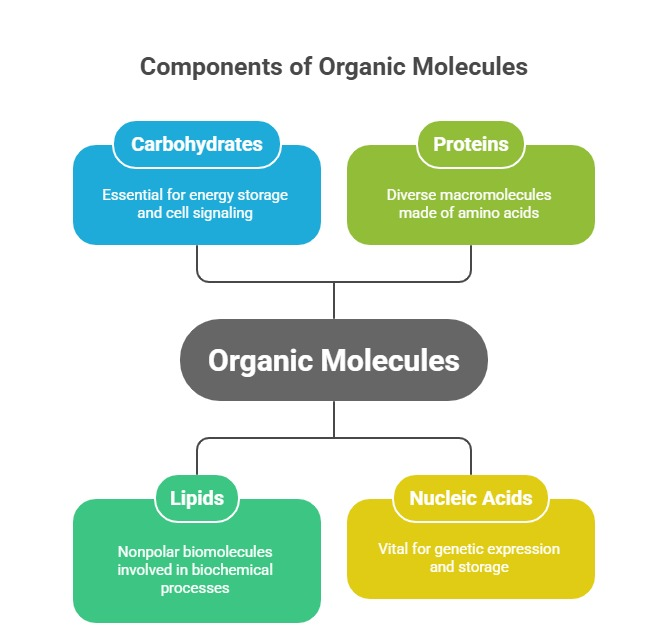
In biological systems, carbohydrates are necessary macromolecules that are involved in cell signalling, energy storage, and structural integrity. Both quantitative and qualitative techniques are used in the analysis of carbohydrates in order to recognise, measure, and describe the different kinds of carbs. Based on their chemical reactivity, the three types of carbohydrates can be identified and their existence confirmed using the procedures described in the qualitative analysis. Both monosaccharide and polysaccharide carbohydrate amounts have been precisely measured in quantitative analysis using colorimetric and enzymatic techniques. The insolubility of steroids, fats, waxes, or their derived substances in water is a common characteristic of lipids, which are nonpolar biomolecules. Although their structural and chemical variability makes them a crucial component of many biochemical and biophysical processes, it can be difficult to analyze. Amino acid chains joined by a peptide bond make up the varied class of macromolecules known as proteins (Fig.1). Different combinations and sequences of the 20 traditional amino acids make up every protein. One of the most important macromolecules, nucleic acids are vital for the expression, storage, and transfer of the genome in all living things. The two main forms of nucleic acids are ribonucleic acid (RNA) and deoxyribonucleic acid (DNA), which are polymers made of nucleotide monomers (Kumar & Jain, 2025).
Cell Structure and Organization
The fundamental building block of life in species belonging to the kingdom Plantae is the plant cell. As eukaryotic cells, these creatures have a real nucleus in addition to specific organelles that serve a variety of purposes. Bacteria are classified into two primary types based on the structure of their cellular envelopes: Gram-positive and Gram-negative. Staphylococcus aureus and other Gram-negative bacteria have thick peptidoglycan in their cytoplasmic and cell walls, while Escherichia coli and other Gram-negative bacteria have thin peptidoglycan in their inner and outer membranes (Kheyrodin et al., 2022). Viruses are micro- or nano-infectious organisms that replicate only inside living eukaryotic or prokaryotic cells. Certain viruses have a protective protein covering called the capsid structure, which is made up of capsomeres. The lipid envelope of a virus is also derived from the host cell membrane.
Cell Membrane Structure and Models
The Singer-Nicolson fluid-mosaic membrane model, which was first proposed in 1972, describes the structure of cell membranes. Globular integral membrane proteins are haphazardly dispersed along the membrane plane by the solid bodies with stippled cut surfaces seen in cell membranes. Important protein complexes are formed by some integral membrane proteins. A bilayer of fluid lipids is a representation of integral proteins (Nicolson & de Mattos, 2023). A naturally occurring process, passive transport transfers chemicals from a region of higher concentration to one of lower concentration without requiring the cell to expend any energy. To move materials against an electrochemical gradient or concentration, cells need energy. This energy is produced by cellular metabolism and takes the form of ATP. A material, such as an ion, is moved into the cell by the major active transport mechanism using ATP, and frequently, another material leaves the cell at the same moment. Secondary active transport describes the movement of material using the energy of the electrochemical gradient established by primary active transport.
Endocytosis: In addition to ion channels and transporter proteins, endocytosis is another typical mechanism by which materials enter cells. Endocytosis comes in three forms.
Pinocytosis: Pinocytosis, sometimes referred to as "cell drinking," is the process by which a cell physically "takes a gulp" of its extracellular fluid.
Phagocytosis: Phagocytosis (the condition of “cell eating”) is the process by which large particles, such as cells or relatively large particles (0.75 µm in diameter), are internalized by a cell.
Receptor-Mediated Endocytosis: A vesicle that imports the chemical into the cell is created when a molecule or ligand binds to a particular receptor on the cell's surface.
Exocytosis: Molecules that would normally be difficult to pass through the cell membrane are exported from cells by exocytosis. Secretory vesicles merge into the cell membrane during this process, causing their contents to be released extracellularly (Buratta et al., 2020).
COMPONENTS OF A CELL
In most cells, the biggest organelle is the nucleus. It is crucial for structuring the complex cellular architecture in addition to holding genetic information and acting as the location of DNA as well as RNA production, transcription, and processing (Cha, 2024). The cytoplasm of eukaryotic cells contains a structure called the endoplasmic reticulum. The smooth endoplasmic and the roughened endoplasmic reticulum are its two constituent parts. Targeting and holding onto a protein found in the inner nuclear membrane (INM). The ER membrane receives the freshly translated protein. The peripheral ER allows it to disseminate. After that, it diffuses to the interior of the nuclear envelope via the nuclear pore membrane. The INM protein's retention is due to its attachment to the chromatin (yellow) and nuclear lamina (green). The smooth-surfaced membranes that make up the sER are devoid of ribosomes. Lipid synthesis as well as processing of the membrane protein produced by the rER are handled by this organelle (sER). They so-known Golgi stack, which is encircled by vesicles, is a collection of flattened, cisternal structures of membranes that make up the Golgi apparatus (Liu et al., 2021).
Oval-shaped organelles with five separate components are called mitochondria. They have an intermediate gap, which is the area between the outer and inner membranes (Chandel, 2021). The electron transport chain, which is made up of the respiratory chain complexes I–IV and transfers electrons in a stepwise manner until they ultimately decrease oxygen to produce water, is essential to the synthesis of ATP in mitochondria (Bratic & Trifunovic, 2010). Lysosomes are organelles with a cytoplasmic membrane that contain hydrolytic enzymes that break down cell components and macromolecules. Every type of eukaryotic cell has lysosomes. Peroxisomes have been identified as important metabolic organelles with vital roles in the detoxification of reactive oxygen species, especially hydrogen peroxide, and cellular metabolism of lipids. Actin microfilaments, microtubules, and intermediate filaments make up the interior cytoskeleton of eukaryotic cells. Actin microfilaments supply the "rails" that myosin "motors" need to carry out various cellular tasks (dos Remedios et al., 2003). Chloroplasts, which are membrane-bound, large organelles located in the cytosol of leaf cells, next to both the cytoplasmic and also Tono plastic membranes, are where photosynthesis takes place in higher plants (Heber & Heldt, 1981).
BIOMOLECULES AND MACROMOLECULES INTERACTIONS
The four structural levels of proteins are primary, secondary, tertiary, and quaternary. The first level is known as the primary structure. The different forms created by hydrogen bonds make up the secondary structure. The tertiary structure is a third level of a protein's structure. The quaternary structure is the last and fourth level of protein structure (Pandey et al., 2025). The branch of biochemistry known as "enzyme kinetics" is focused on measuring the rates of reactions catalyzed by enzymes quantitatively and systematically examining the variables that influence these rates. Modulators, Moderators or modifiers are substances that affect the rate of enzyme-catalyzed processes. This is known as inhibition and typically results in a decrease in the rate. The lipids and proteins that make up biological membranes are extremely complicated. Lipids, proteins, and carbohydrates are the three main constituents of cell membranes. Transmembrane and carrier proteins are two separate types of protein found in membranes (Khan et al., 2013). The plant carbohydrates cellulose and starch, which are both made up of many conjugated glucose molecules. Carbohydrates are the most prevalent macromolecules on Earth (Chandel, 2021).
DNA AND RNA
DNA is a complex molecule that contains all of the information necessary to build and maintain an organism. Another macromolecule that is necessary for every known form of life is RNA.
DNA Structure
The fundamental building block of chromatin, nucleosomes, is a structure that contains all DNA. An octamer of histone protein, comprising two of each of the following types: H2A, H2B, H3, and H4, encircles double-stranded DNA to form nucleosomes. Every organism uses DNA replication as a basic process to replicate its genome and give its two developing daughter cells an identical set of chromosomes (Lee et al., 2023). Every organism has DNA polymerases, which function during the repair of DNA and recombination to maintain the integrity of the genomic, mitochondrial, and plastid genomes in addition to facilitating their replication (Wood & Doublié, 2022).
DNA Repair Mechanism
It is generally accepted that damaging DNA on the transcribed strands of transcriptionally active genes causes inhibited transcription elongation, which signals transcription-coupled repair (Friedberg et al., 2006). BER is in charge of eliminating DNA-damaged bases, which are identified by certain enzymes called DNA glycosylases. Oxidized DNA bases, which can occur spontaneously within a cell during an inflammatory reaction, or as a result of exposure to external agents like ionizing radiation and long-wave UV light. Base mismatches brought on by spontaneous and induced base deamination, oxidation, methylation, and replication mistakes are eliminated by the mismatch repair mechanism. Nucleotide excision repair repairs bulky DNA adducts, including intrastrand cross-links, UV-light-induced photolesions, and large chemical adducts produced by exposure to aflatoxin, benzo pyrene, and other genotoxic agents. DNA double-strand breaks are extremely powerful inducers of cell death and genotoxic effects (chromosomal breakage and exchanges). Homologous Recombination and non- homologous end- joining, which can be error-free and error-prone, respectively, are the two primary mechanisms for DSB repair (Christmann et al., 2003).
Gene Expression
Reading genetic information during transcription and translation determines gene expression. Genes can be produced, but their mRNA has no translation since not all genes make proteins. The units for expression that make up chromosomes are defined by the locations where DNA sequences are first and last converted into RNA. The generating enzyme forms a stable association with the DNA template (Richardson & Roberts, 1993). The most important objective of regulation is transcription, which is the initial stage of gene expression. Eubacteria's transcription beginning steps. RNAP holoenzyme forms a preinitiation closed complex at the promoter. To create an open complex, DNA is unraveled around the gene transcription start point. DNA "scrunching" is necessary for the unsuccessful generation of 2–15 nt RNAs. Chromatin immunoprecipitation, which measures RNAP interaction at promoters and transcribed areas, can be used to study the phase change within initiation and elongation in vivo. a straightforward indicator of the pace of transitioning from initiation to elongation is the relationship of promoter affiliation to coding sequence association. This ratio is known to us as the "Traveling Ratio" (Wade & Struhl, 2008).
Molecular Techniques in Cell Biology
Utilizing methods from other disciplines, such as biochemistry and genetics, numerous studies in molecular and cellular biology have been established to comprehend the properties of the cell, including its physiological processes and interactions with the medium. The recent progress in the subject can be attributed to the advancement and enhancement of current methods, which have made it possible for us to obtain the wealth of knowledge we do now on cell mechanisms. Some of these approaches are referred to as gold standard procedures since they have demonstrated throughout time to provide accurate and dependable data (Kondratyeva et al., 2022).
Microscopy
Optical microscopy, which makes it possible to image cellular systems and components, is one of the most cutting-edge scientific research techniques. A range of methods, such as brightfield, darkfield, fluorescent, and fluorescence microscopy, is included in modern light microscopy and has been specifically created to satisfy particular research needs. The subcellular and molecular elements of both alive and frozen cells can now be seen with remarkable specificity and precision thanks to the development of fluorescence imaging (Aarif et al., 2025). Electron microscopes, particularly those using transmission electron microscopy (TEM) and scanning electron microscopy (SEM), in practically every scientific and technological domain. Details like morphology, chemistry, crystal structure, and phase are all provided by electron microscopes (Ullah et al., 2023).
Polymerase Chain Reaction (PCR)
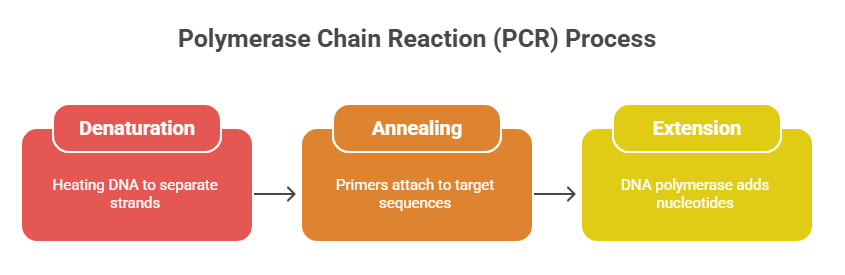
A popular molecular biology method for amplifying particular DNA sequences is called PCR. It is crucial for biotechnology, forensic science, medical diagnostics, and genetics. By cycles of denaturation, annealing, and extension, PCR replicates specific DNA sequences, enabling the identification and investigation of genetic material even in minuscule samples. Denaturation is the process of heating double-stranded DNA to split it into two independent strands (Fig. 2). Primers are brief synthetic DNA sequences that attach to the target areas on either strand during the annealing stage. The target sequence is amplified at the end of the extension phase when DNA polymerase adds nucleotide to the primers to create new DNA strands. Billions of duplicates of the desired DNA sequence are produced by repeating this cycle several times (Juma, 2025).
Electrophoresis
The separation method known as electrophoresis is used to purify proteins and nucleic acid macromolecules that exhibit variations in size, charge, or conformation. Its idea is based on the fact that, depending on their charge, charged molecules can move toward the cathode or the anode when exposed to an electrical field. In contrast to proteins, which can function as either positively or negatively charged, nucleic acids consistently display a negative charge because of the phosphate backbone they contain. The procedure of electrophoresis is used to separate molecules according to their molecular size. Molecules can pass through agarose or polyacrylamide gel by being exposed to an electric field (Ammar et al., 2022).
Blotting
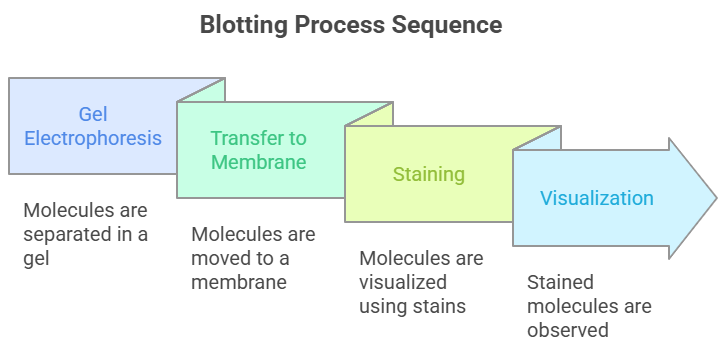
Blotting is widely used for diagnostic purposes and is employed in molecular biology to identify proteins and nucleic acids. Blotting is the process of transferring nucleic acids, such as proteins or DNA and RNA, onto a certain membrane. This membrane might be made of nylon or nitrocellulose, or PVDF. This technique involves moving molecules from a gel onto the blotting membrane surface immediately following gel electrophoresis (Fig. 3). On occasion, however, the molecules might be transferred directly onto the membrane. Then, by employing staining, we can visualize these transporting molecules. Examples include ethidium bromide, etc. (Patel et al., 2022).
Cell Culture Techniques
The process of artificially cultivating tissues, cells, or organs of animal origin using a laboratory atmosphere that includes culture medium, carbon dioxide (CO2) level, pH indicator, and temperature to keep tissues functioning and growing properly is known as cell culture. These include organ culture, primary tissue culture, and cell culture, which is frequently utilized in immunological research, viral vaccine creation, recombinant DNA (rDNA) techniques, as well as the study of cell growth and normal functions to identify growth factors. In the pharmaceutical sector, cell culture techniques are widely sought after due to their high viability.
Recombinant DNA Technology
"Recombinant DNA technology" refers to the process of creating and designing novel nucleotide sequence arrangements by inducing mutation, reconfiguration, and exchange of DNA strands. The primary goal of this field's research is to experimentally investigate the potential for mending damaged human DNA and repairing or improving future human bodies. Zinc finger nucleases, transcription activator-like effector nucleases, and regularly interspaced clusters of short palindromic repeats (CRISPR/Cas9) are some of the specific methods being used extensively in DNA repair and human genome editing (Šlesingerová, 2021).
CRISPR-Cas9 Technology
Genome editing has been transformed by CRISPR-Cas9 technology, which provides accurate and effective ways to alter genetic material. Using the bacterial immune system's capacity to target and cleave particular DNA sequences, CRISPR-Cas9 is a potent gene-editing tool. In order to direct the nuclease enzyme Cas9 to the targeted sequence of DNA and cause a double-strand break, the system uses a brief RNA molecule known as single guide RNA (sgRNA). Cellular repair systems can then mend this breach, enabling the insertion of targeted genetic changes. CRISPR-Cas9 is a revolutionary tool in the domain of genetic engineering because of its ease of use, affordability, and high efficiency (Ansori et al., 2023).
Stem Cells
A stem cell line is a population of clonal, self-renewing cells that are multipotent, meaning they may produce a variety of differentiated cell types. They are mainly differentiated based on their potency, origin, and lineage development. The classification of stem cells can be based on where they are found. For instance, adult stem cells, embryonic stem cells, and stem cells from cord blood. Additionally, stem cells are categorized according to the features of their differentiation; for instance, they can be divided into five different types: totipotent, pluripotent, multipotent, oligopotent, and unipotent (Shah & Khan, 2021).
Applications of Cell and Molecular Biology
One of the mainstays of contemporary life sciences is molecular biology, which explores the complex molecular systems underlying life. Precision medicine, CRISPR/Cas9, recombinant DNA technologies, and PCR (polymerase chain reaction) are among the significant advancements in this area. Crop upgrades have benefited greatly from molecular biology's ability to increase crop yield and disease resistance, while molecular biology techniques have also significantly enhanced medicine. In medicine, molecular biology is used in genomic medicine, pharmaceutical biology, and gene therapy. Personalized healthcare, molecular markers, and targeted medicines are important for identifying and preventing diseases. These methods are not limited to treating cancer and abnormalities such as organ damage, cardiovascular illness, and genetic problems (Ghaffar et al., 2024).
References
- Aarif R, S Sahoo and DK Bishi, 2025. Basics of light microscopy and fluorescence imaging. In: Basics of microscopy and imaging techniques. pp: 03–26.
- Ammar Q, NK Maraie and BT Al-Sudani, 2022. Efficacy of gel electrophoresis for proteins and biotechnological products – an overview. Al Mustansiriyah Journal of Pharmaceutical Sciences 20:45–56.
- Ansori AN, Y Antonius and RJ Susilo et al., 2023. Application of CRISPR-Cas9 genome editing technology in various fields: a review. Narra Journal 3:184.
- Ashrafizadeh SN & Z Seifollahi, 2021. Trends in biotechnology and ties with chemical engineering. Journal of Biotechnology and Biomedicine 4:169–86.
- Bratic I & A Trifunovic, 2010. Mitochondrial energy metabolism and ageing. Biochimica et Biophysica Acta Bioenergetics 1797:961–7.
- Cha HJ, 2024. Nuclear structures and their emerging roles in cell differentiation and development. BMB Reports 57:381.
- Chakraborty SK, 2021. Water: its properties, distribution, and significance. In: Riverine ecology, volume 1: eco-functionality of the physical environment of rivers. Springer International Publishing, Cham, pp:23–55.
- Chandel NS, 2021. Mitochondria. Cold Spring Harbor Perspectives in Biology 13:040543.
- Christmann M, MT Tomicic and WP Roos et al., 2003. Mechanisms of human DNA repair: an update. Toxicology 193:03–34.
- dos Remedios CG, D Chhabra and M Kekic et al., 2003. Actin binding proteins: regulation of cytoskeletal microfilaments. Physiological Reviews 83:433–73.
- Friedberg EC, A Aguilera and M Gellert et al., 2006. DNA repair: from molecular mechanism to human disease. DNA Repair 5:986–96.
- Ghaffar R, G Mustafa and MZ Salar, 2024. The role of molecular biology in biotechnology and medicine. In: Zoology: advancements and research trends (Ijaz MU, N Ehsan, M Imran and S Yousaf, eds): FahumSci, Lahore, Pakistan, pp: 291–8. ISBN: 978-627-7745-02-8.
- Heber U & HW Heldt, 1981. The chloroplast envelope: structure, function, and role in leaf metabolism. Annual Review of Plant Physiology 32:139–68.
- Juma K, 2025. Polymerase chain reaction (PCR): principle, requirements, types and application. Lifeline Health Sciences 3:98–105.
- Khan MS, NS Dosoky and JD Williams, 2013. Engineering lipid bilayer membranes for protein studies. International Journal of Molecular Sciences 14:21561–97.
- Kheyrodin H, R Jami and FU Rehman, 2022. Cellular structure and molecular functions of plants, animals, bacteria, and viruses. Cellular, Molecular and Biomedical Reports 2:33–41.
- Kondratyeva LG, MS Dyachkova and AV Galchenko, 2022. The origin of genetic code and translation in the framework of current concepts on the origin of life. Biochemistry Moscow 87:150–69.
- Kontogeorgis GM, A Holster and N Kottaki et al., 2022. Water structure, properties and some applications: a review. Chemical Thermodynamics and Thermal Analysis 6:100053.
- Kumar T & S Jain, 2025. Solutions, pH, and buffers. In: Essential laboratory techniques and biochemical analysis. CRC Press, pp:29–58.
- Lee CS, M Weiss and S Hamperl, 2023. Where and when to start: regulating DNA replication origin activity in eukaryotic genomes. Nucleus 14:2229642.
- Liang K & Y Du, 2021. Cell engineering techniques improve pharmacology of cellular therapeutics. Biomaterials and Biosystems 2:100016.
- Liu J, Y Huang and T Li et al., 2021. The role of the Golgi apparatus in disease. International Journal of Molecular Medicine 47:38.
- Nicolson GL & GF de Mattos, 2023. The fluid–mosaic model of cell membranes: a brief introduction, historical features, some general principles, and its adaptation to current information. Biochimica et Biophysica Acta Biomembranes 1865:184135.
- Pandey P, C Kumar and R Khandia, 2025. The insight into the role of protein misfolding and tau oligomers in Alzheimer’s disease. In: Proteostasis: investigating molecular dynamics in neurodegenerative disorders. Springer Nature, Singapore, pp:253–75.
- Patel HK, JB Dobariya and PS Patel, 2022. Genetic engineering: an optimism for sustainable biofuel production. In: Bio-clean energy technologies, volume 1. Springer Nature, Singapore, pp:133–53.
- Ribatti D, 2018. An historical note on the cell theory. Experimental Cell Research 364:01–04.
- Richardson JP & JW Roberts, 1993. Transcription termination. Critical Reviews in Biochemistry and Molecular Biology 28:01–30.
- Shah AA & FA Khan, 2021. Types and classification of stem cells. In: Stem cell biology and regenerative medicine. Springer Nature, pp:25–49.
- Šlesingerová E, 2021. Recombinant DNA and genome-editing technologies: embodied utopias and heterotopias. Body and Society 27:32–57.
- Ullah N, RA Qazi and S Ullah et al., 2024. Application and importance of scanning and transmission electron microscopes in science and technology. Contributions, Section of Natural, Mathematical and Biotechnical Sciences 43:27–37.
- Wade JT & K Struhl, 2008. The transition from transcriptional initiation to elongation. Current Opinion in Genetics and Development 18:130–5.
- Wood RD & S Doublié, 2022. Genome protection by DNA polymerase θ. Annual Review of Genetics 56:207–28.