
INTRODUCTION
One health approach is a collaborative effort across multiple disciplines to address issues related to human, animal, and environmental health, such as antimicrobial resistance (AMR). AMR in animals involves a "One Health" approach, which mainly focuses on judicious use of antibiotics, i.e., prescription by a veterinarian and no use of growth promoters, disease prevention and control, which includes farm biosecurity, antibiotics alternatives like vaccines or probiotics. AMR surveillance, AMR awareness among farmers and veterinarians, strengthening national policies, and promoting research regarding antibiotic alternatives. AMR can be transmitted between and within different populations and ecosystems; resistant zoonotic bacteria are also present in the soil, and from there, they can contaminate fruits, vegetables, and plants (Velazquez-Meza et al., 2022).
In the veterinary sector, rearing and producing healthy animals for food production is of utmost importance for farmers. Therefore, AMR in animals involves both public health safety and the economy of farmers (Kasimanickam et al., 2021). All the animals can be a source of resistant pathogens; however, the focus remains on food animals, as they, due to their food supply chain, are a key public health concern. Since the discovery of the first antibiotic, antimicrobials have been utilized in both animal and human sectors around the world to treat transmissible diseases and infection control. Most antimicrobials utilized in humans are recommended for animals, including classes of antimicrobials necessary to human medicine, such as broad-spectrum quinolones and beta-lactams. Antimicrobials have multiple uses in animals, farmed fish, farm animals, bees, and pets (Jans et al., 2018) which may develop antibiotic resistance in humans through the food chain. AMR in animals is mainly a food safety issue, as the growing need for animal protein for human consumption worldwide could result in a substantial growth in AMU in food-animal production by 67% between 2010 and 2030 (Van Boeckel et al., 2015).
The main reason behind the use of abundant amounts of antimicrobials in the animal food industry is their role as growth promoters (Mehdi et al., 2018). This may lead to the development of resistance in microorganisms due to the selection pressure and transmission of resistance genes due to overuse and misuse of antibiotics in food animals, for example, antibiotic growth promoters (AGPs). These resistant commensals and zoonotic pathogens can infect people directly or indirectly through the food system and are considered a major public health concern (Aarestrup & Wegener, 1999). Tackling AMR in the livestock sector is challenging in many ways; however, the basic concept remains the same as in human medicine, including but not limited to controlling antimicrobial usage. Key strategies and actions in addressing AMR include Responsible Use (Antimicrobial Stewardship), Surveillance & Monitoring, Disease Prevention & Control, Education & Awareness about AMR, Strict farm biosecurity, Policy & Regulation, and Applied research (Edwards and Gould 2012; Premanandh et al., 2016).
MECHANISM OF RESISTANCE DEVELOPMENT
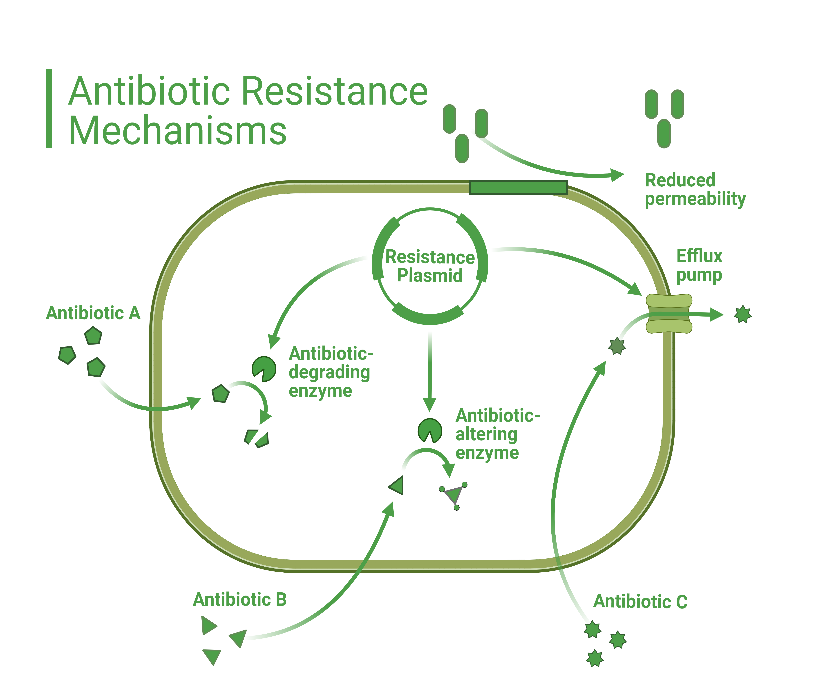
Another key element to tackle AMR is to understand the underlying mechanisms of resistance development. It has been observed that many antimicrobials can be used for years before pathogens develop resistance against them, while some become ineffective in a very short period (Jans et al., 2018). The bacteria develop resistance as a result of the long-term, widespread usage of antibiotics. AMR has become a major health concern with potential worldwide effects due to the unprecedented levels of natural genetic evolution to resist antibiotics in the twenty-first century, which calls for early intervention (Cho et al., 2014). Antimicrobial resistance occurs through various mechanisms, including reduced permeability of the bacterial cell membrane, development of efflux pumps that pump antibiotics out of the bacterial cell membrane, and enzymatic inactivation of antimicrobial agents. Fig. 1 illustrates the major mechanisms of antimicrobial resistance. Antibiotic resistance emerges due to overuse and misuse of antibiotics, due to a phenomenon called selection pressure, where antibiotic usage leads to the development of antibiotic mechanisms in bacteria. Moreover, irrational use of antimicrobials, ineffective farm biosecurity, and prophylactic use of antibiotics to boost/enhance production. agricultural wreckage, environmental pollutants, and relocation of people and animals infected with resistant bacteria aid the spread of resistance (Bürgmann et al., 2018; Collignon et al., 2018).
THE ONE HEALTH FRAMEWORK
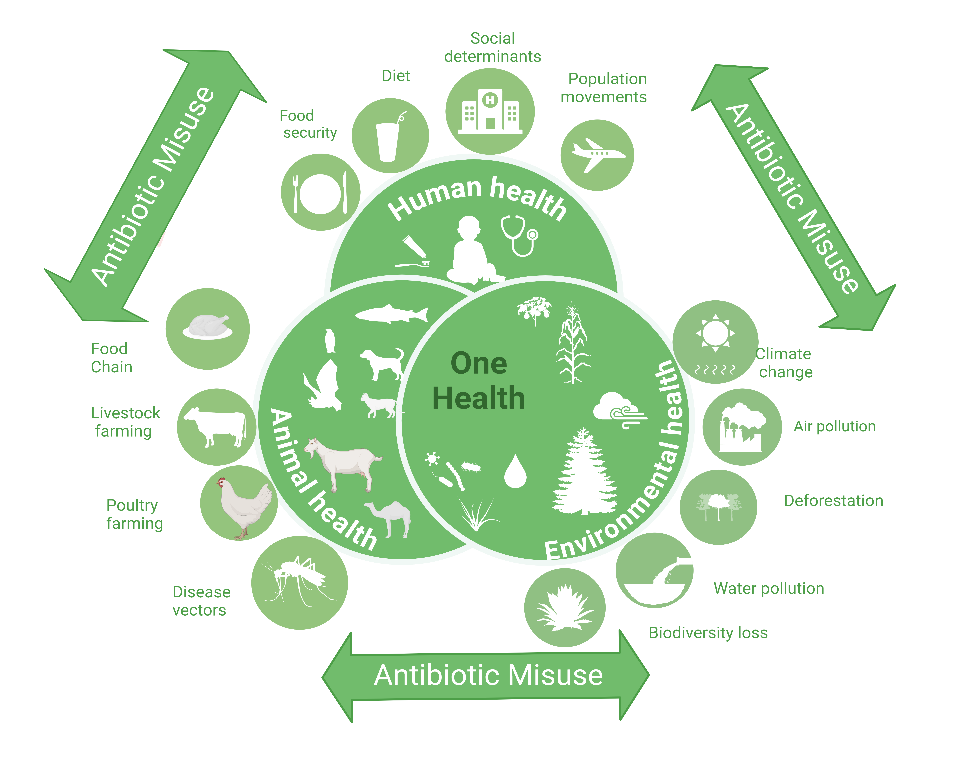
One Health identifies AMR as a complex, interconnected challenge that requires collaboration among human, animal, and environmental health sectors (Fig. 2). The human health sector is pivotal in the one health approach and it plays a key role in AMR spread through lack of infection prevention and control measures for example, hygiene measures, sanitation, and lack of antibiotics, e.g., vaccines, misuse of antibiotics and improper antibiotic usage, particularly in hospitals or healthcare settings. In the human health sector, antibiotic stewardship, which promotes rational drug prescription, appropriate drug usage and its dosage, and avoiding misuse of antibiotics, for example, in viral infections, robust surveillance systems tracking resistance patterns to guide policy makers and strengthen regulations about AMR, raising public awareness about AMR spread and healthcare professionals’ education can further enhance responsible antibiotic use. Furthermore, research and development of new diagnostic techniques and antibiotic alternates e.g., vaccines and d proper healthcare waste management, also contribute in AMR mitigation strategy (Endale et al., 2023).
The animal health sector plays a crucial role in AMR spread, particularly through food animals, by misuse and overuse of antibiotics, for example use of critical antibiotics as growth promoters or AGPs, lack of farm biosecurity, irrational antimicrobial use, weak drug regulation, and implementation of policies. AMR spread can be reduced by veterinary stewardship programs, stringent regulations about the use of antibiotics in food animals, particularly focusing on the use of antibiotics as growth promoters, strict farm biosecurity measures and supervision, disease control and prevention via vaccination to reduce antibiotic use in livestock and raising farmer awareness to reduce self-medication practice among farmers. One health and food security are directly linked in the context of AMR, which is referred to as the “farm-to-fork concept,” which means that the resistant bacteria (e.g., E. coli, Salmonella, Staphylococcus aureus) can spread along the entire food chain—from animal production (farm) to consumer consumption (fork). This concept in animal health is crucial because antibiotic misuse in livestock and poultry farming can transfer resistant bacteria to humans through food consumption, direct contact, or environmental contamination. In livestock, AMR can also spread through fecal shedding, contamination of equipment, and environmental pathways like water lines and waste management, which can be controlled by the implementation of farm biosecurity measures. However, key AMR mitigation strategies include the use of vaccines to prevent infections and antibiotic use, promoting antibiotic alternatives (e.g., probiotics, bacteriophages), enhanced AMR surveillance and laboratory networking and development of regulatory frameworks to limit over-the-counter availability of antibiotics in veterinary settings. Environmental health contribution to one health entails poor sanitation measures, lack of wastewater treatment, which can be improved by improving sanitation, regulating wastewater treatment, and hospital and agricultural waste management to limit AMR spread.
ROLE OF FOOD ANIMALS IN ONE HEALTH
AMR significantly influences healthcare systems through food animals because antibiotics are not only consumed by humans but also excessively used in livestock and the agriculture sectors (Abushaheen et al., 2020). Studies have shown that antimicrobial contributions in food systems and agriculture significantly influence AMR (Van Boeckel et al. 2019). According to studies, in the U.S., Veterinary medicine can employ 70% of the antibiotics used to treat humans (McKernan et al., 2021). Additionally, zoonosis presents a significant risk for transferring antibiotic-resistant bacteria between humans and animals through direct or indirect contact and foodborne or waterborne incidents (Bhatia 2021; Gilbert et al., 2021). Worldwide, a large number of livestock, including cows, cattle, and poultry, are raised mainly for food and profit. The main key driver in enhancing antimicrobial resistance in livestock and aquaculture is the quantity and quality of antimicrobial use. Profitability is the main factor in the overuse or abusive use of antimicrobials in livestock production and aquaculture systems.
In developing countries, the administration of low doses of antibiotics to healthy animals over extended periods promotes selective stress on bacteria and, subsequently, the existence and growth of resistant strains. The continuous exposure to antibiotics points to the appearance of resistant strains (Almansour et al., 2023).As mentioned by (Van Boeckel et al., 2019)around 70% of the antimicrobials are used for animals for disease prevention and as growth promoters in addition to the treatment of diseases. This resistance in animals can then easily be transmitted to humans when they consume those animals or come in direct contact with the infected animal. Similarly, livestock waste contaminated with resistance genes, considered environmental pollutants, transmits resistance when released into the environment, particularly when on agricultural land (Zalewska et al., 2021).
The intricate interaction of AMR transmission among humans, animals, and ecosystems highlights the necessity of a One Health approach to gain a deeper understanding of the transmission mechanisms and reduce its spread (Fujita et al., 2022b). When compared to human isolates, antimicrobial susceptibility testing for animal and environmental isolates seems to be inconsistent and disproportionately low. AMR data gaps in the animal and environmental sectors are highlighted by the fact that the pooled prevalence of resistance in many animal and environmental isolates could not be computed because of a lack of susceptibility data (Fujita et al., 2022a). The underlying causes of antimicrobial resistance are very complicated, diverse, and interlinked, enhancing the complexity of antimicrobial resistance across humans, animals, and the environment. Microbial and genetic processes are also involved in diverse factors of resistance. Since everything impacts everything else, it is not unexpected that AMR is such a challenging issue to solve. Despite several knowledge gaps, antibiotic-resistant bacteria (ARB) and antibiotic-resistant genes (ARGs) can spread throughout farms, the environment, human populations, and households, including companion animals. Globally, resistance spreads, for instance, through international travel, wildlife migration, and the trade in animal products. It is essential to gain a better understanding of the several factors that can affect the level of resistant bacteria and resistance genes to prevent the emergence and spread of AMR (Graham et al., 2019).
The prerequisite to ponder links between humans, the environment, and animals, in the management of the global antimicrobial resistance (AMR) emergency, is progressively highlighted in action plans technologically advanced by the United Nations Quadripartite, regional actors (such as the European Union), and countries across the world. All advocate a ‘One Health’ approach, which usually distinguishes that “the health of domestic and wild animals, humans, plants, and the environment (including ecosystems) are closely interconnected and inter-dependent”, to use the precise wording approved by the United Nations Quadripartite (Larsson et al., 2023). Several international bodies are coordinating on Antimicrobial Resistance (AMR), for example, WHO, FAO, WOAH, and UN, working through frameworks like. The Global Action Plan on AMR, Quadripartite (WHO, FAO, WOAH, UNEP) to foster a "One Health" approach. These global efforts are integrating human, animal, and environmental sectors to tackle resistance, enhance research and development and guide national strategies, addressing AMR as a critical global health security threat and promoting AMR monitoring and management at the national level globally with the vision of having better and stronger collaborations.
GLOBAL COORDINATION OR ONE HEALTH ALLIANCES
AMR is one among several global health threats that have attracted policy attention in recent years and which can only be addressed through adopting a complex, broad-based strategy. Combating AMR requires multiple facets of policy approaches, including stewardship, drug development, One Health, and education, to help contain the problem rightfully (Hayes, 2022). WHO Global Action Plan (GAP) on AMR was adopted in 2015, which consists of five core objectives to tackle growing AMR, all under a "One Health" approach involving human, animal, and environmental health sectors. These objectives provide a framework for national policies or guidelines to combat AMR. The Global Action Plan by WHO on Antimicrobial Resistance has outlined five objectives:
Improving Awareness/Understanding:
The issue of AMR can only be eradicated through the support of educational programs, which are a major key to sustainable progress (Spicer et al., 2022). Key aspects include: Curricula incorporating One Health principles prepare future healthcare and veterinary professionals to address AMR effectively. Workshops and seminars encourage cross-disciplinary knowledge sharing, fostering collaboration among sectors. AMR awareness about understanding of AMR, its driving factors and mechanism of spread should be integrated into the curricula of medical, veterinary, and agricultural fields. Campaigns, such as Antibiotic Awareness Week, educate communities on the impact of misuse and the importance of completing prescribed courses. Awareness Campaigns should be encouraged for example, efforts such as the Antibiotic Awareness Week involve the public in creating awareness of AMR effects in society. Hence, sustained funding of Education for future professionals assures that these continued and new policies on AMR are appropriately informed by enlightened choices.
AMR surveillance and monitoring: Enhance policy-relevant surveillance and the spread of actionable research. Monitoring both resistance genes and organisms in wastewater, healthcare centers, and agricultural effluent guarantees identification and tracking of the extent to which AMR has invaded the environment. National action plans focus on the importance of an integrated surveillance framework for antimicrobial use and resistance patterns in human and animal activity sectors.
Disease control and prevention: AMR can be prevented by employing the highest standards of prevention for example, implementing effective sanitation, hygiene, stringent farm biosecurity and preventive treatments like vaccinations across the animal health sector.
Antimicrobial stewardship programs (ASPs): ASP includes maximizing and efficiently rationalizing the demand and consumption of antimicrobials in human and animal health. To implement robust ASPs, policymakers emphasize several approaches: Core elements of ASPs include leadership commitment to put legislation in place, ensuring accountability and pharmacy expertise, focusing on acquiring effective action plans, as well as monitoring and reporting, with specific emphasis on providing customized education (Barlam et al., 2016). ASP includes the development and implementation of new regulations and the strengthening of existing legislation on policy making level. Measures such as Europe’s restrictions on preventive antibiotic administration in feed or water to animals also strengthen prudent antibiotic utilization practices in agriculture. ASP also demands reporting, including those set by the World Health Organization (WHO), The Joint Commission in its standards, and the Centers for Medicare and Medicaid Services in their conditions of participation, require ASPs to be created and documented. Interprofessional Collaboration: Teamwork integrated into case-based learning and simulation further enhances the focus on decision-making regarding the use of antimicrobials. Collaborative Models: Michigan Hospital Medicine Safety Consortium is also one of the successful models by implementing different tactics that include sharing best practices and focusing on monitoring compliance with syndrome-based efforts as well. In many hospitals, particularly in smaller or rural areas, ASP success is argued by increasing interventions and adapting them to the settings. As a continued focus, the development of ASPs during acute care, in long-term care settings, and in ambulatory practice is in focus.
AMR Fund Initiatives
Research and education are foundational to long-term solutions against AMR. Collaborative investment in these areas supports the evolution of diagnostics, therapies, and preventive measures. Governments and private sectors, through initiatives like the AMR Action Fund, provide financial support to develop new antimicrobials targeted at resistant pathogens. There is no doubt that the development of new antibiotics is an important factor in the management strategies of AMR; nevertheless, financial and developmental challenges limit the development of new antibiotics. Reforms supporting drug development include (Rauseo et al., 2020): An initiative of the public and private sectors dedicated to offering financial and technical resources to encourage the development of antibiotics. The same has been observed in existing policies, such as the DISARM Act in the United States, which is in the process of advancing a financial plan that provides for a higher rate of reimbursement to institutions that utilize new antibiotics in accredited hospitals. Therefore, it is necessary to develop long-term, sustainable investment cases enabling AMR containment worldwide. Challenging the problem of AMR involves the implementation of harmonized and properly coordinated policies that cut across sectors and countries. There remain improvements in specific areas of stewardship, drug development, and education, but enhanced innovations in One Health initiatives and global collaboration will enhance the effort. Implementation of these measures ensures a robust defense against the emerging danger of antimicrobial resistance (Ranjbar and Alam, 2023). One Health can be implemented successfully across nations by following the core pillars.
Political Commitment and Policy: There should be high-level commitment and support of politicians and policymakers to overcome institutional barriers and integrate One Health into national laws, strategies, and agreements.
Cross-Sector Collaboration: There should be involvement of diverse experts, human health professionals, veterinarians, environmentalists, policy makers and communities through joint goals and equal contribution.
Integrated Surveillance and Data: There should be integration of surveillance data at a central platform for early detection and monitoring of threats.
Capacity Building: There should be training of all stakeholders involved in the one health approach to develop multidisciplinary teams, strengthen laboratory networks for diagnostics and research.
Community Engagement: There should be involvement of local communities to raise awareness about the impact of one health. The Rabies Control Program in Sri Lanka is a successful one-health program that leads to significant reductions in human and animal cases through mass-level vaccinations in dogs, post-exposure prophylaxis in humans, and community awareness campaigns.
USE OF AI TO COMBAT AMR
Artificial intelligence (AI) and machine learning offer new ways to fight the growing problem of antimicrobial resistance (AMR). As antibiotic resistance makes common treatments less effective against "superbugs," AI can play a key role in improving diagnosis, guiding better prescribing, and supporting the development of new drugs (Ahmed et al., 2024). By using advanced tools like neural networks and predictive analytics, AI can help detect infections earlier and recommend appropriate treatments faster. AI can also analyze hospital data, patient conditions, and treatment guidelines to suggest the best antibiotics, ensuring more effective and targeted care (Liu et al., 2024).
CHALLENGES TO COMBAT AMR
The overuse of antibiotics is driving antimicrobial resistance (AMR), which poses a growing global health threat. AMR causes more severe infections, longer hospital stays, higher complications, and increased mortality. It also burdens national economies and healthcare systems due to high treatment costs and reduced productivity. Key factors contributing to AMR include improper antibiotic use, lack of clean water and hygiene, poor infection control, limited access to medicines and vaccines, and weak awareness and regulation. AMR is a global issue, leading to the establishment of surveillance systems to track its spread (Sharma et al., 2024). Various monitoring systems are gathering crucial data on the impact of AMR and forecasting emerging resistance patterns. Global Antimicrobial Resistance and Use Surveillance System (GLASS) is a well-recognized monitoring platform at the global level; additionally, various systems at the regional level are also engaged in AMR tracking. The Fleming Fund, a new initiative launched by the UK Government, is grounded in the principles of One Health and cross-sector cooperation (Frost et al., 2021).
AMR IN THE VETERINARY SECTOR OF PAKISTAN
In Pakistan, addressing AMR in li animal health sector, mainly involving poultry farming, livestock farming and aquaculture farming, is considered crucial for public health, food safety and security. However, veterinary infrastructure and existing regulatory mechanism remains underdeveloped. Pakistan’s National Action Plan on AMR (2024–2028) includes livestock, poultry and fisheries activities according to one health approach yet there are weaknesses for example, limited surveillance data, inadequate provincial coordination, lack of laws and regulations on over-the-counter antibiotic sales, and insufficient stewardship programs in the veterinary sector. Current data highlights high multidrug resistance in critical pathogens in food animals, posing a serious threat to public health and food safety. Fleming Fund Country Grant Pakistan has played a leading role in the development of Pakistan’s first National AMR Surveillance Strategy for Healthy Food Animals and Aquaculture, strengthened laboratory capacity, and developed antimicrobial use prescription guidelines for veterinarians to rationalize antibiotic use in food animals. Meanwhile, FAO and the local livestock departments play a role in awareness campaigns on judicious antibiotic use. At the global level, WHO, FAO, and WOAH coordinate regional AMR projects under a shared One Health framework, emphasizing responsible antimicrobial stewardship in food animals. International collaborations and national regulations are pivotal for AMR mitigation in Pakistan’s veterinary sector. Furthermore, the Drug Regulatory Authority of Pakistan (DRAP) plays a central role in the development of regulations and policies related to over-the-counter sales of antibiotics to curb AMR. DRAP has introduced a prescription-only requirement for antibiotics, which emphasizes that the antibiotics can be used only when prescribed by a licensed practitioner to reduce self-medication and irrational use of antibiotics, which are major contributors to AMR. It also directs provincial governments to enforce drug regulations across all provinces as an AMR mitigation strategy. Additionally, DRAP’s regulatory actions suggest manufacturers and importers share antibiotic production and import data for guided policy decisions, AMR surveillance and stewardship planning, and strengthening oversight of antimicrobial supply chains. DRAP is also collaborating with government/private bodies to train pharmacists to reduce self-medication and enhance pharmacovigilance, addressing irrational antibiotic dispensing. Despite these initiatives, there are challenges in implementation due to overlapping federal-provincial jurisdictions and widespread over-the-counter antibiotic availability. These advances in the regulatory framework highlight Pakistan’s commitment to strengthening AMR mitigation strategies, strict governance, antimicrobial stewardship, and the development of the One Health framework (Qiu et al., 2024).
CONCLUSION
Addressing antimicrobial resistance (AMR) in animals needs a multilayered approach that balances animal welfare, public health, and environmental sustainability. AMR is a serious threat to public health globally, due to the irrational use of antimicrobials in veterinary medicine, leading to the development of resistant pathogens. A systematic approach would prioritize preventive measures like vaccination and biosecurity, encourage sound farming practices, and tighten laws governing the use of antibiotics. Fostering behavioral change requires educating the public, veterinarians, and farmers about the responsible use of antibiotics. Global collaboration is essential to tackle AMR effectively. Initiatives like the "One Health" approach emphasize the interconnection of human, animal, and environmental health, encouraging stakeholders to work together. Researchers, policymakers, and industry leaders must line up to cultivate advanced solutions, boost surveillance systems, and guarantee rightful access to assets. Eventually, addressing AMR in animals is not just an agricultural issue but a foundation of maintainable health systems. Proactive and combined action will defend both human and animal health for future generations.
References
- Aarestrup FM & HC Wegener, 1999. The effects of antibiotic usage in food animals on the development of antimicrobial resistance of importance for humans in Campylobacter and Escherichia coli. Microbes and Infection 1:639-44.
- Abushaheen MA, Muzaheed, AJ Fatani et al., 2020. Antimicrobial resistance, mechanisms and its clinical significance. Disease-a-Month 66:100971.
- Ahmed SK, S Hussein, K Qurbani et al., 2024. Antimicrobial resistance: impacts, challenges, and future prospects. 2:100081.
- Almansour AM, MA Alhadlaq, KO Alzahrani et al., 2023. The Silent Threat: Antimicrobial-Resistant Pathogens in Food-Producing Animals and Their Impact on Public Health. 11:2127.
- Barlam TF, SE Cosgrove, LM Abbo et al., 2016. Implementing an antibiotic stewardship program: guidelines by the Infectious Diseases Society of America and the Society for Healthcare Epidemiology of America. Clinical Infectious Diseases 62:51-77.
- Bhatia R, 2021. Addressing challenge of zoonotic diseases through One Health approach. Indian Journal of Medical Research 153:249-52.
- Bürgmann H, D Frigon, WH Gaze et al., 2018. Water and sanitation: an essential battlefront in the war on antimicrobial resistance. FEMS Microbiology Ecology 94:101.
- Cho H, T Uehara & TG Bernhardt, 2014. Beta-lactam antibiotics induce a lethal malfunctioning of the bacterial cell wall synthesis machinery. Cell 159:1300-11.
- Collignon P, JJ Beggs, TR Walsh et al., 2018. Anthropological and socioeconomic factors contributing to global antimicrobial resistance: a univariate and multivariable analysis. The Lancet Planetary Health 2:398-405.
- Edwards B & I Gould, 2012. Antimicrobial stewardship: lessons from human healthcare. Reviews in Medical Microbiology 31:135-44.
- Endale H, M Mathewos & D Abdeta, 2023. Potential causes of spread of antimicrobial resistance and preventive measures in one health perspective-a review. Infection and drug resistance 16:7515-45.
- Frost I, G Kapoor, J Craig et al., 2021. Status, challenges and gaps in antimicrobial resistance surveillance around the world. Journal of Global Antimicrobial Resistance 25:222-6.
- Fujita AW, K Werner, JT Jacob et al., 2022a. Antimicrobial Resistance Through the Lens of One Health in Ethiopia: A review of the literature among humans, animals, and the environment. International Journal of Infectious Diseases 119:120-9.
- Gilbert W, LF Thomas, L Coyne et al., 2021. Mitigating the risks posed by intensification in livestock production: the examples of antimicrobial resistance and zoonoses. One Health 15:100123.
- Graham DW, G Bergeron, MW Bourassa et al., 2019. Complexities in understanding antimicrobial resistance across domesticated animal, human, and environmental systems. Annals of the New York Academy of Sciences 1441:17-30.
- Hayes JF, 2022. Fighting back against antimicrobial resistance with comprehensive policy and education: a narrative review. Animals 11:644.
- Jans C, E Sarno, L Collineau et al., 2018. Consumer exposure to antimicrobial resistant bacteria from food at Swiss retail level. Frontiers in Microbiology 9:362.
- Kasimanickam V, M Kasimanickam & R Kasimanickam, 2021. Antibiotics use in food animal production: escalation of antimicrobial resistance: Where are we now in combating AMR? Veterinary Sciences 9:14.
- Larsson D, W Gaze, R Laxminarayan et al., 2023. AMR, One Health and the environment. Nature Microbiology 8:754-5.
- Liu GY, D Yu, MM Fan et al., 2024. Antimicrobial resistance crisis: could artificial intelligence be the solution? Microbiology and Molecular Biology Reviews 11:7.
- McKernan C, T Benson, S Farrell et al., 2021. Antimicrobial use in agriculture: Critical review of the factors influencing behaviour. Journal of Antimicrobial Resistance 3:178.
- Mehdi Y, MP Létourneau-Montminy, ML Gaucher et al., 2018. Use of antibiotics in broiler production: Global impacts and alternatives. Animal Nutrition 4:170-8.
- Premanandh J, B Samara, A Mazen, 2016. Race against antimicrobial resistance requires coordinated action-an overview. Frontiers in Microbiology 6:1536.
- Qiu Y, JP Ferreira, R Ullah et al., 2024. Assessment of the implementation of Pakistan’s national action plan on antimicrobial resistance in the agriculture and food sectors. Antibiotics 13:206.
- Ranjbar R & M Alam, 2023. Antimicrobial Resistance Collaborators (2022). Global burden of bacterial antimicrobial resistance in 2019: a systematic analysis. ebnurs-2022-103540.
- Rauseo AM, A Coler-Reilly, L Larson et al., 2020. Open Forum Infectious Diseases.7:016.
- Sharma S, A Chauhan, A Ranjan et al., 2024. Emerging challenges in antimicrobial resistance: implications for pathogenic microorganisms, novel antibiotics, and their impact on sustainability. Frontiers in Microbiology 15:1403168.
- Spicer JO, WS Armstrong, BS Schwartz et al., 2022. Evaluation of the Infectious Diseases Society of America’s core antimicrobial stewardship curriculum for infectious diseases fellows. Clinical Infectious Diseases 74:965-72.
- Van Boeckel TP, C Brower, M Gilbert et al., 2015. Global trends in antimicrobial use in food animals. Proceedings of the National Academy of Sciences of the United States of America 112:5649-54.
- Van Boeckel TP, J Pires, R Silvester et al., 2019. Global trends in antimicrobial resistance in animals in low-and middle-income countries. Science 365:1944.
- Velazquez-Meza ME, M Galarde-López, B Carrillo-Quiróz et al., 2022. Antimicrobial resistance: one health approach. Veterinary world 15:743.
- Zalewska M, A Błażejewska, A Czapko et al., 2021. Antibiotics and antibiotic resistance genes in animal manure-consequences of its application in agriculture. Frontiers in Microbiology 12:610656.