
INTRODUCTION
Antimicrobial resistance occurs when microbes evolve mechanisms to withstand exposure to antimicrobial agents that would ordinarily inhibit or kill them. These methods include enzymatic degradation or modification (e.g., Beta-lactamase production), changes to drug target sites, reducing membrane permeability and active efflux of antimicrobials from cells. AMR is caused by a combination of biological, human and environmental causes, most notably antibiotic abuse and overuse in human, veterinary practice, and agriculture (Wellington et al., 2013). Poor infection prevention and control, inadequate sanitation, and limited access to excellent healthcare all contribute to the spread of resistant pathogens. Furthermore, horizontal gene transfer by plasmids, transposons, and integrons enables the rapid dissemination of resistance genes throughout bacterial populations, making AMR complex and rising.
Mechanisms of Resistance in Bacteria
Antimicrobial resistance (AMR) is a result of blocking biochemical cycles that are required for synthesizing vital compounds of bacterial cells. Cell wall, nucleic acid and protein synthesis are three major targets of antibacterial agents. The mechanism of action of antimicrobials includes inhibiting the synthesis of proteins, cell walls, pathways related to metabolism and nucleic acids. Antimicrobials mechanism depends on the ability to bind to target sites present on the bacteria (Reygaert, 2018; Uddin et al., 2021). Additionally, to reach those sites, antimicrobials must cross the bacterial cell walls in different ways. This is considered an important determining factor that antimicrobials need to overcome to kill and interfere with the growth of bacteria (Belay et al., 2024; Vaiyapuri et al., 2023). AMR is a complicated process which includes different bacterial species, several types of antimicrobials, resistance mechanisms, and genes (Abushaheen et al., 2020). The resistance of an organism’s ability either temporarily or permanently and its progeny should be multiplying and viable in stress conditions, which could inhibit or destroy the related strains or substrains. Bacteria are considered resistant when certain quantities of antimicrobials do not make them susceptible practically (Cloete, 2003).
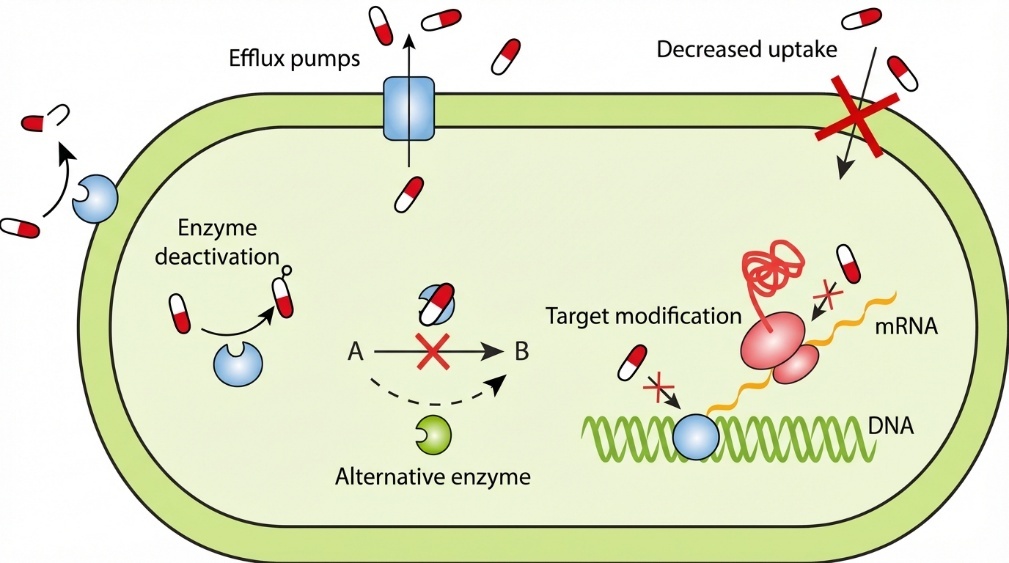
Bacteria develop and employ various structural, biochemical, genetic, and enzymatic mechanisms to cope with the challenges posed by antibiotics and adverse environmental stimuli. This resistance strategy can be either intrinsic or acquired by bacteria against the antimicrobial agents. Studies have shown that different bacteria have natural resistance to the antibiotics that were developed without any exposure to the antibiotics against which the bacteria are resistant. If the provided concentration of antimicrobial cannot control or treat the infection clinically, then the bacteria are intrinsically resistant. There are several causes of intrinsic resistance, including a reduction in uptake of antimicrobials, the absence of real targets, and enhanced activity of enzymes, encoded chromosomally, responsible for the biodegradation of antibiotics in bacteria (Fig. 1). Uptake of antimicrobials can be affected either by modification of the permeability of cell walls and membranes or a change in the functioning of efflux pumps. In recent times, “Intrinsic resistome,” which is a combination of elements involved either directly or indirectly in AMR, is not associated with past antimicrobial exposure and Horizontal gene transfer (Olivares et al., 2013).
According to Petrson et al., in immunocompromised individuals, intrinsic mechanisms of resistance can reduce the level of AMR in the actual host and can convert the normal flora or environmental bacterial species to pathogens of opportunistic nature. Plasmid-mediated resistance has modified the concept of resistance, which was previously considered as a chromosomal nature only, resulting in enhanced dissemination and expression. This kind of resistance is called acquired resistance, posing a serious threat to human health (Peterson & Kaur, 2018)
Bacteria become intrinsically resistant to antimicrobials by using mechanisms including changing outer-membrane permeability, lack of the target for the antibiotic and efflux pumps. In bacteria, the membrane of the cytoplasm acts as a barrier that separates the outside environment from the cytoplasm. Biological membranes, composed of a lipid bilayer, are flexible and can self-seal. The fluidity of a membrane affects its permeability: greater flexibility leads to higher permeability. However, reducing the cytoplasmic membrane permeability and consequently, its fluidity can negatively impact the structure and function of the various membrane proteins embedded in the bilayer. To address this issue and protect themselves, some bacteria develop extra structures that act as a barrier to limit the entry of potentially harmful substances. In Gram-positive bacteria, the outer thick layer of peptidoglycan, which is decorated with teichoic acid polymers and proteins bound covalently, primarily provides structural support, offering tensile strength and resisting the osmotic pressure from the cytoplasm (Arzanlou et al., 2017; Cox & Wright, 2013).
Lack of a target site for the antibiotic is another pathway for the intrinsic resistance. Some antibiotics work by binding to specific enzymes or proteins essential for bacterial survival or replication. If a bacterium lacks these targets entirely, it cannot be affected by those antibiotics. For instance, Daptomycin, a lipopeptide antibiotic, is effective against MRSA, Vancomycin-resistant Enterococci (VRE) and Vancomycin-resistant Staphylococcus aureus (VRSA), but it does not work against Gram negative organism. It acts by targeting the cytoplasmic membrane, where it inserts itself through a calcium-mediated mechanism, leading to the depolarization of the membrane. The cytoplasmic membrane of bacteria, having gram negative nature, contains a much lower number of anionic-phospholipids as compared to that of Gram-positive microbes. The following difference in membrane structure diminishes the effectiveness of daptomycin's calcium-mediated insertion, resulting in reduced bactericidal activity against bacteria of a gram-negative nature (Randall et al., 2013).
Horizontal Gene Transfer (HGT)
Horizontal Gene Transfer (HGT) is a crucial driver in the establishment and dissemination of Beta-lactamase-resistant E. coli, allowing for the rapid acquisition of resistance genes from different bacteria (Doi et al., 2017). Genes coding Beta-lactamases, such as ESBLs, AmpC, and carbapenemases, are commonly found on mobile genetic elements (MGE), including plasmids, transposons and integrons in E. coli (El Salabi et al., 2013). These features promote gene transfer predominantly through conjugation, allowing resistant bacteria to effectively transmit resistance determinants in clinical, community, and environmental settings. HGT not only adapts E. coli to Beta-lactam antibiotics but also promotes the coexistence of several resistance genes within a single strain, resulting in multidrug resistance (Hossain & Chowdhury, 2024). HGT has an important role in the persistence evolution and global dissemination of Beta-lactamase producing E. coli, making effective antibiotics challenging (Yao et al., 2022).
Efflux Pumps
Efflux pumps are commonly found in the chromosomes of organisms, including those that are not antibiotic producers, indicating that they may have developed for reasons other than evading antibiotics. The first instance of antimicrobial resistance due to efflux was identified for tetracycline (an antibiotic) in the 1970s, and since then, the active efflux of various antibacterial compounds has been extensively documented in numerous Gram-positive and Gram-negative bacteria (Butaye et al., 2003). Efflux pumps are either specific to a single substrate or have a broader range, capable of exporting different classes of compounds. It has been proposed that antibiotic resistance resulting from active efflux may be an unintended consequence of the wide substrate specificity of these pumps; they typically transport multiple molecules and often expel toxic substances produced by the host. This suggests that their primary function is a survival strategy in their natural habitat, rather than a direct response to the selective pressure from the clinical use of antibiotics (Cox & Wright, 2013; D’Costa et al., 2011).
Target Modification
Target modification is the first mechanism of antimicrobial resistance in which the microorganism alters the molecular structure to which antibiotics are intended to attach, lowering or eliminating molecular efficacy (Schaenzer & Wright, 2020). Target modification in E. coli can arise via genetic modifications or the acquisition of resistance genes, which alter the target site for antimicrobials such as penicillin-binding proteins PBP), DNA gyrase enzyme, topoisomerase IV enzyme or ribosomal subunits (Lambert, 2005). These changes prevent antibiotics from properly interacting with their targets, allowing important bacterial functions such as cell wall synthesis, DNA replication, and protein production to continue despite antimicrobial treatment. Target alteration is typically combined with additional resistance mechanisms, including beta-lactamase production and efflux pumps, leading to increased level of resistance as shown in Fig. 1. This process leads to the durability of resistant E. coli strains (Nasrollahian et al., 2024).
Enzymatic Degradation (beta-lactamases)
Enzymatic degradation is a critical mechanism of antimicrobial resistance in which bacteria develop enzymes that deactivate antibiotics before they can take effect. E. coli uses Beta-lactamases to break down β-Lactam antibiotics such as penicillin, cephalosporins, and carbapenems (Singh et al., 2025). E. coli produces Extended-Spectrum-Beta-Lactamases (ESBLs), AMPC-beta-lactamases, and carbapenemases, making it resistant to several Beta-lactam antibiotics. This severely limits treatment choices. Beta-lactamases are typically found on plasmids and other mobile genetic elements, allowing for rapid proliferation via HGT. Enzymatic breakdown by Beta-lactamases has contributed significantly in worldwide spread of multi-drug-resistant E. coli (Khan et al., 2025).
DRIVERS OF AMR IN ANIMALS
Antimicrobials that are essential for the medical field are widely used in the veterinary field, such as pets, aquaculture, beekeeping, and livestock, usually at higher rates for both preventive and therapeutic purposes. The uncontrolled use of antimicrobials in veterinary fields and antimicrobial resistance (AMR) is an increasing global challenge that impacts animals as well as human but also animals throughout the food supply chain in nearly every country. These resistant bacteria and genes are able spread from farm animals to humans through direct contact, eating food items, particularly if they are not properly processed and cooked. The Centers for Disease Control and Prevention (CDC) in the United States estimates that around 20% of resistant infection cases are linked with pathogens found in animals and animal-derived food (Storey et al., 2022). Additionally, resistant microbes and residues in animal byproducts or waste are significant contributors to environmental AMR, which can then affect humans through direct exposure and environmental stimulation. Animals can acquire these resistant microorganisms from various sources in the environment, and their guts and tissues often contain a high concentration of antimicrobial-resistant bacteria (ARB), which can spread back to the environment and to humans. The microbial pathogens can target humans via processing and consumption of contaminated products and food, direct contact with animals, fishing and drinking contaminated water (Preena et al., 2020).
Overuse of Antimicrobials in Veterinary Practice
In Third World countries, the extensive use of antibiotics in both medical and non-medical contexts in animal farming makes the rise of AMR unavoidable. Nowadays, poultry production is rapidly growing as a source of income and a supplement for the increasing demand for the animal origin protein (Azabo et al., 2022; Kimera et al., 2020). This phenomenon, along with increasing urbanization and highly growing population, further fuels the irrational use of antimicrobials both therapeutically and non-therapeutically to exploit the output. Antibiotics are commonly utilized in poultry farming as growth promoters or to treat infections (Scudiero et al., 2023; Tabashsum et al., 2023). Over the past two decades, the prevalence of MDR strains has surged. Farm animals and their products have been recognized as sources of resistance genes. E. coli acquires these resistance genes through selective pressure, induction, or mutation. Furthermore, bacterial AMR genes can be transmitted both horizontally and vertically to other bacteria, and they can also enter the human food-supply (Ogundare et al., 2024; Okaiyeto et al., 2024).
Global use of antimicrobials in farm animals has increased due to an increase in the protein consumption from animal sources. Reported data shows that 8,164,662 kilograms of antimicrobial agents are consumed worldwide annually and 70 percent accounts for non-therapeutic use (Bushen et al., 2021). In 2020, it is estimated that 3558 tons of antimicrobial agents were consumed in farm animals in Africa only (Mshana et al., 2021). In several countries globally, antimicrobials are being used non-therapeutically, such as for the improvement of feed efficiency and animal growth promoters (Hosain et al., 2021; Lekshmi et al., 2017). At present, a significant proportion of about 80% of farm animals and birds receive antimicrobial therapy during their whole or most of their life cycle (Lees et al., 2021; Wallinga et al., 2022).
In underdeveloped regions, animal production has been increased because of modern technologies and methods of farming, which leads to improper or enhanced usage of antimicrobial compounds (Geta & Kibret, 2021). In high-income countries, the irrational and unauthorized antimicrobial usage has accelerated the spread of antibacterial resistance in farm animals. Due to the overuse of antimicrobial agents, the resistance against microbes has increased, because patients with infections caused by the resistant microbes will be treated with higher doses of antimicrobials. This will lead to enhanced selection pressure, which favors the pathogenic as well as normal microbial flora to become more resistant, leading to the dissemination and emergence of multidrug-resistant microbes (Murray et al., 2022). Generally, antimicrobial resistance is a result of overuse of antimicrobial agents, when such antibacterial compounds meet microbes, leading to permanent or temporary mutations in genes of microbial species, forcing them to modify the drug target sites (Naveed et al., 2020). The methylase enzyme encoding genes for erythromycin resistance against S. aureus and Mycobacterium spp are primarily functional upon exposure to a certain class of antibiotics; as a result, the pathogens keep evolving against these specific antimicrobial agents (Smyk et al., 2022; van Duin & Paterson, 2016).
This antimicrobial resistance that emerged in livestock production centers can disseminate and contaminate one's health from work through different mechanisms associated with the food chain and the use and inappropriate removal of other byproducts. Livestock production is a very critical hot spot and has a very great role in the dissemination and emergence of the antibacterial-resistant Salmonella and E. coli via the food chain, occupational exposure, and environmental contamination. Furthermore, these pathogens can reach plant-based foods via livestock manure-based fertilization and then be transmitted to human beings and other animals. This indicates that livestock production serves as the reservoir and hotspot for the dissemination of associated economic and health threats. Thus, this review discusses the emergence, dissemination, public health significance and preventive approaches of antimicrobial-resistant E. coli and Salmonella present in livestock production systems within one health framework (Dahms et al., 2015; Ma et al., 2021).
Off-label use of antimicrobials in livestock
Furthermore, the consumption of antimicrobials without a label can result in the absorption modification, distribution disturbance, or excretion of active molecules. This is also influenced by the fact that as an animal's size increases, the surface area to weight ratio decreases, which slows down the physiological processes compared to smaller animal species. These factors together affect how drugs are distributed, absorbed, metabolized, and eliminated among various animals. Administering antimicrobials that are not effective against the microbes indicated on the label or using an insufficient dose (due to antimicrobial resistance) results in unnecessary antibiotic exposure and contributes to the development of antimicrobial resistance. For example, quinolones, penicillin, lacosamide, sulfonamides and trimethoprim combination are often recommended in veterinary medicine without a confirmed diagnosis (Hosain et al., 2021).
Use of antimicrobials as additives in livestock
The consumption of antimicrobials as additives in farm animals is widespread, as antibiotics are commonly employed in animal agriculture to improve nutrient absorption, stimulate growth, and enhance productivity at doses lower than those used for treatment. However, these antibiotics create selection-pressure that can develop resistant genes in bacteria, fostering an environment conducive to antimicrobial resistance (AMR) due to the use of sub-therapeutic doses in feed. Additionally, as previously noted, residual antimicrobial components can build up in the tissues of animals, such as chicken, beef, and pork, as well as in dairy products and eggs, which can then affect human microbes. In a few cases, intake of sub-minimum inhibitory concentrations (sub-MIC) of antibiotics may produce reactive oxygen species, potentially increase the rate of mutations and lead to the emergence of MDR-strains. Moreover, antimicrobials in farm animal feed facilitate the transfer of resistant genes through bacteriophages, enhancing the spread of antibiotic resistance genes (ARGs). It is also important to note that sub-MIC levels of antimicrobials encourage HGT, a primary mechanism for the exchange of ARGs (Belay et al., 2024).
Poor Regulatory Frameworks and Antibiotic Misuse
Regulatory frameworks are essential for ensuring the secure and effective use of antibiotics. These frameworks typically include guidelines for prescribing practices, monitoring antibiotic sales, and controlling over-the-counter availability. However, many countries lack robust regulations or fail to enforce existing ones effectively. Mainly in developing countries, inadequate prescription practice is the most observed problem both in human and veterinary health care and medication dispensing centers. In many regions, especially in underdeveloped countries, there is a lack of stringent guidelines governing antibiotic prescriptions. Studies have shown that healthcare providers often prescribe antibiotics unnecessarily due to insufficient training or pressure from patients expecting immediate treatment (Sharma et al., 2025). Access to antibiotics is essential for reaching the sustainable ambitions related to health and well-being. However, the most frequent contributors to improper access to antibiotics are non-prescribed and informal sources, which can lead to treatment failure and contribute to AMR. Therefore, understanding how antibiotics are accessed within communities is crucial for addressing the sources of misuse. In several countries, antibiotics can be accessed without a prescription, leading to self-medication and misuse. Research indicates that this practice is prevalent in LMICs where regulatory oversight is weak. The ease of access contributes significantly to inappropriate usage patterns (Edessa et al., 2024).
Antibiotics are medications that can only be obtained with a prescription. However, in many resource-limited countries, it is common for people to access antimicrobials without a doctor’s prescription. In some of these countries, the rate of obtaining antibiotics without a prescription can exceed 93%, particularly where regulations on dispensing prescription-only medications are not strictly enforced. Additionally, individuals in these regions often struggle to access antimicrobials from official resources due to a lack of public healthcare facilities in rural areas and insufficient funding and distribution systems for medications. As a result, unlicensed drug sellers have become a major source of non-prescribed antibiotics, providing over half of all medications (Edessa et al., 2024). This unchecked access to antimicrobials through unofficial channels poses significant risks, as it can lead to the availability of low-standard and ineffective medicines, known as sub-standard and falsified drugs, which increases the likelihood of antibiotic resistance. Unofficial sellers may also provide inadequate antibiotic doses that fail to effectively treat bacterial infections, leading to repeated use of antibiotics and a heightened risk of resistance. Understanding the extent and factors contributing to inappropriate antimicrobial access at the community level is vital for aligning with policy frameworks and healthcare settings in different countries (Agarwal & Larson, 2018; Do et al., 2021).
TRANSMISSION OF ESBL IN ANIMALS
Transmission Among Livestock
Several studies predict the high dissemination of ESBL-resistant E. coli in cattle, pigs, and poultry. For example, an E. coli strain encoding the CTX-M type of ESBL was common among cattle and pigs, while SHV types were predominant in poultry (Khan et al., 2025; Widodo et al., 2024). Direct contact with livestock during management practices can enhance the transmission of AMR microbes. Similarly, one bacterial species carrying resistant genes of ESBL can transfer similar genes to other species after having direct or indirect exposure to fecal or contaminated material. Animal dung or litter material can work as resorviour for several resistant bacterial species. Manure and bedding materials can serve as reservoirs for ESBL-producing bacteria. In a shared environment where farm animals are living together with pet animals and other types of livestock, there is always a risk of AMR genes spreading among them through water and soil (Bava et al., 2024; Muhummed et al., 2024). One of the transmission routes is water and feeding lines and utensils. If AMR adulterated feed is consumed by one livestock species, it can be a source of transmission to other animal species, too, after direct interaction with the feeding source or feed. Transformation, conjugation, and transduction are the major routes of HGT. Highlights that non-AMR carrying species can acquire the resistance genes from resistance bacterial species via direct interactions (Beshiru et al., 2024).
Several studies presented that phenotypic AMR is very close in poultry, swine and bovine, when we refer to the E. coli phylogenetic groups. Furthermore, a lack of biosecurity and farming of diverse animal species have more tendency to disseminate the resistance genes among other animals as well as in the environment. Colostrum and milk of animals have been reported with the presence of antimicrobial-resistant bacteria in several studies. Escherichia coli and Staphylococcus aureus are common examples where AMR genes are present in mastitis. Similarly, in the egg-laying species, such poultry can transmit the resistant genes vertically while the laying eggshells are contaminated from the infected reproductive tract and the presence of fecal material. Additionally, a few bacterial pathogens can directly infect the embryo by penetrating the shell of eggs (Lubna et al., 2023; Saeed et al., 2023).
Companion Animals as Reservoirs of ESBL
Several studies have identified cats and dogs as reservoirs for AMR- producing bacteria, for example, ESBL-resistant bacteria. Such bacteria can modify and degrade several antibiotics, making them ineffective. Types of ESBLs, such as TEM, SHV, and CTX-M, have been detected in dogs and cats in several regions of the world. TEM, SHV, and CTX-M type ESBL genes have been reported in animal species, highlighting one health issue. CTX-M type ESBLs (specifically CTX-M-1, 14, and 15) have been reported in the domestic species of animals and these are also common in the human population, while SHV-12 and TEM-52 have been detected in several parts of the world.
Bacterial species responsible for ESBL/AmpC and carbapenem resistance Enterobacteria (CPE) have been identified in various domestic animal species, posing a potential One Health problem. These animals are a source of transmission of AMR bacteria and genes to other livestock animals, the surrounding population, and the environment. It has been reported by several authors that close direct contact of humans with pets enhances the bacterial species exchange among them and promotes the dissemination of AMR. Two ways of transfer of AMR pathogens and genes among pets and pet owners have been reported by the authors in different studies. Information related to the transmission routes and how it occurs is limited and further investigations are required (van den Honert et al., 2020; Zanardi et al., 2020).
Environmental Contamination and Indirect Transmission
Wastewater is a mixture of various pollutants, including personal hygiene products, pharmaceutical drugs, disinfectants, and pesticides, which are gathered from homes, industries, and healthcare settings by wastewater systems. The presence of antimicrobials and other chemical components in wastewater presents a significant challenge due to their potential to promote antimicrobial resistance (AMR) when microbes are exposed to these chemical compounds. Research has indicated that wastewater plays a role as a major reservoir for both antimicrobial and important antimicrobial-resistant bacteria at the clinical level and AMR genes, highlighting its role in the spread of AMR. As previously discussed in this document, these resistant microbes and genes can transfer to the atmosphere, humans and animals through various indirect and direct interactions and food supply chains. The prolonged application of waste and animal dung as fertilizers can lead to antimicrobial absorption by plants from water, antimicrobial-rich soil, which results in exposure to humans to low levels of antibiotics through the food chain. Crops such as forage, corn, wheat, and peanuts may absorb and retain antibiotics when fertilized with animal manure, indicating that the antimicrobials in the animal manure can be taken up by various plants and stored in the plant tissues (Maciel-Guerra et al., 2023). These low concentrations of antibiotics can promote the development and persistence of resistance genes in pathogens affecting humans and animals. Additionally, AMR microorganisms and resistance genes can be transmitted to the plants through animal dung and wastewater.
Biofilms and ESBLs
Biofilms act as reservoirs for several pathogens and bacterial species and can transfer the AMR genes via horizontal gene transfer in farm animal settings. Biofilms are the hotspot for horizontal gene transfer in several bacterial species (Irshad et al., 2025). It has been reported that the formation of Biofilm by E. coli on the bovine farming’s water troughs and equipment was involved in repeated dissemination. The bacterial species used these biofilms to protect themselves against harsh environments, antimicrobials and disinfectants. Even after routine cleaning, biofilm-associated cells can survive and recolonize surfaces, reintroducing bacteria into animal populations. This persistence not only provides a source of infection inside farms, but it also promotes horizontal gene transfer throughout microbial communities, hence increasing the spread of ESBL genes. Therefore, biofilms play an important role in linking environmental contamination and animal-to-animal transmission, continuing the resistance cycle in livestock production systems (Lee et al., 2022; Maciel-Guerra et al., 2023). The occurrence of the AMR determinants in farm animal settings is the potential driver for the prevalence of antimicrobial resistance in the livestock environment. The genes such as bla-CTX-M, bla-TEM, and bla-SHV are present on the plasmids of bacterial pathogens, able to survive in stress and antibiotic environments, even between production cycles. It highlights the importance of further research on biofilms (Ejaz et al., 2021).
References
- Abushaheen MA, AJ Fatani, M Alosaimi et al., 2020. Antimicrobial resistance, mechanisms and its clinical significance. Disease-a-Month 66:100971.
- Agarwal M & EL Larson, 2018. Risk of drug resistance in repeat gram-negative infections among patients with multiple hospitalizations. Journal of Critical Care 43:260–4.
- Arzanlou M, WC Chai & H Venter, 2017. Intrinsic, adaptive and acquired antimicrobial resistance in Gram-negative bacteria. Essays in Biochemistry 61:49–59.
- Azabo R, F Dulle, SE Mshana et al., 2022. Antimicrobial use in cattle and poultry production on occurrence of multidrug resistant Escherichia coli. Frontiers in Veterinary Science 9:1000457.
- Bava R, F Castagna, C Lupia et al., 2024. Antimicrobial resistance in livestock: A serious threat to public health. Antibiotics 13:551.
- Belay WY, M Getachew, BA Tegegne et al., 2024. Mechanism of antibacterial resistance, strategies and next-generation antimicrobials to contain antimicrobial resistance. Frontiers in Pharmacology 15:1444781.
- Beshiru A, NA Isokpehi, IH Igbinosa et al., 2024. Extended-spectrum beta-lactamase producing Escherichia coli surveillance in surface water sources in Edo State, Nigeria. Scientific Reports 14:21658.
- Bushen A, E Tekalign & M Abayneh, 2021. Drug- and multidrug-resistance pattern of Enterobacteriaceae isolated from droppings of healthy chickens. Infection and Drug Resistance 14:2051–8.
- Butaye P, A Cloeckaert & S Schwarz, 2003. Mobile genes coding for efflux-mediated antimicrobial resistance in bacteria. International Journal of Antimicrobial Agents 22:205–10.
- Cloete TE, 2003. Resistance mechanisms of bacteria to antimicrobial compounds. International Biodeterioration & Biodegradation 51:277–82.
- Cox G & GD Wright, 2013. Intrinsic antibiotic resistance: Mechanisms, origins, challenges and solutions. International Journal of Medical Microbiology 303:287–92.
- Dahms C, NO Hübner, A Kossow et al., 2015. Occurrence of ESBL-producing Escherichia coli in livestock and farm workers. PLOS ONE 10:0143326.
- D’Costa VM, CE King, L Kalan et al., 2011. Antibiotic resistance is ancient. Nature 477:457–61.
- Do NTT, HTL Vu, CTK Nguyen et al., 2021. Community-based antibiotic access and use in low- and middle-income countries. The Lancet Global Health 9:610–9.
- Doi Y, A Iovleva & RA Bonomo, 2017. The ecology of extended-spectrum β-lactamases in the developed world. Journal of Travel Medicine 24:44–51.
- Edessa D, FK Asefa Kumsa, G Dinsa et al., 2024. Inappropriate antibiotic access practices at the community level. Scientific Reports 14:17751.
- Ejaz H, S Younas, KOA Abosalif et al., 2021. Molecular analysis of ESBL genes in Enterobacteriaceae from animals. PLOS ONE 16:0245126.
- El Salabi A, TR Walsh & C Chouchani, 2013. Extended-spectrum β-lactamases and mobile genetic elements. Critical Reviews in Microbiology 39:113–22.
- Geta K & M Kibret, 2021. Knowledge, attitudes and practices on antibiotic use in Ethiopia. Scientific Reports 11:21211.
- Hosain MZ, SL Kabir & MM Kamal, 2021. Antimicrobial uses for livestock production in developing countries. Veterinary World 14:210.
- Hossain AKMZ & AMMA Chowdhury, 2024. Evolution and transmission dynamics of antibiotic resistance genes. Journal of Basic Microbiology 64:2400259.
- Irshad Z, A Laconi, R Vougat Ngom et al., 2025. Antimicrobial resistance and residues from biofilms in farms. Animals 15:2756.
- Khan MTS, N Formenti, G Tosi et al., 2025. Prevalence of ESBL-resistant genes in birds in Italy. Animals 15:1598.
- Kimera ZI, SE Mshana, MM Rweyemamu et al., 2020. Antimicrobial use and resistance in food-producing animals in Africa. Antimicrobial Resistance & Infection Control 9:37.
- Lambert PA, 2005. Bacterial resistance to antibiotics: Modified target sites. Advanced Drug Delivery Reviews 57:1471–85.
- Lee S, P Fan, T Liu et al., 2022. Transmission of antibiotic resistance at the wildlife–livestock interface. Communications Biology 5:585.
- Lees P, L Pelligand, E Giraud et al., 2021. A history of antimicrobial drugs in animals. Journal of Veterinary Pharmacology and Therapeutics 44:137–71.
- Lekshmi M, P Ammini, S Kumar et al., 2017. Food production environment and antimicrobial resistance. Microorganisms 5:11.
- Lubna, T Hussain, A Shami et al., 2023. Antimicrobial usage and multidrug-resistant Staphylococcus aureus in raw milk. Antibiotics 12:673.
- Ma T, TA McAllister & LL Guan, 2021. Resistome within the digestive tract of livestock. Journal of Animal Science and Biotechnology 12:121.
- Maciel-Guerra A, M Baker, Y Hu et al., 2023. Microbial communities and resistomes across humans, soil and livestock. ISME Journal 17:21–35.
- Mshana SE, C Sindato, MI Matee et al., 2021. Antimicrobial use and resistance in African agriculture. Antibiotics 10:976.
- Muhummed A, A Alemu, S Hosch et al., 2024. Fecal carriage of ESBL-producing E. coli in children and livestock. Antimicrobial Resistance & Infection Control 13:148.
- Murray CJ, KS Ikuta, F Sharara et al., 2022. Global burden of bacterial antimicrobial resistance in 2019. The Lancet 399:629–55.
- Nasrollahian S, JP Graham & M Halaji, 2024. Mechanisms of antibiotic resistance in E. coli. Frontiers in Cellular and Infection Microbiology 14:1387497.
- Naveed M, Z Chaudhry, SA Bukhari et al., 2020. Antibiotics resistance mechanism. In: Antibiotics and antimicrobial resistance genes in the environment. Elsevier, pp:292–312.
- Ogundare ST, FO Fasina, JP Makumbi et al., 2024. Epidemiology and resistance profiles of pathogenic Escherichia coli. Science of the Total Environment 951:175705.
- Olivares J, A Bernardini, G Garcia-Leon et al., 2013. The intrinsic resistome of bacterial pathogens. Frontiers in Microbiology 4:103.
- Peterson E & P Kaur, 2018. Antibiotic resistance mechanisms in bacteria. Frontiers in Microbiology 9:2928.
- Preena PG, TR Swaminathan, VJ Rejish Kumar et al., 2020. Antimicrobial resistance in aquaculture. Letters in Applied Microbiology 71:26–38.
- Reygaert WC, 2018. Overview of antimicrobial resistance mechanisms. AIMS Microbiology 4:482–501.
- Schaenzer AJ & GD Wright, 2020. Antibiotic resistance by enzymatic modification. Trends in Molecular Medicine 26:768–82.
- Uddin TM, AJ Chakraborty, A Khusro et al., 2021. Antibiotic resistance in microbes. Journal of Infection and Public Health 14:1750–66.
- Wellington EM, AB Boxall, P Cross et al., 2013. Role of the environment in antibiotic resistance. The Lancet Infectious Diseases 13:155–65.
- Widodo A, AR Khairullah, MH Effendi et al., 2024. ESBL-producing Escherichia coli from poultry. Veterinary World 17:2017–27.
- Yao Y, R Maddamsetti, A Weiss et al., 2022. Mobile genetic element transposition driven by antibiotics. Nature Ecology & Evolution 6:555–64.
- Zanardi G, T Iemmi, C Spadini et al., 2020. Wild micromammals as bioindicators of antibiotic resistance. Animals 10:1184.