
INTRODUCTION
Aloe Vera (AV) is Aloe barbadensis miller or Aloe Barbadensis Mill., belongs to the Asphodelaceae (Liliaceae) family, and the Aloe genus is derived from the tropical cactus of this genus has various actions. Aloe Vera is known as the Wonder plant or Miracle plant due to its astonishing pharmacological properties that are studied continually (Saleem et al., 2022; Catalano et al., 2024). In Egypt, it is also known as the “eternal plant” and the “plant of immortality” (Nagansurkar et al., 2024). Aloe Vera is a shrubby, monocotyledonous, perennial, succulent, xerophytic, herbaceous, pea-green color tropical plant with long triangular, fleshy leaves and serrated edges. The name Aloe Vera is derived from the Arabic word “Alloeh” which means “shining bitter substance” or “sparkling bitter material” due to the bitter liquid present in its leaves and the Latin word “Vera” which means “true” or “truth” (Catalano et al., 2024; Nagansurkar et al., 2024; Saleem et al., 2022). The most important part of AV is its leaf and each leaf comprises three layers: the inner layer, the middle layer, and the outer layer and the rest consists of amino acids, lipids, vitamins, glucomannans, sterols, and chromones. The outer or upper layer, also known as rind or peel, is made of different types of protective cells (15-20) that have protective functions and assist in producing proteins and carbohydrates. These layers include xylem, phloem, and vascular bundles for the transport of nutrients. The middle layer also known as sap consists of latex and bitter yellow liquid including anthraquinones and glycosides. The inner layer is made up of viscous, clear, semisolid, and transparent gel that carries 99 % (98.5 to 99.5%) water (Ebrahim et al., 2020; Maan et al., 2018; Saini et al., 2022). Aloe Vera is well known for its significance, as it used in medicine, cosmetics, skincare, and health for many years (Nagansurkar et al., 2024). Aloe Vera is used as an active ingredient in skin products such as lotions, creams, cleansers, sunblocks, soap, shampoos, etc. It is also used to treat different wounds, including burn wounds, ulcers, diabetes, bedsores, and mouth sores (Saleem et al., 2022). Aloe Vera is comprised of 75 biologically active compounds including amino acids, fatty acids, sugars (monosaccharides or polysaccharides), minerals (calcium, zinc, copper), vitamins (A, C, E), enzymes (amylase lipase, catalase, etc.), hormones, anthraquinones (emodin, aloe-emodin and aloin), saponins, tannins, lignin or more (Catalano et al., 2024; Ebrahim et al., 2020; Kumar & Yadav, 2014). These compounds present in AV have various pharmacological advantages due to their biological impacts, including analgesic, anti-inflammatory, antimicrobial, antioxidant, anti-irritant, antidiabetic, anticancer, antiviral, antifungal, antianginal, anticonstipation, antiulcerogenic, antiarthritis, immunostimulatory, and cardioprotective properties (Ebrahim et al., 2020; Catalano et al., 2024). These properties of compounds present in AV make it beneficial in many aspects due to its various therapeutic and biological uses. This chapter focuses on the impacts of Aloe Vera on health biomarkers and how Aloe Vera assists in boosting the health biomarkers along with using Aloe Vera as an alternative to antibiotics.
IMPACT OF ALOE VERA ON HEALTH BIOMARKERS
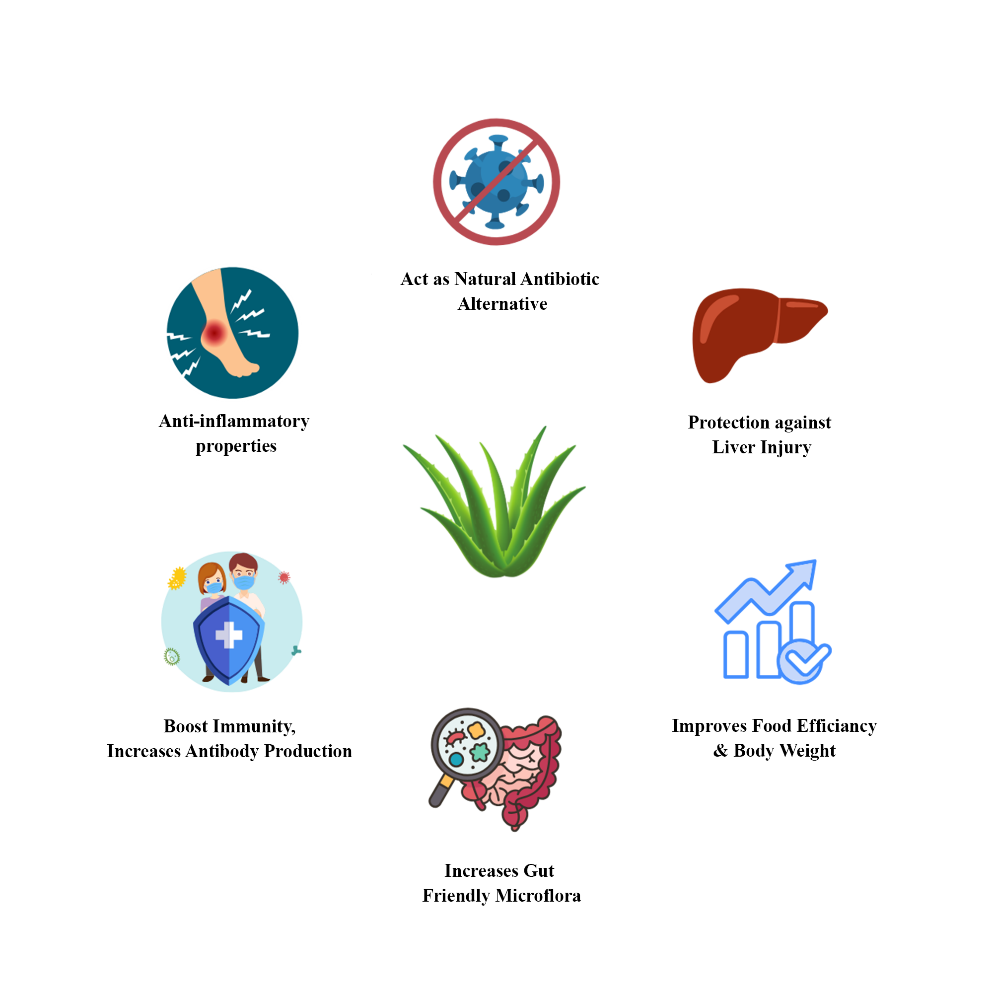
Feed additives are added to livestock and poultry feed to enhance growth and livability and reduce mortality rates (Saini et al., 2022). Antibiotic Growth Promoter as a feed additive has been banned due to antimicrobial resistance issues in animals and humans. Further studies suggested a medicinal plant Aloe Vera, as a promising alternative. Aloe Vera can be used as a feed additive to boost health (Fig. 1) and its associated biomarkers, improving overall performance (Babak & Nahashon, 2014).
Impact on Gut Health
Strong Gut-friendly bacteria and maintaining an optimal balance between them provide a barrier against intestinal pathogens, ultimately increasing animal performance (Chen et al., 2021). Aloe vera Phyto extracts improve intestinal microflora in humans and animals (Chandran, 2021). Phytochemicals such as essential oil, anthraquinones, and saponins directly impact the ruminal fermentation rate (Akanmu et al., 2020). It increases short-chain volatile fatty acid production and its leaf extracts contain flavonoids that help microorganisms to break cell wall components and produce protein by enhancing its yield.
Polysaccharides in aloe vera reduce E-coli in the gut and increase gut-friendly bacteria such as Lactobacillus and Bifidobacterium. Adding Aloe vera to the diet enhances normal microflora and the production of short-chain fatty acids. Moreover, aloe vera lowers methane production by bacteria in ruminants, a major global warming issue (Buttar et al., 2022). Parasitic infections threaten livestock farming by affecting the gut health of animals (Prakash et al., 2021). A study concluded that Aloe vera has an anti-parasitic effect (Kumar et al., 2022). According to (Saini et al., 2022) a researcher conducted a trial in which he used Aloe vera at @2-4 gm/Body weight in calves to check the anti-parasitic effect, and concluded lower fecal egg count in a group in which a higher dose of aloe vera was used as compared to a control group and another group with low dose. Aloe vera has greater anti-protozoal activity, especially for coccidia. A study concluded that using Aloe vera in poultry broiler diets reduces fecal oocyte count and oocyte shedding in feces. Aloe vera also enhances the population of Lactobacillus, which competes with infectious pathogens and helps produce lactic acid (Jalal et al., 2019). According to (Babak & Nahashon, 2014) Polysaccharide (Acemannan) present in aloe vera has a prebiotic-like effect. According to (El-Kholy et al., 2022) study, Groups with high doses of aloe vera showed a reduction in bacterial count of E.coli and clostridial species and increased lactobacilli count. Ammonia production level also dropped in this group. A researcher conducted a study and states that he examined the impacts of aloe vera in 14 months on human Gut microbes. Firmicutes, actinobacteria, verrucomicrobia, and bacteriodetes normally dominate the human gut. This study concluded the positive influence of aloe vera on growth, as aloe vera promotes the growth of these gut-friendly bacteria. According to Cremonesi et al. (2024) use of aloe vera in the dry-off period of cows positively increases the rectum-friendly microbe population.
Impact on Immune System
The robust immune system in poultry flocks guarantees a strong immunity response to pathogens and ensures homogeneity and peak growth performance. Acemannan in AV promotes macrophage activity. A study reported an increase in antibody titer against Newcastle disease on 24 and 38 days by adding aloe vera to the diet. Another study reported increased antibody titer against sheep red blood cells using aloe vera pulp orally. An improved cellular immunity response was observed in the broiler after injecting PHA-P. This proves Aloe vera improves humoral and cellular immunity (Yadav, 2017). It is reported that humoral and cell-mediated response stimulation after vaccination can be obtained by adding aloe vera to the diet (Altug et al., 2010). The immunomodulatory function of Acemannan is based on stimulation of macrophages, activating the release of interferon IFN-c, Cytokines, and Interleukin 6, boosting immune cells and expression of surface antigens. WBCs and lymphocyte count can be increased by adding aloe vera gel in drinking water to the broiler (Jalal et al., 2019). According to (Buttar et al., 2022), Aloe vera promotes immune response by activating T helper cells. A study concluded that increased neutrophil count is observed in groups with high doses of aloe vera in diet. Immunohistochemical investigation revealed a high concentration of astrocytes in the brain after using a high dose of AV (Hefny et al., 2023). Traditional medicine is now integrated with modern medicine, however, Ghana still relies on WHO to use allopathic medicine for COVID-19 cases. A study concluded that allopathic medicine in Ghana including aloe vera lowers virus replication efficiency and is thus used for COVID-19 cases in Ghana (Al-Dulaimi et al., 2022). According to (Moghaddasi & Res, 2011), A pilot study in HIV-infected persons proved positive effects such as an increase in WBCs with the use of Acemannan (Aloe vera). A study concluded an increase in IgM and IgG concentration but insignificant differences were observed in IgA concentration in three aloe vera-treated groups (El-Kholy et al., 2022).
Impact on Growth Performance
Studies on broiler chickens have proven that aloe vera greatly affects growth performance. In this study, researchers observed increased feed intake, weight gain, and water intake when using aloe vera compared to the control group (Begum et al., 2024). According to Daniel (2024), different articles state that consuming aloe vera by broilers increases feed consumption by enhancing feed flavor and stimulating appetite. Rumen fermentation and liver function can be enhanced by adding lyophilized aloe arborescens to dairy cattle. Goat milk production can also be enhanced by using aloe vera in the diet. A study trial concludes that using aloe vera in broiler chickens boosts feed consumption, feed conversion ratio, and overall performance (Amber et al., 2021). Another trial in a study states that the use of aloe vera in diet increases dressing percentage, weight of spleen, and whole giblet, but decreases fat accumulation (Ebrahim et al., 2020). According to (El-Kholy et al., 2022), the use of aloe vera increases shoulder fat but in contrast, decreases abdominal fat. Improvement in FCR can be achieved in Japanese quails with low FCR due to coccidian infection using aloe vera (Hafeez et al., 2024).
Impact on Inflammation
Multiple anti-inflammatory medications are used in animals and humans by neglecting their side effects. No doubt they produce good results, but due to their side effects more research focused on finding a herbal product that has an anti-inflammatory effect. An in vitro study concluded that polypeptide fraction of aloe vera tends to reduce NO, TNF-α, and IL-6 levels. Aloe vera extract inhibits protein denaturation based on dose rate. The results of this trial state that aloe vera reduces the concentration of TNF-α and IL-6 in rats (Babu & Noor, 2019). The herbal preparation of aloe vera is widely used as an anti-inflammatory in inflammatory Bowel disease despite evidence-based therapeutic efficiency (Williamson et al., 2011). According to (Yazdani et al., 2022), AV extract reduces the tumor necrosis factor and interleukin-6 concentration in high-fat diet rats. A study conducted by (Paul et al., 2021), reveals that aloe vera unprocessed gel reduces TNF-alpha and CoX-2 expression at different dose rates. Bradykinase and C-glucosyl are aloe vera compounds that participate as anti-inflammatory chemicals (Riaz et al., 2021).
Impact on Lipid Profile and Blood Glucose Level
One of the serious global risks to human health is diabetes mellitus (metabolic disorder) due to its chronic progression and increases due to aging, physical inactivity, obesity, and population. Aloe vera is used as an anti-diabetic agent due to its hypoglycemic activity and fewer side effects (Zagórska-Dziok et al., 2017). Aloe vera gel is widely known for its ability to reduce the blood glucose level. The mechanism behind hypoglycemic action of AV is to improve glucose metabolism, which decreases blood sugar level (Saleem et al., 2022). Polysaccharides present in AV gel show hypoglycemic property and anti-diabetic effect by increasing insulin level (Noor et al., 2008). The anti-diabetic action of AV was demonstrated in Type-II diabetic mice due to the presence of five phytosterols including cycloartanol and 24-methylene-cycloartanol, lophenol, 24-methyl-lophenol, and 24-ethyl-lophenol that act as anti-diabetic compounds (Tanaka et al., 2006; Pegu & Sharma, 2019). The study conducted to evaluate the anti-diabetic effect of AV showed its potential antidiabetic activity, AV can also reduce the level of triglycerides along with the blood glucose as triglycerides level are frequently elevated in diabetic patients (Yagi et al., 2009). Alcoholic insoluble residue extract of AV gel considerably increases the level of insulin in plasma in addition to decreasing the fasting blood sugar, triglycerides, plasma and tissue cholesterol, hepatic transaminases, phospholipids, and free fatty acids (Saleem et al., 2022). Aloe Vera contains acemannan (polysaccharide) that regulates the fat metabolism in the liver, this assists in adjusting blood cholesterol. Aloe Vera also decreases the blood lipid level by improving the cell’s sensitivity to insulins, leading toward the reduction of free fatty acid released from fat tissue to the blood (Amber et al., 2021). Glucomannan (polysaccharides) is responsible for lowering blood glucose level and cholesterol level. Aloe Vera extract reduces blood glucose level and lipid profile (Hasan & Abdullah, 2022). According to previous studies, AV is considered an effective hypolipidemic agent that reduces lipid profile by decreasing the level of cholesterol and triglycerides along with the reduction in glucose level (Singh & Silitonga, 2021). According to various clinical (human) and animal studies, AV gel is considered an effective hypoglycemic and hypolipidemic agent that reduces blood glucose level and lipid profiles, including triglycerides, cholesterol, and low-density lipoprotein (LDL) (Sabbaghzadegan et al., 2021).
Impact on Haematological Parameters
The constituents of AV gel and amla stimulate the production of red blood cells (RBCs) by activating the erythropoietic system. These constituents include riboflavin, thiamine, folic acid, and other essential amino acids that boost the immune response and organs (spleen, thymus, and bone marrow) linked with the formation of blood cells (Islam et al., 2020). Previous studies demonstrated that the use of 1% powder of AV gel and 3-4% AV gel increases the level of haematological parameters including hemoglobin, RBCs, white blood cells (WBCs), Mean corpuscular hemoglobin (MCH) and Mean corpuscular hemoglobin concentration (MCHC) (Mahdavi et al., 2012; Oyeyemi et al., 2014).
ALOE VERA AS AN ALTERNATIVE TO ANTIBIOTIC
In livestock, previously antibiotics were commonly utilized to treat different bacterial infections. Frequent use of antibiotics results in the emergence of bacterial resistance that causes a serious risk to the health of animals. Although the use of antibiotics was constricted due to their detrimental effects on the health of animals. This area of interest motivated the search for better alternatives to antibiotics with fewer side effects used to cure and treat different diseases in animals (Buttar et al., 2022). In poultry, antibiotic growth promoters have been used for enhancing the feed conversion ratio (FCR) and growth performance but the frequent use of antibiotics in poultry results in the release of residues in the poultry products and bacterial resistance against treatment in humans (Mohamed et al., 2017). Few drug residues still step into the food chain of humans, resulting in antibiotic resistance, even with accurate withdrawal methods to hinder antibiotic residues in food (Ayoola et al., 2020). Therefore, the use of antibiotics is banned in poultry because of serious threats to the health of humans (Darabighane et al., 2011). Many studies have been conducted to find alternatives to antibiotics by examining garlic, ginger, pepper, essential oils, herbs, and different plant extracts. Aloe Vera has been examined as a green alternative to common antibiotics in the veterinary and biomedical field in addition to its traditional uses. The study elaborated on the use of AV as a natural antimicrobial agent alternative to antibiotics in modern poultry production (Khan et al., 2022).
Aloe Vera has been observed to have various compounds with different properties (wound-healing, immunomodulatory, anti-inflammatory, antioxidant, antibacterial, anti-inflammatory, and antidiabetic) that assist in improving the immune system, blood parameters, growth performance, health of the digestive system (increased population of intestinal microflora & changes morphology of intestine) and reducing FCR and number of bacteria that causes diseases (Darabighane et al., 2011; Quaye et al., 2023). Due to the many benefits of AV, there is a recent trend of using AV products as an alternative to antibiotics in poultry (Arif et al., 2022; Ebrahim et al., 2020). A recent study demonstrated that the addition of 1 % extract of AV gel in the drinking water of poultry can substitute antibiotics without any detrimental effect on the performance and health status of birds (Quaye et al., 2023). So the study conducted on poultry for improving performance shows that AV gel at the rate of 2% mixed with the diet of the broiler can act as a good alternative to virginiamycin (Darabighane et al., 2011). Another study showed that 0.75% or 1% aqueous extract of AV gel used in the drinking water for the treatment of birds increased Lactobacilli species and reduced Coliform species (Shokraneh et al., 2016).
Aloe Vera has an antimicrobial activity due to presence of anthraquinones isolated from the extract of AV gel. Aloe Vera comprises of 6 antiseptic agents that have repressive action against bacteria, virus and fungi. These antiseptic agents includes phenols, sulphur, salicyclic acid, cinaamomic acid, urea nitrogen and lupeol. Due to its antimicrobial activity, AV has the potential of reducing the diseases in animals (Soltani et al., 2023). Aloe Vera leaf contains saponin and anthraquinones which are responsible for direct antibacterial actions. Although direct bacterial property has been associated with polysaccharides present in AV that are responsible for the activation of phagocytic leukocytes to kill bacteria (Daniel, 2024). The integrity of bacterial cell membrane have been disrupted by anthraquinones and polysaccharides that cause the cell breakdown and ultimately death of the bacteria (Ekakitie, 2024). Acemannan also have indirect antibacterial activity through its capacity of stimulating the release of inflammatory cytokines by macrophages (Khan et al., 2022). Aloe Vera also contains salicyclic acid which has both antibacterial and anti-inflammatory actions (Ebrahim et al., 2020; Khan et al., 2022). Other compounds responsible for antibacterial characteristics of AV includes p-coumaric acid, cinnamic acid ascorbic acid, and pyrocatechol (Catalano et al., 2024; Lawrence et al., 2009). Emodin belongs to anthraquinone compounds is responsible for the antibacterial activity of AV against Escherichia coli that is conciliated via blocking the transport of solute across the membranes (Hamman, 2008). Both Gram-negative and Gram-positive bacteria are susceptible to antibacterial action of liquid of Aloe (Khan et al., 2022). Several different techniques have been used to demonstrate the antibacterial activity of AV gel against both Gram-negative and Gram-positive bacteria (Iqbal & Ahmed, 2021) as shown in table 1. Many studies documented shows that AV gel possesses antibacterial activity against Gram-negative and Gram-positive bacteria such as Staphylococcus aureus, Escherichia coli, Salmonella typhi, Pseudomonas aeruginosa, and Mycobacterium (Arbab et al., 2021; Minwuyelet et al., 2017; Neththrika & Gunathilaka, 2023). Aloe Vera also suppresses the growth of certain microorganisms such as Shigella flexneri, Streptococcus pyogenes, Klebsiella Species, mainly Gram-positive bacteria that cause infections or food poisoning in humans and animals (Saleem et al., 2022). The study conducted shows the broad spectrum antibacterial actions of AV against clinically significant bacteria such as Escherichia coli, Staphylococcus aureus, Klebsiella pneumonia, and Pseudomonas aeruginosa and suppression of the growth of bacteria (Haque et al., 2019). The potential for antibacterial properties acquired by AV polyphenols (aloin) highlighted in the study shows AV polyphenols as an encouraging alternative to antibiotics in fighting bacterial infection specifically caused by Escherichia coli and Staphylococcus aureus. Several studies also demonstrated the topical use of AV for the effective treatment of wounds, burns, sunburns, and inflammatory skin diseases (Arbab et al., 2021).
| How Aloe Vera was used | Bacteria (Gram-negative & Gram-positive) | References |
|---|---|---|
| Methanol, Ethanol or acetone extract of AV gel | Gram-negative Bacteria (Escherichia coli, Salmonella typhi, Pseudomonas aeruginosa and Klebsiella pneumonia) | Lawrence et al., 2009 |
| Gram-positive Bacteria (Streptococcus pyogenes, Staphylococcus aureus, Bacillus cereus and Bacillus subtilis) | ||
| Ethanol, aqueous or acetone extract of AV gel | Gram-negative Bacteria (Escherichia coli and Pseudomonas aeruginosa) | Nejatzadeh-Barandozi, 2013 |
| Gram-positive Bacteria (Streptococcus pyogenes, Staphylococcus aureus) | ||
| AV gel or its integration with the chitosan nanoparticles | Gram-negative Bacteria (Helicobacter pylori causes peptic ulcers & globally affects 50% of people ) | Rawat &Saxena, 2023; Yahya et al., 2022 |
| AV extract with second-line anti-tubercular drugs or AV ethanol extract | Gram-positive Bacteria (Mycobacterium tuberculosis H37Rv strains and Multidrug-resistant (MDR) TB strains) | Azal & Zodape, 2023; Mawarti et al., 2022 |
| AV and zinc oxide nanoparticles-based Electrospun nanofibers | Gram-negative Bacteria (Escherichia coli) | Munir et al., 2022 |
| Gram-positive Bacteria (Staphylococcus aureus) |
The efficiency of AV in wound healing for its anti-inflammatory and antibacterial actions was also elaborated in the studies that show its effects on the treatment of bacterial infection due to Gram-negative bacteria in wound healing and also revealed the mutual effect of AV and cinnamon oil in wound healing with improved antibacterial characteristics (Khurshid et al., 2024; Yusman & Karim, 2024). Aloe Vera leaf juice possesses antimicrobial property as it inhibit the growth and reproduction of bacteria especially Gram-positive bacteria (Propionibacterium acnes) which is commonly present on skin and linked with the growth of acne lesions. The number of bacteria on skin are reduced due to the inhibition of Propionibacterium acnes growth resulting in decreasing irritation and growth of acne lesions on the skin (Ekakitie, 2024). In dogs, the topical 20% and 40% AV gel ointments has anti-inflammatory, antibacterial, and anti-oxidative actions against staphylococcal pyoderma more than gentamycin which would promote its use as an alternative to antibiotics in the health arena (Kamr et al., 2020). Further study revealed the potential of AV as a natural antimicrobial agent in dentistry and the antibacterial efficiency of its peel against microbes (Porphyromonas gingivalis and Streptococcus mutans) which are frequently related to periodontal infections and dental care (Majid et al., 2023).
FUTURE PERSPECTIVE
Aloe vera compounds offer robust potential in advancing human and veterinary medicine, particularly as a sustainable alternative to antibiotics. In this way, we can control antimicrobial resistance. Moreover, its non-methanogenic effect on ruminants provides a sustainable environment, protecting them from global warming (Buttar et al., 2022). Aloe vera can be used in the wound healing process, especially skin burn wounds. Bioactive compounds from aloe vera should be isolated and prepared by using biotechnology genome sequencing of aloe vera to help find specific genes. Several nutraceutical companies should add bioactive compounds of aloe vera to boost immunity and growth rate with performance (Wasim et al., 2023). More studies focused on conducting trials can help determine its efficacy at different dosages and vast use (Saini et al., 2022).
CONCLUSION
Aloe Vera is a useful medicinal and nutritional plant that can improve different health parameters in both humans and animals. Its natural compounds help in fighting infections, reducing inflammation, improving immunity, and balancing blood sugar and fats. The main point of this work is that Aloe Vera can be used as a safe and natural alternative to antibiotics, helping to reduce the problem of antibiotic resistance. It also supports better animal growth. Aloe Vera can be used in feed or medicine, as it can improve health and food safety. More studies should be done to find the best doses and to confirm its effects through clinical trials.
References
- Akanmu AM, A Hassen & FA Adejoro, 2020. Gas production, digestibility and efficacy of stored or fresh plant extracts to reduce methane production on different substrates. Animals 10:146.
- Al-Dulaimi FH, 2022. The importance of herbal plants (Aloe vera L.) in immune system support anti-COVID-19: A review article. Journal of Genetic and Environment Conservation 10:206-13.
- Altug N, N Yuksek & A ZT, 2010. Immunostimulatory effects of aloe vera and-glucan on cellular and humoral immune responses following vaccination with polyvalent vaccines in dogs. Kafkas Üniversitesi Veteriner Fakültesi Dergisi 16:405-10.
- Amber K, R Nofel, R Ghanem et al., 2021. Enhancing the growth rate, biochemical blood indices, and antioxidative capacity of broilers by including aloe vera gel in drinking water. Frontiers in Veterinary Science 7:632666.
- Arbab S, H Ullah, W Weiwei et al., 2021. Comparative study of antimicrobial action of aloe vera and antibiotics against different bacterial isolates from skin infection. Veterinary Medicine and Science 7:2061-7.
- Arif M, A ur Rehman, K Naseer et al., 2022. Effect of Aloe vera and clove powder supplementation on growth performance, carcass and blood chemistry of Japanese quails. Poultry Science 101:101702.
- Ayoola AA, DA Ekunseitan, SB Muhammad et al., 2020. The effects of extraction methods of Mangifera indica and Azadirachta indica bark on in vitro antimicrobial efficacy and performance of broiler chickens. Journal of World's Poultry Research 10:28-35.
- Azal S & GV Zodape, 2023. Effect of Aloe Vera Extract and Second Line Anti-Tuberculosis Drugs on Mycobacterium Tuberculosis Strain-H37Rv. Saudi J Med Pharm Sci 9:214-219.
- Babak D & SN Nahashon, 2014. A review on effects of Aloe vera as a feed additive in broiler chicken diets. Annals of Animal Science 14:491-500.
- Babu SN & A Noor, 2019. Aloe barbadensis Miller peptide/polypeptide fraction alleviates inflammation through inhibition of proinflammatory cytokines and mediators in vitro and in rats with Freund's adjuvant-induced hind paw edema. Asian Pacific Journal of Tropical Biomedicine 9:524-30.
- Begum M, N Uddin, MSA Bhuiyan et al., 2024. Study on effects of aloe vera (Aloe barbadensis Miller) supplementation on growth performance and carcass traits of broiler. EAS Journal of Veterinary Medical Science 6:59-65.
- Buttar HS, H Kumar, HS Tuli et al., 2022. Potential health benefits of using aloe vera as a feed additive in livestock: A mini-review. The Indian Veterinary Journal 99:9-18.
- Catalano A, J Ceramella, D Iacopetta et al., 2024. Aloe vera—An extensive review focused on recent studies. Foods 13:2155.
- Chandran D, 2021. Veterinary phytomedicine in India: A review. International Journal of Scientific Research in Science and Technology 8:598-605.
- Chen S, S Luo & C Yan, 2021. Gut microbiota implications for health and welfare in farm animals: a review. Animals 12:93.
- Cremonesi P, F Biscarini, G Conte et al., 2024. Aloe arborescens supplementation in drying-off dairy cows: influence on rumen, rectum and milk microbiomes. Animal Microbiome 6:49.
- Daniel CP, 2024. Potential Health Benefits of Aloe vera in Livestock: A Review. Journal of Applied Veterinary Sciences 9:94-104.
- Darabighane B, A Zarei, AZ Shahneh et al., 2011. Effects of different levels of Aloe vera gel as an alternative to antibiotic on performance and ileum morphology in broilers. Italian Journal of Animal Science 10:e36.
- Ebrahim AA, SS Elnesr, MAA Abdel-Mageed et al., 2020. Nutritional significance of aloe vera (Aloe barbadensis Miller) and its beneficial impact on poultry. World's Poultry Science Journal 76:803-14.
- Ekakitie E, 2024. Aloe barbadensis leaf juice in skincare for acne: Unraveling its antimicrobial qualities. Journal of Knowledge Learning and Science Technology 3:125-32.
- El-Kholy KH, EHA El-Azayem, SA Barakat et al., 2022. Impact of dietary addition of Aloe Vera leaves powder on productive performance, caecal ecosystem and some physiological parameters of growing rabbits. Advances in Animal and Veterinary Sciences 10:2522-32.
- Hafeez A, RU Khan, S Naz et al., 2024. Ameliorative effect of Aloe vera supplementation on the growth indices, intestinal health and oocysts shedding under an experimentally challenged with coccidia in Japanese quails. Italian Journal of Animal Science 23:1269-78.
- Hamman JH, 2008. Composition and applications of Aloe vera leaf gel. Molecules 13:1599-616.
- Haque SD, SK Saha, U Salma et al., 2019. Antibacterial Effect of Aloe vera (Aloe barbadensis) leaf gel against Staphylococcus aureus, Pseudomonas aeruginosa, Escherichia coli and Klebsiella pneumoniae. Mymensingh Medical Journal 28:490-6.
- Hasan ZYM & JM Abdullah, 2022. Effects of gel extract from Aloe vera cultivated in Iraq on blood glucose level and lipid profile in induced diabetic mice. Iraqi Journal of Science 63:124-30.
- Hefny A, M Awad & M Youssef, 2023. Aloe Vera aqueous extract and yogurt enhance peripheral immune cells, and brain astrocytes response in rats. SVU-International Journal of Veterinary Sciences 6:74-84.
- Iqbal F & A Ahmed, 2021. Antibacterial activity of Aloe barbadensis Mill. Polish Journal of Environmental Studies 30:3637-43.
- Islam MS, MM Ali & F Dadok, 2020. Effect of supplemental Aloe vera gel and amla fruit extract in drinking water on growth performance, immune response, haematological profiles and gut microbial load of broiler chicken. Journal of Bioscience and Agriculture Research 24:2030-8.
- Jalal H, MZ Akram, SC Doğan et al., 2019. Role of Aloe vera as a natural feed additive in broiler production. Turkish Journal of Agriculture-Food Science and Technology 7:163-6.
- Kamr A, A Arbaga, A El-Bahrawy et al., 2020. The therapeutic efficacy of Aloe vera gel ointment on staphylococcal pyoderma in dogs. Veterinary World 13:2371.
- Khan RU, S Naz, D De Marzo et al., 2022. Aloe vera: a sustainable green alternative to exclude antibiotics in modern poultry production. Antibiotics 12:44.
- Khurshid S, U Farwa, Z Mazhar et al., 2024. Evaluation of aloe vera gel combined with cinnamon oil with antibacterial activity for wound healing application. The International Journal of Lower Extremity Wounds 2024:15347346241259102.
- Kumar M, MD Barbhai, M Hasan et al., 2022. Onion (Allium cepa L.) peels: a review on bioactive compounds and biomedical activities. Biomedicine and Pharmacotherapy 146:112498.
- Kumar S & JP Yadav, 2014. Ethnobotanical and pharmacological properties of Aloe vera: a review. Journal of Medicinal Plants Research 48:1387-98.
- Lawrence R, P Tripathi & E Jeyakumar, 2009. Isolation, purification and evaluation of antibacterial agents from Aloe vera. Brazilian Journal of Microbiology 40:906-15.
- Maan AA, A Nazir, MKI Khan et al., 2018. The therapeutic properties and applications of Aloe vera: A review. Journal of Herbal Medicine 12:1-10.
- Mahdavi A, F Alemi, K Ghazvinian et al., 2012. Study of effects of different levels of Aloe vera gel powder on antibody titre against sheep red blood cells and other blood parameters in broilers. British Poultary Abstract 8:49-50.
- Majid A, QUA Sameed, S Asim et al., 2023. Antibacterial Efficacy of Aloevera Peel Extract Against Streptococcus Mutans and P. Gingivalis: A Preclinical Experimental Study. International Journal of Health Sciences 7:2035-43.
- Mawarti H, M Rajin, Z Khusniyah et al., 2022. Aloe vera and its potency as antituberculosis against strains of Mycobacterium tuberculosis that is resistant to some tuberculosis drugs. Bali Medical Journal 11:1879-83.
- Minwuyelet T, M MogesSewalem & M Gashe, 2017. Review on therapeutic uses of Aloe vera. Global Journal of Pharmacology 11:14-20.
- Moghaddasi MS & M Res, 2011. Aloe vera their chemicals composition and applications: A review. International Journal of Biological and Medical Research 2:466-71.
- Mohamed SM, W El-Eraky & M Al-Gamal, 2017. Effects of feeding Aloe vera leaves powder on performance, carcass and immune traits of broiler chickens. Zagazig Veterinary Journal 45:72-78.
- Munir MU, D Mikucioniene, H Khanzada et al., 2022. Development of eco-friendly nanomembranes of aloe vera/PVA/ZnO for potential applications in medical devices. Polymers 14:1029.
- Nagansurkar SB, SK Bais & MB Mujawar, 2024. A review: aloe vera is miracle plant. International Journal of Pharmacology 2:367-378.
- Nejatzadeh-Barandozi F, 2013. Antibacterial activities and antioxidant capacity of Aloe vera. Organic and Medicinal Chemistry Letters 3:1-8.
- Neththrika GTC & MDTL Gunathilaka, 2023. Dillenia retusa (Godapara) and Aloe vera (Komarika) as a Promising Antimicrobial Agent Against Skin Infections: a Mini-Review. Sri Lankan Journal of Applied Sciences 2:05-15.
- Noor A, S Gunasekaran, AS Manickam et al., 2008. Antidiabetic activity of Aloe vera and histology of organs in streptozotocin-induced diabetic rats. Current Science 94:1070-6.
- Oyeyemi MO, SG Olukole & TA Ajayi, 2014. Haematological parameters of the West African Dwarf bucks treated with Aloe vera gel extract. J. Pharm. Sci. Innov 3:35-8.
- Paul S, D Modak, S Chattaraj et al., 2021. Aloe vera gel homogenate shows anti-inflammatory activity through lysosomal membrane stabilization and downregulation of TNF-α and Cox-2 gene expressions in inflammatory arthritic animals. Future Journal of Pharmaceutical Sciences 7:1-8.
- Pegu AJ & MA Sharma, 2019. Review on Aloe vera. International Journal of Trend in Scientific Research and Development 3:35-40.
- Prakash P, Radha, M Kumar et al., 2021. Documentation of commonly used ethnoveterinary medicines from wild plants of the high mountains in Shimla District, Himachal Pradesh, India. Horticulturae 7:351.
- Quaye B, O Opoku, V Benante et al., 2023. Influence of Aloe vera (Aloe barbadensis M.) as an alternative to antibiotics on the growth performance, carcass characteristics and haemato-biochemical indices of broiler chickens. Veterinary Medicine and Science 9:1234-40.
- Rawat A & A Saxena, 2023. Short review on composition and medicinal applications of aloe-vera. AIP Conference Proceedings 2735:1.
- Riaz S, S Hussain, SK Syed et al., 2021. Chemical characteristics and therapeutic potentials of Aloe vera. RADS Journal of Biological Research and Applied Sciences 12:160-6.
- Sabbaghzadegan S, H Golsorkhi, MH Soltani et al., 2021. Potential protective effects of Aloe vera gel on cardiovascular diseases: A mini-review. Phytotherapy Research 35:6101-13.
- Saini R, SK Chhikara, S Sahu et al., 2022. The potential of aloe vera as a herbal feed additive for livestock-a review. International Journal of Bio-resource and Stress Management 13:877-86.
- Saleem A, I Naureen, M Naeem et al., 2022. Aloe vera gel effect on skin and pharmacological properties. Scholars International Journal of Anatomy and Physiology 5:1-8.
- Shokraneh M, G Ghalamkari, M Toghyani et al., 2016. Influence of drinking water containing Aloe vera (Aloe barbadensis Miller) gel on growth performance, intestinal microflora, and humoral immune responses of broilers. Veterinary World 9:1197.
- Singh RS & HA Silitonga, 2021. Hypolipidemic effects of aloe vera (Aloe vera L.). International Journal of Biomedical Herbal Medicine 1:15-28.
- Soltani A, F Cabane & K Hamraoui, 2023. Analysis of physico-chemical properties, and antimicrobial activity of aloe vera (Aloe barbadensis miller). Phytothérapie 21:49-54.
- Tanaka M, E Misawa, Y Ito et al., 2006. Identification of five phytosterols from Aloe vera gel as anti-diabetic compounds. Biological and Pharmaceutical Bulletin 29:1418-22.
- Wasim A, A Saif & SA Pratap, 2023. A Comprehensive Review of Aloe Vera: Health Benefits, Mechanisms of Action and Future Perspectives. International Journal of Research Development and Technology 1:1-18.
- Williamson G, P Coppens, L Serra-Majem et al., 2011. Review of the efficacy of green tea, isoflavones and aloe vera supplements based on randomised controlled trials. Food and Function 2:753-9.
- Yadav DC, 2017. Aloe vera as a feed additive in broiler chicken production: A review. Population 17:38.
- Yagi A, S Hegazy, A Kabbash et al., 2009. Possible hypoglycemic effect of Aloe vera L. high molecular weight fractions on type 2 diabetic patients. Saudi Pharmaceutical Journal 17:209-15.
- Yahya R, AM Al-Rajhi, SZ Alzaid et al., 2022. Molecular docking and efficacy of Aloe vera gel based on chitosan nanoparticles against Helicobacter pylori and its antioxidant and anti-inflammatory activities. Polymers 14:2994.
- Yazdani N, SE Hossini & MA Edalatmanesh, 2022. Anti-inflammatory effect of aloe vera extract on inflammatory cytokines of rats fed with a high-fat diet (HFD). Jundishapur Journal of Natural Pharmaceutical Products 17:114323.
- Yusman SNY & AA Karim, 2024. Antibacterial effect of aloe vera to gram-negative bacteria on wounds, an overview. Junior Science Communication 34:24.
- Zagórska-Dziok M, D Furman-Toczek, M Dudra-Jastrzębska et al., 2017. Evaluation of clinical effectiveness of Aloe vera-a review. Journal of Pre-Clinical and Clinical Research 11:86-93.