
INTRODUCTION
Agriculture remains a critical economic sector that provides food, fiber, energy, and livelihood to the ever-growing human population (Wreford & Topp, 2020). Global human population continues to rise, reaching 7.6 billion in 2017 and is estimated to be around 8.6 billion by 2030 and 9.8 billion by 2050 (Grossi et al., 2019). This continued growth puts pressure on global food systems. To cater to the nutritional requirements of this expanding human population, we need an estimated increase of 60-100 percent in food production (Roberts et al., 2021). The agro-livestock products are key in fulfilling the nutritional requirements of humans, hence play a significant role in human life.
Livestock systems play a pivotal role in food and nutrition security globally. Livestock contributes about 33% of global protein intake and 17% of dietary energy, underscoring its importance in meeting human nutritional requirements. In economic terms, livestock production contributes about 40% of the total agricultural GDP globally (Akhtar et al., 2024). Livestock production also produces a source of income for rural communities, particularly in low and middle-income countries. In developing economic livestock is not only essential for food security but also a symbol of overall economic resilience (Cheng et al., 2022).
Sustaining this nutritional requirement requires significant natural resources. The livestock sector occupies 26% of the global ice-free land for grazing, fodder cultivation, and farming purposes. This marks it as a major contributor to altering the land use patterns and subsequently various climate change challenges. Additionally, rapid population growth and subsequent urbanization are further intensifying the demand for the livestock driven products, hence increasing pressure on the production system for expansion. In response to these pressures, it is pivotal that more sustainable livestock farming practices are adopted to effectively mitigate the environmental impacts of livestock production. Precision and climate resilient livestock farming are combination of modern technologies intended to improve livestock production without wasting natural resources and minimizing its environmental impacts. Through its digital sensing approach coupled with enhanced information and communication systems, they improve traditional practices that help to overcome pressure and challenges faced by the livestock industry. Precision livestock farming has the potential to meet the increasing demand of a growing population (Monteiro et al., 2021).
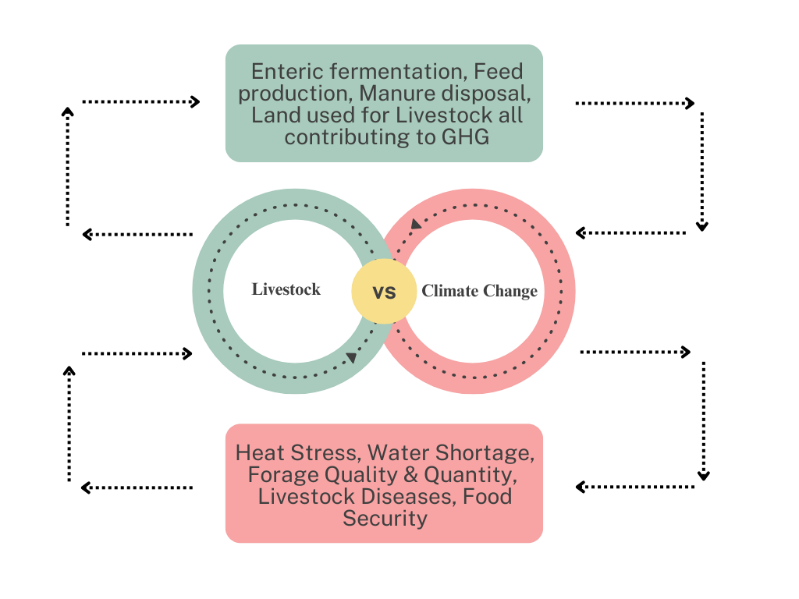
Livestock production and climate change are closely interconnected with each other. Livestock systems contribute to the global greenhouse gas (GHG) emissions through feed production, land use pattern alterations, manure management, and enteric fermentation. Overall, the livestock sector is responsible for 14.5% of global GHG emissions and contributes to issues like land degradation, air and water contamination (Cheng et al., 2022). Similarly, climate change poses serious challenges for livestock production through heat waves, low water availability, degradation in fodder quality, altering the disease spread patterns and affecting biodiversity. These climate-induced stressors threaten livestock productivity and ultimately food security. Therefore, the primary challenge is to achieve and maintain a balance between maximizing productivity and safeguarding nutritional security while minimizing the environmental impacts, hence enhancing the sustainability. This chapter examines the interconnected relationship between livestock production and climate change through a one-health perspective. It further explores adaptation and mitigation strategies aimed at promoting resilient and environmentally sustainable livestock systems.
LIVESTOCK AND CLIMATE CHANGE
Livestock production and climate change are closely interconnected with each other in a bidirectional relationship where one exerts significant influence on the other (Fig. 1). Climate change alters environmental conditions that directly affect livestock health and productivity. At the same time, livestock systems contribute to climate change though GHS emissions and extensive use of natural resources. These interactions collectively shape food security, environmental integrity and rural livelihoods, making climate-livestock dynamics a central concern for sustainable agriculture development.
Impact of Climate Change on Livestock
Recent assessments indicate a clear warming trend and its subsequent implications for livestock production. According to the Intergovernmental Panel on Climate Change (IPCC), global mean temperatures from January to September 2023 exceeded the pre-industrial average by 1.54±0.13°C (Betts et al., 2023). Rising temperatures, altered participation patterns and increased frequency of extreme weather events markedly influence livestock productivity through altering animal physiology, feed and water availability, and disease dynamics (Cheng et al., 2022).
The impacts of climate change on livestock production can be broadly categorized into direct and indirect impacts. Direct impacts usually arise from increased temperatures leading to heat stress, which results in reduced feed intake, impairs reproductive performance, and weakens the immune system. These changes subsequently result in decreased milk and meat production and altered morbidity and mortality patterns. On the other hand, indirect impacts result from climate-driven changes in water availability, fodder production, disease patterns and prevalence of pests and rodents, ultimately reducing the overall productivity and resilience of the livestock production systems (Collier et al., 2019; Cheng et al., 2022).
Temperature and heat stress
The thermal conditions, including air temperature, humidity, and airflow, are among the most critical environmental factors affecting animal production. Livestock thrive within a certain range of thermal conditions referred to as the thermal comfort zone, which supports optimal physiological function. When ambient temperature exceeds this comfort zone, the animals experience heat stress, triggering the behavioral, metabolic and endocrine responses. Some of the key effects of heat stress on animal production are discussed below. Küçüktopçu et al., 2024).
Feed intake and efficiency
Heat stress significantly reduces the feed intake in both ruminants and poultry. Ruminants under heat stress experience reduced appetite, gut motility, and rumination, leading decline in nutrient intake and a drop in milk production. Dairy animals usually exhibit a drop in milk production when the ambient temperatures rise above 30°C. For this reason, animal husbandry experts advise feeding animals early in the morning. Similarly, the poultry birds rapidly reduce their feed intake when the temperature goes above 30°C, especially young birds, who are way more sensitive and can drop the feed intake by 9.5% (Cheng et al., 2022). Reduced feed intake and impaired feed efficiency collectively lead to reduced milk and meat yield, ultimately affecting food security (Herbut et al., 2019).
Animal production and reproductive performance
Heat stress adversely affects both production and reproduction of animals across species. Increased metabolic heat is the major factor in animals, leading to reduced milk production in cows, buffaloes, and goats, while beef cattle experience lower carcass weight, reduced fat deposition, and smaller body size. It also affects poultry, leading to low body weight and impaired carcass quality, which is deficient in protein. Reproductive processes are particularly sensitive to heat stress as it affects oocyte quality, embryo development, and conception rate in females. Heat stress has deteriorating effects on male sperm concentration and viability (Rojas-Downing et al., 2017).
Health and mortality
Prolonged exposure to a hot and humid environment poses a serious risk to the livestock. Heat stress disrupts metabolic homeostasis, induces oxidative stress, and causes hormonal imbalance, leading to compromised immune function. These physiological disturbances lead to reduced nutrient utilization and increased susceptibility to diseases. Chronic heat exposures lead to reduced saliva production and bicarbonate levels, impairing the digestive processes. These collectively lead to elevated susceptibility to the diseases (Rojas-downing et al., 2017).
Water scarcity
Water is an essential entity for every soul, and climate change has severely impacted the water availability for livestock and is expected to affect the livestock farming industry. High temperatures will lead to an increase in water consumption demand (Fader et al., 2016). Shortage of water creates competition between livestock, crops, and other non-agricultural uses (Reynolds et al., 2010).
Forage quality and quantity
An ad libitum supply of food is essential for weight gain and for the production of animals. Forage varies in their nutritive value, and suitable forage is required to meet the nutrition demand for livestock. Temperature variation, especially high temperature, extremely affects the nutritive value of forage. The nutritive value of forage is based on the content of crude protein, minerals, neutral detergent fiber, calcium and potassium, and acid detergent fiber (Collins et al., 2017). Higher temperatures lower the quality of forage by increasing the lignin in the tissues, ultimately lowering the digestibility (Polley et al., 2013). So higher temperature decreases digestibility and nutritive value and leads to more methane emission from animals (Lee et al., 2017).
Livestock diseases
Climate change also causes extreme conditions like heavy rainfall, drought, heat waves, floods, and dryness in some areas, dust storms, wildfires, melting snow, hurricanes, and many more. These extreme changes cause relocation of human, insect, and livestock populations and wild animals, which increases the incidence of interaction of wildlife and insects with humans and livestock. Mainly, climate change and temperature are the main factors that cause the emergence of new diseases. Some of the diseases are listed: West Nile virus, swine edema, Pasteurella multocida infection, Trypanosomiasis, Fasciolosis, Babesiosis, and Anaplasmosis (El-Sayed & Kamel, 2020). Heat Stress may alter the normal gut flora in animals and also cause the emergence of new flora colonies that are resistant to many drugs, ultimately leading to a decrease in nutrient absorption and low production. This effect may increase the incidence of gut infections (Sepulveda & Moeller, 2020).
Food security
According to the WHO 2021, a rapid transition to safe, healthy, and sustainable diets for everyone is necessary for the health of people, animals, and the environment. Currently, 2 billion people suffer from micronutrient deficiencies, and 690 million people are starving. The scarcity of forage for animals, an ultimate cause of health issues, and low productivity in animals are due to different factors that are: a decline in pasture and rangeland productivity, reduced digestibility of herbs, and limited grazing resources, and low-quality grains. Now these factors that are linked alter the food security of animals and ultimately disturb the food chain (Escarcha et al., 2018). Climate change indirectly contributes to food scarcity for humans by affecting livestock (Rojas-Downing et al., 2017).
| Emission sector | Emission (Million tons CO2 eq) | Emission share |
|---|---|---|
| Energy (Transportation, electricity, etc.) | 37224.94 | 76.2% |
| Industrial processes | 2902.68 | 5.9% |
| Agriculture | 5817.65 | 11.9% |
| Forestry and land use change | 1387.56 | 2.8% |
| Waste | 1606.86 | 3.3% |
Impacts of Livestock on Climate Change
Greenhouse gas (GHG) emissions are one of the major issues in this era and in the coming days (Fig. 2). They are the main issue of global warming on Earth. Methane (CH4) is the main contributor to these gases and contributes to climate change. Methane is more dangerous than Carbon dioxide (CO2). Methane contributes 14-16% of total GHG (Table 1). The livestock and cattle industry, including beef and dairy, is the main contributor to methane emissions. These industries, directly and indirectly, involve methane and other GHG emissions via manure management practices and enteric fermentation. Nitric Oxide (N2O), Methane (CH4), and Carbon dioxide (CO2) are the main GHGs and their major emission portion is linked to the livestock industry (Nejad et al., 2024).
Enteric fermentation and manure management
Enteric fermentation is the natural mechanism of ruminants, converting raw food to useful material in the body with the help of microorganisms in their rumen. Some by-products are formed due to this fermentation, including CO2 and CH4. These gases are also known as GHG, which contribute to Global warming. Manure is another main source of GHG in the form of CH4 and N2O. Anaerobic breakdown of organic material generally produces methane and N2O is released during ammonia decomposition. N2O is mainly produced when manure is used as a fertilizer. Several other factors also contribute to the severity of the production of these gasses like Temperature, Moisture, and duration of waste management (Grossi et al., 2019).
Feed production
Feed is crucial to animals for maximum production. Nearly 60% of the total biomass is used for bedding or feed material in the livestock industry. Fertilizers used to enhance the crops production are the main cause of GHG emissions. So N2O, CH4, and CO2 are produced by fertilizer application, manure use, and feed transportation, respectively (Grossi et al., 2019).
Land used for livestock and its production
As the need for livestock products is increasing, more land is converted from forest land to cropland for livestock feed. Forestland has more capability of storing CO2 and nitrogen as biomass below the soil as compared to cropland. So, conversion of forest land to cropland is a major issue in GHG emissions (Cheng et al., 2022).
ADAPTATION AND MITIGATION STRATEGIES TO IMPROVE THE PRODUCTION OF LIVESTOCK UNDER THE INFLUENCE OF CLIMATE CHANGE
Adaptation and mitigation strategies are initiated to overcome the detrimental effects of climate change, improve the productivity of livestock under climate change, and decrease the impact of livestock on climate change (Rojas-Downing et al., 2017; Sejian et al., 2015).
Adaptation Strategies
Adaptation strategies focus on the modification of management and production systems, adjustment in feed or living environment, and animal response. Adaptation Strategies as shown in Table 2, include animal breeding and genetics, physical modification, modification in the livestock systems, change in the perception of farmers and capacity of adaptation, and institutional and policy changes (Cheng et al., 2022; Rojas-Downing et al., 2017).
Mitigation Strategies
Mitigation Strategies are developed to reduce the GHG emissions from the livestock sector. The potential for mitigation is found in the difference between the methods of management that produce the lowest and the highest intensities of emission and livestock emission intensities differ significantly between production systems and geographical regions. According to their estimation, if the producers of a particular region, system, and climate adopt the strategies now used by the top 25% and 10% of the producers with the lowest intensity of emission, then the emissions from the livestock sector are lowered by 18% and 30%, respectively. Mitigation strategies help in lowering enteric emissions, improve manure management, and provide feed that is more emission-efficient by using less N fertilizer and carbon sequestration from the land. These strategies include carbon sequestration, management of enteric fermentation, manure and its storage, land resources, and fertilizers, as shown in Table 3.
| Adaptation Strategy | Mechanism of Action | Benefits |
|---|---|---|
| Animal Breeding and Genetics | Genetic Selection, like light colored or smaller animals | Increase livestock production Improve the efficiency of livestock production Improve animal tolerance against heat stress and diseases Enhance the adaptation of animals to climate stress |
| Genetic Enhancement for heat-tolerant animals | ||
| Selection of animal species and breeds that are more tolerant to heat | ||
| Modification in breeding strategies (selective breeding for heat tolerance) | ||
| Alteration in genetics at the herd level | ||
| Physical modification (outdoor or indoor) | Provision of shade and shelter | Reduction in the exposure to solar radiation Lowering body temperature Reduction in heat stress Improve animal performance |
| Installation of fans, sprinklers, foggers, and misters | ||
| Use of a ventilation system and provide an evaporative cooling facility | ||
| Pad cooling and air conditioning | ||
| Use of building material that is heat-reducing, such as insulation | ||
| Modification in the livestock production and management system | Incorporation of livestock system with crops or forestry (effective synergistic effects on nutrient cycling and soil properties) | Maintain equilibrium between environmental protection, agricultural output, and carbon sequestration Increase productivity Reduce chemical use Improve the quality of air, soil, and water Enhance biodiversity along with pest and disease control Help to cope with climate change Improve livestock farm sustainability Decrease the infestation of pests and diseases |
| Agroforestry- plantation of trees with crops and pasture | ||
| Shifting from cropping to grazing | ||
| Adjustment in stocking rate or size of herd | ||
| Diversification in species of livestock (multi-species farming) | ||
| Follow health care practices and improve the management practices for water and soil | ||
| Use of thermostats, vaccination and rapid cooling | ||
| Improve the monitoring and surveillance of pests and diseases | ||
| Management of pest and feed | Integrated pest management, along with better pesticide techniques | Enhance the effectiveness of insecticides Improve the performance of the animal Reduction in heat stress by high feed intake, boosting energy content and maintaining water balance. Enhance the efficiency of livestock production |
| Rotation of insecticides with various mechanisms of action | ||
| Improving the feeding practices (modification in the composition of the diet, changing frequency and time of feeding, feed conservation, and water management) | ||
| Feed Supplementation and management of weeds and pests | ||
| Perception of Farmers and Capacity of Adaptation | Information regarding the perception of farmers to adaptation and mitigation strategies should be gathered with open-ended survey questions or group discussions at workshops | Recognize individual farmer and group attitudes Help to increase the farmer’s perception of risk when making decisions Encourage approval of communication strategies for adaptation and mitigation strategies to climate change |
| Education, Social engagement between farmers and farming communities, and family farm succession |
IMPACTS OF LIVESTOCK AND CLIMATE CHANGE ON ONE HEALTH TRIAD
One health triad is the interaction between animal health, human health, and the environment. One Health is an integrated and cross-disciplinary approach that works for the improvement of human health by making and implementing actions and policies at the human-animal-environment interface. This approach notices the interconnections between the public health, veterinary medicine and ecosystem (Shafique et al., 2024). There are approximately 2 billion cases of zoonotic infection per year, leading to more than 2 million deaths and more than 700,000 deaths worldwide annually due to vector-borne diseases. Recent pandemics and epidemics have been caused by both zoonotic and vector-borne diseases, including the Zika virus, COVID-19, Ebola virus, plague, and severe acute respiratory syndrome (SARS) (Graham et al., 2023). Climate change is a major concern as it has a potential impact on the spread and outbreaks of zoonotic infections (Shafique et al., 2024).
| Mitigation Strategies | Mechanism of Action | Benefits | |
|---|---|---|---|
| Carbon sequestration | Minimize deforestation rate | Increase the productivity of grass and carbon sequestration from the soil Restore organic carbon in cultivated soil | |
| Replanting to reverse deforestation | |||
| Enhance the species of grass | |||
| Conversion of cropland into grassland | |||
| Selection of crops with higher production and varieties with better adaptation to climate change | |||
| Use of conservation tillage and reduction in erosion | |||
| Improvement in the management of water, land, pasture, & soil acidity | |||
| Rotation of crops, double cropping, and mulching | |||
| Management of Enteric Fermentation | Modification of diet | Improve the efficiency of fermentation in the rumen Improve the digestibility of the diet and forage Reduction in enteric methane emission by 15% per unit of fat protein-corrected milk Reduction in emission of methane due to a decrease in enteric fermentation Increase the productivity of animals | |
| Improve the genetic selection of animals | |||
| Increase the fat content in the diet and give high-quality forage | |||
| Forage can be physically processed by grinding, chopping, and steam treatment | |||
| Use by-products (cold-pressed canola meal, brewers' grains, hominy meal, and cottonseed) | |||
| Use of supplements, anti-methanogen vaccines, and feed additives (grains, antibiotics, lipids, chemical inhibitors, and ionophores) | |||
| Alteration in manure storage practices (decrease temperature and duration of storage, frequent manure removal, and less water usage) | |||
| Management of Manure and its storage | Use of processing techniques such as solid-liquid separation | Reduction in the emission of ammonia (NH3), N2O, and CH4 from manure Change the emission composition into carbon dioxide and methane rather than CH4 and N2O (with the use of anaerobic digestion) | |
| Improve housing, application and timing of manure, and waste management system of manure | |||
| Adjustments in diet (low protein feed & modification in nitrogen content) that change the volume and composition of manure | |||
| Use of anaerobic digesters | |||
| Substitution of fossil energy that is emission-intensive (with the use of anaerobic digestion) | |||
| Use efficient livestock systems & sowing legumes | |||
| Management of land resources | Improve grazing management like lower the intensity of grazing | Reduction in GHG emission Enhance forage production Reduction in N2O emission Increase sequestration of CO2 | |
| Alteration in breeds and enhancement of diet with improved pasture implementation | |||
| The use of an intensive rotational grazing system helps in adjusting the duration of grazing, stocking density, and vegetative regrowth | |||
| Use of organic fertilizers | |||
| Management of Fertilizers | Avoid fertilizer application during wet seasons or before the utmost rainfall | Increase efficiency of nitrogen utilization Decrease N2O emission Decrease emission of GHG from the feed production sector | |
| Variation in species of plants (legumes with grass in pasture area) | |||
| Use of time-released nitrogen | |||
| Use of nitrification inhibitors | |||
| Regular testing of soil |
| Bacterial Diseases | Viral Diseases | Parasitic Diseases | |
|---|---|---|---|
| Animal | Pasteurella multocida infection Swine edema Bartonella henselae Infection | Lumpy Skin Disease Swine acute diarrhea syndrome coronavirus | Trypanosomiasis, Fasciolosis |
| Human | Hemorrhagic colitis Hemolytic uremic syndrome caused by Shiga toxin Tuberculosis | Severe acute respiratory syndrome coronavirus Coronavirus disease 19 Ebola Virus Infection Middle East respiratory syndrome coronavirus | Malaria, Schistosomiasis, Toxoplasmosis |
| Zoonotic | Leptospirosis Tuberculosis Brucellosis Anthrax Methicillin-resistant Staphylococcus aureus | Crimean-Congo hemorrhagic fever Rabies Avian Influenza West Nile Fever Dengue Fever Human immunodeficiency virus Infection | Ascariasis, Leishmaniasis, Toxoplasmosis, Babesiosis, Giardiasis, Amebiasis, Giardiasis, Malaria |
The changes in epidemiology of infectious diseases related to global warming are associated with the increased exposure to the causative agent, population susceptibility, and changes in ecology or habitat. These factors increase the prevalence of diseases including the emerging infectious diseases (EIDs), neglected tropical diseases (NTDs) and transboundary diseases (TBDs) (Baker et al., 2022; Bilal et al., 2023). EIDs include zoonotic, air-borne, water-borne, food-borne and insect borne disease such as brucellosis, tuberculosis, campylobacteriosis, Cholera, E. coli infection, cryptosporidiosis, rabies, anthrax, dengue fever, yellow fever, Chagas disease, trypanosomiasis, drug-resistant infections, etc. (El-Sayed and Kamel, 2020; Zhang et al., 2017). NTDs that are vulnerable to climate change include fungal, bacterial, viral and parasitic infections such as human scabies infection (Sarcoptes scabiei), onchocerciasis (Onchocerca) spread by black flies, lymphatic filariasis transmitted by different mosquitoes, schistosomiasis (Schistosoma), bacterial NTD (Mycobacterium lepra), Rabies, Dengue fever, and Ebola hemorrhagic fever. Climate change has a remarkable impact on the outbreaks of major newly emerging diseases, e.g., cholera, malaria, dengue fever, and many other diseases (Bilal et al., 2023; El-Sayed and Kamel, 2020; Mutlu and Nacaroglu, 2019). Climate change and increasing temperature promote the increase in the reproduction rate and spread of vectors (aphids, ticks, fleas, and mosquitoes) and zoonotic hosts. The elevation in temperature causes a reduction in the incubation period of the pathogen and an increase in its replication rate results in an expansion of the load of the pathogen within vectors. Global warming is associated with the emergence of vector-borne pathogens and has a direct effect on the number, survival, and spread of diseases and their vectors. It also influences the geographical distribution of intermediate hosts and vectors (rodents, insects, and migratory birds), such as the bacteria (Table 4) Chlamydia spread by parrot is a zoonotic pathogen that infects about 90-92 million people per year, according to the World Health Organization (WHO). Climate change and global worming also associated with the growth of pathogenic parasites as increases in humidity and temperature, floods and heavy rainfall promote the survival of different infectious stages (larva/metacercaria) of pathogenic parasites (Bilal et al., 2023; El-Sayed and Kamel, 2020).
Climate change also exerts influence on the growth and survival of pathogens in the environment, along with routes and sources of transmission, eventually influencing human health and the food web, as highlighted by the Food and Agriculture Organization (FAO). Temperature increases also change the concentration of ozone, which exacerbates lung conditions such as breathing issues, bronchitis, respiratory failure, and premature death. Food production and food security can be affected by climate change as rising temperatures have harmful impacts on the growth of crops and variations in the duration of growing seasons (Shafique et al., 2024). Climate change decreases livestock production (decreases the body weight, feed intake, body condition, average daily gain, milk production, and milk quality), which hurts the nutrition and health of humans, as livestock fulfills the daily milk and protein requirements of the human population (Getachew and Mulatu, 2023).
FUTURE PERSPECTIVE
Livestock contributes to GHG emissions, so this minor contribution should be reduced to lessen the overall GHG burden in the future. Implementation of precision agriculture farming with smart technology in livestock farming helps the farmer monitor animal performance and their digestive and reproductive status. The addition of a few feed additives in their feed can lower methane gas emissions and implementing machinery that treats manure before its wastage can also reduce nitrous oxide emissions (Monteiro et al., 2021). Sustainable livestock practices balance ecological and nutritional benefits and thus contribute significantly to the UN Sustainable Development Goal (Varijakshapanicker et al., 2019). There is a need for research to find the effects of different products that should be added to feed to reduce methane emissions and to devise a method of treating manure with chemicals to reduce nitrous oxide emissions. A proper method of measuring CH4 emission should be adopted as improper methods lead to under- or over-estimation of setting goals and implementing policies (Nejad et al., 2024). There is a relationship between animal performance and GHG emissions, so studies should be conducted as done in the poultry industry to maximize feed conversion ratio and reduce GHG emissions (Grossi et al., 2019).
CONCLUSION
This chapter mainly focuses on the interaction between livestock and climate and their effect on one's health. Climate change is closely linked with the livestock production system, but there is a misconception that the livestock industry is a major contributor to GHG emissions. The livestock industry only contributes 14-16% of total GHG Emissions. This misconception can be reduced by the collection of accurate data and by assessing the contribution of different sectors to GHG emissions. Proper studies in improving the genetic potential of animals, nutrition, policies, improvement, and infrastructure can help address this global issue. One health approach improves the security of health by monitoring and handling the changes in ecosystems. Implementation of mitigation strategies and improving farmer contribution is crucial for lowering the GHG emissions from this sector.
References
- Akhtar S, G Hameed & A Afzal, 2024. The Economic Impact of Livestock Production & Trade: A Global Perspective. Strategies in Accounting and Management 5(2): 000606.
- Baker RE, AS Mahmud, IF Miller et al., 2022. Infectious disease in an era of global change. Nature Reviews Microbiology 20(4): 193-205.
- Betts RA, SE Belcher, L Hermanson et al., 2023. Approaching 1.5° C: how will we know we’ve reached this crucial warming mark? Nature 624: 33-35.
- Bilal M, MK Saleemi, A Khatoon et al., 2023. Emerging Infectious Diseases in Perspective to Climatic Conditions. One Health Triad, Unique Scientific Publishers Faisalabad, Pakistan Vol. 1: 201-208.
- Cheng M, B McCarl & C Fei, 2022. Climate change and livestock production: a literature review. Atmosphere, 13: 140.
- Collier RJ, LH Baumgard, RB Zimbelman et al., 2019. Heat stress: physiology of acclimation and adaptation. Animal Frontiers 9: 12-19.
- Collins M, KJ Moore & CA Roberts, 2017. Forage utilization. Forages, Vol. 1: An Introduction to Grassland Agriculture 1: 287.
- El-Sayed A & M Kamel, 2020. Climatic changes and their role in emergence and re-emergence of diseases. Environmental Science and Pollution Research 27: 22336-22352.
- Escarcha JF, JA Lassa & KK Zander, 2018. Livestock under climate change: a systematic review of impacts and adaptation. Climate 6(3): 54.
- Fader M, S Shi, W von Bloh et al., 2016. Mediterranean irrigation under climate change: more efficient irrigation needed to compensate for increases in irrigation water requirements. Hydrology and Earth System Sciences 20: 953-973.
- Getachew M & H Mulatu, 2023. Review on the impact of climate change on approach to epidemiology of livestock diseases control. Journal of Internal Medicine Research & Reports 2: 1-9.
- Graham SB, C Machalaba, SE Baum et al., 2023. Applying a One Health lens to understanding the impact of climate and environmental change on healthcare-associated infections. Antimicrobial Stewardship & Healthcare Epidemiology 3: e93.
- Grossi G, P Goglio, A Vitali et al., 2019. Livestock and climate change: impact of livestock on climate and mitigation strategies. Animal Frontiers 9: 69-76.
- Herbut P, S Angrecka, D Godyń et al., 2019. The physiological and productivity effects of heat stress in cattle–a review. Annals of animal science 19: 579-593.
- Küçüktopçu E, B Cemek & H Simsek, 2024. Modeling environmental conditions in poultry production: computational fluid dynamics approach. Animals 14:501.
- Lee MA, AP Davis, MG Chagunda et al., 2017. Forage quality declines with rising temperatures, with implications for livestock production and methane emissions. Biogeosciences 14: 1403-1417.
- Monteiro A, S Santos & P Gonçalves, 2021. Precision agriculture for crop and livestock farming-Brief review. Animals 11: 2345.
- Mutlu F & O Nacaroglu, 2019. Examination of perceptions of gifted students about climate change and global warming. Journal of Baltic Science Education 18: 780-792.
- Nejad GJ, MS Ju, JH Jo et al., 2024. Advances in Methane Emission Estimation in Livestock: A Review of Data Collection Methods, Model Development and the Role of AI Technologies. Animals 14: 435.
- Polley HW, DD Briske, JA Morgan et al., 2013. Climate change and North American rangelands: trends, projections, and implications. Rangeland Ecology & Management, 66: 493-511.
- Reynolds C, L Crompton & J Mills, 2010. Livestock and climate change impacts in the developing world. Outlook on Agriculture 39: 245-248.
- Roberts DP, NM Short Jr, J Sill ety al., 2021. Precision agriculture and geospatial techniques for sustainable disease control. Indian Phytopathology 74: 287-305.
- Rojas-Downing MM, AP Nejadhashemi, T Harrigan et al., 2017. Climate change and livestock: Impacts, adaptation, and mitigation. Climate Risk Management 16: 145-163.
- Sejian V, L Samal, N Haque et al., 2015. Overview on adaptation, mitigation and amelioration strategies to improve livestock production under the changing climatic scenario. Climate Change Impact on Livestock: Adaptation and Mitigation. Pp: 359-397.
- Sepulveda J & AH Moeller, 2020. The effects of temperature on animal gut microbiomes. Frontiers in Microbiology 11: 384.
- Shafique M, M Khurshid, S Muzammil et al., 2024. Traversed dynamics of climate change and One Health. Environmental Sciences Europe 36: 135.
- Varijakshapanicker P, S Mckune, L Miller et al., 2019. Sustainable livestock systems to improve human health, nutrition, and economic status. Animal Frontiers 9: 39-50.
- Wreford A & CF Topp, 2020. Impacts of climate change on livestock and possible adaptations: A case study of the United Kingdom. Agricultural Systems 178: 102737.
- Zhang Y, SJ Smith, JH Bowden et al., 2017. Co-benefits of global, domestic, and sectoral greenhouse gas mitigation for US air quality and human health in 2050. Environmental Research Letters 12: 114033.