
INTRODUCTION
Over time, infections and genetic changes lead to the natural development of AMR. The growth and spread of diseases are accelerated by human activities, especially the excessive and inappropriate use of antibiotics to treat, prevent, or manage diseases in people, animals, and plants. Antimicrobial resistance (AMR) is the result of microbes, such as fungi, parasites, bacteria, and viruses evolving to the point where they eventually become resistant to the antimicrobial medications, such as antibiotics, that are utilized for managing such infections. Since the rate of AMR infections has increased so quickly and there aren't many new antimicrobial drugs being developed to address this problem, AMR has become one of the biggest worldwide issues of the twenty-first century (Tang et al., 2023). AMR, sometimes known as the "Silent Pandemic," is an issue that requires immediate attention, needs to be handled more skillfully, and shouldn't be viewed as a potential future scenario (Founou et al., 2021). Corresponding to estimation, by 2050 AMR overwhelm all death reasons worldwide if steps for the prevention are not taken. Global estimations show that fatalities are directly interrelated to increased AMR to above 1.2 million by 2019 and by 2050, it is expected to extend to 10 million yearly if insufficient measures are done for the management of AMR (Stanley et al., 2022).
Historical Background of Antibiotic Discovery and Resistance Emergence
Antibiotic exposure was known before modern medicine, as evidenced by the discovery of trace tetracyclines in ancient Egyptian human remains. The ancient Egyptians, Rome, Greeks, Serbs, and Chinese all used moldy bread to cure wounds and skin problems. The first hospital antibiotic, pyocyanase, was produced by German doctors Emmerich and Low. In 1877, the idea that one microorganism could block another was first proposed (Iskandar et al., 2022). Antimicrobial development is the best pharmacological therapy in the history of medicine. Previously, the most common cause of mortality in humans, infectious illnesses, has been managed and their death rates have been significantly reduced with the development of antimicrobials. Although the first antibiotic was developed in 1910, the average human lifespan has improved by 23 years (Hutchings et al., 2019). Accordingly, Sir Alexander Fleming's discovery of the antibiotic penicillin, which marked the start of the "golden period" of antibiotics, was one of the most important medical advances of the twentieth century (Opimakh, 2025). However, penicillinase, which rendered the antibiotic molecule inactive and clinically ineffective, was later shown to be produced by bacteria resistant to antibiotics. This is important since penicillin and its derivatives (cephalosporins and carbepenems) are the main type of antibiotics that are still utilized for curing infections in both people and animals. The so-called "superbugs" have become increasingly resistant, even multi-resistant, as a result of the widespread and excessive usage of nearly 150 novel antibiotics that have been developed since then (Abbas et al., 2024).
Global Burden of AMR
Infection as well as mortality rates are continuously monitored due to the rapid development of AMR. AMR outbreaks in the UK are estimated to have risen from 61,946 individuals during 2018 to 65,162 by 2019. The yearly prevalence of antibiotic-resistant infections in the European Union (EU) alone has topped 670,000 cases, based on information collected by the European Centre for Disease Control and Prevention. According to data analysis from a prior study, bacterial AMR was accountable for approximately 1.27 million of the 4.95 million fatalities worldwide that were linked to the disease in 2019. By 2050, 10 million deaths a year are expected to be directly linked to AMR. Because of their large populations and a dearth of laws relevant to AMR prevention, Asia and Africa are believed to have the highest predicted fatality rates from this. According to a previous study, Sub-Saharan Africa had the greatest average all-age death rate in the Global Burden of Disorders (GBD), which has been directly linked with AMR, whereas Australasia had the lowest percentage of AMR-associated mortality in 2019 (Naghavi et al., 2024).
Pathogens of Concern
The aerobic gram-negative bacillus Acinetobacter baumannii belongs to the group of pathogens known as "ESKAPE" (Enterococcus faecium, the Staphylococcus aureus, Klebsiella pneumonia, Acinetobacter baumannii, Pseudomonas aeruginosa, along with Enterobacter species), which refers to the bacteria's resistance to the bactericidal effects of antibiotics. The opportunistic pathogen A. baumannii is responsible for hospital-acquired infections all over the world and can become resistant to antibiotics. Deadly bacteria having rapidly emerging multidrug resistance are known as ESKAPE diseases. Despite their genetic differences, these bacteria share several resistance mechanisms that contribute to their emergence and persistence, such as altered drug targets, reduced drug uptake, drug inactivation, and activation of drug efflux pumps (Pandey et al., 2021).
MECHANISMS OF ANTIMICROBIAL RESISTANCE
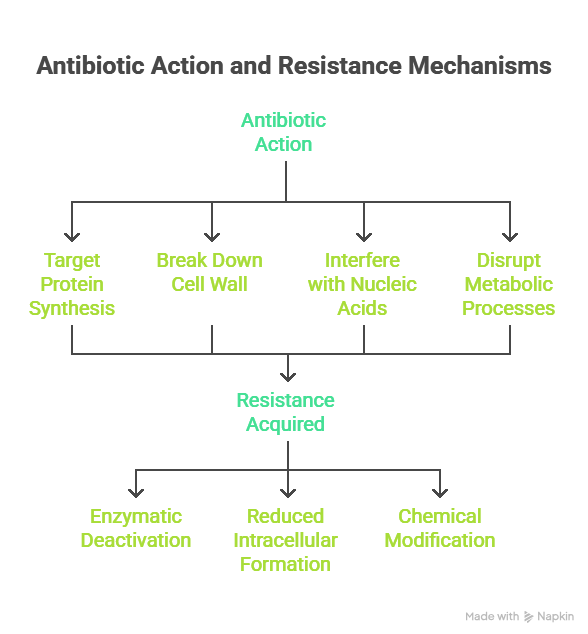
Antibiotics primarily target the microbial cells' biology and physiology in an effort to slow or stop their growth (Fig. 1). Certain antibiotics target the protein synthesis machinery by attaching to ribosomal units, which inhibits the antibacterial action of those microorganisms. Other antibiotics break down the ß-lactam along with glycopeptide components of bacterial cells to damage their cell walls or cell membranes. These antibiotics that target the cell wall include macrolides, tetracycline, linezolid, aminoglycosides, and chloramphenicol. The other antibiotics that target cells and interfere with the synthesis of nucleic acids include fluoroquinolones (FQ) and rifampin. The remaining antibiotics, such as folic acid analogs, daptomycin, polymyxins, and sulfonamides, disrupt metabolic processes and damage the membrane matrix (Muteeb et al., 2023). Conversely, resistance acquired is an abnormality specific to a strain that results from either chromosomal target gene mutations or the acquisition of foreign resistance genes. Mutations that increase the level of production of multidrug transporter pathways may fall under this group.
Three Basic Categories of Resistance Mechanisms Exist
Enzymatic deactivation of antimicrobials through chemical modification or disintegration; Reduced intracellular formation of antimicrobials as a result of increased efflux and decreased influx of antimicrobials; Chemical modification, mutation, or defense of cellular target sites; and excessive expression of highly susceptible targets or the substitution of resistant structures for sensitive target structures (Sheikh et al., 2022).
KEY RESISTANT PATHOGENS OF AMR
One of the main human pathogens, S. aureus, can produce infections that are moderate to fatal. It can become resistant to both new and old antibiotics and is very communicable. In 1961, the first strain of S. aureus that was resistant to methicillin was discovered. By attaching themselves to penicillin-binding proteins (PBPs), methicillin, along with other β-lactam antibiotics stop S. aureus from growing. By obtaining the genes mecA and mecC, which render methicillin inactive by synthesizing an alternate PBP, S. aureus developed methicillin resistance (MRSA) (Gimza & Cassat, 2021). When treating severe MRSA and other resistant gram-positive infections, vancomycin has historically been used as a last resort antibiotic (Li et al., 2022). According to the World Health Organization (WHO), S. aureus is a leading pathogen of infections acquired in hospitals and a serious global health issue. Several kinds of antibiotics are being used to treat MRSA infections, which are challenging to cure. Target gene mutations, target modifications, and efflux pump overexpression are the three main ways that MRSA resistance develops. For the curing of illnesses of MRSA, a significant alternative to vancomycin is daptomycin, a class of peptide antibiotics. However, as a result of various protein alterations, resistance to the antibiotic daptomycin during treatment is growing (Table 1). The use of macrolide-lincosamide-streptogramin (MLS) medicines to treat serious infections has gained attention again as a result of the rising incidence of MRSA infections (Timsina et al., 2021).
Klebsiella becomes highly resistant towards antibiotics via the broad uptake of genes expressing enzymes, which include ESBLs along with carbapenems. The most prevalent carbapenem-resistant Enterobacteriaceae (CRE) in clinical settings are strains of K. pneumoniae that are resistant to carbapenem. Since carbapenems are frequently the last resort for treating gram-negative persistent diseases, the growing number of K. pneumoniae (KPC) infections that produce carbapenems and have the carbapenems expressing the blaKPC-3 gene poses a serious risk to public health (Gualtero et al., 2020).
Since Multidrug-resistant TB (MDR-TB) is responsible for around 29% of AMR-attributable deaths, Mycobacterium tuberculosis (Mtb), the acid-fast bacillus which triggers tuberculosis (TB), deserves to be one of the top priority pathogens. The pathogen, Mycobacterium TB, developed resistance to the antagonist medications. Due to this, resistant strains have emerged, resulting in "Multi-Drug Resistant-Tuberculosis" and "Extensively Drug-Resistant Tuberculosis," which are still curable but have a decreased success rate. As the resistance mechanism continues, it eventually results in completely drug-resistant TB that is uncontrollable (TDR-TB) (Khawbung et al., 2021).
In recent years, there has been a lot of interest in the widespread resistance of these parasites to antimalarial medications. The elimination of malaria has been significantly hampered by the development of parasite resistance. As early as the late 1950s, P. falciparum in Thailand developed resistance to chloroquine (CQ), and the medication eventually lost its effectiveness. These resistant strains gradually expanded throughout South America, Southeast Asia, and India in the 1960s and 1970s. After sulfadoxine-pyrimethamine (SP) was introduced as a substitute treatment for P. falciparum malaria in the late 1970s, resistance also typically started to appear. Before the discovery of artemisinin, treatment for malaria was hampered by parasites' persistent resistance (Wang et al., 2023).
| Pathogens | Resistance Types | Mechanisms | References |
|---|---|---|---|
| Staphylococcus aureus | Methicillin resistance (MRSA) | mecA and mecC genes, which inactivate methicillin by synthesizing an alternate PBP | Lee et al., 2018. |
| Klebsiella pneumoniae | Carbapenem resistance | Beta-lactamase production (ESBLs) | Effah et al., 2020. |
| Mycobacterium tuberculosis | Multidrug-resistant TB (MDR-TB) | Tuberculosis activation | Khawbung et al., 2021. |
| Pseudomonas aeruginosa | Carbapenem resistance | Cause over-expression of efflux pumps | Langendonk et al., 2021. |
Humans nowadays have a significant chance of acquiring an infection that is resistant to antibiotics at the start and end of their lives, and their chances of becoming able to obtain efficient treatments are decreasing. Bacterial infections that are resistant form a health issue that affects all parts of the world and is on par with, if not more so than, HIV and malaria (Puri et al., 2025).
Drivers of AMR
Global factors influencing antimicrobial resistance (AMR) are complex and interrelated, and health spending varies significantly across high- and low-income countries. Urbanization, poverty, poor sanitation, overcrowding, ignorance, loose regulations, and health disparities are some of the causes of these injustices. The governance of health systems and government participation also affect the systemic approach to lowering AMR. Because antibiotics are widely used and their usage within food or animal production is increasing, it is difficult to find a balance between increasing agricultural output and reducing antibiotic use while preserving food safety. AMR is also disseminated by global issues such as hazardous waste, sewage, water contamination, manure runoffs, sanitation, and hygiene. The co-selection and spread of resistance in the environment are linked to heavy metals and biocides. However, surveillance is inadequate for this purpose in many regions of the world. Strategies for surveillance may not accurately reflect the target population or may skew the results, which could lead to misuse of antibiotics. There are clear disadvantages to traditional laboratory-based resistance surveillance, which compiles data from routine patient testing in healthcare facilities; the data usually represent the conditions of a chosen sample of individuals obtaining diagnostics and medical treatments (Okeke et al., 2024).
One of the main causes of AMR is also a lack of understanding about antibiotics. A UK survey on public knowledge of antibiotics was carried out in 2017 by Public Health England. While 83% of respondents agreed that antibiotics may be used to treat bacteria, 35% of participants believed that they might also be used to treat viral illnesses. These results have improved from the 2014 survey, indicating that the public in the UK is now more knowledgeable and aware about antibiotics (Bhardwaj et al., 2021). A study conducted in India, on the other hand, found that 49% of respondents believed that antibiotics might heal viral infections, while 45% of respondents took medications to treat colds. India is said to have one of the highest rates of infectious diseases, especially those caused by bacteria that are resistant to a wide range of medications. These results imply a link between AMR and public awareness (Torumkuney et al., 2022).
Global and Regional Impact
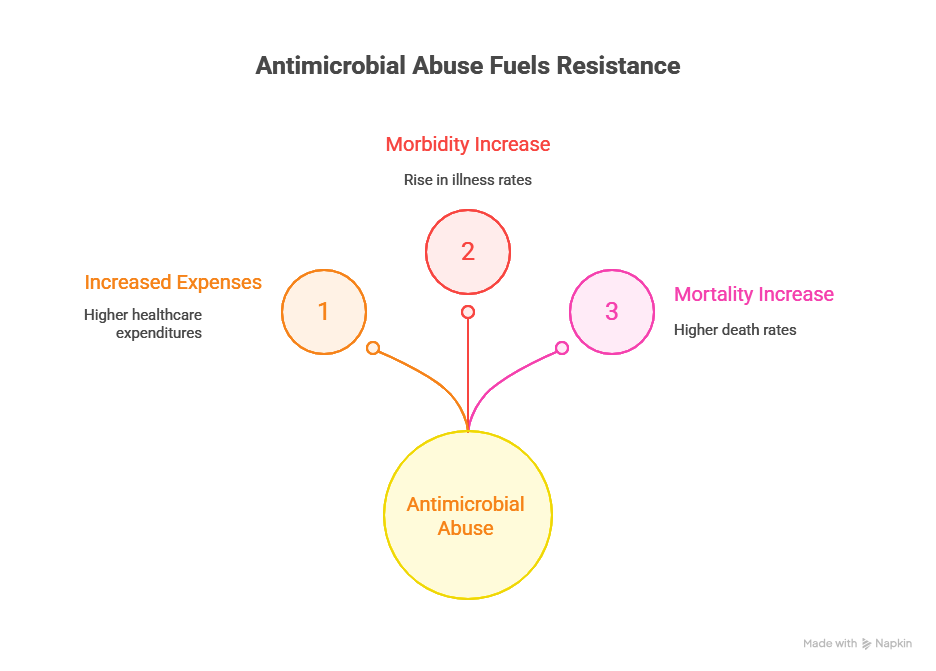
Surveillance of drug-resistant infections can be challenging in low- and middle-income countries where resources and capacity to implement AMR intervention activities are restricted (Matee et al., 2023). antibiotic resistance (AMR), which has increased health costs, morbidity, and rates of mortality globally, is a result of antibiotic overuse and misuse as shown in Fig. 2 (Murray et al., 2022). It has been suggested that surveillance is combined with strategies and actions to mitigate the spread of AMR in humans to animals and in the surroundings (Godman et al., 2021).
SURVEILLANCE AND MONITORING SYSTEMS
Surveillance systems must be used to monitor AMR in humans, animals, agriculture, and the environment. Effectively used surveillance techniques reveal that the presence of AMR has been detected in a certain community. AMR surveillance requires a more resilient multisectoral approach and efficient coordination (Lim et al., 2021). To reduce or eliminate the occurrence of antibiotic-resistant bacteria and their genes, it is highly recommended that AMU be thoroughly monitored. AMR surveillance determines the magnitude of the AMR challenge, the emergence of newer AMR, where the AMR problem is developing or receding, a particular resistance is expanding, and an eruption caused by precise resistance (Ikhimiukor and Okeke, 2023).
According to the Global Antimicrobial Surveillance System (GLASS) of the World Health Organization (WHO), surveillance systems must use recommended indicator microorganisms, such as E. coli, which is considered a priority microorganism, and Enterococcus species, which are found in specimens and demonstrate antibiotic resistance characteristics in Gram-positive bacteria. Other recommended indicator bacteria for AMR surveillance in food-producing animals, including chicken, are Salmonella species and Campylobacter species. Therefore, it is highly recommended that they be employed as pathogens of interest in cattle systems for AMR surveillance (Sadia et al., 2025).
Strategies to Combat AMR
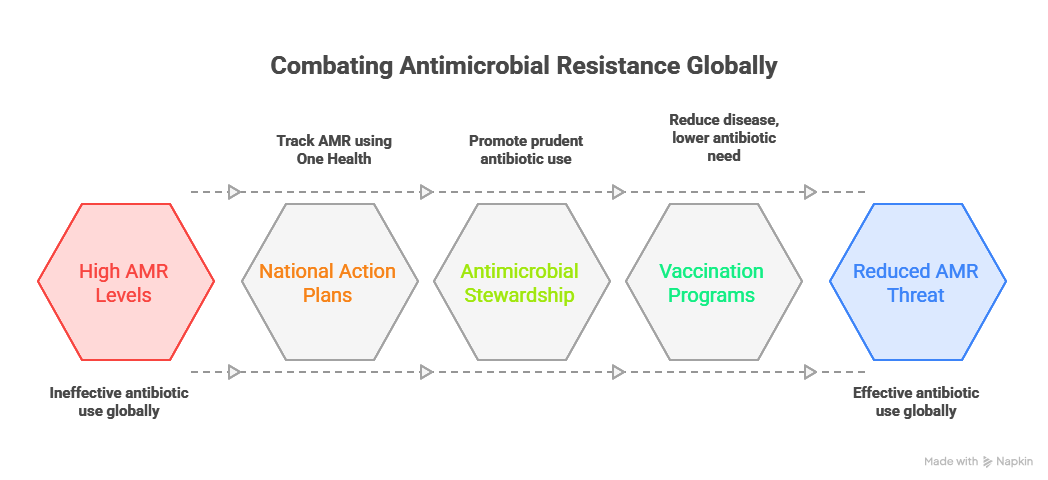
Many nations throughout the world have created the National Action Plans (NAPs) on AMR to handle AMR in accordance to the Global Action Plan (GAP) upon AMR (Fig. 3). These NAPs were created in accordance with the GAP's AMR goals, and nations utilize them to track AMR through a "One Health" strategy (Lota et al., 2022). It is tentatively required that nations that have created and executed their NAPs carry out assessments to track their success and efficacy in reducing AMR. Countries that have successfully implemented their AMR, NAPs have so far made good strides toward lowering AMR and its effects. Furthermore, the response to AMR is thought to be insufficient even with the availability of NAPs. The ability of individual nations to create NAP objectives and the degree and intensity of devotion to NAPs are crucial to their implementation. NAPs must therefore incorporate goals that assess the financial impact of policies put in place to maximize the utilization of antibiotics in various nations to foster political commitment and involvement (Willemsen et al., 2022).
Programs for antimicrobial stewardship (AMS) encourage prudent utilization of antibiotics via focusing on the best possible choice, dosage, frequency, and length of antimicrobial therapy, which results in the finest clinical consequence for infection inhibition or management, with little to no patient toxicity and a decrease in antimicrobial resistance (Aiesh et al., 2023). AMS programs are crucial in preventing AMR and their actual employment showed a reduction in AMU and the therapeutic results of patients. Healthcare movements or cognizance-sensitization, hospital-created AMS programs, NAPs, as well as the GAP are examples of AMS programs (Alabi et al., 2022).
Both inactivated and attenuated live vaccinations are intended for use in veterinary medicine. Vaccines can produce mucosal immunity, which shields animals from serious infections and reduces infections brought on by live pathogens (Ravikumar et al., 2022). Consequently, vaccines reduce the use of antimicrobial agents in animal health by reducing animal diseases. Reduced usage of antibiotics lowers the likelihood of AMR emergence in food-producing animals by shielding bacteria present in these animals from exposure to these medications. Therefore, in order to avoid illnesses, it is necessary to encourage the use of vaccines in the livestock industry. In a similar vein, vaccines are administered to humans to stop or lessen the severity of illnesses, which lowers the need for antibiotics and stops AMR from happening again. The WHO created a framework to encourage immunizations and lower AMU (Vekemans et al., 2021). Raising the public's awareness of emerging AMR plague determines that prevention is the best strategy among the majority of these recently suggested measures; therefore, effective interaction of everyone with an interest is necessary (Mostafa et al., 2021).
Policy Frameworks and Global Initiatives
International healthcare organizations and several nations have taken various steps to respond to AMR for addressing problem. To make sure that every agency working in the area of proficiency and with other agencies minimizes AMR potential effects, the "One Health Approach" was introduced, which demands a global cooperative effort involving several diverse disciplines, comprising on Food and Agriculture Organization of the United Nations (FAO) along with the World Organization for Animal Health (OIE). For accomplishing the goals of the GAP-AMR plan, the World Health Organization (WHO) also created the Global Action Plan to regulate AMR (GAP-AMR) and launched the Global Antimicrobial Resistance as well as the Implement Surveillance System (GLASS) to constantly fill in the knowledge gaps (Charani et al., 2023).
Based on decisions made by the Food as well as Agricultural Organization of the United Nations (FAO) Governing Conference, the World Assembly of the World Organization within Animal Health (OIE) Delegates, and the World Health Organization (WHO), the GAP was introduced in 2015. The plan's objective was to guarantee endless continuity in the avoidance and cure of infectious diseases by making effective antimicrobials accessible and encouraging the responsible use of safe, quality-assured antimicrobials. To accomplish this, five strategic goals were established: (1) to raise awareness and comprehension of antibiotic resistance; (2) to increase knowledge through research and surveillance; (3) to lower infection rates; (4) to improve the utilization of antimicrobial medicines; and (5) to guarantee long-term investment in the fight against antimicrobial resistance (Iwu and Patrick, 2021).
CHALLENGES AND GAPS
Addressing the advent of AMR poses difficult problems that cannot be easily solved. Antimicrobials are widely used in medicine and the economics of food animal production, which makes it difficult to minimize humanity's enormous use of them. Modern farming systems rely on regular delivery of antimicrobials to animals for preventing infection and growth promotion, while doctors frequently rely on empirical antibiotic prescribing to protect against bacterial infections due to the lack of rapid point-of-care diagnostics. Despite awareness of the hazards of antibiotic resistance linked to overuse, antimicrobial management initiatives for health care and updated livestock farming rules are still not widely implemented. These problems are exacerbated by the antimicrobial drug development system's inability to keep up with the ongoing evolution. Costly antimicrobial research having few financial incentives is being abandoned by pharmaceutical companies more and more (Ahmed et al., 2024).
AMR also poses a threat to global health via food insecurity because it limits the ability to treat sick animals. In these settings, the excessive use of antibiotics in enterprises and the release of active antibiotics into the environment favor resistant bacterial lineages and put humans and animals at threat about the future global epidemic from an incurable bacterial infection (Ikhimiukor et al., 2022). Antibiotics have saved millions of lives but have also led to a resistance pandemic, causing significant mortality. Control of infectious diseases is hampered by the increasing and unequal distribution of the resistance burden. Because of the effects of antimicrobial selective strain brought about by earlier generations, every person is at risk from AMR, even those who were never given an antibiotic, such as newborns. Due to a lack of laboratory testing and a poorly estimated burden of disease, AMR is not well established (Bouiller et al., 2020). AMR is a One Health challenge that necessitates surveillance and interventions throughout human, animal, and environmental domains. For stopping aversion and success evaluation, the surveillance system must be supported.
CONCLUSION AND FUTURE DIRECTIONS
In just over a century, antibiotics have greatly increased human longevity and revolutionized the field of medicine, yet they have also been negatively impacted by the ongoing AMR pandemic, according to research on the evolution of antibiotics and resistance. Antimicrobial resistance is a global health issue that threatens medical progress. It is accelerated by inadequate surveillance, inappropriate usage, and little innovation in therapy. It is crucial to advance fair access, raise public health awareness, and apply the One Health approach. To decide how to proceed, it is essential to review the current state of AMR in diseases caused by community-acquired infections that affect people throughout their lives, depending on contact and risk factors. In addition to this evaluation, a critical analysis of the developments and persistent shortcomings in the reporting and measuring of antibiotic resistance should be carried out. Assembling of these results, we propose concrete steps to enhance surveillance, including more data sharing across sectors and health systems, and standardized processes.
References
- Abbas A, A Barkhouse, D Hackenberger et al., 2024. Antibiotic resistance: A key microbial survival mechanism that threatens public health. Cell host and microbe 32:837-851.
- Ahmed SK, S Hussein, K Qurbani et al., 2024. Antimicrobial resistance: Impacts, challenges, and future prospects. Journal of Medicine, Surgery, and Public Health 2:100081.
- Aiesh BM, MA Nazzal, AI Abdelhaq et al., 2023. Impact of an antibiotic stewardship program on antibiotic utilization, bacterial susceptibilities, and cost of antibiotics. Scientific Reports 13:5040.
- Alabi AS, SW Picka, R Sirleaf et al., 2022. Implementation of an antimicrobial stewardship programme in three regional hospitals in the south-east of Liberia: lessons learned. JAC-Antimicrobial Resistance 4:069.
- Bhardwaj K, S Shenoy, S Baliga et al., 2021. Knowledge, attitude, and practices related to antibiotic use and resistance among the general public of coastal south Karnataka, India–A cross-sectional survey. Clinical Epidemiology and Global Health 11:100717.
- Bouiller K, X Bertrand, D Hocquet et al., 2020. Human infection of methicillin-susceptible Staphylococcus aureus CC398: a review. Microorganisms 8:1737.
- Effah CY, T Sun, S Liu et al., 2020. Klebsiella pneumoniae: an increasing threat to public health. Annals of Clinical Microbiology and Antimicrobials 19:1.
- Founou RC, AJ Blocker, M Noubom et al., 2021. The COVID-19 pandemic: A threat to antimicrobial resistance containment. Future Science OA 7:736.
- Charani E, M Mendelson, SJ Pallett et al., 2023. An analysis of existing national action plans for antimicrobial resistance—gaps and opportunities in strategies optimising antibiotic use in human populations. The Lancet Global Health 11:466-474.
- Gimza, BD and JE Cassat, 2021. Mechanisms of antibiotic failure during Staphylococcus aureus osteomyelitis. Frontiers in immunology 12:638085.
- Godman B, A Egwuenu, M Haque et al., 2021. Strategies to improve antimicrobial utilization with a special focus on developing countries. Life 11:528.
- Gualtero S, S Valderrama, M Valencia et al., 2020. Factors associated with mortality in Infections caused by Carbapenem-resistant Enterobacteriaceae. The Journal of Infection in Developing Countries 14:654-659.
- Hutchings MI, AW Truman and B Wilkinson, 2019. Antibiotics: past, present and future. Current opinion in microbiology 51:72-80.
- Ikhimiukor OO and IN Okeke, 2023. A snapshot survey of antimicrobial resistance in food-animals in low and middle-income countries. One Health 16:100489.
- Ikhimiukor OO, EE Odih, P Donado-Godoy et al., 2022. A bottom-up view of antimicrobial resistance transmission in developing countries. Nature Microbiology 7:757-765.
- Iskandar K, J Murugaiyan, D Hammoudi Halat et al., 2022. Antibiotic discovery and resistance: the chase and the race. Antibiotics 11:182.
- Iwu CD and SM Patrick, 2021. An insight into the implementation of the global action plan on antimicrobial resistance in the WHO African region: A roadmap for action. International Journal of Antimicrobial Agents 58:106411.
- Khawbung JL, D Nath and S Chakraborty, 2021. Drug resistant Tuberculosis: A review. Comparative Immunology, Microbiology and Infectious Diseases 74:101574.
- Langendonk RF, DR Neill and JL Fothergill, 2021. The building blocks of antimicrobial resistance in Pseudomonas aeruginosa: implications for current resistance-breaking therapies. Frontiers in Cellular and Infection Microbiology 11:665759.
- Lee AS, H De Lencastre, J Garau et al., 2018. Methicillin-resistant Staphylococcus aureus. Nature reviews Disease Primers 4:1-23.
- Li G, MJ Walker and DM De Oliveira, 2022. Vancomycin resistance in Enterococcus and Staphylococcus aureus. Microorganisms 11:24.
- Lim C, EA Ashley, RL Hamers et al., 2021. Surveillance strategies using routine microbiology for antimicrobial resistance in low-and middle-income countries. Clinical Microbiology and Infection 27:1391-1399.
- Lota MMM, AQ Chua, K Azupardo et al., 2022. A qualitative study on the design and implementation of the national action plan on antimicrobial resistance in the Philippines. Antibiotics 11:820.
- Matee M, SE Mshana, M Mtebe et al., 2023. Mapping and gap analysis on antimicrobial resistance surveillance systems in Kenya, Tanzania, Uganda and Zambia. Bulletin of the National Research Centre 47:12.
- Mostafa A, A Abdelzaher, S Rashed et al., 2021. Is health literacy associated with antibiotic use, knowledge and awareness of antimicrobial resistance among non-medical university students in Egypt? A cross-sectional study. BMJ Open 11:046453.
- Murray CJ, KS Ikuta, F Sharara et al., 2022. Global burden of bacterial antimicrobial resistance in 2019: a systematic analysis. The Lancet 399:629-655.
- Muteeb G, MT Rehman, M Shahwan et al., 2023. Origin of antibiotics and antibiotic resistance, and their impacts on drug development: A narrative review. Pharmaceuticals 16:1615.
- Naghavi M, SE Vollset, KS Ikuta et al., 2024. Global burden of bacterial antimicrobial resistance 1990–2021: a systematic analysis with forecasts to 2050. The Lancet 404:1199-1226.
- Okeke IN, ME de Kraker, TP Van Boeckel et al., 2024. The scope of the antimicrobial resistance challenge. The Lancet 403:2426-2438.
- Opimakh SG, 2025. History of the antibiotics discovery and their influence on the pulmonology development. Ukrainian Pulmonology Journal 34:58-58.
- Pandey R, SK Mishra and A Shrestha, 2021. Characterisation of ESKAPE pathogens with special reference to multidrug resistance and biofilm production in a Nepalese hospital. Infection and Drug Resistance 2201-2212.
- Puri B, R Vaishya and A Vaish, 2025. Antimicrobial resistance: Current challenges and future directions. Medical Journal Armed Forces India 81:247-258.
- Ravikumar R, J Chan and Prabakaran, 2022. Vaccines against major poultry viral diseases: strategies to improve the breadth and protective efficacy. Viruses 14:1195.
- Sadia H, M Adil, MW Nasir et al., 2025. Global Strategies for Combating Antimicrobial Resistance through the One Health Approach: A Mini Review. Open Access Public Health and Health Administration Review 4:60-71.
- Sheikh BA, BA Bhat and MA Mir, 2022. Antimicrobial resistance: new insights and therapeutic implications. Applied Microbiology and Biotechnology 106:6427-6440.
- Stanley D, R Batacan Jr and YS Bajagai, 2022. Rapid growth of antimicrobial resistance: the role of agriculture in the problem and the solutions. Applied Microbiology and Biotechnology 106:6953-6962.
- Tang KWK, BC Millar and JE Moore, 2023. Antimicrobial resistance (AMR). British Journal of Biomedical Science 80:11387.
- Timsina R, U Shrestha, A Singh et al., 2021. Inducible clindamycin resistance and erm genes in Staphylococcus aureus in school children in Kathmandu, Nepal. Future Science OA 7:361.
- Torumkuney D, A Poojary, B Shenoy et al., 2022. Countr data on AMR in India in the context of community-acquired respiratory tract infections: links between antibiotic susceptibility, local and international antibiotic prescribing guidelines, access to medicine and clinical outcome. Journal of Antimicrobial Chemotherapy 77:10-17.
- Vekemans J, M Hasso-Agopsowicz, G Kang et al., 2021. Leveraging vaccines to reduce antibiotic use and prevent antimicrobial resistance: a World Health Organization action framework. Clinical Infectious Diseases 73:1011-1017.
- Wang S, F Huang, H Yan et al., 2023. A review of malaria molecular markers for drug resistance in Plasmodium falciparum and Plasmodium vivax in China. Frontiers in Cellular and Infection Microbiology 13:1167220.
- Willemsen A, S Reid and Y Assefa, 2022. A review of national action plans on antimicrobial resistance: strengths and weaknesses. Antimicrobial Resistance and Infection Control 11:90.