

INTRODUCTION
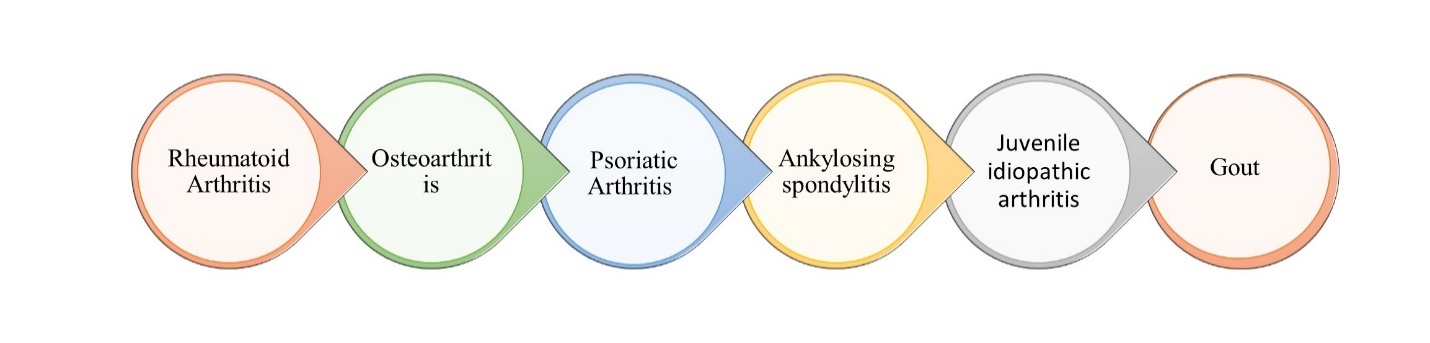
The word arthritis means inflammation of joints. This inflammation may affect one or more joints, which, over time, can become severe and result in scraping of the bones during movement. Almost 100 different types of arthritis with diverse causes and symptoms. Arthritis not only affects the tissues covering the joints and those that connect the joints, but also affects the whole joint. According to an estimate in 2019, almost 528 million people were suffering from osteoarthritis and 18.5 million from rheumatoid arthritis (Shi et al., 2023). Rheumatoid Arthritis is a systemic disease of the immune system identified by inflammation, stiffness of joints, swelling and pain. It is one of the major categories of arthritis, a body defense system disturbance involved in it, because it starts reacting against the body's own joints. It affects small and large joints and also internal body organs. Complications caused by rheumatoid arthritis include joint movement blockage and unbearable pain (Bullock et al., 2019). Various types of arthritis have been shown in (Fig. 1).
Osteoarthritis is called the extremely common class of arthritis and deterioration of bones. It affects the aged people, mostly female after the menopause. Complete crash of cartilages of joints occurs, which then cause decrease mobility and discomfort. The most affected joints in this arthritis are weight-bearing joints like the hip, knee and foot. Psoriatic Arthritis is a complicated, long-lasting disease related to inflammation with complex manifestations. It mostly occurs in people who already suffer from psoriasis (an immune system defect), in which patches and silvery scales are present on the skin and nails (Ritchlin et al., 2017). Ankylosing spondylitis can be called by another name is the axis spondylitis. Basically, it is an inflammatory disease that majorly affects the spine. With the passage of time, this disease becomes worse and causes the complete fusion of the spin vertebrae, as a result of which spin flexibility ceases and a hunched posture of the body comes into being (Ebrahimiadib et al., 2021). Gout is also a type of inflammatory arthritis in which the body is unable to remove the uric acid from the body, as a result of which high levels of uric acid in the blood cause the accumulation of needle-shaped monosodium urate crystals (MSU), which cause severe pain, swelling, redness, and tenderness in joints (Ragab et al., 2017).
Arthritis Pandemic
In a study that was done in 2018 by the researchers, 1.5 million people's data was investigated within 3 years to check certain musculoskeletal (MSK) conditions and chronic pain. Study revealed that out of this number, 16.8% people was suffer from MSK conditions like arthritis, osteoporosis 9.5% and severe back pain, 6.7%. Almost 21.3% people in this area of research receive medication and consultation for chronic pain. Its epidemiology is high in poor resource countries that are under development due to socioeconomic conditions. Most affected people by this clinical condition are old and women (González et al., 2018).
Role of Inflammation in the Pathophysiology of Arthritis
Swelling is the principal factor of arthritis, which can be see every type of arthritis. Inflammation causes the hardening of the synovial membrane, because of which tenderness and unbearable pain in joints. If inflammation remains for a long period of time, it leads to the start of various dangerous cellular and chemical events that cause complete damage to bone and cartilage. In this condition, major defense cells like neutrophils, lymphocytes, and macrophages cause the liberation of cytokines (tumor necrosis factor alpha, IL-6, IL-1) after entering the synovial membrane. These cytokines further delay the inflammation and stimulate other joint cells, as a consequence of which damage occurs in the joint because the cells in the joints stimulated by the cytokines release some enzymes that dissolve the bone by activating the bone-dissolving cells, as a result of which more damage occurs (Raggi et al., 2018). Inflammation in joints increases the sensitivity of pain pathways, leading to peripheral sensitization (heightened sensitivity of pain-sensing nerves) and central sensitization (increased excitability of spinal cord neurons). These processes cause the pain seen in arthritis, including spontaneous pain, hyperalgesia (severe pain from harmful stimuli), and allodynia (pain from normally harmless stimuli (Cao et al., 2020).
Inflammatory chemicals like bradykinin, prostaglandins, neuropeptides, and cytokines activate and increase receptors on nerve endings, making them more sensitive. In the spinal cord, the neurotransmitter glutamate and neuropeptides such as substance P and CGRP heighten neuron activity, a process that can be reduced by blocking NMDA and non-NMDA receptors. Prostaglandin E2 (PGE2) further enhances central sensitization by acting on both presynaptic and postsynaptic neurons. Drugs like indomethacin, which block PGE2 effects, can help reduce this heightened pain response (Meng and Shen, 2022).
IMPACT OF NSAIDs IN ARTHRITIS
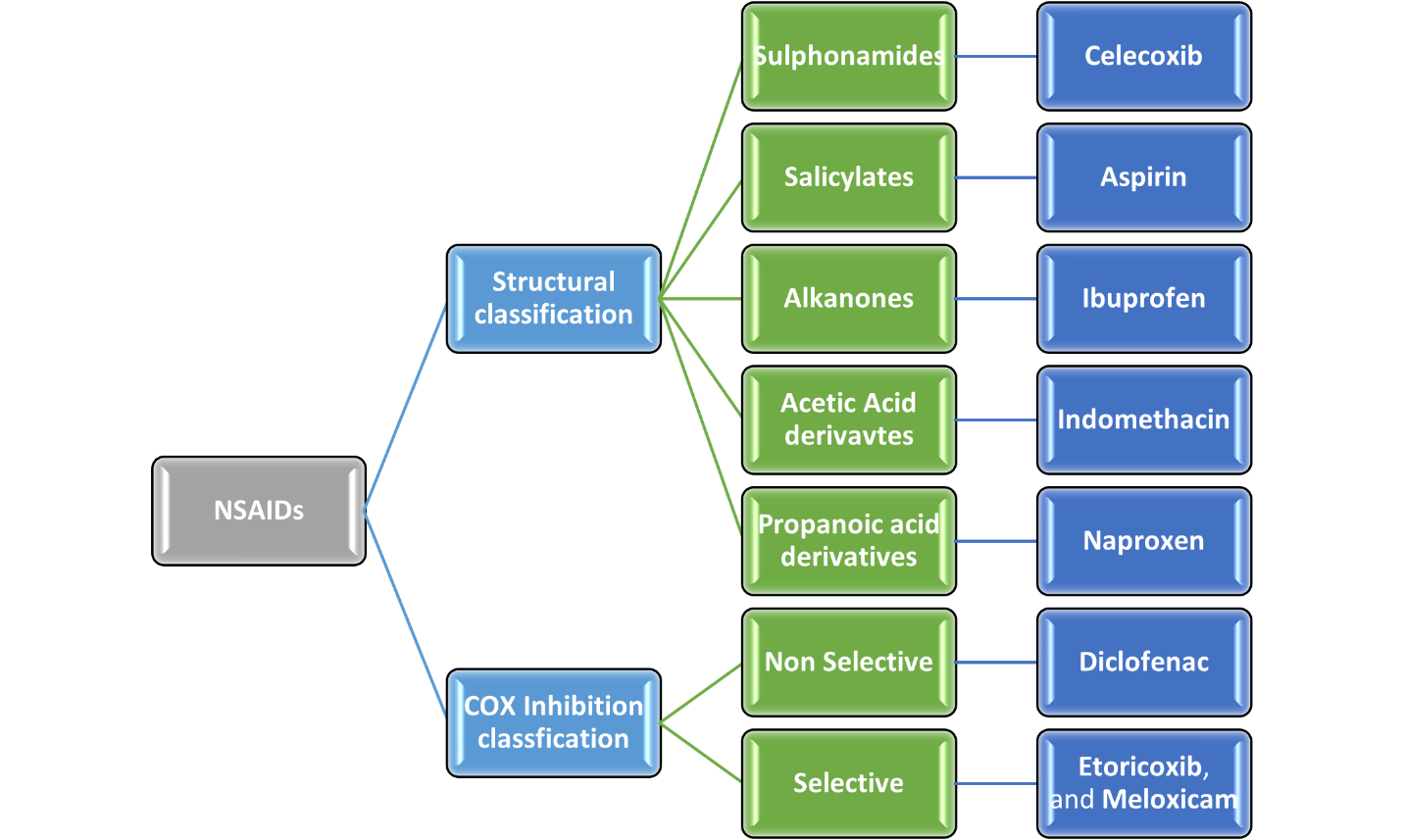
NSAIDs are a type of drug that work by hindering the 2 enzymes cyclo-oxygenase-1 (COX-1) and COX-2 (Fig. 2). These enzymes participate in the production of prostaglandins. Majorly, these drugs act as analgesics, anti-inflammatories, and antipyretics and are used to relieve pain, decrease fever, and inflammation. Even though the chemical structure of these drugs is largely dissimilar, they are similar in the mechanism of action. Cyclooxygenases (COX) are enzymes that participate in prostanoid, NSAIDs suppress these enzymes' action. However, since they are so diverse, they have other actions that may make them therapeutically endowed. COX-1 is also known as the housekeeping enzyme play essential roles in the body, like protecting the gastric mucosa of the stomach, clotting of platelets and aiding in proper renal blood flow. COX-2 is produced during conditions like trauma and inflammation to induce pain and swelling in the affected area.
Pharmacokinetics of NSAIDs
Pharmacokinetics is simply defined as what the body does with the drug (Table 1). A drug undergoes 4 major phases in the body to perform its action at the target site. These include absorption, drug distribution, breakdown, and excretion from the body. NSAIDs are well absorbed after as a rule orally by ingestion and have a high bioavailability of 80-100 %, although there are some exceptions (e.g., diclofenac, celecoxib). Their absorption is usually fast and peak plasma concentrations are commonly found inside 2-3 hours Food intake may delay absorption, and the decrease of systemic availability is infrequent compounds e.g. diclofenac or aspirin, experience a high first-pass effect which is largely degraded in decreasing their bioavailability, whereas active drug is produced in a first-pass metabolism in other cases, such as dipyrone, nabumetone. When applied topically, the penetration of the inflamed tissue by NSAIDs occurs. The presence of tissues and joints seems to be meager, and measurable concentrations are found in synovial fluid. noticed that following some topical treatments (i.e., with diclofenac) appears to be reliant on dermal absorption and circulatory circulation (Seefried et al., 2020).
The majority of the NSAIDs are well attached to the plasma. proteins 95-99 %, and such binding can be saturable and has a potential for interaction with competitive drugs, the pattern of distribution is very influential on the pharmacological effects and adverse effects of NSAIDs. The majority of compounds attain maximum concentration to central nervous system to have a central analgesic effect; their kinetics in the focus of inflammation appear to be influenced by specific physicochemical features, for example, acidity (Olson and Christ 1996).
Predominately NSAIDs are removed from the blood plasma by biotransformation in the liver, and afterwards excretion through kidney. Active drugs are excreted by the renal system in very small amounts. Others have active metabolites, for example, nabumetone and almost all are subject to some extent of biliary excretion and reabsorption (enterohepatic circulation), which appears to be a cause of NSAID enteropathy (Domaradzka et al., 2015). Phase I (oxidation, hydroxylation, demethylation), then phase II glucuronidation, and other conjugations are the fate of some NSAIDs, with others only being reacted at phase II.
Passive absorption into the blood after being taken up into the bloodstream, NSAIDs gain access into synovial tissue and fluid by the free (unbound) part of the drug diffusing into the tissue and fluid. This is useful even with drugs with low plasma half-lives to ensure that a higher level of the drug is maintained locally and the effect of the drug is extended. Due to this factor, there is a slower increase in synovial concentrations, which remain constant longer, which means less frequent dosing. Topical NSAIDs can also be administered in high concentrations directly to the joint, reducing exposure to the system with much lower exposure (Wang et al., 2022). Special chemical properties that are possessed by NSAIDs, including weak acids, high protein binding, and lipophilicity, enable them to effectively manage inflammatory joints. This causes long-acting therapeutic levels within the synovial fluid and tissue, where they prevent cyclooxygenase (COX) enzymes and reduce the production of prostaglandins, which reduces pain and inflammation (Baranowski et al., 2018).
Due to increased blood artery permeability, which allows medications such as NSAIDs to enter the bloodstream and access the inflamed joints in rheumatoid or osteoarthritis. This is so since the inflammatory response may entrap weakly acidic drugs in the inflammatory site through leaky blood vessels and local low pH. NSAIDs are thus more prone to accumulate and stay longer in the synovial fluid, suppressing the activity of COX enzymes and reducing the production of prostaglandins, which cause pain and inflammation. The accumulation of a particular amount of therapeutic agent at the place of inflammation helps more in reducing the pain and swelling effectively. Known phenomenon linked with the increased permeability and retention (EPR) of inflammatory joints, analogous to tumor tissues, is a similar phenomenon that has been commonly employed in targeted forms of drug delivery, particularly using nanomedicines ( Dolati et al., 2016).
The main purpose of the treatment of any diseases to save people from suffering. The right dose pathway and intake method monitoring is necessary to prevent complications and to make sure the appropriate quantity of the drug reaches at the action site. For this purpose, an understanding of the pharmacokinetics of the drug is most important. Lack of information on the pharmacokinetics of the therapeutic agents makes it difficult for doctors to prescribe the exact dose and pathway of the drug. Arthritis is the main cause of movement impediment in older people. Treatment in patient is given for purpose like remove inflammation and restricting pain by using drugs and other techniques, except for drugs. Non-steroidal anti-inflammatory drugs are taken as first aid for arthritis. Selection of appropriate drug their dose by understanding the complications that these drugs can cause is a big challenge. These drugs cause bad effects on the kidney, stomach and heart function. For the best use of NSAIDs its necessary to carefully monitor the patient's problem faced by him or her if the other therapies like physical workout do not work as a remedy, then recommend non-steroidal anti-inflammatory drugs. After recommending is essential to check the outcomes or any side effects faced by the people (Magni et al., 2021).
MECHANISM OF ACTION OF NSAIDs
NSAIDs work in three ways to help relieve the symptoms of arthritis, for example, it acts by reducing the inflammation, by minimizing the pain, and by maintaining body temperature.
Anti-Inflammatory Action
Arachidonic acid, by the cyclooxygenase pathway, forms the prostaglandins, which is major inflammatory mediators and cause the inflammation of joints in arthritis. NSAIDs target this pathway and inhibit PG production and reduce inflammation. Chemotaxis response inhibition is another way of reducing inflammation. In this mechanism, the signals in the body that are responsible for the production are blocked, as a result of which inflammation reduction happens. Free radicals and oxidative stress are also factors for the inflammation initiation in the body by the COX-2 production, so NSAIDs diminish the free radical production. Interleukins also participate in chemotaxis and cause inflammation; NSAIDs downregulate their action and block the production of inflammation. NSAIDs decrease the sensitivity of the blood vessels to histamine and bradykinin, which are inflammatory mediators and participate in the chemotaxis process. Ultimately, they produce inflammation by synthesizing prostaglandins, which help in inflammatory symptoms in patients suffering from arthritis.
Analgesic and Antipyretic Action
| Drugs | Absorption | Distribution | Metabolism | Excretion | Half life | Dosing | Side effects |
|---|---|---|---|---|---|---|---|
| Diclofenac sodium | 100% absorbed after oral intake | Diffuses into and out of synovial fluid 9 % bound to plasma protein | Follow the first pass metabolism by the liver | Through kidney and fecal excretion | 2 hours | Do not use above 40mg/kg | Stomach pain Skin rash Decrease urination |
| Ibuprofen | GIT | 99% bound to plasma | In liver | Kidney | 2 hours | 2-400mg/kg after a 6-hour gap or according to the prescription strength | GI effects, including bleeding, dyspepsia CNS effects |
| Celecoxib | GIT | 97% plasma protein-bound | Metabolized by liver cytochrome P450 | Feces and urine | 11 hours | One time a day | Pain in the abdomen Diarrhea Headache |
| Methotrexate | Oral GIT | 50% bounded with plasma proteins | Hepatic and intracellular metabolism | Bile urine | Depending upon the dose consumption, about 3-15 hours | One time a week in autoimmune arthritis treatment | Ulceration of the mucus membrane, nausea |
These drugs reversibly reduce the pain by inhibiting the COX-2 enzyme. Prostaglandin production inhibition decreases the sensitivity of the pain stimulus-receiving receptors in the body, as a result of which pain perception is reduced. If pyrogens enter the body, it causes the elevation of the body's normal temperature. NSAIDs basically lower the PGE2 level and maintain the thermoregulatory temperature set point of the hypothalamus results in temperature reduction. Commonly used therapy for arthritis is NSAIDs, which help in managing the inflammation, pain, and stiffness linked with arthritis. These drugs do not purely cure the arthritis, but they are designed to relieve the arthritis related symptoms and improve the quality of life. Because prostaglandins also play an essential role in the body like maintenance of the health of the stomach and kidneys, the use of NSAIDs needs caution. Other ways can also be used to minimize the arthritis symptoms, like physical therapy and lifestyle changes, which depend upon the type and the severity of the arthritis. Most commonly used NSAIDs in arthritis recovery are chloroquine, D- penicillamine methotrexate, etc. (Osafo et al., 2017).
Methotrexate is a drug that is helpful in autoimmune diseases, mostly used in rheumatoid or psoriatic arthritis because it helps the immune system recover and prevents the immune system from causing problems in the body, as a result of which inflammation in the body, reduce due to which reduces stiffness and pain in joints. It slows down the progression of the disease and joint deformity. For the treatment of RA, osteoarthritis, and pain, Celecoxib is an authorized drug. Selective cox-2 inhibitor inhibits this enzyme and restricts the body's production of inflammatory mediator prostaglandins, as a result of which arthritis related symptoms like pain, inflammation and stiffness of joints are reduced. Diclofenac sodium is accepted for prolonged use in the therapy of RA, osteoarthritis, and ankylosing spondylitis. It works by enzyme inhibition, and prostaglandin reduction helps in the management of pain and inflammation. Multiple drug types and categories help in the reduction of symptoms of arthritis (Huang et al., 2021).
The disease-modifying anti-rheumatic drugs DMARDs play a key role in the treatment of rheumatoid arthritis because these drugs are capable to slow down the disease progression and destruction of joints. American College of Rheumatology suggests DMARD therapy within 3 months of diagnosis and including NSAIDs, low dose steroid and physical or occupational therapy. Early DMARD therapy is relevant to prevent the development of inflammation and halt the progression of the disease in its initial phases (Altawil et al., 2016). No one DMARD is safe and effective with all RA patients, so several drugs might require trials. The therapy often begins with conventional DMARDs such as methotrexate or hydroxychloroquine that are effective and generally well tolerated. In case of failure of these, newer agents like leflunomide, anakilr, or TNF blockers like adalimumab, etanercept, and infliximab may be employed. The combination therapy (particularly methotrexate with another DMARD) is usually effective and safe (Buckley et al., 2015).
The majority of such drugs cannot be used during pregnancy. In rheumatoid arthritis (RA), the inflammatory cytokine IL-1β and the TNF-α (Interleukin-1 beta, Tumor Necrosis factor alpha) are crucial in the destruction of joints through inflammatory response, erosion of cartilage and loss of bones. TNF blockers, including etanercept, adalimumab, and infliximab, are useful to reduce the symptoms, delay the destruction of the joints, and increase the movement, and the results appear in two weeks in many cases. When the effect of one TNF inhibitor fails, the other can be used. They are frequently administered as a combination with other DMARDs or methotrexate, but not anakinra (IL-1 blocker). Nevertheless, TNF inhibitors also predispose people to severe infections such as tuberculosis, sepsis, and fungal infections, and decreased counts of blood cells (pancytopenia) in the blood. Etanercept is a biologic medication that prevents tumor necrosis factor-alpha (TNF-α), an important inflammatory substance. It prevents TNF- α binding with its receptors to reduce joint damage and inflammation in rheumatoid arthritis, juvenile arthritis, psoriatic arthritis, ankylosing spondylitis, and psoriasis (Silva et a., 2019).
It is either administered as a single agent or together with methotrexate and the combination is generally better in managing the disease and improving the symptoms. The injection is given twice a week under the skin with Etanercept, and the drug attains its peak blood level in approximately three days, with the drug being given a half-life of approximately five days. It is mostly well tolerated, but there are patients who might have some mild reddening or irritation at the injection point. Arthritis symptoms usually recur within one month after terminating the treatment (Bolge et al., 2015).
EFFICACY OF NSAIDs
The term efficacy is defined as the ability of any substance to produce the desired effect. Osteoarthritis (OA) is one of the leading causes of disability among elderly individuals in the world. Treatment aims are to decrease inflammatory pain and improve physical performance with the help of pharmaceutical and non-pharmacological approaches. It is recommended to first-line treat with non-steroidal anti-inflammatory medicines (NSAIDs). Nonetheless, influencing factors are the age of patients, comorbidities, polypharmacy, and benefit/risk balance of the drug, and these aspects increase the risk of cardiovascular (CV), gastrointestinal (GI), and renal adverse events (AEs). The various NSAIDs have varying safety profiles, although efficacy profiles are well established (Magni et al., 2021). Topical NSAIDs are effective when used in the same way as oral NSAIDs in the treatment of OA, and topical and oral NSAIDs are equally important in pain relief and improved physical functioning in patients with OA. As far as safety is concerned, more samples are still required to ascertain whether there exist any differences in topical or oral NSAID safety profiles (Wang et al., 2022).
The management of acute gout consists of both long-term maintenance therapy and the treatment of the acute flare-ups. The possible treatment of an acute flare would include colchicine, corticosteroids, and non-steroidal anti-inflammatory drugs (NSAIDs). The acute or chronic inflammatory reaction is called gouty arthritis and is a result of monosodium urate microcrystals depositing in the periarticular and articular tissues. Human monocyte production of cyclo-oxygenase-2 has been demonstrated to be caused by monosodium urate microcrystals. NSAIDs may be traditional and selective COX-2 and two examples of NSAIDs are traditional and selective COX-2, respectively; the first type of NSAID inhibits both COX-1 and COX-2, whereas the latter type of NSAID only inhibits COX-2. COX-2 inhibitors are equally as effective as the classic NSAIDs, and only less side effects, particularly gastrointestinal side effects ( Li et al., 2020). The use of non-steroidal anti-inflammatory drugs (NSAIDs) is common among infants, children and even adolescents all over the world. However, a lack of comprehensive literature on infants exists despite sufficient evidence on the benefits of the use of NSAIDs among children and adolescents. NSAIDs used in infants have included ibuprofen, dexibuprofen, ketoprofen, flurbiprofen, naproxen, diclofenac, ketorolac, indomethacin, niflumic acid, meloxicam, celecoxib, parecoxib, rofecoxib, acetylsalicylic acid and nimesulide, among others, and data are now available on the usage of these drugs. NSAIDs are effective in the treatment of various diseases, such as pain and fever. NSAIDs also form the basis of anti-inflammatory treatment even in cases of inflammatory rheumatic diseases in children. The safety of most NSAIDs among infants is not well reported (Ziesenitz et al., 2022).
NSAIDs are very useful in the treatment of arthritis (such as OA, RA, PsA) to decrease inflammation and pain, be used as the first-line interventions in managing symptoms, although their safety and efficacy should be balanced (GI, CV, kidney) with alternatives such as topical NSAIDs or alternative oral NSAIDs (short vs. long-acting) to improve safety and efficacy in treatment, exercise often being a safer and more effective alternative.
CONCLUSION
Many people worldwide suffer from arthritis. It is a toxic element that affects the quality of life of people. Non- steroidal anti-inflammatory drugs play a key role in the relief of the different types of arthritis, but do not totally eliminate the disease. These are taken as first line treatment of arthritis. Understanding of the pharmacokinetics, which is basically how the drug acts in the body, is very important to get the desired effects, because these drugs act in the body through different mechanisms by cyclooxygenase enzymes. These drugs must be taken under the guidelines of clinicians because they may cause severe cardiovascular, renal and gastrointestinal effects.
References
- Altawil R, S Saevarsdottir, S Wedrén et al., 2016. Remaining pain in early rheumatoid arthritis patients treated with methotrexate. Arthritis care and research 68:1061-68.
- Baranowski DC, B Buchanan, H Dwyer et al., 2018. Penetration and efficacy of transdermal NSAIDs in a model of acute joint inflammation. Journal of Pain Research 11:2809-19.
- Bolge SC, A Goren and N Tandon, 2015. Reasons for discontinuation of subcutaneous biologic therapy in the treatment of rheumatoid arthritis: a patient perspective. Patient preference and adherence 9:121-31.
- Buckley F, A Finckh, TW Huizinga et al., 2015. Comparative efficacy of novel DMARDs as monotherapy and in combination with methotrexate in rheumatoid arthritis patients with inadequate response to conventional DMARDs: a network meta-analysis. Journal of managed care and specialty pharmacy 21:409-23.
- Bullock J, SA Rizvi, AM Saleh et al., 2019. Rheumatoid arthritis: a brief overview of the treatment. Medical Principles and Practice 27:501-07.
- Cao Y, D Fan and Y Yin, 2020. Pain mechanism in rheumatoid arthritis: from cytokines to central sensitization. Mediators of inflammation 2020:2076328.
- Dolati S, S Sadreddini, D Rostamzadeh et al., 2016. Utilization of nanoparticle technology in rheumatoid arthritis treatment. Biomedicine and pharmacotherapy 80:30-41.
- Domaradzka D, U Guzik and D Wojcieszyńska, 2015. Biodegradation and biotransformation of polycyclic non-steroidal anti-inflammatory drugs. Reviews in Environmental Science and Bio/Technology 14:229-39.
- Ebrahimiadib N, S Berijani, M Ghahari et al., 2021. Ankylosing spondylitis. Journal of Ophthalmic and Vision Research 16:462.
- González-Chica DA, S Vanlint et al., 2018. Epidemiology of arthritis, chronic back pain, gout, osteoporosis, spondyloarthropathies and rheumatoid arthritis among 1.5 million patients in Australian general practice: NPS MedicineWise MedicineInsight dataset. BMC musculoskeletal disorders 19:20.
- Huang H, M Luo, H Liang et al., 2021. Meta-analysis comparing celecoxib with diclofenac sodium in patients with knee osteoarthritis. Pain Medicine 22:352-62.
- Li M, C Yu and X Zeng, 2020. Comparative efficacy of traditional non-selective NSAIDs and selective cyclo-oxygenase-2 inhibitors in patients with acute gout: a systematic review and meta-analysis. BMJ open 10:036748.
- Magni A, P Agostoni, C Bonezzi et al., 2021. Management of osteoarthritis: expert opinion on NSAIDs. Pain and therapy 10:783-808.
- Meng Y and HL Shen, 2022. Role of N-methyl-D-aspartate receptor NR2B subunit in inflammatory arthritis-induced chronic pain and peripheral sensitized neuropathic pain: a systematic review. Journal of Pain Research 15:2005-13.
- Moore N, C Pollack and P Butkerait, 2015. Adverse drug reactions and drug–drug interactions with over-the-counter NSAIDs. Therapeutics and clinical risk management 11:1061-1075.
- Olson RE and DD Christ, 1996. Plasma protein binding of drugs. In Annual reports in medicinal chemistry, Vol. 31, Academic Press pp. 327-36.
- Osafo N, C Agyare, D Obiri et al., 2017. Mechanism of action of nonsteroidal anti-inflammatory drugs. In Nonsteroidal anti-inflammatory drugs. (Al-kaf AGA Ed.) Intech Open.
- Ragab G, M Elshahaly and T Bardin, 2017. Gout: An old disease in new perspective–A review. Journal of Advanced Research 8:495-511.
- Raggi P, J Genest, JT Giles et al., 2018. Role of inflammation in the pathogenesis of atherosclerosis and therapeutic interventions. Atherosclerosis 276:98-108.
- Rapoport RJ, 1999. The safety of NSAIDs and related drugs for the management of acute pain: maximizing benefits and minimizing risks. Cancer Control 6:18-21.
- Ritchlin CT, RA Colbert and DD Gladman, 2017. Psoriatic arthritis. New England Journal of Medicine 376:957-70.
- Ruhal P, and P Sehgal, 2023. The benefits and risks of non-steroidal anti-inflammatory drugs. Innovations in Pharmacy Planet 11:62-64.
- Seefried L, M Blyth, R Maheshwari et al., 2020. Penetration of topical diclofenac into synovial tissue and fluid of osteoarthritic knees: a multicenter, randomized, placebo-controlled, pharmacokinetic study. Therapeutic advances in musculoskeletal disease 12:1759720X20943088.
- Shi G, X Liao, Z Lin et al., 2023. Estimation of the global prevalence, incidence, years lived with disability of rheumatoid arthritis in 2019 and forecasted incidence in 2040: results from the Global Burden of Disease Study 2019. Clinical Rheumatology 42:2297-2309.
- Silva LB, AP dos Santos Neto, SM Maia et al., 2019. The role of TNF-α as a proinflammatory cytokine in pathological processes. The Open Dentistry Journal 13:332.
- Wang Y, M Fan, H Wang et al., 2022. Relative safety and efficacy of topical and oral NSAIDs in the treatment of osteoarthritis: A systematic review and meta-analysis. Medicine 101:30354.
- Ziesenitz VC, T Welzel, M van Dyk et al., 2022. Efficacy and safety of NSAIDs in infants: a comprehensive review of the literature of the past 20 years. Pediatric Drugs 24:603-655.