
INTRODUCTION
An injury that fractures skin or other biological tissue is called a wound. Open wounds broke skin and exposed bodily tissue; closed wounds have tissue damage behind intact skin (Sorroza-Martínez et al., 2025). When chemical, physical, thermal, or microbiological harm breaks or disrupts the normal anatomical framework and functional integrity of live tissue, it is referred to as a wound. Wounds are broadly classified as acute or chronic based on their healing duration. Depending on the size, type, and severity of the injury, and also the patient's age, co-morbidities, and post-injury care, acute wounds often recover in 14 days. Infections affect between 5.6 to 26% of wounds as a result of local microbial colonization (caused by changes in moisture, temperature, and nutrients) and disruption to the skin barrier. The three wounds that are most likely to become infected are burn, surgical site, and traumatic wounds (Ding et al., 2022). Systemic diseases like diabetes, high blood pressure, venous insufficiency, and arterial insufficiency are the cause of chronic wounds. In contrast to acute wounds, which heal in a balanced and brief amount of time, chronic wounds require a long time to recover, typically lasting longer than 4 to 6 weeks (Mousa et al., 2025). A surgical wound is a deliberate incision or cut made through the skin or underlying tissues during a surgical procedure under sterile conditions to gain access to internal structures or to remove, repair, or replace diseased tissue or organs. These wounds are typically closed by sutures, staples, or adhesives and are expected to heal by primary intention if no infection or complication occurs (Ahmed et al., 2024). Exposure to thermal, chemical, electrical, and radiative energy can result in burn wounds, which are a form of tissue injury that produce coagulative necrosis of the skin and occasionally deeper tissues (Abazari et al., 2022). The destruction of the protective epithelium layer, fluid imbalance, and higher susceptibility to infection are the outcomes of the injury.
Repairing the functional and structural integrity of wounded tissues is the goal of the highly regulated biological process known as wound healing. It goes through four separates, but overlapping phases: homeostasis, inflammation, remodeling and proliferation as discussed in table 1 (Machado et al., 2025). Von Willebrand factor, which endothelial cells secrete during hemostasis, promotes platelet adhesion, which causes mediators to be released. When these molecules are released, a fibrin clot forms, obstructing the lesion and halting the bleeding. The vessels quickly constrict as a result of smooth muscle contraction (in response to the elevated calcium ion level), which reduces the flow. Vasoactive metabolites that interfere with arterial artery vasodilation and relaxation are produced as a result of these processes. This phase lasts for several minutes (Fernández-Guarino et al., 2023). The body's primary purpose during the inflammatory phase is to clear away debris, injured tissue, and infections in order to provide a sterile environment for tissue healing. Neutrophils and monocytes are attracted to the wound site by the cytokines and growth factors released by wounded cells and platelets, such as tumor necrosis factor-alpha (TNF-α), transforming growth factor-beta (TGF-β), or platelet-derived growth factor (PDGF). This controlled inflammation prepares the wound bed for the proliferative phase, while prolonged inflammation can delay healing and cause chronic wounds (Raziyeva et al., 2021). During the proliferative phase, the wound is rebuilt with collagen-rich extracellular matrix produced by fibroblasts, mainly type III collagen, providing structural support. Angiogenesis, a process triggered by vascular endothelial growth factor (VEGF) and FGF, creates new vessels for blood to nourish the healed tissue. Keratinocytes move to regenerate the surface, and granulation tissue is formed by fibroblasts and endothelial cells, imparting the damaged area a red, granular look. The phase concludes with epithelial coverage and wound contraction. A proper balance of collagen deposition and cell growth is crucial; an imbalance may cause scarring or delayed healing. Remodeling is the last stage of cutaneous wound healing, during which a more ordered and functioning scar tissue replaces the temporary matrix. Excess cells undergo apoptosis, and collagen fibers mature and realign. Collagen cross-linking boosts the tissue's tensile strength, which helps to stabilize the scar. Even though the remodeling phase can go on for a long time, successful wound repair and remodeling depend on the maintenance of a critical balance between the activities of matrix metalloproteinases (MMPs) and tissue inhibitors of metalloproteinases (TIMPs) (Choudhary et al., 2024).
| Phase of Wound Healing | Key Cellular Events | Key Molecular Signals and Growth Factors | Primary Functions | References |
|---|---|---|---|---|
| Hemostasis | Platelet aggregation, clot formation, vasoconstriction | Platelet-derived growth factor (PDGF), thrombin, fibrinogen | Prevent bleeding, form an initial clot, and release of growth factors | Mosser et al., 2021 |
| Inflammatory Phase | Neutrophils and macrophages migrate to the wound site, clear debris, and pathogens | Transforming growth factor-beta (TGF), vascular endothelial growth factor (VEGF), tumor necrosis factor-alpha (TNF-alpha) | Fight infection, initiate tissue repair, modulate inflammation | Cano‐Martínez et al., 2024 |
| Proliferative Phase | Fibroblasts synthesize collagen and extracellular matrix, angiogenesis, and keratinocyte proliferation | Fibroblast growth factor (FGF), epidermal growth factor (EGF), VEGF, TGF, etc | Formation of new tissue (granulation), vascularization, and collagen synthesis | Wang et al., 2023 |
| Maturation Phase | Collagen remodeling, scar tissue maturation, and fibroblast apoptosis | Matrix metalloproteinases (MMPs), collagen type I and III, TGF, VEGF | Strengthening and remodeling of tissue, scar formation | Chen et al., 2021 |
Between 1.5 and 2 million people in Europe alone suffer from acute or chronic wounds. Diabetic foot ulcers (DFUs) as well as pressure ulcers are among the most problematic conditions, as they pose significant risks for infection, amputation, and death. Type 2 diabetes is the primary cause of DFUs, which have a 6.3% prevalence worldwide and a 5.1% prevalence in Europe. With amputation rates of about 109 per 100,000 diabetics each year and mortality rates among amputees reaching 22%, DFUs dramatically raise the risk of amputation of the lower and death. Globally, pressure ulcer rates vary; depending on factors including age, gender, and access to treatment, some areas report rates as high as 2.32 per 1,000 people.
Among the fundamental biological processes that make the survival of Homo sapiens possible, wound healing is of primary significance. This process is necessary for the healing of the body after any damage, infection, allergy, or injury (Peña and Martin, 2024). Moreover, it also assists in maintaining body homeostasis and avoids prolonged complications such as chronic wounds. Effective and proper wound healing supports the body’s defense mechanisms and assists in the mitigation if chronic disability, due to which it can be considered the cornerstone of treatment in clinical settings (Gowda et al., 2023). The proper execution of the mechanism of wound healing is necessary for the restoration of tissue structure and function, assuring the sustenance of wellbeing and prevention of infection in individuals. Impaired or failure of wound healing can lead to wounds that won’t heal, thus becoming the cause of long-term suffering of the adults, elderly, diabetic patients and patients with impaired immune system (Cai et al., 2023).
MECHANISTIC INSIGHTS RELATED TO WOUND HEALING
Role of Fibroblasts, Keratinocytes, Endothelial Cells and Macrophages
Fibroblasts, Keratinocytes, endothelial cells and macrophages play a fundamental role in wound healing. Taking a look at their individual roles, fibroblasts are responsible for collagen production and extracellular proteins that provide anatomical support to tissue during its healing phase (Uberoi et al., 2024). When it comes to strengthening and repair of epithelial wall of the wound, while endothelial cells promote angiogenesis, forming new blood vessels to provide vital nutrients (oxygen and nutrients) to the endothelial cells. Macrophages play an important role not only in the release of growth factors such as VEGF (vascular endothelial growth factor) and EGF (epidermal growth factor), which also initiate the process of wound healing (Wang et al., 2023).
Key Molecular Signals and Growth Factors
Various signaling molecules and growth factors are also necessary for wound healing, including PDGF, TGF- β, etc. PDGF is necessary for the migration and proliferation of fibroblasts and smooth muscle cells, playing a role in the proper closure of wounds (Vaidyanathan, 2021). Several growth factors and signaling molecules are critical for wound healing, including PDGF, TGF-β, VEGF, and EGF. PDGF is essential for the migration and proliferation of fibroblasts and smooth muscle cells, contributing to wound closure (Farooq et al., 2021). TGF-β regulates fibrosis and inflammation, while VEGF promotes angiogenesis, which increases blood flow to repairing tissues. EGF increases the formation of keratinocytes, which is necessary for re-epithelialization (Xiong et al., 2022).
Mechanisms of Action
Phytochemicals found in medicinal plants aid in wound healing via several key pathways. Their antibacterial qualities, present in substances such as alkaloids, tannins, and essential oils, help to prevent infections by suppressing bacterial development and stimulating the immune system (Fu et al., 2024). Antioxidants, particularly flavonoids and terpenoids, neutralize free radicals, lower oxidative stress, and protect cells from harm, so boosting tissue healing. Anti-inflammatory phytochemicals, such as flavonoids and saponins, serve to control inflammation by lowering pro-inflammatory cytokines, resulting in optimal healing conditions (Liau and Craig, 2021). Furthermore, phytochemicals such as essential oils promote angiogenesis, or the development of new blood vessels to supply nutrients and oxygen to healing tissues. Finally, chemicals such as saponins, flavonoids, and terpenoids promote collagen formation, which is necessary for tissue repair and wound closure. Together, these actions significantly accelerate and enhance the healing process (Peña and Martin, 2024).
EVIDENCE-BASED MEDICINAL PLANTS IN WOUND MANAGEMENT
Aloe vera (Aloe barbadensis)
Aloe vera (Aloe barbadensis) is a biennial succulent plant that is a member of the Liliaceae family. These plants yield two primary products, such asyellow latex (aloe juice) and aloe gel. Minerals such as (zinc, copper, and calcium), carbohydrates (glucomannans, acetylated and polymannans), the polyphenols (anthraquinones), steroids (lupeol and campesterol), enzymes (amylase, catalase, and peroxidase), vitamins A, C, E, and B12, and hormones (auxins and gibberellins) are distinct active constituents of the aloe vera (Zeng et al., 2020). The mechanism of action in promoting wound healing was thoroughly investigated in experimental animals. A mannose-rich polymer called glucomannan, which functions in conjunction with gibberellin and growth hormone to stimulate fibroblasts to actively proliferate, is the primary regulator of aloe vera's ability to promote healing. Fibroblast activation as well as proliferation promote collagen biogenesis, which raises the amount of collagen in wounds, increases transversal connections, and produces new collagen subtypes, all of which hasten the healing process. Aloe vera has been proven to shield keratinocytes from preservative-associated mortality, which accelerates wound healing while also boosting natural fibroblast and keratinocyte proliferation (Massoud et al., 2023). Furthermore, topical gel made from aloe vera may increase angiogenesis and improve wound blood flow, thereby better satisfying metabolic requirements. In rat cutaneous wound models, topical use of A. vera has been demonstrated to dramatically accelerate the rate of contraction of wounds, epithelialization, and maturation. Additionally, in comparison to the control lesions, it minimizes inflammation, shrinks the amount of scar tissue, and improves the alignment and arrangement of regenerated scar tissue while raising the amount of collagen and glycosaminoglycans (Vitale et al., 2022).
Calendula officinalis (Marigold)
Calendula officinalis is the well-known medicinal herb. It is indigenous to southern Europe and Asia. It is used to treat wounds, burns, abrasions, and dermatitis and is a member of the Asteraceae family. Fatty acids, polysaccharides, triterpenoids, saponins, flavonoids, carotenoids, quinones, coumarins and essential oils are bioactive components of the marigold (Giostri et al., 2022). By raising the amount of hexosamine and collagen hydroxyproline content, therapy with an ethanolic floral extract of Calendula officinalis significantly improved wound healing activity in rats that had thermally induced burns. Similarly, because of its possible antioxidant properties, the levels of acute phase proteins (orosomucoid, heptaglobulin), lipid peroxidation, and tissue damage markers (alanine and alkaline phosphatase) should be reduced. Calendula officinalis may aid in the induction of granulation tissue formation in an in vivo model of excisional wounds in BALB/c mice by changing the appearance of α-smooth muscle actin (α SMA) and connective tissue growth factor (CTGF) (Deka et al., 2021). Significant wound healing occurred when a natural ointment with C. officinalis was applied topically. This was further clarified by improvements in collagen production, greater wound contraction, modifications in interleukin 6, and raised levels of TNF-α, PDGF, and EGF (Gunasekaran et al., 2020)
Curcuma longa (Turmeric)
Curcuma longa is a perennial rhizomatous plant that hails from Southeast Asia. It belongs to the Zingiberaceae family (Fuloria et al., 2022). Proteins, carbohydrates, ascorbic acid, carotenoids, Curcumin, saponins, alkaloids, terpenoids, anthroquinones, steroids, phlobatannins, leucoanthocyanin, chalcones, desmethoxycurcumin, bisdemethoxycurcumin, and flavonoids are phytochemical constituents found in turmeric. Curcumin, the most potent of these molecules, is thought to be responsible for a variety of pharmacological actions (Jikah and Edo, 2025). Curcumin is hypothesized to offer wound-healing benefits due to its anti-inflammatory, anti-oxidant, and radical scavenging qualities. Each stage of wound healing is influenced by curcumin. During the inflammatory phase, curcumin has been demonstrated to suppress NF-kB activity as well as TNF-alpha and IL-1 production (Berbudi et al., 2021). Curcumin has been shown in wound healing trials to have radical-scavenging properties, yet at large dosages, it can also function as a pro-oxidant. By releasing curcumin, the mid-layer curcumin-loaded nanofibrous membrane decreased inflammation and oxidative stress in the wound (Chen et al., 2021)
Cassia fistula
Cassia fistula, an attractive tree with lovely golden blooms known as "Golden shower" due to its beauty, is a member of the family Leguminosae. It is also known as "AMALTAS" in some places (Singh et al., 2023). C. fistula is rich in various bioactive components such as catechins. tannins, alkaloids, flavonoids, saponins, phenols, Chrysophanol, Oxyanthraquinone, glycosides, Leucocyanidin, Anthraquinone, carbohydrates, proteins, amino acids, Gibberellic acid, stetculic and malvalic acid (Monkolva et al., 2021). Rats were not harmed by the ethanolic or aqueous extracts from Cassia fistula leaves, suggesting that the extracts are non-toxic. Numerous processes, such as accelerated re-epithelialization and vascularity, scavenging of harmful free radicals, decreased inflammation, and infection control via antioxidant, anti-inflammatory, and antimicrobial properties, may contribute to the healing effect of ethanolic as well as aqueous extracts of Cassia fistula leaves. Consequently, this investigation confirms the therapeutic value of Cassia fistula leaf aqueous and ethanolic extracts in burn wound injuries (Khanam and Fatima, 2021). A study on albino rats evaluated the effectiveness of C. fistula leaf extracts in wound healing. The gel, made from using methanol as a solvent, extracted from the C. fistula leaves, was applied to two wounds (excision and incision), showing improved healing and enhanced tissue regeneration (Mwangi et al., 2021).
Azadirachta indica (Neem)
The perennial Azadirachta indica tree, often known as Indian neem (Margosa tree) or Indian lilac, belongs to the Meliaceae family and is frequently planted throughout the Indian subcontinent. The neem tree has a wide range of therapeutically active chemicals, including triterpenoids, flavonoids, alkaloid phenolic ingredients, carotenoids, steroids, and ketones. The extract's antioxidant constituents help to scavenge free radicals, protect tissues from oxidative stress, and promote faster recovery. When neem leaf extract is applied topically, research employing animal models has shown significant decreases in wound size, increased tensile strength in regenerative tissue, and faster re-epithelialization (Acharya, 2025).
FORMULATIONS AND DELIVERY SYSTEMS
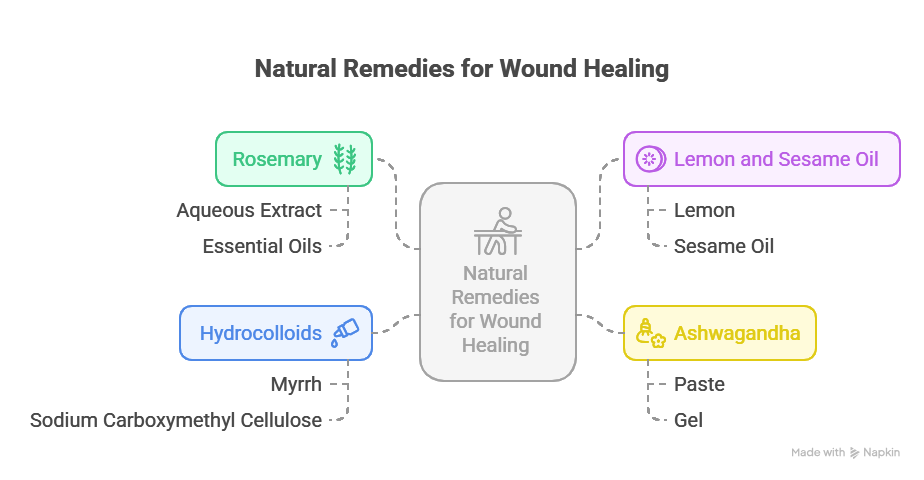
To ensure the absorption of the medications included in the formulation and their distribution to the intended sites, drug delivery methods have been developed. The most significant organ and outer part of the human body, the skin, is ideal for topical delivery of medicinal medicines because it may be targeted. The right mix of base and active chemicals would enable a variety of topical formulations that are appropriate for delivery of active substances (Zhao et al., 2024). Rosemary is one of the herbs that is most frequently used to treat cutaneous wounds. In BALB/c mice with alloxan-induced diabetes, they investigated the effectiveness of aqueous extract as well as essential oils. In the treated wounds, various elements of the diabetic wound healing process were noted, including decreased inflammation and improved wound contraction, re-epithelialization, granulation tissue regeneration, angiogenesis, and collagen deposition (Gwarzo et al., 2022).
According to one study, ointments prepared from lemon and sesame oil could be interesting alternatives for dressings for wounds to accelerate healing and promote tissue recovery (Fig.1). Lemon and sesame oil can assist with speeding up the healing process of acute wounds by blocking inflammatory cells and boosting the synthesis of new elastin and connective tissue in the healed area. The use of lemon juice and sesame oil topically promotes angiogenesis and epithelial cell regeneration, which aids in lesion healing and necrotic tissue elimination.
Ashwagandha (Withania somnifera) leaves, in paste and gel form, are utilized to study the wound-healing capabilities of excision and incision wound models in Wistar strain albino rats. Ashwagandha in both forms significantly increases wound contraction percentage, epithelialization length, and skin elasticity. When applied topically, Withania somnifera paste and gel exhibit anti-inflammatory, anti-oxidant, and antibacterial properties, which hasten wound healing and improve the quality of tissue granulation (Bhosale et al., 2023).
PRECLINICAL AND CLINICAL STUDIES
A randomized clinical trial compared the efficacy of A. vera cream to topical silver sulfadiazine for burn injuries. Randomized clinical studies. Silver sulfadiazine is used to inhibit microbial growth at the burn site, while also delaying wound healing. The assessments were correct since the plant A. vera has an extensive record of being utilized to treat minor burns. Research has shown that A. vera treatment reduces the time it takes for burn injuries to heal. When in comparison with silver sulfadiazine, the clinical investigation showed that the administration of A. vera shortened the healing period, all thirty patients (100%) of the A. vera group showed full wound healing in 19 days, while 80% in the silver sulfadiazine group did the same. After being treated with 3% or 1% A. vera, respectively, an in vitro investigation evaluating the impact of A. vera on skin fibroblasts as well as epidermal keratinocytes found a considerable acceleration of fibroblast and keratinocyte growth (Moses et al., 2023). In the HFD/STZ-induced diabetes type 2 model, hydrocolloid film dressings loaded with 0.5% Moringa oleifera aqueous extract of leaves showed the best promise for speeding up the healing of diabetic wounds across both complete-thickness excisions and partial-thickness abrasion wounds, with activity comparable to that of commercial Kaltostat dressings (Chin et al., 2019).
SAFETY, STANDARDIZATION, AND REGULATORY CONSIDERATIONS
For instance, in vitro cytotoxicity testing might reveal that a recently suggested gadget is cytotoxic, which could potentially hinder the healing of wounds (Fig. 2). A wound healing study in an animal model, which has similarities in wound healing between the proposed in vivo study and humans, may be asked to demonstrate significant similarity to help understand the potential implications of the in vitro cytotoxic effect and ascertain whether this might lead to delayed wound healing (Guan and Morabito, 2024). Quercetin provides several health benefits, including antiviral, anti-inflammatory, anti-proliferation, and wound-healing properties. It might have healing and protective qualities for the skin. Most people agree that quercetin is safe and well-tolerated. However, some research has suggested quercetin may have genotoxic consequences (Al‐Shuhaib & Al‐Shuhaib, 2025).
In order to ensure the consistency of product quality and biological activity, standardization is an essential step in the safety assessment of herbal resources and their products. Various thermogravimetric, liquid chromatographic, and spectroscopic methods can then be used, either singly or in combination, to accomplish standardization. Additionally, capillary electrophoresis and polarographic techniques are said to have helped standardize herbal medicines in wound healing. Chemically recognized ingredients called markers are employed in herbal medications to determine their therapeutic impact and maintain quality. They are pure, isolated substances that can be used as individual natural medications, since they possess secondary metabolites such terpene, steroids, alkaloid, and glycoside (Lamichhane et al., 2023).
The application of the Herb MaRS for herbal material quality assurance has been shown by research. Regarding the phytochemical standardization for most widely used medicinal herbs in Uganda, markers have been found. The following markers were chosen such aloin, aloe emodin, acemannan present in Aloe barbadensis, mangiferin, catechin, quercetin, and gallic acid found in Mangifera indica, and azadirachtin, nimbin, nimbidin occur in Azadirachta indica. This suggests that the Herb MaRS technique is only useful for plants which have undergone so much study that proof of their safety and effectiveness can be established (Kaggwa et al., 2023).
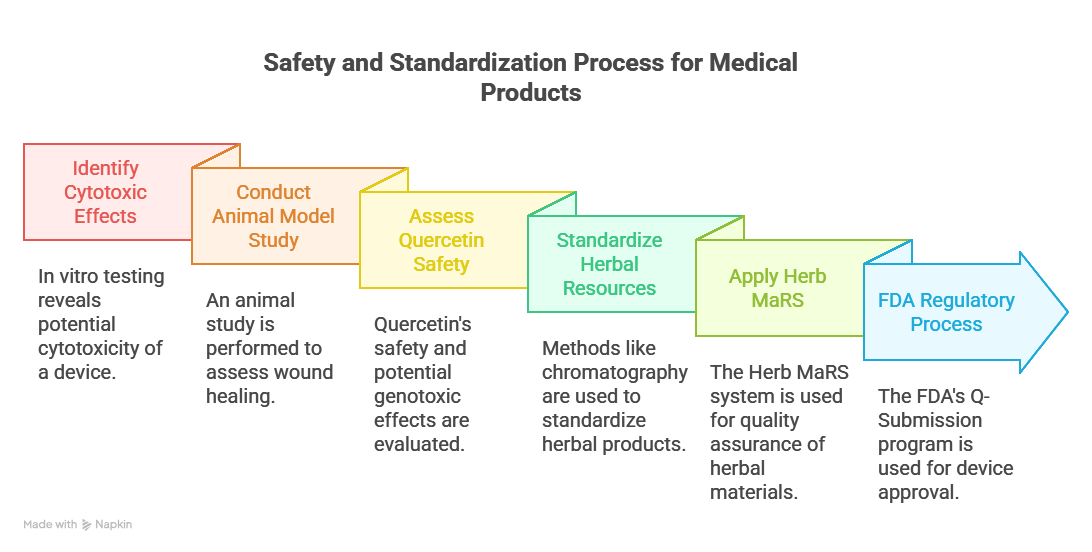
The FDA supports the development of novel, secure, and efficient medical goods as part of its mission to safeguard and advance public health. Before making large investments in data collection, medical device sponsors thinking about requesting marketing permission for a wound dressing regarding a novel or particular indication should think about using the Q-Submission program. The Center for Devices and Radiological Health (CDRH) of the US Food and Drug Administration (FDA) is in charge of regulating medical devices used for wound dressings (Kadakia et al., 2023).
INTEGRATION INTO MODERN WOUND CARE
Natural products, including extracts from plants (phytochemicals), as well as naturally derived substances (CAMs), have attracted a lot of attention from researchers. Due to their antioxidant, anti-inflammatory, angiogenic, and cell synthesis-modulating qualities, herbal remedies and naturally derived medicines have long been employed in wound healing. Herbal remedies are a key component of treatment in complementary healthcare systems like naturopathy and Ayurveda (Alkhatham et al., 2025).
Innovative methods utilizing cutting-edge technologies may aid in wound treatment. In the case of persistent wounds, cytokines and growth factors, which are crucial for wound healing, can be adjusted as needed. Through doing this, the unbalanced cytokine and growth factor production can be brought back to normal. Gene therapy may make it possible to transfer genes or messengers produced from genes that can heal wounds precisely to the area of the wound at predetermined intervals, in the desired dosage, and during a particular stage of healing (Ferreira et al., 2020).
Numerous studies have confirmed the benefits of mixing bioactive natural ingredients, such as rutin and quercetin, with synthetic and biopolymers in wound dressings to promote improved wound healing. In addition to solving the issues of synthetic polymers' poor patient compliance, lack of biocompatibility, and biodegradability, the combination of bio- with synthetic polymers may also solve the issue of bio-polymers' inadequate mechanical support. Although they have poor water solubility, quercetin and rutin are flavonoids possessing potent anti-inflammatory, antibacterial, and antioxidant properties. A novel bioactive electro-spun nanofiber membrane was found to be more effective than all other nanofiber membranes for burn injuries when quercetin and rutin were combined with polycaprolactone and chitosan oligosaccharides (Zhou et al. 2021).
FUTURE PERSPECTIVES
In order to provide better biological formulations for different dressings and scaffolds, wound treatment is still a topic of great interest within the medical community. Drug stability, targeted distribution, and prolonged release at wound sites can be enhanced using hydrogels loaded with herbs, bioengineered scaffolds, and nanoparticle-based carriers. Some of the most recent developments in the field include the delivery of localized nucleic acids for the treatment of chronic wounds that do not heal. Future developments in wound dressings should prioritize the application of more economical and environmentally friendly green approaches, in addition to enhancing the component materials efficacy. To increase the effectiveness of wound dressings, new synthetic polymer synthesis and more effective cross-linking techniques should be considered. In order to speed up the healing process, particularly in chronic wounds, bioactive compounds like growth factors or natural extracts are frequently added to formulations. Modern dressings can have a range of bioactive compounds added to them to improve their ability to heal. In addition to improving the efficacy of the treatment, 3D printing can boost patient compliance by enabling the creation of dressings with personalized parameters (Berger et al., 2021). This approach of wound healing offers numerous advantages while avoiding the drawbacks of standard coverings. Coordination among pharmacists, biotechnologists, and physicians is essential for converting laboratory results into clinically meaningful wound-healing formulations. To include plant-based drugs in normal wound care procedures, extensive clinical studies, extract consistency, and legislative improvement will be required.
References
- Acharya SK, 2025. Neem Leaf Extract in Wound Healing: Mechanisms and Efficacy. International Journal of Sciences and Innovation Engineering 2:822-830.
- Alkhathami AG, MY Alshahrani, SA Alshehri et al., 2025. Curcumin as a potential inhibitor of TGFβ3 computational insights for breast cancer therapy. Scientific Reports 15:2871.
- Al‐Shuhaib MBS & JM Al‐Shuhaib, 2025. Assessing therapeutic value and side effects of key botanical compounds for optimized medical treatments. Chemistry & Biodiversity 22:202401754.
- Berbudi A, AA Fadlillah, MA Afni et al., 2021. Effect of Curcuma longa crude extract, curcumin and nano curcumin-based gel topical administration on excised skin wound healing in Swiss-Webster Mice. Biomedical and Pharmacology Journal 14:635-641.
- Berger AG, JJ Chou & PT Hammond, 2021. Approaches to modulate the chronic wound environment using localized nucleic acid delivery. Advances in Wound Care 10:503-528.
- Bhosale SD, JA Mayya, HK Gowda et al., 2023. Wound healing activity of'Withania'leaf paste and its gel in Wistar albino rats-an experimental evaluation. Wound Practice & Research: Journal of the Australian Wound Management Association 31:182-189.
- Chen K, H Pan, D Ji et al., 2021. Curcumin-loaded sandwich-like nanofibrous membrane prepared by electrospinning technology as wound dressing for accelerate wound healing. Materials Science and Engineering: C 127:112245.
- Chin CY, PY Ng & SF Ng, 2019. Moringa oleifera standardised aqueous leaf extract-loaded hydrocolloid film dressing: in vivo dermal safety and wound healing evaluation in STZ/HFD diabetic rat model. Drug delivery and translational research 9:453-468.
- Deka B, B Bhattacharjee, A Shakya et al., 2021. Mechanism of action of wound healing activity of Calendula officinalis: a comprehensive review. Pharmaceutical and Biosciences Journal 28-44.
- Ferreira DW, C Ulecia-Moron, C Alvarado-Vazquez et al., 2020. CD163 overexpression using a macrophage-directed gene therapy approach improves wound healing in ex vivo and in vivo human skin models. Immunobiology 225:151862.
- Fuloria S, J Mehta, A Chandel et al., 2022. A comprehensive review on the therapeutic potential of Curcuma longa Linn. in relation to its major active constituent curcumin. Frontiers in Pharmacology 13:820806.
- Giostri GS, EM Novak, M Buzzi et al., 2022. Treatment of acute wounds in hand with Calendula officinalis L.: A randomized trial. Tissue Barriers 10:1994822.
- Guan A & J Morabito, 2024. Regulatory Considerations for Development of Wound Dressing Devices Used for Chemical and Radiation Injuries. Disaster Medicine and Public Health Preparedness 18:99.
- Gunasekaran S, AAJ Nayagam & R Natarajan, 2020. Wound healing potentials of herbal ointment containing Calendula officinalis Linn. on the alteration of immunological markers and biochemical parameters in excision wounded animals. Clinical Phytoscience 6:77.
- Gwarzo ID, SP Mohd Bohari, R Abdul Wahab et al., 2022. Recent advances and future prospects in topical creams from medicinal plants to expedite wound healing: a review. Biotechnology & Biotechnological Equipment 36:82-94.
- Jikah AN & GI Edo, 2025. Turmeric (Curcuma longa): an insight into its food applications, phytochemistry and pharmacological properties. Vegetos 38:845-866.
- Kadakia KT, SS Dhruva, C Caraballo et al., 2023. Use of recalled devices in new device authorizations under the US Food and Drug Administration’s 510 (k) pathway and risk of subsequent recalls. JAMA 329:136-143.
- Kaggwa B, G Anywar, EI Munanura et al., 2023. Application of the herbal chemical marker ranking system (Herb MaRS) to the standardization of herbal raw materials: a case study. BMC Complementary Medicine and Therapies 23:348.
- Khanam H & N Fatima, 2021. Pharmacological Screening for Burn Wound Healing Potential of Traditional Plant Cassia fistulia in Rats. Journal of Drug Vigilance and Alternative Therapies 1:19-28.
- Lamichhane S, BJ Sahariah, B Das et al., 2023. Herbal drug standardization: a systemic review. Journal of Drug Delivery and Therapeutics 13:149-153.
- Maji S & S Modak, 2021. Neem: Treasure of natural phytochemicals. Chemical Science Review and Letters 10:396-401.
- Massoud D, BM Alrashdi, M Fouda et al., 2023. Aloe vera and wound healing: a brief review. Brazilian Journal of Pharmaceutical Sciences 58:20837.
- Monkolval P, W Insuwan, J Nanuam, et al., 2021. Phytochemical and protein extraction of Golden shower tree (Cassia fistula). Asian Health, Science and Technology Reports 29:21-35.
- Moses RL, TA Prescott, E Mas-Claret et al., 2023. Evidence for natural products as alternative wound-healing therapies. Biomolecules 13:444.
- Mwangi RW, JM Macharia, IN Wagara et al., 2021. The medicinal properties of Cassia fistula L: A review. Biomedicine & Pharmacotherapy 144:112240.
- Singh R, H Khanam & J Pandey, 2023. The Biological Properties and Medical Importance of Cassia fistula: A Mini Review. Chemistry Proceedings 14:95.
- Vitale S, S Colanero, M Placidi et al., 2022. Phytochemistry and biological activity of medicinal plants in wound healing: an overview of current research. Molecules 27:3566.
- Zeng WM, A Parus, CW Barnes et al., 2020. Aloe vera mechanisms of action, uses, and potential uses in plastic surgery and wound healing. Surgical Science 11:312.
- Zhao L, J Chen, B Bai et al., 2024. Topical drug delivery strategies for enhancing drug effectiveness by skin barriers, drug delivery systems and individualized dosing. Frontiers in Pharmacology 14:1333986.
- Zhou L, L Cai, H Ruan et al., 2021. Electrospun chitosan oligosaccharide/polycaprolactone nanofibers loaded with wound-healing compounds of Rutin and Quercetin as antibacterial dressings. International journal of biological macromolecules 183:1145-1154.