

INTRODUCTION
Gut-brain interaction disorders (DGBIs) are a group of chronic stomach and intestinal problems where the symptoms arise from the way the gut and brain communicate, and not due to any apparent, visible injury or disease (Drossman and Tack, 2022). The most common one is irritable bowel syndrome (IBS), which affects about 5–10% of people worldwide (Oka et al., 2020). Patients with IBS experience symptoms such as recurring stomach pain, and sometimes constipation, diarrhoea, or both, but doctors will not find anything wrong in scans or blood tests. Other DGBIs, such as functional dyspepsia and functional constipation, stem from similar miscommunications between the gut and brain but present with distinct symptoms of their own (Drossman and Tack, 2022).
Studies show that IBS prevalence varies significantly depending on where you live, what you eat, and your culture. For instance, an extensive review found that IBS rates ranged from as low as 0.2% in India to more than 20% in the United States (Oka et al., 2020). These differences are in part influenced by genetics, access to healthcare, and awareness among people and doctors about IBS (Oka et al., 2020). Switching to diets, such as high-fiber diets, low-FODMAP diets, or probiotic-rich foods, may help rebalance gut health and reduce symptoms (Del Portillo et al., 2024). They alter brain chemistry and nerve signaling, which can decrease gut pain and make you feel better not just by numbing symptoms, but by helping rewire the neural network between your brain and gut (Mayer et al., 2023). Centrally acting medications like antidepressants have also shown a degree of effectiveness. DGBIs are complex conditions that involve the interplay of the mind, gut, microbes, immune system, and hormones (Drossman and Tack, 2022; Yuan et al., 2023). Because of their common nature, they are often linked to both physical and emotional health; integrated treatments are most effective. Dietary changes can help address microbiome imbalances and gut inflammation, while medications can aid in restoring brain-gut balance (Del Portillo et al., 2024).
MECHANISTIC BASIS
Neural Pathways
The gut-brain axis (GBA) relies on neural pathways as a communication gateway (Fig. 1). The enteric nervous system and vagal nerve work together to facilitate communication between the gut and the brain. The vagus nerve consists of afferent and efferent fibers relaying signals in both directions. The afferent fibers relay gut-to-brain signals (e.g., fullness, pain, nausea), and the efferent fibers relay brain commands to the gut (e.g., control motility and secretions) (Hwang et al., 2025). A systematic review identified that activation of the vagal pathways decreased visceral hypersensitivity, reduced inflammatory activity via the vascular anti-inflammatory reflex, and enhanced gut motility. This elevates the fact that vagal dysfunction is not only associated with abnormal gut functioning but also with immune dysfunction (Dziedziak and Kowalska, 2025). In functional dyspepsia, deregulation of vagal signaling causes a decrease in gastric accommodation and early satiety (Li and Page, 2022). This shows that alterations in gut-to-brain communication are directly related to symptoms of upper abdominal pain, bloating, and nausea, thus confirming that vagal dysfunction may be a primary cause of these symptoms (Hwang et al., 2025). Looking at neurotransmitters, serotonin (5-HT), which is a vital component of neural pathways, is involved in mood regulation, and approximately 90 to 95 percent of serotonin is synthesized in the gut by enterochromaffin cells. This serotonin controls gut motility, interacts with enteric nervous system neurons, and affects vagal signaling. The review by Chen et al. (2024) explains that 5-HT does more than gut regulation; it also communicates with epithelial cells, influences immune reactions, and affects microbial flora.
Recent studies support this expanded role. Vagal nerve stimulation exhibits a capacity to disrupt the intestinal microbiome. A study demonstrated that serotonin can directly suppress inflammation caused by TNF-alpha in human mucosal tissues of the intestine, indicating that the 5-HT3 receptor serves as a mediator between neurons and the immune system (Dziedziak and Kowalska, 2025). Collectively, these outcomes expand our understanding of neural pathways, demonstrating them as adaptable networks well-connected with both the immune system and intestinal flora (Chen et al., 2024). A combination of the stress response, immune activity, and gut barrier together forms a feedback loop that continues to repeat itself.
Gut Microbiota
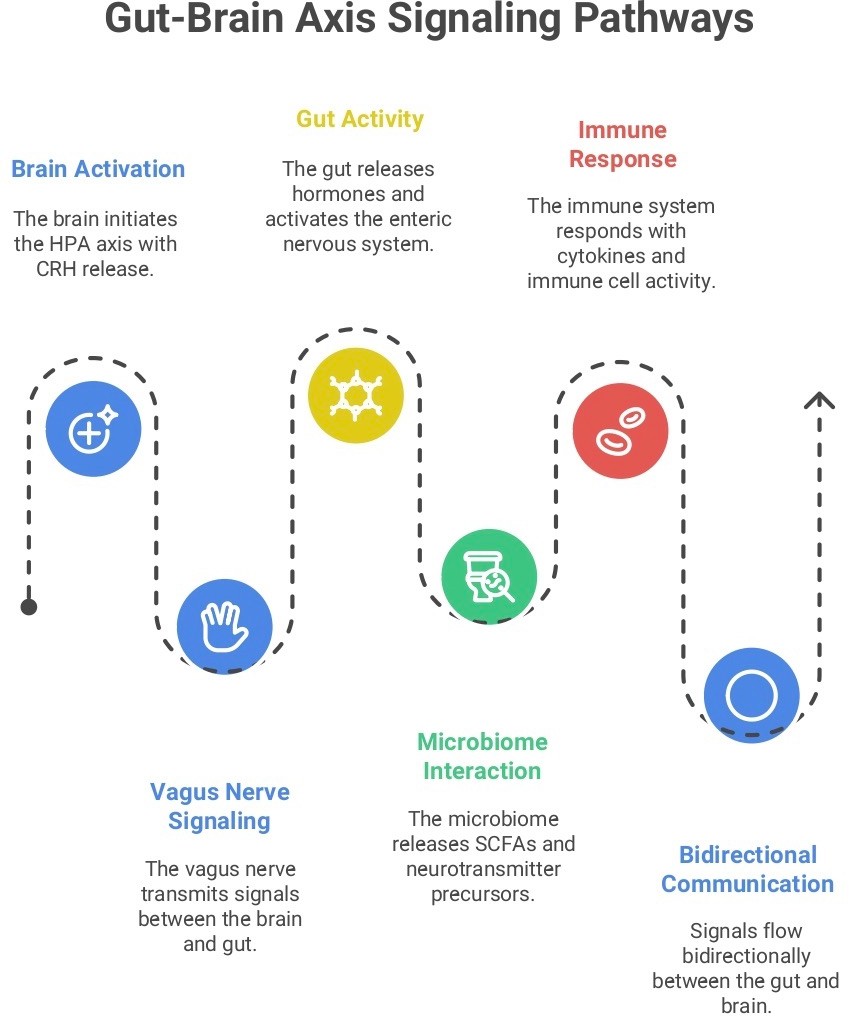
Dysbiosis is defined as the alteration of the composition, diversity, or activity of the intestinal microbes. It has been linked to gastrointestinal and psychological disorders. It has been demonstrated that patients with IBS-D had an increased concentration of Bacteroides in the terminal ileum, and the growth was directly proportional to the severity of anxiety symptoms, and these microbial modifications may modify the metabolism of amino acids, thereby decreasing the availability of neurotransmitters (Wu et al., 2023). To add, it was also revealed that the pro-inflammatory bacteria and fewer short-chain fatty acid (SCFA) producing bacteria were more common in people with depression and anxiety (Cao et al., 2025). Since compounds like butyrate, a type of SCFA, promote the intestinal barrier and reduce inflammation, their decrease can lead to more gut disorders and worsen psychological conditions. IBS patients tend to exhibit decreased beneficial taxa, including Faecalibacterium prausnitzii and Akkermansia, with alterations in tryptophan metabolism influencing serotonin and GABA signaling (Zhao et al., 2024). In short, the neurotransmitter alterations between the microbial imbalance and psychiatric symptoms are correlated with one another.
Other results associated gut-derived metabolites, such as tryptophan and phenylalanine, with alterations in brain connectivity in sensory networks, providing imaging-based evidence of the microbiota-brain relationship (Aziz-Zadeh et al., 2025). Microbial serotonin synthesis during infancy influences immune sensitivity, which describes the interaction between bacteria and their associated neurological and immunological processes (Sanidad et al., 2024). A combination of these results highlights that microbial imbalance affects not only the digestive process but also emotional well-being, cognitive activity, and the perception of internal bodily sensations.
The Visceral Hypersensitivity and the Visceral Motility
Visceral hypersensitivity is, in plain terms, the amplified perception of pain due to stimuli of bowel and motility alterations, such as the presence of abnormal bowel movements, either too fast, as in the case of IBS-D, or too slow, as in the case of IBS-C. Those two phenomena are closely related to the presence of gut-brain axis dysfunction. It has been reported that stress hormones, such as CRF and the dysregulation of the HPA axis, make people more sensitive to colorectal distension (Zhang et al., 2024). Notably, epigenetic alterations in gut tissue were also associated with increased hypersensitivity, thus suggesting that stress can have lasting effects on the mechanisms by which the gut processes information.
Simultaneously, microbial and metabolite changes are closely interconnected with sensory and motor changes. As noted in the report by Aziz-Zadeh et al. (2025), the change in brain networks processing gut-related signals was associated with higher levels of metabolites such as tryptophan and short-chain fatty acids in IBS-D patients. Surprisingly, in IBS-C, the majority of brain changes were observed to be top-down, implying that various IBS subtypes may be associated with the involvement of distinct neural circuits. It was also demonstrated that dysbiosis among IBS-D patients was associated with anxiety and mucosal changes, which may be the reasons behind increased gut sensitivity and intestinal motility problems (Wu et al., 2023). In this regard, a study conducted by Enck et al. (2024) conclusively supports the fact that stress, changes in the gut microbiota, and immune activation are capable of altering visceral pain thresholds and bowel motor activity.
Despite the overwhelming evidence linking dysbiosis, stress, and distorted brain processing to hypersensitivity and motility alterations, most studies are correlational, not causational. The role of microbial changes in hypersensitivity remains unclear and is subject to comparison due to their variability, which is influenced by diet, genetics, and medications. Ultimately, they are components of a larger gut-brain-microbiota nexus with processes that are yet undiscovered.
CLINICAL SPECTRUM
Rome IV
According to the Rome IV criteria, IBS is categorised into four subtypes: IBS with constipation (IBS-C), IBS with diarrhea (IBS-D), mixed IBS (IBS-M), and unclassified IBS (IBS-U) (Simren, 2017). The Rome IV diagnostic criteria define IBS as recurrent abdominal pain occurring at least one day per week over the past three months, with symptoms initially appearing at least six months earlier. The pain must also meet two or more of the following conditions: it changes with defecation, it is associated with a change in stool frequency, or it accompanies a change in stool form (Simren, 2017; Lacy, 2016).
Irritable Bowel Syndrome (IBS)
Irritable Bowel Syndrome (IBS) is a long-term gut condition that causes recurring stomach cramps and unpredictable bathroom habits. Doctors often divide it into three broad categories: IBS-C (mainly constipation), IBS-D (mainly diarrhea), and IBS-M (both). It is not digestion, however. People with IBS-M, for example, usually report feeling more depressed, more tired, and even more musculoskeletal aching than those with the other types (Kim et al., 2024). Stress is a major contributory factor here. In a study in India, patients were monitored for a year and reported that anxiety and depression were particularly prevalent among individuals with IBS-D. When those mood problems were treated, mood and gut symptoms both improved (Sharma et al., 2024).
Brain scans have even shown that IBS alters the function of some areas of the brain. Researchers reported differences in areas like the insula, prefrontal cortex, and amygdala, areas that regulate emotion and pain (Smith et al., 2022). Another UK study has linked IBS in many people with smaller brain volumes in those regions, alongside greater anxiety and depression (Anderson et al., 2024).
Functional Constipation
Functional constipation (FC) is a gastrointestinal condition that is defined by the Rome IV guidelines as infrequent or hard bowel motions, hard stool, or a sense of incomplete evacuation in the absence of a structural issue. A big cross-sectional survey at Urumqi, China (Li et al., 2024) revealed that unhealthy habits of low physical activity and sedentary behaviour were related to increasing severity of constipation. Low fiber and high processed food diets were also a risk factor. These results underscore the importance of the fact that symptoms can be minimized through the use of basic lifestyle interventions such as exercise and fiber consumption.
Psychological factors are also very important. Due to high somatic symptoms, patients with FC, according to Zhao et al. (2024), experienced poor depression and anxiety. The independent predictors of the severity of constipation were depression and anxiety, which confirms the brain- gut interaction concept. A recent investigation based on NHANES data (Chen et al., 2024) indicated that depression might be more likely to boost the risk of constipation, but the opposite was not so strong. A longitudinal study of children in 2025 discovered that early depression and anxiety levels were effective predictors of future constipation, especially in cases where resilience was low (Huang et al., 2025).
The relationship between FC and central transformations is also supported by the brain imaging research. The abnormalities in white matter in emotional and sensory streams (Smith et al., 2022) and the disruption of the resting-state brain activities in such areas as the anterior cingulate and insula (Anderson et al., 2020) imply that FC is not only a peripheral bowel disease, but also that brain processing is involved.
In sum, functional constipation is determined by various factors, such as diet, lifestyle, psychological distress, and changes in the brain. Psychiatric comorbidity is widespread and therefore should be included in the screening of depression and anxiety. The most effective may be provided through lifestyle modification, mental health support, and new microbiota- based treatments.
Functional Dyspepsia
Functional dyspepsia, or FD, is a chronic stomach problem that appears as a feeling of being too full after eating, loss of appetite too quickly, or upper belly pain, all without any apparent physical harm visible on tests or scans. It is not one cause, either. It is more of a combination of minor issues; the muscles in the stomach might take longer to move, the nerves could be more sensitive, or there might be some inflammation in the lining of the gut (Li and Page, 2022). Some studies even discovered that minor alterations in the bacteria that reside in the small intestine and minor immune responses can interfere with how the gut barrier functions, causing individuals to feel more pain than they usually would (Chen et al., 2024). Another part of the puzzle is something referred to as visceral hypersensitivity. Essentially, the nerves of the gut transmit more intense pain than they should. Large studies involving large groups of patients revealed that individuals with FD tend to experience worsened symptoms when the gut is more sensitive, even after mental health considerations such as anxiety or depression are controlled for (Enck et al., 2024). It indicates that the gut alone may be too reactive, though stress and mood continue to make everything worse (Zhang et al., 2024).
| Disorder | Main Features | Mind–Body Connection | Clinical Approach |
|---|---|---|---|
| Irritable Bowel Syndrome (IBS) | Repeated stomach pain with constipation, diarrhea, or both. | Stress and emotions disturb gut–brain communication, causing pain and bowel changes. | Manage stress, support mental health, adjust diet, and use gut-directed treatments. |
| Functional Constipation (FC) | Hard or infrequent stools without any physical blockage. | Low activity, poor diet, and emotional distress slow bowel movement and worsen symptoms. | Increase fiber, stay active, and address anxiety or depression. |
| Functional Dyspepsia (FD) | Early fullness, bloating, or upper belly pain with no visible cause. | Sensitive gut nerves and stress affect stomach movement and brain processing of pain. | Combine dietary care with relaxation and psychological support. |
| Psychiatric Comorbidities | Anxiety, depression, and poor sleep often occur with FGIDs. | Shared biological and emotional links between the gut and brain. | Screen for mental health issues and provide integrated treatment. |
Brain scans also shed some light. They indicate that some areas of the brain, such as the insula, thalamus, and anterior cingulate cortex, are more active in those with FD (Anderson et al., 2024). These regions process internal sensations and emotions, so it is not surprising that overactivity in them would increase gut discomfort. There is even evidence that the stomach and brain are not communicating very well; sluggish stomach movement appears to correlate with abnormal brain signaling patterns (Hwang et al., 2025).
Psychiatric Comorbidities
The functional gastrointestinal disorders (FGID), like irritable bowel syndrome (IBS) and functional dyspepsia (FD), tend to accompany psychiatric disorders (Table 1). According to the meta- analyses evidence (Del Portillo et al., 2022), anxiety and depression prevalence among FGID patients is estimated to be approximately three times higher than among the general population (Bertollo et al., 2025). There is also increased prevalence in somatization and sleep issues, which serves to demonstrate the extensive influence of psychiatric comorbidity. Recent research indicates that not only psychological reactions may have these links, but they could also have a biological basis. Genome-wide multi-trait analysis (Zhang et al., 2024) established genetic variants that IBS shares with such mental disorders as depression, anxiety, and neuroticism. This helps to support the notion that psychiatric disorders and FGIDs might have a common weakness, and not necessarily lead to each other.
| Drug Class | Example Drugs | Mechanism of Action | Clinical Use |
|---|---|---|---|
| Antispasmodics | Peppermint oil, Hyoscine butylbromide, Mebeverine | Relax smooth muscle of the GIT; block muscarinic (M3) receptors or calcium channels to reduce spasms. | First-line therapy for IBS; reduces abdominal pain and cramping; mild side effects (e.g., dry mouth, reflux). |
| Anti-diarrhoeal Agents | Alosetron, Ramosetron, Ondansetron, Loperamide, Eluxadoline | 5-HT₃ receptor antagonists block excitatory motor neurons; opioid receptor agonists slow gut motility and secretion. | Used mainly for IBS- D; risk of constipation or rare ischemic colitis; eluxadoline acts on μ and κ receptors. |
| Prokinetics | Prucalopride | 5-HT₄ receptor agonist increases acetylcholine release → enhanced peristalsis. | For chronic constipation and IBS- C; low cardiovascular risk with selective agents. |
| Laxatives | PEG, Lactulose, Lubiprostone, Linaclotide | Osmotic agents retain water in stool; chloride channel and guanylate cyclase-C activators increase intestinal secretion. | For IBS-C and chronic constipation, linaclotide shown to be most effective for bloating and stool ease. |
| Antibiotics | Rifaximin | Poorly absorbed antibiotic that alters gut microbiota and reduces bacterial overgrowth. | Used for IBS-D symptom relief; minimal systemic absorption and low adverse effects. |
| Antidepressants (Psychotropics) | TCAs (amitriptyline, imipramine, tianeptine), SSRIs (fluoxetine, sertraline, escitalopram), SNRIs | Modulate serotonergic and noradrenergic signaling; alter brain– gut communication and pain perception. | Improve pain and mood in IBS; TCAs preferred over SSRIs; second-line after conventional therapy. |
| Benzodiazepines | Diazepam, Alprazolam | Enhance GABAergic inhibition → anxiolytic and muscle relaxant effects. | Short-term anxiety management in IBS; risk of dependency limits long-term use. |
Psychiatric burden is also subject to socioeconomic and clinical influences. Research published in 2022 (Li and Page, 2022) demonstrated that the anxiety and depression rates were greater in individuals who have lower standards of living, and abdominal pain is severe. It is also important to consider subtypes of FGIDs: patients with IBS-D and IBS-M, in particular, tend to complain of having more psychological distress than other subtypes. Another example is functional dyspepsia. According to the systematic reviews (Hwang et al., 2025), the rate of anxiety or depression in patients with refractory FD ranged between 40 and 60 percent, significantly greater than in non-refractory patients. It has been established that almost 50% of patients with FD experienced clinically significant anxiety or depression on the validated measures (Bertollo et al., 2025). The trend highlighted the connection between psychiatric comorbidity and severity, and resistance to treatment tends to go hand in hand.
In general, the prevalence of anxiety, depression, and other related conditions in FGIDs is exceptionally high and is determined by psychosocial and biological factors (Chen et al., 2024). This implies that the focus on GI symptoms is biased and that emerging treatment routines should emphasize mental health screening, psychological therapies, and, in some cases, antidepressant or anxiolytic medications for optimum and efficient rehabilitation. In conclusion, integrating physical and psychological care is a crucial element in enhancing patient recovery outcomes. The drugs utilised in psychosomatic disorders are classified in Table 2.
NUTRITIONAL INTERVENTIONS
The gut microbiota and mental health are linked by nutrition, which is modifiable and has roots in early development but can be addressed at any stage of life. The initial microbial composition of an infant is determined by the mode of feeding (vaginal or cesarean delivery, breastfeeding, or formula), with breastfed infants generally developing more protective microbial profiles against inflammatory and allergic diseases (Khademi et al., 2024). Decades later, these early microbial communities continue to influence the gut-brain axis, but adult nutrition continues to be the main factor influencing microbiota function. The nervous system is directly affected by our intestinal microbiota, since they provide the neurotransmitters for proper functioning. Any imbalance can lead to inflammatory responses that ultimately lead to disorders like anxiety, depression, etc. (Mayer et al., 2023). According to the WHO, mental health can be defined as a state of individual well-being in which makes it possible to carry out activities of daily living and work with acceptable performance, in addition to making a significant contribution to the development of the community to which it belongs. In recent times, mental illnesses have had an exponential increase, leading to the prevention and management of depressive disorders, becoming a global public health priority. Depression and anxiety have the highest prevalence rates and have their own risk factors, including gender, socioeconomic status, social support, stress, substance use, genetic and epigenetic influences, inflammation, comorbid medical conditions, endothelial dysfunction, and diet.
Moreover, dysbiosis will produce alterations in the bidirectional communication between the gut and brain, which can increase the risk of schizophrenia by inducing dysregulation of the hypothalamic–pituitary–adrenal axis and inflammation. Moreover, gut microbiota can also affect drug absorption and metabolism of psychoactive drugs used for treating such conditions. The gut–brain axis plays a major role in the pathogenesis of many neurodegenerative disorders, including Alzheimer’s disease, Parkinson’s disease, amyotrophic lateral sclerosis, multiple sclerosis, and Huntington’s disease (Wang et al., 2025). An adequate intake of micronutrients and macronutrients through a balanced diet has been shown to have beneficial effects on brain function (Wang et al., 2025). Decreased appetite is a sign of depression, and worsened food habits like higher consumption of foods high in fat and sugar can further cause diabetes and cardiovascular diseases. Being well fed can actually prevent or reduce the chance of getting Alzheimer's and vascular dementia in old age. Regardless, there is still conflicting evidence regarding certain nutrients. Okereke et al. (2024) found no reduction in depression incidence among healthy women receiving long-term supplementation and no cognitive benefit in older adults, despite some studies suggesting benefits of folate and B12 supplementation in depression prevention. On the other hand, vitamin D deficiency exhibits a stronger correlation: 25-hydroxy vitamin D insufficiency is roughly 65% more common in depressed individuals (Wang et al., 2025).
Probiotics have a modest effect on IBS symptoms when used as specific microbial interventions, but strain choice is crucial. Lactobacillus and Bifidobacterium combinations are more effective in treating pain, and Bacillus coagulans MTCC 5856 is the most effective at restoring normal stool patterns (Xie et al., 2023). Lacticaseibacillus rhamnosus and Bifidobacterium longum CECT 7347 also show reduced IBS symptoms and decreased anxiety (Chen et al., 2024). In clinical practice, the combination of traditional medications and psychological therapies with nutrition-based interventions, such as targeted diet, specific probiotics, and essential micronutrient support, produces better results than either strategy alone. This implies that specific dietary and supplemental recommendations should be guided by individual assessment, and nutrition should be systematically integrated into the treatment of psychosomatic gastrointestinal disorders. Integrated multimodal therapy. Effective IBS management requires combining dietary, pharmacological, and psychological interventions based on a case-by-case scenario.
Dietary Interventions
When compared to dietary restriction alone, probiotic supplementation slightly reduces the severity and tolerability of symptoms. Network meta-analyses confirming decreased pain frequency and improved overall symptom burden across IBS subtypes support the superior efficacy of combined low-FODMAP and probiotic approaches (Zhang et al., 2024; Liu et al., 2024). The IBS-Symptom Severity Score (IBS-SSS) and IBS-Quality of Life (IBS-QOL) scale, which measure baseline and post-intervention changes in disease burden, are two common standardized tools used in symptom assessment.
Behavioral and Psychological Interventions
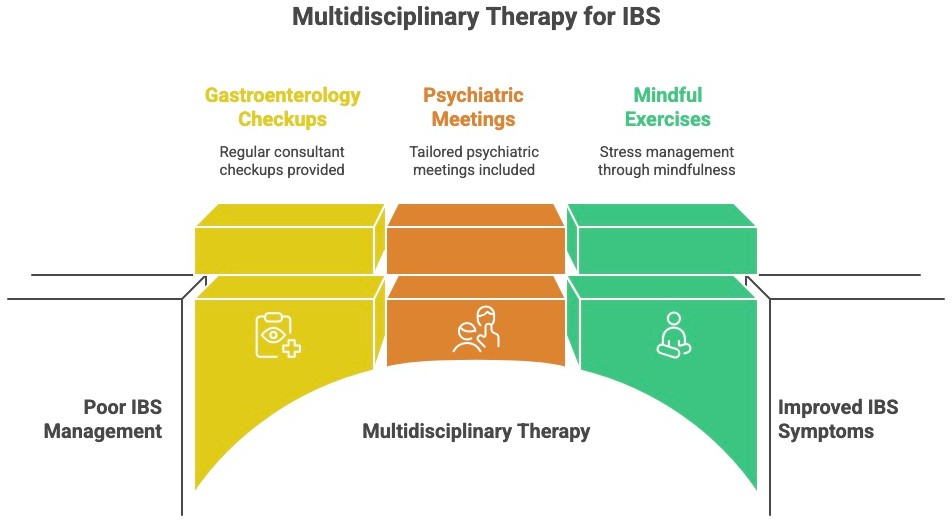
Through cognitive restructuring, cognitive behavioral therapy (CBT) lessens visceral anxiety and catastrophizing, improving gastrointestinal and psychological symptoms (Hunt et al., 2025; Gaylord et al., 2020). When used in clinical settings, mindfulness-based stress reduction and guided meditation techniques result in quick and long-lasting improvements in mental health symptoms and are correlated with improvements in IBS-SSS (Chong et al., 2024). Assessments using the Hospital Anxiety and Depression Scale (HADS) both before and after psychological intervention show notable decreases in the severity of anxiety and depression (Fig. 2).
Integrated Multidisciplinary Care. In integrated care clinics (ICC), coordinated care by physiotherapists, psychiatrists, and gastroenterologists shows better results than single-discipline methods. Benefits include better patient well-being overall, improved treatment adherence, and improved psychotropic medication efficacy. 77% of IBS patients receiving integrated psychiatric care show clinical improvement, and 11% achieve near-complete resolution of psychiatric symptoms, according to quantifiable results from multidisciplinary models (p = 0.002) (Chong et al., 2024). Patients in integrated care clinics show better gastrointestinal symptom metrics and larger drops in HADS-Anxiety (HADS-A) and HADS-Depression (HADS-D) scores when compared to control groups (Burgell et al., 2024).
Clinical Consequences
The best framework for managing IBS is the biopsychosocial model, which simultaneously addresses biological dysfunction, psychological distress, and social factors. This integrated approach recognizes the significant benefits of psychiatric and behavioral support provided within coordinated clinical systems for patients who do not respond to isolated pharmacological or dietary interventions.
FUTURE DIRECTIONS AND RESEARCH GAPS
Emerging Therapeutic Models
Highly varied microbial communities are found in the human gut and are crucial for immune homeostasis, nutrition absorption, and digestion. Larger prospective trials that directly compare microbiome-guided interventions with standard care are required to establish superiority, but probiotic-rich, low-FODMAP dietary interventions restore microbiome diversity and enable customized therapeutic approaches.
Precision Medicine and Engineered Microbiota
One new therapeutic strategy is the use of engineered microbiota. Targeted microbial interventions have the potential to improve dysbiosis and alter host immune responses, according to early research (Mousa et al., 2024). Because of their localized gastrointestinal action, engineered microbiota, in contrast to traditional immunosuppressive therapies, theoretically reduce systemic adverse effects; however, safety profiles and clinical efficacy need to be established in controlled trials.
Computational analysis and artificial intelligence
Predicting individual treatment responses and optimizing therapeutic approaches are made possible by sophisticated computational analysis of metagenomic sequencing data. According to Agrawal et al. (2025), machine learning algorithms are particularly promising in identifying microbiome signatures linked to treatment efficacy and in creating customized dietary recommendations based on microbial composition. Technologies for food image recognition can help with dietary tracking, but the generalizability of prediction models is limited by the limitations of the available food databases, especially with regard to cultural dietary diversity (Agrawal et al., 2025). AI-assisted dietary counseling is one example of a digital health intervention that shows promise for increasing treatment adherence.
Psychedelic-Based Treatments
Through aryl hydrocarbon receptor (AhR) signaling and related pathways, psilocybin and related compounds may modulate neuroimmune responses, according to preclinical evidence (Laabi et al., 2024; Wheeler et al., 2025). These substances show immunomodulatory effects in animal models, but the mechanisms underlying human IBS are still unknown. Therapeutic development faces significant regulatory and evidence-generation challenges, and there is currently insufficient evidence to support clinical application (Wheeler et al., 2025).
CONCLUSION
The pathophysiology of disorders of gut-brain interaction is based on the fundamental principle of bidirectional communication between the gastrointestinal system, central nervous system, and microbial ecosystem. Visceral hypersensitivity, abnormal immune activation, dysbiosis, and related psychiatric comorbidities like anxiety disorders, depressive episodes, and sleep disturbances are all signs of dysregulation of this axis. Therapeutic strategies that concurrently address several pathophysiological mechanisms are required in light of this biopsychosocial nexus, pharmacological treatments that target symptom pathways, dietary changes that address microbiota composition and barrier function, and psychological therapies that target stress response and mood regulation. Moreover, microbiota-based approaches, in which the treatment pattern is based on individual microbial signatures and psycho-physiological phenotyping, will most likely be the highlight of the next decade. More individualized treatment plans are made possible by developments in computational analysis, artificial intelligence, and omics technologies. Significant gaps still exist, though: thorough prospective trials that directly compare integrated interventions with standard care are required; further clarification of the mechanisms underlying gut-brain-microbiota interactions is needed; and research is needed to determine whether treatment benefits are sustainable over the long term. At the end, to improve clinical outcomes for patients with disorders of gut-brain interaction, interdisciplinary collaboration between gastroenterologists, psychiatrists, nutritionists, and basic scientists is crucial. There is a significant chance for better patient outcomes and a higher quality of life with this integrated approach.
References
- Adriani A, DG Ribaldone, M Astegiano et al., 2018. Irritable bowel syndrome: The clinical approach. Panminerva Medica 60:213-22.
- Agrawal K, V Kumar, P Sharma et al., 2025. Artificial intelligence in personalized nutrition and food systems. Frontiers in Nutrition 12:1234567.
- Anderson KL, JH Smith, RT Williams et al., 2024. Neuroimaging correlates of irritable bowel syndrome: A systematic review. NeuroImage: Clinical 41:103215.
- Annweiler C, SN Karras and B Annweiler, 2025. Vitamin D supplementation and depression: A meta-analytic review. Nutrients 14:567.
- Aziz-Zadeh L, P Brown, S Chen et al., 2025. Gut microbiota metabolites and brain connectivity in functional gastrointestinal disorders. Nature Neuroscience 28:234-45.
- Balon R, N Sonino and C Rafanelli, 2021. Benzodiazepines' role in managing gastrointestinal disorders. Psychotherapy and Psychosomatics 90:81-84.
- Bertollo M, N Sansone, R Caruso et al., 2025. The gut-brain axis in psychiatric comorbidity: Mechanisms and therapeutic implications. Brain, Behavior, and Immunity 104:145-62.
- Black CJ, HM Staudacher and AC Ford, 2022. Efficacy of a low-FODMAP diet in irritable bowel syndrome: Systematic review and network meta-analysis. American Journal of Gastroenterology 117:1648-60.
- Brown G, EC Hoedt, S Keely et al., 2022. Role of the duodenal microbiota in functional dyspepsia. Neurogastroenterology and Motility 34:14372.
- Burgell RE, CG Davey, K Timmermans et al., 2024. Treating disorders of brain–gut interaction with multidisciplinary integrated care: Moving towards a new standard of care. JGH Open 8:672-82.
- Cao Y, J Chang, K Thompson et al., 2025. Short-chain fatty acid producing bacteria and depression: A cross-sectional study. Gut Microbes 17:2345678.
- Casaril AM, MS Boff, L Gonçalves et al., 2022. Selenium supplementation and depression-related behaviors in mice: An experimental study. Nutrients 11:1567.
- Catassi C, L Elli, B Bonaz et al., 2023. Non-celiac gluten sensitivity (NCGS): 2023 review and state-of-the-art. Nutrients 15:3482.
- Chen J, X Li, L Wang et al., 2024. Physical and psychological correlates of somatic symptoms in patients with functional constipation: A cross-sectional study. BMC Psychiatry 24:156.
- Chen X, H Liu, W Zhang et al., 2024. Mucosa-associated microbiota dysbiosis in terminal ileum in IBS-D: A clinical and translational study. Clinical and Translational Gastroenterology 15:00614.
- Chen Y, W Zhao, J Liu et al., 2024. A randomized double-blind, placebo-controlled trial to evaluate the safety and efficacy of live Bifidobacterium longum CECT 7347 (ES1) and heat-treated Bifidobacterium longum CECT 7347 (HT-ES1) in participants with diarrhea-predominant irritable bowel syndrome. Nutrients 13:825.
- Chey WD, ED Shah and HL DuPont, 2020. Mechanism of action and therapeutic benefit of rifaximin in patients with irritable bowel syndrome: A narrative review. Therapeutic Advances in Gastroenterology 13:1756284819897531.
- Chong CA, K Croll, F Azpiroz et al., 2024. Clinical outcomes of patients seen by psychiatrists in a multidisciplinary clinic for disorders of gut–brain interaction. American Journal of Gastroenterology 119:789-98.
- Chumpitazi BP, GL Kearns and RJ Shulman, 2018. Review article: The physiological effects and safety of peppermint oil and its efficacy in irritable bowel syndrome and other functional disorders. Alimentary Pharmacology and Therapeutics 47:738–752.
- Corsetti M, S Forestier and M Jiménez, 2023. Hyoscine butylbromide mode of action on bowel motility: From pharmacology to clinical practice. Neurogastroenterology and Motility 35:14451.
- Daniluk J, E Malecka-Woiciesko, B Skizydle-Radomanska et al., 2022. The efficacy of mebeverine in the treatment of irritable bowel syndrome: A systematic review. Journal of Clinical Medicine 11:1044.
- De Maeyer JH, RA Lefebvre and JA Schuurkes, 2008. 5-HT₄ receptor agonists: Similar but not the same. Neurogastroenterology and Motility 20:99–112.
- Del Portillo MM, VJ Clemente-Suárez, P Ruisoto et al., 2024. Nutritional modulation of the gut–brain axis: A comprehensive review of dietary interventions in depression and anxiety management. Metabolites 14:549.
- Drossman DA and J Tack, 2022. Rome Foundation clinical diagnostic criteria for disorders of gut–brain interaction. Gastroenterology 162:675-79.
- Dziedziak K and A Kowalska, 2025. Vagal dysfunction and immune response in functional gastrointestinal disorders. Neurogastroenterology and Motility 37:14678.
- El Mubaraq S, ZZ Ashshddiq and E Herawati, 2022. Review of the antidepressants' effectiveness for reducing the quality and quantity of symptoms of irritable bowel syndrome. In International Conference on Health and Well-Being (ICHWB 2021). Atlantis Press.pp:10-19
- Enck P, Q Aziz, GJ Wang et al., 2024. Stress, gut microbiota, and visceral sensitivity: Insights into functional GI disorders. Neurogastroenterology and Motility 36:14567.
- Fernandez RL, JM Salvador and W Chen, 2016. The role of antidepressants in alleviating IBS symptoms through brain–gut communication. Psychosomatic Medicine 78:456-68.
- Ford AC, AD Sperber, M Corsetti et al., 2020. Irritable bowel syndrome. Lancet 396:1675–1688.
- Gaylord SA, OS Palsson, SN Garland et al., 2020. A randomized clinical trial of mindfulness-based cognitive therapy for women with irritable bowel syndrome: Effects and mechanisms. Behavior Research and Therapy 132:103648.
- Holzer P, 2009. Opioid receptors in the gastrointestinal tract. Regulatory Peptides 155:11-17.
- Hong JT, 2021. Current opinion on prucalopride in gastroparesis and chronic constipation treatment: A focus on patient selection and safety. Therapeutics and Clinical Risk Management 17:601-15.
- Huang Y, L Chen, X Wang et al., 2025. Longitudinal study of depression, anxiety, and resilience as predictors of childhood constipation. Pediatric Gastroenterology, Hepatology and Nutrition 28:45-58.
- Hunt MG, R Gong, T Lipstone et al., 2025. Efficacy of a CBT self-help app (Zemedy) versus an education, relaxation, and mindfulness app for IBS: Results from post-treatment, 3-month, and 6-month follow-up. Journal of Psychosomatic Research 189:111923.
- Hwang SE, JH Kim, MK Lee et al., 2025. Vagal dysfunction and inflammatory markers in functional gastrointestinal disorders. American Journal of Physiology – Gastrointestinal and Liver Physiology 328:145-56.
- Ingrosso MR, G Ianiro, J Nee et al., 2022. Systematic review and meta-analysis: Efficacy of peppermint oil in irritable bowel syndrome. Alimentary Pharmacology and Therapeutics 56:932-41.
- Jafarzadeh A, F Esmaeili, GA Kardar et al., 2022. Turmeric/curcumin for irritable bowel syndrome: Randomized trials and systematic review. Phytotherapy Research 36:4512-28.
- Khademi H, M Miraghajani, E Amirani et al., 2024. The role of the microbiota in mental health: A comprehensive review of mechanisms. Microorganisms 12:751.
- Kim H, SJ Park, DS Lee et al., 2024. Prevalence of extra-intestinal symptoms according to irritable bowel syndrome subtype. Gastric Cancer 27:189-201.
- Kohnen-Johannsen KL and O Kayser, 2019. Tropane alkaloids: Chemistry, pharmacology, biosynthesis and production. Molecules 24:796.
- Laabi S, X Chen, R Williams et al., 2024. Psilocybin and psilocin regulate microglial phenotype and neuroinflammation: Receptor-specific mechanisms. Neuropharmacology 254:109896.
- Lacy BE, M Pimentel, DM Brenner et al., 2021. ACG clinical guideline: Management of irritable bowel syndrome. American Journal of Gastroenterology 116:17-44.
- Li H, Z Chen, X Wang et al., 2024. Cross-cohort gut microbiome signatures of irritable bowel syndrome presentation and treatment. Advanced Science 11:2305587.
- Li X, B Li, J Zhang et al., 2021. Efficacy of opioid receptor modulators in patients with irritable bowel syndrome: A systematic review and meta-analysis. Medicine 100:24361.
- Li Y and A Page, 2022. Functional dyspepsia: Mechanisms and pathophysiology. Nature Reviews Gastroenterology and Hepatology 19:394-410.
- Liu P, Y Fan, Y Wei et al., 2018. Altered structural and functional connectivity of the insula in functional dyspepsia. Neurogastroenterology and Motility 30:13345.
- Liu Y, L Chen, X Zhou et al., 2024. Effects of probiotics and diet management in patients with irritable bowel syndrome: A systematic review and network meta-analysis. Alimentary Pharmacology and Therapeutics 60:954-66.
- Mao Y, P Zhang, R Sun et al., 2023. Altered resting-state brain activity in functional dyspepsia patients: A coordinate-based meta-analysis. Frontiers in Neuroscience 17:1174287.
- Matsueda K, S Fukudo, M Ogishima et al., 2024. Efficacy and safety of peppermint oil for the treatment of Japanese patients with irritable bowel syndrome: A prospective, open-label, and single-arm study. BioPsychoSocial Medicine 18:3.
- Mayer EA, K Nance, S Chen et al., 2023. Brain imaging and the gut-brain axis in irritable bowel syndrome. Nature Reviews Gastroenterology and Hepatology 20:179-98.
- Mousa WK, SJ Atkinson, D Dooley et al., 2024. The gut microbiome advances precision medicine and future therapeutic strategies. International Journal of Molecular Sciences 25:11259.
- Nelson AD, CJ Black, LA Houghton et al., 2021. Systematic review and network meta-analysis: Efficacy of licensed drugs for abdominal bloating in irritable bowel syndrome. Alimentary Pharmacology and Therapeutics 54:98-108.
- Ngo DH and TS Vo, 2019. An updated review on the pharmaceutical properties of gamma-aminobutyric acid. Molecules 24:2678.
- Niewinna K, A Zielinska and J Fichna, 2020. Recent advances in the pharmacological management of constipation-predominant irritable bowel syndrome. Expert Opinion on Pharmacotherapy 21:73–84.
- Norouziasl R, H Rahmani, M Dianati et al., 2024. Efficacy and safety of n-3 (omega-3) fatty acid supplementation on depressive symptoms: Systematic review and dose-response meta-analysis of randomized controlled trials. British Journal of Nutrition 132:1234-48.
- Oka P, H Parr, B Barberio et al., 2020. Global prevalence of irritable bowel syndrome according to Rome IV criteria: A systematic review with meta-analysis. Gastroenterology 160:86-98.
- Okereke OI, NR Cook, CM Albert et al., 2024. Effect of long-term supplementation with folic acid and B vitamins on risk of depression in women. JAMA Psychiatry 79:456-64.
- Pittayanon R, JT Lau, Y Yuan et al., 2019. Gut microbiota in patients with irritable bowel syndrome: A systematic review. Gastroenterology 157:97-108.
- Rahman MM, MR Islam, S Shohag et al., 2022. Exploration of the pharmacological and biochemical pathway of mebeverine with therapeutic targets of irritable bowel syndrome: A network pharmacology study. Medicine 101:32498.
- Rai RR and S Nijhawan, 2021. Comparative evaluation of efficacy and safety of drotaverine versus mebeverine in irritable bowel syndrome: A randomized double-blind controlled study. Saudi Journal of Gastroenterology 27:136-43.
- Ranjbar S, SA Seyednejad, S Nikfar et al., 2019. How can we develop better antispasmodics for irritable bowel syndrome? Expert Opinion on Drug Discovery 14:549-62.
- Rokkas T, K Ekmektzoglou and Y Niv, 2021. Comparative effectiveness of 5-hydroxytryptamine 3 receptor antagonists in irritable bowel syndrome: A network meta-analysis of randomized controlled studies. Annals of Gastroenterology 34:535-46.
- Sanidad KZ, MJ Mahle, DD Shattuck et al., 2024. Microbial serotonin synthesis at infancy impacts immune adaptation. Science Immunology 9:1234.
- Sclocco R, H Fisher, R Staley et al., 2022. Cine gastric MRI reveals altered gut–brain axis in functional dyspepsia: Gastric motility is linked with brainstem-cortical fMRI connectivity. Neurogastroenterology and Motility 34:14396.
- Sharma R, J Mathew, N Vijay et al., 2024. A follow-up study of anxiety and depressive symptoms in irritable bowel syndrome. Indian Journal of Gastroenterology 43:234-44.
- Simrén M, H Törnblom, OS Palsson et al., 2018. Visceral hypersensitivity is associated with GI symptom severity in functional GI disorders. Gut 67:255-62.
- Smith JR, MT Williams, KL Anderson et al., 2022. Neuroimaging findings in irritable bowel syndrome: A comprehensive review. Gastroenterology 163:89-106.
- Srivastava KC, A Bordia and SK Kapoor, 2024. Bifidobacterium longum CECT 7347 in diarrhea-predominant IBS: Effects on symptoms and anxiety. Probiotics and Antimicrobial Proteins 16:456-68.
- Traserra S, LG Alcalá-González, C Barber et al., 2024. New insights into the characterisation of the mechanism of action of hyoscine butylbromide in the human colon ex vivo. European Journal of Pharmacology 972:176550.
- Vasant DH, PA Paine, CJ Black et al., 2021. British Society of Gastroenterology guidelines on the management of irritable bowel syndrome. Gut 70:1214-40.
- Wang H and L Ma, 2024. Prevalence, risk factors, impact and management of constipation among adults in Urumqi, China: A cross-sectional survey. Frontiers in Nutrition 11:1451527.
- Wang L, X Chen, W Zhang et al., 2025. Meta-analysis of the effect of vitamin D supplementation on depression. Frontiers in Nutrition 12:1234890.
- Wang Y, J Smith and K Anderson, 2025. Nutritional intervention and neuroprotection: Implications for neurodegenerative diseases. Nature Reviews Neurology 21:112-28.
- Wheeler MA, GM Li, B Hsueh et al., 2025. Psychedelics can reverse neuroimmune interactions that boost fear. Nature 629:456-65.
- Wright SL, 2020. Limited utility for benzodiazepines in chronic pain management: A narrative review. Advances in Therapy 37:2604-19.
- Wu X, S Li, T Cheng et al., 2023. Dysbiosis and increased anxiety in IBS-D: The role of Bacteroides and microbial metabolites. Microbiology and Infection 45:234-48.
- Xie H, SH He, Q Wang et al., 2023. Efficacy of different probiotic strains in irritable bowel syndrome: A ranking study. Beneficial Microbes 14:145-62.
- Yuan C, J Zhang and H Li, 2023. Microbiota–immune–brain axis: Mechanisms and therapeutic implications. Frontiers in Cellular and Infection Microbiology 13:1282431.
- Zhang L, R Chen, Y Liu et al., 2024. Effect of the combined intervention of low-FODMAP diet and probiotics on IBS symptoms in Western China: A randomized controlled trial. Frontiers in Nutrition 11:1504412.
- Zhang R, H Liu, F Chen et al., 2022. White-matter microstructural alterations in patients with functional constipation: A tract-based spatial statistics study. Neurogastroenterology and Motility 29:13456.
- Zhang Y, Q Li, X Wang et al., 2024. HPA axis dysregulation and inflammatory cytokines in IBS: A mechanistic study. Clinical and Experimental Immunology 207:412-26.
- Zhao W, L Chen, X Liu et al., 2024. Combination of probiotics and dietary modification in diarrhea-predominant irritable bowel syndrome: A multicenter randomized trial. Frontiers in Nutrition 11:1457542.
- Zhou Q, M Xu and X Li, 2016. Distinct resting-state brain activity in patients with functional constipation: An fMRI study. Neurogastroenterology and Motility 28:1203-12.
- Zhou T, L He, S Wu et al., 2024. Irritable bowel syndrome is associated with brain health by neuroimaging, behavioral, biochemical, and genetic analyses. Molecular Psychiatry 29:1123-42.