

INTRODUCTION
Fungal infections are a growing worldwide health problem, impacting millions of people annually, and also leading to significant morbidity and mortality in many people. Immunocompromised patients, such as HIV/AIDS patients, chemotherapy patients, and patients receiving solid-organ or hematopoietic stem cell transplants, have an excessive number of opportunistic mycoses, mainly caused by Candida, Aspergillus, and Cryptococcus species (Black and Baden, 2007). They are associated with unreasonably high fatality rates. The lack of diagnostic capacity, a limited range of therapeutic agents, and the development of resistant strains of the fungus exacerbate the global burden, underscoring the necessity of effective antifungal strategies.
In spite of the need to use antifungal agents to treat fungi, therapeutic issues relating to the agents are numerous. The fact that the classes of drugs are not as antibacterial as to impose restrictions on the therapeutic freedom is a weakness. Antifungal resistance that occurs due to inappropriate prescription, tacit tolerance period, and other reactions to the fungi, such as the development of efflux pumps or target site modifications, contribute to the failure to the treatment, as well (Salvation et al., 2025). These dilemmas are complicated by the issue of the delay in diagnosis that could be triggered by ineffective or insensitive diagnostic procedures since such diagnostic procedures trigger delayed effective treatment.
CLASSIFICATION OF ANTI FUNGALS
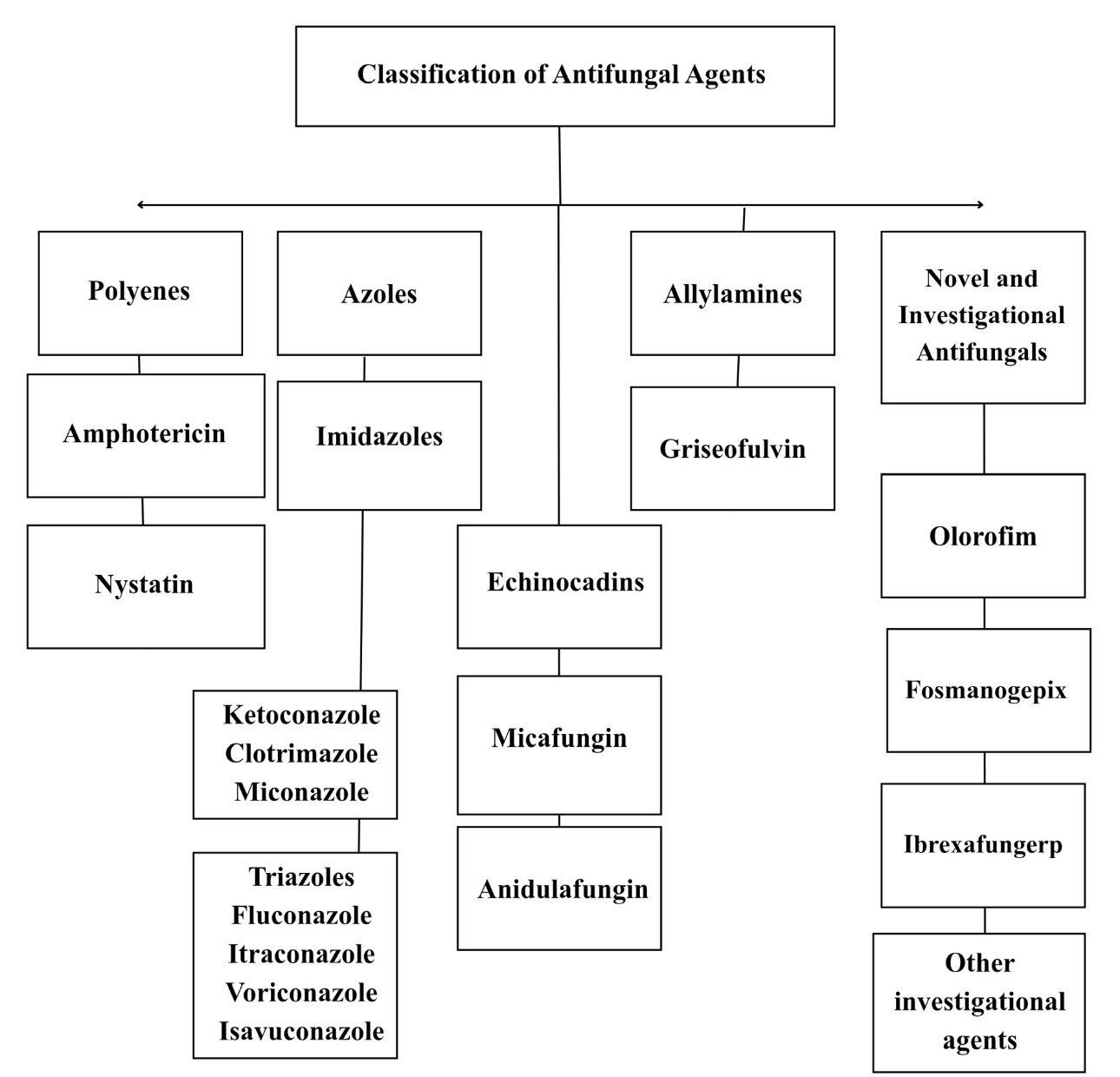
These antifungal agents might be generalized with references to their chemical structure, scope of action, and mechanism, and any of them has certain susceptibility to fungi physiology. However, unlike the prokaryotic bacteria, fungi are eukaryotes, whose structures and metabolisms are somewhat similar to mammalian cells. This phylogenetic similarity not only restricts the number of selective drug options available but also poses a hurdle in the development of treatment due to host toxicity. Despite all these difficulties, over the last few decades, several classes of antifungal drugs have been developed, and most of them are crucial in clinical practice. The primary classes of antifungal agents are polyenes, azoles, echinocandins, allylamines, flucytosine, and griseofulvin (Fig. 1). New agents are currently under development, including ibrexafungerp, olorofim, and fosmanogepix, which are expected to become future agents in antifungal chemotherapy (Hoenigl et al., 2021).
Polyenes
Polyenes continue to be one of the backbone agents of antifungal drugs, and the most widely used representatives are amphotericin B and Nystatin. Their significant action is that they are highly affined to ergosterol, which the principal sterol is found in cell membranes of fungal cells. The binding of this event results in the destabilization of the membrane structure, causing pore formation, the release of intracellular electrolytes, and the death of fungal cells (Cohen, 1998). Amphotericin B is fungicidal and has a broader activity spectrum, covering a wide range of yeast, molds, and dimorphic fungi. It is invaluable in treating severe systemic infections due to cryptococcal meningitis, invasive aspergillosis, and disseminated candidiasis. Although in its potent form, amphotericin B has been linked to dose-limiting nephrotoxicity and infusion-related anaphylaxis, the drug has long been viewed as a strict liability agent to be explicitly reserved only in life-threatening infections. Recent developments in drug formulation, particularly the introduction of lipid-based amphotericin B formulations such as liposomal amphotericin B (AmBisome), amphotericin B lipid complex, and amphotericin B colloidal dispersion (Steimbach et al., 2016), have significantly reduced renal toxicity and increased tolerability.
Azoles
The azole group is the most commonly prescribed type of antifungal agents, including imidazoles (such as ketoconazole, clotrimazole, and miconazole) and triazoles (such as fluconazole, itraconazole, voriconazole, Posaconazole, and isavuconazole). Their mode of action is primarily the inhibition of lanosterol 14α-demethylase, a cytochrome-dependent P450 enzyme involved in one of the key steps in ergosterol synthesis (Han et al., 2020). Blocking this enzyme leads to ergosterol loss and the accumulation of abnormal sterol intermediates, disconnecting membrane integrity, interrupting fungal growth, and increasing survival. Clinically, azoles are broad-spectrum, with fluconazole being specifically active against Candida albicans and Cryptococcus neoformans (Teixeira et al., 2022). The latest drug is isavuconazole, which can be characterized by outstanding oral bioavailability, consistent pharmacokinetics, and a less damaging safety profile than voriconazole, especially in terms of hepatotoxicity and visual impairment (Wilby, 2017).
Echinocandins
The most recent and significant family of antifungal agents in clinical practice endeavors are the echinocandin group, which includes caspofungin, micafungin, and anidulafungin. Their distinct action specifically targets β-1,3-glucan synthase, the enzyme responsible for β-glucan synthesis a structural polysaccharide that plays a crucial role in maintaining the integrity of the fungal cell wall. Through this pathway, echinocandins provide fungicidal action against Candida species and fungistatic action against Aspergillus (Szymański et al., 2022). Echinocandins have emerged as the initial management of invasive Candida infections and as salvage therapy for refractory aspergillosis (Aruanno et al., 2019).
Allylamines
The allylamines constitute a smaller group of antifungals, with terbinafine being the most clinically relevant. Terbinafine blocks squalene epoxidase, which is an early-stage enzyme in the ergosterol biosynthetic pathway, leading to loss of ergosterol and hypoxanthine accumulation in the cell of toxic squalene (Mechidi et al., 2024). The biochemical modifications affect the functionality of membranes, which causes fungal cells to die. Terbinafine has a strong fungicidal effect on dermatophytes, including Trichophyton and Epidermophyton; therefore, it is considered the drug of choice for onychomycosis, tinea corporis, and other superficial mycoses (Pereira et al., 2021). It exhibits lipophilic properties, thereby facilitating accumulation in targeted tissues, and remains at therapeutic levels even after therapy is discontinued.
Flucytosine
Among antifungal agents, fluconazole (also known as 5-fluorocytosine) has a unique mechanism of action, being a fluorinated pyrimidine analogue. After entering fungal cells through the action of cytosine permease, 5-fluorouracil is formed through the action of cytosine deaminase. The metabolite is then integrated into the RNA, which interferes with protein synthesis and its turnover to 5-fluorodeoxyuridine monophosphate, preventing thymidylate synthase and thusdisrupting DNA synthesis (Liyanage and Denning, 2023). Flucytosine is very orally bioavailable and is easily absorbed through a compromised fissure of the cerebral fluid. Candida endocarditis is often associated with Candida albicans, not Candida cerevisiae. This combination treatment has now become the standard of care for treating cryptococcal meningitis in most regions of the globe.
Griseofulvin
Griseofulvin, one of the first antifungal agents introduced into clinical practice, acts as a fungal agent by modifying its target. In this case, it affects mitotic spindle formation by binding to the mitotic spindle and damaging its central microtubules, thereby preventing the cell from dividing (Guo et al., 2023). It preferentially attacks dermatophytes and is concentrated in the keratinized tissues, making them resistant to invasion by the fungi. Griseofulvin was also widely used, but it has been largely replaced by newer antifungal agents that are more effective, safer, and have a shorter course of action. It is employed today primarily in cases of refractory supracutaneous dermatophytosis, particularly in pediatric patients, since cost and safety considerations may have justified its use (Keshwania et al., 2023)
Novel and Investigational Antifungals
The growing resistance to antifungal agents and the limitations of existing agents have driven the development of new antifungal drugs with a novel mechanism of action. Among the most promising are olorofim, fosmanogepix, and ibrexafungerp, which represent the first-in-class therapeutic agents that have advanced to late-stage clinical trials (Hoenigl et al., 2021). Oralamant, Olorofim is an orotomide antifungal, which interferes with an activity of a specific enzyme named dihydroorotate dehydrogenase that synthesizes the pyrimidines in the mitochondrial level (Wiederhold, 2020).
MECHANISMS OF ACTION OF ANTIFUNGAL AGENTS
The clinical efficacy of antifungal pharmacotherapy relies on exploiting biochemical and structural differences between fungi and mammalian cells. However, the eukaryotic character of the fungi makes the identification of selective targets hard, and as such, current medicines target a small subset of disparities, such as membrane sterol composition, cell wall biosynthesis, nucleic acid metabolism, and mitotic apparatus that create an adequate therapeutic window to allow fungi to be killed or growth inhibited and hold the host spared.
Polyenes: Binding to Ergosterol and Pore Formation
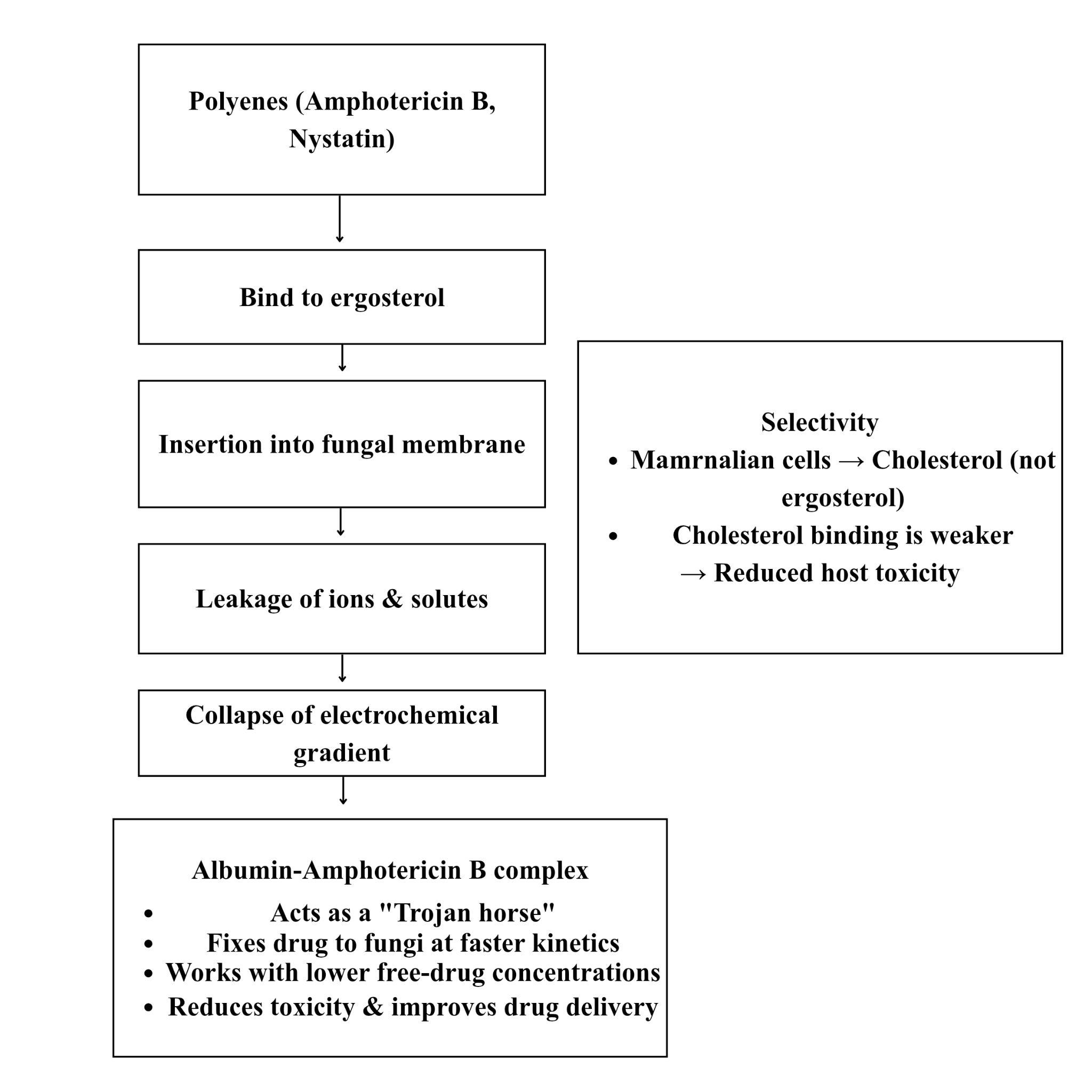
The polyenes (e.g. amphotericin B and Nystatin) mediate their fungicidal effect by their biophysical interaction with ergosterol, which is the characteristic sterol found in severe fungal membranes (Fig. 2). This high-affinity binding facilitates the insertion of the polyene molecule into the lipid-phosphoglycan inverse tube and the subsequent establishment of transmembrane channels leading to unregulated loss of monovalent and divalent cations and small solutes; the subsequent collapse of the electrochemical gradient. The mechanism has the advantage of selectivity since cholesterol, but not ergosterol, is the dominant molecule in mammalian membrane but partial affinities of cholesterol rather than ergosterol compromise progress achieved in formulation science that amphotericin B is used to enhance potent antifungal activity with reduced in-tolerability (Faustino and Pinheiro, 2020). In addition to these traditional ideas, recent biophysical and microbiological studies have found that the carrier itself has the potential to modify the way that drugs are delivered and become active: when amphotericin B is complexed with albumin, the albumin-drug complex seems to behave as a "Trojan horse", adding fixation the amphotericin B to fungi at set-up kinetics and allowing the test to work with lower free-drug concentrations, which incriminates carrier interactions in the control of neuro-janatos insertional kinetics and supports future strategies of reducing (Grela et al., 2023).
Azoles: Inhibition of Ergosterol Biosynthesis
Azoles, including imidazoles and triazoles exerted their central effect by inhibiting the lanosterol 14a-demethylase (CYP51) which is an enzyme of the cytochrome P450 active in the conversion of lanosterol to ergosterol (Bossche et al., 1989); when this enzyme is inhibited the sterol composition is altered, ergosterol is depleted, and non-specific sterol intermediates are accumulated that can disrupt membrane fluidity and disorient membrane-bound proteins, as well as growth in fungi. The inherent role of human CYP isozymes in the metabolism of azoles produces a clinically significant drug-drug interaction axis and pharmacogenomic exchange that mediates both efficacy and toxicity, and consequently has an impact on clinical outcomes in actual life (Kazeminejad et al., 2022).
Echinocandins: Inhibition of β-1,3-Glucan Synthase
Echinocandins belong to the initial category of antifungals that attach to the β-1,3-glucan synthase (Szymański et al., 2022), the multi-subunit complex that assembles β-1,3-glucan polymers, giving the fungal cell wall tensile strength, which in turn destroys the integrity of the walls, raising their osmotic resistance, and leading to cell lysis in susceptible yeasts. New population pharmacokinetic studies and dynamic simulations have shown that, when it comes to an integral mechanism as complex as β-1,3-glucan synthase, in vivo blockade will only lead to clinical efficacy as long as there is adequate exposure of the drug to the site of infection within the respective patient population (De Marco Castro et al., 2020)
Allylamines: Inhibition of Squalene Epoxidase
Allylamines act upstream in the sterol biosynthetic pathway by inhibiting squalene epoxidase, thereby preventing the conversion of squalene-to-squalene epoxide and engendering a toxic intracellular accumulation of squalene alongside depletion of ergosterol; these dual biochemical insults impair membrane organization and are particularly lethal to dermatophytes, which explains terbinafine's potent and durable fungicidal activity in keratinized tissues. The pharmacokinetic property of keratin affinity enables sustained drug concentrations in skin and nails long after dosing cessation, reinforcing the mechanistic basis for terbinafine's clinical success in onychomycosis and other superficial mycoses. Nevertheless, the allylamine mechanism is narrow in its systemic scope and subject to evolutionary pressure: point mutations in the SQLE gene alter the enzyme's affinity for terbinafine and have been associated with clinical resistance in dermatophyte outbreaks, thereby demonstrating how simple genetic changes in high-use settings can circumvent a single-enzyme target (Yamada et al., 2017).
Flucytosine: Inhibition of Nucleic Acid Synthesis and Prodrug Activation Dynamics
Flucytosine operates as a prodrug that enters fungal cells via cytosine permease and is enzymatically converted by fungal cytosine deaminase into 5-fluorouracil (5-FU), which is further metabolized into active nucleotides that inhibit thymidylate synthase and become mis-incorporated into RNA; the result is a potent interruption of DNA and RNA synthesis that yields fungistatic or fungicidal effects contingent on organism and exposure. The potency of this mechanism is tightly coupled to intracellular activation and sufficient, sustained exposure, which explains both the rationale for combination therapy (to prevent rapid resistance) and the recent interest in altered formulations (Delou et al., 2019): sustained-release pellets and other modified-release approaches can lengthen the time that drug concentrations remain above the MIC, thereby reducing windows of subinhibitory exposure that permit mutational escape.
Griseofulvin: Disruption of Mitosis and Keratin Targeting
Griseofulvin exerts its antifungal action by binding to fungal tubulin and interfering with microtubule assembly, thereby disrupting mitotic spindle formation and arresting cell division; this mitotic inhibition is reflected clinically in slow, cumulative clearance of dermatophyte infections as the drug concentrates within keratinized tissues and is incorporated into newly synthesized keratin, rendering the tissue refractory to reinvasion (Martinez-Rossi et al., 2021).
Integrative and Systems-Level Modifiers of Mechanistic Action
Beyond the canonical descriptions above, experimental genetics and systems biology have revealed that broader cellular networks and ecological contexts modulate mechanisms of drug action: QTL mapping in interspecies Saccharomyces hybrids and comparative genomics have identified pleiotropic loci that influence susceptibility across multiple drug classes, demonstrating that membrane composition, cell wall remodeling pathways, and stress-response regulators can substantially alter how a nominal target responds to pharmacologic inhibition. Sterol metabolism is particularly plastic; fungi can adapt to ergosterol-targeting drugs by rerouting sterol flux, upregulating alternate ERG genes, or accumulating intermediate sterols that partially rescue membrane function (Song et al., 2025). Such metabolic reprogramming attenuates the practical impact of drugs targeting ergosterol. In addition, adjunctive natural compounds and small molecules such as certain polyphenols have been shown to potentiate conventional drugs by increasing membrane permeability or inhibiting efflux mechanisms, thereby altering the pharmacodynamic context within which the original mechanism operates.
In addition to the canonical Polyenes (Amphotericin B, Nystatin) mechanism of antifungal activity, laboratory genetics and systems biology techniques like QTL mapping and comparative genomics can be used to identify drug phenotype pleiotropic loci. The results of these studies have identified processes such as adaptation of sterol metabolism, adjunctive modifications influencing the permeability and efflux of membranes, and, more generally, contextual effects, such as drug-target chemistry and pharmacokinetics, which influence antifungal efficacy.
MECHANISMS OF ANTIFUNGAL RESISTANCE
Antifungal resistance can be intrinsic (a certain species may be resistant to a certain type of drug by nature) or acquired (adaptive reactions to initially susceptible organisms are developed because the mechanism of selection exerts pressure in the course of long-term and incorrect exposure to this drug). Compared to bacterial resistance, which is commonly a horizontal transmission phenomenon triggering the activity of the plasmid and supporting bacterial virulence (Dimitriu, 2022), fungal resistance is typically a phenomenon of chromosomal mutation, gene multiplication, or epigenetic modification (Chang et al., 2019).
Intrinsic vs. Acquired Resistance
Acquired resistance develops as a consequence of long exposure to the medication. Intrinsic resistance is an innate quality of some antifungal products on some species of fungi in the absence of previous exposure. Their resistance to a wide range of known azoles and polyenes as well as their unique sterol composition of the membrane and potentially efflux and detoxification, contribute to the fact that the species of Fusarium, including them, are not vulnerable to a great number of them. Similarly, Candida krusei is naturally resistant to fluconazole mainly because of low affinity between the lanosterol 14a-demethylase (ERG11 homolog) and fluconazole. In contrast to this, acquired resistance occurs in a strain that is susceptible to the pressure of the drugs, such as Candida albicans and Aspergillus fumigatus. The point mutations in the crucial genes (e.g., ERG11, FKS1), the increased level of transporter, which is amplified, and factor or epigenetic modifications are typically linked with the acquired resistance (Lee et al., 2023).
Resistance to Polyenes
Even though in the past resistance to polyenes was rather rare compared to that against azoles, in certain cases, as well as in certain species, resistance has become more prevalent. Some clinical and laboratory isolate of Candida lusitaniae and Aspergillus terreus exhibit altered sterol profiles, which diminish the efficacy of polyenes. Additionally, biofilms appear to protect fungal cells from polyene action through the sequestration of extracellular matrix and altered sterol composition, likely due to reduced drug penetration and adaptive membrane remodeling. Recent data from surveillance in cancer patients in Jiangxi, China, reaffirm that while amphotericin B remains broadly active, non-wild-type isolates exist for some species (e.g., Candida tropicalis and non-albicans Candida) with reduced susceptibility, suggesting that early steps of polyene resistance are being selected in specific settings (Bilal et al., 2025).
Resistance to Azoles
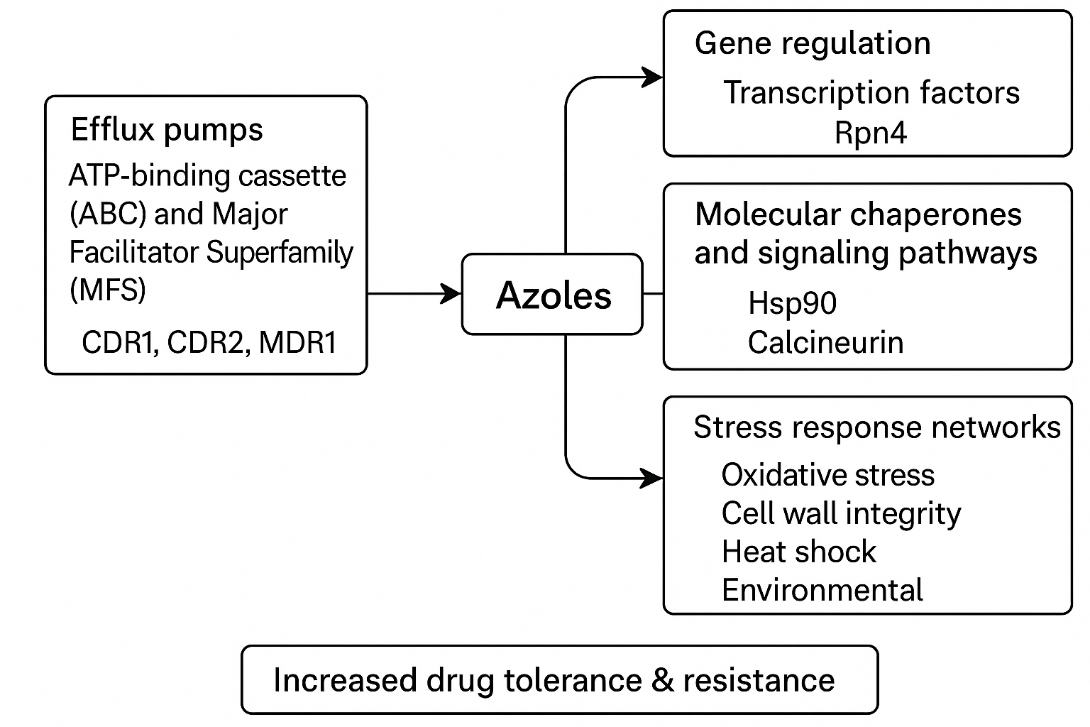
Azole resistance represents one of the most clinically significant challenges in antifungal therapy. Multiple mechanisms contribute to the loss of azole efficacy (Fig. 3). Mutations in ERG11 or its regulatory elements can alter the binding site of lanosterol 14α-demethylase, thereby reducing drug affinity. In Aspergillus fumigatus, tandem repeat insertions in the promoter region of cyp51A (e.g., TR34/L98H, TR46/Y121F/T289A) have increased in recent years, allowing for the overexpression of the target enzyme, along with structural changes (Arastehfar et al., 2021).
Azoles effect various cellular events such as more efflux pumps activation (ABC and MFS transporters like CDR1, CDR2 and MDR1), activation, transcription factors (e.g., Rpn4), molecular chaperones and signaling pathways (Hsp90, calcineurin) as well as stress response networks (oxidative stress, cell wall integrity, heat shock and environmental stress). A combination of the mechanisms means enhanced drug tolerance and resistance.
Resistance to Echinocandins
Echinocandin resistance was initially rare but has become increasingly prominent, particularly in Candida glabrata and some Candida auris strains, following prolonged treatment with echinocandins. The primary mechanism involves point mutations in hot-spot regions of FKS1 or FKS2, which encode subunits of β-1,3-glucan synthase. These mutations alter the enzyme's conformation, reducing drug binding and thus causing a reduced fungicidal effect. In addition, compensatory increases in chitin synthesis within the cell wall have been observed, which partially offset the loss of β-glucan (Kordalewska et al., 2023).
Resistance to Allylamines
Allylamine resistance, previously considered uncommon, is emerging in dermatophytes, especially in regions with high terbinafine use. Mutations in the SQLE gene change the amino acids in squalene epoxidase, reducing drug binding and thus lowering efficacy.
Resistance to Flucytosine
Flucytosine resistance develops rapidly when it is used in monotherapy, because its mechanism depends on fungal cell uptake (via permeases, e.g., FCY2) and enzymatic conversion (cytosine deaminase, FUR1, etc.). Mutations that reduce or abolish permease activity prevent drug entry; others in downstream activation enzymes prevent the conversion of the drug into cytotoxic metabolites. Newer studies on Candida auris have shown that only one or two passages under drug pressure can select for resistant strains carrying FUR1 or FCY2 mutations. Moreover, variants with altered uptake rates or metabolic enzyme deficiencies have emerged even without mutations in classical pathway genes, indicating that compensatory pathways or epigenetic changes may also play a role (Chandra and Ghannoum, 2017).
Biofilm-Associated Resistance
Biofilm formation presents a formidable mode of resistance that is phenotypic rather than purely genetic, dramatically increasing the antifungal tolerance of fungal communities compared to planktonic cells. Fungi in biofilms are encased in extracellular matrices (composed of polysaccharides, proteins, nucleic acids), which reduce penetration of antifungal drugs, sequester them away from active cells, and alter local microenvironment (pH, oxygen) in a way that slows drug action (Ramage et al., 2025).
Role of Efflux Pumps and Stress Responses
Efflux pumps of the ATP-binding cassette (ABC) and Major Facilitator Superfamily (MFS) represent central mechanisms of multidrug resistance, especially for azoles. Genes such as CDR1, CDR2, and MDR1 are frequently upregulated in resistant isolates of Candida and Candida auris, either by mutation of transcriptional regulators or by environmental induction. Recent work on C. auris identified the transcription factor Rpn4 as an activator of its own expression and as an inducer of efflux pump expression, thereby contributing to intrinsic fluconazole resistance.
CLINICAL IMPLICATIONS OF RESISTANCE
Antifungal resistance has evolved from an academic concern to a pervasive clinical crisis, impacting patient outcomes, influencing therapeutic decision-making, and overwhelming public health systems across diverse geographic and socioeconomic settings. The increasing population of immunocompromised individuals, those with HIV/AIDS, malignancies undergoing chemotherapy, solid organ or hematopoietic stem cell transplant recipients and patients in intensive care units (ICUs) has created a reservoir of vulnerability in which even modest resistance can lead to treatment failure (José Garnacho-Montero et al., 2024). Compounding this is a narrow antifungal armamentarium, frequent and severe toxicities of available agents, delays in diagnosis due to imperfect or unavailable diagnostics, and the increasing burden of co-morbid conditions. In nosocomial contexts, resistant fungi are particularly troublesome because outbreaks tend to be prolonged, pathogens often colonize skin and environmental surfaces, and standard infection prevention and control (IPC) measures are sometimes insufficient or poorly implemented.
Multidrug-Resistant Fungi (Candida auris and others)
Among multidrug-resistant fungi, Candida auris remains one of the most clinically and epidemiologically significant threats. Recent surveillance data show that colonized individuals may progress to invasive disease, with crude mortality rates ranging from approximately 30% to 72%. In a U.S. national study of over 21,000 patients colonised with C. auris between 2016 and 2023, approximately 6.9% later had a clinical specimen positive for C. auris, including 2.8% with bloodstream infections (Baker et al., 2025). Pediatric C. auris infections, though less frequent than adult cases, also show high mortality (up to 40%) in bloodstream infections in South Asia and Africa (De Gaetano et al., 2024). Beyond C. auris, Candida glabrata and non-albicans Candida spp. are showing rising resistance to both azoles and echinocandins via FKS1/FKS2 mutations, which is especially concerning in settings with heavy echinocandin use (Table 1). Aspergillus fumigatus isolates with promoter tandem repeat mutations (e.g., TR34/L98H) are increasingly reported in Europe, Asia, and parts of the Americas, likely selected by environmental exposure to azoles, thereby compromising first-line mold therapy.
| Fungal Species | Resistance Pattern / Mechanism | Population / Notes | Mortality / Clinical Impact | References |
|---|---|---|---|---|
| Candida glabrata | Rising resistance to azoles and echinocandins (FKS1/FKS2 mutations) | Adults, immunocompromised | Morbidity increased, treatment limited | Kessler et al., 2022 |
| Non-albicans Candida spp. | Azole and echinocandin resistance | Hospitalized / high antifungal use areas | Significant morbidity | Kessler et al., 2022 |
| Aspergillus fumigatus | TR34/L98H promoter tandem repeat mutations | Europe, Asia, Americas | Reduced efficacy of first-line mold therapy | Pfaller et al., 2024 |
| Fusarium spp. | Multidrug-resistant | Emerging clinical reports | Limited therapeutic options | Garvey and Rowan, 2023 |
| Scedosporium spp. | Multidrug-resistant | Emerging clinical reports | Often requires toxic or experimental drugs | Mello et al., 2022 |
Table 1 is an overview of clinically significant fungi with progressive multidrug resistance. C. glabrata and Candida aureus unquestionably carry significant concern regarding the aspect of resistance to azole and echinocandins, besides a high fatality rate and little to no treatment options. The Candida spp. (not albicans) is also known to induce morbidity even with hospital admission of patients. Asppergillusfugigae with the TR34/ L 98H mutation do not respond to the first-line treatment of mold with Abatidib. Scedosporium spp Multidrug resistance Multidrug resistance was notably an emerging phenomenon in Fusarium spp. and Scedosporia, and very few therapeutic options exist, which are typically based on toxic agents or experimental agents.
STRATEGIES TO OVERCOME RESISTANCE
The accelerating problem of antifungal resistance has forced a reconsideration of therapeutic strategy from incremental optimization of existing agents to a multipronged paradigm that simultaneously pursues novel molecular targets, rational combination regimens, repurposed pharmacopoeia, host-directed therapies, and advanced delivery platforms; this integrated approach aims not only to restore efficacy where existing agents fail but also to delay or prevent the emergence of further resistance by reducing selective pressure and improving target engagement in diverse clinical settings. Ibrexafungerp, the first orally bioavailable triterpenoid that inhibits β-1,3-glucan synthesis via a binding site distinct from echinocandins, has achieved regulatory approval for vulvovaginal candidiasis and is progressing through late-stage development for invasive indications, thereby providing an oral option with activity against some echinocandin- and azole-resistant Candida isolates and offering an important outpatient alternative to intravenous therapy (Spruijtenburg et al., 2025). Fosmanogepix (the prodrug of manogepix), which targets Gwt1 and thereby disrupts GPI-anchor biosynthesis critical for cell wall protein localization, has shown broad in vitro and early clinical activity against Candida, Aspergillus and several multidrug-resistant species, and is being advanced into larger efficacy trials and expanded access programs reflecting its potential as a broadly applicable systemic antifungal (Shaw and Ibrahim, 2020). Nevertheless, it is important to acknowledge that even these novel agents have mechanistic blind spots (for example, olorofim’s lack of activity against yeasts and rezafungin’s class limitations). Early clinical experience suggests that vigilance for emergent resistance and narrow spectra will be necessary.
FUTURE PERSPECTIVES AND RESEARCH TRENDS
The escalating price of antifungal resistance has marked a more profound global effort to redesign therapeutic strategies through the implementation of novel scientific technology. Interdisciplinary advances in molecular biology, genomics, immunology and nanomedicine are gradually shaping substance antifungal development. Each of these areas has a possibility to not only become less restricted nowadays, but also focus on the creation of the mechanisms of resistance that still a mystery, as yet. Antifungal studies are thus not just embarking on the avenue of precision-based, integrative, and preventive models that are supported by effective surveillance and translational pipelines on a global scale. The identification of fungus-targeted molecular discovery, new to the activity and research, remains a foundation to antifungal research and development. Likewise, stress resistance, morphogenesis and pathogenicity in Candida and Aspergillus species were shown to be affected at great distance by perturbation of the calcineurin and the TOR signal pathway.
Preventive Strategies and Vaccines
Given the limited antifungal pipeline and high mortality associated with invasive fungal diseases, prevention remains a strategic priority. Antifungal prophylaxis, particularly in hematopoietic stem cell transplant and leukaemia patients, continues to reduce invasive fungal infections, although stewardship is critical to mitigate the development of resistance (Teh et al., 2021). Development of vaccines against fungal pathogens has been experiencing a lot of momentum over the past years. Potential prospects are recombinant protein vaccines against Candida adhesins, conjugate vaccines based on b-glucan in order to induce cross-protective vaccines, and new technologies against Cryptococcus and Aspergillus.
CONCLUSION
Fungal infections are also secondary infections, but lately they have turned into a major global health issue. This has been occasioned by, the rise in numbers of patients with a weak immunity, the rise in rate of invasive fungi infections, and alarming appearance of multidrug-resistant pathogens. The A-O-E includes polyenes, azoles, echinocandins, allylamines, flucytosine, and griseofulvin, and it does not imply that the situation of the patients has ceased to improve in the past few decades. The advancements in new antifungal drugs development can be promised by new approaches, such as designing next-generation antifungal with new molecular targets, rational combination, drug repurposing, host-directed immunomodulation, and nanotechnology-mediated delivery platforms. Despite such improvement, there are severe challenges in the future.Moreover, precision medicine will also require an extensive infrastructure, the interdisciplinary competences, and global surveillance systems which can assist in the detection of the real-time resistance patterns. Lastly, the treatment of the fungal infection needs to be a multidimensional process, which should encompass the alignment of innovation in therapeutic and diagnostic development, prevention measures, and a rigid antifungal stewardship program. The success journey will involve collaboration with clinicians, scientists, policymakers, and industry partners in order to translate the emerging therapies and preventive options into clinical therapies.
References
- Arastehfar A, A Carvalho, J Houbraken et al., 2021. Aspergillus fumigatus and aspergillosis: From basics to clinics. Studies in Mycology 100:100115.
- Aruanno M, E Glampedakis and F Lamoth, 2019. Echinocandins for the treatment of invasive aspergillosis: From laboratory to bedside. Antimicrobial Agents and Chemotherapy 63:00399-19.
- Baker AD, JAW Gold, K Forsberg et al., 2025. Progression from Candida auris colonization screening to clinical case status, United States, 2016–2023. Emerging Infectious Diseases 31:1613.
- Bilal H, X Li, X Wang et al., 2025. Epidemiology risk factors and antifungal resistance patterns of Candida in cancer patients in Jiangxi China. Frontiers in Microbiology 16:1630226.
- Black KE and LR Baden, 2007. Fungal infections of the CNS. CNS Drugs 21:293-318.
- Bossche HV, P Marichal, J Gorrens et al., 1989. Biochemical approaches to selective antifungal activity: Focus on azole antifungals. Mycoses 32:35-52.
- Chandra J and MA Ghannoum, 2017. Flucytosine treatment and resistance mechanisms. Antimicrobial Drug Resistance, Cham: Springer International Publishing 407–413.
- Chang Z, V Yadav, SC Lee et al., 2019. Epigenetic mechanisms of drug resistance in fungi. Fungal Genetics and Biology 132:103253.
- Cohen BE, 1998. Amphotericin B toxicity and lethality: A tale of two channels. International Journal of Pharmaceutics 162:95-106.
- De Gaetano S, A Midiri, G Mancuso et al., 2024. Candida auris outbreaks: Current status and future perspectives. Microorganisms 12:927.
- De Marco Castro E, PC Calder and HM Roche, 2020. β-1,3/1,6-glucans and immunity: State of the art and future directions. Molecular Nutrition and Food Research 65:1901071.
- Delou JMA, ASO Souza, LCM Souza et al., 2019. Highlights in resistance mechanism pathways for combination therapy. Cells 8:1013.
- Dimitriu T, 2022. Evolution of horizontal transmission in antimicrobial resistance plasmids. Microbiology 168:001214.
- Faustino and Pinheiro, 2020. Lipid systems for the delivery of amphotericin B in antifungal therapy. Pharmaceutics 12:29.
- Garvey M and NJ Rowan, 2023. Pathogenic drug resistant fungi: A review of mitigation strategies. International Journal of Molecular Sciences 24:1584.
- Grela E, S Stączek, M Nowak et al., 2023. Enhanced antifungal activity of amphotericin B bound to albumin: A “Trojan horse” effect of the protein. The Journal of Physical Chemistry B 127:3632-40.
- Guo Y, J Li, J Shi et al., 2023. Griseofulvin inhibits root growth by targeting microtubule-associated proteins rather than tubulins in Arabidopsis. International Journal of Molecular Sciences 24:8692.
- Han G, N Liu, C Li et al., 2020. Discovery of novel fungal lanosterol 14α-demethylase (CYP51)/histone deacetylase dual inhibitors to treat azole-resistant candidiasis. Journal of Medicinal Chemistry 63:5341-59.
- Hoenigl M, R Sprute, M Egger et al., 2021. The antifungal pipeline: Fosmanogepix, ibrexafungerp, olorofim, opelconazole and rezafungin. Drugs 81:1703-29.
- José Garnacho-Montero, I Barrero-García and C León-Moya, 2024. Fungal infections in immunocompromised critically ill patients. Journal of Intensive Medicine 4:299-306.
- Kazeminejad Z, M Marzi, A Shiroudi et al., 2022. Novel 1,2,4-triazoles as antifungal agents. BioMed Research International 2022:1-39.
- Keshwania P, N Kaur, J Chauhan et al., 2023. Superficial dermatophytosis across the world’s populations: Potential benefits from nanocarrier-based therapies and rising challenges. ACS Omega 8:31575-99.
- Kessler SQS, PM Lang, TS Dal-Pizzol et al., 2022. Resistance profiles to antifungal agents in Candida albicans isolated from human oral cavities: Systematic review and meta-analysis. Clinical Oral Investigations 26:6479-89.
- Kordalewska M, G Cancino-Prado, J Nobrega et al., 2023. Novel non-hot spot modification in Fks1 of Candida auris confers echinocandin resistance. Antimicrobial Agents and Chemotherapy 67:0042323.
- Lee Y, N Robbins and LE Cowen, 2023. Molecular mechanisms governing antifungal drug resistance. npj Antimicrobials and Resistance 1:1-9.
- Sagera LSM and DW Denning, 2023. Flucytosine and its clinical usage. Therapeutic Advances in Infectious Disease 10:20499361231161387.
- Martinez-Rossi NM, NTA Peres, TA Bitencourt et al., 2021. State-of-the-art dermatophyte infections: Epidemiology aspects, pathophysiology and resistance mechanisms. Journal of Fungi 7:629.
- Mechidi P, J Holien, D Grando et al., 2024. New sources of resistance to terbinafine revealed and squalene epoxidase modelled in the dermatophyte fungus Trichophyton interdigitale from Australia. Mycoses 67:13795.
- Mello TP, IC Barcellos, AC Aor et al., 2022. Extracellularly released molecules by multidrug-resistant fungal pathogens belonging to the Scedosporium genus. Journal of Fungi 8:1172.
- Pereira PA, ES Vieira, FC Charles et al., 2021. Superficial and cutaneous mycoses, epidemiology, virulence, susceptibility profile to antifungals and their infections: A literature review of the last twenty years. International Journal of Pharmacy and Biological Sciences 11:176-87.
- Pfaller MA, CG Carvalhaes, PR Rhomberg et al., 2024. Trends in the activity of mold-active azole agents against Aspergillus fumigatus clinical isolates with and without cyp51 alterations from Europe and North America (2017–2021). Journal of Clinical Microbiology 62:0114123.
- Ramage G, R Kean, R Rautemaa-Richardson et al., 2025. Fungal biofilms in human health and disease. Nature Reviews Microbiology 5:1-16.
- Salvation IF, K Mezgebo, Z Meresa et al., 2025. Review on antifungal resistance: Definition, mechanisms, diagnosis, challenges and solutions. Journal of Medicine and Health Research 10:224-42.
- Shaw KJ and AS Ibrahim, 2020. Fosmanogepix: A review of the first-in-class broad spectrum agent for the treatment of invasive fungal infections. Journal of Fungi 6:239.
- Song L, S Wang, H Zou et al., 2025. Regulation of ergosterol biosynthesis in pathogenic fungi: Opportunities for therapeutic development. Microorganisms 13:862.
- Spruijtenburg B, T de Groot and EFJ Meijer, 2025. SCY-247, a novel second-generation triterpenoid antifungal, demonstrates high in vitro activity against genetically diverse Candida auris isolates. Journal of Antimicrobial Chemotherapy 80:3165-66.
- Steimbach LM, FS Tonin, S Virtuoso et al., 2016. Efficacy and safety of amphotericin B lipid-based formulations: A systematic review and meta-analysis. Mycoses 60:146-54.
- Szymański M, S Chmielewska, U Czyżewska et al., 2022. Echinocandins – structure, mechanism of action and use in antifungal therapy. Journal of Enzyme Inhibition and Medicinal Chemistry 37:876-94.
- Teh BW, DK Yeoh, GM Haeusler et al., 2021. Consensus guidelines for antifungal prophylaxis in haematological malignancy and haemopoietic stem cell transplantation, 2021. Internal Medicine Journal 51:67-88.
- Teixeira MM, DT Carvalho, E Sousa et al., 2022. New antifungal agents with azole moieties. Pharmaceuticals 15:1427.
- Wiederhold NP, 2020. Review of the novel investigational antifungal olorofim. Journal of Fungi 6:122.
- Wilby KJ, 2017. A review of the clinical pharmacokinetics and pharmacodynamics of isavuconazole. European Journal of Drug Metabolism and Pharmacokinetics 43:281-90.
- Yamada T, M Maeda, MM Alshahni et al., 2017. Terbinafine resistance of Trichophyton clinical isolates caused by specific point mutations in the squalene epoxidase gene. Antimicrobial Agents and Chemotherapy 61:0011517.