

INTRODUCTION
Before conventional medicine, plants were the primary source of medicine. Man has utilized plants for food, making clothes, building shelter, and as medicine. History is full of evidences that how man has used plants to treat ailments. At present all the medicine that we use, about 50% of them are derived from plants. This knowledge of the therapeutic effect of plants is given to us by our ancestors, who unveiled this information by testing and experimenting with it. Humans have always been curious. According to fossil records, around 60,000 years ago, man has used plants to make medicine (Inoue & Hayashi, 2021).
Although our ancestors have utilized plants as medicine, there’s no proper record of dosage and how they consumed them. Back in time, there was no proper way to isolate certain phytochemicals, check for toxicity, and determine a controlled therapeutic dose. Science has changed the way we cure. Conventional medicines are taking over the world as they are clinically tested in every way. As we all know, many of the conventional medicines are made from phytochemicals isolated from certain therapeutic plants. Over the past few years, people have started including plant medicine as a cure for ailments and to reconnect with nature. Plant-made medicines are natural and possess fewer side effects than conventional medicines. Also, medical researchers are paying more interest towards phytochemicals and are making efforts to incorporate traditional medicines with conventional therapeutics in order to develop effective, natural and safe medicines (Jamal, 2023).
In both urban and rural areas, the idea of health consciousness is currently gaining popularity. People have been employing herbal remedies, either by themselves or in conjunction with other items such as conventional therapies, to achieve good health and to avoid the negative impacts on health caused by modern medicine. Significant financial gains are linked to the growth and application of medicinally important plants and their derivatives in indigenous medicines for the treatment of illness, suggesting that the path for the herbal renaissance is broadening. Reports released by the World Health Organization (WHO) made it clear that 70 to 80 percent of the world's population uses various plants for therapeutic purposes to meet their basic approach towards a healthy life (Linharis et al., 2023).
Our ancestors used plants as medicine and passed information verbally over generations. There is no record of how certain plants treated certain diseases and which compounds are actually responsible for the therapeutic effect. Because of a lack of proper research, ancient people have used phytomedicine blindly. Over the decades, researchers have been studying phytochemicals of traditionally significant plants. Ethno-pharmacological studies disclosed that only one out of ten thousand phytocompounds can actually be used as a drug to treat diseases. Because of this discovery, a lot of indigenous medical practices are in question. Although we cannot deny the therapeutic potential of plants, ethno-pharmacology can help to reveal phytocompounds that can lead to the production of safe and effective new drugs (Pirintsos et al., 2022).
ETHNOBOTANICAL RECORD
Over centuries, plant medicines have been a part of humans’ lives. Indigenous plants inspired people to use them in various ways. Different parts of earth have its own indigenous plants and therapeutic practices indigenous to local people. Historical evidence showed several medical systems with particular practices native to various countries. Among many indigenous therapeutic practices, Ayurveda, Traditional Chinese Medicine and Unani are the highlighted ones with a vast historical record. Originating from Greco-Arabic medical traditions that span more than 2,500 years, Unani medicine is a traditional medical system that emerged during Arab civilization. It views a person as having a single, cohesive body, mind, and soul. The foundation of Unani medicine is the notion that the human body is composed of four fundamental parts, each with its own distinct temperament. When these temperaments are out of balance, it can lead to a variety of illnesses. The goal of Ayurveda is to restore equilibrium by employing natural remedies to address the root cause of illness. Ayurveda emphasizes that leading a healthy lifestyle is essential to avoid asymmetry and unnecessary distress (Parveen et al., 2022).
In addition to becoming a part of the Chinese public health system, traditional Chinese medicine is now recognized as an alternative or supplementary treatment in Western nations. It is estimated that Traditional Chinese Medicine is used to treat about 1.5 billion people worldwide. Numerous ailments are treated using Chinese herbal remedies. Every human person with equal or balanced yin and yang forces might be deemed healthy, according to the Chinese cultural viewpoint. It affects human health, for example, a large amount of yang energy might result in fever since it symbolizes heat, while a lack of yang energy or an excess of yin energy can result in chills. The excess or lack of yin or yang forces can therefore be used to categorize disorders. Traditional Korean medicine has a long history and is related to traditional Chinese medicine. Since its inception, traditional Korean medicine has been an integral part of Korea's national healthcare system. More than a thousand herbal substances are used therapeutically in Korea. These uses include the production of herbal medications, the use of the materials as food, medical herbs, cosmetics, and market items. Other than these, Ethiopia, Africa and Bangladesh are home to a wide range of indigenous therapeutic plants and ancient medical practices (Afzal et al., 2024).
All these medical systems are of great importance among native people and are a huge reflection of their culture as well. Different cultures have their own specific practices. Indigenous people got knowledge about these practices through their elders, who got this knowledge through their ancestors. Although conventional medicines are easily available, these traditional medicines and knowledge are still of great significance among locals (Turner et al., 2022). Along with being a source of food, many plants have medicinal significance. Evidence and old pharmacological scripts showed several plants that have been used for various purposes, for example, some plants were used as poison for hunting, some used as aromatics, some for ritual practices and some for therapeutic purposes. Historical scripts showed that a lot of plants such as chamomile, fig, dates, garlic, onion, parsley, willow, sage, aloe, poppy, pepper, cinnamon, mint leaves, along with many other has been used to prepare phytomedicines (Napagoda & Wijesundara, 2022).
Traditional medicines have been prepared by practitioners through various methods, through which they can reap the benefits. Traditional people used phytomedicines in the form of powder, decoctions, tinctures, poultices, etc. They have used dried leaves, flowers, seeds, and bark ground into powder. They prepared decoctions by steeping various parts of the plant in boiled water and for tinctures, they soaked the plant in alcohol or vinegar and left it for days. For cuts or wounds or muscle pain, they prepared poultices by smashing the leaves of the plant and wrap it on the desired part of the body (Verep et al., 2023).
PHYTOCHEMISTRY OF MEDICINAL PLANTS
Numerous products of various chemical types are naturally produced by plants and are essential to their growth and development. Primary metabolites supply the materials needed for respiration, movement, and photosynthesis (Fig. 1). Secondary metabolites are the byproducts of primary metabolites that do not directly contribute to growth and development. Secondary metabolites are often the result of biosynthetic changes such as methylation, glycosylation, and hydroxylation, and are the outcome of primary metabolites. In contrast to primary metabolites, secondary metabolites undoubtedly have more complicated side chains and physical characteristics (Twaij & Hasan, 2022).
Among the biggest and most intricate groups of secondary metabolites that plants create are polyphenols, which are synthesized via the shikimate biosynthesis pathway, which supplies the building blocks for aromatic compounds. They are separated into many different categories, including simple phenols, phenolic acids, flavonoids, and tannins, based on the biosynthesis process, the quantity of aromatic rings, carbon atoms, and hydroxyl groups. Terpenes, also known as terpenoids or isoprenoids, are a broad class of biological compounds with a wide range of structures, uses, and characteristics. Terpenes may have a variety of roles in plants, such as drawing pollinators or shielding damaged areas from attacks by pests, insects, and herbivores. Hemiterpenes, monoterpenes, sesquiterpenes, diterpenes, sesterterpenes, triterpenes (steroids, saponins), etc., are the several categories into which they are classified. Alkaloids comprise about 10,000 compounds of secondary metabolites found in plants. Alkaloids are a vast class of phytochemicals of ecological significance that have a variety of pharmacological, toxicological, dietary, and aesthetic properties. In flowering plants, alkaloids are widely distributed throughout every organ, including leaves, flowers, seeds, roots, stem, fruits, bark, and bulbs (Chiocchio et al., 2021).
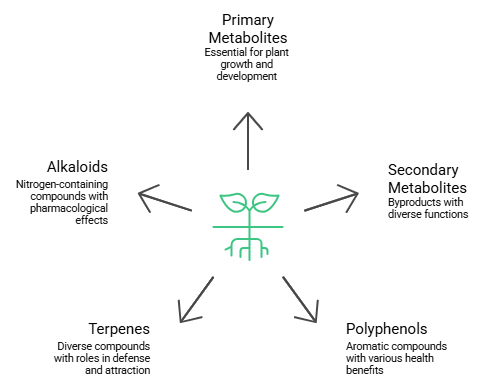
Different types of terpenes possess beneficial activities such as anti-bacterial, anti-cancer potential and have been used to treat lung diseases. Terpenes are a huge part of plant essential oils, in which they perform anti-insecticidal, anti-inflammatory and antioxidant activities. Furthermore, saponins have cytotoxic and anti-diabetic properties and can lower lipoprotein and cholesterol levels. Anti-inflammatory, antioxidant, and anti-hepatotoxic properties are among the pharmacological actions of certain phenolic substances. Numerous alkaloids are useful therapeutic substances that may be used to treat a range of illnesses, such as cancer, diabetes, heart problems, and malaria (Elshafie et al., 2023).
Plants have been an important source of medicinal substances across the ages. Since the beginning of time, people have utilized these herbs for therapeutic purposes, frequently depending on their intuition and previous exposure. Classifying medicinal plants is one of the main obstacles to understanding their evolution. To classify plants, taxonomists have developed a number of methods, including morphological, anatomical, and chemotaxonomic categorization. A contemporary method of classifying plants, chemotaxonomy entails examining the chemical variety of plants and applying the results to comprehend their evolutionary links. In order to classify and clarify the evolutionary relationships between various plant species, the multidisciplinary disciplines of chemotaxonomy and comparative phytochemistry concentrate on examining plant compounds. The systematic study of phytochemical variation among plants is known as chemotaxonomy (Marne et al., 2025).
FROM FOLK MEDICINE TO MODERN DRUG DISCOVERY
Several illnesses, particularly contagious and chronic ones, have benefited from ethno-pharmacology's contributions to therapy. It has been discovered that bioactive chemicals with therapeutic promise against illnesses, including diabetes, cancer, and infectious diseases, are present in many traditional treatments. Numerous chemicals produced from plants have been transformed into chemotherapeutic medicines for the treatment of cancer. For instance, leukemia and Hodgkin's lymphoma are treated with vincristine and vinblastine, which are extracted from Madagascar periwinkle, respectively. Additionally, ethno-pharmacology has contributed to the creation of antidiabetic medications. For instance, bitter melon, which has been used widely used in Chinese and Ayurvedic medicine, may help decrease blood pressure (Ansari et al., 2025).
For ages, plants remained the center of attention when it comes to treating ailments. Back in time and still some indigenous tribes use traditional methods for the preparation of medicine. Plants are rich in several phytochemicals, each unique in its properties. Although traditional medicine preparation methods, such as powders or crude extracts, treated people back then, there were also the risks of toxicity, as plants also contain toxins, or sometimes they did not contain the needed amount of a specific phytochemical. In 1803, an alkaloid known as morphine was successfully isolated from poppy seeds, which led to the onset of plant-derived drug research. Isolation of phytochemicals helped in making new effective drugs with fewer side effects as compared to modern conventional medicine (Nasim et al., 2022).
After the first isolation of phytochemicals from plants, scientists started experiments to isolate more phytocompounds from well-known traditional therapeutic plants. The drug paclitaxel, derived from Pacific yew, is utilized for the treatment of breast, ovarian, and lung cancer. Malaria is treated using the phytochemical artemisinin, which is extracted from the traditional Chinese plant sweet wormwood. Milk thistle seeds are used to make silymarin, which is utilized for alleviating liver problems. The foxglove plant-derived digitoxin has been used to treat heart conditions, including congestive heart failure. A key component in the battle against malaria was quinine, which was extracted from the bark of the cinchona tree. And worth mentioning, phytochemical aspirin has been derived from the bark of willow tree. Through experiments, researchers extracted acetylsalicylic acid from willow bark, the active compound that is useful in pain management and the treatment of inflammation (Chaachouay & Zidane, 2024).
Several plant-derived phytochemicals are commercially remodeled to make safer and more effective medicines. Phytochemical morphine derived from opium poppy plants has been used to make partially synthetic apomorphine. Apomorphine has been tested to cause less dependence as compared to morphine and is pharmacologically accepted to be used as a treatment for Parkinson’s disease. Similarly, artemether has been derived from artemisinin and is more stable than artemisinin itself. Being oil-soluble and with a long half-life, artemether is more effective in the treatment of malaria. Phytochemical tiotropium is derived from deadly nightshade and found effective in the treatment of respiratory disorders such as asthma, chronic obstructive pulmonary disease, etc. Additionally, for alleviating urinary tract infections, phytochemicals such as anthocran, cysticlean, and monoselect macropcarpon are extracted from berries like cranberries, blueberries, along with others. Myrrh, purple coneflower, rhatany and chamomile extracts were used to create Parodontax, which is commercially available as toothpaste for healthy teeth and gums, whereas liquohaving a long half-life, artemether is more effective in treatingrice plant extract was used to create the basic product named GutGuard. Oral infections have been treated using products containing essential oils of wild mint, peppermint, and common sage (Chihomvu et al., 2024).
PHARMACOLOGICAL VALIDATION OF MEDICINAL PLANTS
Phyto-medicine has been a topic of interest among scientists and researchers. Studies proved that, along with therapeutic agents, there are also some other agents present in plants that could be toxic. So testing is required before launching a medicine. There are a number of ways to test out the efficacy, safety, and optimum dose levels for plant-made medicine. Unlike ancient tribes, which used plant medicine without any scientific proof, scientist has developed different types of models to test out things. For safety concern scientist developed a model which is called “In vitro,” which is a Latin term meaning in glass. In this model, an experiment is performed on a part of body tissue or micro vessels in a dish, tube, or flask. But this model does not always provide the deep insight of mechanism and other concerns. It is difficult to test out a medicine directly on humans because it could be dangerous in many ways. Scientists started using animals for conducting experiments who has anatomical similarities to humans or has same drug processing mechanism to get better results and more clear understanding. In-vivo meaning in the living body, is a Latin term that is used to describe the experimental model discussed above. In vivo and in vitro, both of these experimental models need planning, a well-designed structure, and review of the literature as a backbone before the conduction of the experiment. In silico is an experimental model in which all the data gathered from in vivo or in vitro is processed through mathematics, analytical and computer programs which help in understanding and comparison of outputs (Bekisz et al., 2022).
Even though plants have been used to treat ailments, ancient people did not exactly know the mechanism through which phytochemicals worked in the human body because of a lack of proper knowledge and equipment to gain a deep insight. In ancient times, sweet wormwood was used in traditional Chinese medicine to treat fever, but they had no clue of the exact mechanism and which compound was responsible. Modern technology helped in unveiling a lot of things. To use phytomedicine for treatment, it is necessary to understand the nature of active phytochemicals and how they work inside the body. Studies have shown that a phytochemical called artemisinin in wormwood is responsible for curing malaria by combating inflammation and disrupting the life cycle of the parasite, which is responsible for causing malaria. Similarly, phytochemical curcumin from turmeric has anti-inflammatory potential by hindering the mediators and enzymes that are responsible for inflammation in the body (Giri et al., 2024).
Along with identification of active phytoconstituent and mechanism of action, drug dosage and bioavailability are those factors on which the treatment of a disease depends. Bioavailability refers to the knowledge of drug absorption, metabolism, dispersal and withdrawal from the body. When a drug is administered, it goes through many challenges, such as the digestive system, entering blood stream, and reaching the targeted site inside the body. To combat these challenges dose standardization, play the most important role in order to achieve a successful therapy; Because incorrect dosage may result in not providing the desired effect or might exaggerate the condition. Dose standardization and bio-availability are still a challenge for researchers, as it is very difficult and cost-effective process. To study the bio-availability of a drug by adjusting the dosage in In-vivo and In-vitro is very challenging because of hindering bodily processes and variation of organ functionality among organisms and humans (Stielow et al., 2023).
People are turning towards plant medicine as it is a natural alternative for a cure. But even though plants are naturally present, it does not mean that they are safe to consume in any way. Numerous trials showed the toxicity of phytomedicines. Plants being abundant in a diversity of phytochemicals, along with certain compounds, can be toxic because of many phytochemicals that are toxic to humans. Different case studies showed that in-vivo and in-vitro trials of phytochemicals proved to be non-toxic, but in human trial those phytochemicals showed toxicity, which led to the investigation and research in order to check the safety of administering phytomedicines (Parish et al., 2020).
Formulation and Delivery of Natural Products
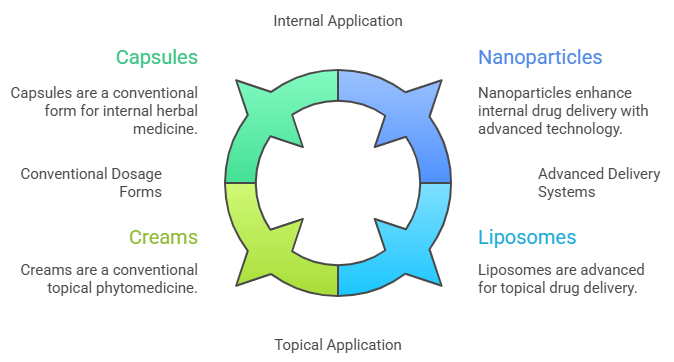
With research and experiments, scientists managed to isolate an active compound from plants and prepared dosages for effective therapy. Phytomedicines are available in different forms and dosage forms effect the bioavailability of the drug (Fig. 2). There are different types of dosage forms, and each play’s specific purpose. For example, for kidney diseases and urinary tract infections, conventional herbal medicines are available in the form of capsules, juice, powder extracts, or gummies. For skin-related issues and muscle pain or stiffness, phytomedicines are available in the form of oils, creams and ointments for topical application. Conventional herbal medicines are also available in the form of soft gel capsules, compressed tablets, syrups, solutions, and in the form of topical patches. Each form targets a particular issue and has a specifically designed drug bioavailability for successful treatment (Elkordy et al., 2021).
As people are taking more interest in conventional herbal medicines, researchers and scientists are trying to develop conventional phytomedicines with advancements to make medicines with greater efficacy, stability, minimal side effects, better absorption, distribution and longer shelf life to meet the demands of the population. Advanced drug delivery systems are introduced as nanoparticles, phytosomes, liposomes, etc. Nanoparticles are the basis of nanotechnology in the world of medicine. As the name suggests, nanoparticles are highly fine particles with a very small size. They help in solubility, providing a covering and as a carrier of the drug. Nanoparticles provide better absorption, delivery to the targeted site, drug stability, efficacy, and therapeutic index. Nanoparticles can be generated in various sizes and with desired properties. Phytosomes are generated by the combination of polyphenolic phytocompound and phosphatidyl-choline in particular proportions, hence are lipid soluble. Phytosomes are a more advanced form of drug delivery and are proven to increase the absorption of drugs, especially in the liver. Liposomes are made by mixing of Phosphor-lipids, either synthesized or natural. They are usually in the shape of lipid covering the fluid particle and are readily bio-functional. They are very easy to make and different types of liposomes can be easily generated by changing the drug composition without compromising therapeutic effect (Tiwari et al., 2020). Combining active phytocompounds with synthetic drugs is another approach to achieve a better therapeutic effect. This combination can act in synergy and can provide more benefits. Synergistic formulations can lead to better absorption, drug resistance, distribution, and fewer side effects. Phyto-constituent resveratrol and catechins have been clinically shown to help increase the therapeutic effect of several chemotherapeutic drugs. Similarly, several flavonoids such as quercetin and thiosulphate compound-allicin have been shown to increase the efficacy of antibiotics by hindering the bacterial cell functionality (Chaachouay, 2025).
Regulatory and Quality Control Perspective
Increasing demand for phytomedicine is pressuring the pharmaceutical industries to mass-produce them. In order to produce effective phytomedicines few points should be kept in consideration. The World Health Organization plays an important role by providing instructions and schemes. Producers can adopt procedures that reduce the risks of contamination, adulteration, and efficacy variability related to herbal medications by adhering to WHO recommendations. This guarantees that customers may use herbal products with trust and contributes to the protection of public health. The WHO-recommended quality control procedures help ensure the dependability and uniformity of herbal medications. Following WHO recommendations makes it easier to comply with legal obligations set out by international organizations and governments. When creating laws for the production, sales, and labelling of herbal medicines, regulatory bodies frequently consult WHO standards. Manufacturers can fulfil legal requirements and obtain commercial authorization for their products by adhering to these recommendations. WHO standards offer a standardized method for inspection procedures, encouraging uniformity and stability in the evaluation of herbal medications around the globe. This promotes trust and reliability between customers and medical experts by facilitating international trade and guaranteeing that goods produced in one nation fulfil quality standards recognized worldwide (Jain et al., 2024).
INTEGRATION INTO EVIDENCE-BASED CLINICAL PRACTICES
There is a huge amount of information available regarding the traditional and use of medicinal plants and based on that scientist managed to isolate components and studied their effect. A number of plant-derived medicinal products proved effective alone as well as in synergy with synthetic medicine. In many cases, plant products increased the efficacy of the drug and in some case the worked the opposite and affected drug action. Even though plants are responsible for the discovery of thousands of beneficial drugs consisting of phytochemicals, there are not enough clinical trials. When it comes to clinical trials of plant medicines alone and with other drugs, a lot of challenges come in the way. As discussed before, in vivo (animal model) and in vitro trials are not enough.
Human clinical trials are very difficult to conduct, as results may vary among individuals. Also, there are many other risks, such as safety concerns, inappropriate dosage, and herb-drug interactions. But there is no deny of therapeutic potential of plant medicines. Conventional or synthetic drugs are effective but often come with side effects. While plant medicines are effective, being natural leads to very few side effects and serves as a holistic approach. They are also a way of connecting and respecting traditional medicinal systems. Synthetic and plant medicine together can lead to a better approach to treatment and therefore, more clinical trials and practices should come into action. By following the guidelines of WHO, education of pharmacists, practitioners, physicians and manufacturers can create a pavement for a better life (Patwardhan et al., 2023).
EMERGING TRENDS AND FUTURE DIRECTIONS
Even though scientists had the information about several therapeutic phytocompounds, their production on a commercial level was not possible because of a lack of genetic data. The genomes of several medicinal plants are being constructed thanks to the development of high-throughput sequencing technology, which enables the biological characterization of genes involved in certain secondary biosynthetic processes. Omics technology helped in unveiling several phytochemicals, the mechanism of action, molecular pathway. A genomic study of a medicinal plant provided a set of genes that are biologically involved therapeutically. It is a very complex study and still, researchers are making efforts to design a complete genomic chart of a certain plant. Proteomic study focuses on the study of protein expression of phytochemicals, while metabolomics study focuses on the investigation of metabolites present in medicinal plants, as well as serves as a quality check (Zhang et al., 2023).
All these techniques and technologies have provided us with a massive amount of data, which is very difficult to go through and study at a time. Luckily, artificial intelligence is present to process this huge amount of data. Phytochemical genomics, metabolomics, and computerized phytochemistry are supporting the potential benefits of AI. Among the most talked-about technological developments of the century, machine learning has made it easier to estimate photosynthetic activity from plant cells to massive ecological systems on Earth by understanding and analyzing this data in a fraction of the time. A branch of artificial intelligence called machine learning makes use of algorithms that are known to complete the task at hand by learning from a given data collection, which may or may not be labelled. Deep learning is a highly conjectured machine learning approach that uses numerous processing layers to teach the computer to learn. The program automatically finds patterns in the data as it learns (Verghese et al., 2025).
Directed DNA insertions, deletions, substitutions, base editing, and initiation/suppression at the specific locus are the main applications of genome editing. The most effective method for altering the phytochemical profiles of medicinal plants is the CRISPR/Cas9 system. Important functional genes that regulate the amount and rate of production of a plant's medicinal constituents can have their expression changed by CRISPR/Cas9. To increase the yield of advantageous secondary metabolites for industrial, dietary, and therapeutic applications, several gene editing techniques have been used to alter phytometabolite pathways. As a reliable and efficient genome editing technology, CRISPR/Cas9 may improve quality, unravel routes, and upscale important bioactive compounds (Borah et al., 2024).
Readily changing climate due to various factors such as greenhouse gases, pollution, floods, soil nutrient depletion, and drought are risk factors disturbing the plant biodiversity as well as phytoconstituents in plants. As demand for medicinal plants is increasing, these factors could be a hindrance. Medicinal plants, along with the source of cure, are a huge part of our indigenous tradition. Climate changes are leading to the decline in growth rate and extinction of many medicinally important plants. In order to protect the biodiversity of indigenous medicinal plants, efforts should be made (Patni et al., 2022).
CONCLUSION
Global healthcare systems have relied heavily on medicinal plants as a means of combining the knowledge of conventional medicine with the scientific method. From their wide phytochemical variety, which has produced life-saving medications like paclitaxel and artemisinin, to their profound ethnobotanical roots in systems like Ayurveda, TCM, and Unani, medicinal plants remain to provide enormous therapeutic promise. Ethno-pharmacological knowledge must be integrated with evidence-based research as scientific methodologies develop. Preclinical and clinical models are used to validate the pharmacological effects of plant-derived compounds, ensuring their safety and effectiveness. Meanwhile, advancements in composition and administration technologies are increasing the bioavailability and therapeutic efficacy of these compounds. To protect public health, regulatory frameworks and quality control requirements are essential, particularly as herbal medicines become more widely used in clinical settings. In the future, innovative techniques like genetic engineering, artificial intelligence, and omics technologies should speed up the discovery and maximize the manufacturing of bioactive substances. In order to fully utilize phytomedicine, an integrated approach that respects traditional knowledge, incorporates contemporary research, and puts patient safety first is required. In addition to combining the old with the modern, this integration signifies a radical change in the foundations of global health.
References
- Afzal A, K Iqbal, A Tanveer et al., 2024. Cultural perspectives on healing: a study of traditional medicinal practices. In: Ethnopharmacology and Ethnobotany of Medicinal Plants (Sindhu ZuD, B Aslam, MN Faisal & W Majeed, eds): FahumSci, Lahore, Pakistan pp:33-40. ISBN: 627-7745-10-3.
- Ansari P, AD Reberio, NJ Ansari et al., 2025. Therapeutic potential of medicinal plants and their phytoconstituents in diabetes, cancer, infections, cardiovascular diseases, inflammation and Gastrointestinal disorders. Biomedicines 13:454.
- Bekisz S, L Baudin, F Buntinx et al., 2022. In vitro, in vivo, and in silico models of lymphangiogenesis in solid malignancies. Cancers 14:1525.
- Borah A, S Singh, R Chattopadhyay et al., 2024. Integration of CRISPR/Cas9 with multi-omics technologies to engineer secondary metabolite productions in medicinal plant: Challenges and Prospects. Functional & Integrative Genomics 24:207.
- Chaachouay N & L Zidane, 2024. Plant-derived natural products: a source for drug discovery and development. Drugs and Drug Candidates 3:184-207.
- Chaachouay N, 2025. Synergy, additive effects, and antagonism of drugs with plant bioactive compounds. Drugs and Drug Candidates 4:4.
- Chihomvu P, A Ganesan, S Gibbons et al., 2024. Phytochemicals in drug discovery—A confluence of tradition and innovation. International journal of molecular sciences 25:8792.
- Chiocchio I, M Mandrone, P Tomasi et al., 2021. Plant secondary metabolites: An opportunity for circular economy. Molecules 26:495.
- Elkordy AA, RR Haj-Ahmad, AS Awaad et al., 2021. An overview on natural product drug formulations from conventional medicines to nanomedicines: Past, present and future. Journal of Drug Delivery Science and Technology 63:102459.
- Elshafie HS, I Camele & AA Mohamed, 2023. A comprehensive review on the biological, agricultural and pharmaceutical properties of secondary metabolites based-plant origin. International journal of molecular sciences 24:3266.
- Fonmboh DJ, ER Abah, TE Fokunang et al., 2020. An overview of methods of extraction, isolation and characterization of natural medicinal plant products in improved traditional medicine research. Asian Journal of Research in Medical and Pharmaceutical Sciences 9:31-57.
- Giri KR, K Palandurkar, A Trigunayat et al., 2024. Reverse Pharmacology: Transdisciplinary Approach of Drug Discovery from Ethnomedicine. In: Traditional Resources and Tools for Modern Drug Discovery (Das Talukdar A, JK Patra, G Das & D Nath, Eds). Interdisciplinary Biotechnological Advances. Springer, Singapore, pp. 267-293. ISBN: 978-981-97-4600-2.
- Inoue M & S Hayashi, 2021. Blessings of Medicinal Plants—History and Prospects. In: Medicinal Plants: Sustainable Development and Biodiversity, (Ekiert HM, KG Ramawat & J Arora, eds): vol 28, Cham: Springer International Publishing pp:771-796. ISBN: 978-3-030-74779-4.
- Jain SD, SK Shrivastava, A Agrawal et al., 2024. WHO guidelines for quality control of herbal medicines: From cultivation to consumption. Internafional Journal of Pharmaceufical and Chemical Analysis 11: 212-225.
- Jamal A, 2023. Embracing nature's therapeutic potential: Herbal medicine. International Journal of Multidisciplinary Sciences and Arts 2:117-126.
- Linhares Y, A Kaganski, C Agyare et al., 2023. Biodiversity: The overlooked source of human health. Trends in molecular medicine 29:173-187.
- Marne PA, AT Pawar, AA Tagalpallewar et al., 2025. Comparative Phytochemistry and Chemotaxonomy. Pharmacognosy and Phytochemistry: Principles, Techniques, and Clinical Applications 333-346.
- Napagoda M & D Wijesundara, 2022. Medicinal plants as sources of novel therapeutics: The history, present, and future. Chemistry of Natural Products: Phytochemistry and Pharmacognosy of Medicinal Plants 3:4-18.
- Nasim N, IS Sandeep & S Mohanty, 2022. Plant-derived natural products for drug discovery: current approaches and prospects. The Nucleus 65:399-411.
- Parish ST, M Aschner, W Casey et al., 2020. An evaluation framework for new approach methodologies (NAMs) for human health safety assessment. Regulatory Toxicology and Pharmacology 112:104592.
- Parveen A, M Ahmad, B Parveen et al., 2022. The traditional system of Unani medicine, its origin, evolution and Indianisation: A critical appraisal. Indian Journal of Traditional Knowledge (IJTK) 21:511-521.
- Patni B, M Bhattacharyya, A Kumari et al., 2022. Alarming influence of climate change and compromising quality of medicinal plants. Plant Physiology Reports 27:1-10.
- Patwardhan B, LS Wieland, O Aginam et al., 2023. Evidence-based traditional medicine for transforming global health and well-being. Journal of Integrative and Complementary Medicine 29:527-530.
- Pirintsos S, A Panagiotopoulos, M Bariotakis et al., 2022. From traditional ethnopharmacology to modern natural drug discovery: A methodology discussion and specific examples. Molecules 27:4060.
- Stielow M, A Witczyńska, N Kubryń et al., 2023. The bioavailability of drugs—the current state of knowledge. Molecules 28:8038.
- Tiwari S, MS Talreja & MS Pandey, 2020. A review on use of novel drug delivery systems in herbal medicines. Science and Engineering Journal 24:190-197.
- Turner NJ, A Cuerrier & L Joseph, 2022. Well grounded: Indigenous Peoples' knowledge, ethnobiology and sustainability. People and Nature 4:627-651.
- Twaij BM & MN Hasan, 2022. Bioactive secondary metabolites from plant sources: types, synthesis, and their therapeutic uses. International Journal of Plant Biology 13:4-14.
- Varghese R, H Shringi, T Efferth et al., 2025. Artificial intelligence driven approaches in phytochemical research: trends and prospects. Phytochemistry Reviews 1-16.
- Verep D, S Ateş & E Karaoğul, 2023. A review of extraction methods for obtaining bioactive compounds in plant-based raw materials. Bartın Orman Fakültesi Dergisi 25:492-513.
- Zhang W, Y Zeng, M Jiao et al., 2023. Integration of high-throughput omics technologies in medicinal plant research: The new era of natural drug discovery. Frontiers in Plant Science 14:1073848.