
INTRODUCTION
Chronic respiratory disease (CRD) refers to illnesses that affect the lungs and airways, such as chronic pulmonary obstructive disease (COPD), asthma, pneumonia, and sarcoidosis of the lungs (Syamlal, 2020). The World Health Organization, known as the WHO, is the primary governing body for the fulfillment of health-related SDGs, and its 2019-2023 strategy outlines three key objectives: one billion more people experiencing a better quality of life, universal health coverage, and greater safeguards against health emergencies. In addition to its efforts to monitor health-associated indicators, the WHO has developed a global action plan (GAP) for well-being and a healthy life for all (SDG3 GAP) to boost collaboration among key actors in the multilateral framework and accelerate progress toward health-related SDGs targets (WHO, 2018). The most recent assessment on the worldwide incidence and related health impact of CRDs was produced using the Global impact of injuries, diseases, and Risk Factors Research Study (GBD) 2017. New data sources, locations, risk factors, and analytical adjustments result in more exact assessments in the updated GBD 2019. CRDs are mostly caused by environmental and occupational dangers, as well as smoking, with different distributions depending on geography, culture, age, and gender. Understanding the trends in these risk variables and identifying at-risk populations can assist policymakers in devising effective targeting of risk modification measures, resulting in reduced disability and early mortality (Momtazmanesh et al., 2023).
Inhaled corticosteroids (ICSs) are commonly used to treat chronic respiratory illnesses. These drugs act by decreasing the synthesis of pro-inflammatory chemicals in the airways, thereby preventing or reducing allergic reactions, airway constriction, and mucus production. The Global Initiative for Asthma (GINA) states that ICSs have been demonstrated to improve lung function, minimize exacerbation, and improve quality of life in individuals with chronic respiratory disorders (Wang et al., 2023). However, several present issues with ICS distribution limit its effectiveness. One key problem is achieving the medication's optimal distribution throughout the lung. ICS particles may become trapped in the mouth cavity, reducing their effectiveness in the respiratory tract. Individuals may also have difficulties using their inhaler appropriately, resulting in diminished delivery of medicines and efficacy. Furthermore, finding the optimum ICS dosage for every patient can be difficult because individual demands might vary greatly (Latorre et al., 2020).
PATHOPHYSIOLOGY OF MAJOR PULMONARY DISEASES
Asthma
Inflammation of the airway wall is linked to asthma. Airway wall examinations and bronchoalveolar lavage fluids of asthmatic patients include elevated levels of different types of inflammatory cells, including eosinophils, but also basophils, mast cells, macrophages, and some types of lymphocytes. The mast cells, as well as Th 2 cells, are activated by inhaled antigens, inflammatory cytokines and mediators, including IL-4 and IL-5, which are produced. In the process of extending eosinophil survival, chemokines and cytokines generate inflammatory mediators such as leukotrienes, which exacerbate tissue damage in the airways. Resident airway cells are activated by this inflammatory cascade, which results in a protracted chronic inflammatory response marked by mucous hypersecretion, epithelial shedding, and remodeling of the airway wall, including fibrosis and smooth muscle hyperplasia (Habib et al., 2022).
One of the main features of asthma is airway hyperresponsiveness, which is characterized by an increased bronchoconstrictor response to different stimuli. Increased histamine production from mast cells, increased airway smooth muscle bulk, increased vagal tone, and raised intracellular free calcium are some of the factors that lead to increased muscle contractility. Normal breathing is made more difficult by inflammation, white blood cell granules, fluid, and mucus. Myofibroblast proliferation causes collagen to be deposited, which thickens the basement membrane by narrowing the layer of smooth muscle and thickening the epithelium. As a result, airway remodeling may result in permanent airflow blockage (Bhong et al., 2023).
Chronic Obstructive Pulmonary Disease (COPD)
The endogenous ROS generated from inflammatory responses and the mitochondrial respiration to inhaled pathogens like bacteria and viruses, the lungs are exposed to external oxidants in inspired air. Mitochondria have been dysfunctional in COPD, via leaky membranes, and are increased due to a failure in clearance by mitophagy, resulting in mitochondrial ROS (mROS), that are major sources of oxidative stress in the lungs, including neutrophils and fibroblasts, as well as inflammatory cells from COPD patients generate intracellular ROS primarily from leaky abnormal mitochondria and NADPH oxidases (Barnes, 2022).
Both endogenous reactive oxygen species (ROS) produced by neutrophils and external ROS produced by cigarette smoke activate epidermal growth factor receptor (EGFR). Nuclear transcription factors such as nuclear factor kB (NF-kB) can be activated downstream of EGFR to initiate the transcription of the MUC gene. Additionally, EGFR has the ability phosphorylate signaling transducers and activators of transcription 6 (STAT6), which lowers the expression of forkhead box A2 (FOXA2) and encourages goblet cell proliferation and mucus secretion (Oh et al., 2021).
Pulmonary Fibrosis
Mesenchymal cells and fibroblast precursors are the primary sources of fibrosis-triggering cells, and several potential mechanisms for their development have been suggested, such as resident lung fibroblast proliferation, migration and fibroblastic differentiation of bone marrow cells, like circulating monocytes or fibrocytes and epithelial to mesenchymal transition (EMT). Myofibroblasts, which are differentiated fibroblasts that resemble smooth muscle cells because they can contract and contain α-SMA, are thought to be the main effector cells in the development of pulmonary fibrosis, regardless of the source of the lung fibroblasts. In response to chemokines and cytokines released through inflammatory and resident cells, fibroblasts move to the site of tissue damage and start producing ECM components (Savin et al., 2022).
Acute Respiratory Infections
In the pathophysiology of acute respiratory distress syndrome (ARDS), microbial or cellular damage first activates alveolar macrophages, which then release chemokines and cytokines that attract neutrophils. These cells help remove pathogens, but they also harm the alveolar endothelial-epithelial barriers, which causes inflammatory oedema in the alveoli. Neutrophil apoptosis and alveolar epithelial regeneration are indicators of the immune response's shift towards tissue repair during the proliferative phase. Persistent inflammation can cause fibrotic alterations in the lungs and, in some cases, fibrosing alveolitis if this phase is disturbed (Swenson and Swenson, 2021).
Increased capillary permeability, which damages the capillary as well as the alveolar epithelium, is a characteristic of ARDS. Pro-inflammatory cytokines, including TNF, IL-1, and IL-6, cause diffuse alveolar damage and the buildup of protein-rich fluid inside the alveoli. Toxic mediators are released by activated neutrophils, causing oxidative cell injury. NF-kappa B transcription anomalies have been observed in the lungs of ARDS patients, and neutrophil recruitment and inflammation are crucial to the pathophysiology of ARDS. Inflammation and lung injury are made worse by other substances like angiotensin-2 and endothelin-1. No single biomarker can accurately predict patient outcomes because of the intricate interactions between multiple pathways in the development of ARDS (Bos and Ware, 2022).
Tuberculosis
One of the most important aspects of TB pathogenesis is the link between Mycobacterium tuberculosis (Mtb) and macrophages. As an internal pathogen, Mtb multiplies and thrives inside the infected host cells, primarily in the macrophages. After lung infection is established, the bacilli must go to the extracellular region and cause host cell death to spread to new hosts. Recent advancements in the various ways that tuberculosis infection directly causes cell death and the effects it has on host cells. Additionally, it will pinpoint host and mycobacterial variables as possible targets for upcoming TB treatments (Nisa et al., 2022).
The pathologic characteristic of Mycobacterium tuberculosis infection is the granuloma. An individual with active tuberculosis can spread Mycobacterium tuberculosis through aerosols. Individual bacilli are most frequently inhaled in the airways, where they come into contact with alveolar macrophages and cause infection. Nevertheless, the host mounts an immunological response when the bacilli (probably in alveolar macrophages, or possibly other phagocytes) go to the lung parenchyma. Granuloma formation starts when monocytes, macrophages, neutrophils, as well as dendritic cells are drawn to the infection site, probably as a result of chemokine and cytokine signals of the infected cells. The bacilli are transported to the lymph nodes that drain the lungs, where the adaptive immune response is primed (Flynn and Chan, 2022).
ROLE OF PHYTOCHEMICALS IN PULMONARY HEALTH
Alkaloids
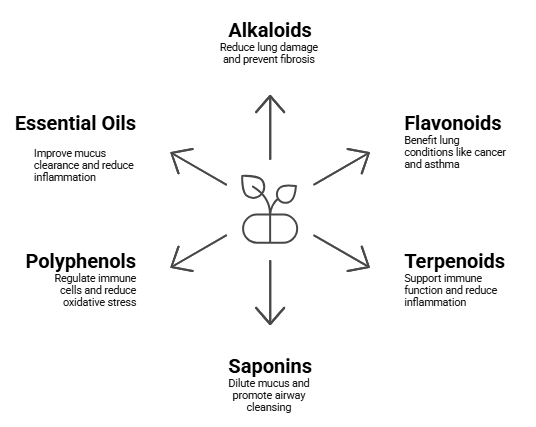
Many plant species contain the isoquinoline alkaloid tetrahydropalmatine (THP), which significantly lessens the damaging effects of radiation and oxidative alteration in the lungs. By reducing inflammation of the lungs, apoptosis, and the level of protein in the lung tissues, THP reduced lung damage and demonstrated the preventive impact of THP treatment for pulmonary fibrosis (Dudala et al., 2021).
Flavonoids
One of the plant flavonoids is quercetin. Quercetin is abundant in Camellia sinensis. Other sources of quercetin include a variety of fruits and vegetables, such as kale and red onions. Among the many biological impacts of quercetin are immune-regulating, anti-inflammatory, and antioxidant properties. Numerous lung conditions, including lung cancer, COPD, and asthma, have been shown to benefit from quercetin in cell culture, along with animal investigations. In bleomycin-treated rats, quercetin reduced PF by blocking pro-fibrotic factors, such as IL-8, VEGF, IL-10, TNF-α, TGF-β1, and NF-κB (Hosseini et al., 2021).
Terpenoids
Terpenoids have pharmacological properties that include immunomodulation support, anti-inflammatory, antiviral, and neutrophil function inhibition. Additionally, it has been demonstrated that terpenoids inhibit neutrophil elastase (Surowiak et al., 2021). They have an array of biological actions, including anti-inflammatory and anti-tumor properties, and are present in many different types of plants. Triterpenoids were extracted from Panax japonicus var roots (Fig. 1). Terpenoids have the potential to be used as medicinal products for pulmonary diseases involving hyperactive immune responses and chronic inflammation (Igwe et al., 2024).
Saponins
Ivy leaf extract is one of the most significant and widely used saponin medications with expectorating action (mucolytic) because it effectively dilutes viscous bronchial secretions and promotes airway cleansing. Its spasmolytic, bronchodilator, and expectorant actions have been demonstrated in both in vitro and in vivo investigations, and it is recommended for the treatment of basic acute bronchitis as well as cough therapy (Barnes et al., 2020). Senega root decreases the viscosity of bronchial mucus, which has a secretolytic effect. All saponins, including senegin as well as polygalic acid, irritate the stomach mucosa and cause a reflexive increase in bronchial mucus secretion (Petrovic et al., 2022).
Polyphenols
According to recent studies, polyphenols may have immunomodulatory effects by regulating immune cell function through complex processes. Polyphenols have been linked to the inhibition of pro-inflammatory cytokines, including interleukin-6 (IL-6) and tumor necrosis factor-alpha (TNF-α), possibly via blocking nuclear factor-kappa B (NF-κB) signaling pathways. Additionally, polyphenols have antioxidant qualities that reduce oxidative stress, which is known to contribute to the pathophysiology of autoimmune diseases. Polyphenols have a complex effect on immunological regulation, as evidenced by their reduction of autoantibody formation, regulatory T-cell function, and adjustment of T-helper cell balance (Shakoor et al., 2021).
Essential oils
Eucalyptus oil changes the physical characteristics of mucus, making it less sticky and thick, which makes it easier for the airways and lungs to remove it. It controls mucin genes (such as MUC5AC) that govern excessive mucus production, particularly in long-term diseases like bronchitis, COPD, and asthma. Eucalyptus can help transport phlegm away from the lungs more effectively by improving mucociliary clearance, which is the flow of mucus by microscopic hair-like filaments (cilia) in the airways. Eucalyptus oil successfully lowers harmful reactive oxygen species, demonstrating the compound's antioxidative qualities (Nh et al., 2025).
HERBAL INTERVENTIONS FOR PULMONARY DISEASES
Diseases of the lungs (such as chronic obstructive pulmonary disease (COPD), asthma, pulmonary fibrosis, and other inflammatory and obstructive disorders) present a significant health burden to the world (Balaei-Kahnamoei et al., 2024). Traditional pharmacotherapy, including bronchodilators, corticosteroids, and anti-inflammatory medications, continues to be the foundation of clinical treatment. However, there is a growing body of evidence to support the adjunctive nature of herbal interventions in such conditions (Ovia et al., 2021). With a wide range of pharmacological interventions and botanicals, most of which have long historical use in traditional systems of medicine, including Ayurveda and Traditional Chinese Medicine (TCM), show a wide range of pharmacological activities (Li et al., 2021). The chapter is an attempt to provide a review of the pharmacological evidence on the possible usefulness of various herbs in the treatment of pulmonary diseases, with special emphasis on their anti-inflammatory, broncho-dilatory, antioxidant, cytoprotective, antitussive, expectorant, and anti-fibrotic effects.
Herbs with Anti-inflammatory Effects
Curcuma longa: Turmeric is rhetorically referred to as Curcuma longa and has undergone extensive research regarding its anti-inflammatory and immunomodulatory effects. Curcumin, being the key phytochemical of C. longa, has been well reported to reduce many inflammatory pathways. It not only suppresses pro-inflammatory cytokines TNF- 2, IL-1β, and IL-6, but also mitigates the NF-κB pathway (Shafique et al.). Research has shown that curcumin has a great anti-inflammatory activity in pulmonary diseases, particularly COPD, asthma and pulmonary fibrosis. Preclinical models have shown that curcumin is able to decrease airway remodeling, oxidative stress and lung inflammation by reducing the expression of inflammatory mediators. Additionally, curcumin balances a number of signaling pathways. It triggers the nuclear factor erythroid 2-related factor 2 (Nrf-2), which is an important antioxidant response actor (Satpathy and Parida, 2023). Nevertheless, the low bioavailability of curcumin is a limit to the clinical application of this compound, as it decreases its therapeutic activity. New drug delivery concepts, like curcumin-loaded nanoparticles and liposomes, are under consideration to maximize their uptake and direct action on the lung tissue (Kwon et al., 2021).
Zingiber officinale: also known as ginger, has been used since ancient times in different traditional medical systems in the treatment of respiratory infections. Ginger and its major active constituents, especially gingerol, have anti-inflammatory, antioxidant, and immunomodulatory effects, which have been demonstrated by an extensive body of preclinical and clinical studies (Pratama et al., 2022). There is evidence that ginger suppresses airway inflammation in asthma and chronic obstructive pulmonary disease by inhibiting the production of proinflammatory cytokines and chemokines and altering the actions of enzymes, including cyclooxygenase2 (COX-2). Even though most of the studies investigating the anti-inflammatory properties of ginger have been carried out in vitro or by the use of animal models, the existing evidence indicates that the product may be used as a complementary treatment option in the treatment of pulmonary inflammation (Reviono et al., 2023). Moreover, a few clinical trials have shown that symptomatic improvement in asthma and COPD individuals was achieved after the ginger supplementation. However, it is urgent to provide more strict human clinical trials to determine standard dosage and the long-term effects of ginger and thus justify its use in the evidence-based respiratory care (Lorensia et al., 2021).
Herbs with Bronchodilator Activity
Tylophora indica: The herb Tylophora indica, which is used in the management of asthma in Ayurvedic medicine, has bronchodilatory and anti-inflammatory effects. The major alkaloids, especially tylophorine, have been shown to cause relaxation of airway smooth muscle, reduce bronchial hyper-reactivity and suppress inflammation in preclinical asthma models (Mostafa et al., 2023). Its bronchodilatory activity was investigated and it was found to have the ability to significantly increase airflow and decrease airway resistance in animal asthma models. Despite these promising statistics, there is limited clinical data and further studies need to be done to assess safety as well as efficacy and pharmacokinetic profile of T. indica on human beings. Its therapeutic effect can be adjusted by such variables as dosage, formulation, and potential synergistic action with other medicinal plants (Gururani et al., 2023).
Ephedra sinica: Ephedra Sinica also known as Ma Huang, is a botanical specimen in the hierarchy of traditional Chinese medicine and has been documented over the years in the ethnopharmacological literature as a medicine to treat asthma with a range of pulmonary disorders. Ephedrine is an alkaloid and the most commonly acting pharmacologically active constituent of E. sinica, which acts as a sympathomimetic compound (Zhuo et al., 2024). The action of ephedrine is that the β1-adrenergic receptors on the smooth pulmonary muscles are used, thus relaxing bronchial constriction. The pharmacodynamic activity is comparable to the established 2 -agonist bronchodilators that have been in use in modern clinical practice. Although it has been proven to be effective in clinical tests and experimental research, the use of Ephedra in clinical practice has been significantly suppressed due to various cardiovascular adverse effects, especially hypertension, tachycardia, and arrhythmogenic effects (Chang et al., 2024). The safety questions have led to tight regulatory restrictions in many jurisdictions, which has in effect restricted the access of Ephedra-based preparations to treat therapeutic uses. Despite these limitations, Ephedra is still a very important herb in traditional medicine. Continued pharmaco-scientific work is to come up with safer preparations or adjunctive formulations that can override the cardiovascular risks without losing the therapeutic profile of the herb in terms of bronchodilation (Lv et al., 2025).
Herbs with Antioxidant and Cytoprotective Action
Camellia sinensis: Green tea, also referred to as Camellia sinensis, contains polyphenolic compounds, such as catechins, which possess significant antioxidants and cytoprotective properties. Oxidative stress is a key factor in the etiopathogenesis of various pulmonary diseases, including chronic obstructive lung disease, asthma, and lung fibrosis. It has been shown that green tea alleviates oxidative damage in pulmonary tissues by quenching of reactive oxygen species (ROS) and activating antioxidant enzymatic processes (Mokra et al., 2022). In addition to the antioxidative effects, the polyphenolic compounds of the green tea can act on inflammatory signaling cascades and potentially mediate the effects on airway inflammation and remodeling of the extracellular matrix (Kang et al., 2023). The potential benefit of green tea as a curtailer of oxidative stress-mediated pulmonary injury has been convincingly demonstrated in a series of in vitro experiments and animal models, but there are few strong clinical trials in human populations (Shin et al., 2022).
Allium sativum: which is widely referred to as garlic, is widely used in both the food and medical industries. The biomolecules in garlic that contain sulfur, especially allicin, exhibit antioxidant, anti-inflammatory and immunomodulatory effects, which have been reported to bring benefits to pulmonary physiology (Savira et al., 2023). Garlic was studied concerning its ability to reduce oxidative stress, regulate immune response and prevent effects of inflammatory pathways in respiratory diseases like asthma and chronic obstructive pulmonary disease (COPD). However, the clinical data that prove a therapeutic effect of garlic in respiratory conditions are relatively limited (Boskabady et al., 2022). Most of the studies that are in existence are preclinical or have small-scale human studies. Therefore, large randomized, controlled trials are necessary to determine its effectiveness, the best dosages, and long-term safety (Loría Gutiérrez et al., 2021).
Herbs with Antitussive and Expectorant Properties
Glycyrrhiza glabra: also referred to as licorice, has traditionally been used as an expectorant and antitussive (Wahab et al., 2022). The anti-inflammatory, immunomodulatory and mucolytic effects of the phytochemical constituents of licorice, especially glycyrrhizin, have made it a potentially useful adjunctive treatment of respiratory diseases characterized by hyper-secretion of mucus, such as bronchitis and asthma (Guftar et al., 2025). Animal models have reported the ability of licorice to reduce bronchial hyperresponsiveness and airway inflammation. However, there are some side effects of chronic use of licorice, including hypertension, electrolyte imbalance, and adrenal suppression; these need to be taken into account carefully (Sherwani and Nawab, 2024).
Mentha spp.: Menthas such as peppermint are widely used for their ameliorating properties in the respiratory system (Askari and Mohtashami, 2022). The most common bioactive compound of peppermint, which is menthol, is a mild bronchodilator, and it has been found to have antitussive and expectorant effects. Peppermint oil has found application in traditional medical practice to reduce symptomatic expression of cough, congestion and bronchial irritation (Saqib et al., 2022). Despite its extensive usage, the lack of specific clinical evidence that fully supports the effectiveness of Mentha spp. in pulmonary diseases is limited. Most of the existing studies mainly focus on symptomatic relief as opposed to explaining the underlying pathology (Chakraborty et al., 2022).
Anti-fibrotic Herbal Agents
Salvia miltiorrhiza: Danshen or Salvia miltiorrhiza is a commonly used traditional Chinese medicine that possesses vascular and anti-fibrotic effects. Preclinical trials have also shown that Danshen has the capability of preventing pulmonary fibrosis and airway remodelling by inhibiting fibroblast activation, decreasing collagen deposition, and altering the profibrotic signaling pathways (Huang et al., 2024). The systematic review of traditional Chinese medicine to treat COPD and pulmonary fibrosis showed that Salvia miltiorrhiza was one of the most promising herbal therapies in the prevention of airway fibrosis-induced changes. But there is limited clinical evidence, and this requires human studies on a large scale that will confirm its effectiveness in pulmonary fibrosis (Chen et al., 2025).
Withania somnifera: Ashwagandha (Withania somnifera) is an adaptogenic herb that is characterized by the capacity to regulate the immune system and alleviate stress (Singh et al., 2022b). It is explored due to its possible use in reducing inflammation and fibrosis in chronic lung disease, especially in the pulmonary fibrosis model (Singh et al., 2022a). Nevertheless, whereas certain studies in animals show anti-inflammatory and cytoprotective effects, there is little clinical information in humans about the anti-fibrotic effects of the compound (Saleem et al., 2024).
HERBAL FORMULATIONS FOR PULMONARY DISORDERS
Ayurvedic Medicines
Ayurvedic medicines have been used for a long time, and in recent years, their use has expanded dramatically in response to the growing importance of natural products worldwide. However, there is no suitable standard operating procedure (SOP) or standardization approach for many Ayurvedic compositions (Mangal et al., 2023). Through the identification of many etiological elements, such as environmental exposures and lifestyle considerations, Ayurvedic perspectives, as expressed by Acharya Charaka, enhance our understanding. In Ayurveda, Acharya Charaka listed a number of etiological reasons for Shwasa roga, such as exposure to certain elements, excessive physical activity, poor diet, trauma, malnutrition, disorders of bleeding, and infectious diseases (Bhaskar et al., 2024). A polyherbal Ayurvedic medication called "Sitopaladi churna" (SPC) is used to treat pleurodynia, intercostal neuralgia, colds, coughs linked to bronchitis, pneumonia, tuberculosis, burning sensations in the extremities, allergies, viral respiratory infections, digestive problems, and congestion in the throat and chest. It has been reported that the components of Sitopaladi churna have antioxidant properties (Shrestha, 2021).
Traditional Chinese Medicine
Traditional Chinese Medicine (TCM) has emerged as a valuable adjunct in managing pulmonary disorders such as COPD, pulmonary fibrosis, and pulmonary hypertension. Syndrome-based TCM granules Bu-Fei Jian-Pi, Bu-Fei Yi-Shen and Yi-Qi Zi-Shen significantly reduced exacerbations and improved dyspnea, exercise capacity, and quality of life in patients with severe COPD when used alongside standard Western therapy. TCM herbal formulas may enhance lung function and reduce pulmonary artery pressure in COPD-associated pulmonary hypertension, while preclinical innovations, such as inhalable nanoparticles containing astragaloside IV and ligustrazine, show promising anti-fibrotic and anti-inflammatory effects in models of pulmonary fibrosis by modulating NOX4-ROS, p38 MAPK, and NLRP3 signaling (Li et al., 2025).
Unani and Persian Herbal Mixtures
The phrase Waram-i-shoab Muzmin, which denotes prolonged inflammation of the mucous lining of the bronchioles and presents as a persistent cough and profuse expectoration, is used in Unani medicine to define the clinical entity that resembles chronic bronchitis. The symptomatology is already adequately depicted in classical Unani writings under situations like Su‘āl (cough), referred to as Surfa. Surfa, according to Unani doctors, is an irregular movement of the lungs and related respiratory organs that acts as a natural mechanism for the intrinsic faculty of "abī'at" to evacuate irritating or diseased stuff from the chest. They contrasted the role of coughing in the lungs with that of sneezing in the brain or cramps in the stomach, all of which are defensive reflexes intended to restore equilibrium (Mansoor et al., 2025). Coughing is the main symptom of COPD, according to Persian medical field. The production of thick, sticky secretions is the source of this. This may result in infection and inflammation. Because of their anti-inflammatory, anti-oxidant, and anti-microbial qualities, Persian medicinal herbs such as Zataria multiflora, Thymus vulgaris, Glycyrrhiza glabra, Crocus sativus, Nepeta bracteate and Hyssopus officinalis L. have positive benefits on COPD (Baniamerian et al., 2023).
Numerous polyherbal preparations are widely acknowledged for their ability to alleviate symptoms and slow the advancement of diseases. These herbal and polyherbal compounds exhibit a variety of target-specific biological activities, such as bronchodilation, anti-analgesic, mast cell stabilization, anti-allergic, anti-spasmodic, and anti-inflammatory properties. The anti-asthmatic properties of "Kushta Abrak Kalan (PH 1)" from Hamdard Laboratories and "Qars Dama Ajmali (PH 2)" from Ajmal Dawa Khana are utilized in these compositions. PH 1 is made from white talc, Aloe vera mucilage, and potassium nitrate and is used to treat cough, asthma, spermatorrhoea, and leucorrhoea. Glycyrrhiza glabra, Acacia arabica, Papaver somniferum, Viola odorata, and Piper longum make up PH 2. It is used to treat productive coughs and asthma (Saleem et al., 2020).
Novel Drug Delivery Systems
Nanoparticles, which typically have a particle size of less than 1000 nm, are used to administer a variety of medications (such as corticosteroids, long-acting β-agonists, and biomacromolecules like DNA, siRNA, and mRNA) to treat lung disorders linked to inflammation. Nanoparticles can be administered by injection, ingestion, or inhalation (Loo and Lee, 2022).
Inhalation has long been the most popular and traditional approach to delivering medications to the lungs and airways. The three primary uses of inhaled medications are therapy management, topical or systemic illness treatment, and prophylaxis. Drug delivery is accomplished by inhaler devices such as nebulizers, metered-dose inhalers, dry powder inhalers, and other aerosol-based device technologies. In contrast to systemic distribution, focused delivery to the lungs through inhalation necessitates the use of lower medication dosages. By delivering the medication locally to the affected spot, the targeted strategy improves the therapeutic index while lowering the systemic side effects brought on by delivery methods, including oral dosing and injections. Because the human lungs have a huge surface area, the inhalation delivery approach is also used for alveoli-based systemic administration (Mishra and Singh, 2020).
References
- Askari Y, R Mohtashami, 2022. Evaluation of Thymus vulgaris, Salvia officinalis, Mentha piperita and Hyssopus officinalis with benefits on respiratory organs. International Journal of Advanced Biological and Biomedical Research 10:173-84.
- Balaei-Kahnamoei M, M Al-Attar, M Khazaneha et al., 2024. Overview of herbal therapy of acute and chronic pulmonary disease. Library Hi Tech 42:79-100.
- Barnes LA, M Leach, D Anheyer et al., 2020. The effects of Hedera helix on viral respiratory infections in humans: a rapid review. Advances in Integrative Medicine 7:222-26.
- Barnes PJ, 2022. Oxidative stress in chronic obstructive pulmonary disease. Antioxidants 11:965.
- Bhong PN, PJ Patil, PK Ghadage, 2023. Pathophysiology of asthma: a review. International Journal of Pharmaceutical Sciences and Research 14:4373-83.
- Bos LD, LB Ware, 2022. Acute respiratory distress syndrome: causes, pathophysiology, and phenotypes. The Lancet 400:1145-56.
- Boskabady M, N Marefati, F Kianian et al., 2022. The effects of Allium cepa and their derivatives on respiratory diseases. In: Frontiers in Drug Design and Discovery. Bentham Science Publishers, pp:116-40.
- Chakraborty K, AR Chakravarti, S Bhattacharjee, 2022. Bioactive components of peppermint (Mentha piperita L.). Journal of Pharmacognosy and Phytochemistry 11:109-114.
- Chang A, X Zhao, L Zhang et al., 2024. TCM practitioners’ attitudes regarding Ephedra sinica Stapf. Journal of Traditional Chinese Medical Sciences 11:435-42.
- Chen L, H Lin, L Qin et al., 2025. Network pharmacology-based approach to Salvia miltiorrhiza against idiopathic pulmonary fibrosis. Frontiers in Medicine 12:1569590.
- Dudala SS, TC Venkateswarulu, SC Kancharla et al., 2021. A review on importance of bioactive compounds of medicinal plants in treating idiopathic pulmonary fibrosis. Future Journal of Pharmaceutical Sciences 7:156.
- Flynn JL, J Chan, 2022. Immune cell interactions in tuberculosis. Cell 185:4682-4702.
- Guftar Z, HM Khan, AA Alosaimi et al., 2025. Anti-inflammatory and anti-allergic potential of liquiritin in asthma management. Naunyn-Schmiedeberg's Archives of Pharmacology 398:1-13.
- Gururani R, S Patel, A Bisht et al., 2023. Tylophora indica alleviates allergic asthma. Fundamental and Clinical Pharmacology 37:1153-69.
- Habib N, MA Pasha, DD Tang, 2022. Current understanding of asthma pathogenesis and biomarkers. Cells 11:2764.
- Hosseini SA, F Zahedipour, T Sathyapalan et al., 2021. Pulmonary fibrosis: therapeutic and mechanistic insights into the role of phytochemicals. BioFactors 47:250-69.
- Huang P, X Wang, Y Cao et al., 2024. Research progress on Salvia miltiorrhiza in pulmonary diseases. Biomedicine and Pharmacotherapy 179:117282.
- Igwe OU, MU Anyaogu, IE Otuokere, 2024. Chemical, antioxidant and antibacterial assessment of clove (Syzygium aromaticum) seed extract and in-silico pharmacokinetic exploration of prominent compounds. Journal of Applied Sciences and Environmental Management 28:1935-43.
- Kang S, HY Kim, AY Lee et al., 2023. Camellia sinensis extract attenuates allergic asthma. Pharmaceutics 15:2355.
- Kwon CY, B Lee, BJ Lee et al., 2021. Herbal medicine for COPD: a meta-analysis. Frontiers in Pharmacology 12:717570.
- Latorre M, E Bacci, V Seccia et al., 2020. Upper and lower airway inflammation in severe asthmatics: a guide for a precision biologic treatment. Therapeutic Advances in Respiratory Disease 14:1753466620965151.
- Li J, P Zhao, Y Tian et al., 2021. Anti-inflammatory effects of five Chinese herbal compounds in COPD. Frontiers in Pharmacology 12:709702.
- Lorensia A, AM Pratama, DA Sukarno et al., 2021. Effects of red ginger on lung function in COPD. Teikyo Medical Journal 44:2667-76.
- Lv M, J Shuai, Y Wang et al., 2025. Polyphenols from Ephedra sinica in pulmonary hypertension. Bioresources and Bioprocessing 12:1-17.
- Mokra D, J Adamcakova, J Mokry, 2022. EGCG as a new player in respiratory disease treatment. Antioxidants 11:1566.
- Momtazmanesh S, S Moghaddam, S Ghamari et al., 2023. Global burden of chronic respiratory diseases and risk factors, 1990–2019: an update from the Global Burden of Disease Study 2019. Clinical Medicine 59:101936.
- Mostafa EM, A Musa, HA Mohammed et al., 2023. Phenanthroindolizidine alkaloids in Tylophora. Plants 12:1143.
- Nh H, ST Khan, K Chithrashree et al., 2025. A review on eucalyptus essential oil in the treatment of chronic obstructive pulmonary diseases. World Journal of Pharmaceutical Research 14:206-20.
- Nisa A, FC Kipper, D Panigrahy et al., 2022. Different modalities of host cell death and their impact on Mycobacterium tuberculosis infection. American Journal of Physiology-Cell Physiology 323:1444-74.
- Oh SY, YH Kim, MK Kang et al., 2021. Aesculetin inhibits airway thickening and mucus overproduction induced by urban particulate matter. Antioxidants 10:494.
- Petrovic B, P Vukomanovic, V Popovic et al., 2022. Significance and efficacy of triterpene saponin herbal drugs with expectorant action in cough therapy. Agriculture and Forestry 68:221-39.
- Reviono R, BD Hapsari, YS Sutanto et al., 2023. Effectiveness of Zingiber officinale in pneumonia. Narra Journal 3:142.
- Saleem U, M Usman, F Anwar et al., 2020. Pharmacological evaluation of anti-asthmatic polyherbal formulations. Anais da Academia Brasileira de Ciências 92:20191562.
- Savin IA, MA Zenkova, AV Sen’kova, 2022. Pulmonary fibrosis as a result of acute lung inflammation. International Journal of Molecular Sciences 23:14959.
- Shakoor H, J Feehan, V Apostolopoulos et al., 2021. Immunomodulatory effects of dietary polyphenols. Nutrients 13:728.
- Surowiak AK, L Balcerzak, S Lochyński et al., 2021. Biological activity of selected natural and synthetic terpenoid lactones. International Journal of Molecular Sciences 22:5036.
- Swenson KE, ER Swenson, 2021. Pathophysiology of acute respiratory distress syndrome and COVID-19 lung injury. Critical Care Clinics 37:749-60.
- Syamlal G, 2020. Medical expenditures attributed to asthma and chronic obstructive pulmonary disease among workers—United States, 2011–2015. Morbidity and Mortality Weekly Report 69:809-14.
- Wang J, P Wang, Y Shao et al., 2023. Advancing treatment strategies: a comprehensive review of drug delivery innovations for chronic inflammatory respiratory diseases. Pharmaceutics 15:2151.
- WHO, 2018. Towards a global action plan for healthy lives and well-being for all: Uniting to accelerate progress towards the health-related SDGs (No. WHO/DCO/2018.3). World Health Organization, Geneva.
- Zhuo Z, J Nie, B Xie et al., 2024. Ephedra–Schisandra herb pair in asthma. Journal of Ethnopharmacology 322:117614.