

INTRODUCTION
Depression is a disorder of the nervous system often recognized by constant feelings of despair, sadness, anhedonia and suicidal thoughts that are instigated by long-term exposure to constant stress that can occur due to intense social, financial, or academic pressure (Shah and Pol, 2020). This kind of depression usually occurs when a person’s capability to handle stress is depleted, leading to gradual variations in the anatomy and physiology of the brain. The observed proportion of stress-related depression has been rising progressively in recent years, with survey-based studies stating that about 25% of people experience depression as a result of continuous stress during their adult life (de Carvalho et al., 2021). Fundamental factors playing a role in this escalation include financial problems, an uncomfortable workplace, social isolation, sudden accidents, traumas, and universal uncertainties (Shah and Pol, 2020). The influence of stress-induced depression expands beyond individual health, reducing occupational efficiency and overall quality of life, rendering it a matter of substantial public health concern (Khan et al., 2020).
Understanding and exploring molecular signaling pathways and a mechanistic approach are necessary for the advancement of scientific studies and the development of targeted treatments, e.g., complementary and alternative medicine with integration of novel drug delivery methods (Hassamal, 2023). Researchers can delve into the details of etiological factors and explore the mechanistic foundations of diseases in order to find the prospective molecular targets. In this way, they can design better therapies by assessing and identifying the underlying interactions in living cells at the molecular level in individuals. This knowledge also enables the production of accurate diagnostic tools and diagnostic laboratory assays, leading to diagnosis and development of customized treatment paradigms (Yuan et al., 2023). Also, understanding of molecular pathways is necessary for manipulating biological pathways, which have applications in novel research fields including genetic engineering, biomedical sciences, advanced drug delivery methods, synthetic biology, biotechnology and environmental sciences (Cui et al., 2024). With constant advancement in technology, detailed comprehension and profound insights of molecular signaling pathways will play a pivotal role in addressing global challenges, including climate change, drug resistance and food security (Westfall et al., 2021).
Foundational Understanding of the HPA Axis and Its Significance in Stress Homeostasis
The hypothalamic–pituitary–adrenal (HPA) is the main neuroendocrine framework that manages the body’s physiological response to stress by initiating and modulating an interconnected cascade of hormonal reactions encompassing stress hormone (cortisol), corticotropin-releasing hormone (CRH) and adrenocorticotropic hormone (ACTH) (Asarnow, 2020). Under acute stress, the system ensures immediate activation of adaptive bodily mechanisms; however, chronic activation of a cascade of such hormonal reactions disturbs its negative feedback mechanism, eventually leading to cortisol imbalance and development of stress-induced depressive disorders (Menke, 2024). Targeting the pathways of the HPA axis has thus emerged as an emerging treatment paradigm for mental health disorders such as manic disorders, anxiety, anhedonia, depression and post-traumatic stress disorder (PTSD). By regulating the activity of CRH, ACTH and stress hormones, HPA-directed treatments aim to restore neuroendocrine homeostasis, improve stress resistance, and strengthen cognitive integrity and emotional stability (Sharan and Vellapandian, 2024). Also, it can lead to betterment of comorbidities such as insomnia, hypersomnia, anorexia nervosa or bulimia nervosa, mood disorders, etc., presenting a tailored and precision-based therapeutic intervention that is expected to provide better safety and efficacy over conventional therapies (Zhou et al., 2022).
Theoretical and Empirical Grounds for Prioritizing the HPA Axis in Depression Treatment Frameworks
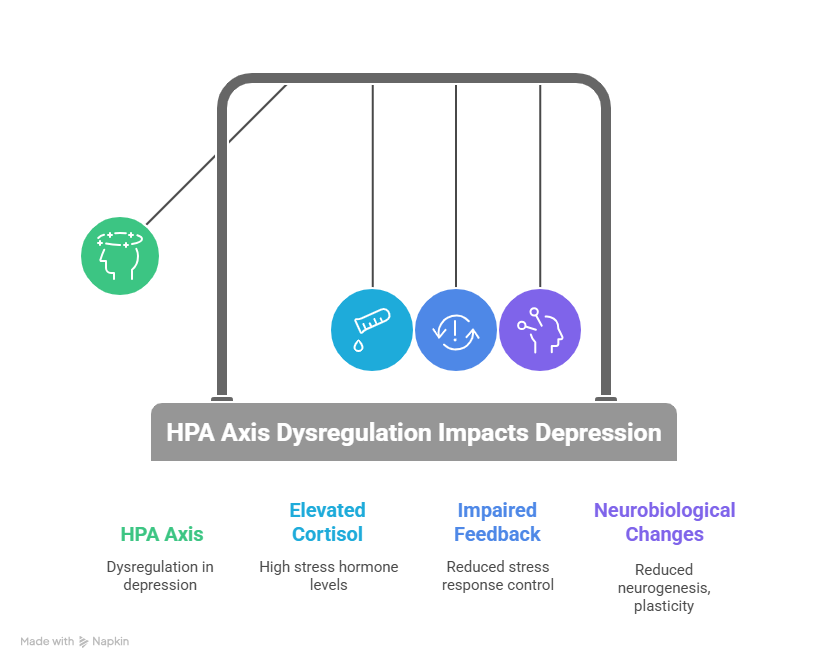
Due to its fundamental role in hormonal regulation of the body under both acute and chronic stress, the HPA axis is the primary focus of researchers for target identification regarding the development of therapeutic interventions to address the physiological and endocrinological dysregulations that occur as a result of stress-induced disorders (Mikulska et al., 2021). Exacerbated levels of cortisol and dysregulated negative feedback mechanisms play an important role in neuroendocrinological variations encompassing a low rate of neurogenesis, impaired synaptic plasticity (Fig.1) and altered neurochemical dynamics (Goncharova, 2020). Therapeutic interventions targeting the functioning of the HPA axis not only address physiological but also endocrinological roots of depressive disorders rather than merely symptoms. Restoration of hormonal balance may boost the antidepressant efficacy and facilitate the design of personalized therapeutic interventions (Almeida et al., 2021).
Critical Gaps in current therapeutic approaches for depression
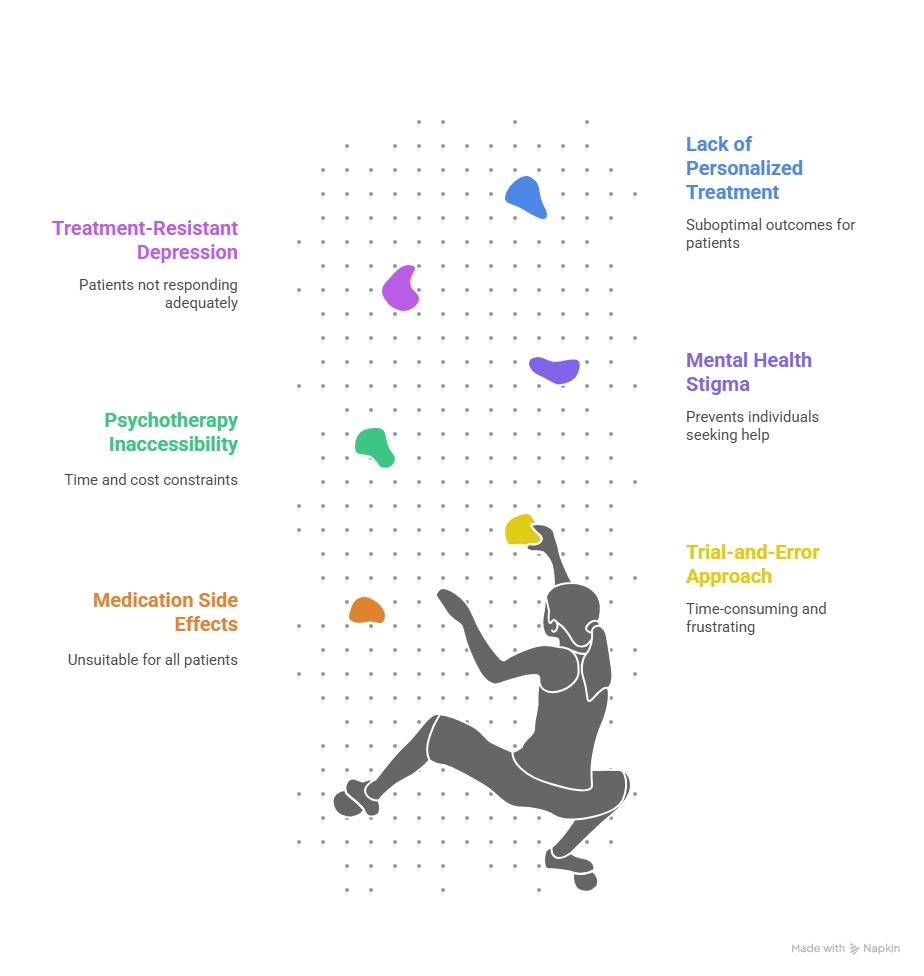
Existing occidental treatments for depression face several shortcomings, such as patients’ dependency on medicine and development of resistance over prolonged use of medications (Wassink‐Vossen et al., 2022). Various therapeutic agents, e.g., selective serotonin reuptake inhibitors (SSRIs), have various limitations and side effects, including their delayed onset of action (a cause of more disappointment in patients), and are not effective for all patients (Cuijpers et al., 2020). It may lead patients to even more depression and despair due to its adverse effects, such as vertigo, gastrointestinal disturbances, etc. Moreover, traditional antidepressant psychotherapy is not only costly but needed to be administered by patients for a considerable time, which may lead to users physiological (Fig. 2) and psychological dependency on that patient (McIntyre et al., 2023). The stigma around mental health may deter individuals from pursuing professional psychological assistance. Unexplored mechanistic details at the molecular level and a lack of personalized approaches regarding depression are the major reasons for ineffective clinical outcomes regarding depression (Fig. 2). These gaps underscore the need for more effective, accessible, safe and less costly treatment options (Taylor et al., 2021).
THE HPA AXIS: STRUCTURE AND FUNCTION
Components of the HPA Axis
Three main endocrinological components are found in the anatomical composition of the HPA axis: the hypothalamus, the pituitary gland and the adrenal glands. The hypothalamus, a part of the brain, comprises neurons that secrete not only corticotropin-releasing hormone (CRH) but also arginine vasopressin (AVP). The hormones are secreted into the hypophyseal portal system, which mediates the connection between the hypothalamus and the anterior pituitary. The anterior pituitary releases the adrenocorticotropic hormone into the systemic circulation as a result of stimulus provided by CRH and AVP (Herman et al., 2020). The adrenal cortex, located at the top of the kidney, is stimulated by the secretion of ACTH and secretes glucocorticoids, among which cortisol is the most fundamental. This multidisciplinary system of hormonal glands plays a crucial role in mediating stress responses, regulating metabolism, and ensuring the proper functioning of physiological mechanisms throughout the human body (Robayo, 2024).
Hypothalamus: Structure and Function
Hypothalamus, situated above the brainstem and below the thalamus, contains numerous nuclei and is in contact with several brain areas simultaneously, including the pituitary gland. It is comprised of 3 portions referred to as the anterior pituitary, the middle physiatry and the posterior pituitary (Fong et al., 2023). All portions contain particular nuclei which are involved in specific endocrinological functions through the release of hormones, including maintenance of homeostasis, restoration of the body’s normal temperature after exercise or fight and flight conditions, regulation of fundamental needs such as hunger, thirst, and individuals’ circadian rhythms (Raise-Abdullahi et al., 2023). Moreover, the hypothalamus is also involved in the primary regulation of emotional mechanisms, notably during acute and chronic stress conditions, and reproductive behaviors. The hypothalamus is responsible not only for the mediation of the physiological balance of the body but also as a critical integrator of information from multiple body systems by recognizing and properly responding to the internal and external stimuli, which can be attributed to its diverse functionality and extensive connections (Mueller et al., 2022).
Pituitary gland
Present at the Sella turcica (bony cavity) in the brain, this small-sized pituitary gland is one of the primary organs in the HPA axis and consists of 2 main lobes, i.e., adenohypophysis (anterior lobe) and neurohypophysis (posterior lobe). The first one comprises the glandular tissue and secretes various hormones such as ACTH, TSH, LH and prolactin (important in lactation) (Crivii et al., 2020). The neurohypophysis is basically an extension of the hypothalamus and stores and secretes 2 hormones: oxytocin and antidiuretic hormone (ADH) (Robayo, 2024). The pituitary gland plays a crucial role in several physiological mechanisms at the molecular level, for instance, reproduction, growth, gut-brain axis, stress regulation and emotional responses by producing hormones that target the organs via transfer through systemic circulation throughout the body. Its performance is closely linked with the hypothalamus via a complex feedback mechanism, thus rendering the title of “master gland”, because of its major influence over several endocrine glands and its contribution in maintenance of homeostasis (Mueller et al., 2022).
Adrenal glands
Present at the upper portion of renal organs, these small, endocrine organs resembling a triangle contain 2 basic portions: the outer cortical region and inner medullary region, each responsible for synthesis and secretion of several hormones that are critical for the body’s proper function during emotional acute distress and chronic stress alongside other physiological mechanisms (Van Slycke et al., 2022). Important stress hormones, i.e., the epinephrine and norepinephrine (responsible for the body’s fight or flight response) are secreted by the adrenal gland upon getting stimulus into the blood circulation, eventually causing a significantly high heart rate, increased blood pressure and increased blood flow to the muscles, to prepare the individual’s body for any sudden action in circumstances of acute stress. Though the adrenal gland also plays major role in long-term or chronic stress and its dysregulation, for example, defective secretion of catecholamines or intense cortisol secretion is often observed in stress-related disorders like depression, underlining the significance of adrenal glands in the pathophysiology of manic disorders and proper adaptation in stressful circumstances.
PHYSIOLOGICAL REGULATION OF THE HPA AXIS
Whenever the stress mechanism is discussed HPA axis becomes the central component of the discussion regarding the body's adaptation and controlled release of cortisol into the systemic circulation, which eventually leads to the regulation of various body processes, such as the enhanced immune system and restored metabolism. Upon the exposure to sudden stressor in in acute stress condition or for long-term exposure to stressors during the chronic stress condition the hypothalamus is responsible for secreting the corticotropin releasing hormone (CRH), which instigates the anterior pituitary to produce ACTH, which then reaches the adrenal cortex via systemic circulation and stimulates the receptors by binding the active site to synthesize and secrete the cortisol into the blood circulation of the individuals (Al-Suhaimi and Khan, 2022). In a healthy individual, enhanced levels of cortisol lead to the start of a negative feedback loop to regulate homeostasis and achieve the body's normal functioning. In such a situation, cortisol binds with the active site of the glucocorticoid receptors in both the hypothalamus and the pituitary gland, leading to inhibition of CRH and ACTH, which consequently mitigates the cortisol secretion and stops the stress response (Balasubramanian, 2024).
Key Hormones and Neurotransmitters
Many hormones and neurotransmitters play crucial roles in the mediation of the HPA axis, such as Corticotropin-Releasing Hormone (CRH), which is produced by the hypothalamus in response to stimuli induced by stress and is a fundamental initiator of HPA axis activation (Correia and Vale, 2024). Adrenocorticotropic Hormone (ACTH) is released from the anterior pituitary gland. ACTH stimulates the adrenal cortex to produce cortisol (Zhu et al., 2021). Cortisol is the ultimate product of the HPA axis-regulated relay of chemical reactions and exerts important effects on the targeted organs and tissues, including mediation of immune response and physiological action (Zhao et al., 2022). Glucocorticoid Receptors (GRs) are located in both the hypothalamus and pituitary regions, leading to the mediation of negative feedback effects of cortisol production (Mikulska et al., 2021). Neurotransmitters such as Norepinephrine and serotonin can alter the sensitivity of the glucocorticoid receptors, leading to inefficient responses of the HPA axis to stress stimuli, with norepinephrine enhancing the stress response and increased serotonin leading to upregulation of mood (Zhao et al., 2022).
Circadian Rhythm and HPA Axis Function
The HPA axis works properly under the impact of the body’s circadian rhythm and sleep-wake cycle, regulated by the suprachiasmatic nucleus (SCN) of the hypothalamus. This rhythm suggests the timely secretion of cortisol in systemic circulation, with concentration exacerbating after awakening from sleep, i.e., a process referred to as the cortisol awakening response (CAR). As the time progresses from early morning to noon, the following afternoon, evening and eventually night, the cortisol concentration continues to reduce gradually and reaches its lowest at night (Cheiran Pereira et al., 2022). Disturbance in the circadian rhythm occurs in jet-lagged conditions or changes in work shift can lead to changes in cortisol production patterns. These dysregulations in sleep-wake schedules or circadian rhythms cause the impairment of the negative feedback mechanism, leading to increased susceptibility or onset of stress-related disorders (Correia and Vale, 2024).
GENETIC FACTORS
Polymorphisms in HPA Axis-Related Genes
Variations in the individual’s genetic makeup associated with the HPA axis have been studied for their implications in the prognosis of depressive disorders. Remarkably, single-nucleotide polymorphisms (SNPs) in genes such as NR3C1, FKBP5 and CRHR1 have been studied in detail (Zhao et al., 2025a). The major implications regarding these genes are FKBP5, NR3C1 and CRHR1. Since the patients exposed to stress in early childhood were studied, and a mutation in the rs1360780 SNP in FKBP5 was explored for its circumstantial association with depression (Li et al., 2023). This polymorphism not only affects genetic expression but also imposes influence on the sensitivity of glucocorticoid (Sun and Cao, 2025). Albeit changes in NR3C1 have been associated with disrupted receptor responses and susceptibility to depression, primarily because it encodes the glucocorticoid receptor. These polymorphisms can affect the receptor’s functional capacity to perform negative feedback in the HPA axis (Zhao et al., 2025b). CRHR1, being responsible for encoding CRH receptor-1, has been linked with depression, particularly in individuals with a history of early-age trauma exploration. Targeted SNPs found in this gene can modulate stress responses and have an important role in susceptibility to depression (Sun and Cao, 2025).
Epigenetic modifications affecting HPA axis regulation
Epigenetic variations, such as histone changes, DNA methylation and non-coding RNA expression play contribute remarkably in regulation of the HPA axis and depression (Zhao et al., 2025b). Changes in DNA methylation patterns of HPA axis-related genes, for instance, FKBP5 and NR3C1, have been observed in depression patients. Such alterations in epigenetic infrastructure can induce deficits in HPA axis regulation (Chiappini et al., 2025). Moreover, a detailed study of mechanistic modifications of histone proteins suggested that acetylation or methylation of histone can lead to improper transcription of the DNA, thus affecting gene expressions associated with stress responses. Such modifications are related to the induction and prognosis of depression and HPA dysfunction (Herman et al., 2020). Also, long-chain non-coding RNA molecules can regulate the expression of HPA axis genes. Dysregulation of these non-coding RNAs can also contribute to abnormal feedback mechanisms regulation by the HPA axis (Li et al., 2023).
Gene-Environment Interactions in Stress Susceptibility
The dynamic interdependence of environmental stressors and genetic predispositions remarkably enhances the risk of depression in individuals (Starr et al., 2021). Polymorphisms in the genomic sequence can mediate an individual’s sensitivity to early life stress, leading to the onset of symptoms of depression. For example, specific SNPs in FKBP5 and CRHR1 have been explored for their reciprocal relation with early-age trauma, instigating the etiology of depressive disorders (Ferrer et al., 2025). Additionally, the compilation of traumatic events in life can create a mutual influence with the onset of depression alongside genetic variations. Prior studies have shown that gene-environment correspondence can increase the risk of depression because of exposure to stressful events since childhood (Li et al., 2023). Furthermore, genomic mutations can occur because of environmental stressors passed down to future generations, eventually affecting the HPA axis regulation and increasing the risk of depression. Such genetic transmittance highlights the importance of childhood traumas and genetic transformations in governing trajectories of mental health of not only an individual but their entire future generation (Ferrer et al., 2025).
NEUROBIOLOGICAL ALTERATIONS
Changes in Neurotransmitter Systems
Dopamine, norepinephrine, and serotonin are the key neurotransmitters that are involved directly in the regulation of HPA axis control mechanisms in the individual's body. In depression, changes in these systems play an important role in HPA axis dysfunction (von Zimmermann et al., 2021). Hypercortisolism resulting from the extensive and overactivity of the HPA axis can mitigate the availability of tryptophan that is the primary precursor of serotonin, eventually leading to reduced serotonin secretion and synthesis. Likewise, increased cortisol can impair neurotransmitter synthesis, leading to decreased NE concentrations. Such imbalances can disturb the normal functioning of the HPA axis, leading to a cycle of stress and depression (Starr et al., 2021).
Alterations in Neuroplasticity and Neurogenesis
Impairment of neuroplasticity and dysregulation in neurogenesis in synaptic regions are also key elements in chronic stress induced depression, particularly in the cells of the hippocampus. Exacerbated cortisol concentrations in systemic circulation can also inhibit the secretion of BDNF, which is a fundamental and primary protein responsible for normal neuronal growth and regulated synaptic plasticity of synaptic cells. Low concentrations of BDNF can result in impairment of neurogenesis and disruption in neuroplasticity in the hippocampal region, leading to atrophy and cognitive impairment. This neuroplastic impairment plays an important role in the prognosis of depressive disorders and HPA axis dysfunction (Prange et al., 2022).
Neuroinflammation and its impact on HPA axis function
Among the several neurobiological variations, neuroinflammation plays a central role in the investigation and prognosis of depression because depression caused by chronic stress instigates the microglia and activates the astrocytes that lead to the secretion of pro-inflammatory cytokines, which are responsible for the disruption of the neurotransmitter mechanisms and impairment of HPA axis feedback mechanisms (Toenders et al., 2022). Exacerbated concentrations of inflammatory cytokines such as interleukin 6 and TNF alpha can mitigate the sensitivity of the binding sites of glucocorticoid receptors, leading to defective regulation of the negative feedback mechanism of the HPA axis. This regulation leads to the sustained and exacerbated elevation in cortisol concentration in systemic circulation, leading to intense depression symptoms and playing an important part in the pathophysiology of depressive disorders (Bertollo et al., 2025).
NEUROENDOCRINE ABNORMALITIES
Cortisol Hypersecretion and Its Consequences
Excessive secretion of Cortisol in MDD leads to a situation called hypercortisolism, which leads to various physiological and endocrinological variations. Such variations are responsible for impairment of people campus leading to memory problems and emotional dysregulation (Akil and Nestler, 2023). Moreover, chronic hypercortisolism is related to the enhanced risk of metabolic syndrome, heart diseases, arthritis and osteoporosis. Patients diagnosed with hypercortisolism often represent extreme thoughts, suicidal behavior and symptoms of manic disorder, underscoring the severity of dysregulation of the HPA axis in these depressive individuals (Toenders et al., 2022).
Changes in Glucocorticoid Receptor Sensitivity
The effects of cortisol are mediated primarily by GRs on target tissues. Variations in the sensitivity of GR have been studied in previous results (Göver and Slezak, 2024). Mitigation of GR expression and desensitization of the HPA axis, leading to malfunctioned receptor function, can downregulate the negative feedback produced by the HPA axis, which eventually increases systemic levels of cortisol. This dysregulation can lead to the development of severe depressive symptoms and resistance to conventional therapy (Engelmann et al., 2022).
Alterations in CRH and ACTH Regulation
CRH and ACTH play important roles in the HPA axis; dysregulated effects regarding their secretion have been stated in previous literature in depression induced in-vivo models (pre-clinical trials). Abnormally augmented cortisol concentrations can enhance ACTH secretion and raise cortisol in systemic circulation. A complex interplay has been explored where hypercortisolemia induces diminished ACTH action to CRH, reflecting a complicated interplay and prospective insensitivity or decreased reactivity within HPA axis feedback mechanisms (Akil and Nestler, 2023).
CURRENT THERAPEUTIC APPROACHES TARGETING THE HPA AXIS
Pharmacological Interventions
Glucocorticoid receptor antagonists: The primary objective of GR antagonists is to reduce the effects of exacerbated cortisol concentrations in depression. Mifepristone, a GR antagonist, has shown efficacy in the management of hypercortisolism, a primary effect of depression. Clinical studies have shown that mifepristone can mitigate depression symptoms by blocking GR-mediated effects, thus restoring hormonal function regarding the HPA-axis (von Zimmermann et al., 2021).
CRH receptor antagonists: CRH antagonists, including GSK561679 (verucerfont), bind with the specific site on the CRH1 receptor to alleviate the hyperactivity of the HPA axis (Hartmann et al., 2021). These agents are explored for their potential to diminish ACTH and concentration of cortisol, leading to enhanced mood and improved stress management in in-vivo models. Efficacy and safety profiles are in the development process during clinical studies in human populations (Zhang et al., 2023).
Vasopressin V1b receptor antagonists: Like CRH receptors, Vasopressin receptors, particularly V1b, also play a critical role in stress modulation. Antagonists developed against V1b receptors, for instance, SSR149415 can suppress the effects of vasopressin, leading to restoration of the body’s normal functioning. Preclinical research has suggested that these antagonistic drugs can minimize the ACTH release and mitigate the depression-mimicking behavior in in-vivo models. Clinical studies are suggesting their capacity as proper interventions for depression (Hartmann et al., 2021).
Emerging Therapeutic Strategies
Novel drug targets: Stress-induced depression can be regulated through the mediation of the HPA axis by successful targeting of FKBP5, neuropeptide Y, and oxytocin. For instance, the hyperactivity of the HPA axis in depression can be downregulated by modulation of neuropeptide Y, with regulation of its Y1 receptor, where promising potential is explored for antidepressant action in recent studies (Marwaha et al., 2023). Moreover, oxytocin also regulates the HPA axis and immune function, by adopting inhalable drug delivery systems, where intranasal drug administration showcases anxiolytic action. Likewise, the earlier mentioned co-chaperone protein FKBP5 is considerably sensitive to the Glucocorticoid receptor, and effective inhibition of this receptor can eventually influence the normal working of HPA axis feedback by promotion of neuronal sustenance, enhancement of plasticity and upgradation of GR sensitivity, representing therapeutic potential in depressive disorder induced by prolonged stress (Chiappini et al., 2025).
Personalized medicine approaches: Characterization and selection of precise biomarkers suggest a precision therapeutic strategy to manage depression, leading to the development of treatments according to the customized biological profiles of individuals based upon their genetic makeup. Novelties in epigenetic and genetic biomarker selection can lead to accurate prediction in major depressive disorders (MDD), with pharmacogenomic assessment offering personalized treatment (Bhatt et al., 2023). Genetic assays also pave the way for characterization of polymorphisms affecting drug metabolism and results, for instance, CRHR1 gene changes. Multimodal therapies targeting various components suggest potential in the restoration of neuroendocrine balance. Such therapeutic techniques advance the individualized therapeutic approaches by converging molecular-level profiling with other treatment approaches (Marwaha et al., 2023).
Innovative Delivery Methods: Advanced delivery systems for drug administration include nanoparticle-based interventions that pave the way for precision-based depression therapy. Moreover, with the integration of nanotechnology, the controlled drug release can be made possible, which would be a noteworthy advancement and upgradation of the conventional depression therapy and can also reflect enhanced efficacy, bioavailability, and reduced side effects and adverse drug events. Nanoparticles and magnetic drug delivery systems improve the blood-brain barrier permeability and secretory targeting of neuroreceptors (Mikulska et al., 2021). Gene-targeted therapeutic intervention with viral vectors also leads to provision of molecular-level work to rectify the HPA axis dysregulation via receptor mediation (Scangos et al., 2023). Chemo-genetic and optogenetic interventions can also control the over-stimulation of neuronal circuitry, with instigation of the medial prefrontal cortex and amygdala representing antidepressant-like effects. Such biotechnological strategies also provide promising prospects for precise complementary and integrative interventions to manage depressive disorders (Cheiran Pereira et al., 2022).
CHALLENGES AND FUTURE DIRECTIONS
Current research trends regarding stress-induced depression and anxiety primarily focus on refining animal models, optimizing translational strategies, and integrating recent advances from preclinical to practical scenarios after proper screening and assurance of ethical and safety of contemporary treatments. Employing stress models in animals (e.g., chronic unpredictable mild stress) alongside genetic screening promotes prolonged environmental verification and accounts for variability. The characterization and development of biomarkers, such as inflammatory cytokines and neuroimaging techniques, and the gut-brain axis bridge the gap between laboratory and clinical sectors. Ethical guidelines not only necessitate the balanced efficacy and therapeutic safety of the novel treatments in HPA modulation but also prevention from dependency and addiction, which are major limitations of conventional treatments. Longterm conventional therapy has a high potential of damaging the immune system and disrupting the cognitive abilities, thus creating the need for continuous monitoring and surveillance. Also, the researchers need to consider the socioeconomic barriers by making proper policies and grounds for implementing the HPA targeted therapies. Integration of advanced therapeutic interventions, by addressing challenges properly, can lead to the provision of holistic depression therapy. Emerging technologies such as neurofeedback play crucial roles in the development of personalized treatment by increasing neuroplasticity and boosting neurogenesis. These methodological improvements, therapeutic advancements, and ethical safeguards will eventually contribute to safe and inclusive research for depression management.
CONCLUSION
The HPA axis plays a pivotal role in proper stress regulation, and its dysregulation has a crucial impact on the onset and progression of depression and associated psychological disorders. Chronic stress stimulates the HPA axis, exacerbating the cortisol concentrations, which lead to neurodegenerative changes and anatomical and functional impairment of the hippocampus. Therapeutic interventions targeting the HPA axis include the CRH receptor blockers and glucocorticoid receptor antagonists, whose primary objective is to restore the physiological activity of the neuroendocrine system. Novel therapeutic strategies such as FKBP5 inhibition, nanotechnology-based delivery, and neuropeptide modulation can offer improved therapy with high precision and accuracy. Employing these interventions with established antidepressant regimens and psychotherapeutic agents have potential to provide synergistic effects by integrating neurobiological and psychosocial dimensions of depression. Neurofeedback and repetitive transcranial magnetic stimulation propose non-invasive strategies to restore HPA structure and function. Despite progress, challenges remain regarding therapeutic safety, interindividual variability, and mechanistic understanding, which can be addressed by developing interventions that can target the HPA axis as needed.
References
- Akil H and EJ Nestler, 2023. The neurobiology of stress: Vulnerability, resilience, and major depression. National Academy of Sciences 120:e2312662120.
- Al-Suhaimi EA and FA Khan, 2022. The pituitary gland: functional relationship with the hypothalamus, structure, and physiology, Emerging Concepts in Endocrine Structure and Functions. Springer pp. 73-131.
- Almeida FB, G Pinna and HMT Barros, 2021. The role of the HPA axis and allopregnanolone on the neurobiology of major depressive disorders and PTSD. International Journal of Molecular Sciences 22:5495-5495.
- Asarnow LD, 2020. Depression and sleep: what has the treatment research revealed and could the HPA axis be a potential mechanism? Current opinion in psychology 34:112-116.
- Balasubramanian SP, 2024. Anatomy of the thyroid, parathyroid, pituitary and adrenal glands. Surgery (Oxford) 42:204-208.
- Bertollo AG, MED Mingoti and ZM Ignácio, 2025. Neurobiological mechanisms in the kynurenine pathway and major depressive disorder. Reviews in the Neurosciences 36:169-187.
- Bhatt S, J Kanoujia, S Mohana Lakshmi et al., 2023. Role of brain-gut-microbiota axis in depression: emerging therapeutic avenues. CNS and Neurological Disorders-Drug Targets-CNS and Neurological Disorders) 22:276-288.
- Cheiran Pereira, GE Piton, B Moreira dos Santos et al., 2022. Microglia and HPA axis in depression: An overview of participation and relationship. The World Journal of Biological Psychiatry 23:165-182.
- Chiappini S, G Sampogna, A Ventriglio et al., 2025. Emerging strategies and clinical recommendations for the management of novel depression subtypes. Expert Review of Neurotherapeutics 25:443-463.
- Correia AS and N Vale, 2024. Advancements exploring major depressive disorder: insights on oxidative stress, serotonin metabolism, BDNF, HPA axis dysfunction, and pharmacotherapy advances. International Journal of Translational Medicine 4:176-196.
- Crivii CB, SV Clichici and AG Filip, 2020. Anatomy and Topography of the Hypothalamus, The Human Hypothalamus: Anatomy, Dysfunction and Disease Management. Springer. pp:7-14.
- Cui L, S Li, S Wang et al., 2024. Major depressive disorder: hypothesis, mechanism, prevention and treatment. Signal transduction and targeted therapy 9:30.
- Cuijpers P, A Stringaris and M Wolpert, 2020. Treatment outcomes for depression: challenges and opportunities. The Lancet Psychiatry 7:925-927.
- de Carvalho LM, WY Chen and AW Lasek, 2021. Epigenetic mechanisms underlying stress-induced depression, International Review of Neurobiology No. 156. Elsevier. pp:87-126.
- Engelmann J, H Murck, S Wagner et al., 2022. Routinely accessible parameters of mineralocorticoid receptor function, depression subtypes and response prediction: a post-hoc analysis from the early medication change trial in major depressive disorder. The World Journal of Biological Psychiatry 23:631-642.
- Ferrer A, J Labad, N Salvat-Pujol et al., 2025. Genetic and epigenetic changes to the glucocorticoid receptor gene (NR3C1) and cognition in major depressive disorder. Spanish Journal of Psychiatry and Mental Health
- Fong H, J Zheng and D Kurrasch, 2023. The structural and functional complexity of the integrative hypothalamus. Science 382:388-394.
- Goncharova ND, 2020. The HPA axis under stress and aging: individual vulnerability is associated with behavioral patterns and exposure time. BioEssays 42:2000007-2000007.
- Göver T and M Slezak, 2024. Targeting glucocorticoid receptor signaling pathway for treatment of stress-related brain disorders. Pharmacological Reports 76:1333-1345.
- Hartmann J, T Bajaj, C Klengel et al., 2021. Mineralocorticoid receptors dampen glucocorticoid receptor sensitivity to stress via regulation of FKBP5. Cell reports 35:1-10.
- Hassamal S, 2023. Chronic stress, neuroinflammation, and depression: an overview of pathophysiological mechanisms and emerging anti-inflammatories. Frontiers in Psychiatry 14:1130989-1130995.
- Herman JP, N Nawreen, MA Smail and EM Cotella, 2020. Brain mechanisms of HPA axis regulation: neurocircuitry and feedback in context Richard Kvetnansky lecture. Stress 23:617-632.
- Khan AR., L Geiger, O Wiborg and B Czéh, 2020. Stress-induced morphological, cellular and molecular changes in the brain—lessons learned from the chronic mild stress model of depression. Cells 9:1026-1033.
- Li P, Y Wang, B Liu et al., 2023. Association of job stress, FK506 binding protein 51 (FKBP5) gene polymorphisms and their interaction with sleep disturbance. PeerJ 11:e14794-e14802.
- Marwaha S, E Palmer, T Suppes et al., 2023. Novel and emerging treatments for major depression. The Lancet 401:141-153.
- McIntyre RS, M Alsuwaidan, BT Baune et al., 2023. Treatment‐resistant depression: definition, prevalence, detection, management, and investigational interventions. World Psychiatry 22:394-412.
- Menke A, 2024. The HPA axis as target for depression. Current Neuropharmacology 22:904-915.
- Mikulska J, G Juszczyk, M Gawrońska-Grzywacz et al., 2021. HPA axis in the pathomechanism of depression and schizophrenia: new therapeutic strategies based on its participation. Brain sciences 11:1298-1298.
- Mueller B, A Figueroa and J Robinson-Papp, 2022. Structural and functional connections between the autonomic nervous system, hypothalamic–pituitary–adrenal axis, and the immune system: a context and time dependent stress response network. Neurological Sciences 43:951-960.
- Prange S, H Klinger, C Laurencin et al., 2022. Depression in patients with Parkinson’s disease: current understanding of its neurobiology and implications for treatment. Drugs and Aging 39:417-439.
- Raise-Abdullahi, PM Meamar, AA Vafaei et al., 2023. Hypothalamus and post-traumatic stress disorder: a review. Brain sciences 13:1010.
- Robayo AMM, 2024. Hypotalamus-pituitary-adrenal (HPA) axes and their relationship with stress, mood, personality, and neurocognitive functioning, The Theory of Mind Under Scrutiny: Pychopathology, Neuroscience, Philosophy of Mind and Artificial Intelligence. Springer. pp:341-365.
- Scangos KW, MW State, AH Miller et al., 2020. Prevalence of depression and anxiety in college students. Journal of Mental Health and Human Behaviour 25:10-13.
- Sharan P and C Vellapandian, 2024. Hypothalamic-pituitary-adrenal (HPA) axis: Unveiling the potential mechanisms involved in stress-induced Alzheimer’s disease and depression. Cureus 16:1-10.
- Starr LR, CB Stroud, ZA Shaw et al., 2021. Stress sensitization to depression following childhood adversity: Moderation by HPA axis and serotonergic multilocus profile scores. Development and Psychopathology 33:1264-1278.
- Sun K and C Cao, 2025. The effects of childhood maltreatment, recent interpersonal and noninterpersonal stress, and HPA-axis multilocus genetic variation on prospective changes in adolescent depressive symptoms: A multiwave longitudinal study. Development and Psychopathology 37:543-554.
- Taylor CB, AK Graham, RE Flatt, et al., 2021. Current state of scientific evidence on Internet-based interventions for the treatment of depression, anxiety, eating disorders and substance abuse: an overview of systematic reviews and meta-analyses. European Journal of Public Health 31:i3-i10.
- Toenders YJ, L Schmaal, L Nawijn et al., 2022. The association between clinical and biological characteristics of depression and structural brain alterations. Journal of Affective Disorders 312:268-274.
- Van Slycke SK, Van Den Heede and EA Vandenwyngaerden, 2022. Adrenal glands: anatomy, physiology, and pathophysiology, Endocrine Surgery Comprehensive Board Exam Guide. Springer. pp:437-455.
- von Zimmermann C, L Böhm, T Richter-Schmidinger et al., 2021. Ex vivo glucocorticoid receptor-mediated IL-10 response predicts the course of depression severity. Journal of Neural Transmission 128:95-104.
- Wassink‐Vossen S, RC Oude Voshaar, P Naarding et al., 2022. Effectiveness of late‐life depression interventions on functional limitations: a systematic review. International Journal of Mental Health Nursing 31:823-842.
- Westfall S, F Caracci, M Estill et al., 2021. Chronic stress-induced depression and anxiety priming modulated by gut-brain-axis immunity. Frontiers in Immunology 12:670500-670509.
- Yuan M, B Yang, G Rothschild et al., 2023. Epigenetic regulation in major depression and other stress-related disorders: molecular mechanisms, clinical relevance and therapeutic potential. Signal transduction and targeted therapy 8:309-318.
- Zhang H, L He, S Li et al., 2023. Cerebral iron deficiency may induce depression through downregulation of the hippocampal glucocorticoid-glucocorticoid receptor signaling pathway. Journal of Affective Disorders 332:125-135.
- Zhao J, W Shi, Y Lu et al., 2022. Alterations of monoamine neurotransmitters, HPA-axis hormones, and inflammation cytokines in reserpine-induced hyperalgesia and depression comorbidity rat model. BioMed Central Psychiatry Psychiatry 22:419-425.
- Zhao X, M Chang, Z Zeng et al., 2025a. HPA-axis multilocus genetic variation moderates longitudinal link between friendship quality and adolescent depressive symptoms after childhood abuse. Child Abuse and Neglect 169:107635-107641.
- Zhao X, D Wang, M Chang et al., 2025b. HPA-axis multilocus genetic interaction with stress life events in predicting changes in adolescent suicidal ideation. Journal of Affective Disorders 380:288-297.
- Zhou L, T Wang, Y Yu et al., 2022. The etiology of poststroke-depression: a hypothesis involving HPA axis. Biomedicine and Pharmacotherapy 151:113146-113173.
- Zhu Y, X Wu, R Zhou et al., 2021. Hypothalamic-pituitary-end-organ axes: hormone function in female patients with major depressive disorder. Neuroscience Bulletin 37:1176-1187.