
INTRODUCTION
Our overall well-being is greatly impacted by reproductive health. Reproductive health disorders within the sex binary (female/male), investigating the ailments that affect the reproductive tract in female bodies, including external organs such as the labia, clitoris, and the opening of the vagina, and internal organs such as the cervix, uterus, fallopian tubes, and ovaries (Barrera et al., 2022). Polycystic Ovary Syndrome (PCOS) is hyperandrogenic an-ovulation, referring to the lack of egg release from the ovaries. This hormonal imbalance leads to signs and symptoms that can manifest in early adolescence and include acne or oily skin, body and facial hair, truncal obesity (fat around the belly), and male-pattern hair loss. A classic trait of PCOS is irregular periods, which can be heavy, absent, irregular, or just generally unpredictable. Since these periods can be anovulatory, a common complication of PCOS which is is infertility (Rosenfield and Ehrmann, 2016). Globally, the prevalence of PCOS is reported to be between 4% and 20% of women of reproductive age (Ritu et al., 2020). The diagnostic criteria of is still under considerations but recently Rotterdam criteria is used for the identification purpose of pcos. Clinicians can use standard criteria to diagnose PCOS. An individual must have two of the following three to receive a PCOS diagnosis: Manifestations of oligo-anovulation, high androgen levels (which can cause acne, excess body hair, or male-pattern hair loss) , irregular or absent periods and Cysts on the ovaries were identified through ultrasound (Dewailly, 2016). Current pharmacological treatments for PCOS have limitations, including side effects, low or inconsistent efficacy, poor long-term adherence, and the lack of a single treatment addressing both reproductive and metabolic aspects of the syndrome. Oral contraceptives (OCs) can worsen insulin resistance and have risks like thromboembolic events. Metformin's benefits are lost after cessation, and it is not recommended for all patients. There's a lack of high-quality studies for anti-androgenic drugs, and some treatments don't improve underlying insulin resistance.
Endometriosis
Endometriosis is an inflammatory condition in which uterine tissue grows outside the uterus, similar to how uterine tissue normally grows within the uterus, known as the endometrium. Period blood flows back into the pelvic cavity, where immature cells in the blood implant and grow, which can result in pelvic pain and infertility. It occurs when the ovaries and fallopian tubes aren't connected, causing blood to flow backwards into the abdomen. Diagnosis is confirmed through a biopsy, usually via laparoscopic surgery. Ultrasonography and MRI help to identify ovarian endometrioma and deeper nodules. It’s important to note that endometriosis can take years to be diagnosed and is frequently misdiagnosed or underdiagnosed. Current pharmacological treatments for endometriosis have limitations, including side effects like mood changes and irregular bleeding, the inability to cure the disease, high costs, and ineffectiveness in some patients. Hormonal therapies are a mainstay but suppress fertility, while other options like NSAIDs are only for symptomatic relief and lack long-term effectiveness. Recurrence of symptoms is common after treatment cessation, highlighting the need for new therapies that target the disease itself rather than just symptoms.
Menstrual Irregularities
The duration of the menstrual cycle for most women is 21 to 35 days. 14% to 25% of women experience irregular menstrual cycles, which might be longer and heavier or shorter and lighter than usual, or also linked to other issues like cramping in the abdomen. Menstrual irregularity can be associated with both ovulation and anovulation. The most common menstrual irregularities include: Amenorrhea or absent menstrual periods: When a woman skips having her period for three months, or she hasn’t started her menstrual cycle even at the age of sixteen. Oligomenorrhea or infrequent menstrual periods: Intervals more than 35 days or fewer than 9 periods per year.Menorrhagia or heavy menstrual periods: Unrestrained bleeding.Prolonged menstrual bleeding: Bleeding that exceeds 8 days in duration regularly. Dysmenorrhea: Painful periods that may include severe menstrual cramps (Foster and Zubeidi, 2018).
Current pharmacological treatments for menstrual irregularities have several limitations, including unpredictable breakthrough bleeding, particularly in the initial months of therapy. Other limitations include potential adverse effects, such as hormonal imbalances, reduced bone mineral density with long-term use of certain progestins, and complications related to estrogen, like blood clots. Additionally, these treatments can be costly and may have limited evidence for some specific populations or conditions.
PATHOPHYSIOLOGY
PCOS
In the past, various theories have been proposed to explain the pathophysiology of PCOS. Initially, the cause of PCOS taken into account was the redundancy of intrauterine androgens. Subsequently, insulin resistance and hyperandrogenemia were also considered to cause the disease. Genetic and environmental variables contribute to dysregulated ovarian steroidogenesis, abnormal insulin signaling, and excessive oxidative stress in PCOS. In women, theca cells are responsible for the release of androgens by enhancing steroidogenesis, while hyperandrogenism prevails due to any kind of mutation in theca cells. Insulin resistance is caused by a genetic mutation in insulin signaling pathways (Lorenzo et al., 2023).
Endometriosis
It is a chronic, inflammatory and gynecological disorder characterized by abnormality in endometrial functioning. Pathophysiology explains that endometriosis is caused by various factors such as hormonal dysregulation, estrogen dominance, progesterone resistance, immune deficiency, inflammatory response, and microRNAs. Endometrial functioning is controlled by steroid hormones estrogen and progesterone, which are involved in the regulation of the menstrual cycle. A mutation in these ligands or their receptors can cause endometriosis (Bulun et al., 2010). One important factor in endometriosis is the presence of estrogen. Outside of the uterine cavity, estrogen increases the endometriotic tissue's survival or resilience. Endometriotic tissue can also express a variety of steroidogenic genes, such as aromatase, which allows for the local conversion of cholesterol to estradiol. By controlling the conversion to estradiol, aromatase raises the concentration of estrogen locally, which promotes the development of endometriotic tissue and the preservation of endometriosis (Patel et al., 2017).
Follicular growth, ovulation, and luteinization are all influenced by progesterone signaling. It is also responsible for preparing and maintaining the endometrium for implantation of a fertilized egg by converting it from proliferative to secretory endometrium and preventing its overgrowth (hyperplasia). Progesterone signaling is compromised in endometriosis-affected women. Because it disrupts the control of uterine epithelial proliferation and hinders decidualization (Marquardt et al., 2019).
Menstrual Irregularities
There are different kinds of menstrual irregularities, such as secondary amenorrhea, oligomenorrhea, and polymenorrhea. Oligomenorrhea is caused by ovarian insufficiency, hyperandrogenism, hypothalamic pituitary axis disorder, and prolactin excess. secondary amenorrhea caused by pregnancy, structural lesions, inflammation and endocrinopathies. Aberrant uterine bleeding results in excessive menstrual flow due to thyroid disorders and PCOS. Hypogonadotropic hypogonadism is characterized by poor gonadotropin-releasing hormone release, which in turn results in low levels of LH and FSH. This may be either permanent or temporary. This group includes people with anorexia nervosa or extreme exercise who experience temporary hypothalamic dysfunction (Attia et al., 2023).
OVERVIEW OF PHYTOCHEMICALS
A large family of plant-based compounds is phytochemicals, which are assumed to be beneficial for the prevention of disease served by a diet high in fruit and vegetables, beans and cereals, plant-based drinks like tea and wine. Phytochemicals are naturally occurring nonnutritive chemicals. They seem to be used singly and jointly with vitamins and food nutrients to prevent, stop, or reduce disease. This is why it is significant to consume whole foods in place of supplements (Tyagi et al., 2010). Phytochemicals perform different functions by exhibiting many characteristics like anti-oxidant activity, anti-microbial, hormone metabolism, cholesterol metabolism, immune system modulation, antivirals, and antibacterials. Chukwuebuka and Chinenya, 2015). Recent researches are based on edible and non-edible plants to investigate their bioactive components and their therapeutic efficacy for the prevention of minor as well as major ailments. Phytochemicals have two general classes: flavonoids and phenolic acids. Flavonoids are further classified into flavones, isoflavones, flavononse, flavonols and phenolic acids into hydroxybenzoic and hydroxycinnamic acids. Fruit peel is a major source of flavonoids, depending on the species and their exposure to light.
It improves health concerns as substrates for biochemical reactions take place in the body, acts as a catalyst of enzymatic reactions, provides better absorption of vital nutrients, excretes unwanted constituents in the intestine, detoxifies, acts as a growth factor for microbiota and also inhibits intestinal bacteria that are not beneficial. It has already been investigated that phytochemicals are used as a treatment strategy for many diseases, such as hypercholesterolemia, hyperlipidemia, hyperglycemia, and cancer (Abbas et al., 2016).
Alkaloids
These are complexly structured, organic nitrogen-containing bases that are byproducts of secondary metabolism; many of them exhibit physiological action. The majority of the chemicals listed in current alkaloid compendia are found in flowering plants. But as detection techniques advance, alkaloids will likely be present in some concentration practically everywhere. Distinguished plant alkaloids are narcotic analgesics, morphine, codeine and apomorphine, which have potential benefit against parkinsons disease, papaverine used as a muscle relaxant, sanguinarine and berberine as antimicrobial agents. Firsltly the separation of alkaloids was being done by the commencement of the percolation process for the extraction of drugs. The pioneer drug was opium, which had therapeutic potential as a narcotic and analgesic. Beyond their analgesic property, they can also be used as antiseptics, sedatives and stimulants in Chinese folk medicines (Bribi, 2018). These days, more advanced analytical techniques are used, such as mass spectrometry. Only the main alkaloids could be separated (and purified) from plant extracts until separation methods like chromatography and counter-current extraction were developed enough to be widely used. Improvements in isolation techniques have made it possible to collect physiologically significant compounds in commercial quantities, even when they are present at extremely low concentrations.
Flavonoids
A class of naturally occurring compounds with a variety of phenolic structures, which are called flavonoids, can be found in tea, wine, fruits, vegetables, grains, bark, roots, stems, and flowers. The health benefits of these natural products are widely recognized, and attempts are underway to separate the components. These days, flavonoids are thought to be a crucial component of numerous pharmacological, cosmetic, nutraceutical, and medicinal applications. This is explained by their anti-oxidative, anti-inflammatory, anti-mutagenic, and anti-carcinogenic properties, as well as their capacity to alter the function of significant cellular enzymes (Panche et al., 2016).
Saponins
Sterol or triterpene glycosides that are surface active are called saponins. Although they are found in many different types of plants, only around 28 of them are commonly consumed by humans. Of them, spinach, peanuts, chickpeas, and soybeans are the most often consumed. Individual saponins are difficult to separate from the crude combination, and this has rarely been accomplished, even though they can be easily extracted from plant materials via solvent extraction. The presence of saponins in plant extracts can be easily detected by their hemolytic activity and capacity to create stable foams in aqueous solution. Thin-layer chromatography is also the most effective method for quantitative analysis of saponins. Older techniques are unreliable, such as those that rely on hemolytic activity (Oakenfull, 2023).
Terpenoids
The 5-carbon substance isoprene and its polymers, terpenes, are the source of a broad class of naturally occurring organic compounds called terpenoids, commonly referred to as isoprenoids. In addition to being utilized as pesticides in agriculture, they are frequently found in fragrances, cosmetics, cuisine, and traditional medicines due to their pharmacological effects, flavors, and scents. Tetrahydrocannabinol, the active chemical in marijuana, and hop components that influence beer flavor are a few examples. Because plants need to repair carbon through photosynthetic reactions using photosensitizing pigments, terpenes are important. Terpenes interact with free radicals to have a special antioxidant effect. Because of their lengthy carbon side chains, terpenes react with free radicals by separating into fatty membranes. The tocopherols and tocotrienols are arguably the most researched terpene antioxidants (Dillard and German, 2000).
Polyphenols
A broad and varied family of naturally occurring antioxidant compounds, polyphenols are present in plants and offer a number of health advantages, such as anti-aging and anti-inflammatory properties, as well as protection against chronic illnesses. They fall into categories such as flavonoids and non-flavonoids and are found in large quantities in fruits, vegetables, whole grains, coffee, and tea (Abbas et al., 2016).
Glycosides
Natural substances known as glycosides are made up of an aglycone, which is a non-sugar molecule, and a glycone, which is a carbohydrate, connected by a glycosidic bond. These substances, which belong to several classes such as cardiac, cyanogenic, and phenolic glycosides, are present in plants and some animals and have functions in defense, detoxification, and storage. Until hydrolysis releases the glycone and the active aglycone, they are frequently inactive and can either have toxicity or therapeutic effects (Dillard and German, 2000).
MECHANISM OF ACTION OF PHYTOCHEMICALS
Antioxidant activity (neutralizing free radicals to prevent cellular damage), anti-inflammatory effects (modulating inflammatory pathways), anti-cancer properties (inducing apoptosis and cell cycle arrest, inhibiting proliferation and angiogenesis), and antibacterial actions (disrupting bacterial cell membranes and enzymes) are some of the various ways that phytochemicals carry out their advantageous actions. They can alter cellular signalling pathways and enzymatic activity to prevent disease, and they have an impact on metabolic processes, including the anti-diabetic benefits via altering glucose absorption and carbohydrate digestion. Some chronic diseases, such as atherosclerosis and cancer, can be prevented by the use of antioxidant-rich plants. To stop oxidative stress and cellular damage, phytochemicals like flavonoids and polyphenols scavenge free radicals and reactive oxygen species (ROS). Oxygen is an essential compound in aerobic metabolism and due to its high reactivity, it produces reactive oxygen species, which can be harmful for biomolecules. So, antioxidants protect the cell proteins, nucleic acid and lipids from oxidative damage.
Phytochemistry demonstrated that treatment of many ailments with plant products is more beneficial because of their minimal side effects. Inflammation is the body's natural protective mechanism against different viruses, bacteria, fungi and a defective immune system. Anti-inflammatory drugs have side effects, so plant extracts are new targets as anti-inflammatory agents (Gonfa et al., 2023). Signal transduction pathways control the activity of a cell by maintaining the cell cycle, gene transcription, cell growth and differentiation. Abnormalities in these pathways can be the underlying cause of the diseases. Phytochemicals are considered agonists and antagonists of these pathways and produce curative actions. Mitigation and programmed cell death are among the processes that phytochemicals can affect by controlling intricate molecular pathways, including the NF-κB and mitogen-activated protein kinase (MAPK) pathways (Pham et al., 2020).
PHYTOCHEMICALS IN PCOS MANAGEMENT
The class of phytochemicals that helps ameliorate several diseases, including infertility, is Soy isoflavones have the potential to improve conditions such as insulin resistance, inflammation, cardiovascular diseases and intestinal dysbiosis (Table 1). Studies showed that giving women with PCOS soy isoflavone improved the levels of insulin resistance markers, serum total T, SHBG, FAI, triglycerides, VLDL cholesterol, GSH, and MDA. However, it did not affect FPG, other lipid profiles, or biomarkers of oxidative stress and inflammation. Soy isoflavones modulated hormone levels by binding to estrogen receptors, and the property may be enhanced by butyric acid, which was elevated by resistant starch intake (Deren et al., 2025).
Flavonoids such as quercetin, a common medication in Chinese herbal medicines, fruits, leaves, vegetables, seeds, and plant roots, is also known as apigenin. Among its many benefits are anti-oxidant, anti-inflammatory, anti-insulin resistance, and anti-cancer properties. According to certain research, PCOS patients receiving QUR medication have lower levels of serum testosterone (T), luteinizing hormone (LH), the LH/follicle-stimulating hormone (FSH) ratio, fasting glucose, fasting insulin, HOMA-IR, and lipids (Ma et al., 2022).
Phytosterols (Feugreek, Nigella sative) are a safe therapeutic agent that can halt the symptoms of PCOS and prevent the damaging effects on the female reproductive system. Studies report the effect of Trigonella foenum-graecum extract (Furocyst®) as an effective phytosterol for the effective management of PCOS. Its actions involve betterment of endocrine functions, menstrual cycle regulation, reduction in testosterone and prolactin and improvement in the ratio of LH: FSH and decreasing the size of cyst (Sankhwar et al., 2022).
Resveratrol (polyphenol) used as novel therapy for ameliorating ovarian hyperandrogenism. It also possesses anti-inflammatory, antioxidant and cardioprotective. It significantly decreases ovarian and adrenal androgens by decreasing their release from interstitial theca cells but does not produce any disturbance in the release of progesterone. It also has potential in improving insulin sensitivity and reducing insulin levels, which are hallmarks of PCOS. Studies also report it effect in decreasing testosterone and DHEAS in women with PCOS without disturbing their BMI, lipid profile and inflammatory markers (Banaszewska et al., 2016).
A systematic review examined the effects of a herbal combination of cinnamon, spearment, aloevera and liquoricesupplements and cinnamon alone on blood glucose regulation, reproductive hormones, and hyperlipidemia in PCOS patients. It produced improvement in the sensitivity of insulin, dyslipidemia ( by lowering the level of total cholesterol, triglycerides and LDL) but did not affect weight, waist circumference, or HDL. In the case of body mass index, cinnamon alone decreases this level significantly, but the herbal mixture had no significant effect (Ainehchi et al., 2019).
PHYTOCHEMICALS IN ENDOMETRIOSIS MANAGEMENT
Curcuminoids are bioactive compounds present in turmeric (Curcuma longa) responsible for its pharmacological activities. By correcting the hormonal imbalance, curcumin therapy was also seen to improve the process of implantation within the endometriosis mouse model. Research indicates that curcumin's anti-endometriotic properties, whether acting alone or in combination, are mainly mediated via altering extracellular matrix remodeling, reducing the synthesis of estradiol, and inducing the mitochondrial-dependent apoptotic pathway. The peritoneal cytokine milieu exhibits a dynamic interaction within inflammatory, adhesion, and angiogenic factors that drives the proliferation of endometrial implants and contributes to the infertility associated with endometriosis. These changes are accompanied by decreased levels of oxidative stress, NF-κB nuclear movement, and cell migration. By suppressing NF-κB activation in endometriosis, curcumin has been shown to effectively reduce TNF-α-mediated production of adhesion molecules as well as inflammatory cytokines. Curcumin also suppresses the phosphoinositide 3-kinases (PI3K)/Akt signaling pathway and prevents the promoters of cyclooxygenase (COX-2) as well as sterol regulatory element-binding protein (SREBP-1), which are important transcriptional regulators of hypoxia-mediated inflammation in primary endometriotic cells (Singh et al., 2022).
Numerous biological activities are displayed by green tea and its main bioactive ingredient, epigallocatechin gallate (EGCG), especially those that have proapoptotic, antiangiogenic, antiproliferative, and antimetastatic effects. These characteristics provide credence to EGCG's potential as an endometriosis treatment. By affecting different molecular mechanisms and signaling pathways, preclinical research has shown that EGCG can suppress fibrosis and decrease the frequency, size, and thickness of endometriotic lesions in both in vitro and in vivo settings. Through biopsies taken via the posterior uterine wall, endometrial cells collected from 16 women with proliferative endometriosis who had not received treatment were used in the study. Mice treated with EGCG were examined in vivo after endometriosis was surgically induced. EGCG raised apoptosis and dramatically decreased endometrial epithelial proliferation (Markowska et al., 2025).
Resveratrol decreased ectopic endometrium development in the rat endometriosis model and prevented the migration, invasion, and proliferation of stromal cells from the endometrium within in vitro preparations. Another recent study examined the effects of varying doses of resveratrol on the growth of human endometriotic as well as endometrium in 3D culture, angiogenesis, NO production, and the expression of genes linked to apoptosis. During the resveratrol administration, there was a notable dose-dependent decrease in the typical development of both endometriotic and endometrial tissue (Khazaei et al., 2020). In a number of clinical trials, physicians also looked at resveratrol's potential as a treatment for endometriosis. The majority of clinical research usually assumed that resveratrol's hypo-estrogenic action could enhance the effects of contraceptives taken orally in the therapeutic management of endometriosis (Ilhan et al., 2019).
Although isoflavones have structural similarities to estradiol, a subtype of flavonoids present in soybeans, are said to have antagonistic effects on estrogen. Because of their heterocyclic phenolic structure, isoflavones have structural similarities that make it easier for them to attach to the ERα and ERβ estrogen receptors and imitate the effects of estrogen. Because it binds to estrogen receptors or competes with estradiol to have an anti-estrogenic effect, puerarin is considered a phytoestrogen. By encouraging the recruitment of ERα corepressors and preventing the recruitment of coactivators, puerarin can inhibit the growth of endometriotic stromal cells driven by estrogen and downregulate both the transcription and protein amounts of cyclin D1 and cdc25A. According to the research, puerarin's anti-estrogenic impact may be mostly based on an interaction between ERα and the corepressor complexes, suggesting that this isoflavone may be a promising treatment for endometriosis (Gołąbek et al., 2021).
| Phytochemical Constituents | Plant Source | Management | Therapeutic Outcome | References |
|---|---|---|---|---|
| Isoflavones | Soybean, Red clover | PCOS, Endometriosis | Improved insulin resistance markers and modulated hormone levels via binding with estrogen receptors. | Rizzo et al., 2022 |
| Flavonoids | Citrus fruits | PCOS, Menorrhagia | Regulate menstrual flow by increasing uterine PGF2α. | Robeldo et al., 2020 |
| Phytosterols | Fenugreek | PCOS | Regulate menstrual cycle. | Singh et al., 2023 |
| Curcuminoids | Curcuma longa | Endometriosis, Dysmenorrhea | Suppress NF-κB activation, decrease the inflammation. | Singh et al., 2022 |
| Resveratrol | Grapes, Berries | Endometriosis | Reduce ectopic endometrium growth. | Khazaei et al., 2020 |
| Gingerols | Zingiber officinale | Dysmenorrhea | Decrease the menstrual pain and inflammation | Harjai and Chand, 2018 |
| Racemosol | Asparagus racemosus | Menstrual Irregularities | Improve lactation, regulate menstrual rhythm | Patibandla et al., 2024 |
Clinical Trials and Animal Model Findings
Natural plant-derived compounds are intriguing prospects for the creation of innovative endometriosis treatment approaches, according to preclinical and clinical research. Compared to conventional anti-estrogenic drugs, they may prevent escape mechanisms from targeted therapy and cause milder side effects due to their pleiotropic action profile, which targets important processes in disease pathophysiology, such as proliferation, apoptosis, inflammatory ROS formation, and angiogenesis. When compared to controls, carnosic acid as well as rosmarinic acid considerably decreased the size of surgically created endometriotic lesions in mice. Rosmarinic acid also encouraged apoptotic cell death inside the lesions, while both substances markedly reduced cell proliferation (Ferella et al., 2018).
PHYTOCHEMICALS IN MENSTRUAL IRREGULARITIES
Dysmenorrhea
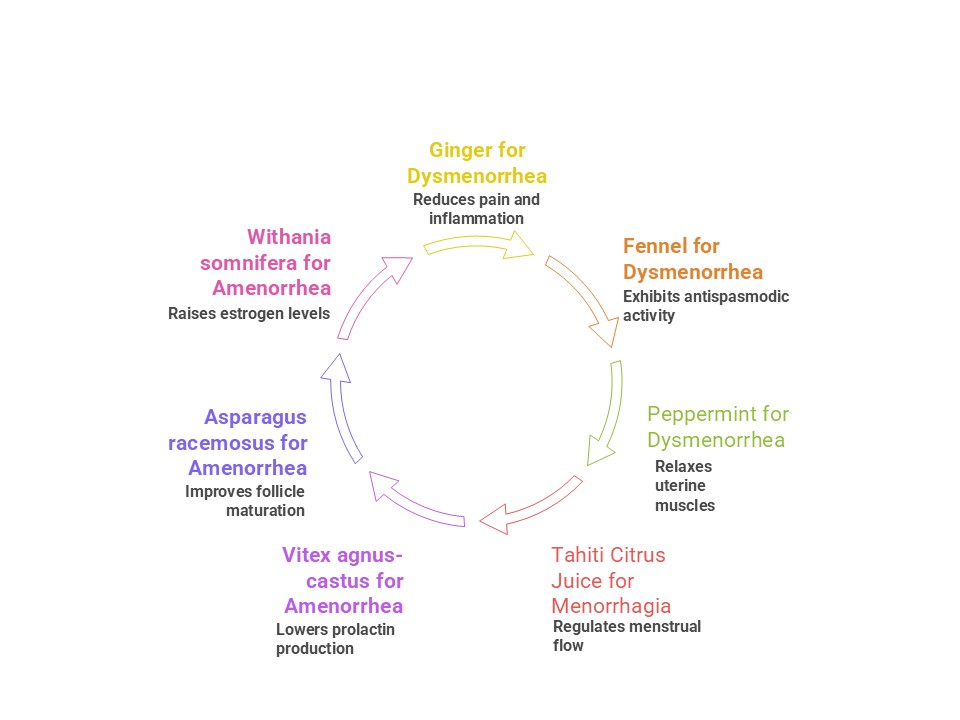
Zingiber officinalehas been demonstrated to have anti-inflammatory and analgesic effects and includes gingerols, free fatty acids, proteins, and carbohydrates. According to other research, ginger suppresses COX-2, which in turn inhibits leukotrienes and prostaglandin formation (Liu et al., 2022). Ginger is a very good pain reliever for dysmenorrhea, according to one meta-analysis. Some research even found that ginger's effects were comparable to those of analgesic drugs. Ginger powder dosages varied from 750 mg to 2000 mg daily. Ginger has been shown in studies to have few negative effects (Xu et al., 2020). Additionally, fennel (Foeniculum vulgare) has been proposed as a potential remedy for dysmenorrhea. In mice's uteri, fennel has been demonstrated to exhibit an antispasmodic activity when oxytocin and PGE2 cause spasms. F. vulgare was consistently successful in lowering the level of severity of dysmenorrhea, though often not less efficiently than NSAIDs, according to a meta-analysis conducted in 2021 that analyzed multiple studies (Shahrahmani et al., 2021). Peppermint's potential to treat dysmenorrhea. peppermint was useful in reducing dysmenorrhea symptoms in a randomized crossover study. But compared to NSAIDs, peppermint had fewer adverse reactions, so it might be a good place to start when treating the condition. Menthol, which is found in peppermint, relaxes smooth muscle, including that of the uterus (Gutman et al., 2022).
Menorrhagia
As a natural source of the flavonoids, Tahiti citrus juice (Citrus latifolia) (TLJ) is being utilized as a substitute to anti-inflammatory medications to treat dysmenorrhea and heavy monthly bleeding, which are frequently linked to an imbalance in prostaglandin (PG) levels. According to both in vitro and vivo evidence, TLJ may regulate menstrual flow by raising uterine PGF2α while keeping PGE2 levels constant. Citrus therapy's PGF2α may decrease menstrual flow by increasing capillary resistance that acts on prostaglandin receptors. Research revealed that four of the substances identified in TLJ, naringin, rutin, eriocitrin, and hesperidin, were unable to stop the LPS-induced PGE2 synthesis in vitro50. When compared to NSAID-based treatment, this impact may be more beneficial for women with menstrual problems linked to decreased PGF2α production (Robeldo et al., 2020).
Amenorrhea and Oligomenorrhea
Numerous traditional medicinal herbs have been suggested by Persian medicine as treatments for amenorrhea and oligomenorrhea. Consuming Vitex agnus-castus extract for three months can lower the prolactin production in underlying hyperprolactinemia without causing major side effects, even though only a few numbers of herbs are useful in treating irregular menstruation (Fig. 1). It has been suggested that certain phytoestrogenic elements in these plants improve follicle maturation, lower blood coagulation factors, relaxation uterine muscles, and speed up uterine healing by acting similarly to natural sex hormones (Jiao et al., 2022). Because of its phytoestrogenic qualities, Asparagus racemosus is utilized for female reproductive health to improve lactation and cure menopausal symptoms. It was also demonstrated that Asparagus racemosus reduced the frequency and force of uterine contractions in a dose-dependent manner (Patibandla et al., 2024). According to research from the National Institute of Ayurveda in Jaipur, India, Withania somnifera works well for menopausal syndrome when combined with other restorative medications like liquorice. Due to its antioxidant properties, it raises estrogen levels and helps lessen symptoms like depression, exhaustion, and hot flashes. Additionally, it has adaptogenic, antidepressant, immunomodulatory, and anti-inflammatory properties (Gopal et al., 2021).
Phytochemical Regulation of Prostaglandins and Uterine Contractility
Numerous vegetables and fruits contain polyphenol chemicals, which may have anti-inflammatory and antioxidant properties. Reduction of uterine contraction is also associated with decreasing oxidative stress. Oleocanthal, a phenolic chemical extract found in extra virgin olive oil, has been shown to have anti-inflammatory as well as anti-oxidant properties (Chiang et al., 2020). Genistein, which has estrogen-like impacts on the uterus and may enhance oxytocin activity and prostaglandins to induce uterine contractions. Furthermore, it has been found that the O-methylated isoflavone prunetin inhibits nitric oxide (NO) in the cells and may help to improve uterine contractility. Since NO lowers uterine contractility by activating guanylate cyclase and elevating cGMP, it is possible to infer that prunetin has a stimulatory effect through NO inhibition. Consequently, NO inhibition will decrease the contractility of the uterine smooth muscle (Bello et al., 2024).
SAFETY, TOXICITY AND LIMITATIONS
Data on the number of serious side effects was gathered by a variety of research supplementing with resveratrol was linked to similar side effects as a placebo. Much preclinical research has not thoroughly studied pharmacokinetics and pharmacodynamics, and when natural medicines are coupled with traditional pharmacotherapy, herb-drug interactions must be carefully reviewed. In fact, randomized controlled multi-center trials are required to demonstrate their safety and efficacy in comparison to traditional therapy techniques. Standardized procedures must be established to generate well-defined plant extracts that comply with GMP. As a result, the pharmaceutical sector has no motivation to spearhead advancements in this area or even carry out costly clinical trials. The majority of phytochemicals have low stability as well as bioavailability in their natural form, which is another significant problem. As a result, they may be used largely as lead compounds for the creation of new medications with better pharmacokinetic profiles (Phan et al., 2018). Lastly, it should be mentioned that the main goal of natural-based treatments, especially CHM, is to alleviate the symptoms associated with endometriosis rather than to cure the condition. This could also be a significant factor in why not all gynecologists, along with patients in China, embrace and approve CHM (Meresman et al., 2021).
FUTURE DIRECTIONS AND RESEARCH GAPS
Furthermore, solid dispersion, nanoparticles, polymeric micelles, nanosuspensions, and lipid-based nanocarriers may all help increase curcumin's oral bioavailability (Ma et al., 2019). Furthermore, unique curcumin formulations with superior pharmacokinetic and human bioavailability data are now accessible. For example, compared to unformulated curcumin, NovaSol®, CurcuWin®, and LongVida® have been shown to have a bioavailability that is more than 100 times higher (Ma et al., 2019). Several Chinese herbal formulations, like Taingui fang, when taken with metformin, can lower insulin levels in patients while also curing infertility. TCM is effective in resolving menstruation and causing ovulation within PCOS patients, especially when combined with electroacupuncture (Sharma, 2024). By improving the standard of diagnosis and treatment, the goal is to tailor care for each patient. The right to carry out the development program within the international research center "The National Centre for personalized medicine of endocrine diseases" (NMCPMED) was granted to the National Medical Research Centre for Endocrinology. The goal of the NMCPMED is to train new medical specialists in addition to developing a personalized treatment system (Dedov et al., 2021). Certain bioactive molecules generated from plants have already progressed to the crucial phase of clinical screening. The state of the research, however, is far from enough to support the use of these substances in contemporary multimodal gynecological therapy ideas. Future randomized controlled multi-center trials with sizable patient populations are the only way to accomplish this (Riaz et al., 2023).
CONCLUSION
Phytochemicals are becoming one of the bioactive agents when it comes to complicated gynecological diseases like polycystic ovary syndrome (PCOS), endometriosis and irregularities in the menstrual cycle. Their therapeutic capabilities are based on their effects on various molecular pathways such as endocrine signal modification, insulin sensitization, oxidative stress reduction and inhibition of inflammatory pathways. In general, the inclusion of phytochemicals in the personalized and complementary medical systems could maximize the outcomes in the field of female reproductive endocrinology, as phytochemicals have been shown to possess the regulatory properties for the female reproductive system, including ovarian activity, endometrial growth, and the menstrual cycle. Phytochemicals represent a useful bridge between traditional medicine and modern biomedical studies and have the potential to play a role in the sustainable, multi-targeted, and patient-centered treatment of female reproductive health conditions.
References
- Abbas M, F Saeed, FM Anjum et al., 2017. Natural polyphenols: An overview. International Journal of Food Properties 20:1689-99.
- Ainehchi N, A Farshbaf-Khalili, A Ghasemzadeh et al., 2019. The effect of herbal medicine supplementation on clinical and para-clinical outcomes in women with PCOS: a systematic review and meta-analysis. Int J Women’s Health Reprod Science 7:423-33.
- Attia GM, OA Alharbi and RM Aljohani, 2023. The impact of irregular menstruation on health: a review of the literature. Cureus 15:49146.
- Banaszewska B, J Wrotyńska-Barczyńska, RZ Spaczynski et al., 2016. Effects of resveratrol on polycystic ovary syndrome: a double-blind, randomized, placebo-controlled trial. The Journal of Clinical Endocrinology and Metabolism 101:4322-28.
- Barrera N, TS Omolaoye and SS Du Plessis, 2022. A contemporary view on global fertility, infertility, and assisted reproductive techniques. In Fertility, pregnancy, and wellness, Elsevier. Pp:93-120.
- Bello IO, BA Ayinde, JO Ofeimun et al., 2024. Investigation of the uterine modulating activities and mechanisms of Brachystegia eurycoma Harms (Leguminosae) methanol stem bark extract and fractions. Scientific African 25:02298.
- Bribi N, 2018. Pharmacological activity of alkaloids: a review. Asian journal of botany 1:1-6.
- Bulun SE, YH Cheng, ME Pavone et al., 2010, January. Estrogen receptor-β, estrogen receptor-α, and progesterone resistance in endometriosis. In Seminars in reproductive medicine, © Thieme Medical Publishers. Vol. 28, pp. 036-043.
- Chang RJ, 2004. A practical approach to the diagnosis of polycystic ovary syndrome. American journal of obstetrics and gynecology 191:713-17.
- Chiang YF, HC Hung, HY Chen et al., 2020. The inhibitory effect of extra Virgin olive oil and its active compound oleocanthal on prostaglandin-induced uterine hypercontraction and pain—Ex vivo and In vivo study. Nutrients 12:3012.
- Chukwuebuka E and IJ Chinenye, 2015. Biological functions and anti-nutritional effects of phytochemicals in living system. Journal of Pharmaceutical and Biological Sciences 10:10-19.
- Dedov II, NG Mokrysheva, MV Shestakova et al., 2021. The prospects for the creation of the National Center for Personalized Medicine of Endocrine Diseases. Problem Endocrinology 67:13-19.
- Dereń K, I Michońska, A Dymek et al., 2025. Soy Isoflavones and PCOS: Role in Hormonal and Metabolic Mechanisms. Applied Sciences 15:6198.
- Deswal R, V Narwal, A Dang et al., 2020. The prevalence of polycystic ovary syndrome: a brief systematic review. Journal of Human Reproductive Sciences 13:261-71.
- Dewailly D, 2016. Diagnostic criteria for PCOS. Best Practice and Research Clinical Obstetrics and Gynaecology 37:5-11.
- Di Lorenzo M, N Cacciapuoti, MS Lonardo et al., 2023. Pathophysiology and nutritional approaches in polycystic ovary syndrome (PCOS): a comprehensive review. Current nutrition reports 12:527-44.
- Dillard CJ and JB German, 2000. Phytochemicals: nutraceuticals and human health. Journal of the Science of Food and Agriculture 80:1744-56.
- Ferella L, JI Bastón, MA Bilotas et al., 2018. Active compounds present inRosmarinus officinalis leaves andScutellaria baicalensis root evaluated as new therapeutic agents for endometriosis. Reproductive BioMedicine Online 37:769-82.
- Foster C and H Al-Zubeidi, 2018. Menstrual irregularities. Pediatric annals 47:23-28.
- Gołąbek A, K Kowalska and A Olejnik, 2021. Polyphenols as a diet therapy concept for endometriosis—current opinion and future perspectives. Nutrients 13:1347.
- Gonfa YH, FB Tessema, A Bachheti et al., 2023. Anti-inflammatory activity of phytochemicals from medicinal plants and their nanoparticles: A review. Current Research in Biotechnology 6:100152.
- Gopal S, A Ajgaonkar, P Kanchi et al., 2021. Effect of an ashwagandha (Withania Somnifera) root extract on climacteric symptoms in women during perimenopause: a randomized, double‐blind, placebo‐controlled study. Journal of Obstetrics and Gynaecology Research 47:4414-25.
- Gutman G, AT Nunez and M Fisher, 2022. Dysmenorrhea in adolescents. Current Problems in Pediatric and Adolescent Health Care 52:101186.
- Harjai K and R Chand, 2018. A study to assess the effectiveness of ginger for reducing pain in primary dysmenorrhoea among adolescent girls in selected college of nursing at Dehradun. History 17:56-61.
- Ilhan M, FT Gürağaç Dereli and EK Akkol, 2019. Novel drug targets with traditional herbal medicines for overcoming endometriosis. Current Drug Delivery 16:386-99.
- Jiao M, X Liu, Y Ren et al., 2022. Comparison of herbal medicines used for women’s menstruation diseases in different areas of the world. Frontiers in Pharmacology 12:751207.
- Khazaei MR, Z Rashidi, F Chobsaz et al., 2020. Inhibitory effect of resveratrol on the growth and angiogenesis of human endometrial tissue in an in vitro three-dimensional model of endometriosis. Reproductive Biology 20:484-90.
- Liu X, X Meng, X Su et al., 2022. The mechanism of ginger and its processed products in the treatment of estradiol valerate coupled with oxytocin-induced dysmenorrhea in mice via regulating the TRP ion channel-mediated ERK 1/2/NF-κB signaling pathway. Food and Function 13:11236-48.
- Ma C, Q Xiang, G Song et al., 2022. Quercetin and polycystic ovary syndrome. Frontiers in Pharmacology 13:1006678.
- Ma Z, N Wang, H He et al., 2019. Pharmaceutical strategies of improving oral systemic bioavailability of curcumin for clinical application. Journal of Controlled Release 316:359-80.
- Markowska A, Z Kojs, M Antoszczak et al., 2025. Epigallocatechin Gallate as a Potential Therapeutic Agent in Endometriosis: A Narrative Review. Nutrients 17:2068.
- Marquardt RM, TH Kim, JH Shin et al., 2019. Progesterone and estrogen signaling in the endometrium. International journal of molecular sciences 20:3822.
- Meresman GF, M Götte and MW Laschke, 2021. Plants as source of new therapies for endometriosis: a review of preclinical and clinical studies. Human Reproduction Update 27:367-92.
- Oakenfull D and GS Sidhu, 2023. Saponins. Toxicants of plant origin 31:97-142.
- Panche AN, AD Diwan and SR Chandra, 2016. Flavonoids: an overview. Journal of Nutritional Science 5:47.
- Patel BG, M Rudnicki, J Yu et al., 2017. Progesterone resistance in endometriosis: origins, consequences and interventions. Acta obstetricia et gynecologica Scandinavica 96:623-32.
- Patibandla S, JJ Gallagher, L Patibandla et al., 2024. Ayurvedic herbal medicines: a literature review of their applications in female reproductive health. Cureus 16:55240.
- Pham DC, MA Shibu, B Mahalakshmi et al., 2020. Effects of phytochemicals on cellular signaling: reviewing their recent usage approaches. Critical reviews in food science and nutrition 60:3522-46.
- Phan MAT, J Paterson, M Bucknall et al., 2018. Interactions between phytochemicals from fruits and vegetables: Effects on bioactivities and bioavailability. Critical Reviews in Food Science and Nutrition 58:1310-29.
- Riaz M, R Khalid, M Afzal et al., 2023. Phytobioactive compounds as therapeutic agents for human diseases: A review. Food Science and Nutrition 11:2500-29.
- Rizzo G, A Feraco, MA Storz et al., 2022. The role of soy and soy isoflavones on women's fertility and related outcomes: an update. Journal of Nutritional Science 11:17.
- Robeldo T, EF Canzi, PM de Andrade et al., 2020. Effect of Tahiti lime (Citrus latifolia) juice on the Production of the PGF2α/PGE2 and Pro-Inflammatory Cytokines involved in Menstruation. Scientific Reports 10:7063.
- Rosenfield RL and DA Ehrmann, 2016. The pathogenesis of polycystic ovary syndrome (PCOS): the hypothesis of PCOS as functional ovarian hyperandrogenism revisited. Endocrine reviews 37:467-520.
- Sankhwar P, SP Jaiswar, S Yadav et al., 2022. Beneficial Effects of a Novel Fenugreek Seed Extract (Trigonella foenum-graecum, Furocyst®) in Women with Polycystic Ovary Syndrome (PCOS): A Follow-up Compliance Clinical Investigation. Journal of the American Nutrition Association 42:691–99.
- Shahrahmani H, M Ghazanfarpour, N Shahrahmani et al., 2021. Effect of fennel on primary dysmenorrhea: A systematic review and meta-analysis. Journal of Complementary and Integrative Medicine 18:261-69.
- Sharma N, 2024. Therapeutic use of phytochemicals in the treatment of various female reproductive disorders. Life Science and Research 1:55-72.
- Singh A, S Dasgupta, A Bhattacharya et al., 2022. Therapeutic potential of curcumin in endometrial disorders: current status and future perspectives. Drug Discovery Today 27:900-911.
- Singh A, S Gainder, P Banerjee et al., 2023. Efficacy of a proprietary fenugreek seed extract (Trigonella foenum-graecum, furocyst®) in women with polycystic ovary syndrome (PCOS): a randomized, double-blind, placebo-controlled study. Journal of the American Nutrition Association, 42:651-59.
- Tyagi S, G Singh, A Sharma et al., 2010. Phytochemicals as candidate therapeutics: An overview. International Journal of Pharmaceutical Sciences Review and Research 3:53-55.
- Xu Y, Q Yang and X Wang, 2020. Efficacy of herbal medicine (cinnamon/fennel/ginger) for primary dysmenorrhea: a systematic review and meta-analysis of randomized controlled trials. Journal of International Medical Research 48:179.