

INTRODUCTION
Skin disorders are associated with abnormalities in the layers or components of the human skin. They can affect individuals of any age group, gender, or race belonging to any social or economic background. There are three leading groups of skin diseases all over the world, namely dry skin, acne, and hyperpigmentation. According to the Global Burden of Disease report, 9.4% and 2.6% of people suffered from acne and atopic eczema (AE) all over the globe (Alexis et al., 2024).
Acne is a chronic inflammation of pilo-sebaceous unit (skin structure comprising of a hair follicle, sebaceous gland, and the arrector pili muscle) (Tuchayi et al., 2015). It is a common disease of puberty but can also be experienced by adults (Taylor et al., 2011). It is categorized as acne vulgaris and adult acne depending upon age group. Acne vulgaris is a common disease of adults up to the age of 24 years, affecting 57.8% of individuals at the rate of about 3-4% annually. However, we refer to it as adult acne if an individual experience it after the age of 25 (Wang et al., 2024). The three pathophysiological factors leading to acne vulgaris are hyper-seborrhea, abnormal follicular keratinization and Propionibacterium acnes proliferation in the pilosebaceous unit. The interaction of these factors induces inflammatory reactions which leads to lesion formation in the host (Jeremy et al., 2003). Atopic eczema (AE) is a complex disease characterized by inflamed skin, triggered by a complex of genetic and environmental factors. It is caused by the involvement of different types of dendritic cells, such as Langerhans cells and other dendritic cells, which activate inflammatory cells and T‐cells to release cytokines and chemokines. Many allergens may combine with bacterial and viral stimuli and lead to the severity of AE (Allam et al., 2006).
LIMITATIONS OF CONVENTIONAL THERAPIES
Several therapies are available for the treatment of acne includes oral antibiotics, isotretinoin, and hormonal therapy. However, there are certain disadvantages, such as side effects, insufficient therapeutic response, and the high expense of some treatments. Although isotretinoin is successful in treating acne, it should not be used during pregnancy because it can lead to birth defects by producing teratogenic effects or disturbing the development of the fetus. There can be variation in severity depending upon dose (Ghosh et al., 2011). Topical anti-inflammatory drugs, including calcineurin inhibitors and topical corticosteroids, as well as skin moisturizing products, can be used to treat eczema. Additionally, it has been discovered that proactive therapy (twice a week) of topical corticosteroids and calcineurin inhibitors in previously affected areas reduces the duration until the next eczematous flare-up. It is difficult to treat eczema due to its complex clinical issue; the original AE diagnosis may need to be reevaluated, particularly if the illness first manifests in adulthood. Additionally, it can call for testing for dietary, contact, and inhalation allergies that could worsen the underlying AE (Chong et al., 2016). Skin care solutions are used in part to lubricate the surfaces of the skin, just like oil lubricant is used primarily to minimize friction between machine components' interacting surfaces in order to provide more efficient system operations (Kasolang et al., 2020). These solutions have drawbacks that call for therapy from a natural source.
In recent decades, people have shown increasing interest in using medicinal plants as alternative or supportive treatments for acne vulgaris and atopic eczema. The main reason behind this shift is the need to reduce bacterial resistance to current antibiotics, lessen the side effects of standard medications, improve patient resistance, and deal with poor treatment outcomes (Cao et al., 2015).
BIOACTIVE COMPOUNDS FROM MEDICINAL PLANTS
Carbohydrates
Bioactive carbohydrates can be derived from plants (laminarin, fucoidan, alginates, cellulose, pectin, β-Glucans), animals (Hyaluronic Acid, heparin, chitin) and microorganisms (Dextran, xanthan). Polysaccharides (a large family of biopolymers) obtained from plant sources form part of herbal remedies that are widely practiced in many Asian countries (Guo et al., 2014). These polysaccharides from plant sources are relatively nontoxic and have fewer side effects compared with those of synthetic compounds. That’s why these bioactive polysaccharides from plant sources have obtained a lot of research interest to explore their biological activities (Xie et al., 2016). Carbohydrates are used in the pharmaceutical industry as bulking agents. Moreover, carbohydrates have biological significance by exhibiting immunomodulatory, hypoglycemic, anticoagulant (e.g., heparin), anti-tumor, and antiviral activities (Fakim et al., 2006).
Alkaloids
Alkaloids are nitrogenous compounds having a complex structure obtained from natural sources such as bacteria, fungi, animals, and plants. There have been two major categories of alkaloids based on their basic ring system (e.g., atropine, quinoline, indole, isoquinoline, piperidine alkaloids, or imidazole) and plant sources (e.g., opium, vinca, belladonna, and ergot alkaloids) (Heinrich et al., 2004). In ancient times, alkaloids have been used for the treatment of various ailments such as purgatives, antitussives, and sedatives. Nowadays, they are used as models for modern drugs and in field pharmacology, such as codeine, brucine, morphine, ephedrine, and quinine (Grijalva et al., 2020). Heterocyclic rings of alkaloids contain nitrogen, having pharmacological activities (Van Wyk et al., 2000).
Phenolics
Phenolics are secondary metabolites extracted from plants characterized by hydroxyl (-OH) groups attached to an aromatic ring (Heinrich et al., 2004). Phenolic compounds have been extensively investigated for their beneficial role as antioxidants, antitumor, and antimicrobial properties (Luna et al., 2018). They have been categorized into two main groups on the basis of the number and arrangement of the carbon atoms as flavonoids and non-flavonoids (Rosa et al., 2019). Flavonoids are phenolics that have two benzene rings linked by a 3-carbon chain. Garlic contains flavonoids and is useful for plaque buildup, coronary artery blockage, cholesterol levels, and a variety of other deadly illnesses (Talapatra et al., 2015).
Glycosides
Secondary metabolites of plants, referred to as glycosides, are made up of two parts: aglycone, a non-carbohydrate element, and glycone, a carbohydrate component. Glycones are composed of one or more glucose units, whereas aglycones are composed of plant secondary metabolites such as aromatic compounds, phenolics, or alkaloids (Heinrich et al., 2006). Various glycosides, such as anthraquinone glycosides, steroidal (cardiac) glycosides, and coumarin glycosides, are reported for their pharmacological significance. Several antibiotics, such as streptomycin, are glycosides in nature; moreover, saponins are also glycosides (reduce the surface tension of water) used as cleansing agents (Bernhoft et al., 2010). Aloesin (chemically a C-Glycoside), reported for its antioxidant activity, free radical scavenging, and anti-inflammatory effects, has been isolated from Aloe vera (Yagi et al., 2002).
MECHANISMS OF ACTION IN ATOPIC ECZEMA
The pathophysiology of atopic eczema involves numerous overlapping elements, making it a complex disease with a varied clinical presentation. These include epidermal gene abnormalities, skin barrier malfunction, and microbial imbalance.
Defective Genes and Epidermal Barrier Damage
The chances that an offspring may have AE are 1.5 times higher if the parents had food allergies, asthma, or allergic rhinitis. The likelihood that a child may get AE increases threefold when one parent has atopic dermatitis, and fivefold when both parents have the condition (Apfelbacher et al., 2011). The pathophysiology of the disease is caused by the interaction of various genes, but their inheritance does not follow the simple Mendelian laws. These genes are susceptible to a number of hereditary abnormalities such as genomic imprinting, inadequate gene penetrance, and epigenetic modifications. Genome study has revealed that 31 distinct chromosomal regions are vulnerable to AE (Torres et al., 2019).
Changes in genes can lead to the disruptive function of the epidermal barrier. Most importantly mutation in the filaggrin gene (present in the long arm of 1q21 chromosome) is thought to be one of the main genes for AE. Filaggrin (the primary constituent of keratohyalin granules, is a highly phosphorylated histidine-rich molecule) is the primary product of filaggrin. Through the transglutaminase-1 enzyme's catalytic activity, the resultant FLG monomers assemble keratin fibers, causing cells to flatten. The lipid extracellular matrix, supported by the corneocytes (cells that form the stratum corneum), prevents excessive water loss, keeps the skin's pH at the right level, stops Staphylococcus aureus from replication, and restricts the ability of antigens to reach deeper layers of the skin. Glutamate, histidine, alanine, and their derivatives, including pyrrolidone carboxylic acid (PCA) and urocanic acid (UCA), are produced as a result of further changes and degradation of filaggrin. Mutations resulting in defective protein synthesis leads to abnormalities in the levels and proportions of free fatty acids, ceramides, and triglycerides, as well as increased transepidermal water loss (TEWL), excessive dryness, and elevated pH on the skin's surface. Intercellular connections break down, proteases become more active, the epidermis becomes more permeable, antigens penetrate, and proinflammatory cytokines are stimulated due to the barrier defect (Zaniboni et al., 2016).
Microbiome
Microorganisms reside on the host skin and establish a mutual and beneficial system with it, known as commensalism. These beneficial microorganisms interact with the natural and acquired immune system of the host and provide protection to it against pathogenic microorganisms and support the epidermal layer (Byrd et al., 2018). But any kind of disturbance in the function of various microorganisms leads to diseases, including atopic eczema (Lunjani et al., 2019). Commensal bacteria belonging to the genera Streptococcus, Corynebacterium, and Cutibacterium decrease in atopic skin, while Proteobacteria, genus Staphylococcus, and S. aureus in increase. Reduced filaggrin, disrupted corneocyte structure, a pH higher than normal skin, and a decrease in the synthesis of antimicrobial peptides. All these factors all favor the colonization of pathogenic staphylococci (Paller et al., 2019). The severity of the skin lesions and the disease are positively correlated with a greater colonization index and increased S. aureus density (Totte et al., 2016).
Pruritus Pathophysiology
A major symptom of AE that has a substantial impact on patients' quality of life is itchy skin. Pruritogens interact with substance-specific receptors to increase itching. Unmyelinated C fibers and sparsely myelinated fibers, which originate from cell bodies in the dorsal root ganglia (DRG), induce the itching. The itching signal is translated in form of motor action of scratching by the brain (Meng et al., 2018). Ineffectively managed pruritus restricts everyday activities, lowers productivity, and interferes with sleep. The root cause of itching is the attuned interactions between keratinocytes, the immune system, and non-histaminergic sensory neurons. Moreover, pruritus in AE patients may be exacerbated by emotional stress, irregular sleeping patterns and use of alcohol (Fujii et al., 2020).
MECHANISM OF ACTION IN ACNE VULGARIS
Factors Involved in Acne Vulgaris
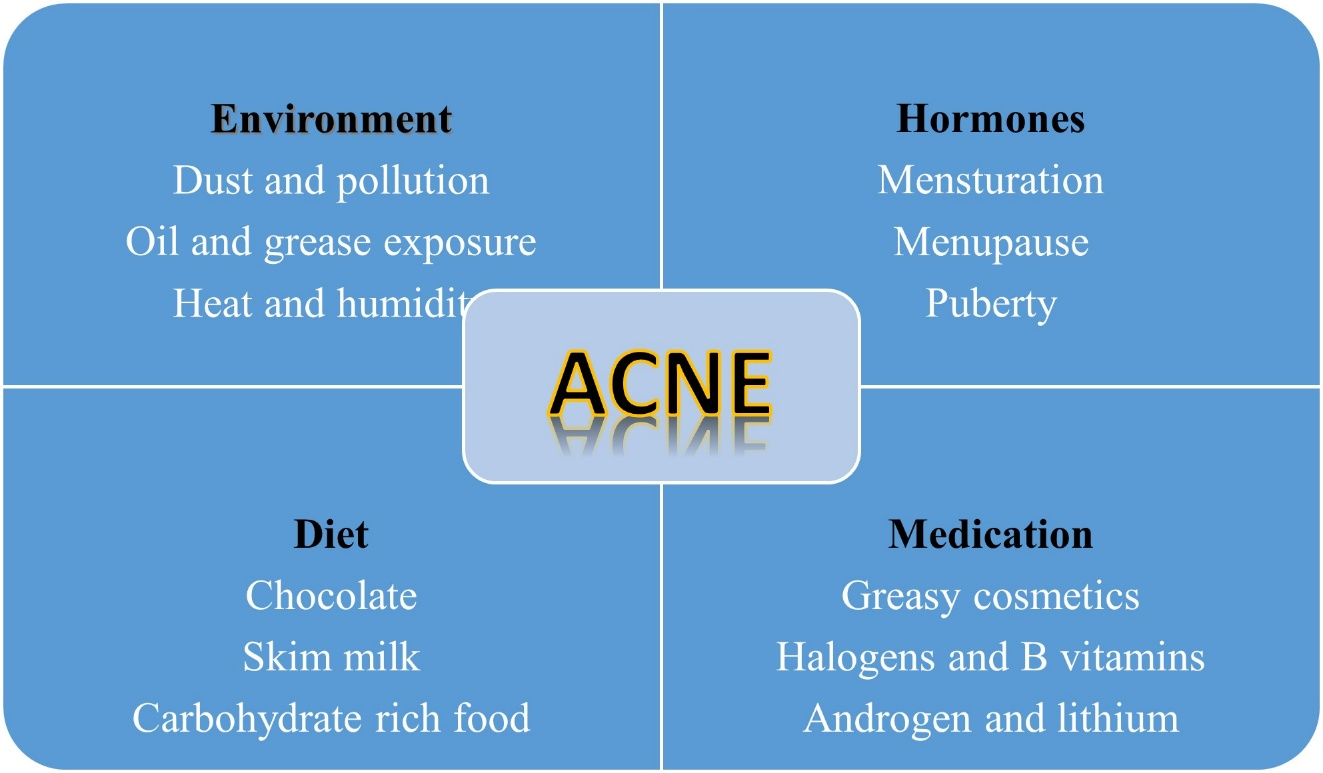
There are some common acne-causing factors found in literatures such as environmental exposure, hormones, diet and medication (Kasolang et al., 2020). A brief description of these factors is given in Fig. 1.
Various Stages in Acne Vulgaris
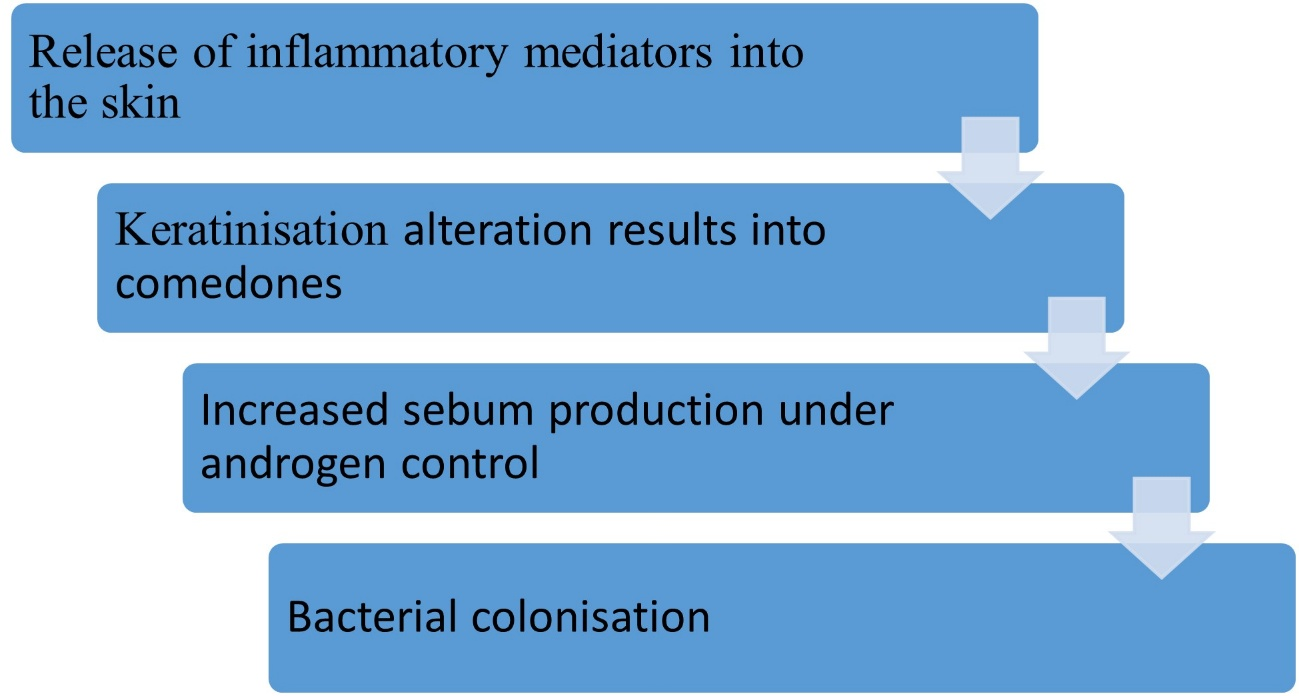
Acne is a long-term inflammatory condition that affects the pilosebaceous, cell-lined follicles. These follicles have enormous sebaceous glands and fine hair that occasionally bursts out of the skin (Reddy and Jain, 2019). The formation of acne undergoes four stages (Williams et al., 2012). The stages are shown in the flow chart given below (Fig. 2).
Sebum is necessary for healthy skin, but too much of it might compromise the integrity of the skin. The sebaceous gland, which is attached to the hair follicles, produces sebum, an oily material (Kasolang et al., 2020). Sebum carries germs and dead cells to the skin's surface, where Propionibacterium acnes begin in the sebaceous follicle. Later on, acne symptoms could progress to inflammatory nodules, papules, and pustules (Reddy and Jain, 2019). The symptoms of inflammatory skin include redness, edema, and pus. Nodules, papules, pustules, blackheads, and whiteheads are among the various kinds of acne lesions.
Blackheads are the open pores that become clogged with a mixture of keratin and sebum, giving the skin a darker appearance, whereas whiteheads are closed pores filled with sebaceous gland secretion that swell beneath the tissue. Solid tumors called nodules often spread into the skin's deeper layers and harm surrounding tissue. Acne outbreaks are extremely uncomfortable and can cause skin scarring. While pustules are tiny, swelling acne lesions filled with pus, papules are solid, inflammatory acne lesions devoid of pus. The mixture of bacteria, leukocytes, and dead skin cells that accumulated around hair follicles is called pus. The most severe forms of acne are characterized by inflammatory lesions, including comedones, papules, pustules, and certain nodulocystic lesions. Acne skin can be classified as almost clear, mild, moderate, or severe (Kasolang et al., 2020).
BIOACTIVE COMPOUNDS IN MEDICINAL PLANTS
Tea
Camellia sinensis (Tea), a member of the Theaceae family, is the world's second most popular beverage and is derived from the Camellia sinensis plant, which is native to Southeast Asia (Botten et al., 2015). Its leaves yield four types of tea: white tea, green tea, oolong tea, and black tea. The contents of these teas vary depending on the fermentation and drying techniques that the leaves go through (Jigisha et al., 2012). The four major catechins are epigallocatechin-gallate, epicatechin-gallate, epigallocatechin, and epicatechin (Ashihara et al. 2010). Epigallocatechin-gallate accounts for around 59% of the total amount of catechins in green tea, making it the most common and important catechin in terms of pharmacology. Green tea has been studied for its anti-inflammatory, anti-cancer, antimicrobial, and antioxidant properties. Green tea's catechin-driven antioxidant effect involves scavenging free radicals, preventing lipid peroxidation, and activating antioxidant enzymes (Cao et al., 2025). Green tea also demonstrated antibacterial properties by altering bacterial membranes and decreasing pathogenic enzyme function and fatty acid production (Chakrawarti et al., 2016). New research suggests that green tea can reduce sebum production by blocking the enzyme 5α-reductase (Saric et al., 2016).
Barberry
Berberis vulgaris (Berberidaceae) is native to the Americas, Europe, and Asia (Khan et al. 2016). Barberry roots, stems, and bark are taken as ethnomedicine, and the scarlet fruit is commonly utilized in food preparation (Kalmarzi et al., 2019). Berberine, an isoquinoline alkaloid from the structurally complex class of protoberberines, is principally responsible for the medicinal properties of B. vulgaris (Imanshahidi et al., 2008). Barberine has also been researched for medicinal properties such as anxiolytic, antifungal, antibacterial, anti-inflammatory, and antioxidant (Dulic et al., 2019). A study found that berberine reduces lipogenesis (the primary cause of oily skin) in the glands that produce oil (Seki et al., 1993).
| Plant Name | Acne Type | Formulation | Outcomes | Reference |
|---|---|---|---|---|
| Melaleuca alternifolia | Mild to moderate (3 months) | 5% tea tree oil+gel | Reduction in inflammatory and non-inflammatory lesions | Bassett et al., 1990 |
| Mild to moderate (45 days) | 5% tea tree oil+gel | Reduction in the total number of lessons | Enshaiesh et al.,2007 | |
| Moderate to severe (12 weeks) | Tea tree oil+gel(twice a day) | Reduction in the total number of lessons | Malhi et al.,2017 | |
| Camellia sinensis | Mild to moderate (30 days) | Aqueous solution of green tea+ capsule 500 mg (3 times a day) | Reduction in inflammatory and non-inflammatory lesions, Reduction in the total number of lesions | Forest and Rafikhah et al., 2014 |
| Moderate to severe (4 weeks) | decaffeinated extract of green tea+ capsule 500 mg (3 times a day) | Reduction in inflammatory and non-inflammatory lesions, Reduction in the total number of lesions | Lu and Hasu, 2016 | |
| Mild to moderate Injury count (2 months) | Camellia sinensis +lotion (twice a day) | Reduction in inflammatory lesions, | Sharique et al., 2006 | |
| Berberis vulgaris | Moderate to severe | Aqueous extract of dried fruit; 200mg capsules (thrice a day) | Reduction in inflammatory and non-inflammatory lesions, Reduction in the total number of lesions | Fouladi et a., 2012 |
| Aloe vera | Mild to moderate | Aloe vera gel + tretinoin cream 0.025% gel (twice a day) | Reduction in inflammatory and non-inflammatory lesions, Reduction in the total number of lesions | Hajheydari et al., 2014 |
Aloe vera
Aloe barbadensis, the most well-known member of the family Asphodelaceae, is extensively used in home remedies all over the world due to its multiple health benefits. It is a xerophytic plant native to the Arabian Peninsula, characterized by long, green leaves with spiny edges that are filled with a mucilaginous pulp. This pulp contains water and various bioactive substances that form aloe vera gel (Guo et al., 2016). Aloe vera gel contains more than 75 distinct components, such as polysaccharides, anthraquinones, flavonoids, terpenes, saponins, amino acids, minerals, and vitamins (Minjares et al., 2018). Anthraquinones are regarded as the most significant secondary metabolites found in aloe vera gel, as they grant astringent, antibacterial, anti-inflammatory, antioxidant, and rehabilitation properties to it (Kumar and others, 2019). Various studies related to acne treatment by using these plants and their results are described in the Table 1.
MEDICINAL PLANTS AND THEIR FORMULATION IN ATOPIC ECZEMA CONTROL
Rosemary
Rosmarinus officinalis, an herb (family: Lamiaceae), native to the Mediterranean region, is characterized by evergreen, needle-shaped leaves with fragrance. Rosemary essential oil has investigated for its anti-inflammatory, anti-microbial, and antioxidant properties, helped in the treatment of atopic eczema. The presence of various phenolic compounds such as rosmarinic acid, carnosol, and carnosic acid may be responsible for the biological activities of rosemary. Another study has revealed that the extracts from rosemary flowers were rich in antibacterial, antioxidant, anti-inflammatory, and analgesic properties (Karadag et al., 2019). Oil obtained from rosemary flowers contains terpenes (especially 1,8-cineole, a strong anti-inflammatory component) (Santos and Rao, 2000). Additionally, rosemary extract was discovered to be highly efficient against three-gram positive bacteria (Staphylococcus aureus, Staphylococcus epidermis, and Bacillus subtilis), three-gram negative bacteria (Proteus vulgaris, Pseudomonas aeroginosa, and Escherichia coli), and two fungi (Candida albicans and Aspergillus niger). The application of rosemary extract oil prevents illness from getting worse when these pathogens tend to exacerbate inflammation in eczema patients, while the application of rosemary extract oil prevents illness from getting worse (Jiang et al., 2011).
Neem
Azadirachta indica is a well-known member of the family Meliaceae. Neem and its constituents play a pivotal role due to having anti-inflammatory, antiulcer, anti-malarial, antifungal, immune-modulator, anti-hyperglycaemic, antibacterial, antiviral, antioxidant, anti-mutagenic, and anti-carcinogenic properties. Different compounds like sodium nimbidate, gallic acid, catechin, polysaccharides, and nimbidin are responsible for the anti-inflammatory effects of neem. Some studies have shown that “nimbidin” can be effective against the production of neutrophils and macrophages that could worsen inflammation. Other compounds like nimbidin, nimbolide, morgolon, morgolonone, and isomorgolonone have also shown therapeutic value. A bath with neem water has been used for centuries to treat a variety of related illnesses. Neem applied topically may help reduce eczema-related irritation and itching (Debjit et al., 2010).
Olive oil
Fruits of Olea europaea L. (family: Oleaceae) have been widely utilized as a source of olive oil at commercial scale. Major components of olive oil are oleic acid, linoleic acid and palmitic acid, which are used in skin and hair products. The regular topical application of monounsaturated oleic acid helps to treat eczema by breaking down the barrier and increasing the permeability of oil into the skin. The stability of the epidermal barrier and its water permeability have been directly affected by linoleic acid derived from oil (Lin et al., 2018).
Coconut oil
Cocos nucifera L. belongs to the family Arecaceae. Different free fatty acids including lauric acid (49%), myristic acid (18%), palmitic acid (8%), caprylic acid (8%), capric acid (7%), oleic acid (6%), stearic acid (2%) and linoleic acid (2%), are present in the Kernels of mature coconuts. External application of virgin coconut oil can be helpful in the treatment of moderate eczema as it reduces trans-epidermal water loss and improves skin texture, leading to a reduction in the severity of the disease (Lin et al., 2018). Coconut oil is important for strengthening the skin's barrier, improving moisture, and fighting germs, making it a useful choice for treating atopic eczema.
FUTURE PROSPECTS
In spite of having abundant benefits, many phytochemicals are still not regarded as medicine due to a lack of clinical confirmation. So, preclinical and clinical testing of such phytochemicals must be encouraged to confirm their usage as medicine. Molecular studies, larger clinical trials, and in silico modeling are some processes to investigate bioactivity, improve interactions, and evaluate safety. The information gathered in this chapter aims to perform future research on further anti-inflammatory phytochemicals that may help to treat complicated skin conditions, including acne vulgaris and atopic eczema.
CONCLUSIONS
Acne vulgaris and eczema are prevalent inflammatory skin conditions. Conventional treatments might have negative side effects and frequently have poor efficacy. Because of their antibacterial, antioxidant, and anti-inflammatory qualities, phytochemicals derived from medicinal plants provide safer substitutes. Fatty acids, glycosides, terpenoids, phenolics, and alkaloids are important bioactive substances. Berberine, aloe vera (anthraquinones), and tea tree oil (terpinen-4-ol) all inhibit Propionibacterium acnes, lower oxidative stress, and inhibit pro-inflammatory cytokines in acne vulgaris. Olive oil (oleic and linoleic acids), coconut oil (lauric acid), neem (nimbidin, nimbolide), and rosemary (rosmarinic acid) all help to restore barrier function and lessen microbial colonization in eczema. Topical formulations based on phytochemicals enhance the integrity of the skin barrier, reduce transepidermal water loss, and reduce sensations, including irritation, dryness, and itching, all of which raise the SCORAD index. Numerous phytochemicals have demonstrated their effectiveness in treating mild to severe acne by significantly reducing both inflammatory and non-inflammatory lesions. These natural substances may also reduce the negative effects of long-term corticosteroid use and improve treatment compliance.
References
- Alexis A, J Tan, M Rocha et al., 2024. Is Acne the Same Around the World? The Journal of Clinical and Aesthetic Dermatology 17:16.
- Allam JP and N Novak, 2006. The pathophysiology of atopic eczema. Clinical and Experimental Dermatology 31:89-93.
- Apfelbacher CJ, TL Diepgen and J Schmitt, 2011. Determinants of eczema: population‐based cross‐sectional study in Germany. Allergy 66:206-13.
- Ashihara H, WW Deng, W Mullen et al., 2010. Distribution and biosynthesis of flavan-3-ols in Camellia sinensis seedlings and expression of genes encoding biosynthetic enzymes. Phytochemistry 71:559-566.
- Bassett I.B, RSC Barnetson and DL Pannowitz, 1990. A comparative study of tea‐tree oil versus benzoylperoxide in the treatment of acne. Medical Journal of Australia 153:455-58.
- Bernhoft AJAB, 2010. A brief review on bioactive compounds in plants. Bioactive compounds in plants-benefits and risks for man and animals The Norwegian Academy of Science and Letters 50:11-17.
- Botten, D, G Fugallo, F Fraternali et al., 2015. Structural properties of green tea catechins. The Journal of Physical Chemistry 119:12860-67.
- Byrd AL, Y Belkaid and JA Segre, 2018. The human skin microbiome. Nature Reviews Microbiology 16:143-155.
- Cao H, G Yang, Y Wang et al., 2015. Complementary therapies for acne vulgaris. Cochrane Database of Systematic Reviews 1:15651858.
- Cao HM, JJ Fang, YT Zhao et al., 2025. Extraction, Isolation and Purification of Catechins and their Applications. Medicinal Chemistry 21:899-911.
- Chakrawarti L, R Agrawal, S Dang et al., 2016. Therapeutic effects of EGCG: a patent review. Expert Opinion on Therapeutic Patents 26:907-16.
- Chong M and L Fonacier, 2016. Treatment of eczema: corticosteroids and beyond. Clinical Reviews in Allergy and Immunology 51:249-262.
- Debjit Bhowmik DB, C Chiranjib, JY Jitender Yadav et al., 2010. Herbal remedies of Azadirachta indica and its medicinal application. Centre for Agriculture and Bioscience International Databases 2:62-72.
- Dulić M, P Ciganović, L Vujicć et al., 2019. Antidiabetic and cosmeceutical potential of common barbery (Berberis vulgaris L.) root bark extracts obtained by optimization of ‘green’ultrasound-assisted extraction. Molecules 24:3613.
- Eber AE, M Perper, R Magno et al., 2017. Acne treatment in antiquity: can approaches from the past be relevant in the future? International journal of dermatology 56:1071-73.
- Enshaieh S and A Jooya, 2007. The efficacy of 5% topical tea tree oil gel in mild to moderate acne vulgaris: a randomized, double-blind placebo-controlled study Indian Journal of Dermatology, Venereology, and Leprology 73:22.
- Fakim GA, 2006. Medicinal plants: traditions of yesterday and drugs of tomorrow. Molecular Aspects of Medicine 27:1-93.
- Forest JM and N Rafikhah, 2014. Oral aqueous green tea extract and acne vulgaris: a placebo-controlled study. Centre for Agriculture and Bioscience International Databases 6:41-46.
- Fouladi RF, 2012. Aqueous extract of dried fruit of Berberis vulgaris L. in acne vulgaris, a clinical trial. Journal of Dietary Supplements 9:253-61.
- Fujii M, 2020. Current understanding of pathophysiological mechanisms of atopic dermatitis: interactions among skin barrier dysfunction, immune abnormalities and pruritus. Biological and Pharmaceutical Bulletin 43:12-19.
- Ghosh VK, DH Nagore, KP Kadbhane et al., 2011. Different approaches of alternative medicines in acne vulgaris treatment. Oriental Pharmacy and Experimental Medicine 11:1-9.
- Grijalva EP, LX Lopez-Martinez, LA Contreras-Angulo et al., 2020. Plant Alkaloids: Structures and Bioactive Properties. In: Swamy M, eds): Plant-derived Bioactives. Springer, Singapore, pp: 85-117. ISBN: 978-981-15-2361-8
- Guo Q and SW Cui, 2014. Polysaccharides from Dendrobium Officinal, Cordyceps Sinensis and Ganoderma: structures and bioactivities. Gums and Stabilisers for the Food Industry 17:303-18.
- Guo X and N Mei, 2016. Aloe vera: A review of toxicity and adverse clinical effects. Journal of Environmental Science and Health 34:77-96.
- Hajheydari Z, M Saeedi, K Morteza-Semnani et al., 2014. Effect of Aloe vera topical gel combined with tretinoin in treatment of mild and moderate acne vulgaris: a randomized, double-blind, prospective trial. Journal of Dermatological Treatment 25:123-29.
- Heinrich M, J Barnes, S Gibbons et al., 2004. Fundamentls of pharmacognosy and phytotherapy, Churchill Livingstone, Edinbourgh, London, New York, pp:245-52. ISBN:978-0-323-93434-6.
- Heinrich M, J Kufer, M Leonti et al., 2006. Ethnobotany and ethnopharmacology Interdisciplinary links with the historical sciences. Journal of Ethnopharmacology 107:157-60.
- Imanshahidi M and H Hosseinzadeh, 2008. Pharmacological and therapeutic effects of Berberis vulgaris and its active constituent, berberine. Phytotherapy Research 22:999-1012.
- Jeremy AH, DB Holland, SG Roberts et al., 2003. Inflammatory events are involved in acne lesion initiation. Journal of Investigative Dermatology 121:20-27.
- Jiang Y, N Wu, YJ Fu, et al., 2011. Chemical composition and antimicrobial activity of the essential oil of Rosemary. Environmental Toxicology and Pharmacology 32:63-68.
- Jigisha A, R Nishant, K Navin et al., 2012. Green tea: a magical herb with miraculous outcomes. International Journal of Pharmacy and Pharmacology 3:139-48.
- Kalmarzi RN, SN Naleini, D Ashtary-Larky et al., 2019. Anti‐inflammatory and immunomodulatory effects of barberry (Berberis vulgaris) and its main compounds. Oxidative Medicine and Cellular Longevity 2019:6183965.
- Karadağ AE, B Demirci, A Çaşkurlu et al., 2019. In vitro antibacterial, antioxidant, anti-inflammatory and analgesic evaluation of Rosmarinus officinalis L. flower extract fractions. South African Journal of Botany 125:214-20.
- Kasolang S, WA Adlina, NA Rahman et al., 2020. Common skin disorders: a review. Journal Tribologi 25:59-82.
- Khan I, S Najeebullah, M Ali et al., 2016. Phytopharmacological and ethnomedicinal uses of the Genus Berberis (Berberidaceae): A review. Tropical Journal of Pharmaceutical Research 15:2047-57.
- Kumar R., AK Singh, A Gupta et al., 2019. Therapeutic potential of Aloe vera—A miracle gift of nature. Phytomedicine 60:152996.
- Lin TK, L Zhong and L Santiago, 2018. Anti-inflammatory and skin barrier repair effects of topical application of some plant oils. International Journal of Molecular Sciences 19:70.
- Lu PH and CH Hsu, 2016. Does supplementation with green tea extract improve acne in post-adolescent women? A randomized, double-blind, and placebo-controlled clinical trial. Complementary Therapies in Medicine 25:159-63.
- Luna-Guevara ML, JJ Luna-Guevara, P Hernandez-Carranza et al., 2018. Phenolic compounds: A good choice against chronic degenerative diseases. Studies in Natural Products Cemistry 59:79-108.
- Lunjani N, C Hlela, and L O’Mahony, 2019. Microbiome and skin biology. Current Opinion in Allergy and Clinical Immunology 19:328-33.
- Malhi HK, J Tu, TV Riley et al., 2017. Tea tree oil gel for mild to moderate acne; a 12 week uncontrolled, open‐label phase II pilot study. Australasian Journal of Dermatology 58:205-10.
- Meng J, M Moriyama, M Feld et al., 2018. New mechanism underlying IL-31–induced atopic dermatitis. Journal of Allergy and Clinical Immunology 141:1677-89.
- Minjares RF, A. Femenia, F. Comas-Serra et al., 2018. Compositional and structural features of the main bioactive polysaccharides present in the aloe vera plant. Journal of Association of Official Analytical Collaboration International 101:1711–19.
- Paller AS, HH Kong, P Seed et al., 2019. The microbiome in patients with atopic dermatitis. Journal of Allergy and Clinical Immunology 143:26-35.
- Reddy DM and V Jain, 2019. An overview on medicinal plants for the treatment of acne. Journal of Critical Review 6:7-14.
- Rosa LA., JO Moreno-Escamilla, J Rodrigo-Garcia et al., 2019. Postharvest physiology and biochemistry of fruits and vegetables, Phenolic compounds. Woodhead Publishing 1:253-71.
- Santos FA and VSN Rao, 2000. Anti-inflammatory and ant nociceptive effects of 1, 8‐cineole a terpenoid oxide present in many plant essential oils. Phototherapy Research: An International Journal Devoted to Pharmacological and Toxicological Evaluation of Natural Product Derivatives 14:240-44.
- Saric S, M Notay and RK Sivamani, 2016. “Green tea and other tea polyphenols: effects on sebum production and acne vulgaris. Antioxidants 6:2.
- Seki T and M Morohashi, 1993. Effect of some alkaloids, flavonoids and triterpenoids, contents of Japanese-Chinese traditional herbal medicines, on the lipogenesis of sebaceous glands. Skin Pharmacology and Physiology 6:56-60.
- Sharquie KE, IA Al-Turfi and WM Al-Shimary, 2006. Treatment of acne vulgaris with 2% topical tea lotion. Saudi Medical Journal 27:83-85.
- Talapatra SK, B Talapatra and KC Nicolaou, 2015. Chemistry of plant natural products: stereochemistry, conformation, synthesis, biology, and medicine. Springer, Berlin, Germany, pp:855-74.
- Taylor M, M Gonzalez and R Porter, 2011. Pathways to inflammation: acne pathophysiology. European Journal of Dermatology 21:323-33.
- Torres T, EO Ferreira, M Gonçalo et al., 2019. Update on atopic dermatitis. Acta Medica Portuguesa 32:606-13.
- Totté JEE, WT Van Der Feltz, M Hennekam et al., 2016. Prevalence and odds of Staphylococcus aureus carriage in atopic dermatitis: a systematic review and meta‐analysis. British Journal of Dermatology 175:687-95.
- Tuchayi SM, E Makrantonaki, R Ganceviciene et al., 2015. Acne vulgaris. Nature Reviews Disease Primers 1:1-20.
- Van Wyk BE, B Oudtshoorn and N Gericke, 1998. Medicinal plants of South Africa. Briza Publications, Pretoria, South Africa. pp:304, ISBN:978-1-875093-09-0
- Waili NS, 2003. Topical application of natural honey, beeswax and olive oil mixture for atopic dermatitis or psoriasis: partially controlled, single-blinded study. Complementary therapies in medicine 11:226-34.
- Wang X, MJ Fan, YF Yu et al., 2024. Acromegaly presented with acne vulgaris: a retrospective study with 123 cases. Journal of Endocrinological Investigation 47:1467-76.
- Williams HC, RP Dellavalle and S Garner, 2012. Acne vulgaris. The Lancet 379:361-72.
- Xie JH, ML Jin, GA Morris et al., 2016. Advances on bioactive polysaccharides from medicinal plants. Critical Reviews in Food Science and Nutrition 56:60–84
- Yagi A, A Kabash, N Okamura et al., 2002. Antioxidant, free radical scavenging and anti-inflammatory effects of aloesin derivatives in Aloe vera. Planta Medica 68:957-60.
- Zaniboni MC, LP Samorano, RL Orfali et al., 2016. Skin barrier in atopic dermatitis: beyond filaggrin. Anais Brasileiros De Dermatologia 91:472-78.